
Why Peridot Care and Cleaning Matters
Peridot care and cleaning represent essential practices for anyone who owns this vibrant green gemstone. With a moderate hardness rating of 6.5 to 7 on the Mohs scale, peridot requires more attentive handling than harder stones like diamonds or sapphires, making regular maintenance crucial for preserving its natural beauty. Without proper attention, oils from your skin, environmental pollutants, and everyday dust can accumulate on the surface, dulling the stone's characteristic olive-to-lime brilliance that makes it so distinctive in the jewelry world.
Investing time in proper peridot jewelry maintenance protects not only the aesthetic appeal of your pieces but also their monetary value. Regular cleaning prevents the buildup of grime that can work its way into settings, potentially loosening prongs and risking stone loss. By establishing a consistent care routine, you ensure that your peridot jewelry remains a stunning accessory for decades, potentially becoming a cherished heirloom passed down through generations without losing its captivating vitreous luster.
Understanding Peridot's Unique Properties
To properly care for this gemstone, understanding peridot durability and physical characteristics provides the foundation for appropriate handling. The Mohs hardness rating of 6.5 to 7 places peridot in the medium-hard category, meaning it can resist scratches from materials softer than itself but remains vulnerable to abrasion from everyday encounters with harder substances like quartz dust, steel, or other jewelry. This moderate hardness stems from peridot's forsterite composition, which, while stable, lacks the crystalline density found in corundum or diamond structures.
Beyond scratch susceptibility, peridot gemstone care requires awareness of thermal sensitivity. Unlike many gemstones that tolerate temperature fluctuations, peridot contains stress fractures and inclusions that can expand when exposed to rapid heating or cooling, potentially causing cleavage or cracking. Additionally, the iron content responsible for peridot's signature green hue can oxidize or alter under extreme conditions, though this typically requires prolonged exposure to high heat rather than normal wear circumstances. Understanding these properties helps owners appreciate why gentle, consistent care outperforms aggressive cleaning approaches.
Daily Wear Tips for Peridot Jewelry
Implementing smart daily peridot care habits significantly reduces the risk of damage and maintains the stone's vibrant appearance throughout years of enjoyment. Always remove peridot rings before engaging in household chores, exercise routines, or gardening activities, as these situations expose the gemstone to both physical impact and chemical agents. For instance, washing dishes exposes peridot to harsh detergents and potential knocks against ceramic sinks, while gardening presents risks of abrasion from soil minerals and accidental strikes against rocks or metal tools.
Apply all cosmetics, perfumes, hairsprays, and lotions before putting on your peridot jewelry to minimize chemical exposure that can etch or cloud the stone's surface. These beauty products often contain alcohol, acids, and oils that can build up over time, creating a film that diminishes the gem's transparency and brilliance. After each wear, take a moment to wipe your peridot pieces with a lint-free microfiber cloth to remove accumulated skin oils, dust, and environmental residues. This simple thirty-second routine prevents buildup from hardening into stubborn deposits that require more intensive cleaning methods later.
Safe At-Home Peridot Cleaning Methods
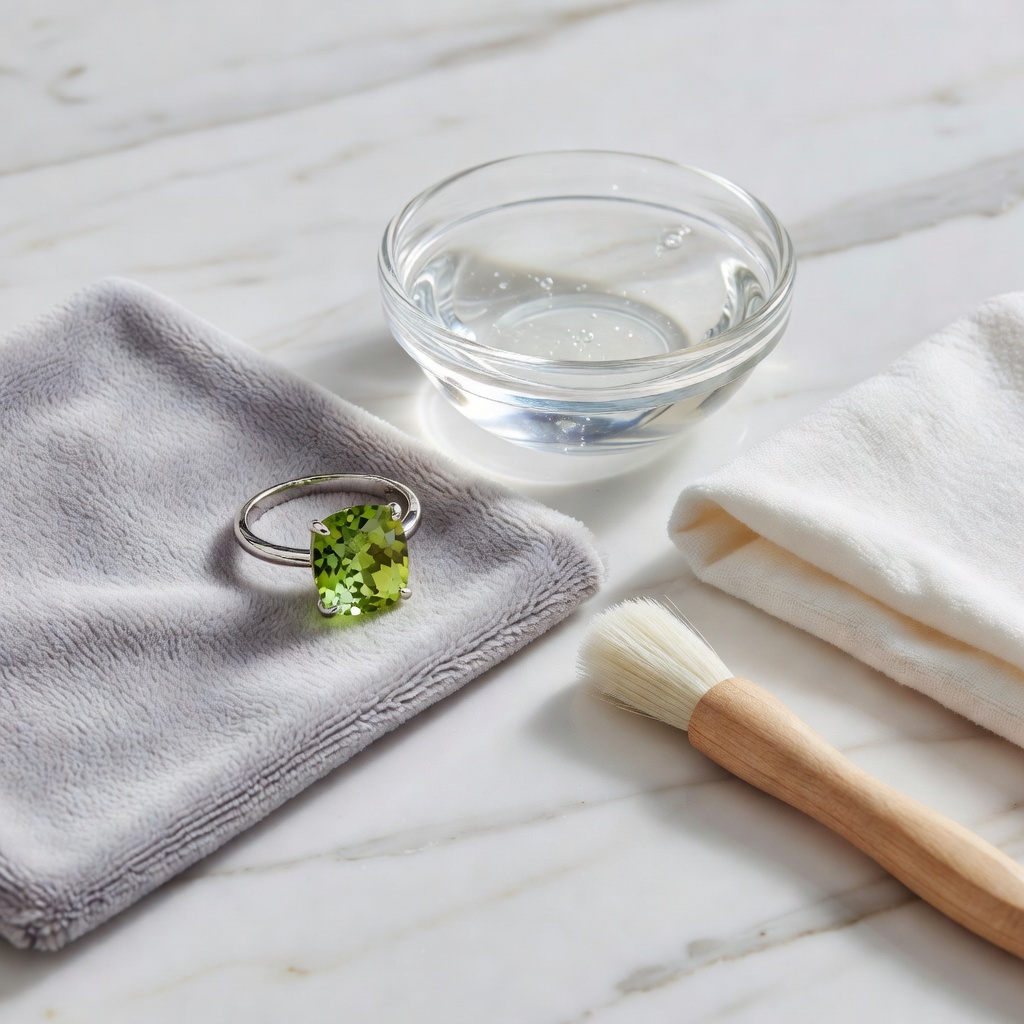
Cleaning peridot gemstone jewelry at home requires gentle techniques that effectively remove dirt without compromising the stone's structural integrity. Begin by preparing a solution of lukewarm water mixed with a few drops of mild, ammonia-free dish soap in a small bowl. Avoid using hot water, as temperature extremes can shock the stone, and steer clear of any cleaners containing bleach, ammonia, or other harsh chemicals that can damage peridot's surface or attack the metal settings holding the gem in place.
Place your peridot jewelry in the solution and allow it to soak for no more than two to three minutes to loosen any accumulated debris. Using a soft-bristled toothbrush—preferably one reserved exclusively for jewelry cleaning—gently scrub the stone and its setting, paying particular attention to the underside of the gem where oils and soaps tend to collect. Hold the piece securely but not tightly, as excessive pressure can stress the setting. After scrubbing, rinse the jewelry thoroughly under lukewarm running water, ensuring all soap residue washes away, as leftover film can attract more dirt. Immediately pat the piece dry with a clean microfiber cloth, avoiding air-drying which can leave water spots on the metal and stone.
Deep Cleaning Your Peridot Jewelry
While daily wiping handles surface oils, deep cleaning peridot pieces requires monthly attention for frequently worn items to address embedded grime and restore maximum brilliance. Unlike harder gemstones that tolerate mechanical cleaning devices, peridot cleaning methods must exclude ultrasonic cleaners, which create vibrations that can expand existing inclusions or microscopic fractures within the stone. These internal weaknesses, common in natural peridot, make the gem particularly vulnerable to the high-frequency agitation that ultrasonic machines generate, potentially resulting in cracks or complete breakage during what should be a cleaning process.
For high-quality, inclusion-free peridot specimens, professional steam cleaning offers an option, though even this method requires caution and expert judgment regarding the stone's specific clarity characteristics. Most homeowners should stick to the manual soap-and-water method described previously but extend the soaking time slightly to five minutes for deep cleaning sessions. For antique peridot jewelry or pieces with compromised settings, consider having a professional jeweler perform the deep cleaning, as they can inspect the integrity of prongs and bezels while cleaning, ensuring that aggressive scrubbing doesn't dislodge a loose stone.
What to Avoid: Harmful Cleaning Practices
Understanding peridot care mistakes is equally important as knowing proper techniques, as several common cleaning methods can permanently damage this beautiful gemstone. Never expose peridot to harsh chemicals including bleach, ammonia, acetone, or alcohol-based cleaners, as these substances can erode the stone's surface and potentially dissolve certain types of metal settings like gold-plated mounts. Even seemingly gentle household cleaners often contain acids or abrasives that attack the forsterite structure of peridot, causing pitting or clouding that no amount of polishing can reverse.
Avoid prolonged soaking sessions that extend beyond five minutes, as extended water exposure can weaken certain jewelry adhesives used in some peridot settings and may allow moisture to seep into microscopic fractures, promoting internal deterioration over time. Additionally, keep peridot away from extreme heat sources such as boiling water, hair dryers, or direct sunlight through magnifying windows, as sudden temperature fluctuations stress the internal crystal structure. Remember that peridot durability has limits; treating this gem with the same rough handling reserved for diamonds or sapphires will inevitably result in scratched surfaces, chipped edges, or cracked stones that diminish both beauty and value.
Proper Storage for Peridot Jewelry
Implementing correct peridot storage tips ensures your jewelry remains pristine when not adorning your outfit. Store each peridot piece separately in soft fabric pouches, individual jewelry boxes with fabric lining, or dedicated compartments that prevent contact with other items. This separation proves crucial because peridot's 6.5-7 hardness rating means harder gemstones like diamonds (10), rubies and sapphires (9), or even quartz (7) can easily scratch its surface when jumbled together in a jewelry drawer or travel case.
Beyond physical separation, maintain stable environmental conditions for your stored peridot jewelry. Choose storage locations away from direct sunlight, which can fade the stone's vibrant green color over extended periods, and avoid humid areas like bathrooms where moisture can tarnish metal settings and potentially affect the gemstone. Consider adding silica gel packets to your jewelry storage area to control humidity levels, and maintain moderate temperatures to prevent thermal shock. For valuable peridot pieces, a home safe or bank safety deposit box provides not only security but also the stable, dark, dry environment that best preserves peridot jewelry maintenance over the long term.
When to Seek Professional Peridot Care
While home maintenance handles routine cleaning, certain situations demand professional peridot care to preserve your jewelry's integrity and appearance. Schedule annual inspections with a qualified jeweler who can examine prong tightness, setting integrity, and the condition of the stone itself using magnification and specialized lighting. These professionals can spot early signs of wear, such as thinning prongs or microscopic cracks in the peridot, addressing issues before they result in stone loss or irreparable damage.
Seek immediate expert assistance if you notice deep scratches, chips, or loose stones, as DIY repairs often exacerbate the problem. Professional gemologists possess the tools and expertise to re-polish badly worn peridot stones, removing surface scratches and restoring the gem's original vitreous luster without compromising its weight or structure significantly. Additionally, if your peridot jewelry suffers impact damage or exposure to harsh chemicals, professional assessment determines whether the stone requires stabilization treatments or if the setting needs reinforcement. Establishing a relationship with a trusted jeweler ensures your peridot pieces receive appropriate care tailored to their specific quality and mounting characteristics.
Common Peridot Care Mistakes to Avoid
Even well-meaning owners sometimes commit peridot care mistakes that compromise their jewelry's longevity and appearance. One prevalent error involves using toothpaste, baking soda, or other abrasive household substances as makeshift cleaners, thinking these gentle enough for teeth must be safe for gems. In reality, these materials contain micro-abrasives that scratch peridot's surface, creating a network of tiny grooves that collect dirt and permanently dull the stone's brilliance, requiring professional polishing to correct.
Another frequent mistake involves wearing peridot jewelry while swimming in chlorinated pools or soaking in hot tubs, as chlorine attacks both the gemstone and its metal settings, potentially causing pitting, discoloration, or structural weakening over time. Similarly, storing multiple peridot pieces together without protective separation invites scratching and tangling, while leaving jewelry on countertops or dressers exposes it to accidental knocks, chemical cleaners, or direct sunlight. Remember that peridot cleaning tips emphasize prevention as much as remediation; avoiding these common pitfalls reduces the frequency of deep cleaning needed and preserves the stone's natural beauty for years of enjoyment.
Final Thoughts on Peridot Care and Cleaning
Mastering peridot care and cleaning requires consistent attention to gentle handling rather than aggressive maintenance routines. By establishing regular habits—wiping after each wear, monthly deep cleaning with mild soap, proper storage away from harder gems, and annual professional inspections—you create a sustainable routine that protects your investment without becoming burdensome. This consistent gentle care delivers superior long-term results compared to sporadic intensive treatments or neglect followed by desperate restoration attempts.
Remember that peridot, while requiring more attention than some harder gemstones, rewards proper care with decades of stunning green brilliance. Whether you own a vintage peridot cocktail ring, a modern pendant, or a pair of delicate earrings, following this peridot gemstone care guide ensures your pieces remain vibrant heirlooms. With mindful daily habits and respect for the stone's physical limitations, your peridot jewelry will continue to capture light and admiration for generations, maintaining the same lush olive-to-lime glow that first captured your heart.
Frequently Asked Questions About Peridot Care
Can I wear my peridot ring every day?
Yes, peridot can be worn daily due to its 6.5-7 Mohs hardness, but requires careful handling. Remove it during activities like cleaning, exercising, or manual work to prevent scratches and chemical exposure that can damage the stone.
What is the safest way to clean peridot jewelry at home?
Mix lukewarm water with mild, ammonia-free dish soap. Soak briefly, gently scrub with a soft-bristled brush, rinse thoroughly under running water, and immediately pat dry with a microfiber cloth. Never use harsh chemicals or abrasive materials.
Can peridot go in ultrasonic cleaners?
No, ultrasonic cleaners are not recommended for peridot. The vibrations can cause existing fractures or inclusions to expand, potentially breaking the stone. Hand cleaning with gentle methods is always the safest approach for peridot care and cleaning.
How should I store my peridot jewelry to prevent damage?
Store peridot pieces individually in soft fabric pouches or separate compartments in a jewelry box. Keep them away from harder gemstones like diamonds and sapphires that could scratch the surface, and avoid direct sunlight and humid areas.
Will peridot fade or change color over time?
Peridot is generally stable, but prolonged exposure to intense direct sunlight may cause slight fading over many years. Store jewelry in a dark place when not worn and avoid leaving it in hot cars or windowsills to preserve its vibrant green color.
How often should I clean my peridot jewelry?
Wipe your peridot jewelry with a soft cloth after each wear to remove oils and dirt. Perform a more thorough cleaning with soap and water once a month for pieces worn regularly, or every 2-3 months for occasional wear items.
Can I use commercial jewelry cleaners on peridot?
Only use commercial cleaners specifically labeled as safe for peridot. Many contain harsh chemicals or ammonia that can damage the stone. When in doubt, stick to mild dish soap and water, which is the safest cleaning method for peridot jewelry.
What should I do if my peridot gets scratched?
Minor scratches can be professionally polished out by a qualified gemologist. For deep scratches or chips, consult a jewelry professional. Attempting DIY polishing can cause further damage. Regular gentle care prevents most scratching issues.


