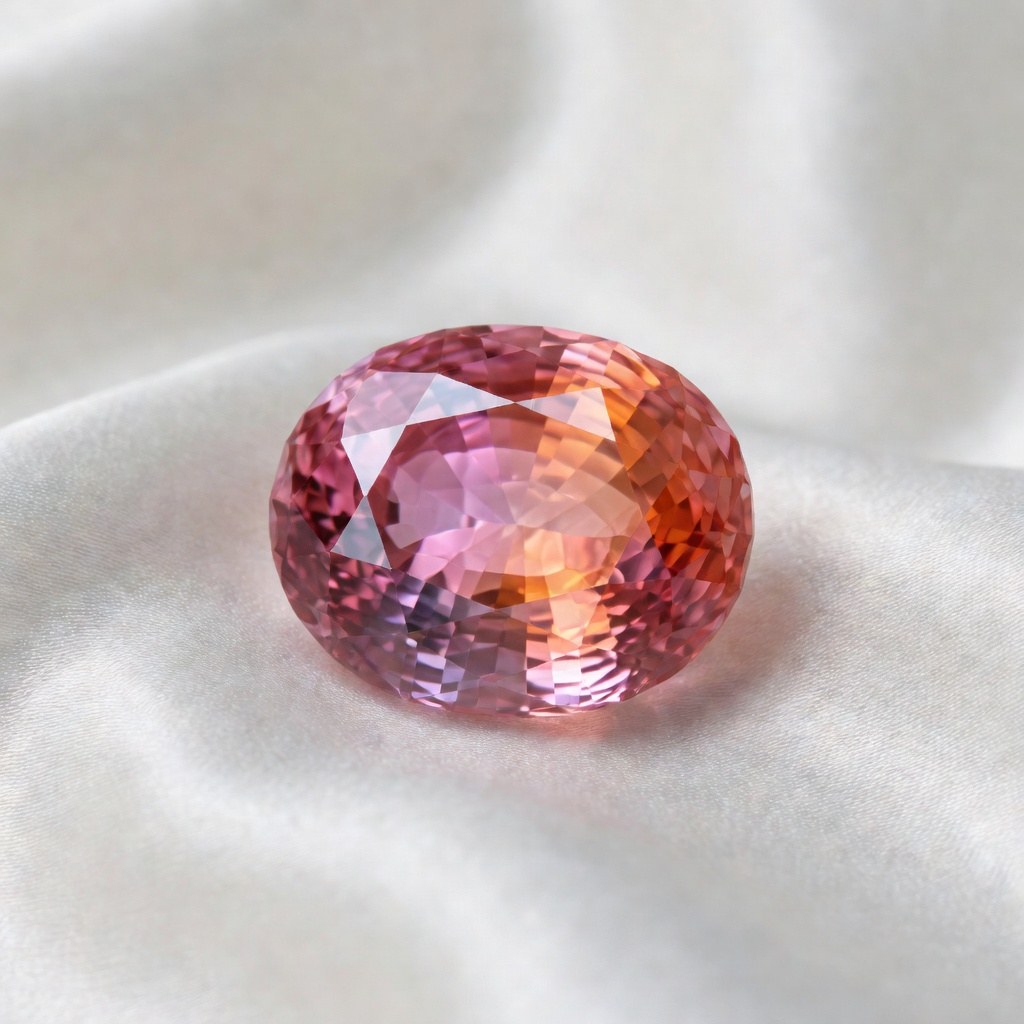
Introduction to Padparadscha Sapphires
The padparadscha sapphire stands as one of the most enchanting and elusive gemstones in the world, captivating collectors with its ethereal blend of sunset hues. The very essence of padparadscha sapphire meaning derives from the Sinhalese word "padma raga," translating to "lotus color," a poetic reference to the aquatic flower's delicate pink-orange blossoms that float upon Sri Lankan waters. This etymology captures not merely a color description but an entire cultural philosophy that has elevated these stones to legendary status among gem connoisseurs and royalty alike.
Historically, padparadscha sapphires have adorned the collections of monarchs and maharajas, symbolizing the perfect union between the passion of rubies and the tranquility of blue sapphires. Unlike their more common blue counterparts, these gems occupy a unique taxonomical position that gemologists have debated for decades, creating a distinct category that sits precisely between pink and orange sapphire classifications. When Princess Eugenie of York received a padparadscha sapphire engagement ring in 2018, the world witnessed a resurgence of interest in these stones, cementing their status as the ultimate expression of sophisticated romance and discerning taste.
Understanding the true padparadscha sapphire meaning requires appreciating its rigid qualification standards, which demand that a stone display both pink and orange simultaneously without dominance from either hue. This strict definition separates authentic padparadschas from similarly colored but technically distinct varieties, creating an exclusive club of gemstones that fewer than one in ten thousand sapphires qualify to join.
Physical and Chemical Properties
Like all sapphires, padparadschas belong to the corundum family, crystallizing from aluminum oxide (Al₂O₃) in the trigonal crystal system under extreme geological conditions. What distinguishes these extraordinary gems chemically is the precise trace element composition—specifically the delicate balance between chromium, which produces pink tones, and iron with titanium, which creates orange hues. This unique chromophore chemistry results in the mesmerizing color shift that defines the variety, requiring specific geological environments where both elements coexist in exact proportions.
One of the most critical padparadscha sapphire hardness characteristics is its ranking of 9 on the Mohs scale, making it second only to diamond in terms of scratch resistance and durability. This exceptional hardness stems from the strong aluminum-oxygen bonds within the crystal lattice, allowing these gemstones to maintain their polish and structural integrity even under daily wear conditions. With a specific gravity ranging from 3.99 to 4.00 and refractive indices between 1.760 and 1.768, padparadscha sapphires possess the optical density necessary to produce the vitreous luster that collectors prize.
Gemologists utilize these physical constants when distinguishing natural padparadschas from synthetics or simulants. For instance, when examining a stone under polarized light, the hexagonal crystal system produces characteristic optical patterns that confirm authenticity. Additionally, the durability conferred by the padparadscha sapphire hardness makes these stones suitable for all jewelry applications, including high-impact pieces like rings and bracelets, provided they are set properly to protect against chipping along cleavage planes.
The Signature Pink-Orange Color Spectrum
The defining characteristic of any padparadscha is its extraordinary color, specifically requiring a harmonious 50/50 balance between pink and orange without the muddying influence of brown or gray modifiers. This pink orange sapphire phenomenon creates what gemologists describe as a "salmon" or "sunset" appearance, though achieving this precise chromatic equilibrium occurs so rarely that truly exemplary stones command immediate attention at the world's finest auction houses. The color must remain stable under various lighting conditions, displaying both hues simultaneously rather than showing color zoning or uneven distribution.
Within the pink orange sapphire category, collectors recognize two primary variations: "Sunrise" stones that lean toward pinker tones with subtle orange flashes, and "Sunset" specimens that display dominant orange with pink undertones. While purists historically favored the 50/50 ideal, modern appreciation has expanded to include these directional variations, provided neither pink nor orange overwhelms the other completely. The most valuable examples exhibit color shift properties, appearing more pink under natural daylight and transitioning toward orange under incandescent lighting, creating a dynamic visual experience that changes throughout the day.
Leading laboratories including the Gemological Institute of America (GIA) and the American Gemological Laboratories (AGL) employ strict grading criteria for pink orange sapphire classification, requiring medium tone and moderate to high saturation without veering into brownish territories. Stones that fail to meet these standards—those appearing too peachy, too pastel, or too brown—receive designations as fancy sapphires rather than true padparadschas, significantly impacting their market value and collector interest.
Geographic Origins and Mining Locations
When discussing padparadscha origin Sri Lanka, gemologists speak of the island's southwestern alluvial deposits, particularly the Ratnapura and Elahera regions, which have produced the world's most coveted specimens for over two millennia. Sri Lankan padparadschas distinguish themselves through their delicate, pastel coloration and exceptional clarity, characteristics resulting from the unique metamorphic conditions present in the Highland Complex geological formation. These stones often exhibit a subtle fluorescence under ultraviolet light, a diagnostic feature that helps confirm their prestigious origin.
While padparadscha origin Sri Lanka remains the gold standard, Madagascar emerged in the 1990s as a significant alternative source, particularly the Tulear region, which produces stones with generally more saturated orange components. These Malagasy specimens often display higher iron content, resulting in deeper, more orange-dominant colors that some collectors prefer for their dramatic intensity, though they typically lack the ethereal delicacy of classic Ceylon material. Tanzanian deposits from the Umba Valley offer yet another variation, frequently yielding smaller stones with pinker tendencies and occasional violet modifiers.
Vietnam's Luc Yen district and select deposits in Tanzania's Songea region represent emerging sources for these rare gems, each contributing unique characteristics to the market. However, stones from these localities often face stricter scrutiny regarding color purity, as they may contain undesirable brown or gray undertones. When evaluating geographic origin, collectors should note that padparadscha origin Sri Lanka typically commands 20-30% premiums over Madagascar material of equivalent quality, reflecting both historical prestige and the classic color standards established by Ceylon stones.
Rarity, Value, and Investment Potential
The astronomical padparadscha sapphire price per carat reflects a supply reality that makes these stones rarer than fine rubies, emeralds, and even Kashmir blue sapphires. Industry estimates suggest that for every 100 high-quality blue sapphires mined, fewer than five padparadschas are discovered, and among those, perhaps one meets the strict color requirements for premium designation. This extreme scarcity has driven auction prices to remarkable heights, with exceptional unheated specimens exceeding $50,000 per carat at major houses like Christie's and Sotheby's.
Current market analysis indicates that commercial-quality heated padparadschas typically range from $5,000 to $15,000 per carat, while fine unheated examples command $20,000 to $35,000 per carat. The highest echelon—museum-quality stones over five carats with perfect color balance and no treatment—can surpass $50,000 per carat, with the record held by a 28.04-carat Sri Lankan stone that sold for over $2.5 million total. When calculating padparadscha sapphire price per carat, buyers must consider that prices increase exponentially rather than linearly with size, as stones over three carats become exponentially scarcer.
Investment advisors specializing in colored gemstones consistently rank padparadschas among the top five appreciating hard assets, citing their increasing rarity and growing Asian market demand. Unlike blue sapphires, where new treatments can flood markets temporarily, the geological specificity required for padparadscha formation ensures continued supply constraints. Collectors seeking portfolio diversification should focus on certified unheated stones with documented Sri Lankan origin, as these have demonstrated the most consistent appreciation curves over the past two decades, often outperforming traditional equity indices.
Treatments vs. Natural Stones
The distinction between heated and untreated padparadscha sapphire specimens represents one of the most critical value differentiators in the colored gemstone market. Unlike blue sapphires, where high-temperature treatment is nearly universal, padparadschas often undergo only gentle, low-temperature heating (below 1300°C) to dissolve rutile silk and improve clarity without altering the delicate color balance. This accepted practice can enhance transparency while maintaining the stone's natural color chemistry, though disclosure remains mandatory for ethical trading.
However, the market faces ongoing challenges from beryllium diffusion, a controversial treatment where stones are heated with beryllium compounds to artificially create orange and pink colors in otherwise colorless or pale corundum. Detecting this treatment requires advanced spectroscopic analysis available only at top-tier laboratories like SSEF or Gübelin, as the beryllium penetrates deeply into the crystal structure. Buyers seeking untreated padparadscha sapphire specimens must insist on certificates explicitly stating "no indications of heating," as vague terminology can obscure diffusion treatments.
The premium for untreated padparadscha sapphire stones typically ranges from 40% to 100% over heated equivalents, depending on size and color intensity. For investment purposes, untreated status is non-negotiable, as treated stones rarely appreciate at comparable rates. When examining certification reports, look for specific language such as "no evidence of heat treatment" rather than "natural color," as the latter may legally apply to diffusion-treated stones that started as natural rough. Reputable dealers will provide pre-purchase inspection periods allowing independent verification by trusted gemologists.
Distinguishing Padparadscha from Peach Sapphires
The debate surrounding padparadscha vs peach sapphire classification has intensified as market demand outpaces supply, leading to controversial boundary expansions by certain laboratories and dealers. Strictly speaking, padparadscha requires distinct pink and orange components visible simultaneously, while peach sapphires present as an admixture or blend where individual colors cannot be separately distinguished, often with brownish or yellowish modifiers. This distinction, while subtle to the untrained eye, significantly impacts value, with true padparadschas commanding multiples over peach-labeled stones.
Saturation levels provide the most reliable distinguishing factor in the padparadscha vs peach sapphire comparison. Padparadschas must display medium saturation—neither too pale nor too intense—whereas peach sapphires typically show lighter, more pastel tones that lack the vibrancy required for padparadscha designation. Additionally, peach sapphires often exhibit dominant orange or brownish-orange with minimal pink presence, failing the strict 50/50 balance test. Some industry experts argue that only Sri Lankan material should qualify as padparadscha, while stones from Madagascar and elsewhere with peachy tones should be categorized separately.
Marketing terminology has complicated this distinction, with some retailers applying "padparadscha" loosely to any pink-orange sapphire regardless of strict gemological criteria. Buyers should approach such claims skeptically, requesting laboratory certification from GIA, AGL, or SSEF that specifically uses the padparadscha designation rather than "pink-orange sapphire" or "peach sapphire." When evaluating padparadscha vs peach sapphire options, consider that while peach sapphires offer beautiful aesthetic alternatives at lower price points, they lack the investment-grade rarity and collector prestige associated with certified padparadscha classification.
Buying Guide: Certification and Quality Factors
Navigating the market for these rare gems requires understanding comprehensive Padparadscha Sapphire Properties and Information as documented by internationally recognized laboratories. Essential certification should originate from GIA, AGL, SSEF (Swiss Gemmological Institute), or Gübelin, with reports explicitly confirming the padparadscha designation, geographic origin, and treatment status. These documents provide more than authentication—they establish provenance and quality parameters that protect your investment and ensure resale liquidity.
Cut quality significantly impacts the appearance of padparadscha sapphires, as proper orientation within the rough crystal maximizes the pink-orange color balance while minimizing windowing (light leakage). Oval and cushion cuts predominate in fine examples, as these shapes optimize color retention and face-up appearance. When examining cut quality, look for symmetrical facets that create even color distribution across the stone's face, avoiding shallow cuts that appear washed out or deep cuts that concentrate color unnaturally. The goal is a lively stone that displays both pink and orange flashes during normal viewing angles.
Clarity standards for padparadschas differ from diamonds, as inclusions are tolerated provided they remain eye-clean (invisible to the naked eye from 6-8 inches) and do not threaten durability. Common inclusions include rutile needles, mineral crystals, and fingerprint patterns—many of which actually confirm natural origin when properly identified by gemologists. When reviewing Padparadscha Sapphire Properties and Information on certification reports, prioritize color description and origin over flawless clarity, as the color parameters remain the primary value drivers for this variety.
Care, Maintenance, and Jewelry Setting
Proper padparadscha sapphire care begins with understanding that while these gems rank high on the Mohs hardness scale, they still require thoughtful handling to preserve their exceptional beauty. Routine cleaning should involve warm soapy water and a soft brush, avoiding ultrasonic cleaners unless the stone has been examined by a gemologist to confirm absence of fractures or inclusions that could expand under vibration. Steam cleaning poses similar risks and should generally be avoided for padparadschas, as thermal shock can damage stones with internal stress or filled fractures.
Jewelry setting selection plays a crucial role in protecting these valuable gems during daily wear. Bezel settings offer maximum protection by surrounding the gem's girdle with metal, while halo designs provide both aesthetic enhancement and physical buffering against impacts. For engagement rings or frequently worn pieces, consider six-prong settings that securely grip the stone without obscuring its color display. Avoid tension settings that place stress on the crystal structure, and ensure that prongs are checked annually by a jeweler to prevent stone loss.
Storage practices for padparadscha sapphire care require separation from other jewelry items, particularly diamonds, which can scratch softer gemstones despite padparadscha's high hardness rating. Store pieces in individual soft pouches or lined jewelry boxes with compartments. When traveling, carry padparadscha jewelry in hand luggage rather than checked baggage, and consider insurance riders specifically covering high-value colored gemstones, as standard homeowner's policies often have low limits for jewelry coverage. With proper care, these heirloom-quality stones will maintain their mesmerizing color and brilliance for generations.
Frequently Asked Questions
What exactly defines a Padparadscha sapphire?
A Padparadscha sapphire is defined by its unique pink-orange color, traditionally requiring a delicate balance of 50% pink and 50% orange without brown or gray modifiers. The name derives from the Sinhalese word for lotus flower, and strict gemological standards require the stone to show both colors simultaneously in different lighting conditions.
How rare are Padparadscha sapphires compared to diamonds?
Padparadscha sapphires are significantly rarer than diamonds. For every 100 gem-quality diamonds found, only one Padparadscha sapphire is discovered. Their extreme scarcity, combined with strict color requirements, makes them among the rarest colored gemstones available on the market.
Why are Padparadscha sapphires more expensive than blue sapphires?
Padparadscha sapphires command premium prices due to extreme scarcity, strict color grading standards, and high collector demand. While high-quality blue sapphires are rare, finding a Padparadscha with the perfect pink-orange balance without heat treatment is exponentially more difficult, driving prices 20-50% higher than comparable blue sapphires.
Can Padparadscha sapphires be heat treated?
Yes, many Padparadscha sapphires undergo low-temperature heat treatment to improve clarity and color, which is generally accepted in the trade. However, high heat can destroy the delicate pink-orange balance. Unheated specimens with natural color command significant premiums—often 40-60% higher than heated stones of similar appearance.
What is the ideal color ratio for a Padparadscha sapphire?
The ideal Padparadscha displays a harmonious 50/50 blend of pink and orange without dominant zones of either color. Premium stones show a 'salmon' or 'sunset' color that shifts subtly between pink and orange under different lighting conditions—appearing more pink in daylight and more orange under incandescent light.
How do I verify if my Padparadscha sapphire is natural?
Always request certification from reputable laboratories like GIA, AGL, SSEF, or Gübelin. These reports confirm natural origin, disclose any treatments, and verify the color meets Padparadscha standards. Be wary of stones labeled 'padparadscha' without certification, as many are actually pink sapphires, orange sapphires, or diffusion-treated stones.
Do Padparadscha sapphires come from places other than Sri Lanka?
While Sri Lanka (Ceylon) produces the most prized Padparadscha sapphires, significant deposits exist in Madagascar and Tanzania. Madagascar stones often show more orange tones, while Tanzanian material tends toward pinker hues. Sri Lankan origin typically commands the highest prices due to historical prestige and classic color standards.
Are Padparadscha sapphires durable enough for engagement rings?
With a hardness of 9 on the Mohs scale, Padparadscha sapphires are excellent for daily wear in engagement rings, second only to diamonds in durability. However, due to their value and rarity, protective settings like bezels or halos are recommended to guard against chips or scratches during everyday activities.