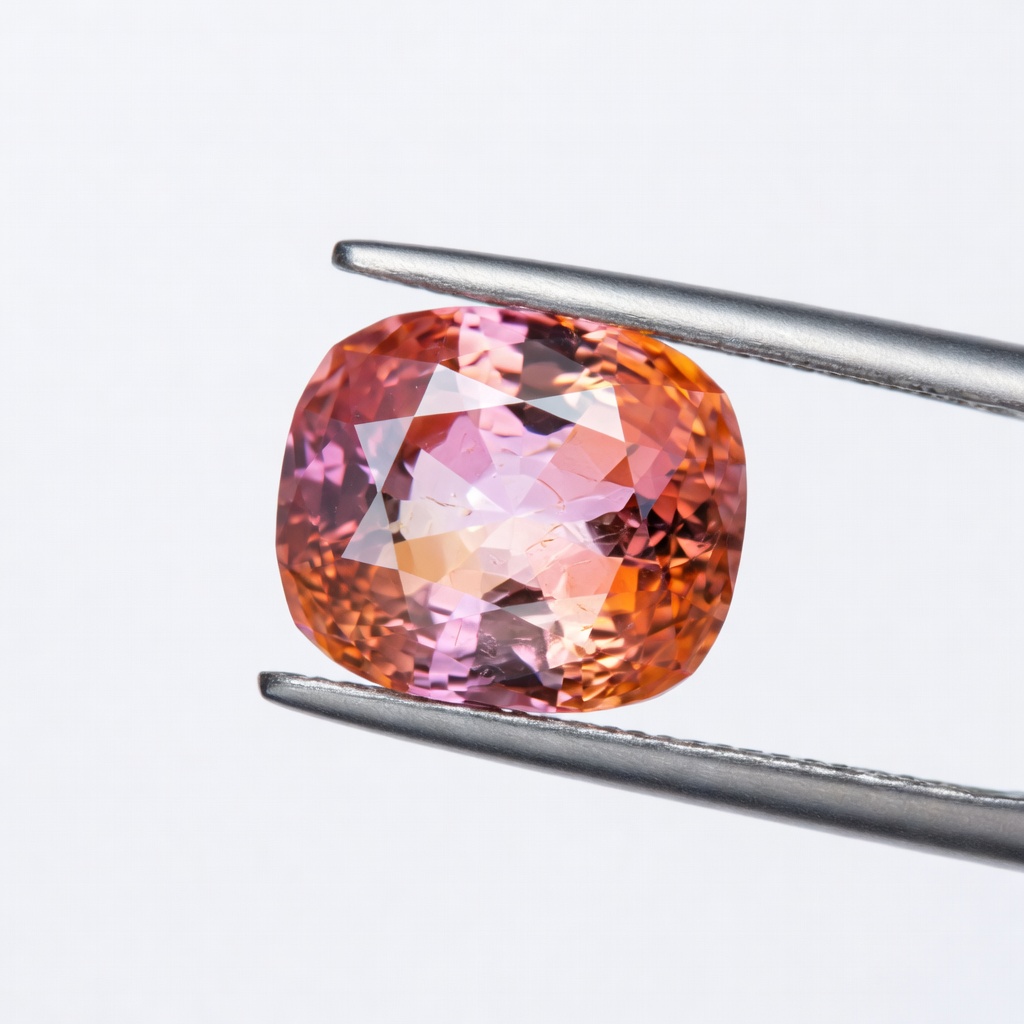
What Is a Padparadscha Sapphire? Understanding the Lotus Color
The padparadscha sapphire stands as one of the rarest and most coveted gemstones in the corundum family, distinguished by its ethereal blend of pink and orange hues that evoke the delicate petals of a lotus flower at sunrise. Derived from the Sinhalese word "padma raga," meaning lotus color, this lotus padparadscha represents the pinnacle of sapphire rarity, requiring a precise chromatic balance that eludes even experienced gemologists. Unlike standard pink sapphires that lean toward raspberry or bubblegum tones, or orange sapphires that burn with citrus intensity, the authentic pink orange sapphire must display both colors simultaneously in a harmonious 40/60 to 60/40 ratio without brownish or grayish modifiers that would diminish its prestige.
Distinguishing a true padparadscha from its close cousins requires understanding the subtle boundaries of color spectrums. Where pink sapphires may show flashes of orange and orange sapphires might display pink undertones, the padparadscha commands a distinct middle ground where neither hue dominates to the exclusion of the other. Trade professionals often describe the ideal color as "sunset" or "salmon," referring to that magical moment when tropical daylight fades into dusk, creating a warm, glowing appearance that seems to emit light from within. However, buyers should exercise caution when encountering stones marketed as "sunset sapphires," as this terminology sometimes serves to justify stones with brownish tints that would fail strict laboratory standards for padparadscha classification.
Origins and Geological Sources
Geographic provenance plays a critical role in determining both the aesthetic qualities and market value of padparadscha sapphires, with Sri Lanka (formerly Ceylon) maintaining its status as the traditional benchmark for the classic lotus color. Ceylon padparadscha sapphire deposits in the Ratnapura and Elahera regions have yielded the most historically significant specimens, characterized by their ethereal, pastel-quality coloration with balanced pink-orange saturation that seems to glow with an inner fire. These Sri Lankan stones typically command the highest premiums at auction, particularly when accompanied by documentation confirming their unheated status and specific mining locality, as collectors increasingly prioritize traceable provenance in their acquisition strategies.
Madagascar emerged as a significant source during the 1990s, producing Madagascar padparadscha stones that often display a distinctly different color profile from their Ceylon counterparts. While Sri Lankan material tends toward subtle, pastel balances, Madagascar rough frequently yields stones with stronger pink dominance and higher saturation levels, sometimes requiring careful cutting to minimize overly pink appearances that might disqualify them from padparadscha designation. Tanzania and Vietnam represent newer sources contributing to the market, with Tanzanian material occasionally showing slightly more orange dominance and Vietnamese stones sometimes exhibiting unique silk inclusions that create a soft, velvety appearance reminiscent of Kashmir sapphires. When evaluating these various origins, collectors should note that Ceylon padparadscha sapphire consistently achieves 20-40% price premiums over equivalent-quality material from Madagascar or other localities, reflecting both historical prestige and the subtle color nuances preferred by connoisseurs.
The 4Cs of Padparadscha Sapphires
Color Grading: Hue, Tone, and Saturation Requirements
Padparadscha grading represents one of the most stringent processes in gemology, with major laboratories applying rigorous standards that exclude stones showing brown, gray, or purple modifiers. The ideal stone exhibits medium tone—neither too light (which risks classification as "pinkish-orange sapphire") nor too dark (which obscures the delicate color dance)—combined with medium to medium-high saturation that allows both pink and orange components to remain visible under various lighting conditions. Gemological institutes like GIA and SSEF utilize master stone sets to determine qualification, examining specimens under standardized daylight-equivalent lighting to ensure the color remains stable and attractive across different environments.
Clarity Expectations and Eye-Clean Standards
Unlike diamonds, where flawless clarity represents the ideal, padparadscha sapphires accommodate certain inclusion types that actually confirm their natural origin and untreated status. Collector-grade stones should appear "eye-clean"—meaning no visible inclusions at a distance of six inches under normal lighting—though minute crystal inclusions, rutile silk, or fingerprint patterns visible under magnification often indicate natural formation and can enhance value when they confirm lack of heat treatment. However, surface-reaching fractures, large dark crystals, or clouds that diminish transparency significantly impact padparadscha sapphire price calculations, with heavily included stones sometimes trading at 50-70% discounts compared to eye-clean specimens of similar color.
Carat Weight Rarity and Premium Pricing
The geological rarity of padparadscha formation means that large crystals occur extraordinarily infrequently, creating exponential padparadscha sapphire price per carat escalations as stones exceed two carats. While one-carat fine-quality stones might trade between $8,000-$15,000 per carat, three-carat specimens of equivalent quality can command $30,000-$50,000 per carat, and stones exceeding five carats with ideal color balance regularly achieve six-figure totals at international auction houses. This scarcity reflects not only the rarity of the geological conditions required to create the pink-orange coloration but also the difficulty of recovering clean rough large enough to yield finished stones above two carats without significant cutting loss.
Cut Optimization and Weight Retention
Master cutters face unique challenges when fashioning padparadscha rough, as orientation significantly affects color perception and the delicate pink-orange balance must be maintained from all viewing angles. Unlike blue sapphires where depth enhances saturation, padparadschas often perform best with shallow pavilion angles that allow light to reflect evenly across both color components, preventing "windowing" (light leakage through the center) that would create dead spots in the stone. Experienced cutters may sacrifice up to 60% of the rough weight to achieve optimal proportions, explaining why poorly cut stones with heavy bottoms or bulging pavilions should be avoided despite their apparent "bargain" pricing—they represent inefficient use of rare material and often display uneven color distribution.
Treatments and Enhancement Disclosure
The distinction between unheated padparadscha and treated material represents perhaps the most critical value determinant in the marketplace, with natural stones commanding multiples of 3-10 times the price of heated equivalents. Traditional low-temperature heat treatment (below 1300°C) remains acceptable within the trade when properly disclosed, potentially improving clarity by dissolving rutile silk and slightly intensifying color, though high-heat treatment or flux healing significantly diminishes value and must be explicitly noted in documentation. Buyers should specifically request laboratory reports stating "no indications of heating" or "natural color" when seeking investment-grade material, as this notation dramatically affects both current pricing and future liquidity.
Treated padparadscha sapphire identification requires sophisticated laboratory equipment, particularly for detecting beryllium (Be) diffusion, a treatment that introduces surface-conforming color concentrations by forcing beryllium atoms into the crystal lattice at high temperatures. This process can transform pale pink or orange rough into padparadscha-like colors, but such stones cannot legally be sold as padparadscha and must be labeled as "diffusion-treated sapphire" or "beryllium-treated corundum." Reputable dealers provide full disclosure of any enhancement history, while certification from laboratories like AGL or Gübelin includes specific testing for beryllium diffusion using laser ablation or chemical analysis techniques that identify treatment signatures invisible to standard gemological observation.
Certification and Laboratory Standards
Padparadscha certification varies significantly between laboratories, making the choice of grading institution as important as the stone itself when making significant acquisitions. The Swiss laboratories SSEF and Gübelin maintain the most conservative standards, typically reserving the padparadscha designation for stones showing subtle, pastel balances without brown modifiers, while American laboratories like GIA and AGL may apply the term to slightly more saturated specimens. A GIA padparadscha report provides detailed color origin analysis and treatment disclosure, though collectors should note that GIA sometimes uses descriptive terms like "pinkish-orange" or "orangy-pink" rather than the specific padparadscha designation, depending on the stone's exact colorimetric properties.
Understanding report terminology proves essential for accurate valuation, as "padparadscha sapphire" commands higher prices than "pink-orange sapphire" or similar descriptive classifications even when the visual difference appears minimal to untrained observers. Origin reports indicating Sri Lankan (Ceylon) provenance add substantial premiums, particularly when combined with "no heat" notations, while red flags in documentation include vague locality descriptions, missing treatment information, or certificates from unknown laboratories without accreditation from organizations like the Laboratory Manual Harmonisation Committee (LMHC). Before finalizing any purchase exceeding $10,000, verify certificate authenticity through the laboratory's online verification system and consider obtaining a second opinion from a complementary institution, particularly for stones borderline in color qualification.
Price Guide and Investment Value
Current padparadscha sapphire price structures reflect a bifurcated market where commercial-quality heated stones trade between $1,000-$5,000 per carat, while fine, unheated Ceylon specimens with ideal 50/50 color balances command $15,000-$50,000 per carat depending on size and clarity. Exceptional museum-quality stones exceeding five carats with perfect provenance documentation have achieved prices exceeding $100,000 per carat at Christie's and Sotheby's auctions, with the record-holder being a 28.04-carat stone that sold for $2.6 million in 2018. These auction results demonstrate the strong padparadscha investment potential for top-tier material, though buyers should recognize that only stones with impeccable certification, ideal color, and unheated status appreciate at these rates.
Investment liquidity factors heavily favor stones accompanied by reports from SSEF, Gübelin, or AGL, as these documents facilitate resale through major auction houses or private sales to established collectors. The market shows particular strength for padparadscha engagement ring stones between 1.50-3.00 carats, where demand from high-net-worth individuals seeking alternatives to diamonds drives consistent price appreciation averaging 8-12% annually for fine specimens over the past decade. However, treated stones, those with brownish modifiers, or Madagascar material without Ceylon pedigree show limited investment potential and should be purchased primarily for aesthetic enjoyment rather than portfolio diversification.
Where to Buy: Dealers, Auctions, and Online Sources
When seeking to buy padparadscha sapphire, prioritizing specialized colored stone dealers over general jewelry retailers ensures access to properly vetted inventory with legitimate documentation. Established padparadscha dealers with Graduate Gemologist (GG) credentials from GIA maintain direct relationships with Sri Lankan and Madagascar rough suppliers, allowing them to source exceptional material before it reaches broader markets, and they typically offer inspection periods of 10-14 days allowing independent verification of laboratory reports. Reputable dealers affiliate with professional organizations like the American Gem Trade Association (AGTA) or the International Colored Gemstone Association (ICA), adhering to strict ethical standards regarding disclosure and treatment representation.
Auction houses including Christie's, Sotheby's, and Bonhams provide access to historic and investment-grade specimens with comprehensive provenance, though buyers should factor in buyer's premiums ranging from 20-25% when calculating total acquisition costs. Online purchasing requires heightened diligence: request high-resolution video footage showing the stone under multiple lighting conditions (daylight, incandescent, and LED) to evaluate color stability, and verify that the seller offers unconditional return privileges within a reasonable inspection window. Before committing to any significant purchase, ask specific questions about the stone's treatment history, cutting origin, and whether the price reflects current wholesale market indices for comparable certified stones.
Setting and Jewelry Design Considerations
Metal selection profoundly influences the perceived color of padparadscha engagement ring designs, with each option offering distinct aesthetic advantages. Rose gold harmonizes with the pink component, intensifying the stone's warmth and creating a cohesive, romantic appearance particularly favored in vintage-inspired settings, while yellow gold emphasizes the orange tones, lending a tropical, sunset-like radiance that complements warmer skin tones. Platinum and white gold provide neutral backdrops that allow the stone's true color balance to dominate without metal reflection interference, making these metals ideal for collectors seeking to display the gem's natural hue without chromatic enhancement from the setting.
Protective setting styles prove essential for this rare and valuable gem, with bezel settings or half-bezel designs offering superior protection compared to delicate prong settings that might snag or loosen over time. When designing padparadscha jewelry design compositions, complementary accent stones should enhance rather than compete: fancy yellow diamonds amplify the orange components, while pink diamonds or morganites emphasize the pink tones, though many connoisseurs prefer solitaire presentations that showcase the padparadscha's unique color without distraction. For daily wear engagement rings, consider slightly recessed settings that protect the girdle from impact, paired with wedding bands featuring contoured profiles that prevent metal-to-gem contact during stacking.
Care, Maintenance, and Long-term Preservation
Proper padparadscha care requires understanding the gem's relative hardness (9 on the Mohs scale) while respecting its rarity and value through preventive maintenance protocols. While sapphires resist scratching from most household dust, they remain vulnerable to chipping if struck against hard surfaces, necessitating removal during activities involving potential impact. Clean your stone using warm water with mild dish soap and a soft toothbrush, avoiding ultrasonic cleaners that might loosen settings or potentially affect untreated stones with liquid inclusions, and never expose padparadschas to harsh chemicals including chlorine bleach or hydrofluoric acid solutions found in some jewelry cleaning dips.
Storage recommendations include individual soft pouches or compartmented jewelry boxes that prevent contact with harder diamonds or moissanite that could scratch the surface, while sapphire maintenance schedules should include professional inspections every 12-18 months to check setting security and prong integrity. Insurance appraisals require documentation from recognized laboratories along with high-resolution photographs showing the stone's inclusion patterns (fingerprinting), and policies should be updated every 2-3 years to reflect market appreciation, particularly for unheated Ceylon specimens that have shown significant value increases. For heirloom pieces, consider climate-controlled storage when not worn, as extreme temperature fluctuations can potentially stress included stones, though stable, room-temperature environments typically pose no risk to well-cut, inclusion-free specimens.
Frequently Asked Questions
What exactly qualifies as a padparadscha sapphire?
A padparadscha sapphire must display a delicate balance of pink and orange colors, resembling a lotus flower or sunset. Major laboratories require the stone to show both colors simultaneously without brown or gray modifiers. The exact ratio varies by lab, but generally, stones too pink become 'pink sapphire' and those too orange become 'orange sapphire.'
How much does a padparadscha sapphire cost per carat?
Prices range from $1,000-$5,000 per carat for heated or lower-quality stones to $10,000-$50,000+ per carat for fine, unheated Ceylon specimens with perfect 50/50 color balance. Exceptional stones over 5 carats can command six-figure prices at auction due to extreme rarity.
Are padparadscha sapphires a good investment?
High-quality, certified unheated padparadscha sapphires from Sri Lanka have shown strong price appreciation and liquidity among collectors. However, treated stones or those with atypical colors have limited investment potential. Always prioritize stones with reports from prestigious laboratories like SSEF or Gübelin for investment purposes.
How can I tell if a padparadscha is natural or treated?
Only laboratory testing can definitively detect treatments. Key indicators include: inclusions (natural stones have characteristic crystal inclusions), color zoning patterns, and fluorescence reactions. Beryllium-treated stones often show surface-conforming color concentrations. Always demand a certificate from GIA, AGL, or Swiss labs specifically stating 'no indications of heating.'
What is the difference between padparadscha and peach sapphire?
While both show pink-orange blends, padparadscha requires higher saturation and specific color balance. Peach sapphires are typically lighter, more pastel, and often browner or pinker without the vibrant sunset intensity. Some labs will call lighter stones 'pinkish-orange sapphire' rather than granting the prestigious 'padparadscha' designation.
Do padparadscha sapphires look different in various lighting?
Yes, padparadscha sapphires are notorious for color shift. They may appear more pink in incandescent light and more orange in daylight or LED lighting. This phenomenon is normal and desirable, but extreme color change (to purple or brown) indicates the stone may not be a true padparadscha. Always view stones under multiple light sources before purchasing.
What metal color best complements padparadscha sapphires?
Rose gold enhances the pink tones, yellow gold brings out the orange warmth, and platinum or white gold provides neutral contrast that showcases the stone's true color. Rose gold is currently the most popular choice for padparadscha engagement rings as it harmonizes with the gem's unique hue.
Where is the best place to buy an authentic padparadscha sapphire?
Purchase from established colored stone specialists with GIA graduate gemologists on staff, strong return policies (minimum 10-day inspection period), and affiliations with professional organizations like AGTA or ICA. Avoid general jewelry chains and be extremely cautious with online marketplaces unless the seller provides independent laboratory certification and high-resolution video in multiple lighting conditions.