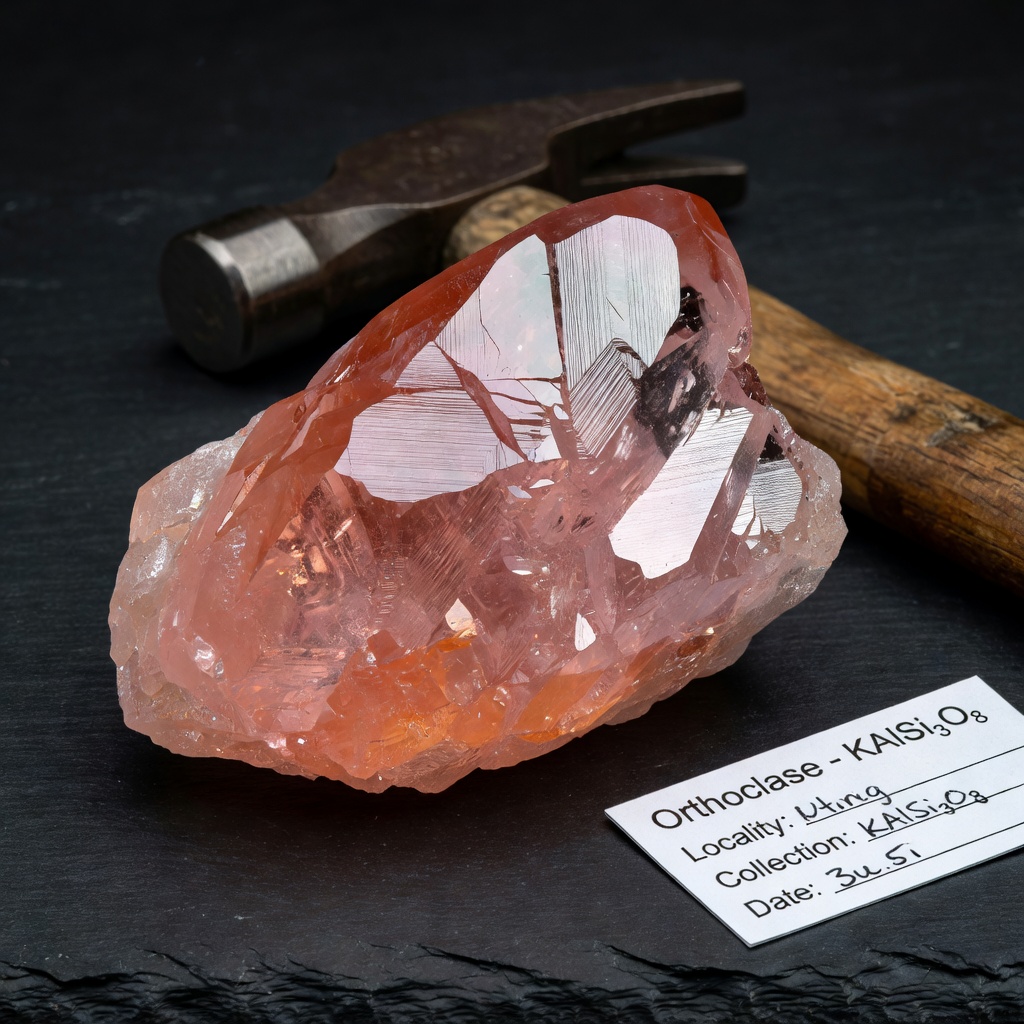
What Is Orthoclase? Mineral Classification Overview
Orthoclase represents one of the most essential members of the feldspar mineral group, serving as a potassium-rich alkali feldspar with the chemical formula KAlSi₃O₈. This abundant mineral forms the backbone of numerous igneous rock types and plays a critical role in understanding geological processes that shape the Earth's crust. As a primary component in granite and other felsic rocks, orthoclase provides valuable insights into the cooling history and crystallization environments of magmatic systems worldwide.
Within the broader feldspar family, orthoclase maintains distinct relationships with its polymorphs microcline and sanidine, all sharing identical chemical compositions but differing in crystal structure and formation temperatures. While orthoclase crystallizes in the monoclinic system at intermediate temperatures, microcline forms at lower temperatures with a triclinic structure, and sanidine represents the high-temperature monoclinic variety found in volcanic rocks. Understanding these distinctions helps geologists reconstruct the thermal history of rock formations and distinguish between slowly cooled plutonic bodies and rapidly quenched volcanic deposits.
The etymology of orthoclase derives from the Greek words "orthos," meaning straight, and "klasis," meaning fracture, directly referencing the mineral's characteristic cleavage pattern that intersects at nearly 90-degree angles. This naming convention, established by early mineralogists, provides immediate visual cues for field identification and distinguishes it from other feldspar varieties with different fracture characteristics. As one of the most abundant minerals in the Earth's continental crust, orthoclase contributes significantly to soil formation, sedimentary rock composition, and the overall geochemical cycling of potassium and aluminum throughout geological time scales.
Physical and Chemical Properties
The physical durability and distinctive appearance of orthoclase make it both a practical industrial mineral and a collectible specimen for enthusiasts seeking comprehensive Orthoclase Properties and Information. On the Mohs hardness scale, orthoclase registers between 6 and 6.5, placing it in a critical position where it can scratch glass and most common metals but remains susceptible to scratching by quartz and harder minerals. This Orthoclase hardness rating proves particularly significant for gem cutters and industrial applications, as it indicates sufficient durability for moderate-wear jewelry while requiring careful handling to avoid surface damage during processing.
Color variations in orthoclase range widely depending on trace element inclusions and structural defects, with the most recognizable specimens displaying characteristic pink, salmon, or flesh-red hues resulting from iron impurities and radiation-induced defects. High-quality crystals may also appear white, gray, colorless, or occasionally exhibit pale greenish tones when specific chemical substitutions occur within the crystal lattice. These color distinctions not only enhance the mineral's aesthetic appeal for collectors but also provide field geologists with preliminary identification cues when examining rock outcrops and alluvial deposits.
The mineral exhibits perfect cleavage in two directions that intersect at approximately 90 degrees, creating the characteristic "straight fracture" that inspired its name and producing flat, reflective surfaces when broken. This cleavage behavior, combined with a vitreous to pearly luster on fresh surfaces, distinguishes orthoclase from many similar-looking minerals found in granitic environments. With a specific gravity ranging from 2.55 to 2.63 and a characteristic white streak when rubbed against unglazed porcelain, orthoclase provides multiple diagnostic features that facilitate accurate identification in both laboratory settings and field conditions.
Crystal Structure and Formation
Orthoclase crystallizes within the monoclinic crystal system, typically developing prismatic or tabular crystal habits that showcase the mineral's internal symmetry and growth patterns under slow-cooling conditions. The Orthoclase crystal system dictates that crystals possess three unequal axes, with one axis intersecting the other two at oblique angles, resulting in the distinctive blocky or elongated prismatic forms commonly encountered in pegmatite deposits. These well-formed crystals often reach impressive sizes in coarse-grained igneous environments, sometimes measuring several centimeters in length and displaying complex terminations that reflect the underlying atomic arrangement.
One of the most diagnostic features of orthoclase appears in its characteristic Carlsbad twinning, a penetration twinning pattern where two crystals intergrow along specific crystallographic planes, creating a composite crystal with a seemingly doubled structure. This twinning pattern, visible in hand specimens as a re-entrant angle or subtle groove along the crystal face, serves as a definitive identification marker that separates orthoclase from its look-alike minerals in the feldspar group. Mineralogy students and professional geologists alike utilize this twinning characteristic when examining thin sections under polarizing microscopes or assessing hand samples in the field.
The formation of orthoclase occurs predominantly in slow-cooling igneous environments such as granite intrusions, syenite bodies, and particularly in pegmatites where extended crystallization times allow for the development of large, well-formed crystals. Temperature stability ranges indicate that orthoclase forms between approximately 500°C and 900°C, occupying the intermediate thermal zone between the high-temperature sanidine found in volcanic rocks and the low-temperature microcline characteristic of deeply buried plutonic bodies. This polymorphic relationship means that orthoclase often serves as a geological thermometer, with its presence indicating specific cooling rates and thermal histories that help reconstruct the formation conditions of ancient rock units.
Distinguishing Orthoclase from Similar Minerals
Accurate identification of orthoclase requires careful observation of several key characteristics that separate it from other members of the feldspar mineral group and common rock-forming minerals encountered in similar geological settings. When comparing orthoclase to plagioclase feldspars, the most reliable field distinction involves examining cleavage surfaces for the presence of fine parallel striations, which appear consistently on plagioclase but remain absent on orthoclase due to differences in twinning patterns. Additionally, orthoclase typically displays warmer color tones ranging from pink to salmon, whereas plagioclase more commonly exhibits white, gray, or bluish hues, though color alone should never serve as the sole diagnostic criterion.
Hardness testing provides another effective method for distinguishing orthoclase from quartz, a mineral frequently found in identical geological environments and often visually similar in coarse-grained rocks. Since orthoclase measures 6 to 6.5 on the Mohs scale while quartz registers a consistent 7, a simple scratch test using a quartz crystal or steel file can definitively separate the two minerals, with quartz readily scratching orthoclase but not vice versa. This practical field test proves invaluable for rapid rock identification when examining building stones, alluvial gravels, or museum specimens where labels may be missing or questionable.
Cleavage angle comparisons offer additional confirmation, as orthoclase displays nearly perfect 90-degree cleavage intersections compared to the slightly oblique 86-degree angles typical of plagioclase feldspars. For collectors working with small fragments or uncertain specimens, applying a drop of dilute hydrochloric acid serves as an effective calcite exclusion test, as orthoclase remains chemically inert while calcite effervesces vigorously upon acid contact. These combined diagnostic approaches ensure accurate identification and prevent common confusions that might otherwise lead to misclassification of specimens within mixed mineral collections or geological surveys.
Gemstone Varieties: Moonstone and Sunstone
Certain varieties of this potassium feldspar transcend their geological origins to become prized Moonstone gemstone specimens, captivating jewelers and collectors with ethereal optical phenomena that distinguish them from ordinary mineral samples. The most celebrated gem variety, adularescent moonstone, displays a billowy, floating light effect resembling moonlight glowing through thin clouds, caused by the interlayering of orthoclase and albite feldspars at the nanoscale level. This adularescence phenomenon reaches its peak quality in specimens from Sri Lanka and Myanmar, where the most valuable examples exhibit a blue sheen against a colorless to white body, though orthoclase moonstones also occur in peach, gray, and rainbow varieties.
Sunstone represents another significant gem variety within the orthoclase family, though it more commonly derives from the plagioclase feldspar oligoclase; true orthoclase sunstones from Oregon display distinctive aventurescence caused by microscopic copper platelets or hematite inclusions that reflect light in glittering metallic flashes. These American sunstones occur in unique geological settings within the Dust Devil mining area, where copper-bearing basalt flows created the specific conditions necessary for copper inclusions to align within the feldspar crystal structure. The resulting aventurescent effect produces gems that shimmer with red, copper, or golden flashes when rotated under light, commanding premium prices in the specialty gemstone market.
Cutting and polishing these gem materials requires exceptional skill due to the perfect cleavage planes inherent in the Orthoclase crystal system, as one wrong angle during faceting can cause the stone to split along its structural weaknesses. Master lapidaries typically orient moonstone cabochons to maximize the adularescent effect while avoiding cleavage directions, often resulting in high-domed cuts that display the optical phenomenon to best advantage. Value factors for these gemstones include the clarity of the base material, the intensity and color of the optical phenomenon, and the precision of the cut, with premium blue-sheen moonstones and deep-red Oregon sunstones fetching prices comparable to fine sapphires or tourmalines in the current market.
Geological Occurrence and Notable Localities
Orthoclase occurs abundantly worldwide as a primary constituent of coarse-grained igneous rocks, particularly within granites, syenites, and the exceptionally large crystals found in pegmatite dikes that cut across older metamorphic and igneous formations. These geological environments provide the slow cooling rates necessary for the development of well-formed crystals, with pegmatite pockets occasionally yielding single crystals weighing hundreds of pounds that showcase the mineral's blocky habit and glassy luster. The association with quartz, muscovite mica, and hornblende in these coarse-grained assemblages creates the classic granite mineral suite that builders and geologists recognize immediately in dimensional stone quarries and natural outcrops.
Famous localities for exceptional orthoclase specimens include the pegmatite regions of Madagascar, which produce large, gem-quality pink crystals prized by museums and private collectors for their size and clarity. Norwegian localities, particularly around Tvedestrand and the Langesundsfjord area, have yielded world-class specimens of amazonite-colored microcline and associated orthoclase for over two centuries, establishing Scandinavia as a historic source of feldspar minerals. The Swiss Alps, Italian pegmatite districts, and the Pikes Peak region of Colorado, USA, contribute additional significant specimens, with Colorado's Crystal Peak area specifically renowned for producing sharp, transparent crystals of smoky quartz intergrown with salmon-pink orthoclase feldspars.
Beyond primary igneous occurrences, orthoclase demonstrates remarkable durability that allows it to survive weathering and erosion processes, eventually concentrating in secondary deposits such as sedimentary sandstones, conglomerates, and alluvial gravels in river systems. These detrital deposits often contain rounded orthoclase grains that retain their distinctive pink coloration even after transport distances of hundreds of miles, making them valuable indicator minerals for prospectors searching for upstream pegmatite or granite sources. The mineral's resistance to chemical weathering, while not as profound as quartz, ensures that orthoclase remains a significant component of arkose sandstones and other feldspathic sedimentary rocks that preserve geological information about ancient mountain ranges and erosion surfaces.
Industrial Applications and Commercial Uses
The industrial Orthoclase uses span multiple manufacturing sectors, with the mineral serving as an essential raw material in ceramic and porcelain production due to its favorable melting characteristics and chemical composition. In ceramic manufacturing, orthoclase acts as a fluxing agent that lowers the melting temperature of silica and clay mixtures, reducing energy costs while improving the vitrification process that creates durable, non-porous finished products. The potassium content in this feldspar mineral group member contributes to the thermal expansion properties and glaze chemistry of fine china, sanitaryware, and electrical porcelain insulators, making it irreplaceable in high-performance ceramic applications.
Glass production represents another major industrial application, where orthoclase serves as an alternative to soda ash for introducing alumina and alkali content into batch mixtures, particularly in the manufacture of specialized glasses requiring specific chemical resistance or thermal properties. The mineral's relatively low iron content in high-quality deposits ensures that glass manufacturers can produce clear, colorless products without the greenish tint associated with iron contamination, while its consistent melting behavior facilitates automated production processes. Container glass, fiberglass insulation, and specialty optical glasses all incorporate feldspar materials to achieve desired viscosity characteristics during the melting and forming stages.
Beyond these primary applications, orthoclase finds use as a functional filler in the paints, plastics, and rubber industries, where its hardness and chemical inertness improve the durability and weather resistance of finished products. Scouring powders and mild abrasive applications utilize ground feldspar particles to provide gentle cleaning action without scratching delicate surfaces, offering a natural alternative to synthetic abrasives in environmentally conscious cleaning products. The non-toxic nature and abundance of orthoclase ensure its continued relevance in industrial formulations, with modern processing techniques enabling the production of ultra-fine powders that meet stringent specifications for high-tech applications including composite materials and advanced ceramics.
Collection Care and Preservation
Proper storage techniques prove essential for maintaining the integrity of orthoclase specimens, given the mineral's perfect cleavage planes that render it susceptible to damage from impact, pressure, or improper handling during display or transportation. Collectors should wrap individual specimens in soft, acid-free tissue paper or bubble wrap, storing them in compartmentalized boxes that prevent contact with harder minerals like quartz or corundum that could scratch the relatively soft surfaces. For museum-quality specimens, custom-made supports that cradle the crystal without applying pressure to delicate terminations help preserve the aesthetic and scientific value of the piece for future generations.
Cleaning orthoclase requires gentle methods utilizing soft-bristled brushes and mild detergents diluted in warm water, as harsh chemicals or ultrasonic cleaners may exploit microscopic fractures along cleavage planes and cause the specimen to split. After washing, specimens should air dry completely before storage to prevent moisture accumulation that might promote chemical weathering or support biological growth on the crystal surfaces. For specimens with matrix attachments or associated minerals, conservators recommend testing cleaning solutions on inconspicuous areas first to ensure compatibility with all components of the assemblage.
Display considerations must account for the sensitivity of some orthoclase varieties, particularly moonstone, to prolonged ultraviolet light exposure and rapid temperature fluctuations that can cause color fading or internal stress fractures. Curators and private collectors should position specimens away from direct sunlight and heating vents, maintaining stable environmental conditions that mimic the protected environments where these minerals formed over geological time scales. When handling gem-quality crystals or irreplaceable museum specimens, wearing nitrile gloves prevents the transfer of skin oils that could attract dust and potentially react with surface features over extended periods.
Frequently Asked Questions
What is orthoclase used for?
Orthoclase is primarily used in ceramic and glass manufacturing as a flux to lower melting temperatures. It's also used in porcelain production, as filler in paints and plastics, and cut into gemstones like moonstone and sunstone for jewelry.
How can you tell orthoclase from plagioclase?
Orthoclase typically shows pink or salmon colors and lacks the fine parallel striations seen on plagioclase cleavage surfaces. Orthoclase also has a 90-degree cleavage angle and does not exhibit the polysynthetic twinning common in plagioclase feldspars.
Is orthoclase the same as moonstone?
Moonstone is a gem-quality variety of orthoclase (or sometimes orthoclase-albite mixtures) that displays adularescence—a billowy, moon-like glow. Not all orthoclase is moonstone; only specimens with specific optical phenomena qualify as the gemstone.
What is the hardness of orthoclase on the Mohs scale?
Orthoclase has a hardness of 6 to 6.5 on the Mohs scale. This makes it softer than quartz (7) but harder than glass (5.5), meaning it can scratch glass but can be scratched by quartz or harder minerals.
Where is orthoclase commonly found?
Orthoclase occurs worldwide in igneous rocks like granite and syenite, particularly in pegmatite deposits. Notable sources include Madagascar, Norway, Switzerland, the Italian Alps, and Colorado in the United States.
What color is orthoclase typically?
Orthoclase most commonly appears in shades of pink, salmon, or flesh-red due to iron impurities. It can also be white, gray, colorless, or occasionally pale green, though the pink variety is most recognizable.
Is orthoclase valuable as a gemstone?
Common orthoclase has limited gem value, but gem-quality varieties like blue-sheen moonstone and Oregon sunstone can be quite valuable. Premium moonstones with strong adularescence command high prices in the jewelry market.
What rocks contain orthoclase?
Orthoclase is a major constituent of granite, syenite, granodiorite, and pegmatites. It also appears in some high-grade metamorphic rocks like gneiss and can survive as detrital grains in sandstones and conglomerates.