Introduction to Orthoclase: Understanding the Mineral's Value
Orthoclase, chemically known as potassium feldspar (KAlSi3O8), represents one of the most abundant mineral groups in the Earth's crust, forming essential components of igneous rocks such as granite and syenite. This tectosilicate mineral serves dual economic purposes, bridging the gap between industrial manufacturing requirements and high-end jewelry markets. Understanding the fundamental distinction between these applications is crucial for anyone navigating the orthoclase feldspar value ecosystem, as pricing structures vary dramatically based on end-use specifications.
The industrial sector primarily values orthoclase for its alumina and alkali content, utilizing massive quantities in ceramic tile production, glass manufacturing, and dental porcelain applications. Conversely, gem-quality specimens, particularly those displaying the adularescent phenomenon known as moonstone, command significantly higher potassium feldspar market prices due to their aesthetic appeal and rarity. Collectors and lapidaries seek specific crystal formations that exhibit exceptional transparency, unique color zoning, or association with rare mineral species, creating a sophisticated marketplace where geological significance directly correlates with monetary worth.
Key Factors That Determine Orthoclase Prices
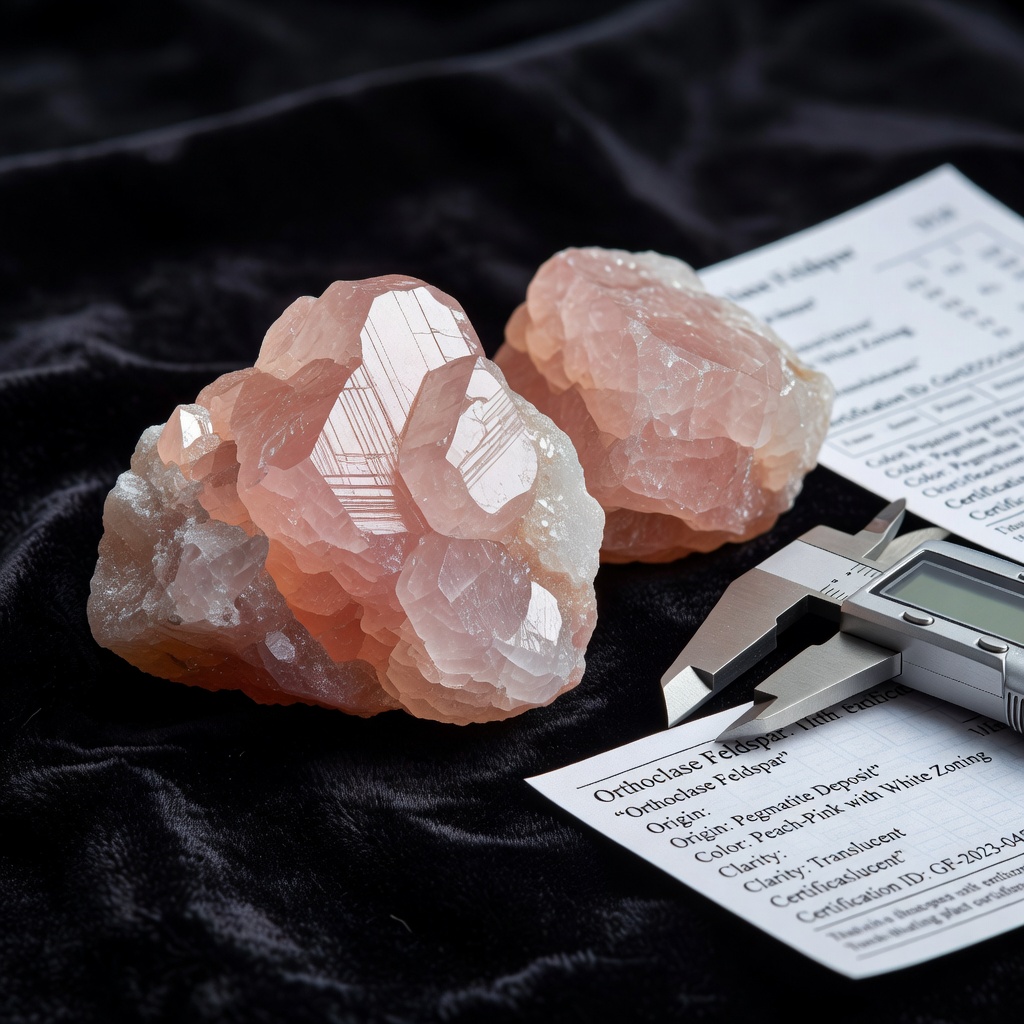
Evaluating orthoclase quality requires systematic assessment of multiple physical characteristics that directly influence commercial viability and collector interest. Color grading standards establish baseline values, with colorless to pale yellow specimens representing entry-level pricing tiers, while vibrant peach, salmon pink, and blue-sheen varieties achieve premium status in the gemstone market. Professional graders assess hue saturation using standardized lighting conditions, noting that intensely colored orthoclase without brownish or grayish secondary tones can command prices exceeding three hundred percent of comparable pale specimens.
Clarity and transparency standards vary significantly between industrial and gem applications, with eye-clean specimens free of visible inclusions representing the pinnacle of orthoclase value factors. The presence of fractures, cleavage planes, or internal healing cracks substantially reduces durability and cutting yield, thereby depressing per-carat valuations. Crystal size and formation quality play equally critical roles; euhedral crystals exceeding five centimeters with intact terminations and no contact damage attract serious mineral collectors, while massive, cleavable material serves industrial purposes regardless of aesthetic imperfections.
Impact of Crystal Structure on Valuation
Perfect orthorhombic crystal systems with well-developed prismatic habits consistently outperform massive or granular formations in the collector marketplace. Specimens featuring aesthetic matrix associations, such as orthoclase perched on smoky quartz or embedded in rare pegmatite minerals, frequently achieve auction records exceeding ten thousand dollars for museum-quality examples. When assessing orthoclase quality grading parameters, experts prioritize three-dimensional integrity, preferring crystals that display complete crystal faces without extraction damage or post-mining cleaving.
Gemstone Grade vs Industrial Grade Pricing Structures
The dichotomy between decorative and functional orthoclase applications creates distinctly separate economic models that rarely intersect. Moonstone varieties exhibiting strong adularescence—that ethereal, billowy light effect resembling moonlight floating on water—establish the upper echelons of moonstone price per carat valuations, with exceptional cabochons from Madagascar ranging between two hundred and five hundred dollars per carat. This optical phenomenon results from interlayering of orthoclase and albite feldspars at the nanoscale, creating interference patterns that command significant premiums over standard transparent orthoclase.
Industrial orthoclase prices operate on entirely different metrics, with ceramic and glass manufacturers purchasing raw material by the metric ton rather than the carat. Current wholesale bulk pricing for high-potassium feldspar suitable for porcelain production ranges from fifty to three hundred dollars per ton, depending on iron content, particle size distribution, and chemical purity specifications. Mining operations in India, Turkey, and the United States dominate this sector, supplying refineries that process raw orthoclase into standardized mesh sizes for specific manufacturing applications.
Collector Specimen Market Dynamics
Between these extremes lies the specialized market for mineral specimens, where aesthetic presentation and geological significance drive valuations independent of either gemological or industrial standards. Exceptional crystal clusters from classic localities such as the Strzegom pegmatite in Poland or the Baveno region in Italy regularly achieve prices between five hundred and five thousand dollars at specialized mineral shows. These specimens require neither cutting nor chemical processing, deriving value solely from their natural beauty, rarity of occurrence, and documentation of provenance.
Current Market Prices and Value Ranges (2024)
Contemporary orthoclase markets reflect broader economic trends while maintaining specific niche premiums for exceptional material. Retail pricing for gemstone-grade orthoclase typically spans ten to one hundred dollars per carat for standard faceted stones, with commercial-quality cabochons occupying the lower end and precision-cut, eye-clean specimens commanding upper-range valuations. Raw orthoclase cost structures for collector specimens vary enormously based on crystal size and aesthetic appeal, with small matrix pieces starting at fifty dollars and exceptional single crystals exceeding five hundred dollars.
Wholesale bulk pricing for industrial applications continues to stabilize around seventy-five to one hundred fifty dollars per ton for standard ceramic-grade material, though high-purity low-iron varieties suitable for specialty glass production may reach four hundred dollars per ton. The auction market for museum-quality orthoclase crystals demonstrates remarkable resilience, with a notable twenty-three-centimeter twinned crystal from Karibib, Namibia selling for eighteen thousand dollars in 2023, establishing new benchmarks for orthoclase price per gram calculations in the rare specimen category.
Emerging Market Trends
Recent increases in renewable energy infrastructure have boosted demand for high-grade feldspar in photovoltaic glass manufacturing, indirectly supporting price stability for premium raw orthoclase cost structures. Simultaneously, the rise of ethical sourcing requirements has introduced certification premiums of fifteen to twenty-five percent for documented conflict-free mining operations, particularly affecting moonstone price per carat valuations in retail jewelry markets.
Geographic Origins and Regional Price Variations
Provenance significantly influences orthoclase valuation, with specific localities commanding automatic premiums due to historical significance, mining difficulty, or superior material characteristics. Madagascar moonstone consistently achieves the highest orthoclase gemstone pricing tiers due to exceptional adularescence quality characterized by bright blue sheen against transparent, colorless body material. Mining operations in the Ambatondrazaka and Ampanihy districts produce limited quantities of this premium material, with export restrictions and difficult logistics contributing to elevated costs compared to Indian or Sri Lankan material.
Indian deposits, particularly those in the Bihar and Orissa regions, supply the majority of commercial moonstone to global markets, offering moderate quality at accessible price points. Norwegian orthoclase from the Larvik region and Swiss specimens from the Binn Valley provide distinctive aesthetic characteristics, with the former often displaying unique aegirine associations and the latter producing exceptional transparent crystals prized by European collectors. These orthoclase mining locations each carry distinct market reputations that affect resale values, with documented specimens from depleted classic localities commanding substantial premiums over contemporary production.
Regulatory Impacts on Supply Chains
Recent implementation of stricter environmental regulations in major producing nations has constrained supply chains, particularly affecting industrial orthoclase prices for high-purity material. Export licensing requirements in several African nations have increased documentation costs by approximately eight to twelve percent, costs that ultimately transfer to consumers in the orthoclase origin value chain. Savvy collectors increasingly prioritize specimens obtained prior to regulatory restrictions, creating a two-tier market where pre-ban material carries historical premiums.
Authentication and Quality Assessment Techniques
Accurate identification separates valuable orthoclase from similar-appearing plagioclase feldspars and synthetic imitations that flood uncertified marketplaces. Genuine orthoclase exhibits distinct perfect cleavage in two directions intersecting at ninety-degree angles, a diagnostic feature distinguishing it from plagioclase series minerals that show oblique cleavage angles. When buying orthoclase specimens or gemstones, prospective owners should verify hardness ratings of six to six-point-five on the Mohs scale and specific gravity measurements between two-point-five-five and two-point-six-three using hydrostatic weighing techniques.
The proliferation of lab-created feldspar and glass imitations necessitates professional orthoclase authentication for significant investments. Gemological laboratories such as GIA (Gemological Institute of America) or AGL (American Gemological Laboratories) provide definitive identification reports verifying natural origin, geographic source when determinable, and treatment status. These certifications prove essential for insurance purposes and resale liquidity, as undocumented high-value specimens face steep discounts in the secondary market due to authenticity concerns.
Visual Inspection Protocols
Preliminary assessment techniques include examining crystal habit—orthoclase typically forms short prismatic crystals with square cross-sections—and testing for the characteristic feldspar luster ranging from vitreous to pearly on cleavage surfaces. Under magnification, natural orthoclase displays characteristic inclusions such as cleavage cracks, negative crystals, or hematite plates, whereas synthetic versions often appear suspiciously clean or display curved striation patterns indicative of hydrothermal growth processes. Experienced collectors carry portable long-wave ultraviolet lamps to check fluorescence, as natural orthoclase typically shows weak reddish-orange to violet reactions distinct from synthetic alternatives.
Investment Potential and Collector Market Trends
The mineral specimen market has demonstrated consistent orthoclase investment potential for rare, high-quality crystals, with annual appreciation rates averaging four to seven percent for exceptional pieces over the past decade. Unlike precious metals or gemstones traded on commodity exchanges, orthoclase resale value depends heavily on provenance documentation, aesthetic presentation, and the specialized knowledge of potential buyers. Liquidity factors favor specimens over three centimeters with minimal damage, as these sizes appeal to both serious collectors and interior designers seeking mineral art installations.
Investment-grade orthoclase requires specific storage conditions to prevent depreciation through physical damage. The mineral's perfect cleavage makes it vulnerable to thermal shock and mechanical stress, necessitating climate-controlled environments with stable humidity levels between forty-five and fifty-five percent. Serious investors maintain detailed photographic documentation, purchase receipts, and laboratory reports in fireproof storage, updating insurance appraisals every twenty-four to thirty-six months to reflect current market conditions and protect against loss.
Market Liquidity Considerations
While blue-chip mineral specimens from famous localities maintain steady demand, niche orthoclase varieties may require six to eighteen months to locate appropriate buyers, making them less liquid than gold or diamonds but comparable to fine art investments. Auction houses specializing in natural history, such as Heritage Auctions or Bonhams, provide the most reliable liquidation venues for high-value pieces, though commission structures of fifteen to twenty percent must factor into profit calculations. Diversification strategies suggest limiting orthoclase to five to ten percent of a broader mineral collection to mitigate market volatility risks.
Where to Purchase: Dealers, Shows, and Online Markets
Securing authentic material requires navigating diverse purchasing channels, each presenting distinct advantages and risks regarding orthoclase gemstone pricing transparency. Established mineral dealers with physical galleries and decades of market presence offer the greatest security for significant acquisitions, providing detailed provenance information and flexible return policies that protect buyers against misrepresented material. The Tucson Gem Show, held annually in February, represents the world's largest gathering of mineral professionals, offering opportunities to compare orthoclase dealers directly and negotiate bulk purchases at prices typically twenty to thirty percent below retail.
E-commerce platforms present mixed opportunities for sourcing orthoclase, with specialized mineral auction sites like iRocks and The Arkenstone providing vetted material with detailed photography, while general marketplace websites carry elevated risks of misrepresentation or undisclosed repairs. When purchasing online, insist on high-resolution photographs under multiple lighting conditions, detailed dimensional measurements, and video documentation demonstrating adularescence in moonstone varieties. Red flags include sellers refusing independent laboratory verification, prices significantly below market rates suggesting synthetic material, or vague locality descriptions such as "Africa" rather than specific mine names.
Negotiation Strategies and Due Diligence
Successful acquisition of high-value orthoclase requires understanding wholesale pricing structures and maintaining relationships with multiple suppliers to ensure competitive quotes. Cash purchases at mineral shows often secure fifteen to twenty percent discounts compared to credit card transactions, while purchasing "matrix included" specimens—rough material still embedded in host rock—can reduce costs by forty to sixty percent for collectors willing to perform cleaning and preparation work. Always request written guarantees of authenticity and natural origin, particularly for expensive moonstone cabochons where treated or assembled stones occasionally enter the market.
Care and Maintenance to Protect Your Investment
Proper handling protocols are essential for maintaining orthoclase value, given the mineral's relative softness and perfect cleavage vulnerability. Ultrasonic cleaners and steam cleaning systems pose severe risks, as vibrations and thermal shock can induce cleaving along the mineral's characteristic planes, instantly destroying faceted gemstones or crystalline specimens. Instead, clean orthoclase using lukewarm water with mild phosphate-free soap, soft natural-bristle brushes for matrix removal, and immediate drying with lint-free cloths to prevent water spots on polished surfaces.
Display considerations significantly impact long-term preservation, with direct sunlight exposure potentially fading sensitive moonstone varieties and causing thermal expansion stress in museum specimens. Ideal storage involves individual compartmentalization in acid-free materials, maintaining separation from harder minerals like quartz or corundum that could scratch orthoclase surfaces. For insurance purposes, maintain current appraisals from certified gemologists or mineralogists, updating valuations every two to three years to reflect market appreciation and ensuring coverage specifically includes "mysterious disappearance" riders for high-value pieces.
Preventative Conservation Measures
Climate control extends beyond simple temperature regulation to include protection from airborne pollutants and vibration sources that could stress cleavage planes. Specimens displayed in high-traffic areas should feature seismic putty or museum wax securing bases to prevent accidental displacement, while jewelry pieces benefit from separate storage compartments to prevent contact with harder gemstones. When traveling with orthoclase specimens to shows or exhibitions, utilize custom foam padding that immobilizes crystals without applying pressure to terminations or fragile matrix associations, preserving both aesthetic and monetary value during transit.
Frequently Asked Questions
How much does orthoclase cost per carat?
Orthoclase pricing varies significantly by quality. Industrial-grade material costs $0.50-$5 per kilogram, while gemstone-grade orthoclase ranges from $10-$100 per carat. Exceptional moonstone varieties with strong adularescence can command $200-$500 per carat or more.
Is orthoclase the same as moonstone?
Moonstone is a specific variety of orthoclase feldspar that exhibits adularescence—a billowy, moon-like glow. While all moonstones are orthoclase, not all orthoclase is moonstone. Standard orthoclase lacks this optical phenomenon and is typically used for industrial purposes or as collector specimens.
What factors make some orthoclase significantly more expensive?
Premium orthoclase prices are driven by exceptional transparency, large crystal size without fractures, vibrant color saturation (particularly peach or pink hues), and the presence of adularescence in moonstone varieties. Geographic origin also affects value, with Madagascar specimens commanding higher prices.
Where is the best place to buy authentic orthoclase specimens?
Purchase from established mineral dealers at reputable shows like the Tucson Gem Show, certified online marketplaces with return policies, or directly from mining operations. Always request provenance documentation and laboratory certification for high-value purchases to ensure authenticity.
Can orthoclase be a good investment stone?
While not as liquid as diamonds or rubies, rare orthoclase specimens and high-quality moonstones have shown steady appreciation. Investment potential is highest for large, inclusion-free crystals over 10 carats or specimens with exceptional mineral associations. However, industrial-grade orthoclase has minimal investment value.
How do I distinguish genuine orthoclase from synthetic or imitation materials?
Genuine orthoclase exhibits perfect cleavage in two directions at 90-degree angles, a hardness of 6-6.5 on the Mohs scale, and specific gravity of 2.55-2.63. Lab-created versions often lack natural inclusions. Professional gemological testing using refractive index measurements provides definitive identification.
Does orthoclase color significantly affect its market price?
Yes, color dramatically impacts orthoclase value. Colorless to slightly yellow specimens are common and affordable. Peach, pink, and blue-sheen moonstone command premiums, with intense, uniform coloration increasing value by 300-500% compared to pale or included material. Gray orthoclase typically carries lower market value.
What is the price difference between raw and cut orthoclase?
Cut and polished orthoclase gemstones typically command 40-60% premiums over rough material due to labor costs and weight loss during cutting. However, exceptional raw crystals with aesthetic matrix associations or large intact formations may exceed cut stone prices in the collector market, sometimes selling for $1,000+ per specimen.