Understanding Orthoclase: Your Feldspar Gemstone Basics
Orthoclase represents one of the most beloved members of the feldspar mineral family, serving as a potassium aluminum silicate that has captivated jewelry enthusiasts for centuries with its distinctive optical properties and versatile color range. As a primary component of many igneous rocks, this gemstone crystallizes in the monoclinic system and typically presents in colors ranging from colorless to yellow, pink, and the coveted blue-white sheen of moonstone. The mineral's name derives from the Greek words for "straight fracture," referencing its characteristic cleavage patterns that gem cutters must carefully navigate when fashioning cabochons or faceted stones. When discussing Orthoclase Care and Cleaning, understanding these fundamental mineralogical properties provides essential context for why specific handling protocols prove necessary for preserving your gemstone's beauty.
Popular varieties of orthoclase dominate both vintage and contemporary jewelry collections, with moonstone standing as the most recognized variant due to its mesmerizing adularescence—a billowy, floating light effect that appears to move across the stone's surface. Sunstone, another prized orthoclase variety, displays aventurescence caused by reflective copper inclusions that create a sparkling, metallic glitter effect highly sought after in statement pieces. Transparent yellow orthoclase, sometimes referred to as precious orthoclase, offers exceptional clarity and brilliance when properly faceted, though it remains relatively rare compared to its phenomenal cousins. These variations each require tailored Feldspar gemstone maintenance approaches, though all share the underlying structural characteristics that define the orthoclase species and influence their care requirements.
Common jewelry applications for orthoclase include cabochon-cut pendants and earrings that showcase adularescence, faceted stones in protective bezel settings for rings, and beaded strands featuring sunstone's glittering inclusions. Designers frequently pair orthoclase with sterling silver or yellow gold settings, creating pieces that range from bohemian-inspired moonstone jewelry to sophisticated sunstone cocktail rings. The gemstone's moderate hardness makes it suitable for brooches, pendants, and earrings that receive less physical impact than bracelets or rings, though many collectors successfully maintain orthoclase rings through diligent care practices. Understanding where and how you wear your orthoclase pieces forms the foundation of proper Feldspar jewelry storage and maintenance protocols.
Orthoclase Hardness and Durability Characteristics
The Orthoclase hardness Mohs scale rating of 6 to 6.5 places this gemstone in a category requiring thoughtful consideration regarding daily wear and exposure to environmental hazards. This hardness level indicates that orthoclase can be scratched by materials ranking higher on the scale, including common household dust containing quartz particles (hardness 7), steel files, and harder gemstones frequently found in jewelry collections. When compared to diamond's perfect 10 rating, sapphire and ruby's 9, or even quartz's 7, orthoclase demands greater protective measures to prevent surface abrasion and maintain its polish. Understanding this relative softness explains why proper Feldspar durability management involves both preventive handling and appropriate cleaning techniques that avoid mechanical damage.
Perhaps more critical than hardness alone, orthoclase possesses perfect cleavage in two directions, a structural characteristic that creates planes of weakness where the stone can split cleanly under impact or pressure. This cleavage property means that sharp blows, sudden temperature changes, or improper setting techniques can result in fractures that extend deeply into the stone or cause complete breakage. Gem cutters leverage this cleavage when splitting rough material, but for jewelry owners, it represents a vulnerability requiring protection against knocks and drops. When examining Gemstone cleaning safety for orthoclase, this cleavage vulnerability specifically contraindicates ultrasonic cleaning and steam treatments that create vibrational stress or thermal shock.
Comparing orthoclase to harder gemstones reveals significant differences in maintenance requirements that collectors must internalize for successful long-term ownership. While a diamond ring might withstand daily dishwashing or gardening activities, orthoclase jewelry demands removal before such tasks to prevent both scratching from grit and impact damage from hard surfaces. The combination of moderate hardness and perfect cleavage makes orthoclase more similar in care requirements to opal or pearl than to corundum or diamond, despite its crystalline structure. Recognizing these limitations allows owners to establish realistic expectations for their orthoclase jewelry's longevity and to implement protective measures that prevent the chips, cracks, and abrasions that compromise both beauty and value.
Daily Orthoclase Care and Handling Protocols
Establishing consistent Daily gemstone handling routines protects orthoclase from cumulative damage caused by cosmetic products, environmental contaminants, and physical impacts. Always apply makeup, perfume, hairspray, and lotion before putting on orthoclase jewelry, as these products often contain alcohols, acids, or oils that can etch the stone's surface or accumulate in setting crevices, creating difficult-to-remove residues. This "last on, first off" rule ensures that your orthoclase pieces never encounter concentrated chemical exposure during your grooming routine. For example, when preparing for an evening event, complete your entire beauty regimen including setting spray and fragrance application, then accessorize with your moonstone pendant or sunstone earrings as the final step.
Removing orthoclase rings before household chores, sports activities, or manual labor represents a critical habit for preventing both acute damage and gradual wear. Kitchen work exposes jewelry to hard sink surfaces, abrasive cleansers, and thermal shocks from hot water, while gardening introduces grit and soil that can scratch the 6-6.5 hardness surface. Even seemingly benign activities like lifting weights at the gym or carrying groceries can result in impact against hard surfaces that exploit orthoclase's cleavage planes. Consider designating a specific dish or tray near your kitchen sink and bathroom vanity for temporary jewelry placement, creating a visual reminder to remove pieces before engaging in potentially damaging activities.
After each wearing, gently wipe orthoclase gemstones with a soft, lint-free microfiber cloth to remove skin oils, perspiration, and environmental dust that can dull the surface over time. Pay particular attention to the back of the stone and the setting areas where oils accumulate most heavily, as these residues can create a barrier that diminishes optical phenomena like adularescence. A dedicated jewelry cloth kept in your bedroom or bathroom facilitates this quick maintenance step, transforming it into an effortless habit. Additionally, implement monthly inspections of prongs, bezels, and settings using a jeweler's loupe or strong magnifying glass to identify loose stones or worn metal before gemstone loss occurs.
Safe Orthoclase Cleaning Methods at Home
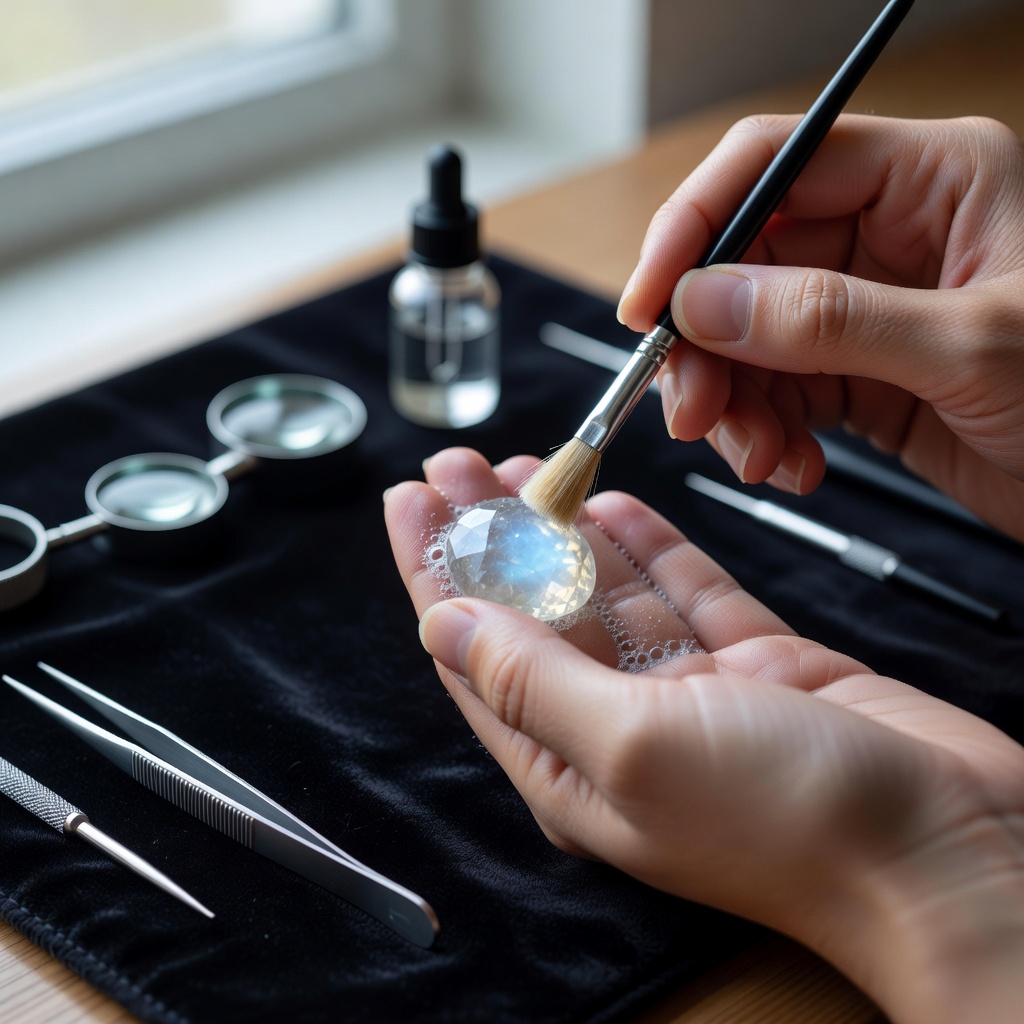
Mastering Orthoclase cleaning methods requires understanding gentle techniques that effectively remove grime without exploiting the stone's cleavage vulnerabilities or causing thermal shock. Begin by preparing a solution of lukewarm water—never hot—and mild pH-neutral dish soap, avoiding formulations with lemon, bleach, or degreasing agents that might damage the feldspar structure. The water temperature should feel comfortable to your touch, approximately body temperature, as extreme heat or cold can create internal stress within the crystal lattice. Fill a small bowl with this solution rather than cleaning directly over a sink, preventing accidental loss down the drain if the stone becomes dislodged from its setting during cleaning.
Utilize a soft-bristled baby toothbrush or dedicated jewelry brush with extremely gentle pressure to dislodge accumulated dirt, working methodically around the stone's girdle and pavilion where debris typically concentrates. The girdle—the narrow rim separating the top and bottom portions of the stone—often traps soap scum and skin oils that diminish brilliance, while the pavilion's facets can harbor dust that blocks light return. Employ a swirling motion rather than aggressive scrubbing, allowing the soft bristles to do the work without applying force that might leverage against cleavage planes. For pieces with intricate filigree work or multiple small orthoclase stones, consider using a cosmetic brush with fine natural bristles to access tight spaces without risking prong damage.
Rinse your orthoclase jewelry thoroughly under clean, lukewarm running water, ensuring all soap residue washes away since dried detergent can create filmy buildup that mimics dullness or damage. Pat the piece dry immediately using a microfiber cloth, chamois, or soft cotton towel, avoiding paper towels that might contain wood fibers capable of scratching the 6-6.5 hardness surface. For optimal results, use a bulb syringe or soft air blower to remove water droplets from beneath the stone and from setting crevices before final drying. This meticulous approach to Safe gemstone cleaning preserves both the stone's polish and the security of its mounting, ensuring your orthoclase remains radiant without risking structural compromise.
Cleaning Mistakes and Chemicals to Avoid
Understanding Gemstone cleaning mistakes specific to orthoclase prevents well-intentioned maintenance from causing irreversible damage to your treasured pieces. Never subject orthoclase to ultrasonic cleaners, regardless of how dirty the stone appears, as the high-frequency vibrations can initiate or extend fractures along the mineral's perfect cleavage planes, potentially splitting the gem entirely. Similarly, steam cleaning contraindications apply due to both the thermal shock risk and the pressure exerted on internal fractures or inclusions. These professional cleaning methods, while appropriate for diamonds and sapphires, pose existential threats to feldspar gemstones and should be strictly avoided regardless of jeweler recommendations unless they specialize in soft stone care.
Harsh household chemicals present another significant hazard to orthoclase integrity, requiring vigilant avoidance of bleach, ammonia, acetone, and alcohol-based cleaning agents. Chlorine bleach can pit the surface of feldspar minerals and attack metal settings, particularly gold alloys, while ammonia solutions may cause structural damage to the crystalline matrix over time. Nail polish remover containing acetone can dissolve certain types of adhesives used in doublet or triplet constructions, potentially causing layered stones to separate. Even common jewelry dips containing harsh acids or abrasives marketed for "all-purpose" cleaning should be excluded from your Orthoclase Care and Cleaning toolkit, as these formulations typically target harder, more durable gemstones.
Abrasive cleaning agents including toothpaste, baking soda, or commercial scrubbing powders create micro-scratches on orthoclase surfaces that accumulate into visible dullness over time. Despite folklore suggesting these household items for jewelry cleaning, their abrasive nature proves too aggressive for 6-6.5 hardness materials, effectively sanding away the polished surface with each application. Additionally, prevent thermal shock by avoiding extreme temperature transitions, such as moving from hot cleaning water to cold rinses or wearing orthoclase jewelry while washing hands with very hot water followed by cold air exposure. These temperature differentials create internal stress within the crystal structure that can trigger cleavage fractures, permanently damaging stones that otherwise appeared stable.
Proper Storage Solutions for Orthoclase Jewelry
Implementing strategic Feldspar jewelry storage protocols protects orthoclase from scratching, chemical exposure, and environmental degradation when not being worn. Store each orthoclase piece individually in soft fabric pouches, acid-free tissue paper, or compartments within a lined jewelry box to prevent contact with harder gemstones that could abrade the surface. Diamond rings, ruby earrings, and even quartz pieces should never share storage space with orthoclase, as these harder materials (ranking 7-10 on the Mohs scale) can scratch the softer feldspar simply through incidental contact during drawer opening or box movement. Consider investing in a jewelry organizer with dedicated, padded slots that keep pieces separated and cushioned against physical impacts.
When storing orthoclase set in silver, utilize anti-tarnish strips or cloths to prevent sulfide buildup on the metal, but ensure these strips do not directly contact the gemstone surface. Some anti-tarnish products contain activated charcoal or chemical compounds that might interact unfavorably with feldspar over extended periods. Instead, wrap the stone portion in acid-free tissue while allowing the anti-tarnish material to protect the metal setting separately. For valuable orthoclase collections, maintain stable humidity levels between 40-60% to prevent both drying (which can affect certain treatments or assembled stones) and excessive moisture that might promote tarnish in metal settings or mildew in storage fabrics.
Protect orthoclase from prolonged direct sunlight exposure, which can fade certain color varieties or affect optical phenomena over time, particularly in treated stones or those with delicate copper inclusions like sunstone. Store jewelry boxes in interior closets or drawers rather than on dresser tops near windows, or choose opaque storage containers that block UV transmission. For travel purposes, utilize hard-sided jewelry cases with individual foam padding or dedicated travel rolls that prevent pieces from shifting during transit. Never toss orthoclase jewelry loosely into a purse or luggage pocket where keys, phones, or other items can scratch or impact the gemstone, compromising both its beauty and structural integrity.
Professional Maintenance and Restoration Services
Establishing relationships with qualified jewelers for Professional gemstone care ensures your orthoclase receives appropriate maintenance beyond home cleaning capabilities. Schedule annual inspections with a jeweler experienced in soft stone care to assess prong tightness, setting integrity, and signs of wear that might predispose the stone to loss or damage. During these examinations, the professional should check for loose stones by gently tapping the piece near the ear or using a probe to test prong security, addressing any issues before the orthoclase falls out and potentially becomes lost or damaged. These preventative visits typically cost significantly less than replacing a lost gemstone or repairing extensive damage, making them sound investments for valuable pieces.
Professional re-polishing services can restore luster to orthoclase that has developed surface scratches or dullness from years of wear, though this process requires lapidaries familiar with feldspar's cleavage properties. Unlike diamond polishing, which can aggressively remove material, orthoclase re-polishing demands gentle techniques that respect the stone's structural vulnerabilities while removing superficial abrasions. If your moonstone has lost its billowy adularescence due to surface scratches, or your sunstone appears dimmed by micro-abrasions, seek specialists who specifically advertise feldspar or soft stone restoration rather than general jewelry repair shops. These experts understand the optimal angles and pressures required to refinish the surface without initiating cleavage fractures.
Seek expert intervention immediately when dealing with deep cleaning needs for assembled stones like doublets or triplets, or when adhesive repairs become necessary for pieces with special constructions. Doublet orthoclase, consisting of a thin orthoclase layer bonded to a backing material, requires moisture-free cleaning and specialized adhesives if delamination occurs, procedures best left to conservation specialists. Additionally, update documentation and appraisals for insurance purposes whenever acquiring new orthoclase pieces or after significant restoration work, ensuring accurate valuation for these increasingly collectible gemstones. Professional appraisals should note any treatments, varieties (such as rainbow moonstone versus true orthoclase moonstone), and specific care requirements that inform proper insurance coverage and replacement values.
Special Care for Different Orthoclase Varieties
Moonstone care tips specifically address protecting the adularescence phenomenon that makes this variety so desirable among collectors and jewelry enthusiasts. The billowy sheen, caused by light scattering between microscopic layers of orthoclase and albite within the stone, sits near the surface and can be abraded by rough cleaning or storage practices. When cleaning moonstone, orient the stone so you scrub parallel to the layers rather than against them, reducing the risk of separating these delicate lamellae structures. Avoid exposing moonstone to prolonged direct sunlight, as UV exposure can sometimes affect the delicate chemical balance responsible for the blue or white sheen, particularly in rainbow moonstone varieties that contain additional mineral inclusions.
Sunstone maintenance focuses on preserving the aventurescence created by reflective copper or hematite platelets suspended within the orthoclase matrix. These metallic inclusions, while creating spectacular glitter effects, can sometimes protrude slightly from the surface or exist near the surface in cabochon-cut stones, making them vulnerable to dislodging during aggressive cleaning. Use only the softest brushes and minimal pressure when cleaning sunstone, and never use ultrasonic cleaners that might shake these inclusions loose or create fractures around them. Store sunstone separately from other jewelry to prevent harder stones from knocking against the copper inclusions, which could cause pitting or loss of the reflective particles that create the stone's signature sparkle.
Treated or enhanced orthoclase stones require additional considerations, as modern treatments including dyeing, coating, or impregnation can alter cleaning requirements. Some yellow orthoclase undergoes heat treatment to improve color, while certain moonstones receive surface coatings to enhance adularescence, treatments that might degrade under harsh chemicals or heat exposure. Always request treatment disclosure when purchasing orthoclase and adjust your care routine accordingly, avoiding any cleaning methods that might remove surface coatings or affect color enhancements. For doublet and triplet constructions featuring thin orthoclase layers bonded to backing materials or covered with protective caps, implement extra moisture precautions including immediate drying after cleaning and avoidance of soaking, as water infiltration can cause delamination or clouding between layers.
Troubleshooting Common Orthoclase Issues
Addressing cloudiness in orthoclase requires distinguishing between surface residue, internal inclusions, and structural damage to determine appropriate Orthoclase restoration approaches. Accumulated soap residue, skin oils, and hand lotion often create a filmy haze that masks the stone's brilliance or adularescence, particularly noticeable in transparent yellow orthoclase or moonstone cabochons. If thorough cleaning with mild soapy water and careful drying fails to restore clarity, the cloudiness may indicate microscopic surface scratches that scatter light, requiring professional re-polishing to remove. However, if the cloudiness appears internal and moves when you tilt the stone, it may represent natural inclusions or cleavage fractures that have trapped moisture or debris, conditions that rarely respond to cleaning and may require stone replacement in severe cases.
Identifying surface scratches versus internal inclusions helps owners understand whether damage results from wear or existed prior to purchase, informing future care strategies. Surface scratches feel rough when you gently run a fingernail across them (with the stone secured in a setting), appear to move or change when viewed from different angles, and often catch light differently than the surrounding polish. Internal inclusions, conversely, remain stationary relative to the stone's movement and typically exhibit characteristic mineral shapes or cleavage patterns visible under magnification. Documenting your orthoclase with high-resolution photographs upon acquisition helps establish baseline condition, allowing accurate assessment of whether new scratches have developed due to insufficient Gemstone cleaning safety protocols or normal wear.
Dealing with loose stones in settings requires immediate action to prevent loss, often indicated by rattling sounds when gently shaking the piece near your ear or visible movement when pressing the stone with a toothpick (gently). Temporary measures include avoiding wearing the piece until professional repair occurs, storing it flat to prevent the stone from falling out, and using a small piece of adhesive tape over the setting if the stone is extremely loose and you cannot visit a jeweler immediately. Recognizing when cleavage fractures require professional attention involves assessing whether cracks extend to the surface, show signs of dirt accumulation (indicating they are not fresh), or cause the stone to feel unstable in its mounting. While hairline cleavages that don't reach the surface may remain stable indefinitely, fractures that extend to the girdle or table facets compromise structural integrity and require evaluation for potential replacement or reinforcement.
Frequently Asked Questions
Can I clean orthoclase jewelry in an ultrasonic cleaner?
No, ultrasonic cleaners are not recommended for orthoclase. The vibrations can cause fractures along the stone's perfect cleavage planes, potentially breaking the gemstone. Always stick to gentle hand-cleaning with soapy water and a soft brush.
How often should I clean my orthoclase gemstone?
Clean your orthoclase jewelry every 2-4 weeks if worn regularly, or immediately after exposure to cosmetics, lotions, or perspiration. For pieces worn occasionally, cleaning every few months is sufficient to prevent buildup of oils and dirt.
Is orthoclase (moonstone) water-safe for cleaning?
Yes, orthoclase is safe to clean with lukewarm water and mild soap. However, avoid prolonged soaking and never expose it to hot water or sudden temperature changes, which can cause thermal shock. Dry thoroughly immediately after rinsing.
Why is my moonstone becoming cloudy or losing its shine?
Cloudiness usually results from accumulated soap residue, skin oils, or dirt trapped under the stone. It can also indicate tiny surface scratches from improper cleaning methods. Try cleaning with mild soapy water, or consult a jeweler for professional polishing if the cloudiness persists.
Can I wear orthoclase rings every day?
While possible, daily wear in rings requires extra caution due to orthoclase's 6-6.5 Mohs hardness. It's softer than dust and sand particles (quartz), making it prone to scratching. Consider reserving orthoclase rings for occasional wear and use protective settings like bezels for daily pieces.
What is the safest way to store orthoclase jewelry?
Store orthoclase pieces separately in soft cloth pouches or individual compartments in a jewelry box. Keep them away from harder gemstones like diamonds, sapphires, or quartz that could scratch the surface. Avoid storing in direct sunlight or extremely dry environments.
Can I use commercial jewelry cleaning solutions on orthoclase?
Avoid most commercial dips and chemical solutions, as they often contain harsh ingredients like ammonia or alcohol that can damage orthoclase. Stick to mild pH-neutral dish soap and water. If unsure, consult a gemologist before using any commercial cleaning product.
How do I know if my orthoclase needs professional attention?
Seek professional help if you notice loose stones in settings, deep scratches that home cleaning won't remove, visible cracks or cleavage fractures, or if the gemstone appears significantly dull despite proper cleaning. Also have prongs checked annually to prevent stone loss.