
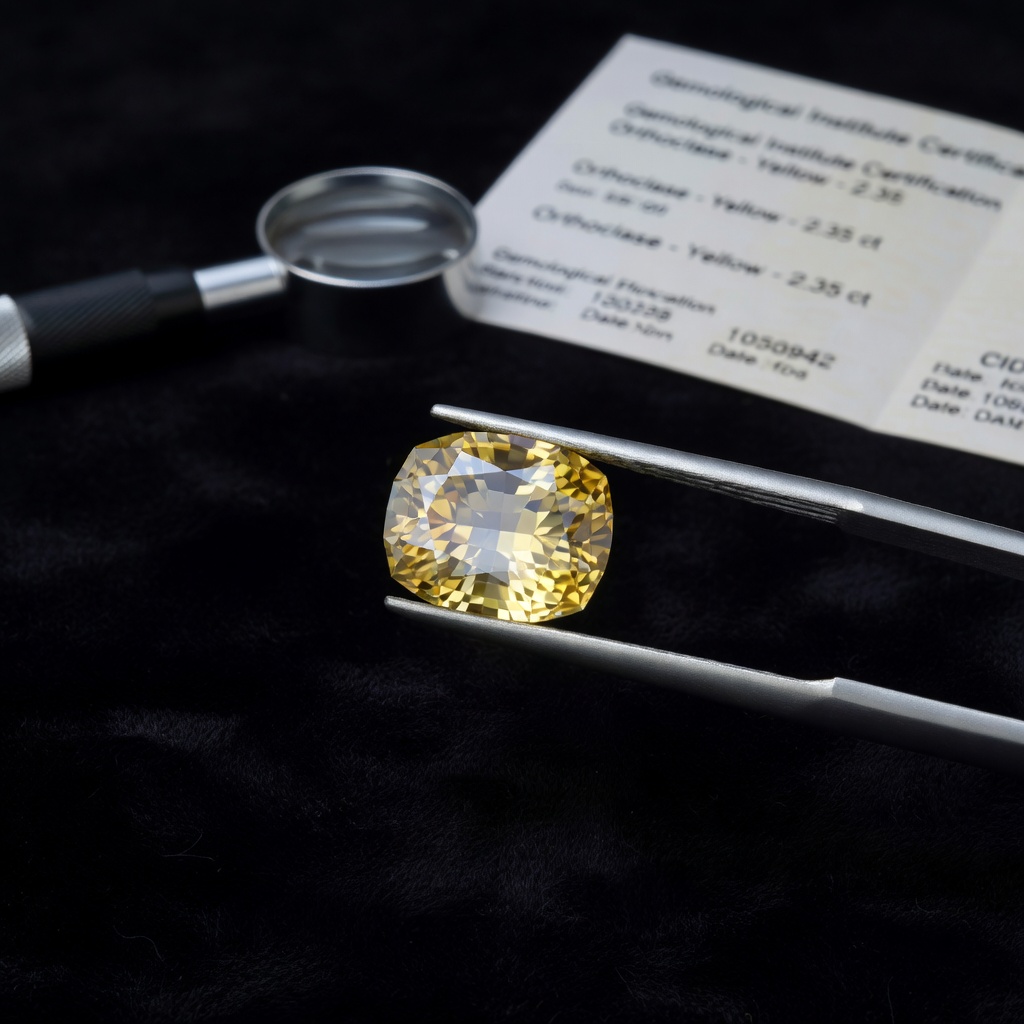
Understanding Orthoclase as a Collectible Gemstone
Orthoclase represents one of the most fascinating yet underappreciated gems in the mineral kingdom, belonging to the potassium feldspar group with the chemical formula KAlSi3O8. This feldspar mineral forms an essential component of the Earth's crust, yet only a small fraction achieves the transparency and clarity necessary for gemstone use. Unlike its common cousins found in granite countertops and ceramics, gem-quality orthoclase gemstone specimens display exceptional brilliance and crystal clarity that have captivated collectors since the Victorian era, when large colorless crystals first appeared in European aristocratic jewelry collections.
The distinction between ordinary feldspar and collectible orthoclase lies primarily in transparency and structural integrity. While most feldspar minerals are opaque and industrial-grade, gem orthoclase occurs as transparent to translucent crystals with a vitreous luster that rivals more expensive yellow gemstones. Historical records indicate that ancient civilizations carved orthoclase into amulets and decorative objects, though it remained relatively obscure in the jewelry trade until the late 20th century when significant deposits in Madagascar revealed the material's true potential as a collector's stone. Today, discerning gem enthusiasts seek orthoclase specifically for its unique combination of rarity, affordability, and geological significance.
For collectors seeking rare gemstones without the astronomical prices of sapphire or alexandrite, orthoclase offers an excellent entry point into high-end mineral collecting. Fine specimens combine the prestige of owning a relatively unknown gem with the scientific appreciation of feldspar's complex crystallography. The orthoclase value proposition becomes particularly compelling when considering that top-quality stones from premier localities often appreciate steadily as deposits deplete, making strategic purchases potentially lucrative long-term investments for mineral collectors who understand market dynamics.
Color Varieties and Visual Characteristics
When evaluating yellow orthoclase, gemologists prioritize stones displaying vivid canary to golden-yellow hues that remain consistent under various lighting conditions. This yellow variety dominates the market due to its striking resemblance to imperial topaz and yellow sapphire at a fraction of the cost. The most desirable specimens exhibit medium to medium-dark tone with strong saturation, avoiding the brownish or greenish secondary tints that diminish value. Collectors should examine stones under incandescent, fluorescent, and natural daylight to ensure the color remains stable, as some orthoclase specimens shift slightly toward greenish tones under certain artificial lighting.
Beyond the coveted yellow varieties, orthoclase occurs in several other color forms that command specialized interest among connoisseurs. Colorless or white orthoclase, sometimes marketed as "white moonstone" though technically distinct from adularescent varieties, appeals to collectors seeking diamond alternatives with unique provenance. Pink orthoclase, though rare, occasionally surfaces from Brazilian deposits with delicate salmon to rose hues caused by trace element substitutions. Greenish orthoclase remains the rarest color variety, typically showing subtle mint to olive tones that result from specific geological conditions during crystallization, making these specimens highly sought after by serious feldspar collectors.
The relationship between orthoclase and orthoclase moonstone creates important distinctions for buyers to understand. True moonstone represents a specific optical variety of orthoclase (or occasionally albite) displaying adularescence—a billowy, floating light effect caused by intergrowth between microscopic layers of different feldspar species. Standard gem orthoclase lacks this phenomenon and instead displays transparent body color with glassy brilliance when faceted. While moonstone cutters typically fashion material into cabochons to maximize adularescence, transparent orthoclase receives brilliant or step cuts to emphasize clarity and dispersion, requiring buyers to specify which variety they seek when approaching dealers.
Evaluating Quality: The Four Cs of Orthoclase
Color grading for orthoclase follows similar principles to other colored gemstones but with specific nuances regarding the feldspar mineral's unique optical properties. The ideal yellow orthoclase displays a pure yellow hue without brownish or grayish modifiers, with tone values between 40-60% on the Gemological Institute of America scale. Saturation should range from moderately strong to vivid, ensuring the stone maintains its color presence even in dim lighting. Stones appearing too light (pastel) receive lower grades, while overly dark specimens may appear muddy and lack the characteristic "glow" that distinguishes fine orthoclase from inferior citrine or quartz.
Orthoclase clarity standards permit certain inclusions that would disqualify other gemstones, provided they do not severely impact transparency or durability. Common inclusions include liquid-filled "fingerprint" patterns, small crystal inclusions of other minerals, and occasionally two-phase inclusions that prove natural origin. Eye-clean standards—meaning no visible inclusions to the unaided eye at six inches—apply primarily to stones over two carats, while smaller specimens may contain minor inclusions without significant value reduction. However, surface-reaching fractures or cleavages present serious concerns due to orthoclase's perfect cleavage in two directions, which can lead to stone breakage during setting or wear.
Cut quality significantly impacts orthoclase value due to the material's challenging physical properties. Master cutters must navigate orthoclase's cleavage planes carefully, typically orienting the table facet perpendicular to the cleavage direction to minimize chipping risks. Brilliant cuts with shallow crown angles often maximize the stone's dispersion and luster, though step cuts suit included material by providing windows into the stone's interior. The optimal cutting style also depends on color: deeper pavilions enhance lighter-colored material, while shallower cuts prevent overly dark appearance in richly saturated stones. Poorly cut orthoclase appears lifeless or exhibits "windowing" (see-through areas), reducing value by 30-50% compared to precision-cut specimens.
Carat weight availability varies dramatically by color and quality, directly affecting price per carat calculations. While commercial-grade yellow orthoclase commonly occurs in sizes ranging from one to five carats, fine collector-grade material exceeding ten carats becomes exponentially rarer. Unlike diamonds, which follow predictable price-per-carat escalations, orthoclase pricing often jumps significantly at the five-carat and ten-carat thresholds due to supply constraints. Large, clean crystals from Madagascar sometimes yield cut stones exceeding twenty carats, though such specimens command premium prices and typically require custom jewelry designs rather than standard mountings.
Distinguishing Orthoclase from Look-Alike Gemstones
Differentiating orthoclase from citrine presents the most common identification challenge for buyers and jewelers alike. While both minerals can display similar yellow hues, citrine (a variety of quartz) possesses higher hardness (7 on the Mohs scale) and different optical properties. Citrine typically shows stronger dichroism and a refractive index between 1.544-1.553, whereas orthoclase gemstone material registers 1.518-1.534 on refractive index testing. Visual cues include orthoclase's distinctive "sleepy" appearance due to typical inclusions compared to citrine's often cleaner look, plus orthoclase's tendency toward slightly waxy luster versus citrine's sharper glassy brilliance. Specific gravity testing provides definitive separation: citrine measures approximately 2.65 while orthoclase ranges 2.55-2.63.
Scapolite and yellow beryl (heliodor) also enter the market as orthoclase simulants or mistaken identities. Scapolite shares orthoclase's yellow color range but exhibits stronger fluorescence under long-wave ultraviolet light and higher birefringence visible as doubling of back facets when viewed through the table. Yellow beryl distinguishes itself through superior hardness (7.5-8), higher refractive index (1.577-1.583), and typically cleaner crystal growth. Advanced gemological testing using a refractometer remains essential for positive identification, as visual similarities can mislead even experienced dealers at gem shows or online marketplaces.
Synthetic feldspar mineral production remains limited compared to corundum or spinel, yet buyers should remain vigilant for imitations created using glass or assembled doublets. Natural orthoclase displays characteristic inclusions such as "hairy" amphibole crystals, two-phase inclusions, and growth zoning patterns visible under 10x magnification. Synthetic imitations typically lack these natural fingerprints while showing curved color banding or gas bubbles in the case of glass simulants. When purchasing significant specimens, always request a gemological certificate from recognized laboratories like GIA, AGL, or IGI, which can definitively separate natural orthoclase from synthetics through spectroscopic analysis and inclusion mapping.
Pricing Guide and Market Value Factors
Current market pricing for orthoclase value spans a broad spectrum depending on quality parameters and provenance. Commercial-grade material suitable for beadwork or mass-market jewelry typically trades between $20-$50 per carat for stones under three carats with acceptable clarity and light to medium color. Fine quality orthoclase displaying vivid yellow saturation, eye-clean clarity, and precision cutting commands $100-$300 per carat, with exceptional large specimens from premium localities potentially exceeding $500 per carat. Colorless orthoclase with exceptional clarity represents a niche market, generally ranging $40-$150 per carat depending on size and cut quality.
Geographic origin significantly influences orthoclase price premiums in today's collector market. Madagascar orthoclase consistently commands the highest prices due to the island's reputation for producing large, clean crystals with intense yellow coloration. Brazilian material, while abundant, typically shows lighter tones and more frequent inclusions, positioning it in the mid-market range. Myanmar (Burma) orthoclase, though less common in Western markets, often exhibits exceptional clarity with slightly greenish-yellow tints that appeal to specialized collectors. Documentation proving Madagascar origin can increase a stone's value by 20-40% compared to similar-quality material from less prestigious localities.
Investment potential for collector-grade orthoclase appears promising based on recent market trends showing steady appreciation for fine feldspar specimens. As major deposits face depletion and mining restrictions increase in Madagascar, supply constraints drive prices upward for top-tier material. Unlike treated stones or common varieties, untreated natural yellow orthoclase over five carats with documentation shows consistent demand at mineral auctions and specialist gem shows. Collectors seeking long-term appreciation should prioritize stones with outstanding color, untreated status, and verified provenance from historically significant mines, avoiding commercial-grade material unlikely to appreciate significantly.
Geographic Origins and Source Localities
Madagascar orthoclase stands as the undisputed premier source for fine gem material, specifically from the pegmatite deposits of the Ikalamavony region and the famous Ampasindava peninsula. These Madagascar localities produce crystals renowned for their exceptional size, frequently yielding rough material capable of cutting stones exceeding twenty carats while maintaining transparency. The characteristic "golden honey" color of Malagasy orthoclase results from specific trace element concentrations and geological conditions unique to the island's ancient Precambrian basement rocks. Serious collectors specifically seek Madagascar material not only for its superior aesthetics but also for its geological significance, as these specimens often form associations with rare minerals like tourmaline and beryl, adding scientific value to collections.
Brazilian deposits, particularly in the Minas Gerais region, provide the majority of commercial-grade orthoclase entering the market today. Brazilian orthoclase gemstone material typically displays lighter yellow to colorless hues with higher clarity than Madagascar specimens, though often lacking the intense saturation that commands premium prices. The Itinga and Governador Valadares districts produce significant quantities of facetable rough, frequently associated with industrial feldspar mining operations. While Brazilian material rarely achieves the "investment grade" status of top Madagascar stones, it offers excellent value for jewelry designers seeking attractive yellow gems at accessible price points.
Myanmar (formerly Burma) contributes smaller quantities of high-clarity orthoclase, typically characterized by slightly greenish-yellow to colorless appearances. Burmese material often surpasses other origins in transparency, yielding "water clear" stones that appeal to collectors prioritizing purity over intense color. Other notable localities include the Swiss Alps (historically significant for colorless crystals), Tanzania (producing pinkish varieties), and Afghanistan (yielding material associated with lapis lazuli deposits). When purchasing significant specimens, demand documentation specifying the exact mine or region, as orthoclase value correlates strongly with documented provenance, particularly for material from depleted or restricted localities.
Treatments, Enhancements, and Disclosure
Heat treatment represents the most common enhancement applied to orthoclase gemstone material, primarily used to intensify yellow coloration or remove unwanted greenish tints. Low-temperature heating (below 400°C) can improve color saturation without causing detectable structural changes, though higher temperatures may alter inclusion patterns or create thermal cracks visible under magnification. Detection of heat treatment requires advanced spectroscopic analysis available at major gemological laboratories, as visual identification proves challenging even for experienced gemologists. Heat-treated orthoclase typically trades at 30-50% discounts compared to untreated natural color material, making disclosure essential for fair pricing.
Irradiation treatments, though less common than heat, occasionally appear in the market to convert colorless or pale orthoclase into more marketable yellow hues. Gamma ray or neutron irradiation can produce stable yellow colors that persist indefinitely, though such treatments require specific safety protocols and regulatory compliance. Irradiated stones may show residual radioactivity immediately after treatment, though this typically decays to safe levels within weeks or months. Professional gemological laboratories utilize specific spectroscopic signatures to identify irradiation, particularly examining absorption spectra in the blue-violet region where irradiation creates characteristic features absent in natural color yellow orthoclase.
Industry standards mandate full disclosure of any treatments when selling orthoclase, following guidelines established by organizations like the American Gem Trade Association (AGTA) and International Colored Gemstone Association (ICA). Reputable dealers provide written documentation specifying "no indications of heating" or detailing specific treatments applied. Buyers should exercise caution regarding stones offered at unusually low prices for apparent high quality, as such specimens often represent treated material being sold as natural. The premium commanded by untreated natural orthoclase reflects both rarity and collector preference for unaltered specimens, with untreated stones from Madagascar particularly prized in the investment community.
Where and How to Buy Orthoclase Safely
Locating reputable sources to buy orthoclase requires targeting specialized gemstone dealers and mineral specialists rather than general jewelry retailers. Established dealers focusing on rare gemstones and collector minerals possess the expertise to properly identify, grade, and price orthoclase according to current market standards. Renowned mineral shows such as the Tucson Gem and Mineral Show, Denver Gem and Mineral Show, and Munich Mineral Show provide excellent venues for examining multiple specimens and comparing prices directly. Online purchasing requires additional diligence: prioritize vendors offering detailed photographs under various lighting conditions, comprehensive return policies (minimum 7-10 days), and verifiable credentials such as membership in professional organizations like the American Gem Society or National Association of Jewelry Appraisers.
Certification from recognized gemological laboratories provides essential protection for significant Orthoclase Buying Guide purchases. For stones exceeding $500 or weighing over three carats, insist on reports from GIA (Gemological Institute of America), AGL (American Gemological Laboratories), or IGI (International Gemological Institute). These certificates verify identity, natural origin, treatments (if any), and basic quality parameters. Be wary of "certificates" issued by unknown laboratories or the sellers themselves, as these often represent marketing documents rather than independent verification. For museum-quality specimens or rare colors (pink or green orthoclase), consider additional testing for origin determination through advanced trace element analysis available at specialized laboratories like GIA's Carlsbad or New York facilities.
Red flags signaling potential problems include sellers unable to specify origin localities, vague descriptions such as "yellow feldspar" rather than specific orthoclase identification, and prices significantly below market rates for claimed quality. Online auctions and social media marketplaces frequently list misidentified stones, with citrine or yellow quartz sold as orthoclase to unsuspecting buyers. When examining potential purchases, ask specific questions: "What is the exact locality and mining date?" "Has this stone undergone any heat treatment or irradiation?" "Does the price include a return period for independent verification?" and "Can you provide provenance documentation for significant specimens?" Professional sellers welcome such inquiries and provide detailed responses, while questionable vendors often deflect or provide inconsistent information.
Care, Maintenance, and Jewelry Setting Considerations
Understanding orthoclase's physical limitations proves essential for proper jewelry care and longevity. With a Mohs hardness of 6-6.5, orthoclase falls below the threshold for everyday wear in rings, ranking softer than quartz (7) and significantly softer than sapphire (9) or diamond (10). This relative softness means orthoclase scratches relatively easily when exposed to dust (which contains microscopic quartz particles) or contact with harder jewelry items. Protective settings become mandatory for ring designs: bezel settings provide superior protection compared to prong settings, while halo designs with harder surrounding stones offer additional defense against direct impact. Reserve orthoclase rings for occasional wear rather than daily use, removing them during household chores, exercise, or any activity involving hand contact with hard surfaces.
Proper cleaning techniques for orthoclase jewelry care exclude ultrasonic cleaners and steam cleaners, which can cause thermal shock or exacerbate existing cleavages within the stone. Instead, clean orthoclase using warm water (never hot) with mild dish soap and a soft-bristled brush, gently removing accumulated dirt from the pavilion and around prongs. Rinse thoroughly under lukewarm running water, ensuring the drain is closed or covered to prevent accidental loss. Dry immediately with a soft, lint-free cloth to prevent water spots. Harsh chemicals including bleach, ammonia, and acids can etch orthoclase's surface or damage any fillings in surface-reaching fractures, necessitating removal before swimming in chlorinated pools or using cleaning products.
Storage requirements emphasize isolation from harder gemstones to prevent scratching. Store orthoclase pieces in individual soft cloth pouches or compartmentalized jewelry boxes, never allowing contact with diamonds, sapphires, rubies, or even quartz jewelry. For collections including multiple orthoclase gemstone specimens, consider storage in acid-free paper envelopes within mineral drawers, maintaining stable humidity levels to prevent potential dehydration of any included minerals. Ideal jewelry applications prioritize settings that minimize impact risk: pendants worn on chains keep stones away from hard surfaces, while earrings and brooches experience less abrasion than rings or bracelets. When designing custom pieces, discuss protective mounting options with jewelers experienced in working with cleavage-prone stones like feldspar and opal.
Final Checklist: Before You Purchase
Completing a thorough pre-purchase inspection ensures satisfactory acquisition of quality orthoclase gemstone material. Examine the stone under natural daylight, incandescent, and fluorescent lighting to verify color stability and desirability, checking for windowing or extinction that indicates poor cutting. Inspect clarity using a 10x loupe, accepting minor inclusions typical of natural feldspar while rejecting stones with surface-reaching fractures or obvious cleavage planes that threaten durability. Verify cutting quality by checking symmetry, facet alignment, and polish quality, ensuring the cutter oriented the stone to minimize cleavage risks while maximizing brilliance. Compare the specimen against pricing guidelines for its specific color, clarity grade, and carat weight to ensure fair market value.
Documentation requirements include written receipts specifying exact weight, dimensions, color description, and origin locality for all purchases. For significant investments, require laboratory certificates confirming natural origin and treatment status, specifically noting "no indications of heating" for untreated specimens. Provenance documentation adds value for Madagascar orthoclase or material from historically important deposits, including mine names, collection dates, and previous ownership history when available. Maintain organized records of all purchases, including photographs and correspondence with sellers, to support future resale or insurance claims.
Price comparison strategies involve consulting multiple vendors before committing to significant purchases, recognizing that orthoclase value varies substantially between commercial dealers and specialist mineral sellers. Attend mineral shows to handle specimens personally and establish relationships with reputable dealers who can notify you of exceptional new acquisitions. Plan for long-term care by budgeting for professional cleaning, periodic inspection of settings by qualified jewelers, and appropriate insurance coverage based on current replacement values. By approaching orthoclase buying tips systematically—prioritizing quality over size, demanding documentation, and planning for proper care—collectors can build significant collections of this beautiful feldspar variety while avoiding common pitfalls that diminish satisfaction and investment potential.
Frequently Asked Questions About Orthoclase
What is orthoclase and is it considered a valuable gemstone?
Orthoclase is a potassium feldspar mineral that occurs as transparent to translucent crystals suitable for faceting. While not as expensive as sapphire or ruby, fine yellow orthoclase from Madagascar can command $50-$200 per carat for high-quality specimens, making it a valuable collector's stone with excellent transparency and luster.
How can I tell if an orthoclase gemstone is natural or treated?
Natural orthoclase typically shows characteristic inclusions and growth patterns visible under magnification. Heat-treated stones may show color zoning or altered inclusion patterns. Always request a gemological certificate from GIA or AGL for expensive specimens, as these labs can detect heat treatment and irradiation through advanced spectroscopic analysis.
What color of orthoclase is the most valuable?
Vivid yellow to golden-yellow orthoclase commands the highest prices, particularly when the color is saturated and evenly distributed throughout the stone. Colorless (white) orthoclase with exceptional clarity is also valuable, while pale or brownish tints are less desirable and consequently more affordable.
Is orthoclase durable enough for everyday jewelry wear?
With a Mohs hardness of 6-6.5, orthoclase is softer than quartz and requires protective settings for rings. It's best suited for pendants, earrings, and brooches where impact risk is minimal. If set in rings, choose bezel settings and reserve for occasional wear rather than daily use to prevent scratching and chipping.
How much should I expect to pay for a quality orthoclase gemstone?
Commercial-grade orthoclase (1-3 carats) typically ranges from $20-$50 per carat, while fine quality yellow specimens with excellent clarity can reach $100-$300 per carat. Large stones over 10 carats with top color are rare and may command premium prices exceeding $500 per carat depending on provenance.
What is the difference between orthoclase and moonstone?
While both are feldspar minerals, moonstone specifically refers to orthoclase or oligoclase that displays adularescence—a billowy blue or white sheen caused by light scattering between microscopic layers. Standard orthoclase lacks this phenomenon and is valued for its transparent body color and brilliance when faceted, whereas moonstone is typically cut as cabochons.
Where is the best place to buy orthoclase gemstones?
Purchase from established gemstone dealers specializing in rare gems, reputable mineral shows like Tucson or Denver, or trusted online vendors offering return policies and certification. Avoid generic jewelry stores that may mislabel orthoclase as citrine or quartz. Always verify the seller's expertise in feldspar minerals before purchasing.
How do I clean and care for orthoclase jewelry?
Clean orthoclase using warm soapy water and a soft brush only. Avoid ultrasonic cleaners, steam cleaning, and harsh chemicals that can damage the stone. Store orthoclase pieces separately from harder gemstones (diamond, sapphire, quartz) to prevent scratching, and remove jewelry before physical activities or housework.


