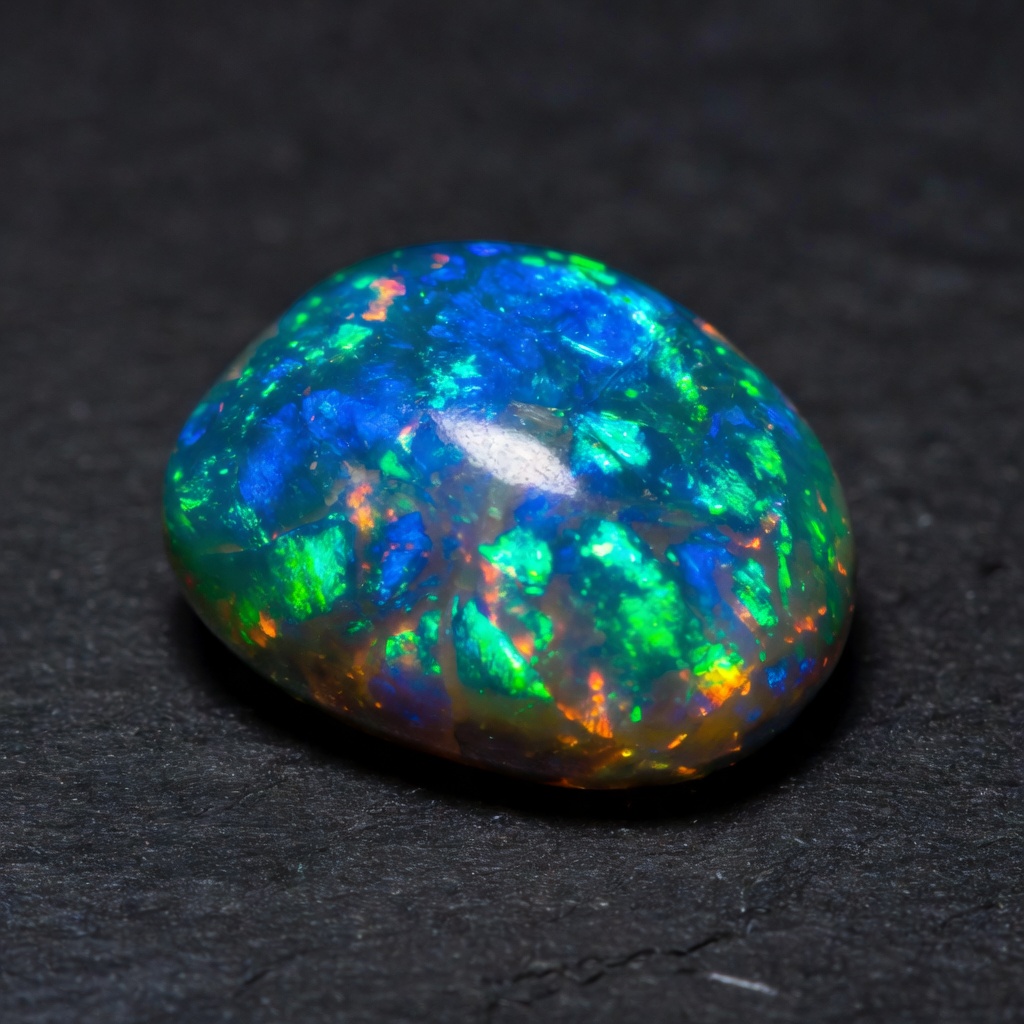
Introduction to Opal Gemstones
Opal stands as one of nature's most mesmerizing creations, a hydrated amorphous form of silica that captures the imagination with its ethereal play of spectral colors. Unlike crystalline gemstones that rely on rigid atomic structures for their beauty, opal gemstone properties derive from a unique arrangement of microscopic silica spheres that diffract light into rainbow hues. This distinctive characteristic has captivated humanity for millennia, from the ancient Romans who considered opal a symbol of hope and purity to Aboriginal Australian cultures that revered the stone as a physical manifestation of the creator's footprints in the rainbow.
Understanding comprehensive Opal Properties and Information becomes essential for anyone considering these gems for jewelry investment or collection purposes. The stone's delicate nature, varying water content, and diverse optical phenomena require specific knowledge to ensure proper selection, care, and appreciation. Whether you are drawn to the deep, mysterious blacks of Lightning Ridge specimens or the brilliant crystal clarity of Ethiopian Welo deposits, grasping the fundamental characteristics of this gemstone will enhance your ability to recognize quality, avoid common purchasing pitfalls, and maintain these treasures for generations.
Physical and Chemical Composition
The fundamental makeup of opal reveals why this gemstone behaves so differently from its silica cousins like quartz or agate. Chemically represented as SiO₂·nH₂O, opal consists of silicon dioxide combined with variable water content ranging from 3% to 21%, a factor that significantly influences both its appearance and durability. Unlike crystalline minerals that form ordered, repeating atomic lattices, opal possesses an amorphous structure where silica spheres arrange themselves in random, non-crystalline patterns, creating the unique conditions necessary for light diffraction while simultaneously making the stone more susceptible to environmental damage.
On the Mohs hardness scale, opal typically registers between 5.5 and 6.5, placing it softer than common jewelry stones like sapphire (9) or even amethyst (7). This moderate hardness means that while opals can withstand normal wear in protective settings, they remain vulnerable to scratching from everyday dust particles, which often contain silica at hardness 7. The specific gravity of opal ranges between 1.98 and 2.25, making it relatively light compared to other gems of similar size—a practical consideration for large statement pieces where weight affects wearability.
Water content within opal creates ongoing stability concerns that collectors must monitor throughout the stone's lifetime. Australian sedimentary opals generally contain 5-6% water and remain relatively stable, while some Ethiopian hydrophane opals can absorb up to 20% water from their environment, temporarily changing transparency and color play. This hygroscopic nature requires owners to maintain consistent humidity levels and avoid sudden temperature fluctuations that could cause the water within the stone to expand or contract, potentially leading to cracking or "crazing" of the surface.
Types and Varieties of Opal
Navigating the diverse world of opals requires understanding the fundamental distinction between precious opal vs common opal, a separation that determines both value and appropriate usage in jewelry. Precious opal displays the phenomenon known as "play-of-color" or "fire"—flashing spectral hues that shift and change as the stone moves under light. Common opal, conversely, presents as a single, solid color without internal color flashes, typically appearing in white, pink, blue, or green hues; while beautiful in its own right, this variety lacks the diffraction grating necessary for color play and consequently commands significantly lower market prices.
Within the precious opal category, several distinct types command different values and aesthetic preferences. Black opal, characterized by a dark body tone ranging from dark gray to jet black, provides the dramatic backdrop that makes color play appear most vivid, with specimens from Lightning Ridge, Australia representing the pinnacle of opal luxury. White opal features a light or white body tone that creates a softer, more ethereal color display, while crystal opal offers transparency ranging from clear to semi-transparent, allowing light to pass through and creating a three-dimensional depth effect. Jelly opal presents as transparent to translucent with a gelatinous appearance and weak to moderate color play, often serving as an affordable entry point for new collectors.
Boulder opal and matrix opal offer unique aesthetic appeals by preserving the ironstone or sandstone host rock as part of the finished gemstone, creating natural, earthy presentations where color veins run through the brown matrix. When examining types of opal for purchase, buyers must also learn to identify synthetic opals, which display unnaturally perfect color patterns with distinct "snake skin" or cellular structures under magnification, and enhanced opals such as those treated with sugar or smoke processes to darken body tones artificially. Doublets and triplets—constructed stones featuring thin slices of precious opal backed by black material or capped with clear quartz—require disclosure but can provide affordable alternatives to solid precious opal when properly identified.
Optical Phenomena and Play-of-Color
The mesmerizing visual effects that define precious opal result from sophisticated interactions between light and the stone's internal architecture. Opal optical phenomena occur when light enters the gem and encounters microscopic silica spheres arranged in orderly, three-dimensional grids. As light waves bend around these spheres, they diffract and separate into spectral colors, much like light passing through a prism, but with the added complexity of interference patterns that create the characteristic flashing or rolling color effects that seem to emanate from within the stone itself.
The size and uniformity of these silica spheres determine the specific colors displayed and the quality of the optical effect. Spheres measuring approximately 0.0003 millimeters produce blue and violet flashes, while larger spheres around 0.0006 millimeters create the rare and highly prized red and orange colors. Perfectly uniform sphere sizes throughout the stone generate broad, intense color patches, whereas irregular spacing creates more pinpoints of color. This scientific basis for color play explains why certain opals command premium prices—those displaying dominant red flashes across the entire stone represent the convergence of perfect geological conditions that rarely occur in nature.
Collectors and gemologists classify opal patterns into distinct categories that significantly impact valuation. Harlequin patterns display large, angular patches of color resembling a checkerboard and represent the rarest and most valuable configuration. Pinfire patterns consist of tiny, closely set dots of color that create a delicate, glittering effect, while flash patterns feature broad, irregular sheets of color that sweep across the stone's surface. Peacock patterns specifically emphasize green and blue hues reminiscent of the bird's plumage. Additionally, stones are classified as directional or non-directional based on whether the color play remains visible from all angles or only when viewed from specific directions, with non-directional stones generally commanding higher prices due to their versatility in jewelry settings.
Geological Formation and Global Sources
The creation of opal represents one of geology's most time-intensive processes, requiring specific environmental conditions maintained over millions of years. Opal formation and sources trace back to the Cretaceous period when silica-rich waters percolated through sedimentary rock formations, filling cracks, voids, and the cavities left by decayed organic matter such as shells, bones, and wood. As the water slowly evaporated or drained away, it deposited microscopic silica spheres that gradually accumulated in layers, eventually solidifying into the precious gem through a process of dehydration and cementation that can span 5 to 6 million years.
Australia dominates the global opal market, producing approximately 95% of the world's supply, with Lightning Ridge in New South Wales specifically renowned for producing the finest black opals characterized by their dark body tone and vivid color play. The opal fields of Coober Pedy and Andamooka in South Australia yield significant quantities of white and crystal opal, while Queensland's boulder opal belt produces the distinctive ironstone-matrix stones. More recently, Ethiopian opal from the Welo fields has emerged as a major competitor, offering brilliant crystal and white opals with exceptional transparency and color intensity, though these stones often require different care due to their hydrophane properties and higher porosity.
Mexico contributes significantly to the opal market through its fire opal deposits, particularly in the state of Querétaro, where stones display vivid orange, red, and yellow body colors sometimes accompanied by play-of-color. Other notable sources include Brazil, which produces precious and common opal, and the United States, specifically Nevada and Idaho, where Spencer opal features a distinctive white base with moderate fire. Each geographic source imparts distinct characteristics to its stones—Australian opals typically offer greater stability and durability due to their lower water content and sedimentary formation, while Ethiopian opals often display more intense color but require careful handling to prevent dehydration or cracking.
Metaphysical Properties and Symbolic Meanings
Beyond their geological significance, opals carry rich symbolic weight that has evolved across cultures and centuries, contributing to their enduring popularity in spiritual and healing practices. The opal meaning and uses in metaphysical circles center on the stone's reputation as a catalyst for emotional healing and creative expression. Crystal healers often associate opal with the crown and heart chakras, believing that its prismatic energy helps bridge spiritual insight with emotional awareness, allowing practitioners to access higher consciousness while remaining grounded in compassionate understanding.
Modern crystal therapy practitioners utilize opal to enhance artistic inspiration and originality, suggesting that the stone's play-of-color stimulates the imagination and encourages innovative thinking. Many believe that opal amplifies emotional states, bringing buried feelings to the surface for acknowledgment and healing—a property that requires careful consideration for those processing grief or trauma. Wearing opal jewelry during creative endeavors or meditation practices remains a popular way to harness these perceived energies, with different colored opals attributed to specific effects: blue opal for communication, fire opal for passion and vitality, and black opal for spiritual protection and grounding.
Historically, opal has weathered periods of superstition, particularly during the 19th century when Sir Walter Scott's novel "Anne of Geierstein" temporarily associated the stone with bad luck and death in Victorian England. However, this reputation contradicts centuries of positive associations, including the ancient Roman belief that opal symbolized hope and purity, and the Arabic legend that the stone fell from heaven in flashes of lightning. Aboriginal Australian traditions view opal as the physical presence of the Rainbow Serpent, carrying the energy of creation and connection to the land. Today, most gem enthusiasts reject negative superstitions, instead embracing opal as a stone of protection, loyalty, and faithfulness, often chosen as a gift for 14th wedding anniversaries and October birthstone celebrations.
Evaluating Quality and Market Value
Assessing opal quality requires understanding multiple interconnected factors that determine both aesthetic appeal and monetary worth. Professional gemologists evaluate opals based on body tone, brightness, color play, pattern, and size, with each element contributing to the final valuation. The body tone scale ranges from N1 (black) to N9 (white), with darker tones generally commanding higher prices because they provide better contrast for color display. However, brightness—the intensity of the color play regardless of body tone—often proves equally important; a bright, vivid white opal can exceed the value of a dull black opal with weak fire.
Color evaluation extends beyond brightness to consider the specific hues present and their distribution across the stone. Red remains the rarest and most valuable color in opal, followed by orange, yellow, green, blue, and violet, with stones displaying the full spectrum (termed "full color") achieving premium prices. Pattern rarity significantly impacts value, with harlequin and broad flash patterns worth substantially more than pinpoint or moss patterns. Transparency affects desirability depending on opal type—crystal opals should be clear and free of cloudiness, while black opals benefit from opacity that enhances color contrast. Inclusions such as sand spots, potch lines, or cracks detract from value, though some collectors appreciate "landscape" opals where inclusions create pictorial scenes.
Market values for opal span an enormous range, from common opal used for carvings and beads costing mere dollars per carat to museum-quality black opals fetching upwards of $10,000 to $15,000 per carat. Australian black opals with strong red fire typically start around $1,000 per carat for commercial quality and escalate rapidly for fine specimens. Boulder opals offer a middle market, generally ranging from $100 to $2,000 per carat depending on color intensity and ironstone backing ratio. Ethiopian opals typically present more affordable entry points, ranging from $50 to $500 per carat for fine qualities, though prices have risen as the market recognizes their exceptional beauty. When evaluating investment potential, buyers should prioritize stones with stable provenance, documented natural status, and cutting orientations that maximize face-up color display while maintaining sufficient thickness for durability.
Proper Care and Maintenance Guidelines
Maintaining opal's beauty requires understanding its unique vulnerabilities and implementing specific protective measures that differ significantly from harder gemstones like diamonds or sapphires. Essential opal care tips begin with recognizing the stone's relationship with water content; because opal contains between 3% and 21% water by weight, exposure to extremely dry environments or sudden temperature changes can cause dehydration, leading to cracking or crazing of the surface. Owners should avoid storing opals in bank vaults or safety deposit boxes for extended periods without humidity control, as these environments often feature dehumidified air that can damage stones over time.
Cleaning opal jewelry demands gentle methods exclusively—warm water with mild, phosphate-free soap and a soft microfiber cloth or natural bristle brush provide the only safe cleaning solution. Ultrasonic cleaners and steam cleaners pose severe risks to opals, as the vibrations can cause existing fractures to spread, and the intense heat can shock the stone, causing thermal expansion that leads to cracking. Chemical exposure presents another hazard; household cleaners, chlorine in swimming pools, and even cosmetics like hairspray or perfume can damage opal surfaces or degrade any fillers used in doublets or triplets. Always remove opal rings before gardening, cleaning, or engaging in sports to prevent impact damage or exposure to harmful substances.
Storage solutions play a crucial role in long-term preservation. Opals should be stored in padded jewelry boxes or soft cloth pouches separate from harder gemstones that could scratch their surfaces—diamond dust, in particular, poses a threat as it can settle on opal surfaces and cause abrasion during handling. For valuable collections, maintaining a stable environment with 40-50% humidity proves ideal; some collectors store opals with small containers of water or damp cotton (not touching the stones) to prevent dehydration, though direct contact with water should be avoided for hydrophane Ethiopian opals that might absorb moisture and temporarily change appearance. When traveling, carry opals in hand luggage rather than checked baggage to avoid temperature extremes in cargo holds, and consider insurance coverage for high-value pieces given the stone's relative fragility compared to other precious gems.
Buying Guide: Investment and Selection
Navigating the opal market successfully requires developing discernment for quality indicators while avoiding common pitfalls that ensnare inexperienced buyers. A comprehensive opal buying guide starts with insisting on laboratory certification from reputable institutions such as the Gemological Institute of America (GIA) or the Australian Opal Centre, which verify natural origin and disclose any treatments like sugar enhancement, smoke treatment, or polymer impregnation. These treatments, while not inherently fraudulent if disclosed, artificially darken body tones to simulate expensive black opal and should command lower prices than untreated natural stones. Always examine stones under different lighting conditions—incandescent light enhances red tones, while fluorescent lighting emphasizes blues and greens—to ensure the color play remains vibrant across environments.
Setting considerations significantly impact an opal's longevity and visual presentation. Protective bezel settings that wrap the stone's edges provide superior security compared to prong settings for rings, which endure daily impacts. Pendant and earring settings allow safer display of high-value opals since these items experience less physical stress than rings or bracelets. Ensure that settings allow light to enter the stone from appropriate angles to maximize color play; overly deep or closed-back settings can diminish the optical effects that justify the investment. For boulder opals, verify that the ironstone backing remains intact and untreated, as some dealers artificially darken these areas to enhance perceived value.
Red flags in the opal market include suspiciously low prices for supposedly high-quality black opal—if a deal seems too good to be true, the stone likely represents a doublet, triplet, or synthetic product. Examine stones for glue lines indicating assembled stones, cloudiness suggesting instability or excessive water loss, and surface scratches indicating improper handling or wear. When purchasing Ethiopian opal specifically, inquire about stabilization treatments, as many vendors now treat these porous stones with resins or oils to prevent cracking, a practice that should be disclosed but often isn't. Building relationships with established dealers who offer return policies and detailed provenance information provides the safest path to building a quality collection, whether seeking affordable common opals for casual wear or investment-grade specimens for long-term appreciation.
Conclusion: Appreciating Opal's Unique Beauty
This comprehensive exploration of Opal Properties and Information reveals why this gemstone occupies such a distinctive position in the world of fine jewelry and mineral collecting. From its amorphous silica structure and variable water content to the breathtaking optical phenomena created by microscopic sphere arrangements, opal represents a convergence of geological precision and natural artistry that no synthetic process can fully replicate. The diversity of types—from the regal depths of Australian black opal to the brilliant transparency of Ethiopian crystal specimens—ensures that every collector can find specimens that resonate with personal aesthetic preferences while fitting diverse budgetary considerations.
Understanding the delicate balance between opal's beauty and its physical vulnerabilities allows owners to preserve these treasures for future generations, transforming proper care from a burden into a ritual of appreciation. Whether drawn to opal for its metaphysical associations with creativity and emotional healing, its historical significance across ancient civilizations, or simply its unmatched visual splendor, collectors who invest time in education reap rewards in both satisfaction and value retention. By prioritizing quality over size, insisting on ethical sourcing and full disclosure of treatments, and selecting appropriate settings that protect while displaying the stone's fire, enthusiasts can build collections that serve as both wearable art and tangible connections to Earth's ancient geological history.
Frequently Asked Questions
What are the essential opal properties and information beginners should know?
Beginners should understand that opal is a hydrated amorphous silica with a hardness of 5.5-6.5, making it relatively soft compared to other gemstones. Key properties include the unique play-of-color caused by light diffraction, water content between 3-21%, and the distinction between precious opal (showing color play) and common opal. Understanding these basics helps in proper selection, care, and appreciation of opal's delicate beauty.
How is opal formed in nature?
Opal forms when silica-rich water seeps into cracks and voids in sedimentary or volcanic rocks. As the water evaporates, it leaves behind silica spheres that stack in orderly arrangements. Over millions of years, these spheres solidify into opal. The size and arrangement of the silica spheres determine the quality of color play, with larger, uniform spheres producing the most vibrant precious opal.
What causes the play-of-color in precious opal?
Play-of-color occurs due to the diffraction of light through microscopic silica spheres arranged in a three-dimensional grid pattern within the opal. When light enters the stone, it bends around these spheres and separates into spectral colors. The size of the spheres determines the colors displayed—larger spheres produce red and orange flashes, while smaller spheres create blue and violet hues.
Is opal durable enough for everyday jewelry wear?
Opal requires careful handling due to its moderate hardness (5.5-6.5 Mohs) and brittle nature. While suitable for pendants, earrings, and occasional rings, opals are not ideal for daily wear in rings or bracelets exposed to hard knocks. They can also be sensitive to sudden temperature changes and dehydration. Protective settings and mindful wearing habits are essential for preserving opal jewelry.
How should I clean and care for my opal gemstones?
Clean opals using only mild soap, lukewarm water, and a soft cloth or brush. Never use ultrasonic cleaners, steam cleaners, or harsh chemicals, as these can cause cracking or remove natural oils. Store opals away from direct heat or dry environments to prevent water loss, and keep them separate from harder gemstones like diamonds or sapphires that could scratch the surface.
What is the difference between precious opal and common opal?
Precious opal displays the characteristic play-of-color or 'fire'—flashing spectral colors that change with viewing angle. Common opal, also called potch, lacks this optical phenomenon and typically appears as a single opaque or translucent color without color variation. While precious opal commands higher prices for jewelry, common opal is often used for carvings, beads, or ornamental objects.
Are opals expensive compared to other gemstones?
Opal prices vary dramatically based on type, quality, and rarity. Common opal can cost just a few dollars per carat, while fine Australian black opal with vivid red flashes can exceed $10,000 per carat. Factors affecting price include body tone (darker is generally more valuable), brightness of color play, pattern rarity, and absence of inclusions or cracks.
Do opals have metaphysical or healing properties?
Many crystal healers associate opal with enhancing creativity, emotional expression, and spiritual connection. It is often linked to the crown and heart chakras, believed to amplify feelings and bring buried emotions to the surface for healing. Ancient Romans considered opal a symbol of hope and purity, while some modern practitioners use it to stimulate originality and artistic inspiration.