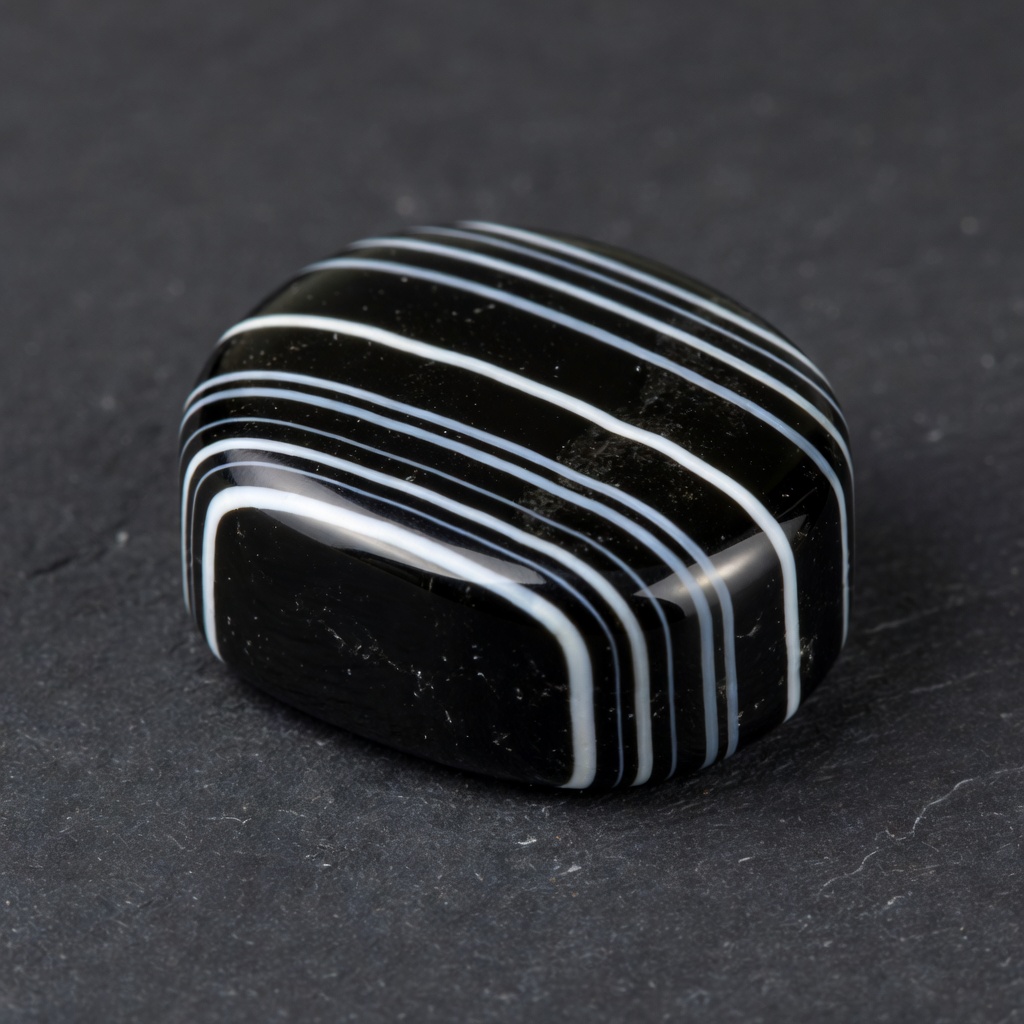
Introduction to Onyx Gemstone
Onyx represents one of the most visually striking and historically significant varieties of banded chalcedony, a microcrystalline form of quartz that has captivated civilizations for millennia with its distinctive parallel layers and deep, mysterious hues. Unlike many gemstones that rely solely on brilliant sparkle or rare color saturation, onyx derives its aesthetic appeal from dramatic banding patterns that create natural contrasts between light and dark strata, making each specimen uniquely identifiable. Understanding comprehensive Onyx Properties and Information proves essential for collectors, jewelers, and interior designers who seek to distinguish genuine specimens from treated alternatives while appreciating the stone's geological complexity and cultural significance. Whether admired as a carved cameo in a Victorian brooch or installed as a backlit architectural panel in contemporary luxury homes, onyx continues to bridge ancient craftsmanship with modern design applications through its versatile beauty and relative durability.
Geological Formation and Mineral Composition
The formation of onyx begins deep within volcanic rock cavities where silica-rich groundwater deposits successive layers of chalcedony over thousands of years, creating the stone's signature parallel banding through gradual mineral precipitation. This process occurs primarily in the gas cavities of volcanic rocks or ancient lava flows, where solutions containing dissolved silica percolate through fissures and evaporate, leaving behind microscopic quartz crystals that align in straight, parallel bands distinct from the curved patterns seen in agate. Chemically classified as silicon dioxide (SiO2), onyx belongs to the cryptocrystalline quartz family, meaning its crystal structure is composed of such minute individual crystals that the material appears uniformly solid and smooth to the naked eye without visible crystalline facets. Gemologists distinguish true onyx from other banded chalcedony varieties primarily by examining the orientation of these bands; while agate displays concentric or curved banding that follows the cavity's contour, genuine onyx exhibits straight, parallel layers that cut across the stone in consistent geometric patterns, making it particularly suitable for detailed cameo work where artisans can carve contrasting figures against background layers.
Volcanic Origins and Depositional Environments
Most commercial onyx deposits form in basaltic lava flows where vesicles or gas bubbles become lined with silica deposits during the cooling phase of volcanic activity, particularly evident in specimens sourced from Brazil, India, Madagascar, and Uruguay. The specific conditions required for onyx formation—stable temperature ranges, consistent water chemistry, and undisturbed depositional environments—explain why high-quality specimens with sharp, distinct banding remain relatively rare compared to other quartz varieties. Geological surveys indicate that the parallel banding develops when silica-rich solutions flow steadily through linear fractures or flat cavity floors, depositing alternating layers of light and dark chalcedony as trace minerals like iron oxide, carbon, or manganese create color variations between strata.
Physical Properties and Characteristics
Onyx demonstrates respectable durability with a Mohs hardness rating between 6.5 and 7, positioning it sufficiently hard for most jewelry applications while remaining soft enough to allow detailed carving by skilled lapidaries who value its workability. The stone's most distinguishing physical characteristic remains its parallel banding patterns, which typically alternate between black, white, brown, or reddish-brown layers, though the thickness and regularity of these bands vary significantly between specimens and geographic sources. Translucency in onyx ranges from opaque to semi-transparent, particularly in lighter colored bands or thin sections, which explains the material's popularity for architectural applications where backlighting can illuminate the stone's internal structure, creating dramatic visual effects in luxury interiors. Specific gravity measurements for onyx typically fall between 2.58 and 2.64, noticeably heavier than glass imitations or plastic simulants, while the luster varies from vitreous on freshly cut surfaces to waxy on polished or weathered areas, providing tactile and visual cues for natural onyx identification.
Durability Factors and Structural Considerations
While onyx possesses adequate hardness for jewelry use, its cryptocrystalline structure contains microscopic interlocking crystals that can create planes of weakness along banding layers, making the stone susceptible to chipping or cleaving if struck with sufficient force along these natural boundaries. Professional gem cutters must orient their work to avoid cutting directly across banding planes when creating gemstones subject to impact, such as ring stones, preferring instead to position the table facet parallel to the banding direction to maximize structural integrity. The stone's porosity varies by color type, with black varieties often being more compact and less porous than lighter banded specimens, which influences how the material accepts dyes, treatments, and polishing compounds during commercial preparation.
Varieties and Color Types of Onyx
The gemstone market recognizes several distinct onyx varieties, each offering unique aesthetic qualities and value propositions for collectors seeking specific Onyx Properties and Information for their acquisitions. Black onyx represents the most commercially common variety, though gemologists note that naturally occurring solid black onyx is extraordinarily rare; most black onyx available today derives from gray chalcedony that has undergone sugar-acid treatment or chemical dyeing processes to achieve its midnight hue, practices considered standard in the industry when properly disclosed. Sardonyx displays particularly desirable alternating bands of reddish-brown sard (a type of carnelian) and white chalcedony, with the finest specimens exhibiting sharp, straight banding contrasts that Roman artisans historically prized for seal engraving and intaglio work. Nicolo onyx presents a sophisticated variation featuring very thin white bands atop a black or dark blue background, creating the illusion of a solid dark stone until viewed against transmitted light, while other varieties include carnelian onyx (red and white banding) and bull's eye onyx (concentric circles, though technically this falls under agate classification and is often mislabeled).
Recognizing Natural Versus Treated Color Variations
Identifying dyed versus natural coloration requires careful examination under magnification and standardized lighting conditions, as treated stones may show color concentrations in surface cracks, fractures, or along banding interfaces where dye solutions naturally accumulate during the enhancement process. Natural black onyx, when found, typically exhibits slight variations in tone and may contain microscopic mineral inclusions, whereas uniformly saturated, perfectly consistent black coloring often indicates treatment. When evaluating sardonyx properties, collectors should prioritize specimens where the reddish-brown layers display the warm, translucent glow characteristic of natural sard rather than the flat, opaque appearance of dyed material, while also examining the sharpness of the banding interface, as natural specimens maintain crisp boundaries between color zones.
Historical Significance and Cultural Lore
Ancient civilizations valued onyx not merely for its aesthetic qualities but for its perceived ability to capture and preserve intricate details in miniature sculpture, leading to its dominance in Roman and Greek cameo production where artisans carved raised figures against contrasting background layers. The Roman naturalist Pliny the Elder documented extensive use of onyx for seals and signet rings, noting that the material's hardness allowed for crisp impressions in wax while resisting wear during daily use, making it ideal for authenticating documents and correspondence in classical antiquity. Biblical references associate onyx with the breastplate of Aaron, the High Priest, where it represented the tribe of Joseph, while various mythological traditions suggest the stone originated from Venus's fingernails clipped by Cupid, subsequently transformed by the gods into the layered gemstone. The onyx gemstone meaning has consistently centered themes of protection, strength, and grounding throughout diverse cultural traditions, with medieval lapidaries recommending the stone for warriors to prevent wounds and reduce sexual desire, while Renaissance scholars believed it could cool the ardors of love and provide resistance to enchantments.
Archaeological Evidence and Ancient Trade Routes
Archaeological excavations along ancient trade routes reveal that onyx served as a significant commodity in Mediterranean commerce, with Roman workshops in Alexandria and Rome producing exquisitely detailed cameos depicting mythological scenes, imperial portraits, and symbolic animals that were traded as far as India and China. The famous Gemma Augustea, a Roman cameo carved from sardonyx depicting Emperor Augustus surrounded by deities, exemplifies the masterful workmanship possible with this material and demonstrates how ancient artisans exploited the stone's natural banding to create dimensional depth in miniature reliefs. These historical pieces often command premium prices in modern antiquities markets, not merely for their artistic merit but because they represent authentic examples of how ancient cultures understood and utilized the unique Onyx Properties and Information available to them.
Metaphysical and Healing Properties
Contemporary crystal healing practices associate onyx primarily with the root chakra, positioning the stone as a powerful grounding tool that helps practitioners establish connection with earth energies while promoting physical stamina and emotional stability during periods of stress or uncertainty. Crystal therapists often recommend black onyx benefits for individuals seeking to enhance mental focus and personal discipline, suggesting that the stone's dense, dark energy helps absorb and transform negative vibrations while providing protective barriers against psychic interference or environmental toxicity. Meditation practitioners frequently incorporate onyx into their rituals by holding tumbled stones or placing larger specimens at the feet during grounding exercises, believing that the mineral's steady vibrational frequency helps quiet mental chatter and establish the focused awareness necessary for deep contemplative states. While scientific evidence does not support claims of physical healing, many users report subjective experiences of increased willpower and emotional resilience when wearing onyx jewelry during challenging transitions, grief processing, or periods requiring sustained concentration and determination.
Energy Healing Modalities and Practical Applications
Professional energy healers often place onyx on the lower back or legs during therapeutic sessions to address issues related to the skeletal system, particularly bone density and alignment, drawing on traditional associations between the stone and structural support. Some practitioners create "grounding grids" by combining onyx with hematite and black tourmaline, positioning these stones at room corners or workplace desk arrangements to create stabilized energy fields believed to enhance productivity and reduce anxiety. When selecting stones for metaphysical purposes, experienced collectors often prefer naturally banded specimens over solid black treated varieties, believing that the layered structure better represents the stone's ability to help users navigate complex emotional landscapes through gradual, steady transformation rather than abrupt change.
Practical Applications and Modern Uses
Modern jewelry design embraces onyx particularly for men's accessories, where the stone's bold, monochromatic appearance complements formal attire through cufflinks, dress shirt studs, tie pins, and signet rings that evoke classical sophistication without excessive ornamentation. The architectural industry has rediscovered onyx as a premier material for luxury interiors, utilizing large slabs for translucent bar fronts, bathroom vanities, feature walls, and dramatic lighting fixtures where backlighting transforms the stone into glowing, amber-hued panels that showcase its internal banding. Fine art carvings and lapidary work continue traditions established by ancient craftsmen, with contemporary artists creating abstract sculptures, functional bowls, and intricateobjets d'art that exploit the material's ability to hold fine detail while displaying natural color contrasts. Understanding comprehensive Onyx Properties and Information proves particularly valuable for interior designers specifying large-format architectural installations, as the stone requires specific structural support and lighting considerations to prevent cracking and maximize its translucent qualities.
Industrial and Decorative Applications
Beyond high-end residential and commercial architecture, onyx finds application in luxury hospitality design, particularly in boutique hotels and exclusive restaurants where backlit onyx panels create ambient lighting effects that cannot be replicated with artificial materials or other natural stones. The telecommunications and electronics industries occasionally utilize onyx for high-end decorative components in luxury devices, though these applications remain limited due to cost and availability constraints. Conservation specialists working with historical collections must understand both the physical and chemical properties of onyx when restoring antique cameos or architectural elements, as improper cleaning agents or environmental humidity fluctuations can damage delicate carvings or cause delamination along natural banding planes.
Identification, Authentication and Buying Guide
Successful natural onyx identification requires systematic visual inspection techniques that examine banding patterns, surface texture, and optical properties under various lighting conditions to distinguish genuine specimens from dyed chalcedony, synthetic simulants, or assembled doublets. Authentic onyx feels distinctly cool to the touch due to its crystalline structure and thermal conductivity, maintains significant heft relative to its size with specific gravity higher than glass or plastic alternatives, and displays natural banding imperfections or slight color variations visible under 10x magnification. Price evaluation depends heavily upon banding quality, with premium specimens showing sharp, straight contrasts between layers without bleeding or diffusion at the interfaces, while color intensity should appear rich but not artificially saturated, particularly in black varieties where natural material shows subtle undertones rather than absolute uniformity. Prospective buyers should prioritize purchasing from certified dealers who provide laboratory reports from recognized gemological institutions such as GIA or IGI, particularly for investment-grade sardonyx or large architectural slabs where treatments significantly impact value.
Red Flags and Common Imitations
Collectors should exercise caution when encountering specimens displaying perfectly uniform coloration without natural variation, as genuine onyx—even high-quality material—typically exhibits subtle textural differences between banding layers or microscopic inclusions visible under magnification. Dyed black onyx often shows color bleeding along surface-reaching fractures or appears unnaturally dense and opaque compared to natural material, while plastic imitations feel warm to the touch, weigh significantly less than genuine stone, and can be scratched easily with a steel knife blade. Assembled stones, particularly cameos where a thin layer of onyx is glued to a backing material, may show glue lines around the edges or exhibit color inconsistencies between the top layer and base when viewed from the side, requiring careful examination before purchase.
Care, Cleaning and Maintenance Best Practices
Proper onyx stone care begins with understanding that despite its reasonable hardness, onyx remains vulnerable to damage from harsh chemicals, extreme temperature fluctuations, and mechanical shock that can fracture the stone along natural banding planes or remove surface polish. Cleaning should involve only mild soap, lukewarm water, and a soft-bristled brush or microfiber cloth, gently working away accumulated oils and debris without applying excessive pressure that might scratch the surface or loosen settings in jewelry pieces. Owners must strictly avoid ultrasonic cleaners and steam cleaning equipment, as the vibrational energy and heat can cause existing fractures to propagate or weaken the stone's structure, particularly in specimens with visible inclusions or treated coloration. Storage recommendations emphasize keeping onyx pieces separated from harder gemstones such as diamonds, rubies, or sapphires that could scratch the surface, ideally wrapping individual items in soft cloth or storing them in padded compartments away from direct sunlight that might fade dyed colors over time.
Long-term Preservation Strategies
For architectural installations or large display specimens, maintaining stable environmental conditions proves crucial, as rapid humidity changes can cause expansion and contraction that stresses the stone's layered structure, potentially leading to cracking or delamination in extreme cases. Jewelry pieces should be removed before engaging in physical activities, household cleaning with chemical agents, or swimming in chlorinated pools, as impacts against hard surfaces or exposure to acids can permanently damage the polish or structural integrity. Professional re-polishing by experienced lapidaries can restore luster to worn onyx surfaces, though this process removes microscopic layers of material and should not be undertaken frequently, making preventive care essential for preserving heirloom pieces or valuable carved artworks.
Frequently Asked Questions
What exactly is onyx made of?
Onyx is a variety of banded chalcedony, which is a microcrystalline or cryptocrystalline form of quartz (SiO2). It forms in volcanic rock cavities when silica-rich groundwater deposits layers over time, creating the stone's characteristic parallel banding patterns.
Is black onyx naturally occurring or is it dyed?
While natural black onyx exists, much of the black onyx on the market is actually dyed gray chalcedony or heat-treated sardonyx. Genuine natural black onyx is rare; most commercial black onyx undergoes sugar-acid treatment or dyeing to achieve its deep color, which is considered an accepted industry practice.
What are the metaphysical benefits of wearing onyx?
Crystal healers attribute grounding and protective properties to onyx, believing it absorbs negative energy and promotes emotional stability. It's associated with the root chakra, thought to enhance willpower, mental focus, and provide strength during stressful situations or grief.
How can you tell if an onyx stone is real?
Authentic onyx feels cool to the touch, has a specific gravity heavier than glass, and displays natural banding imperfections under magnification. Real onyx won't scratch easily (Mohs 6.5-7), while plastic imitations feel warm, lightweight, and can be scratched with a knife. When in doubt, consult a gemologist for refractive index testing.
What is the difference between onyx and agate?
Both are banded chalcedony varieties, but the key distinction lies in banding orientation. Onyx features parallel, straight bands, while agate displays curved or concentric bands. Additionally, onyx typically presents in black and white or brown and white, whereas agate occurs in a wider spectrum of colors with irregular patterns.
Is onyx expensive compared to other gemstones?
Onyx is generally considered an affordable gemstone compared to precious stones like diamonds or rubies. Prices vary based on color quality, banding definition, and size. Natural black onyx commands higher prices than treated varieties, while rare specimens like high-quality sardonyx with sharp red and white banding can be more valuable.
Can onyx be worn every day in jewelry?
With a Mohs hardness of 6.5-7, onyx is suitable for daily wear in protected settings like earrings and pendants. However, rings and bracelets face higher impact risks. Avoid wearing onyx during heavy physical activities, as it can chip or crack if struck against hard surfaces, and protect it from harsh chemicals.
How should I clean and care for my onyx stones?
Clean onyx using only mild soap, lukewarm water, and a soft brush or cloth. Never use ultrasonic cleaners, steam cleaners, ammonia, or acids, as these can damage the stone's surface or remove dyes. Store onyx separately from harder gemstones like diamonds or sapphires to prevent scratching, and avoid prolonged sun exposure which may fade treated colors.