Why Proper Onyx Care and Cleaning Matters
Onyx stands as one of nature's most breathtaking creations, offering unparalleled translucence and dramatic banding patterns that make it a prized material for luxury countertops, decorative items, and architectural features. Unlike harder stone surfaces such as granite or quartzite, onyx is a calcium-based stone that ranks significantly lower on the Mohs hardness scale, making it inherently softer and more porous than its crystalline counterparts. Without diligent onyx care and cleaning protocols, homeowners risk permanent damage including etching from acidic substances, deep staining from liquid penetration, and the gradual loss of the stone's characteristic luminous quality. Implementing a consistent maintenance routine not only preserves the aesthetic integrity of your investment but also ensures that the stone's natural beauty continues to captivate for decades rather than deteriorating within months.
Understanding Onyx: A Delicate Natural Stone
To effectively protect your investment, it is essential to understand the unique geological composition that makes onyx both beautiful and vulnerable. Formed from calcite crystals deposited in caves through slow mineral-rich water dripping, onyx displays distinctive parallel bands that create its signature appearance, yet this same calcite composition renders it extremely sensitive to acids. The stone's high porosity creates a network of microscopic channels that allow spills to penetrate rapidly beneath the surface, often causing discoloration within minutes if the stone remains unsealed. With a Mohs hardness rating of merely 3 to 4, onyx is softer than common household items like copper coins or steel knives, meaning that everyday activities can easily scratch, chip, or abrade the surface if proper precautions are not maintained. Understanding these inherent vulnerabilities forms the foundation of effective cleaning onyx stone strategies that prevent damage rather than merely reacting to it after the fact.
Daily Onyx Cleaning Routine: Simple Steps
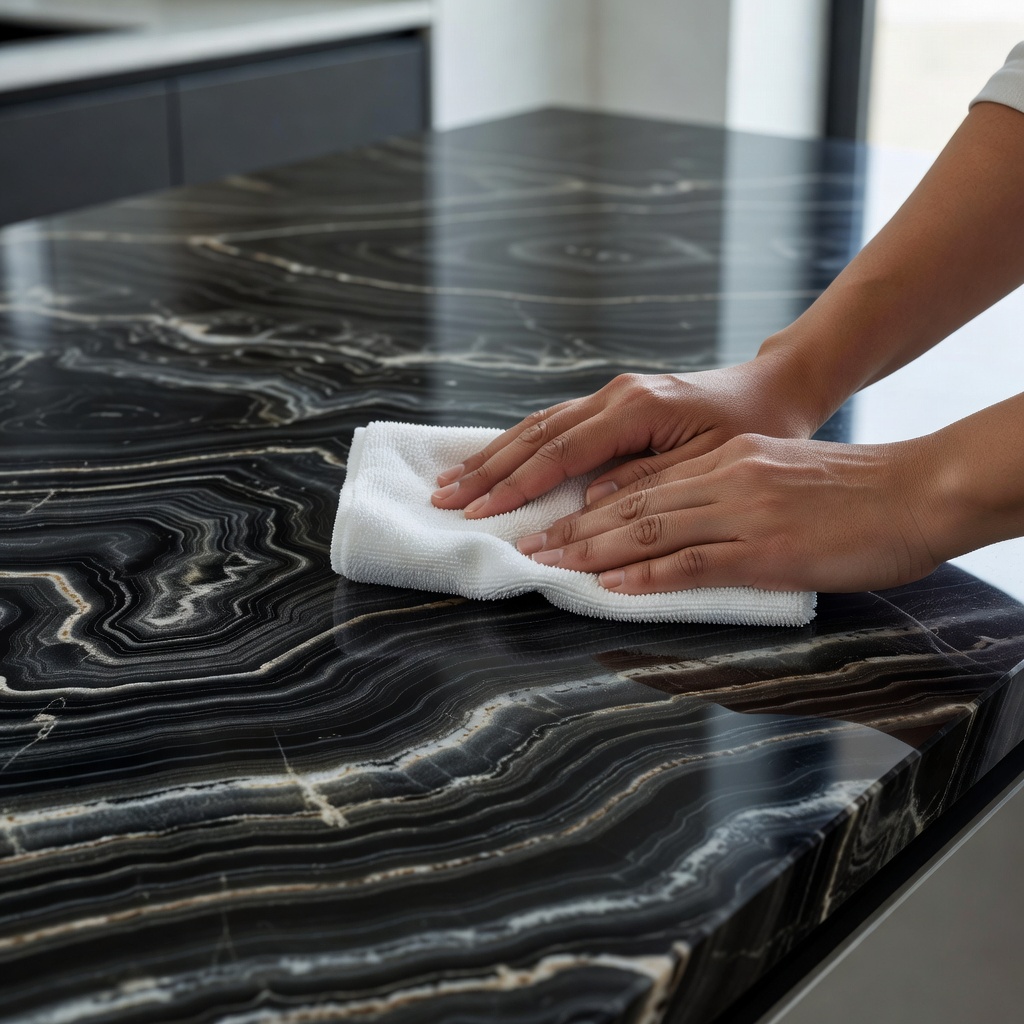
Establishing a daily maintenance protocol represents the most effective defense against cumulative damage that can mar your onyx surfaces over time. Begin each day by using a soft microfiber cloth dampened with warm water to gently remove dust, crumbs, and surface debris that could scratch the stone if ground into the surface during daily activities. For routine sanitization, apply a pH-neutral stone cleaner specifically formulated for calcite-based stones, spraying the solution onto the cloth rather than directly onto the surface to prevent oversaturation. Perhaps the most critical aspect of how to clean onyx effectively involves immediate attention to spills, particularly acidic substances such as red wine, coffee, citrus juices, or tomato sauce, which can begin etching the calcium content within seconds of contact. Always blot spills gently with a clean, dry cloth rather than wiping, as wiping motions can spread the acidic liquid across a larger surface area and exacerbate the potential for damage.
Deep Cleaning Onyx: Safe and Effective Methods
While daily maintenance addresses surface soil, periodic deep cleaning becomes necessary to address embedded dirt and restore the stone's clarity without compromising its structural integrity. Reserve deep cleaning sessions for quarterly or bi-annual intervals, utilizing specially formulated onyx stone cleaners that contain surfactants capable of lifting oils and grime without introducing harsh chemicals or acidic compounds. For persistent stains that resist standard cleaning, create a gentle poultice by mixing baking soda with water to form a thick paste consistency similar to peanut butter, applying it directly to the affected area and covering it with plastic wrap for 24 to 48 hours to draw out the discoloration. Unlike cleaning harder surfaces, onyx stone care tips emphasize the importance of technique over force; avoid circular scrubbing motions entirely and instead use soft blotting actions followed by immediate pat-drying with a clean microfiber towel to prevent moisture absorption. This methodical approach ensures that you remove stubborn contaminants while preserving the delicate surface finish that makes onyx so distinctive.
Sealing Onyx: Essential Protection Guide
Given onyx's inherent porosity, implementing a rigorous sealing schedule provides the invisible barrier necessary to prevent liquids from penetrating and staining the stone's interior structure. Apply a premium impregnating sealer specifically designed for calcium-based stones every 6 to 12 months for high-traffic areas such as kitchen countertops or bathroom vanities, while decorative pieces may require annual attention depending on environmental exposure. To verify that your onyx sealing efforts remain effective, conduct the simple water drop test monthly by placing a few droplets on the surface; if the water beads up and remains on the surface for several minutes, your sealant remains intact, but if the stone absorbs the water within five minutes, immediate resealing is necessary. For large installations or intricate bookmatched slabs where uniform coverage proves challenging, professional sealing services ensure even application using specialized equipment that penetrates deeply into the stone's fissures and banding lines. This proactive approach to sealing transforms your onyx from a vulnerable, stain-prone surface into a resilient, maintainable feature that withstands daily use while retaining its ethereal glow.
Polishing Onyx: Restoring Natural Shine
Over time, even meticulously maintained onyx can develop a dull, hazy appearance due to micro-scratches and the accumulation of cleaning residues that obscure its natural translucence. Professional onyx restoration technicians utilize diamond polishing pads with progressively increasing grit levels, typically starting at 400 grit and moving through 800, 1500, and finally 3000 grit to gradually refine the surface without removing excessive material. For homeowners performing maintenance between professional services, applying onyx-specific polishing powder containing aluminum oxide or tin oxide can restore gloss while filling microscopic scratches that scatter light and reduce clarity. It is crucial to avoid wax-based polishes or all-purpose shine enhancers that promise quick results, as these products create a superficial coating that yellows over time, traps dirt within the stone's pores, and requires harsh strippers for removal that can damage the underlying calcite structure. True onyx polish comes from mechanically refining the stone's surface rather than coating it, ensuring that the characteristic depth and luminosity remain authentic and long-lasting.
Common Onyx Cleaning Mistakes to Avoid
Despite the availability of proper care information, many homeowners inadvertently damage their onyx surfaces through well-intentioned but catastrophic cleaning choices that contradict basic stone care principles. Never apply vinegar, lemon juice, or commercial descaling agents to onyx, as these acidic substances trigger immediate chemical reactions with the calcium carbonate content, creating permanent etch marks that appear as dull, rough patches on the otherwise glossy surface. Equally damaging is the use of abrasive scrubbers, steel wool, or stiff-bristled brushes that leave microscopic scratches across the soft stone surface, creating pathways for future staining and disrupting the uniform reflectivity that defines quality onyx countertop maintenance. Perhaps the most common oversight involves allowing spills to remain on the surface for extended periods or permitting standing water from plant pots or wet glasses to sit overnight, both of which enable moisture and minerals to penetrate the sealant and cause deep, often irremovable discoloration within the stone's banding.
Onyx Care by Application: Countertops, Jewelry & Decor
The specific care protocols for onyx vary significantly depending on whether the stone serves as a functional countertop surface, a piece of wearable jewelry, or a decorative art object displayed within your home. For onyx countertop maintenance in kitchens and bathrooms, religious use of cutting boards prevents knife scratches, while coasters and trivets protect against both heat damage and acidic condensation from beverage glasses that can create ring-shaped etch marks. When caring for onyx jewelry such as cufflinks, pendants, or carved beads, clean pieces using mild soap and lukewarm water applied with a soft-bristled baby brush, then store each item separately in soft cloth pouches to prevent scratching from contact with harder gemstones or metal settings. Decorative onyx pieces including lamps, vases, and sculptures require regular dusting with a feather duster or soft cloth, positioning them away from direct sunlight that can fade the stone's vibrant banding colors over time and maintaining stable humidity levels to prevent cracking in dry environments. Tailoring your protection strategies to the specific application ensures that every onyx item retains its value and beauty regardless of function.
When to Seek Professional Onyx Restoration
Even with diligent home maintenance, onyx surfaces eventually accumulate damage that exceeds the capabilities of consumer-grade products and requires specialized intervention from stone restoration professionals. Deep etching that penetrates beyond the surface sealant, severe staining from oil or wine that has migrated deep into the stone's veining, or widespread dullness affecting large surface areas all indicate the need for comprehensive onyx restoration services. Professional technicians employ diamond honing equipment to grind away damaged surface layers, followed by multi-stage polishing using progressively finer abrasives and final resealing with commercial-grade penetrating sealants that provide superior protection compared to retail products. While costs vary by region and damage severity, professional restoration typically ranges from $5 to $15 per square foot, representing a worthwhile investment compared to the thousands required for complete replacement of premium onyx installations. Attempting aggressive DIY restoration on significant damage often exacerbates the problem due to onyx's softness, making early professional consultation the wisest choice when home remedies fail to produce satisfactory results.
Final Tips for Long-Lasting Onyx Beauty
Sustaining the ethereal beauty of onyx requires transitioning from reactive cleaning to proactive stewardship through systematic maintenance planning and household education. Establish a consistent schedule that includes daily wipe-downs with appropriate cleaners, monthly inspections of sealant integrity using the water-drop test, and annual professional assessments to address minor etching before it becomes severe damage. Create a quick-reference care card laminated near onyx surfaces that reminds family members and guests to use coasters, clean spills immediately, and avoid placing hot or acidic items directly on the stone, effectively multiplying your protective efforts through shared responsibility. Maintain detailed documentation of your onyx installation date, the specific sealant products used, and dates of professional treatments to track maintenance history and predict when future interventions become necessary. By institutionalizing these onyx care and cleaning protocols into your household routines, you ensure that this magnificent natural stone continues to serve as a luminous focal point that appreciates in character and value throughout your ownership.
Frequently Asked Questions About Onyx Maintenance
Can I use vinegar or lemon juice to clean onyx?
No, absolutely not. Vinegar, lemon juice, and other acidic cleaners will etch and permanently damage the calcium-based surface of onyx within seconds of contact, creating dull, rough patches that require professional polishing to remediate. These common household acids react chemically with the calcite crystals that compose onyx, essentially dissolving the surface structure and ruining the polished finish. Always use pH-neutral cleaners specifically designed for natural stone to ensure effective sanitation without compromising the stone's integrity.
How often should onyx be sealed?
Onyx should be sealed every 6-12 months for countertops and high-traffic areas where frequent contact increases the risk of liquid penetration and staining. For decorative pieces that experience minimal handling or environmental exposure, sealing annually is typically sufficient to maintain adequate protection. Test the seal by dropping water onto the surface—if it doesn't bead within 5 minutes but instead absorbs into the stone, it's time to reseal regardless of the calendar schedule.
What is the best daily cleaner for onyx surfaces?
Use warm water with a few drops of mild dish soap or a commercially available pH-neutral stone cleaner specifically formulated for calcium-based stones like onyx and marble. Mix the solution in a spray bottle, apply it to a soft microfiber cloth rather than directly onto the stone, and wipe the surface using gentle linear motions. Dry immediately with a separate clean cloth to prevent water spots and ensure no moisture remains on the surface to penetrate the stone's pores.
Can etched onyx be repaired at home?
Minor etching may be improved with fine-grit diamond polishing pads used with plenty of water and gentle pressure, but significant etching requires professional restoration to avoid creating uneven surfaces or worsening the damage. DIY attempts on deep damage often prove counterproductive due to onyx's softness and the technical skill required to match the surrounding polish level. If you can feel the etch mark with your fingernail or if it covers a large area, consult a professional stone restoration technician rather than attempting home repair.
Is onyx suitable for kitchen countertops?
Onyx can be used for kitchen countertops but requires meticulous care and realistic expectations regarding its durability compared to harder stones like granite or quartzite. It's better suited for low-traffic areas, powder rooms, or as accent pieces rather than primary food preparation surfaces. If used in kitchens, strict maintenance protocols including immediate spill cleanup, consistent use of cutting boards, and frequent resealing are essential to prevent the etching and staining that inevitably occur in high-activity cooking environments.
How do I remove stubborn stains from onyx?
Create a poultice by mixing baking soda with water into a paste consistency similar to peanut butter, then apply it directly to the stain in a layer approximately one-quarter inch thick. Cover the poultice with plastic wrap, tape down the edges to create a seal, and let it sit for 24-48 hours until completely dry, allowing the drying action to draw the stain out of the stone and into the powder. Remove the dried poultice gently with a plastic scraper and rinse with distilled water, repeating the process if necessary for deep stains without resorting to harsh chemicals.
What's the difference between onyx and marble care?
While both onyx and marble are calcium-based stones requiring pH-neutral cleaners and protection from acids, onyx is significantly more porous and softer than marble, making it even more susceptible to damage from spills, scratches, and environmental factors. Onyx typically requires more frequent sealing than marble—every 6 months versus annually for many marble applications—and demands gentler handling due to its lower Mohs hardness rating. The banded structure of onyx also means that stains often follow the veining patterns, making them appear more dramatic and harder to hide than in uniformly colored marble.
Can I use a steam cleaner on onyx surfaces?
No, steam cleaners are not recommended for onyx under any circumstances. The high heat and pressure can degrade or remove the protective sealant, force moisture deep into the stone's pores where it becomes trapped, and potentially cause thermal shock that leads to cracking or delamination of the surface layers. Additionally, steam can drive existing surface contaminants deeper into the stone rather than removing them. Stick to gentle hand-cleaning methods using appropriate stone cleaners and soft cloths to maintain the integrity of your onyx surfaces.