Obsidian Buying Guide: Everything You Need to Know Before Purchasing Volcanic Glass
Navigating the world of volcanic glass requires knowledge and discernment to ensure you receive authentic, high-quality material worth your investment. This comprehensive Obsidian Buying Guide provides the essential information collectors, jewelry makers, and crystal enthusiasts need to make informed purchasing decisions. Whether you are seeking black obsidian for protection practices or rainbow obsidian for a stunning pendant, understanding the nuances of this natural glass will help you avoid common pitfalls and recognize genuine specimens.
What Is Obsidian? Understanding Volcanic Glass Basics
Obsidian is a naturally occurring volcanic glass formed when felsic lava extruded from a volcano cools rapidly with minimal crystal growth. Unlike crystalline minerals that form slowly over thousands of years, obsidian solidifies so quickly that atoms cannot arrange into a crystalline structure, resulting in an amorphous, glass-like substance. This unique formation process gives obsidian its characteristic conchoidal fracture pattern, which creates extremely sharp edges that were prized by ancient civilizations for tool-making and weaponry.
Historically, obsidian held tremendous value across multiple cultures, from the Mayans who used it for sacrificial blades to prehistoric humans who crafted arrowheads and cutting tools. Archaeological evidence shows that obsidian was traded extensively throughout the ancient world, with some specimens traveling hundreds of miles from their volcanic sources. Today, understanding what is obsidian helps modern buyers appreciate both its geological significance and its continued relevance in contemporary applications ranging from surgical scalpels to ornamental carvings.
The physical properties of volcanic glass include a hardness rating of 5 to 5.5 on the Mohs scale, making it softer than quartz but harder than window glass. Its specific gravity ranges from 2.3 to 2.6, giving it a substantial, satisfying weight when held in the hand. Obsidian typically displays a vitreous luster and exhibits perfect conchoidal fracture, meaning it breaks with smooth, curved surfaces that resemble the interior of a seashell. These volcanic glass properties make it both beautiful and functional, though its brittleness requires careful handling in jewelry settings.
Types of Obsidian: Choosing the Right Variety
The diverse world of types of obsidian offers something for every collector and practitioner, with each variety displaying unique visual characteristics and energetic properties. Understanding these differences is crucial when selecting specimens for specific purposes, as the inclusions and formation conditions create distinct appearances and purported metaphysical attributes. From the deep, mirror-like surfaces of classic varieties to the intricate patterns of specialized forms, knowing your options ensures you select the perfect piece for your needs.
Black Obsidian: The Classic Foundation
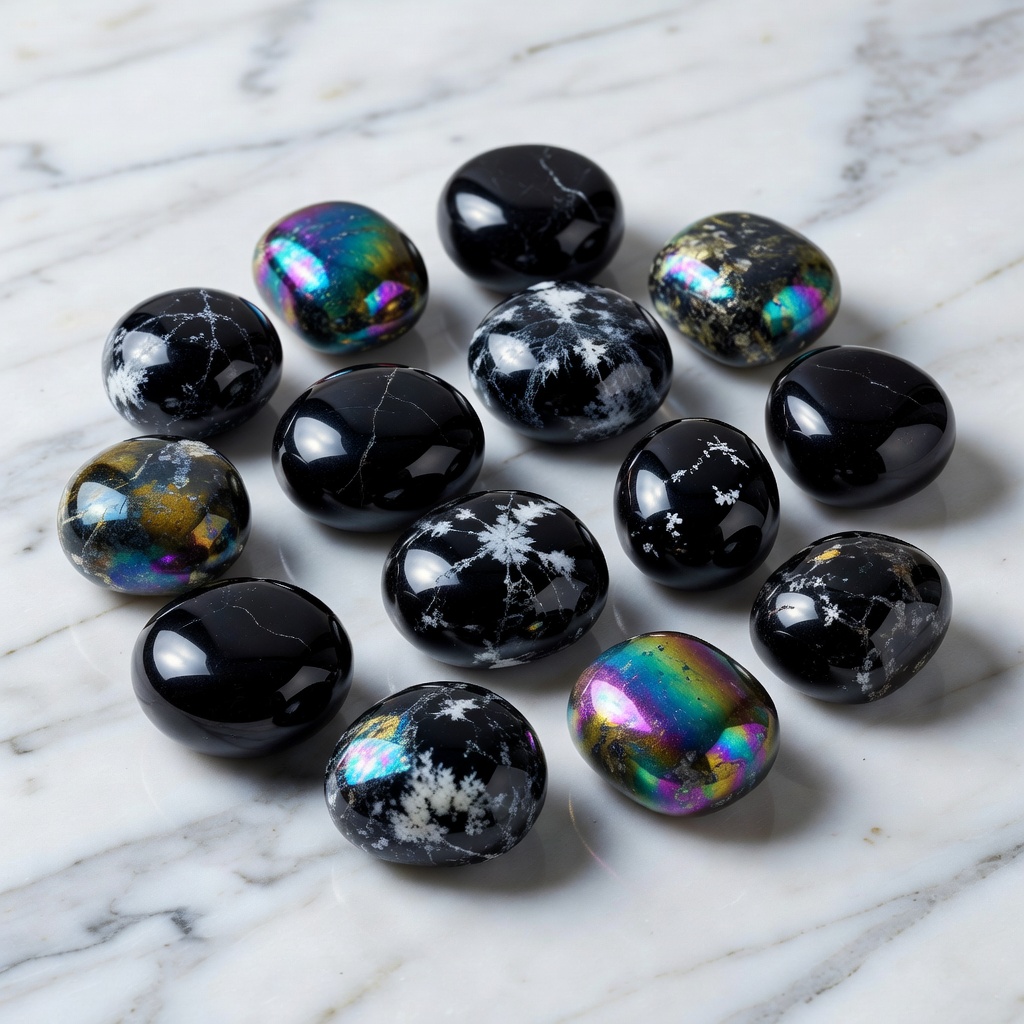
Black obsidian represents the most abundant and widely recognized form of this volcanic glass, characterized by its deep jet color and ability to take a high polish that rivals manufactured glass. This variety forms when lava cools without significant gas bubbles or mineral inclusions, resulting in a pure, homogeneous material that reflects light with mirror-like intensity. When shopping for black obsidian, look for pieces with consistent coloration throughout and a surface free of pitting or dull spots, as these indicate either lower quality material or improper polishing techniques.
Snowflake Obsidian: Nature's Crystalline Artistry
Snowflake obsidian captivates collectors with its distinctive gray-white spherulite inclusions of cristobalite that create intricate, snowflake-like patterns against the black glass matrix. These formations occur when the obsidian undergoes partial devitrification, allowing tiny crystals to grow within the glass over geological time periods. High-quality snowflake obsidian displays well-defined, symmetrical patterns with clear contrast between the white inclusions and dark background, making it particularly prized for jewelry and meditation practices focused on balance and purity.
Rainbow Obsidian: Spectral Beauty in Stone
Rainbow obsidian reveals stunning gold, green, and purple sheen effects when viewed under bright light, caused by the interference of light rays reflecting off microscopic magnetite crystals layered within the glass. This variety requires expert cutting and polishing to orient the layers correctly and maximize the chatoyant effect, making well-crafted pieces more valuable than standard black varieties. When examining rainbow obsidian, tilt the stone under a light source to observe the full spectrum of colors; premium specimens will display vibrant, multi-hued bands that shift and shimmer with movement.
Mahogany and Metallic Varieties
Mahogany obsidian features iron-rich brown to reddish bands swirling through the black glass, created by varying oxidation states of iron during the lava's cooling process. Gold sheen and silver sheen obsidian varieties display metallic luster caused by aligned gas bubbles or mineral inclusions that reflect light in parallel patterns. These specialized types often command higher prices than plain black obsidian due to their relative scarcity and the skill required to polish them without obscuring their distinctive optical effects.
Quality Indicators: How to Assess Obsidian Grade
Evaluating obsidian quality requires attention to several critical factors that distinguish museum-grade specimens from commercial material suitable only for rough crafting. Professional dealers and serious collectors examine specific characteristics that indicate how the stone was formed, processed, and handled before reaching the market. Developing an eye for these quality markers protects your investment and ensures you receive genuine obsidian identification that matches the price point and intended use.
Clarity and translucency serve as primary indicators of high-grade material, with premium obsidian appearing semi-transparent when held to strong light, particularly at the thinner edges. While opaque centers are normal in thicker pieces, the ability to see light passing through the margins indicates pure, bubble-free glass without internal contaminants or fractures. When examining potential purchases, hold specimens against a bright light source to check for cloudy areas, visible inclusions, or internal cracks that would compromise structural integrity for jewelry applications.
Surface polish quality significantly impacts both aesthetic appeal and value, with top-tier obsidian displaying a flawless, mirror-like finish free of scratches, pitting, or dull patches. Examine the surface under magnification to identify tiny fractures or contamination that might not be visible to the naked eye. For patterned varieties like snowflake or mahogany obsidian, assess whether the inclusions are distinct and well-distributed rather than blurred or sparse, as pattern distinctiveness directly correlates with market value and visual impact.
Structural integrity demands careful inspection for internal cracks, chips, or stress fractures that could propagate and destroy the stone during cutting or setting. Tap the obsidian gently against your tooth or a hard surface; genuine, solid material produces a sharp, ringing sound, while fractured pieces sound dull or thud-like. Color consistency throughout the stone indicates natural formation without dye treatments, though some varieties like rainbow obsidian naturally exhibit color variations depending on viewing angle and lighting conditions.
Spotting Fake Obsidian: Essential Authentication Tests
The growing popularity of volcanic glass has unfortunately led to an influx of fake obsidian and imitations that can fool inexperienced buyers. Man-made glass, plastic resins, and dyed stones frequently appear in markets and online platforms, often sold at prices that seem too good to be true. Learning how to tell real obsidian from these substitutes protects both your wallet and your collection's integrity, ensuring you acquire authentic geological specimens rather than manufactured counterfeits.
Visual inspection under magnification provides the most reliable method for distinguishing natural obsidian vs glass imitations, as genuine material never contains bubbles while manufactured glass almost always displays tiny spherical cavities. Use a jeweler's loupe or strong magnifying glass to examine the interior of the stone; natural obsidian may contain mineral inclusions or flow lines but will lack the perfect round bubbles characteristic of factory-produced glass. Additionally, examine the fracture surfaces—real obsidian displays characteristic conchoidal fractures with curved, shell-like patterns, while fake materials often break with conchoidal patterns that look too perfect or uniform.
The temperature test offers a quick field method for authentication, as real obsidian feels distinctly cooler than man-made glass when initially touched due to its higher density and thermal conductivity. Place the stone against your cheek or inner wrist; genuine obsidian should feel noticeably cold initially and warm slowly, whereas plastic imitations feel room temperature immediately and glass imitations warm more quickly. While not definitive alone, this test helps identify obvious plastic fakes that have flooded the market in recent years.
Price analysis serves as a practical reality check when evaluating authenticity, as extremely low prices often indicate dyed glass, plastic, or inferior substitutes rather than genuine volcanic material. If a seller offers large "rare" obsidian spheres or elaborate carvings for less than the cost of raw material, skepticism is warranted. UV light testing can reveal artificial dyes or treatments, as many color-enhanced stones fluoresce unnaturally under ultraviolet light, while natural obsidian typically shows minimal to no fluorescence. Always request documentation or provenance information when purchasing expensive specimens, and prioritize dealers who offer authentication guarantees and reasonable return policies.
Best Uses: Matching Obsidian Types to Purposes
Understanding the optimal applications for different varieties ensures you select obsidian jewelry and specimens that perform well in their intended roles while avoiding disappointment from mismatched expectations. Each type of obsidian possesses distinct physical properties and aesthetic qualities that make it suitable for specific applications, from daily wear accessories to spiritual practices. Matching the right material to your project requires considering hardness limitations, fracture risks, and the energetic properties associated with different varieties.
Jewelry considerations demand particular attention to the 5.5 Mohs hardness rating, which makes obsidian suitable for pendants and earrings but potentially risky for rings and bracelets that endure impact and abrasion. When selecting obsidian jewelry for daily wear, choose protective settings such as bezels rather than prong settings that leave edges exposed. Black obsidian and snowflake obsidian work beautifully as cabochons in wire wrapping projects, while thinner pieces of rainbow obsidian create stunning focal points in pendants where their chatoyancy can be displayed to maximum effect.
Crystal healing practitioners select specific varieties based on attributed metaphysical properties, with black obsidian traditionally associated with grounding and protection, snowflake obsidian linked to emotional balance and purity, and mahogany obsidian connected to strength and vitality. When choosing stones for healing work, consider the size and shape that feels comfortable during meditation; palm stones and worry stones work well for holding during sessions, while larger display pieces serve as energetic anchors in home environments. Many practitioners prefer raw, unpolished pieces for energy work, believing the natural state retains stronger vibrational qualities than commercially processed material.
Knapping enthusiasts and flintknappers require specific fracture qualities that only high-grade obsidian provides, seeking material with consistent conchoidal fracture patterns and minimal internal stress. For home decor applications, large display specimens weighing ten pounds or more create dramatic focal points, while smaller tumbled pieces work well in crystal grids or decorative bowls. Crafters should note that obsidian beads require careful drilling to prevent shattering, and cabochons for setting should have uniform thickness to ensure secure mounting in jewelry findings.
Obsidian Pricing Guide: What to Expect in 2024
Understanding current market values prevents overpayment and helps establish realistic budgets when building your collection or inventory. This obsidian price guide reflects 2024 market conditions and provides benchmarks for evaluating whether quoted prices represent fair market value or potential scams. Prices vary significantly based on variety, quality, size, and processing level, with retail markups substantially affecting final costs compared to rough material prices.
Common black obsidian remains surprisingly affordable given its beauty and utility, with rough material typically ranging from $2 to $10 per pound for unprocessed chunks suitable for lapidary work or large display pieces. Polished specimens including spheres, eggs, and freeforms generally command $10 to $50 depending on size and finish quality, with palm-sized worry stones falling in the $15 to $30 range. These baseline prices establish the foundation for understanding obsidian cost across all varieties, as premium types calculate their value as multiples of standard black obsidian rates.
Premium varieties including snowflake obsidian and rainbow obsidian typically command three to five times the base price of common black material, with exceptional specimens displaying perfect patterns or intense chatoyancy reaching even higher values. High-grade snowflake obsidian with distinct, symmetrical patterns sells for $30 to $100 per pound for rough material, while finished jewelry-grade cabochons range from $50 to $200 depending on size and pattern quality. Rainbow obsidian prices vary dramatically based on the intensity and range of colors visible, with top-grade material showing full spectral effects priced similarly to mid-range gemstones.
Size premiums significantly impact pricing for large display specimens, with pieces weighing ten pounds or more reaching $200 to $500 for high-quality black obsidian and substantially more for patterned varieties. Jewelry pricing incorporates setting costs, with simple sterling silver pendants starting around $40 to $80 while gold settings with diamond accents can push prices into the hundreds or thousands. When purchasing obsidian value items, expect wholesale-to-retail markups of 40 to 60 percent from rough material to finished goods, with handmade artisan pieces commanding additional premiums for craftsmanship and unique design elements.
Where to Buy Authentic Obsidian Safely
Finding reliable sources for genuine material requires research and vigilance to avoid the proliferation of fakes and misrepresented goods flooding the marketplace. Knowing where to buy obsidian safely ensures you receive authentic specimens while supporting ethical dealers who understand and respect the material. Whether you prefer the convenience of online shopping or the tactile experience of in-person selection, multiple reputable channels exist for acquiring quality volcanic glass.
Reputable online dealers offer the widest selection and convenience, with established gem and mineral websites providing detailed photographs, provenance information, and return policies that protect buyers. Look for sellers with GIA certification or membership in professional mineralogical societies, as these credentials indicate serious expertise and business legitimacy. When you buy obsidian online, prioritize vendors who provide multiple photographs showing different angles and lighting conditions, and who offer money-back guarantees if the material does not match descriptions upon arrival.
Gem and mineral shows provide unparalleled opportunities for physical inspection before purchase, allowing you to handle specimens, examine them under magnification, and negotiate prices directly with obsidian dealers. Major shows like the Tucson Gem and Mineral Show or regional events attract miners and wholesalers offering competitive prices and rare specimens not available through retail channels. Local crystal shops and metaphysical stores offer the advantage of immediate possession and community support, though prices typically run higher than direct-from-source options; the expertise of knowledgeable staff often justifies the premium for beginners seeking guidance.
Direct purchasing from miners through platforms like Etsy and eBay can yield excellent values but requires careful vetting of seller ratings and authentication of claims. Avoid sellers who describe common black obsidian as "rare" or "limited edition," as these are red flags indicating either ignorance or deliberate deception. Genuine obsidian dealers will provide specific locality information, acknowledge the relative abundance of common varieties, and price their goods within reasonable market ranges. Always verify that online sellers have substantial positive feedback specifically for mineral sales, and request additional photographs or information if listings seem vague or suspicious.
Caring for Your Obsidian Investment
Proper obsidian care ensures your specimens maintain their beauty and structural integrity for generations, protecting both aesthetic value and monetary investment. Despite its glass-like appearance, obsidian requires specific handling protocols different from both crystals and manufactured glass. Understanding these maintenance requirements prevents accidental damage and preserves the energetic qualities that many collectors value.
Cleaning obsidian safely involves using lukewarm water with mild, phosphate-free soap and a soft microfiber cloth to remove oils and environmental residues. Avoid ultrasonic cleaners and steam cleaning systems, as the vibrations and thermal shock can initiate or propagate internal fractures within the glass structure. For stubborn dirt in carved or textured pieces, use a soft-bristled toothbrush with gentle pressure, taking care not to scratch the polished surface or snag delicate settings if cleaning jewelry items.
Storage recommendations emphasize separate compartments or individual soft pouches to prevent contact with harder materials like quartz or diamond that could scratch obsidian's surface. When storing multiple pieces together, ensure they do not touch each other, as the sharp edges characteristic of conchoidal fracture can chip or scratch neighboring specimens. For obsidian jewelry, remove rings before engaging in heavy work, sports, or household chores, as the 5.5 Mohs hardness makes the material susceptible to chipping upon impact with hard surfaces.
Physical limitations require acknowledging that obsidian's brittleness makes it less suitable for daily wear in rings or bracelets compared to harder gemstones. Energy cleansing practices for metaphysical users include smudging with sage, exposure to moonlight during full moons, or brief rinsing in natural salt water followed by immediate drying. Long-term preservation requires avoiding prolonged exposure to direct sunlight, which can fade the vibrant colors in rainbow obsidian and potentially cause thermal stress in extreme temperatures. With proper obsidian maintenance, these beautiful volcanic glasses remain pristine specimens that bridge ancient geological processes with modern appreciation.
Frequently Asked Questions About Obsidian
How can I tell if my obsidian is real or fake?
Real obsidian is natural volcanic glass with conchoidal (curved) fracture patterns and no bubbles when examined under magnification. It feels denser and cooler than man-made glass initially. Fake obsidian often contains tiny bubbles, has perfect uniformity, or feels lightweight like plastic.
What is the average price range for quality obsidian?
Common black obsidian typically costs $2-$10 per pound for rough material and $10-$50 for polished specimens. Premium varieties like snowflake or rainbow obsidian range from $20-$100 depending on pattern quality and size. Jewelry pieces start around $15 for simple pendants and increase based on setting quality.
Which type of obsidian is best for making jewelry?
Black obsidian and snowflake obsidian are excellent for jewelry due to their durability (5.5 Mohs hardness) and striking appearance. For daily wear rings, choose protective bezel settings since obsidian can chip if knocked. Pendants and earrings are ideal as they avoid impact risks associated with bracelets and rings.
Is there a difference between obsidian and black onyx?
Yes, obsidian is volcanic glass formed from rapidly cooled lava, while black onyx is a banded variety of chalcedony (microcrystalline quartz). Onyx is harder (7 Mohs), more durable for jewelry, and typically more expensive. Obsidian has a glassy luster and conchoidal fracture, whereas onyx has a waxy luster and crystalline structure.
Can obsidian be manufactured or created in a lab?
While true synthetic obsidian exists in small quantities for research, most 'fake' obsidian on the market is simply manufactured glass or plastic. Natural obsidian has unique trace elements and formation characteristics that are difficult to replicate economically. Always purchase from reputable dealers who guarantee natural origin.
What is snowflake obsidian and why does it cost more?
Snowflake obsidian is black obsidian containing white-gray spherulite inclusions of cristobalite that form snowflake-like patterns. It costs more than plain black obsidian due to the aesthetic appeal of these patterns and the relative rarity of well-defined, symmetrical snowflake formations. High-grade specimens display clear, contrasting patterns without matrix rock.
Should I buy raw rough obsidian or polished pieces?
Choose raw obsidian if you enjoy lapidary work, want natural energy for metaphysical practices, or prefer rustic decor. Select polished pieces for jewelry settings, worry stones, or display items where smooth texture is desired. Rough obsidian is significantly cheaper but requires proper handling due to extremely sharp edges.
Where does the highest quality obsidian come from?
Premium obsidian is sourced from volcanic regions including Oregon (USA), Mexico, Armenia, and Iceland. Oregon produces exceptional fire obsidian and rainbow varieties, while Mexico is known for large deposits of black and golden sheen obsidian. The 'best' quality depends on the specific variety desired, as different regions produce distinct types.