
Understanding Obsidian: A Comprehensive Buying Guide for Collectors and Enthusiasts
Whether you are drawn to obsidian for its striking aesthetic appeal, metaphysical properties, or geological significance, navigating the marketplace requires knowledge and discernment. This comprehensive Obsidian Buying Guide provides essential insights into evaluating quality, identifying authentic specimens, and making informed purchasing decisions. From the glassy depths of black obsidian to the iridescent flashes of rainbow varieties, understanding the nuances of this volcanic glass ensures you acquire pieces that meet your expectations and investment goals. Armed with the right information, you can confidently explore the diverse world of obsidian without falling prey to synthetic imitations or overpriced inferior material.
What Is Obsidian? Understanding Volcanic Glass Fundamentals
Obsidian is a naturally occurring volcanic glass formed when felsic lava extruded from a volcano cools rapidly with minimal crystal growth. This rapid cooling process, often occurring at the edges of lava flows or when lava contacts water, prevents the formation of crystalline structures, resulting in an amorphous solid with unique physical properties. Understanding what is obsidian begins with recognizing its formation from silica-rich magma containing less than one percent water by weight, creating the distinctive glassy texture that has captivated humans for millennia.
The volcanic glass properties of obsidian include a conchoidal fracture pattern, which means it breaks with curved, shell-like surfaces that were prized by ancient civilizations for crafting sharp tools and weapons. With a Mohs hardness of 5 to 5.5, obsidian is relatively soft compared to quartz but can be knapped to create edges sharper than surgical steel. These characteristics made it invaluable to prehistoric peoples across North America, Mesoamerica, and the Mediterranean, who utilized obsidian for everything from hunting implements to sacred ceremonial objects.
When examining potential purchases, distinguish between natural volcanic glass and man-made alternatives by examining the texture and inclusions. Genuine obsidian often contains trace elements of iron and magnesium that influence its coloration, along with microscopic crystals or flow banding that indicate natural formation. Unlike manufactured glass, which may contain perfectly spherical bubbles or uniform consistency, natural obsidian exhibits subtle variations in density and occasional phenocrysts—small crystalline inclusions that formed before the rapid cooling process completed.
Types of Obsidian: From Classic Black to Rare Varieties
The marketplace offers a diverse spectrum of types of obsidian, each possessing distinct visual characteristics and value propositions. Black obsidian remains the most abundant and accessible variety, characterized by its deep, opaque black coloration and vitreous luster. This classic variety typically originates from Mexico, Oregon, or Armenia and serves as an excellent entry point for new collectors due to its widespread availability and affordable pricing structure.
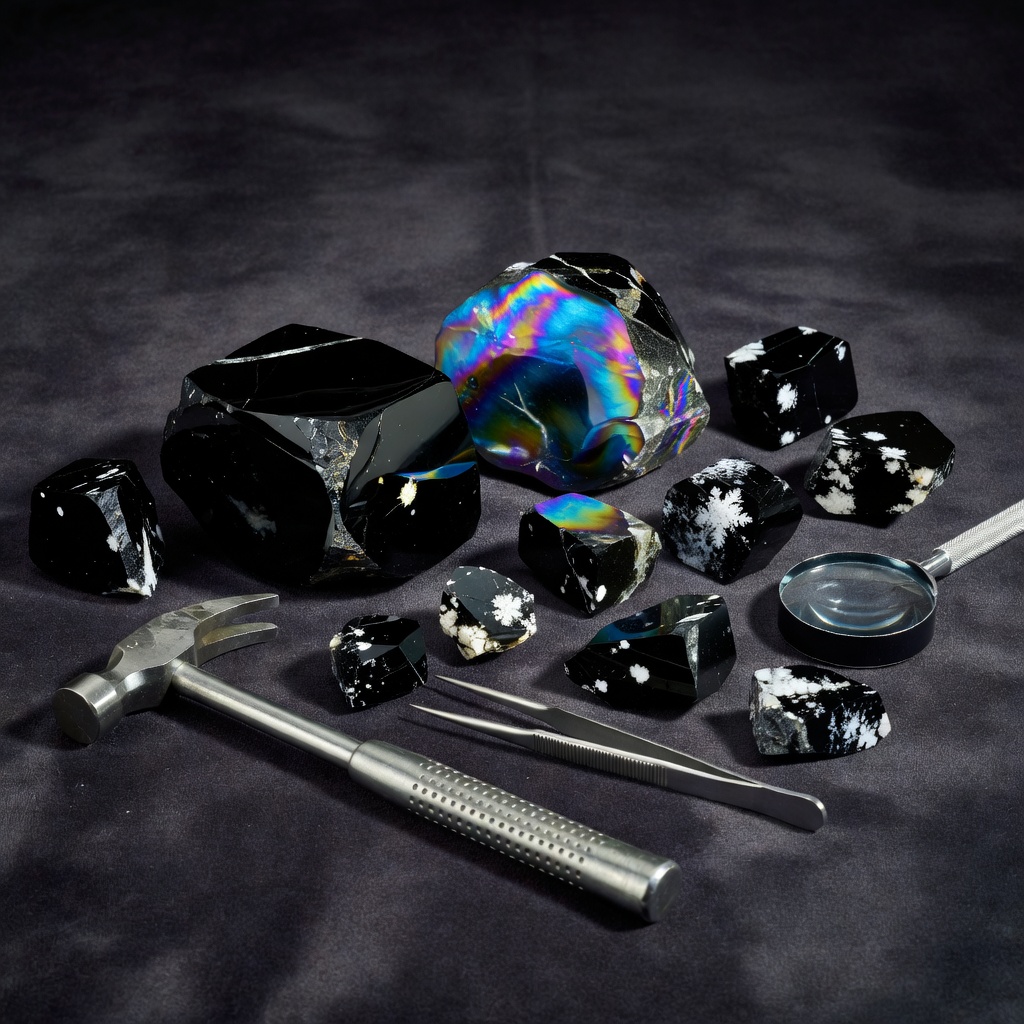
Rainbow obsidian represents one of the most coveted varieties, displaying remarkable iridescence caused by microscopic magnetite nanoparticles arranged in parallel layers. When light strikes these thin layers at specific angles, it creates bands of purple, green, gold, and blue sheen reminiscent of oil on water. When evaluating rainbow obsidian, examine specimens under multiple lighting conditions—genuine sheen appears at specific angles and depths, whereas artificial treatments often produce uniform, surface-level coloration that lacks dimensional depth.
Snowflake obsidian features distinctive white spherulites composed of cristobalite, a polymorph of quartz, scattered across the black glassy matrix like snowflakes against night skies. The value of snowflake obsidian depends on the density, symmetry, and distribution of these white inclusions, with specimens displaying dense, uniform patterns commanding premium prices. Additionally, collectors seek mahogany obsidian, characterized by reddish-brown streaks of iron oxide, and the particularly rare gold sheen and silver sheen varieties that display metallic luster caused by gas bubbles aligned along flow layers.
Quality Grading: How to Evaluate Obsidian Characteristics
Establishing obsidian quality grades requires systematic evaluation of multiple physical attributes that influence both aesthetic appeal and market value. Surface luster serves as the primary quality indicator, with top-grade specimens displaying a mirror-like vitreous shine free from pitting, scratches, or cloudiness. When assessing obsidian characteristics, examine chatoyancy—the cat's eye effect seen in certain varieties—by rotating the specimen under single-point lighting to verify the presence and intensity of optical phenomena.
Clarity assessment in obsidian differs from crystalline gemstones, as inclusions often enhance rather than detract from value. In snowflake obsidian, cristobalite inclusions should be well-defined and symmetrically distributed. For rainbow and sheen varieties, evaluate whether the optical effects penetrate deeply into the material or merely skim the surface. High-quality cabochons should display consistent dome height without flat spots, while spheres require perfect symmetry and high polish free from tool marks or irregularities.
Craftsmanship standards vary significantly between utilitarian specimens and collector-grade pieces. Examine carved specimens for crisp detail and uniform polish in recessed areas, as poor workmanship often leaves dull patches or visible scratches in complex designs. For jewelry applications, inspect the girdle edges and pavilion for microscopic fractures that could compromise structural integrity during setting or wear. Size and weight considerations also impact grading, with larger specimens maintaining optical quality throughout their mass commanding significant premiums over smaller fragments with similar surface characteristics.
Authentication Methods: Spotting Fake and Treated Obsidian
Learning how to spot fake obsidian protects your investment and ensures your collection maintains integrity and value. Begin with hardness testing using the Mohs scale—genuine obsidian registers 5 to 5.5 and should resist scratching by a steel knife blade (5.5 Mohs) but yield to quartz (7 Mohs). Conduct this test on inconspicuous areas or rough edges to avoid damaging finished pieces, and verify that the scratch creates a white streak indicative of genuine volcanic glass rather than manufactured alternatives.
Temperature conduction provides another reliable authentication method. Natural obsidian feels distinctly cool to the touch upon initial contact and warms slowly when held, due to its specific heat capacity and thermal conductivity properties. Manufactured glass, by contrast, typically acclimates rapidly to body temperature. When examining real vs fake obsidian under 10x magnification, look for natural flow lines, microlites, and irregular inclusions rather than perfectly round bubbles or swirl patterns characteristic of slag glass or manufactured imitations.
Bubble inspection requires careful observation under adequate lighting and magnification. While natural obsidian may contain occasional irregular gas pockets or flow-banding, manufactured glass often displays perfectly spherical bubbles with uniform size distribution. Additionally, scrutinize specimens for evidence of common treatments including dyeing—particularly in vibrant blue or green specimens that rarely occur naturally—and heating processes designed to enhance sheen artificially. Composite materials, where thin obsidian layers adhere to glass backing, may show separation lines or color discrepancies at edges and drill holes.
Pricing Guide: Understanding Obsidian Market Values
Developing realistic expectations through an obsidian price guide enables strategic purchasing decisions across various market segments. Common black obsidian rough material typically ranges from $2 to $10 per pound, making it accessible for lapidary enthusiasts and beginning collectors. Finished cabochons generally command $5 to $30 depending on size and polish quality, while rare varieties exhibiting exceptional optical phenomena can reach $50 to $200 per piece or higher for museum-grade specimens.
Multiple factors influence obsidian value beyond basic variety classification. Origin location significantly impacts pricing, with specimens from specific localities such as certain Oregon deposits or Armenian mines carrying premiums due to geological uniqueness or mining restrictions. Size matters disproportionately in pricing structures—larger pieces free from fractures or inclusions become exponentially rarer and command higher per-gram pricing than smaller fragments. Matrix presence, referring to the host rock attached to specimens, may increase value for display pieces showing natural formation context or decrease value for jewelry material requiring extensive trimming.
Market channels affect pricing substantially, with gem shows and wholesale purchasing offering opportunities for negotiated discounts on bulk acquisitions. Retail crystal shops typically mark up inventory 100 to 300 percent to cover overhead costs, while direct-from-miner purchases at mineral shows may offer superior value. When budgeting, distinguish between entry-level specimens suitable for energy work or casual display and investment-grade pieces with documented provenance, exceptional craftsmanship, or rare optical characteristics that appreciate over time.
Purpose-Driven Selection: Choosing Obsidian for Specific Uses
Selecting appropriate specimens requires aligning obsidian jewelry buying criteria with intended applications and durability requirements. For jewelry applications, prioritize specimens free from surface-reaching fractures or internal cleavage planes that could propagate during setting or daily wear. Black obsidian offers excellent durability for pendants and earrings, while bracelets and rings require protective bezel settings rather than prong settings to shield edges from impact. Consider the metal setting compatibility—obsidian's dark coloration pairs strikingly with sterling silver for contrast or yellow gold for warmth.
Practitioners seeking obsidian for meditation and energy work should evaluate tactile properties and energetic resonance. Palm stones require smooth, oval shapes fitting comfortably in the hand with uniform thickness for extended holding periods. Scrying mirrors demand perfectly flat, highly polished surfaces without distortions or inclusions that might interrupt visualization practices. Massage wands and acupuncture tools require specific length-to-width ratios and rounded tips to prevent tissue damage during therapeutic application.
Collectors focusing on display specimens should prioritize aesthetic impact and geological significance. Matrix specimens showing obsidian nodules embedded in perlite or rhyolite host rock provide educational context and visual interest. For lapidary artists selecting raw material, examine fracture patterns to predict cutting yields—material with conchoidal fracture running perpendicular to desired cabochon orientation produces cleaner cuts with less wastage. Carvers should select homogeneous material free from internal flow bands that might create weak points during detailed work.
Trusted Sources: Where to Buy Authentic Obsidian
Determining where to buy obsidian involves vetting suppliers for authenticity guarantees, transparent business practices, and geological expertise. Reputable online mineral dealers typically provide detailed photography under multiple lighting conditions, specific locality information, and disclosure of any treatments or enhancements. Established crystal shops with physical locations often allow tactile examination before purchase, enabling assessment of weight, temperature, and surface texture that photography cannot convey.
Mineral shows, rockhound gatherings, and estate sales offer unique opportunities for best places to buy obsidian directly from collectors or miners. These venues allow direct questioning about sourcing, mining methods, and geological context while often providing competitive pricing compared to retail establishments. When purchasing at shows, bring a loupe for magnification, a flashlight for examining transparency and inclusions, and reference materials for comparing prices across vendors.
Before completing transactions, ask specific questions regarding sourcing documentation, treatment disclosure, and return policies. Legitimate sellers willingly provide information about mining locations, whether specimens are natural or enhanced, and offer inspection periods for authentication. Red flags include vague locality descriptions ("from various mines"), refusal to provide close-up photography, prices significantly below market value suggesting synthetic material, and sellers who pressure immediate purchase without allowing examination time.
Care and Maintenance: Preserving Your Obsidian Investment
Proper obsidian care ensures your specimens maintain their aesthetic appeal and structural integrity across decades of ownership. For routine cleaning obsidian, use warm water with mild dish soap and a soft microfiber cloth or natural bristle brush to remove oils and dust accumulation. Avoid ultrasonic cleaners, which can exacerbate existing fractures through cavitation, and steer clear of steam cleaning or harsh chemical solvents including acetone or ammonia that may etch the surface or degrade any adhesive used in composite specimens.
Storage solutions require strategic separation from harder minerals to prevent scratching. Despite obsidian's glassy appearance, its 5.5 Mohs hardness makes it vulnerable to damage from quartz, topaz, corundum, and diamond. Store specimens individually in soft cloth bags or compartmentalized display cases with padded interiors. For carved pieces or spheres, avoid stacking or pressure contact that might cause chipping at delicate extremities.
If using obsidian for metaphysical purposes, implement energy cleansing methods that avoid physical damage. Moonlight exposure, smudging with sage or palo santo, and visualization techniques cleanse energetic properties without risking the stone's physical condition. When specimens develop surface scratches or lose polish through handling, seek professional lapidary services for re-polishing rather than attempting DIY methods that might alter original contours or remove significant material. Professional repair of chipped specimens involves careful grinding and repolishing to restore original geometry while minimizing weight loss.
Smart Buying Strategies for First-Time Collectors
Beginning your collection requires strategic planning to avoid common pitfalls while building a meaningful assemblage of authentic material. Start with affordable, verifiable common varieties such as Mexican or Oregon black obsidian to develop your eye for quality and authentication before investing in rare specimens. This approach allows you to familiarize yourself with natural texture variations, weight characteristics, and temperature properties without significant financial risk.
Establish realistic budgets that account for the full cost of collecting, including display cases, lighting for viewing optical phenomena, and reference materials for identification. Be wary of marketing terminology such as "premium grade" or "AAA quality" without standardized grading criteria—evaluate each piece individually based on the quality factors outlined in this guide rather than subjective seller ratings. Avoid impulse purchases at mineral shows by researching vendors beforehand and setting spending limits for specific categories.
Cultivate relationships with reputable dealers who specialize in volcanic materials and offer educational resources alongside sales. Trusted dealers provide future acquisition opportunities, first access to new finds, and authentication assistance for estate purchases. For rare or high-value specimens, insist on documentation including locality information, collection history, and certification from recognized geological laboratories when authenticity concerns exist. Maintain detailed records of your acquisitions, including purchase dates, prices, seller information, and provenance details, which enhance resale value and insurance documentation.
Frequently Asked Questions About Obsidian Purchasing
How Much Should I Expect to Pay for Quality Obsidian?
Common black obsidian typically costs $2-$10 per pound for rough material, while cabochons range $5-$30 depending on size. Rare varieties like high-grade rainbow obsidian or gem-quality snowflake obsidian can command $50-$200 per piece. Jewelry settings significantly increase costs, with silver rings starting around $25-$75 and gold settings $100+.
What Is the Difference Between Black Obsidian and Rainbow Obsidian?
Black obsidian is the most common variety, appearing solid black with a glassy luster. Rainbow obsidian contains microscopic magnetite nanoparticles that create an iridescent sheen when light hits at specific angles, displaying bands of purple, green, gold, or blue. Rainbow obsidian is rarer and typically commands higher prices than standard black obsidian.
How Can I Tell if My Obsidian Is Real or Manufactured Glass?
Real obsidian feels cooler to the touch than room temperature due to its mineral composition, while manufactured glass warms quickly. Under magnification, genuine obsidian shows natural inclusions and flow lines but lacks perfectly round bubbles common in manufactured glass. It also has a specific gravity of 2.4 and scratches at Mohs hardness 5-5.5.
Which Type of Obsidian Is Best for Jewelry Making?
Black obsidian is ideal for beginners due to affordability and availability. For high-end jewelry, gold sheen or silver sheen obsidian offers unique optical effects. Snowflake obsidian provides distinctive patterns but requires protective settings due to its relative softness (5-5.5 Mohs). Avoid obsidian with surface cracks or internal fractures for jewelry use.
Is Obsidian Safe to Wear as Everyday Jewelry?
Yes, but with precautions. Obsidian's conchoidal fracture pattern makes it prone to chipping if struck against hard surfaces. It's softer than quartz (7 Mohs) and much softer than diamonds (10 Mohs), so store separately to prevent scratching. Rings and bracelets require protective bezel settings rather than exposed edges for daily wear.
Where Is the Best Place to Buy Authentic Obsidian Online?
Reputable sources include specialized mineral dealers with authentication guarantees, established crystal shops with detailed photography and origin information, and verified sellers on mineral-specific platforms. Avoid generic marketplaces with suspiciously low prices. Look for sellers who provide specific locality information (Mexico, Oregon, Armenia) and disclose any treatments.
Does Obsidian Require Special Care or Cleaning?
Clean obsidian using warm water, mild soap, and a soft cloth or brush. Avoid ultrasonic cleaners, steam cleaning, and harsh chemicals that can damage surface polish. Store separately from harder gemstones to prevent scratching. For carved pieces or spheres, handle with clean hands as oils can temporarily dull the luster.
What Makes Some Obsidian Specimens Significantly More Expensive Than Others?
Rarity of optical phenomena (rainbow/gold sheen), size of specimen without fractures, quality of polish/craftsmanship, specific locality (certain Oregon or Mexican mines command premiums), and unique patterns like perfect snowflake formations drive pricing. Historical provenance or documented collection history can also increase value for serious collectors.


