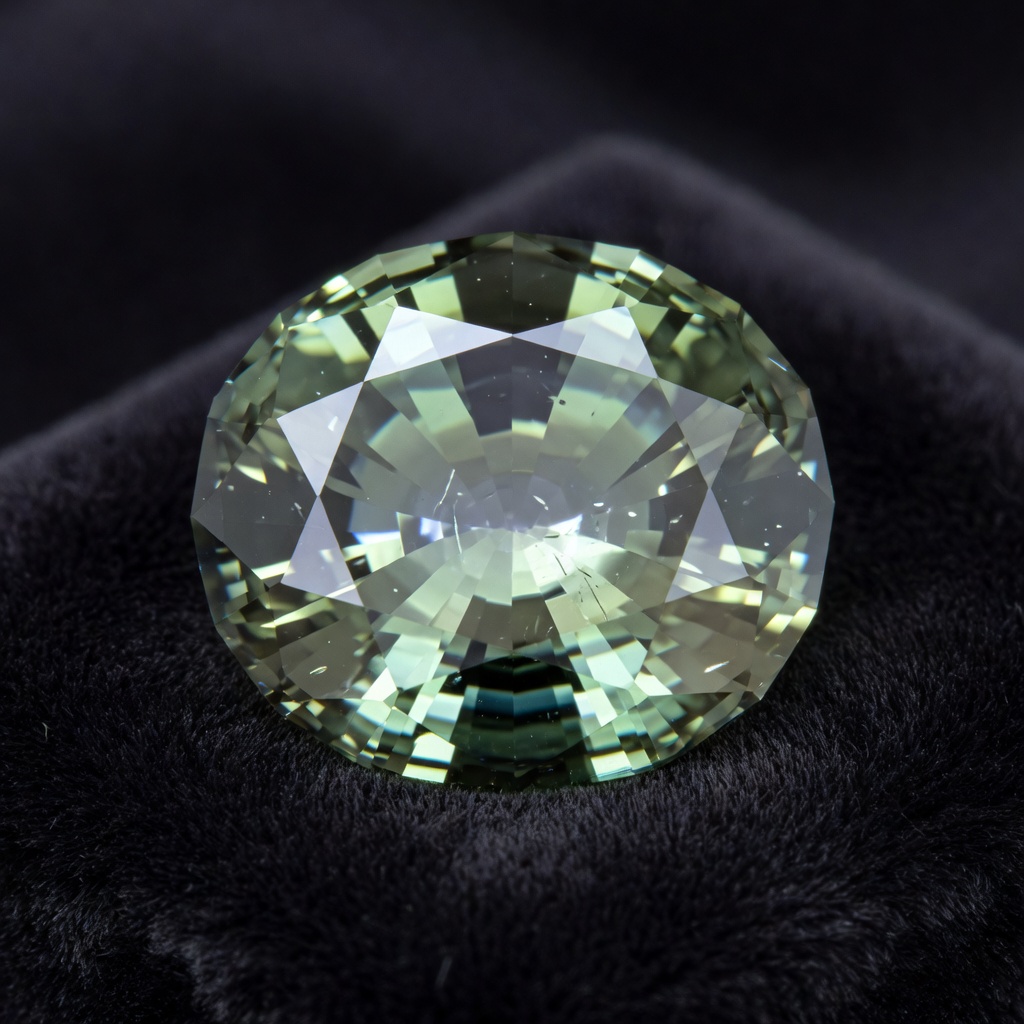
Introduction to Musgravite: The World's Rarest Gemstone
Musgravite stands as one of the most elusive and captivating treasures in the gemstone universe, representing the pinnacle of rarity that drives collector fascination and investment interest worldwide. This magnesium-rich oxide mineral belongs to the taaffeite group, sharing chemical similarities with its better-known cousin while maintaining distinct characteristics that set it apart in mineralogical classification. When exploring Musgravite Properties and Information, gemologists and collectors encounter a stone so scarce that fewer than ten faceted specimens were known to exist in the entire world until 2005, making it arguably the rarest gemstone in the world available to private ownership.
The significance of musgravite within gemology extends far beyond mere scarcity, as the stone combines exceptional durability with unique optical properties that rival more commonly recognized precious gems. Unlike diamonds or rubies that benefit from consistent commercial mining operations, musgravite deposits yield gem-quality material with such infrequency that each discovered crystal represents a geological anomaly worthy of scientific documentation. This extreme rarity positions musgravite among the most valuable colored stones on the market, with prices that reflect not only aesthetic beauty but also the mathematical improbability of its existence in cuttable form.
Chemical Composition and Crystal Structure
Understanding the musgravite chemical composition reveals why this mineral remained hidden from scientific recognition until the late twentieth century, despite its chemical cousins being identified decades earlier. The precise formula Be(Mg,Fe,Zn)₂Al₆O₁₂ identifies musgravite as a beryllium aluminum oxide where magnesium serves as the distinguishing element that separates it from taaffeite and other spinel-group look-alikes. This magnesium content typically ranges between 15-20% of the metallic constituents, creating subtle but critical differences in crystal growth patterns and optical behavior that advanced spectroscopy can detect.
The musgravite crystal structure conforms to the hexagonal crystal system, forming doubly terminated hexagonal prisms that rarely exceed a few millimeters in gem-quality transparency. Crystallographers note specific gravity measurements ranging from 3.60 to 3.68, slightly higher than taaffeite but lower than true spinel, providing gemologists with preliminary identification metrics during examination. The mineral exhibits an isomorphous relationship with taaffeite, meaning they share identical crystal structures but differ chemically, much like the relationship between forsterite and fayalite in the olivine group, requiring sophisticated analytical techniques for definitive separation.
Structural Distinctions from Spinel Group Minerals
Despite superficial visual similarities to purple or gray spinels, musgravite maintains fundamental structural differences that prevent classification within the spinel group proper. While both minerals contain aluminum and oxygen in similar ratios, musgravite's beryllium content and hexagonal crystal system contrast sharply with spinel's isometric cubic structure and magnesium aluminum oxide composition. These distinctions manifest physically through different cleavage patterns and optical properties, though only trained gemologists with refractometers and spectrometers can reliably distinguish them without destructive testing methods.
Physical Properties and Durability Factors
Evaluating musgravite physical properties provides essential data for jewelers considering the stone for custom settings and collectors assessing long-term preservation strategies. The musgravite hardness mohs rating of 8.0 to 8.5 places it between topaz and corundum on the hardness scale, making it suitable for jewelry applications including rings and bracelets that receive regular wear. However, this hardness range also necessitates careful consideration regarding storage and wearing habits, as contact with harder materials like sapphire (9.0) or diamond (10.0) can abrade musgravite surfaces over time.
The refractive index range of 1.724 to 1.746 indicates high brilliance potential, allowing skilled lapidaries to cut stones that maximize light return and scintillation comparable to fine spinels. Durability factors extend beyond hardness to include distinct cleavage planes that present challenges during the cutting process, requiring experienced gem cutters who understand the mineral's tendency to fracture along specific crystallographic directions. The conchoidal to uneven fracture characteristics, combined with moderate brittleness, demand protective settings that shield the girdle edges while allowing maximum light entry through the table and crown facets.
Optical Characteristics and Light Behavior
Gemologists examining musgravite observe uniaxial negative optical character with a birefringence typically ranging from 0.009 to 0.012, creating subtle doubling effects visible under magnification that distinguish it from isometric spinels. This optical property, combined with the stone's specific refractive index, produces a distinctive "life" or internal fire that differs from both diamond and corundum, offering a unique visual signature that experienced dealers recognize immediately. The combination of high refractive index and moderate birefringence requires precise orientation during cutting to minimize double-image effects while maximizing brilliance.
Visual Characteristics and Color Variations
The aesthetic appeal of musgravite derives primarily from its subtle yet distinctive color palette, which ranges from pale olive green and grayish-green to deep violet-gray and rich purple hues rarely encountered in other gem species. High-quality specimens often display complex color zoning that shifts between greenish-gray and purple depending on lighting conditions, creating a chameleon-like effect that captivates viewers in different environments. When examining musgravite colors under various light sources, collectors note that incandescent lighting tends to emphasize purple undertones, while natural daylight highlights the greenish-gray components, making each viewing experience unique.
Strong pleochroism represents one of the most distinctive musgravite appearance characteristics, with dichroic colors typically showing greenish-gray when viewed through the ordinary ray and purple or violet through the extraordinary ray. This pleochroic effect requires careful consideration during the cutting process, as improper orientation can result in "windowing" or uneven color distribution that diminishes the stone's commercial value. Transparency levels range from transparent to translucent, with the finest gem-quality material exhibiting exceptional clarity that allows light to pass through virtually unimpeded, accented by a vitreous to sub-adamantine luster that enhances the stone's depth and dimensionality.
Color Grading and Quality Assessment
Unlike diamonds that rely on standardized color grading scales, musgravite evaluation emphasizes intensity and consistency of hue, with saturated purple-violet specimens commanding premium prices over lighter olive-green varieties. Gem dealers assess color quality by examining the stone against neutral backgrounds under controlled lighting, looking for absence of brownish or grayish overtones that might indicate lower iron content or structural impurities. The most valuable musgravite displays a pure, intense purple or violet-gray color without zoning or visible inclusions, though given the extreme rarity, collectors often accept minor clarity characteristics that would disqualify other gem species from high-end consideration.
Historical Discovery and Naming Origins
The musgravite discovery story begins in 1967 within the remote Musgrave Ranges of South Australia, where geologists conducting mineralogical surveys first identified this unknown beryllium mineral embedded in granitic pegmatites. Named after both the mountain range and Australian geologist Sir Richard Musgrave, who conducted significant early surveys of the region, the mineral initially generated confusion within the scientific community due to its close resemblance to spinel and taaffeite. Early mineralogists struggled to classify the find, with initial specimens often misidentified as unusual magnesium-rich spinels until advanced X-ray diffraction analysis confirmed a distinct crystal structure and chemical composition worthy of separate species status.
The musgravite history reflects broader developments in analytical mineralogy, as the stone's recognition coincided with the widespread adoption of electron microprobe technology that allowed precise chemical mapping of minute mineral samples. For nearly three decades following its discovery, musgravite remained a mineralogical curiosity known primarily to researchers, with no gem-quality material available for cutting or commercial trade. The transition from scientific oddity to coveted gemstone occurred gradually during the late 1990s and early 2000s, as additional deposits in Greenland and Madagascar yielded rare crystals with sufficient transparency and size for faceting, introducing musgravite to high-end collectors and investment portfolios.
From Mineral Specimen to Precious Gem
The transformation of musgravite's status required significant advancements in both mining technology and gem cutting expertise, as early specimens proved too small or included for jewelry applications. Notable milestones include the identification of the first faceted musgravite in the early 1990s, a stone weighing less than 0.5 carats but proving that the material could achieve gem-quality brilliance when properly cut. This discovery triggered increased exploration in known localities and stimulated demand among ultra-high-end collectors seeking specimens rarer than red diamonds or alexandrite, establishing musgravite as the ultimate trophy stone for completed gem collections.
Geographic Sources and Mining Locations
Answering the question of where is musgravite found requires examining several discrete geological environments across four continents, each contributing limited quantities of this exceptional mineral. The primary type locality at Ernabella Mission in the Musgrave Ranges of South Australia remains the scientifically significant source, though production of gem material from this region has been minimal since the initial discovery. The Australian deposits occur within high-grade metamorphic rocks and pegmatitic intrusions, where extreme pressure and temperature conditions facilitated the crystallization of beryllium-rich minerals in association with feldspar, quartz, and rare-element phosphates.
Greenland's Fiskenaesset complex represents the most productive musgravite sources for contemporary collectors, with the Sarfartoq and Qeqertarsuatsiaat regions yielding the majority of faceted stones currently available on the market. These Greenlandic deposits occur within chromium-rich environments that contribute to the purple coloration seen in the finest specimens, distinguishing them from the typically greener Australian material. Additional occurrences have been documented in Madagascar's pegmatite fields, Sri Lanka's alluvial gem gravels, and the Tunduru region of Tanzania, though these localities produce sporadic finds rather than consistent commercial quantities, often yielding only mineral specimens or tiny crystals unsuitable for cutting.
Mining Challenges and Production Realities
Commercial mining operations for musgravite remain economically unfeasible due to the sporadic nature of deposits and the microscopic size of most crystals recovered, with most material coming as byproducts of other mining activities or focused mineral specimen collecting. In Greenland, artisanal miners and prospectors hand-collect material from weathered outcrops, often working in challenging Arctic conditions that limit the mining season to brief summer months. The extreme rarity of gem-quality rough means that entire years may pass without new material entering the market, creating supply constraints that drive the stone's investment value and collector desirability beyond levels seen in more consistently produced gems like sapphire or emerald.
Musgravite vs Taaffeite: Critical Identification Differences
The comparison of musgravite vs taaffeite represents one of the most technically challenging identification scenarios in gemology, as these two minerals share visual, physical, and chemical similarities that confuse even experienced dealers. Both belong to the same mineral group and often display similar colors ranging from purple to grayish-green, yet they maintain distinct chemical compositions that fundamentally differentiate their formation environments and market values. Taaffeite properties include a chemical formula Be(Fe,Mg,Zn)₂Al₆O₁₂ where iron serves as the primary distinguishing element, contrasting with musgravite's magnesium dominance, creating subtle but measurable differences in specific gravity and refractive indices.
Gemological testing reveals that musgravite typically exhibits higher refractive index readings (1.724-1.746) compared to taaffeite's range of 1.719-1.735, providing a preliminary separation method using standard refractometer equipment. Advanced identification requires Raman spectroscopy or energy-dispersive X-ray fluorescence (EDXRF) analysis to detect the magnesium-iron substitution patterns definitively, as visual examination and basic physical testing prove insufficient for conclusive identification. Market value differences further distinguish these stones, with musgravite generally commanding prices 20-30% higher than equivalent-quality taaffeite due to its greater scarcity and more recent recognition as a distinct species.
Practical Identification Protocols
For collectors and jewelers handling potential taaffeite or musgravite specimens, professional certification from laboratories such as GIA, SSEF, or Gubelin remains essential before finalizing high-value transactions. Field gemologists often use specific gravity testing as a preliminary screen, with musgravite's 3.60-3.68 range overlapping partially but statistically trending higher than taaffeite's 3.60-3.65 measurements. When examining rough crystals, musgravite occasionally displays distinctive hexagonal prismatic habits with basal parting that differs from taaffeite's typical crystal forms, though these morphological distinctions require significant mineralogical expertise to interpret accurately.
Investment Value and Market Pricing Analysis
Current musgravite price per carat valuations position this stone among the most expensive colored gems available to private collectors, with fine specimens ranging from $35,000 to $50,000 per carat and exceptional stones commanding significantly higher premiums at specialized auctions. When assessing musgravite value, market analysts consider size as the primary price multiplier, as stones exceeding one carat represent extreme rarities with fewer than twenty such specimens documented in private collections worldwide. Color saturation significantly impacts pricing, with intense violet-gray to purple hues achieving top-market prices while paler olive-green or heavily included specimens trade at discounts of 40-60% from peak valuations.
The musgravite investment potential derives from a perfect storm of scarcity factors: limited geological occurrence, absence of commercial mining operations, and increasing recognition among ultra-high-net-worth collectors seeking tangible alternative assets. Unlike diamonds or colored stones with treated or synthetic equivalents flooding the market, musgravite currently faces no synthetic production challenges, ensuring that every certified natural stone maintains provenance value. Investment advisors specializing in precious gems recommend musgravite as a long-term store of value rather than a liquid trading commodity, suitable for portfolio diversification among investors with holding capacities of ten years or longer who can withstand the stone's illiquidity.
Market Trends and Acquisition Strategies
Recent auction results demonstrate consistent appreciation in musgravite values, with a 2.03-carat purple specimen selling for $180,000 in 2022, establishing new per-carat records for the species. Collectors seeking acquisition opportunities should focus on established dealers with direct connections to Greenlandic mining operations or estate sales from early collections, as new material rarely appears in general commercial channels. Due diligence requires verification of laboratory certification from major gemological institutes, documentation of provenance when available, and examination of treatment reports, as musgravite typically receives no enhancement but requires confirmation of natural origin given its high value.
Advanced Identification and Authentication Methods
Accurately identifying musgravite requires sophisticated analytical techniques beyond the capabilities of standard gemological equipment found in retail jewelry stores, necessitating referral to major laboratories for definitive certification. Raman spectroscopy serves as the primary non-destructive method for identify musgravite, producing characteristic vibrational spectra that distinguish the mineral from taaffeite, spinel, and synthetic analogs through distinctive peak patterns in the 400-700 cm⁻¹ range. Energy-dispersive X-ray analysis (EDX or EDXRF) provides quantitative chemical data regarding magnesium, iron, and zinc ratios, confirming the mineral's position within the taaffeite group while distinguishing it from chemically similar species.
Refractive index testing offers field gemologists preliminary screening capabilities, with readings consistently falling between 1.724 and 1.746 for musgravite, typically higher than taaffeite and distinct from spinel's constant reading of approximately 1.718. Musgravite authentication protocols increasingly involve advanced spectroscopic techniques including photoluminescence spectroscopy, which can detect trace elements and growth patterns indicative of specific geographic origins. Certification importance cannot be overstated for transactions involving this high-value material, with laboratories like GIA, SSEF (Swiss Gemmological Institute), and Gubelin providing documentation that verifies species identification, geographic origin when determinable, and absence of treatment or enhancement.
Distinguishing from Synthetics and Simulants
While synthetic musgravite production remains economically unfeasible due to the mineral's complex chemistry and limited market demand, collectors must remain vigilant against misidentification with synthetic spinels or color-shift sapphires that might simulate musgravite's appearance. Advanced laboratories employ laser ablation inductively coupled plasma mass spectrometry (LA-ICP-MS) to analyze trace element signatures that act as geological fingerprints, distinguishing Greenlandic material from Australian or Madagascar origins. Inclusions studies using high-magnification microscopy can reveal characteristic mineral inclusions such as phlogopite mica or chromite crystals that support natural origin claims while providing clues regarding specific formation environments.
Care, Maintenance, and Storage Guidelines
Proper musgravite care begins with understanding the stone's relative hardness and sensitivity to thermal shock, despite its respectable 8.0-8.5 Mohs rating that suggests good durability for jewelry applications. Cleaning recommendations emphasize gentle methods using warm soapy water (mild dish detergent) and soft natural bristle brushes to remove accumulated oils and debris, strictly avoiding ultrasonic cleaners and steam cleaning equipment that might exploit internal fractures or inclusions. The gemstone maintenance protocol for musgravite parallels that recommended for emeralds or tanzanite, emphasizing protective settings and mindful wearing habits despite the stone's superior hardness compared to those gems.
Storage requirements mandate individual soft pouches or lined jewelry boxes that separate musgravite from harder gemstones like diamond, sapphire, ruby, or moissanite that could scratch its surface during contact. Given the extreme value of significant specimens, owners should maintain specialized high-value gemstone insurance coverage with agreed-value policies that reflect current market replacement costs rather than standard homeowner's insurance limits. Appraisal protocols require recertification every two to three years by qualified gemologists familiar with rare beryllium minerals, as market values for musgravite appreciate rapidly and outdated appraisals may leave collectors underinsured against loss or damage.
Professional Maintenance Recommendations
Before any jewelry repair work involving musgravite, owners must inform jewelers of the stone's identity and value, as standard workshop practices like ultrasonic cleaning pre-polishing or steam cleaning could damage the gem. When resetting musgravite, insist on laser-welding or precision micro-welding techniques that minimize heat transfer to the stone, as thermal shock from traditional soldering methods could cause cleavage plane separation or internal fracturing. Annual professional inspections should check for loose prongs, girdle chips, or abrasion on facet junctions, allowing for timely intervention before minor damage escalates into significant value loss or stone loss.
Frequently Asked Questions
What is musgravite and why is it considered so valuable?
Musgravite is an extremely rare magnesium-rich beryllium aluminum oxide mineral belonging to the taaffeite group. Its value stems from extreme scarcity—with fewer than 10 faceted specimens known to exist until 2005—combined with exceptional hardness (8-8.5 Mohs) and unique visual properties. This rarity makes it one of the most expensive gemstones in the world, often commanding $35,000-$50,000 per carat.
What are the key physical properties of musgravite?
Musgravite exhibits a Mohs hardness of 8.0-8.5, a specific gravity of 3.60-3.68, and a refractive index of 1.724-1.746. It crystallizes in the hexagonal system, typically showing grayish-green to purple colors with strong pleochroism. The mineral has distinct cleavage and conchoidal fracture patterns, distinguishing it from similar-looking spinels.
How can I tell the difference between musgravite and taaffeite?
While visually similar, musgravite contains magnesium whereas taaffeite contains iron in their chemical structures. Musgravite typically shows higher refractive indices (1.724-1.746) compared to taaffeite (1.719-1.735), and advanced spectroscopic analysis reveals distinct absorption spectra. Professional gemological testing is essential for accurate differentiation.
Where is musgravite found in nature?
Musgravite was first discovered in the Musgrave Ranges of South Australia (its type locality). Significant deposits exist in Greenland's Fiskenaesset complex. Additional sources include Madagascar, Sri Lanka, and Tanzania's Tunduru region. However, gem-quality material remains exceptionally rare from all locations, with most finds producing mineral specimens rather than cuttable gems.
How much does musgravite cost per carat?
Fine quality musgravite typically ranges from $35,000 to $50,000 per carat, with exceptional specimens commanding even higher prices. Factors affecting value include size (stones over 1 carat are extraordinarily rare), color saturation (violet-gray to purple commands premium prices), clarity, and cut quality. The extreme scarcity drives consistent appreciation in value.
Is musgravite harder than sapphire?
No, musgravite is slightly softer than sapphire. While musgravite rates 8.0-8.5 on the Mohs hardness scale, sapphire (corundum) rates 9.0. However, musgravite's hardness makes it suitable for jewelry with proper care, though it should be protected from harder gemstones like diamonds, sapphires, and rubies to prevent scratching.
What colors does natural musgravite display?
Natural musgravite typically occurs in grayish-green, olive, violet-gray, and purple hues. The gemstone exhibits strong pleochroism, meaning it shows different colors (usually greenish-gray to purple) when viewed from different angles. High-quality specimens often display a distinctive greenish-gray to purple color shift that enhances their visual appeal.
How should I care for musgravite jewelry?
Clean musgravite using warm soapy water and a soft brush; avoid ultrasonic cleaners and steam cleaning due to potential inclusions. Store separately from harder gemstones (diamond, sapphire, ruby) to prevent scratching. Given its high value, ensure proper insurance coverage and professional appraisals every 2-3 years. Remove during activities that risk impact or chemical exposure.