Introduction to Musgravite: The World's Rarest Gemstone
Discovered in 1967 by Australian geologists exploring the remote Musgrave Ranges of South Australia, musgravite represents the pinnacle of gemstone rarity and exclusivity in the world of fine minerals. This extraordinary gem belongs to the taaffeite family of beryllium aluminum oxides, distinguished by its magnesium-rich chemical composition that creates a unique crystal structure rarely encountered in nature. For nearly four decades after its initial discovery, the musgravite remained an almost mythical specimen among gemologists, with fewer than ten faceted stones known to exist worldwide until 2005, making it significantly rarer than red diamonds or blue painite during that period.
The extreme scarcity of musgravite directly correlates with its exceptional musgravite gemstone value, positioning it among the most expensive minerals per carat ever traded on the open market. Unlike diamonds or sapphires that benefit from commercial mining operations, musgravite occurs in such minute quantities and specific geological conditions that its availability remains unpredictable and severely limited. Collectors and investors seeking to understand true gemstone rarity guide principles often cite musgravite as the ultimate benchmark, as its formation requires the perfect convergence of magnesium, beryllium, and aluminum under precise temperature and pressure conditions found in only a handful of locations globally.
Current Musgravite Prices Per Carat in 2024
The musgravite carat price landscape in 2024 reflects unprecedented demand from ultra-high-net-worth collectors competing for an extremely limited supply of investment-grade specimens. Current market valuations range dramatically from $35,000 per carat for smaller, included stones to upwards of $800,000 per carat for exceptional, eye-clean specimens exceeding one carat in weight. This pricing structure places fine musgravite significantly above even the rarest fancy colored diamonds, with a single two-carat musgravite potentially commanding the same value as a five-carat vivid pink diamond from the Argyle mine.
Recent auction results from major houses demonstrate the asset's appreciation trajectory, with prices increasing approximately twenty percent over the past five years despite broader economic uncertainties. A notable example includes a 0.86-carat grayish-purple musgravite that sold at a Hong Kong auction in late 2023 for $310,000 per carat, establishing new benchmarks for smaller but visually exceptional stones. When evaluating musgravite carat price against other precious colored stones, investors should note that while high-quality Burmese rubies or Kashmir sapphires might command $50,000 to $100,000 per carat, musgravite consistently trades at premiums of three to ten times higher due to its absolute scarcity and geological uniqueness.
Key Factors Determining Musgravite Value
Understanding the comprehensive Musgravite Price Guide requires intimate knowledge of the specific quality parameters that separate museum-grade specimens from merely collectible stones. Color grading represents the primary value determinant, with grayish-green to purple hues commanding the strongest premiums in the current market, particularly stones exhibiting subtle color-change phenomena under different lighting conditions. Clarity standards for musgravite prove exceptionally stringent, as eye-clean specimens remain extraordinarily rare; most rough material contains characteristic inclusions of hematite or phlogopite mica that significantly impact transparency and brilliance.
Carat weight impacts musgravite valuation exponentially rather than linearly, creating dramatic price escalations for stones surpassing critical weight thresholds. Specimens weighing over one carat constitute museum-quality rarities that may never appear on the open market, while stones between 0.5 and 1.0 carats represent the upper echelon of collectible material available to private buyers. Cut quality also plays a crucial role in this Musgravite Price Guide, as the material's extreme value and brittleness require master cutters to maximize yield while minimizing the risk of fracture during the faceting process, with well-executed cuts commanding twenty to thirty percent premiums over poorly proportioned stones.
Musgravite vs. Taaffeite: Understanding the Price Gap
The comparison between musgravite vs taaffeite reveals fascinating insights into how subtle chemical variations can create massive valuation disparities in the gemological world. While both stones share the fundamental beryllium aluminum oxide structure, musgravite contains significantly higher magnesium content (MgAl6BeO8 vs. Mg3Al8BeO16), creating distinct optical and physical properties that command premium pricing. This chemical distinction manifests visually through musgravite's typically darker, more saturated body color and stronger pleochroism compared to the lighter, often pinkish or mauve tones characteristic of taaffeite.
Price differential analysis reveals the stark reality of this musgravite vs taaffeite comparison, with taaffeite generally trading between $1,500 and $20,000 per carat depending on size and quality, while musgravite maintains a floor price of approximately $35,000 per carat. Visual identification presents significant challenges requiring advanced gemological testing, as both stones share similar refractive indices and specific gravity measurements that make separation difficult using standard handheld instruments. Professional laboratories utilize sophisticated techniques including energy-dispersive X-ray fluorescence (EDXRF) to detect the precise magnesium-to-beryllium ratios that definitively distinguish these two rare gems, preventing costly misidentification errors in the marketplace.
Color Variations and Their Market Impact
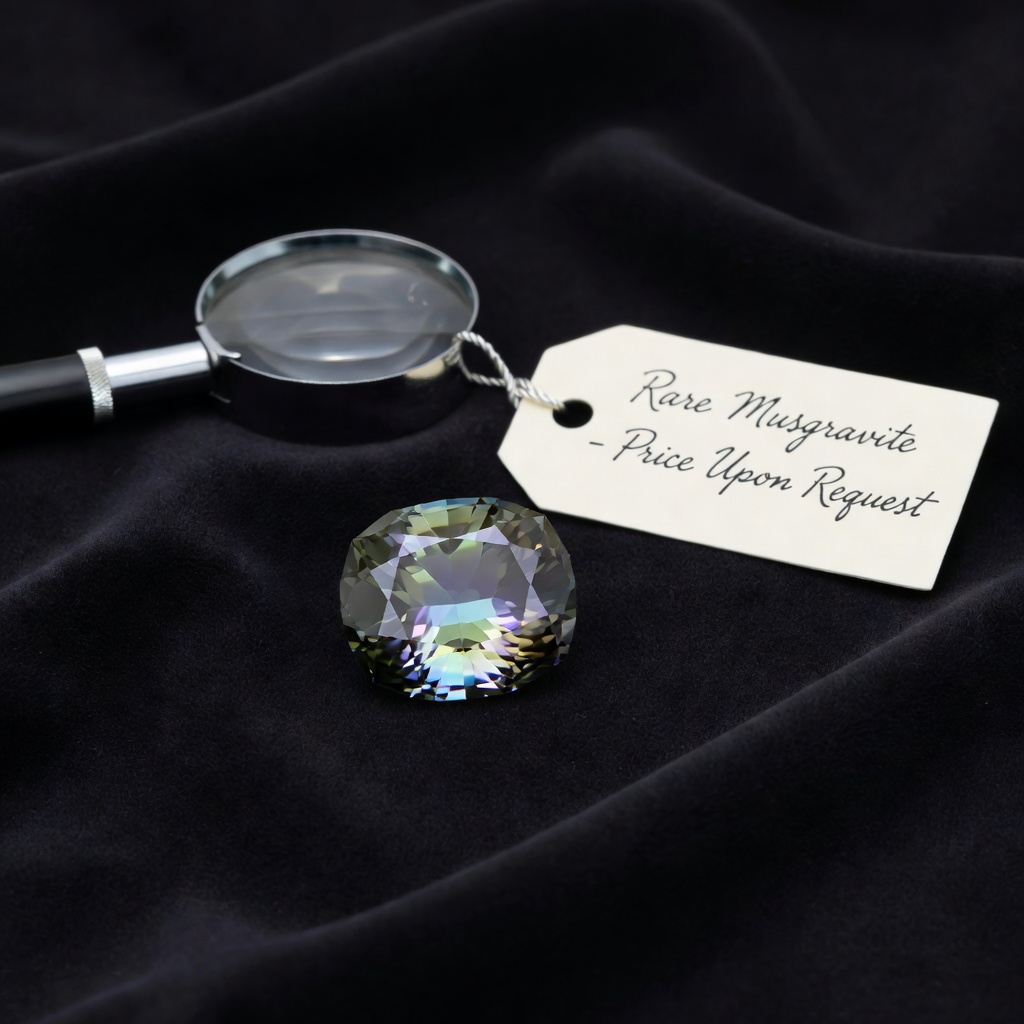
Color phenomenology significantly influences musgravite gemstone value, with the most coveted specimens displaying a remarkable color change from greenish-gray in daylight to purple or violet under incandescent lighting. This alexandrite-like color shift occurs due to the stone's complex interaction with chromium and vanadium trace elements, creating a visual dynamic that captivates collectors and drives substantial price premiums. Stones exhibiting strong pleochroism—the display of different colors when viewed from different angles—command particular attention, as this optical effect demonstrates the crystal's high-quality structure and enhances its visual intrigue beyond standard single-color gems.
The impact of pleochroism on pricing cannot be overstated, as gems showing vivid green, purple, and blue directional colors simultaneously represent the pinnacle of musgravite desirability. Treatment detection remains critical for maintaining musgravite gemstone value, as heat-treated stones attempting to enhance gray or brownish tints to more desirable purple hues trade at significant discounts compared to naturally colored specimens. Advanced spectroscopic analysis can identify heat treatment through subtle shifts in absorption spectra, making independent laboratory certification essential for verifying that color origins are natural rather than artificially induced, with untreated natural color stones commanding premiums of fifty percent or more over treated equivalents.
Authentication and Certification Requirements
Engaging in rare gemstone investment involving musgravite necessitates stringent authentication protocols, as the stone's extreme value has incentivized sophisticated synthetic production and simulant substitution in the marketplace. Mandatory certification from recognized laboratories including the Gemological Institute of America (GIA), American Gemological Laboratories (AGL), or the Swiss Gemmological Institute (SSEF) provides essential verification of identity, origin, and treatment status for investment-grade stones. These institutions employ advanced testing methodologies including Raman spectroscopy to identify characteristic molecular fingerprints, refractive index analysis using high-precision refractometers, and specific gravity determinations that collectively confirm authentic musgravite while detecting synthetic spinels or cubic zirconia simulants.
Common synthetics and simulants present significant risks for unwary rare gemstone investment participants, with flux-grown synthetic taaffeite occasionally misrepresented as natural musgravite by unscrupulous dealers. Additional authentication measures should include examination under Chelsea filters to check for distinctive chromium reactions and microscopic analysis to identify natural inclusion patterns characteristic of musgravite's formation in high-grade metamorphic rocks. Investors should demand comprehensive written reports detailing not only identification but also specific comments on color origin, clarity enhancement status, and geographic origin when determinable, as these factors collectively establish the stone's legitimacy and long-term value retention in a market where authenticity concerns can destroy asset value overnight.
Investment Potential and Market Liquidity
The rare gemstone investment landscape increasingly recognizes musgravite as an alternative asset class capable of outperforming traditional investments during periods of market volatility. Historical appreciation rates demonstrate consistent double-digit annual growth over the past two decades, with particular acceleration observed since 2018 as Asian collectors entered the ultra-rare gem market seeking tangible wealth preservation vehicles. Unlike stocks or bonds, musgravite offers genuine portfolio diversification benefits, as its value correlates neither with equity markets nor traditional commodity cycles, instead responding to supply constraints and collector demand from a finite pool of potential buyers.
However, prospective investors must acknowledge significant liquidity challenges inherent in ultra-rare gem markets, as selling a six-figure musgravite specimen requires finding a qualified buyer with both the capital and specific interest in this niche material. Unlike gold or even diamonds, no standardized wholesale market exists for musgravite, meaning liquidation timelines may extend six months to several years depending on market conditions and the urgency of the sale. Successful rare gemstone investment in musgravite requires sufficient capital reserves to hold the asset long-term without forced liquidation, alongside established relationships with specialized dealers or auction houses capable of accessing the private collector networks where these transactions typically occur.
Where to Purchase: Auction Houses and Specialized Dealers
Navigating the Musgravite Price Guide acquisition landscape requires careful selection of purchasing venues, with high-end auction houses representing the most secure entry point for serious collectors. Christie's, Sotheby's, and Bonhams regularly feature exceptional colored stones in their Geneva, Hong Kong, and New York sales, offering pre-sale vetting by in-house gemologists, transparent condition reports, and return policies that protect buyers against misrepresentation. These venues provide access to stones with impeccable provenance and documentation, though buyers should expect to pay fifteen to twenty-five percent buyer's premiums atop hammer prices, a cost justified by the security and authenticity guarantees provided.
Specialized colored stone dealers in major trading centers like Geneva, New York, and Bangkok offer alternatives to auction houses, often providing more competitive pricing for Musgravite Price Guide research and acquisition, though requiring greater due diligence from buyers. Unlike general jewelry retailers who rarely encounter genuine musgravite, established colored stone specialists maintain direct relationships with cutters and miners, occasionally offering pre-auction inventory at fixed prices. Red flags in private sales include reluctance to provide independent laboratory certification, pressure to complete transactions without escrow services, or pricing significantly below market rates, which often indicate synthetic material or fraudulent misrepresentation requiring immediate avoidance regardless of apparent value.
Future Market Trends for Musgravite Pricing
The trajectory of most expensive gemstones markets strongly suggests continued appreciation for musgravite as geological realities limit new supply while collector demand expands globally. Recent limited discoveries in Greenland's felsic gneiss terrains and Madagascar's high-grade metamorphic belts have produced only minuscule quantities of facetable material, insufficient to satisfy even a fraction of current collector demand. These sporadic findings reinforce the stone's status as a non-renewable resource with depleting known reserves, a fundamental supply constraint that historically drives prices upward in collectible mineral markets.
Growing demand from Asian collectors, particularly in Hong Kong, Singapore, and mainland China, has fundamentally altered the competitive dynamics for most expensive gemstones including musgravite, introducing new capital to a previously Western-dominated market. Economic recession resilience characterizes ultra-rare gemstones like musgravite, as their value derives from absolute scarcity rather than industrial utility or fashion trends, insulating them from economic downturns that impact commercial gem markets. As wealth preservation concerns drive high-net-worth individuals toward tangible assets with proven historical appreciation, musgravite appears positioned to maintain its status among the world's most valuable gemstones per carat, potentially exceeding $1,000,000 per carat for exceptional specimens within the next decade.
Frequently Asked Questions
Why is musgravite so expensive compared to diamonds?
Musgravite commands higher prices than diamonds due to extreme rarity—fewer than 25 faceted specimens existed worldwide until recently. While diamonds are mined commercially, musgravite remains a geological curiosity with sporadic discoveries, driving prices from $35,000 to over $800,000 per carat for fine specimens. The stone's formation requires specific magnesium-rich conditions found in only a handful of locations globally, creating supply constraints that make high-quality diamonds seem abundant by comparison.
How can I verify if a musgravite is authentic?
Authentic musgravite requires certification from recognized laboratories like GIA, AGL, or SSEF. Key identifiers include refractive indices of 1.724-1.744, specific gravity of 3.60-3.61, and distinctive pleochroism. Never purchase without independent lab reports, as synthetics and simulants exist in the market.
What is the difference between musgravite and taaffeite prices?
While both are beryllium aluminum oxides, musgravite (magnesium-rich) typically costs 10-40 times more than taaffeite. Taaffeite ranges from $1,500 to $20,000 per carat, whereas musgravite starts around $35,000 per carat, with exceptional stones exceeding $800,000 per carat due to superior rarity. This massive price differential reflects musgravite's greater scarcity and the difficulty of finding facetable material with desirable color and clarity characteristics.
Is musgravite suitable for beginner gemstone investors?
Musgravite is generally unsuitable for beginners due to high capital requirements ($35,000+ entry point), authentication complexities, and illiquidity. It's recommended for experienced collectors with established dealer relationships, gemological knowledge, and capital sufficient to hold long-term without needing quick liquidation. Novice investors should first gain experience with more liquid colored stones like sapphires or spinels before attempting to navigate the specialized musgravite market.
Which color of musgravite holds the highest value?
Grayish-green to purple color-changing musgravite commands the highest premiums, particularly stones showing strong pleochroism and vivid saturation. Greenish hues in daylight shifting to purple under incandescent light are most desirable, while gray or brownish tints significantly reduce value. Stones exhibiting alexandrite-like color change phenomena can command double the price of single-color specimens, making color evaluation critical during the acquisition process.
Where is the safest place to buy musgravite?
High-end auction houses (Christie's, Sotheby's, Bonhams) offer the safest purchasing environment with pre-sale vetting and return policies. Established colored stone specialists like those in Geneva, Hong Kong, or New York are secondary options. Avoid online marketplaces and insist on escrow services for private transactions.
Can musgravite be worn in jewelry settings?
With 8-8.5 hardness on the Mohs scale, musgravite is durable enough for jewelry, but most specimens over 0.5 carats are too valuable for regular wear. Collectors typically mount smaller specimens (under $50,000 value) in protective settings for occasional wear, while investment-grade stones remain in vaults. The stone's brittleness and extreme value make it impractical for daily wear rings, though pendant or brooch settings provide safer display options for important specimens.
How should musgravite be stored and insured?
Store musgravite individually in soft, padded containers away from harder gems to prevent scratching. Given values exceeding $35,000 per carat, specialized jewelry insurance with 'agreed value' policies is essential. Obtain updated appraisals every 2-3 years from certified gemologists to maintain adequate coverage as prices appreciate.