
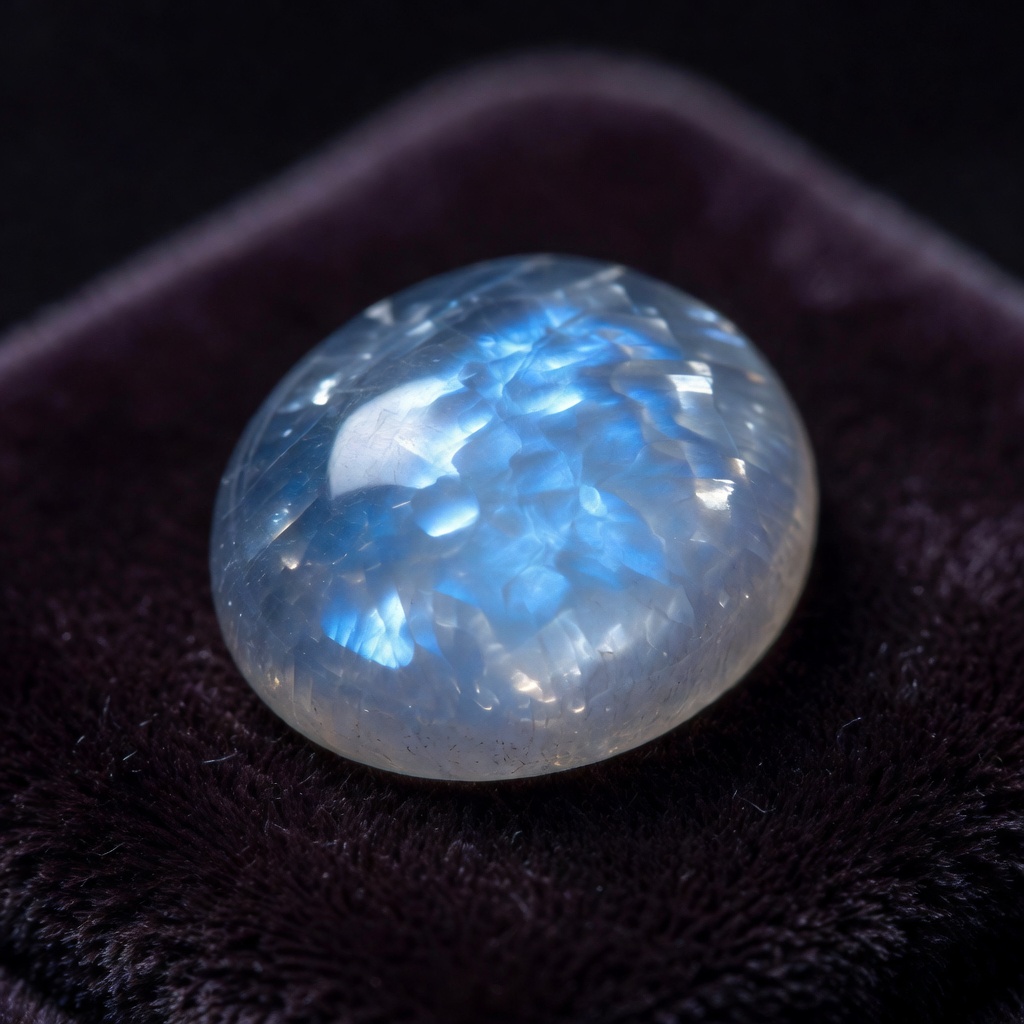
What Is Moonstone? An Introduction to This Mystical Gem
Moonstone is a captivating sodium potassium aluminum silicate mineral that belongs to the expansive feldspar group, renowned throughout history for its ethereal appearance and profound spiritual associations. Ancient civilizations, particularly the Romans, believed that this gemstone was formed from solidified moonbeams, attributing to it the power to bring good fortune and protect travelers during night journeys. In Hindu mythology, moonstone has been considered sacred and believed to be embedded in the forehead of Ganesh, the four-handed god of the moon, symbolizing spiritual vision and enlightenment.
The connection between moonstone and lunar cycles has persisted across cultures, with practitioners of various spiritual traditions utilizing this gem to synchronize their energies with the moon's phases. Throughout history, moonstone has been intrinsically linked to feminine energy, intuition, and the divine feminine principle, making it a favored talisman among women seeking to enhance their natural rhythms and inner wisdom. Understanding these Moonstone Properties and Information provides essential context for appreciating why this gemstone continues to captivate collectors, healers, and jewelry enthusiasts in the modern era.
Geological Composition and Physical Characteristics
From a gemological perspective, moonstone consists primarily of two feldspar species: orthoclase and albite, which become separated into alternating microscopic layers during the stone's formation. As these minerals cool, the orthoclase and albite separate into stacked, thin layers that create the stone's distinctive internal structure, typically forming within pegmatite deposits and metamorphic rocks. This unique lamellar construction not only contributes to the stone's optical phenomena but also presents specific challenges for lapidaries who must orient the cut precisely to maximize the adularescent effect.
Moonstone typically crystallizes in the monoclinic crystal system and possesses a hardness rating of 6 to 6.5 on the Mohs scale, making it relatively soft compared to sapphires or diamonds. More significantly, moonstone exhibits perfect cleavage in two directions, which means it can split cleanly along specific planes when struck with sufficient force, requiring careful handling during both the cutting process and daily wear. When evaluating moonstone gemological properties, collectors should note that high-quality specimens often display a translucent to transparent body with a colorless to slightly blue, gray, or white background.
Understanding Adularescence: The Signature Moonstone Glow
The mesmerizing adularescence effect represents moonstone's most distinctive optical characteristic, creating the appearance of a billowy, floating light that seems to drift across the stone's surface like moonlight shimmering through thin clouds. This phenomenon occurs when light enters the stone and scatters between the microscopic layers of orthoclase and albite feldspar, creating interference patterns that produce a soft, glowing sheen. The specific quality and intensity of this adularescence depend heavily on the thickness and regularity of the alternating mineral layers, with thinner layers typically producing bluer sheens while thicker layers create white or silvery adularescence.
When grading moonstone quality, gemologists prioritize specimens displaying a strong blue sheen against a colorless or nearly transparent background, as these command the highest premiums in the marketplace. The visibility of this floating light phenomenon changes dramatically depending on the viewing angle, requiring observers to rotate the stone under incident light to fully appreciate the effect's dynamic range. High-quality moonstone will display a concentrated, mobile light that appears to hover just beneath the surface, moving smoothly as the stone is tilted, while inferior specimens may show only a static haziness or scattered, uneven patches of light.
Types and Varieties of Moonstone
The world of moonstone encompasses several distinct varieties, each offering unique visual characteristics and energetic properties that appeal to different aesthetic preferences and healing applications. True moonstone, composed of orthoclase feldspar, should be distinguished from rainbow moonstone, which is technically white labradorite (a plagioclase feldspar) that displays a full spectrum of colors including blues, purples, and pinks due to labradorescence rather than true adularescence. While both stones share similar metaphysical associations, rainbow moonstone often exhibits more intense color flashes and a different chemical composition, though many rainbow moonstone benefits parallel those of traditional orthoclase varieties.
Blue moonstone, sourced primarily from Sri Lanka and Southern India, represents the most prized and valuable variety, displaying an intense electric blue sheen that appears to float on a nearly transparent body. Peach and pink moonstones, often found in Madagascar and India, connect more strongly with the heart chakra and emotional healing, while gray moonstone provides grounding energy particularly suited for new beginnings and shadow work. Rare cat's eye moonstone exhibits a sharp, linear chatoyant band caused by parallel inclusions of hematite or goethite, creating a striking optical effect that combines adularescence with the distinctive eye-like band characteristic of tiger's eye specimens.
Metaphysical Properties and Spiritual Significance
Moonstone carries profound moonstone meaning and symbolism related to inner growth, personal strength, and the initiation of new life chapters, making it an essential companion during times of transition and transformation. The stone enhances intuitive abilities and psychic perception, with many practitioners keeping moonstone under their pillows or on their nightstands to stimulate lucid dreaming and receive guidance through the subconscious mind. Its reputation as a traveler's stone extends beyond physical journeys to encompass spiritual voyages, offering protection and insight to those exploring unfamiliar territories of consciousness.
The connection to divine feminine energy makes moonstone particularly significant for fertility rituals and women's mysteries, symbolizing the cyclical nature of life, death, and rebirth. Ancient cultures utilized moonstone in love divination, believing that placing the stone in the mouth during a full moon would allow one to see their future destiny. Modern spiritual practitioners often work with moonstone to balance masculine and feminine energies within themselves, regardless of gender, promoting emotional intelligence, receptivity, and the nurturing qualities associated with lunar consciousness.
Healing Properties and Wellness Applications
The moonstone healing properties extend across physical, emotional, and energetic domains, with particular efficacy in supporting women's hormonal health and reproductive systems throughout various life stages. Crystal therapists frequently recommend moonstone for alleviating menstrual discomfort, regulating irregular cycles, and easing the transition through menopause by harmonizing the body's natural biochemical rhythms. The stone's cooling energy proves beneficial for digestive and elimination disorders, traditionally used to soothe stomach upsets, reduce fluid retention, and support the assimilation of nutrients through the intestinal tract.
Emotionally, moonstone serves as a powerful stabilizer during periods of extreme stress, trauma recovery, and overwhelming change, helping to calm overreactions and emotional triggers while promoting a sense of peace and centeredness. Therapists working with clients experiencing anxiety or depression may suggest carrying moonstone as a grounding tool that diffuses emotional tension and encourages a more balanced perspective. For sleep disorders and insomnia, placing moonstone near the bed or under the pillow creates a calming energetic field that facilitates deep, restorative rest and helps prevent nightmares or disrupted sleep patterns.
Chakra Alignment and Energy Work
Working with moonstone chakra alignment involves understanding how this versatile crystal interacts with multiple energy centers simultaneously to create holistic balance and spiritual activation. Moonstone primarily resonates with the crown chakra, located at the top of the head, facilitating connection to higher consciousness, spiritual guidance, and universal wisdom during meditation practices. When placed directly on the crown during energy healing sessions, moonstone helps to open the channel for divine inspiration while protecting against psychic overwhelm or energy drainage.
The sacral chakra, situated below the navel, responds powerfully to moonstone's watery energy, enhancing creativity, emotional fluidity, and healthy sexual expression while dissolving blockages related to guilt or shame. Additionally, moonstone stimulates the third eye chakra, sharpening intuitive perception, enhancing dream recall, and supporting the development of clairvoyant abilities when used consistently over time. A practical energy exercise involves lying down and placing moonstone on each of these three chakras sequentially for five minutes each, allowing the stone's vibration to recalibrate the energetic body and restore natural flow between the spiritual and physical realms.
Practical Applications: Jewelry and Daily Use
As the traditional moonstone birthstone June, this gem offers special significance for those born in early summer, though its versatile energy benefits anyone seeking to incorporate lunar magic into their daily lives. When selecting moonstone jewelry, protective settings such as bezels or halo designs prove superior to exposed prong settings, particularly for rings, as they shield the stone's vulnerable cleavage planes from accidental impacts during daily activities. Pendants and earrings represent ideal choices for daily wear, keeping the stone close to the heart or head while minimizing exposure to hard surfaces that could cause chipping or scratching.
Meditation practitioners can enhance their inner reflection practices by holding a moonstone sphere or palm stone while focusing on the breath, allowing the cooling energy to quiet mental chatter and deepen the meditative state. In living spaces, placing moonstone clusters or specimens in the bedroom promotes restful sleep and harmonious relationships, while positioning stones in communal areas encourages empathetic communication and emotional understanding among family members. For those working through major life transitions, carrying a small moonstone tumble stone in a pocket or bra provides continuous energetic support and serves as a tangible reminder of one's inner strength and capacity for growth.
Care, Cleaning, and Maintenance Essentials
Proper maintenance of moonstone requires understanding its physical vulnerabilities, particularly the need to avoid ultrasonic cleaners and steam cleaning methods that can exploit the stone's perfect cleavage and cause internal fracturing or complete breakage. Instead, clean your moonstone jewelry using mild, phosphate-free soap diluted in lukewarm water, gently scrubbing with a soft-bristled toothbrush to remove accumulated oils and debris from surface crevices and settings. After washing, rinse thoroughly under running water and pat dry immediately with a soft, lint-free cloth, avoiding prolonged soaking which could potentially weaken adhesives in jewelry settings or exacerbate existing internal fractures.
Storage solutions play a crucial role in preserving moonstone's delicate beauty and energetic integrity, requiring separate compartments or individual soft pouches to prevent contact with harder gemstones like diamonds, rubies, or sapphires that could scratch the surface. When traveling, wrap moonstone pieces in acid-free tissue paper or silk cloth before placing them in padded jewelry rolls, and never pack them in checked luggage where temperature fluctuations and rough handling pose significant risks. Regular energetic cleansing maintains the stone's vibrational potency, with moonlight exposure during the full moon representing the most traditional and effective method for recharging its lunar connections.
Identifying Genuine Moonstone and Quality Factors
Distinguishing natural moonstone from common imitations such as opalite (a man-made glass) or synthetic spinel requires careful observation of the adularescence effect and natural inclusion patterns visible under magnification. Genuine moonstone displays organic-looking inclusions, including tiny tension cracks called "centipedes," while glass imitations like opalite appear unnaturally uniform with perfect clarity and a milky, static iridescence that lacks the billowy movement characteristic of true adularescence. When evaluating authentic moonstone identification, hold the stone against a dark background under direct light and rotate it slowly; natural moonstone will show a light effect that moves across the surface, whereas glass imitations maintain a fixed appearance regardless of viewing angle.
Quality assessment depends on three primary factors: the strength and color of the adularescence (with electric blue commanding premium prices), the transparency of the body material (clearer being more valuable), and the absence of distracting inclusions that interfere with the optical phenomenon. When investing in high-value specimens, insist upon certification from reputable gemological laboratories such as the Gemological Institute of America (GIA) or the American Gemological Laboratories (AGL), which verify natural origin and disclose any treatments such as crack-filling that might affect durability. Reputable dealers should welcome magnification inspection and provide detailed information about the stone's source locality, with Sri Lankan and Indian blue moonstones typically representing the finest quality available in the current market.
Frequently Asked Questions About Moonstone Properties and Information
What are the main healing properties of moonstone?
Moonstone is primarily known for supporting hormonal balance, particularly in women, easing emotional instability, aiding digestive health, and promoting restful sleep. It's also used to alleviate menstrual discomfort and enhance fertility.
How can I tell if my moonstone is real?
Genuine moonstone displays natural adularescence—a billowy, floating light effect that moves as you rotate the stone. It should feel cool to the touch, show natural inclusions under magnification, and lack the perfect uniformity of glass imitations like opalite.
Which chakra is moonstone associated with?
Moonstone primarily resonates with the crown chakra for spiritual connection and the sacral chakra for emotional balance and creativity. It also activates the third eye chakra to enhance intuition and psychic perception.
Can moonstone be worn every day?
While moonstone can be worn daily, it requires careful handling due to its 6-6.5 hardness rating and perfect cleavage. It's best suited for pendants and earrings rather than rings, which are subject to more impact and potential scratching.
What is the difference between moonstone and rainbow moonstone?
True moonstone is orthoclase feldspar with blue or white adularescence. Rainbow moonstone is actually white labradorite (plagioclase feldspar) that displays a full spectrum of colors. Both are feldspars but have different chemical compositions and optical properties.
Does moonstone need to be cleansed energetically?
Yes, moonstone should be cleansed regularly to maintain its energetic properties. Safe methods include placing it under moonlight, especially during the full moon, using sage smoke, or resting it on a selenite charging plate. Avoid water soaking due to its cleavage.
What zodiac signs benefit most from moonstone?
Moonstone is the traditional birthstone for June and is particularly beneficial for Cancer, Libra, and Scorpio. However, its calming, intuitive energies support all signs, especially those seeking emotional balance or going through major life transitions.
How does adularescence work in moonstone?
Adularescence occurs when light enters the stone and scatters between microscopic layers of orthoclase and albite feldspar. This scattering creates a phenomenon where light appears to billow across the stone's surface like moonlight glowing through thin clouds.


