
Understanding Moonstone's Delicate Nature
Moonstone possesses a captivating ethereal glow that has enchanted jewelry lovers for centuries, yet this beauty comes with inherent fragility that demands informed care practices. Ranking between 6 and 6.5 on the moonstone Mohs hardness scale, this feldspar mineral sits in a vulnerable middle ground where everyday materials like steel files and even household dust can potentially mar its surface. Unlike diamonds or sapphires that resist scratching from most sources, moonstone requires mindful handling to prevent the microscopic abrasions that accumulate into visible wear patterns over months of daily use.
The mesmerizing adularescence—that billowy, moonlight-like sheen dancing across the stone's surface—results from a unique interlayered structure of orthoclase and albite feldspar minerals. This distinctive composition creates the optical phenomenon we cherish, but it also introduces planes of potential weakness called cleavage that can split under stress. Moonstone adularescence preservation depends entirely on protecting these internal layers from thermal shock, harsh impacts, and chemical degradation that could permanently dull the stone's signature glow or cause structural failure.
Different moonstone varieties present specific care considerations that collectors should recognize. Rainbow moonstone, technically a form of labradorite, exhibits a crystalline structure that may be slightly more durable than traditional blue moonstone but still requires gentle treatment. Peach and chocolate moonstones often contain higher iron content, making them slightly harder but potentially more susceptible to color fading under prolonged UV exposure. White or blue moonstones with high transparency and strong adularescence typically command premium prices and deserve extra precautionary measures, such as reserving them for special occasions rather than everyday wear, to maintain their investment value and aesthetic brilliance.
Daily Wear and Handling Best Practices
Establishing consistent habits around when you wear moonstone jewelry forms the foundation of effective moonstone jewelry maintenance and significantly extends the lifespan of your pieces. Always remove moonstone rings, bracelets, and necklaces before engaging in household cleaning tasks, as common cleaning agents contain chlorine, ammonia, and abrasive particles that can etch the stone's surface or degrade metal settings. Swimming presents dual hazards: chlorine in pools aggressively attacks the stone's surface chemistry, while ocean saltwater can work its way into microscopic fractures and crystallize upon drying, expanding cracks from within.
Your morning beauty routine should follow a specific sequence to protect delicate gemstones. Apply cosmetics, perfumes, hairsprays, and lotions completely before putting on moonstone jewelry, allowing these products to dry fully for at least five minutes. These substances often contain alcohol, acids, and oils that create a film over the stone, diminishing its adularescence and potentially causing chemical reactions with the feldspar minerals. Consider keeping a soft cloth in your bathroom specifically for wiping moonstone pieces after application to catch any overspray before it adheres to the setting.
Physical impact represents one of the most common causes of moonstone damage, particularly for rings that encounter hard surfaces throughout the day. Develop a weekly inspection routine where you examine prongs and settings under bright light, gently wiggling the stone to check for looseness. Look for bent prongs, worn claws, or gaps between the stone and setting that could allow the gem to fall out during wear. If you notice any movement or visible damage, immediately cease wearing the piece and consult a professional jeweler, as continued wear risks losing the stone or causing chips along the girdle edges where the stone meets the metal.
Safe At-Home Cleaning Methods
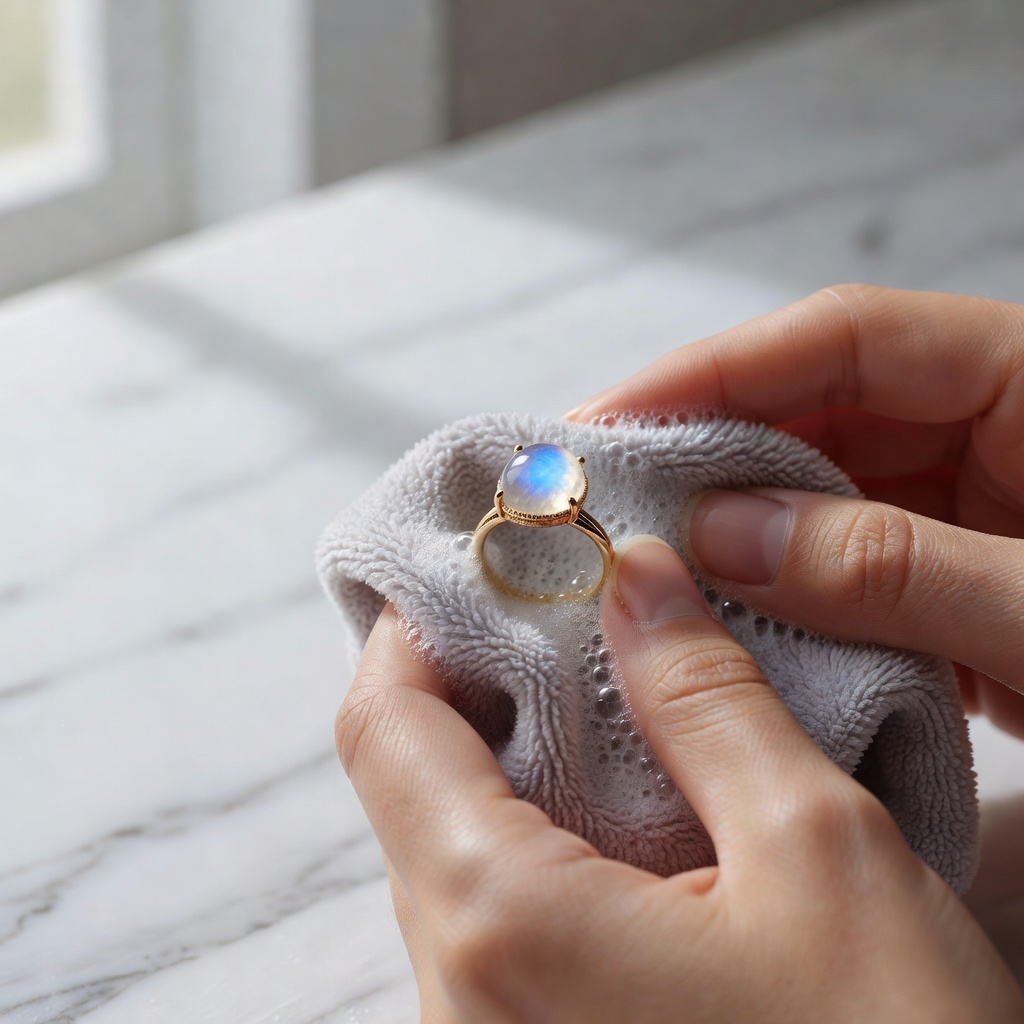
Regular gentle cleaning maintains moonstone's luminous quality without risking the damage associated with aggressive methods. For routine cleaning moonstone gemstones, prepare a solution of lukewarm water—not hot, as thermal shock can cause cracking—and a few drops of mild dish soap free from degreasers or antibacterial agents. Place the jewelry in this bath for two to three minutes to loosen accumulated oils and debris, then use a soft-bristled baby toothbrush with extremely gentle pressure to work around the setting and pavilion (the bottom portion of the stone).
When learning how to clean moonstone ring settings effectively, pay special attention to the area where the stone meets the metal, as this junction traps the most skin oils and lotion residue. Hold the piece over a white towel or bowl while brushing to prevent loss if the stone becomes dislodged, working in circular motions that follow the natural facets without digging into corners. For intricate vintage settings with filigree work, consider using a clean makeup brush with soft sable or synthetic bristles to reach tight spaces without risking prong damage that stiffer brushes might cause.
Thorough rinsing proves essential to prevent soap film buildup that causes cloudiness over time. Hold the jewelry under lukewarm running water, rotating it to ensure all soap exits from beneath the stone and within the setting. Pat the piece immediately with a lint-free microfiber cloth, avoiding paper towels that can scratch softer stones, and allow it to air dry completely on the cloth for thirty minutes before storing. For pieces with closed-back settings where water might become trapped, use a can of compressed air held at least six inches away to gently blow moisture from underneath the stone, preventing water spots that dull the surface.
Cleaning Methods to Absolutely Avoid
Protecting your investment in moonstone care and cleaning requires understanding which popular jewelry cleaning methods actually destroy feldspar minerals. Never subject moonstone to ultrasonic cleaners, even for brief cycles, as the high-frequency vibrations travel through the stone's crystalline structure and exploit existing cleavage planes or microscopic fractures. These internal cracks, often invisible to the naked eye, can propagate rapidly under ultrasonic agitation, causing clean breaks that transform a valuable cabochon into worthless fragments within seconds.
Chemical exposure presents equally serious threats to moonstone integrity. Avoid household cleaners containing bleach, ammonia, or alcohol-based solutions, as these substances react with the potassium aluminum silicate composition of feldspar, potentially causing etching or permanent discoloration. Commercial jewelry dips designed for diamonds and sapphires often contain strong acids that dissolve moonstone's surface layer, permanently destroying the polish and adularescence. Even seemingly gentle solutions like Windex or vinegar create cumulative damage that manifests as a dull, lifeless appearance after repeated exposure.
Abrasive household remedies rank among the most damaging misconceptions in gemstone care. Never use toothpaste, baking soda, or powdered cleansers on moonstone, as these materials contain microscopic grit particles significantly harder than the 6.5 Mohs rating of the stone itself. While these pastes might remove visible grime initially, they simultaneously create thousands of microscopic scratches that scatter light and destroy the smooth surface necessary for adularescence. Similarly, avoid steam cleaning systems that subject the stone to rapid temperature changes and high pressure, both of which induce thermal shock and can cause catastrophic cleavage failures in moonstone's layered structure.
Professional Maintenance and Inspection
While home care maintains daily brilliance, professional intervention ensures long-term structural integrity and addresses issues beyond DIY capabilities. Schedule comprehensive moonstone jewelry maintenance appointments every six to twelve months with a jeweler experienced in handling softer gemstones, requesting specific services beyond standard cleaning. These visits should include prong tightening, setting integrity checks, and professional steam cleaning using equipment calibrated for delicate stones rather than the aggressive industrial machines used for diamonds.
Professional jewelers possess specialized tools to address surface damage that accumulates despite careful wear. Micro-polishing equipment with diamond paste compounds graded specifically for 6-7 hardness stones can restore luster to scratched or slightly etched moonstones without removing excessive material. During inspection, experts examine the stone under magnification for internal stress fractures that may have developed from impact or temperature changes, catching potential problems before they result in complete stone failure. This diagnostic step proves particularly valuable for vintage moonstone pieces where previous owners may have subjected the gem to unknown stresses.
For beaded moonstone necklaces and bracelets, professional re-stringing every two to three years prevents the catastrophic loss that occurs when silk or nylon cords inevitably degrade. Silk threads absorb skin oils and environmental moisture over time, becoming brittle and prone to snapping without warning. A professional stringer will knot between each bead, ensuring that if the strand breaks, you lose only one stone rather than the entire necklace scattering across the floor. They can also inspect individual beads for developing cracks and recommend removing compromised stones before they crumble during wear.
Proper Storage Solutions
How you store moonstone when not wearing it proves equally important as how you clean it, preventing the subtle damage that occurs during idle periods. Implement moonstone storage tips that prioritize individual isolation; store each piece in a soft cloth pouch, acid-free tissue paper, or a fabric-lined jewelry box compartment separate from other items. Harder gemstones like diamonds, rubies, and sapphires readily scratch moonstone when jostled together in a jewelry box, creating permanent abrasions that require professional repolishing to remedy.
Environmental conditions significantly impact moonstone longevity, particularly humidity levels that affect the stone's hydration state. Unlike opals that require moisture to prevent cracking, moonstone needs consistent, moderate humidity rather than extreme dryness or dampness. Store jewelry boxes away from bathroom steam, heating vents, and direct sunlight that creates thermal cycling as temperatures rise and fall throughout the day. For long-term storage of valuable pieces, include silica gel packets to maintain stable humidity around 45-55%, preventing both dehydration that causes brittleness and excessive moisture that promotes metal tarnishing.
Travel requires additional precautions to protect moonstone from the rigors of transportation. Use rigid jewelry cases with individual padded slots rather than soft roll bags where stones might contact each other under pressure. When packing for air travel, carry moonstone jewelry in your personal item rather than checked luggage, avoiding the temperature extremes and rough handling of cargo holds. For extended storage periods exceeding several months, periodically inspect stored pieces for metal tarnish transfer that can stain light-colored moonstones, and rotate silica gel packets to ensure continued effectiveness.
Energetic Cleansing vs. Physical Cleaning
Collectors and spiritual practitioners often confuse the mechanical removal of dirt with metaphysical energy cleansing, requiring distinct approaches for cleaning moonstone gemstones on physical and energetic levels. Physical cleaning removes accumulated oils, dust, and debris that obscure optical properties, while energetic cleansing addresses the subtle energetic imprints that some believe affect the stone's vibrational qualities. Understanding this distinction prevents well-meaning spiritual practices from inadvertently damaging the physical structure of delicate moonstone specimens.
For those who work with crystal energy, several safe alternatives exist to water-based cleansing methods. Moonlight charging—placing moonstone outside or on a windowsill during the full moon—provides energetic renewal without physical risk, leveraging the stone's traditional lunar associations while avoiding liquid contact. Smudging with sage, palo santo, or incense smoke cleanses energetic fields while keeping the stone dry, though practitioners should ensure the stone doesn't become hot from proximity to burning materials. Placing moonstone on selenite slabs or quartz clusters represents another water-free method believed to clear and recharge the stone's energetic signature.
Despite popularity in crystal healing communities, salt water soaks should be strictly avoided for moonstone preservation. Salt crystals can scratch the relatively soft surface during the soaking process, and as the water evaporates, salt residue works into microscopic surface features and fractures, causing internal pressure as it crystallizes. Similarly, burying moonstone in salt or earth risks both abrasion and moisture retention that attacks metal settings. For energetic maintenance without physical risk, sound cleansing using singing bowls or tuning forks provides vibration-based clearing that affects the stone's energetic state without touching its surface chemistry or mechanical structure.
Restoring Dull or Cloudy Moonstones
Even with diligent care, moonstone may eventually develop a cloudy or dull appearance that diminishes its characteristic glow, requiring specific restoration approaches. Cloudiness typically results from soap residue, skin oils, or hard water minerals trapped within surface-reaching inclusions or microscopic scratches that scatter light rather than allowing it to penetrate and reflect back as adularescence. Before assuming permanent damage, attempt a deep cleaning using distilled water rather than tap water to eliminate mineral deposit contributions, soaking the stone for ten minutes in warm water with a single drop of mild soap followed by careful rinsing and immediate drying.
When home cleaning fails to restore clarity, professional repolishing offers the most reliable solution for reviving moonstone care and cleaning challenges. Lapidaries use progressively finer grits of diamond compound on soft polishing wheels to remove the microscopic layer of scratched and etched material, revealing the fresh, smooth surface beneath. This process requires expertise with feldspar minerals, as excessive heat generation during polishing can cause thermal shock, and over-aggressive material removal can alter the stone's proportions or weaken thin areas near the girdle. Expect to lose minimal weight—typically less than 0.1 millimeters of depth—but gain significantly improved optical performance and restored value.
Resist the temptation to use DIY polishing compounds or commercial scratch removers marketed for auto paint or household surfaces. These products contain aluminum oxide, silicon carbide, or cerium oxide abrasives significantly harder than moonstone itself, creating more damage while attempting repairs. Similarly, avoid home ultrasonic baths, steam cleaners, or chemical etching solutions promoted online as "miracle cures" for dull gemstones. If professional repolishing costs exceed the stone's value, consider resetting the moonstone in a pendant where light interaction occurs primarily through the top surface rather than the sides, maximizing the remaining adularescence rather than risking further damage through aggressive restoration attempts.
Frequently Asked Questions
Can moonstone get wet or be worn in the shower?
While brief contact with water won't immediately damage moonstone, prolonged exposure to hot water, chlorine, and soaps can dull the surface and damage the setting. It's best to remove moonstone jewelry before showering or swimming to preserve its adularescence and prevent soap buildup in crevices.
How often should I clean my moonstone jewelry?
Clean moonstone pieces every 2-4 weeks if worn regularly, or immediately after exposure to sweat, cosmetics, or household chemicals. Daily wear accumulates oils and debris that can diminish the stone's signature glow, so gentle wiping with a soft cloth after each use helps maintain brilliance between deeper cleans.
Can I use an ultrasonic cleaner on moonstone?
No, ultrasonic cleaners are unsafe for moonstone. The intense vibrations can exacerbate existing fractures and cleavage planes within the feldspar structure, potentially causing the stone to crack or shatter. Always stick to gentle hand-washing with mild soap and water.
Why does my moonstone look cloudy or dull?
Cloudiness typically results from accumulated skin oils, lotion residue, or soap film trapped in surface-reaching inclusions. Hard water deposits and microscopic scratches from daily wear can also scatter light, reducing the adularescence effect. A thorough cleaning with mild soap usually restores clarity.
Is moonstone durable enough for daily wear?
Moonstone's 6-6.5 Mohs hardness makes it moderately durable but vulnerable to scratching and impact damage. While suitable for occasional wear, daily wear in rings or bracelets risks surface damage. Earrings and pendants experience less contact and are better suited for frequent use.
Can I clean moonstone with vinegar, baking soda, or toothpaste?
Avoid these household cleaners entirely. Vinegar's acidity can etch the surface, while baking soda and toothpaste contain abrasive particles that scratch moonstone's relatively soft surface. These scratches permanently damage the polish and reduce the stone's adularescent glow.
How should I store moonstone to prevent damage?
Store moonstone jewelry individually in soft cloth pouches or fabric-lined compartments to prevent contact with harder gemstones. Keep pieces away from direct sunlight and heat sources that can cause thermal shock. For long-term storage, include a silica gel packet to control humidity and prevent cracking.
Does moonstone require special care during energetic cleansing?
For spiritual cleansing, avoid salt water soaks which can damage the stone's surface over time. Instead, use moonlight charging, smudging with sage, or placing on selenite slabs. These methods cleanse energy without risking physical damage to the gemstone's delicate structure.


