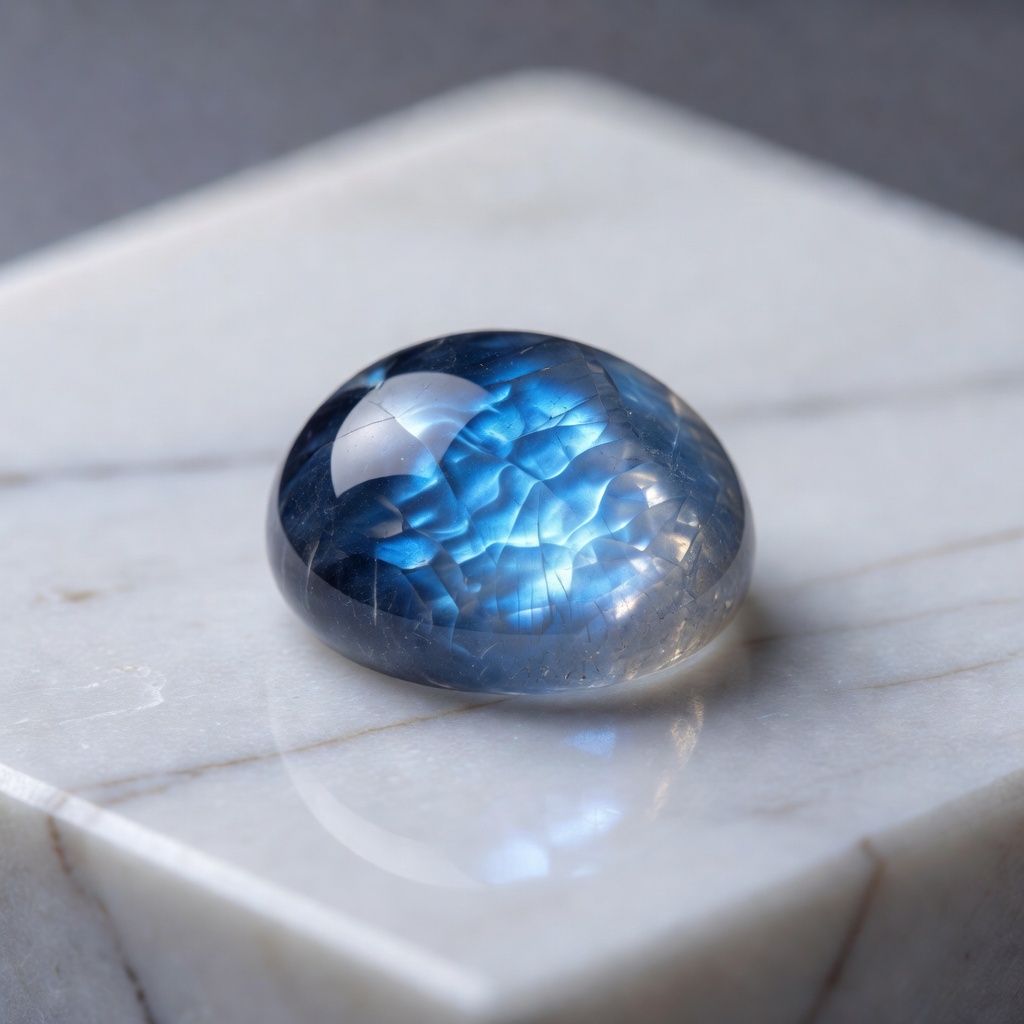
Understanding Moonstone Varieties and Origins
Navigating the world of gemology requires understanding that "moonstone" refers to two distinct mineral families within the feldspar group, each offering unique visual characteristics and value propositions. Traditional blue moonstone belongs to the orthoclase feldspar species, characterized by its sodium potassium aluminum silicate composition that creates the coveted billowy adularescence. In contrast, rainbow moonstone is technically a variety of labradorite (white feldspar), distinguished by its calcium-rich composition that produces multicolored flashes including blues, oranges, and yellows rather than the pure silver-blue sheen of its orthoclase counterpart. When evaluating specimens for your collection, remember that while both varieties are commercially marketed as moonstones, orthoclase blue moonstones typically command premium prices due to their historical significance and relative rarity in fine qualities.
Geographic provenance significantly influences both the appearance and market value of these gemstones, with certain regions producing distinctly different material. Sri Lankan (Ceylon) deposits historically yield the most prestigious blue moonstones, featuring transparent, water-clear bodies with intense blue adularescence that appears to float within the stone like moonlight on water. India's Bihar region has emerged as a major supplier of fine material, often displaying slightly more translucent bodies with strong silver-blue sheen, while Madagascar specializes in exceptional rainbow varieties that showcase the full spectrum of labradorescence. When examining potential purchases, always inquire about origin documentation, as Sri Lankan material typically carries a 20-30% premium over Indian equivalents of similar quality, while untreated Madagascar rainbow specimens are increasingly sought after by contemporary jewelry designers seeking vibrant color play.
Evaluating Adularescence: The Hallmark of Quality
The singular most important value factor in any Moonstone Buying Guide remains the quality of adularescence, that mesmerizing glow that seems to originate from deep within the stone rather than reflecting off its surface. True high-quality adularescence exhibits three-dimensional depth, creating the illusion that a billowy cloud of light is suspended inside the gem, moving gracefully as you tilt the stone under incident light. When evaluating specimens, position the stone under a single incandescent light source or natural diffused daylight, rotating it slowly to observe how the sheen travels across the dome; inferior stones will show a flat, painted-on appearance, while exceptional specimens demonstrate a rolling, mobile glow that shifts with every movement.
Color intensity and distribution separate commercial-grade material from collector-quality stones worthy of investment. The most valuable blue moonstones display a vivid electric blue or royal blue sheen concentrated in the center of the dome, though silver-white adularescence remains acceptable in finer qualities. Be wary of stones showing washed-out gray tones or uneven color distribution, as these indicate either poor crystalline structure or improper cutting angles that fail to maximize the optical phenomenon. For optimal evaluation, examine the stone against a black or dark blue background under focused lighting, as this technique reveals the true intensity of the effect without ambient light interference masking subtle quality deficiencies.
Clarity Standards and Inclusion Analysis
Unlike diamonds where inclusions typically diminish value, certain internal characteristics actually authenticate natural moonstone identification and verify geological authenticity. The presence of "centipede" inclusions—tension cracks resembling multi-legged insects—serves as a positive identification marker for natural material, proving the stone formed under genuine geological stress rather than laboratory conditions. These characteristic inclusions, composed of tiny cavities arranged in linear patterns, should be visible under 10x magnification but ideally remain subtle enough not to interfere with light transmission through the stone's body. When examining clarity, prioritize specimens that balance these natural fingerprints with sufficient transparency to allow the adularescence phenomenon to manifest fully without obstruction.
Navigate the transparency spectrum carefully, understanding that moonstone clarity exists on a continuum from transparent to translucent, with distinct implications for both aesthetics and durability. The finest specimens achieve "water clear" transparency, allowing unimpeded viewing of the adularescence layer while maintaining structural integrity, whereas heavily included or turbid stones appear milky or cloudy, diminishing the mystical floating-light effect. Critically inspect all potential purchases for surface-reaching fractures or cleavage planes, as moonstone's perfect cleavage in two directions makes it susceptible to splitting along these natural weakness planes. Any cracks extending to the surface compromise not only the stone's beauty but its ability to withstand the stresses of setting and daily wear, representing significant durability red flags that should disqualify stones from serious consideration regardless of attractive pricing.
Cut, Shape, and Dome Height Considerations
The cabochon cut represents the industry standard for maximizing moonstone's optical performance, featuring a smooth, domed upper surface and flat or slightly curved base that focuses light onto the stone's internal lamellar structure. Unlike faceted gems that prioritize brilliance and fire, the moonstone cabochon specifically engineers light interaction to showcase adularescence, requiring the cutter to orient the stone so the microscopic feldspar layers run parallel to the base. When selecting cabochons, examine the dome profile carefully: too flat a dome fails to concentrate light sufficiently, resulting in weak sheen, while excessively high domes waste carat weight and may create awkward proportions in jewelry settings. The optimal dome rises gently to a rounded apex with smooth, symmetrical curves free of flat spots or lumpy irregularities that indicate poor lapidary work.
While cabochons dominate the market, faceted moonstones serve specific aesthetic purposes for collectors seeking alternative presentations of this classic material. Precision cutting into step cuts, Portuguese cuts, or mixed designs suits highly transparent material with minimal adularescence, transforming the stone into a sparkling gem that emphasizes clarity over sheen, though such stones generally command lower prices than fine cabochons. Popular shapes include oval and round domes for rings and pendants, cushion cuts for vintage-inspired designs, and pear shapes for elegant earrings, with elongated oval cabochons between 12x10mm and 16x12mm representing the sweet spot for statement jewelry. When commissioning custom pieces, request that your jeweler source cabochons with calibrated heights (typically 4-6mm for standard sizes) to ensure proper seating in pre-made mountings without requiring excessive bezel depth that might obscure the stone's sides.
Carat Weight and Pricing Structure
Understanding moonstone price per carat requires recognizing the exponential rather than linear relationship between size and value, particularly once stones exceed five carats where fine material becomes genuinely scarce. Commercial-grade moonstones in the 1-3 carat range suitable for rings typically retail between $10-50 per carat, representing accessible entry points for collectors, while fine blue sheen specimens in similar sizes command $100-500 per carat depending on clarity and adularescence intensity. The pricing curve steepens dramatically for stones exceeding five carats with exceptional quality, where collector-grade specimens can reach $1,000+ per carat, reflecting the statistical rarity of large crystals forming without inclusions or structural weaknesses in this geologically fragile material.
Strategic size selection depends heavily on intended jewelry application and budget constraints. Ring stones typically range 2-3 carats (approximately 10x8mm in oval cabochons), providing substantial presence without excessive vulnerability to impact damage, while pendant centers often utilize 5 carats or larger to create visual impact when viewed at greater distances. When investing in significant specimens exceeding 10 carats, prioritize stones with GIA or AGL certification verifying natural origin and documenting any treatments, as the financial stakes warrant professional authentication. Consider that matched pairs for earrings command premiums of 20-40% over single stones due to the difficulty of finding two pieces with identical color, sheen orientation, and dome height, making single large specimens occasionally better value propositions for solitaire pendants or brooches.
Natural vs. Synthetic: Authentication Methods
The marketplace unfortunately contains numerous simulants and synthetics masquerading as genuine moonstone, necessitating vigilant natural moonstone identification techniques before significant investment. Common imitations include lab-created spinel (often sold misleadingly as "synthetic moonstone"), glass with injected sheen, and coated chalcedony, each presenting specific diagnostic features visible under magnification. Natural moonstones display the characteristic centipede inclusions and a three-dimensional adularescence that seems to originate from varying depths within the stone, whereas glass imitations typically show bubbles, swirl marks, or a superficial surface shine lacking the billowy depth of genuine material. Lab-created spinel, while chemically distinct, may fool casual observers but lacks the specific feldspar structure and inclusion patterns that define authentic moonstones.
Treatments present additional complications, with common enhancements including colorless oil or polymer fracture filling to mask cracks, and surface coatings applied to glass or white chalcedony to simulate adularescence. Detect fracture filling by examining the stone under darkfield illumination, where filled cracks display flash effect colors (orange, blue, or purple interference colors) distinctly different from the body color, or by observing whether inclusions appear blurred or "wet" rather than sharp and distinct. For purchases exceeding $500, insist upon certification from reputable laboratories such as GIA, AGL, or Gubelin, which can definitively distinguish natural feldspar from synthetics using advanced spectroscopic analysis. When buying uncertified material, perform simple specific gravity tests (natural moonstone ranges 2.56-2.59) or consult a gemologist, as the cost of professional verification pales in comparison to the risk of acquiring worthless imitation material.
Budget Planning and Value Assessment
Establishing realistic budget parameters requires understanding the quality tiers that define moonstone value across different market segments. Entry-level commercial grades ($10-50 per carat) typically feature white to gray body colors with weak adularescence, visible inclusions, and translucent rather than transparent clarity—suitable for fashion jewelry or beginner collections but lacking investment potential. These stones may display adularescence only from specific angles under intense lighting, often exhibiting "dead zones" where the sheen disappears entirely, and frequently originate from Indian or Madagascan mines producing abundant lower-grade material. While affordable, these specimens serve primarily as decorative elements rather than collectible gemstones.
Fine quality specimens ($100-500 per carat) justify their premium through transparent to nearly transparent bodies, strong blue or silver adularescence visible under normal indoor lighting, and minimal eye-visible inclusions that do not detract from the optical effect. Investment-grade collector stones exceeding $1,000 per carat represent the apex of the market, featuring water-clear transparency, intense electric blue sheen concentrated in the dome's center, and sizes exceeding 5 carats with documented Sri Lankan origin. When assessing value, consider the "total visual package" rather than fixating on single characteristics—a stone with slightly weaker sheen but exceptional clarity and cutting may outperform a heavily included stone with intense but patchy adularescence. Set your budget to prioritize the optical phenomenon over size, as a smaller stone with vivid adularescence provides greater satisfaction than a large, lifeless specimen.
Trusted Sources and Purchase Safety
When you buy moonstone online, rigorous vendor vetting protects against misrepresentation and financial loss in a market where photography manipulation can dramatically exaggerate adularescence. Reputable dealers provide high-resolution images under standardized lighting conditions alongside videos showing the stone's optical behavior when tilted, offer detailed origin information, and maintain clear return policies allowing examination by independent appraisers. Examine seller reviews specifically mentioning accuracy of color representation and disclosure of treatments, as ethical vendors will explicitly state whether stones have been fracture-filled or coated rather than burying such information in fine print. Avoid marketplace platforms where individual sellers lack established gemological credentials or where prices seem significantly below wholesale market rates, as these often indicate glass imitations or heavily treated material.
For in-person acquisitions, bring a 10x loupe and penlight to inspect stones under controlled conditions rather than relying solely on jewelry store lighting designed to enhance appearance. Check that the adularescence appears three-dimensional and billowy rather than painted-on, examine the girdle and base for chips or fractures that might expand during setting, and verify that the dome height matches the stated dimensions to ensure fair carat weight representation. Red flags include vague origin descriptions ("Asian source" rather than specific localities), prices substantially below market norms for claimed quality grades, sellers unwilling to provide certification for expensive specimens, or stones displaying uniform, plastic-like appearance suggesting synthetic manufacture. Whether purchasing online or in-person, request written documentation specifying natural origin, absence of treatments (or full disclosure of any enhancements), and guarantee of authenticity backed by refund rights if independent testing reveals misrepresentation.
Jewelry Settings and Wearability Factors
Selecting appropriate moonstone jewelry settings requires balancing aesthetic presentation with protective engineering, given that moonstone's 6-6.5 Mohs hardness and perfect cleavage render it vulnerable to scratching and impact damage. Bezel settings offer superior protection by surrounding the cabochon's circumference with a metal rim that shields edges from knocks and prevents the stone from catching on clothing, though they partially obscure the sides and require precise fitting to avoid squeezing the stone along its cleavage planes. Alternatively, protective halo designs featuring diamond or sapphire surrounds in 14k gold provide both security and visual enhancement, while V-prong settings at the cabochon's apex and base offer minimalist protection suitable for occasional wear pieces. Avoid exposed prong settings for rings intended for daily wear, as the stone's softness makes it susceptible to loosening or chipping when subjected to household activities or accidental impacts.
Metal selection significantly influences the perceived color of adularescence, with white gold and platinum enhancing blue moonstone's cool tones while yellow and rose gold complement peach, gray, or white varieties by providing warm contrast. Consider the wearer's lifestyle when determining suitability: pendants and earrings experience minimal impact and suit regular wear even in delicate settings, whereas rings require substantial protective mountings and should be removed during physical activities, cleaning, or gardening. For heirloom pieces, specify 14k or 18k gold rather than sterling silver for mountings, as the softer silver scratches easily and may require frequent refinishing that risks damaging the stone during repair processes. Discuss with your jeweler the possibility of adding a "bumper" gallery beneath the stone to absorb shock, particularly for larger cabochons where the weight increases stress on the setting during wear.
Long-term Care and Maintenance Protocols
Preserving your moonstone's beauty requires adhering to specific moonstone care protocols that acknowledge its relative softness and sensitivity to environmental factors. Clean your gemstone using only warm soapy water (mild dish detergent) and a soft lint-free cloth or natural bristle brush, gently removing accumulated oils and debris without subjecting the stone to mechanical stress. Never use ultrasonic cleaners, steam cleaners, or harsh chemical jewelry dips, as these can exploit existing fractures, loosen fracture fillings, or cause thermal shock that cracks the stone along its cleavage planes. After cleaning, pat the stone dry immediately rather than allowing water spots to evaporate, as mineral deposits from tap water can dull the surface luster over time.
Storage solutions must prevent contact with harder gemstones (diamonds, rubies, sapphires, quartz) that could scratch moonstone's surface, ideally utilizing individual soft cloth pouches or compartmentalized jewelry boxes with fabric-lined separators. Remove moonstone jewelry before applying perfumes, hairsprays, or cosmetics, as these products can build up in surface scratches or under bezels, creating a dull film that obscures adularescence. Should the cabochon surface accumulate scratches from normal wear over years of enjoyment, professional re-polishing by a lapidary can restore the original luster, though this process removes minimal carat weight and should be performed only by specialists experienced with feldspar materials. With proper care and occasional professional maintenance, fine moonstones remain beautiful for generations, their ethereal glow continuing to captivate observers just as they have since ancient civilizations first treasured these lunar gems.
Frequently Asked Questions
How much should I expect to pay for a quality moonstone?
Commercial-grade moonstones typically cost $10-50 per carat, while fine quality specimens with strong blue adularescence range from $100-500 per carat. Rare collector-grade stones exceeding 10 carats with exceptional clarity can command $1,000+ per carat.
What is the difference between rainbow moonstone and blue moonstone?
Rainbow moonstone is actually a variety of labradorite (white feldspar) that displays a full spectrum of colors, while traditional blue moonstone is orthoclase feldspar exhibiting specifically blue or silver adularescence. Blue moonstone typically commands higher prices due to its rarity.
How can I tell if my moonstone is real or synthetic?
Natural moonstones contain characteristic 'centipede' inclusions (stress cracks) and show a three-dimensional billowy light effect. Synthetic imitations often appear too perfect, display surface-level shine rather than depth, and may show bubbles (glass) or uniform structure (lab-grown spinel).
Is moonstone durable enough for everyday wear?
With a Mohs hardness of 6-6.5, moonstone is relatively soft and requires protective settings for daily wear. It's susceptible to scratching and cleaving, making it better suited for pendants and earrings rather than rings worn during physical activities.
What causes the blue sheen effect in moonstones?
The blue sheen, called adularescence, results from light scattering between microscopic layers of orthoclase and albite feldspar within the stone. As light enters, it reflects off these thin lamellar structures, creating the characteristic floating, billowy glow.
Which origin produces the highest quality moonstones?
Historically, Sri Lanka (Ceylon) produces the most prized blue moonstones with transparent bodies and strong adularescence. However, India's Bihar region now supplies significant quantities of fine material, while Madagascar offers excellent rainbow varieties.
Should I choose cabochon or faceted moonstone?
Choose cabochon cuts to maximize adularescence display, as the domed surface allows optimal light reflection for the billowy effect. Faceted moonstones are rare and typically reserved for transparent material with minimal adularescence, appealing to those preferring sparkle over sheen.
What metal setting works best with moonstone?
Yellow and rose gold complement peach and gray moonstones, while white gold and platinum enhance blue adularescence. Bezel settings offer superior protection for this softer gemstone, though protective halo designs in 14k gold provide both security and aesthetic appeal.