What is Moldavite? Understanding This Rare Tektite
Moldavite represents one of the most fascinating and sought-after specimens in the mineral kingdom, classified specifically as a tektite rather than a traditional crystal. Unlike minerals that form through slow geological processes within the earth's crust, moldavite is a natural glass created through a catastrophic cosmic event that fused terrestrial and extraterrestrial materials into a unique green gemstone. This extraordinary origin story distinguishes it from crystalline structures like emerald or peridot, positioning moldavite as a bridge between earthly and celestial energies that has captivated collectors and spiritual practitioners alike.
The discovery and naming of moldavite trace back to the Moldau River region in the Czech Republic, where farmers first encountered these mysterious green stones while plowing their fields during the late 18th century. Early specimens were initially mistaken for unusual types of obsidian or green glass until scientific analysis revealed their extraterrestrial connection and distinct chemical composition. The term "moldavite" derives from the German name for the Vltava River (Moldau), reflecting the geographic concentration of deposits along this waterway and surrounding areas of Bohemia and Moravia.
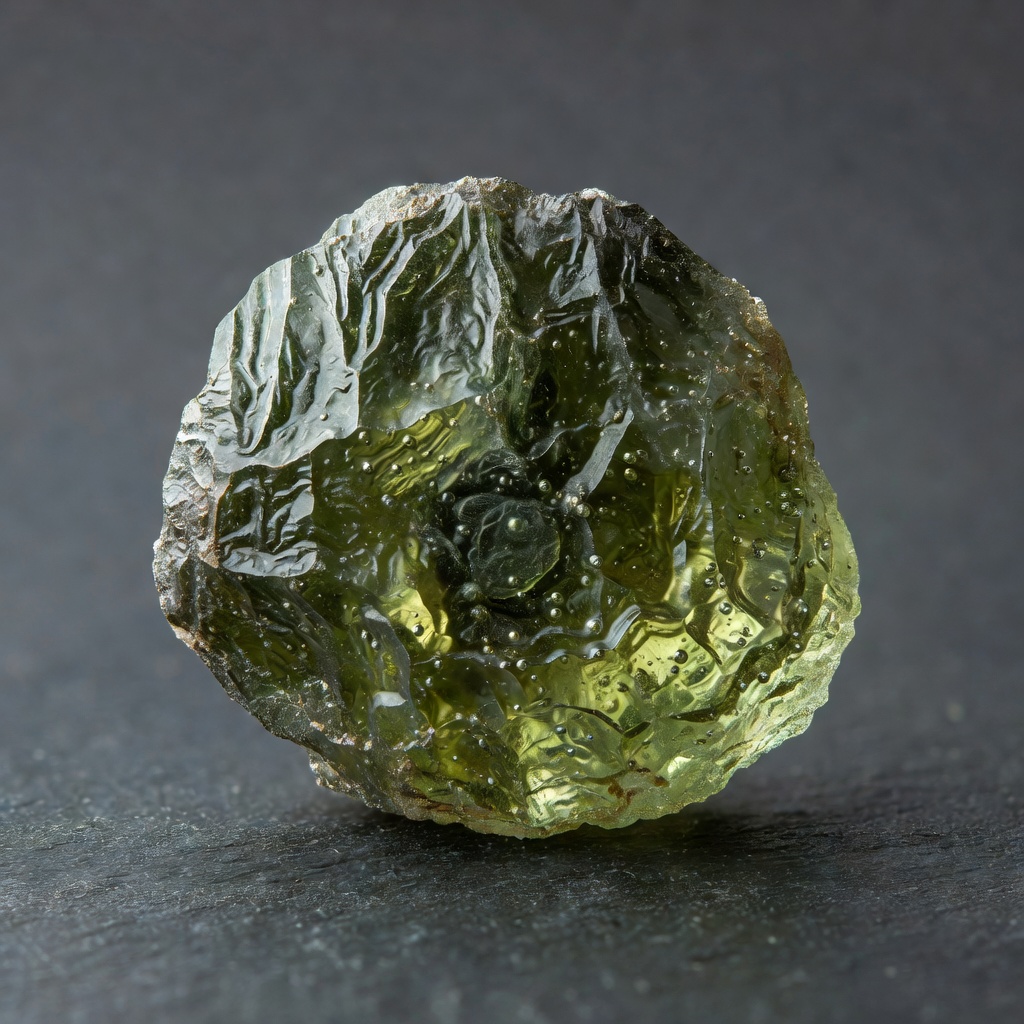
Physically, moldavite exhibits characteristics that immediately distinguish it from other green gemstones, including its highly textured surface featuring intricate pits, wrinkles, and grooves formed during rapid atmospheric cooling. The stone typically displays translucent to transparent qualities with color ranges spanning pale lime to deep forest olive, often containing fascinating internal features like bubbles and lechatelierite threads. These natural sculptures create a raw, organic aesthetic that contrasts sharply with the faceted perfection of commercially cut gemstones, making each piece a unique artistic creation forged by cosmic forces.
The extreme rarity of moldavite significantly contributes to its value and mystique within the collector community, as viable deposits exist only within a limited strewn field covering approximately 8,400 square kilometers in the Czech Republic. Unlike other crystals that form continuously through geological time, moldavite represents a finite resource created during a single momentous event millions of years ago, with existing deposits gradually depleting as mining operations extract the remaining specimens. This scarcity factor, combined with increasing global demand for authentic moldavite properties and information, has transformed the stone from a regional curiosity into an internationally recognized treasure commanding premium prices in the metaphysical and jewelry markets.
The Geological Formation and Origin
The genesis of moldavite occurred approximately 14.8 million years ago during the Miocene epoch when a massive meteorite estimated at 1.5 kilometers in diameter struck the earth's surface near the present-day Nördlinger Ries crater in southern Germany. This catastrophic impact generated temperatures exceeding 30,000 degrees Celsius and pressures capable of melting both the meteorite itself and the surrounding terrestrial rock, creating a superheated plasma that was ejected into the atmosphere at velocities approaching escape velocity. As this molten material traveled southeastward across what is now central Europe, it cooled and solidified during flight, forming the unique aerodynamic shapes characteristic of moldavite tektite benefits that distinguish it from other impact glasses.
The creation process involved complex physical transformations where silica-rich target rocks underwent vitrification, losing their crystalline structure to become amorphous glass while retaining the chemical signature of both earth and space. During the rapid cooling phase, which occurred over mere seconds as the material descended through the atmosphere, the molten glass developed distinctive surface features including regmaglypts (thumbprint-like indentations) caused by atmospheric ablation and internal stress fractures. This violent formation process ensures that no two pieces of moldavite are identical, with each specimen bearing the unique scars and shapes of its specific trajectory and cooling history.
Primary moldavite deposits concentrate exclusively within specific strewn fields in the Czech Republic, particularly in South Bohemia and Moravia, where geological forces preserved these ancient glasses within sedimentary layers for millions of years. The South Bohemian deposits yield the highly prized "Besednice" specimens featuring exceptional surface sculpture and clarity, while Moravian moldavite tends toward darker colors and more massive forms due to different cooling conditions and target rock compositions. Archaeological evidence suggests that prehistoric humans discovered and utilized these stones as tools and amulets approximately 25,000 years ago, indicating that moldavite has captivated human imagination since the earliest periods of European settlement.
Chemical analysis reveals that moldavite consists primarily of silicon dioxide (SiO2) with varying amounts of aluminum oxide, iron oxide, and trace elements that contribute to its characteristic green coloration. The silica content typically ranges between 75-80%, significantly higher than obsidian but lower thanLibyan desert glass, placing moldavite in a unique compositional category among tektites. Isotopic studies confirm the extraterrestrial component of moldavite formation and origin, showing distinct chromium isotope ratios that match certain classes of carbonaceous chondrites while retaining the oxygen isotope signature of terrestrial surface rocks, definitively proving its status as a hybrid cosmic-terrestrial material.
Physical Properties and Visual Characteristics
Identifying genuine moldavite requires careful examination of its distinct physical attributes, beginning with color variations that range from pale yellowish-green to deep forest olive and occasionally brownish-green hues depending on iron content and weathering conditions. High-quality specimens display a vitreous luster and translucency that allows light to penetrate the stone, creating an inner glow often described as "mossy" or "olive oil" in appearance when held against illumination. Unlike manufactured glass, which tends toward uniform coloration, authentic moldavite exhibits subtle color zoning and internal variations that reflect its natural formation process and the heterogeneous nature of the original molten material.
The surface sculpture of moldavite provides crucial identification markers for distinguishing authentic specimens from counterfeits, featuring complex patterns of pits, wrinkles, grooves, and etchings created during atmospheric flight and subsequent geological burial. These textures, technically termed "regmaglypts," resemble the thumbprints found on meteorite surfaces and occur when the molten glass partially ablates during high-velocity travel through the atmosphere, creating aerodynamic shaping and surface scoring. Advanced collectors examine these patterns under magnification to verify natural origin, as authentic surface textures display irregular, random distributions that prove extremely difficult to replicate artificially when learning how to identify real moldavite.
Internal examination reveals additional diagnostic features including spherical to elongated bubbles of various sizes, lechatelierite threads (silica glass filaments formed from quartz grains that did not fully melt), and schlieren (wavy streaks indicating flow patterns during solidification). These inclusions appear under magnification as natural imperfections rather than manufacturing defects, with bubbles often displaying irregular shapes and distribution patterns that differ from the uniform round bubbles found in synthetic glass. The presence of lechatelierite specifically indicates formation temperatures high enough to melt pure quartz, serving as definitive proof of the cosmic impact origin that defines genuine moldavite properties and information.
On the Mohs hardness scale, moldavite registers between 5.5 and 6.0, making it softer than quartz but harder than window glass, which requires careful handling to prevent scratches and chips during wear or storage. The specific gravity ranges from 2.32 to 2.38, noticeably lighter than most crystalline gemstones but heavier than plastic imitations, providing a tactile verification method for experienced collectors. Due to its natural fracturing tendencies and brittle nature, moldavite demands protective settings when used in jewelry and should never be exposed to harsh chemicals, ultrasonic cleaners, or extreme temperature changes that could induce thermal shock and cracking.
Moldavite Crystal Meaning and Metaphysical Attributes
Throughout metaphysical traditions, moldavite carries profound significance as a stone of transformation and spiritual acceleration, often described as possessing the highest vibrational frequency of any mineral used in crystal healing practices. The moldavite crystal meaning centers on its role as a catalyst for rapid personal evolution, earning nicknames like "the stone of the Holy Grail" and "the gem that fell from the sky" among spiritual communities. Practitioners believe that moldavite's extraterrestrial origin imbues it with cosmic intelligence and galactic energies that facilitate communication with higher dimensions, spirit guides, and one's higher self during meditation and energy work.
The primary energetic association links moldavite to the heart chakra (Anahata), though advanced practitioners report activation of the higher heart, third eye, and crown chakras simultaneously during extended work with the stone. Unlike heart-centered stones such as rose quartz that promote gentle emotional healing, moldavite generates intense energy described as "electric" or "buzzy" that rapidly clears blockages and pushes stagnant energies to the surface for immediate processing. This characteristic makes moldavite particularly effective for individuals seeking moldavite spiritual awakening experiences, as it accelerates the removal of karmic patterns and limiting beliefs that hinder spiritual progress.
Cosmic connection represents another fundamental aspect of moldavite's metaphysical profile, with many users reporting enhanced intuition, psychic abilities, and receptivity to extraterrestrial or interdimensional communications. The stone serves as a talisman for starseeds and those who feel spiritually disconnected from earthly existence, providing a tangible link to cosmic origins and universal consciousness. Historical records indicate that moldavite was treasured during the Paleolithic period and possibly used in goddess worship ceremonies, with archaeological finds including moldavite amulets and cutting tools suggesting that ancient peoples recognized its special energetic properties long before modern crystal healing practices emerged.
Transformational energy defines the core spiritual teaching of moldavite, which insists on authenticity and alignment with one's true life purpose rather than maintaining comfortable but limiting situations. Users frequently report synchronicities, life-changing opportunities, and the sudden dissolution of obstacles shortly after acquiring moldavite, though these changes often require courage and adaptability to navigate successfully. The stone teaches that spiritual growth sometimes necessitates discomfort, serving as a spiritual personal trainer that pushes consciousness beyond self-imposed boundaries into expanded awareness and higher vibrational living.
Healing Properties and Energy Benefits
The moldavite healing properties encompass profound emotional therapeutic applications, particularly regarding the release of deeply buried traumas, fears, and negative patterns stored within the cellular memory. Working with moldavite often initiates what practitioners term "the moldavite flush"—a physical warming sensation or emotional catharsis that accompanies the sudden release of suppressed energies from the heart and solar plexus regions. This intense clearing process, while temporarily uncomfortable, creates space for higher vibrational emotions such as unconditional love, compassion, and joy to anchor within the auric field, facilitating lasting emotional freedom and psychological resilience.
Physical healing associations traditionally focus on the heart and respiratory systems, with crystal healers using moldavite to support cardiovascular health, improve circulation, and address ailments affecting the lungs and bronchial tubes. Some practitioners place moldavite on the thymus gland to stimulate immune function or use it in layouts targeting the eyes, believing that its high silica content resonates with connective tissues and cellular regeneration. While these applications should complement rather than replace conventional medical treatment, many users report enhanced vitality and physical energy when working regularly with moldavite tektite benefits in their wellness routines.
Meditation enhancement represents one of the most consistently reported moldavite healing properties, with users experiencing dramatically altered states of consciousness, enhanced dream recall, and vivid visionary experiences during practice. The stone acts as a psychic amplifier, intensifying clairvoyant, clairaudient, and clairsentient abilities while providing protection and grounding during astral travel or interdimensional exploration. Beginners often find that holding moldavite during meditation accelerates the attainment of deep theta brainwave states that typically require years of disciplined practice to achieve, making it a valuable tool for both novice and advanced meditators seeking expanded awareness.
Personal evolution accelerates dramatically under moldavite's influence, as the stone refuses to allow stagnation or procrastination regarding one's spiritual development and life purpose. Many report that moldavite reveals hidden talents, attracts necessary teachers and resources, and dissolves self-sabotaging behaviors with unprecedented efficiency. This acceleration extends to manifestation practices, where moldavite serves as an amplifier for intention-setting, helping to bridge the gap between thought and physical reality by aligning the user with the vibrational frequency of their desires and clearing obstacles from their path.
How to Use Moldavite in Your Spiritual Practice
Integrating moldavite into meditation practice requires sensitivity to its intense energetic signature, with beginners advised to start with brief sessions of 10-15 minutes rather than attempting extended immersions initially. A foundational technique involves holding the stone in the receptive hand (typically the left for right-handed individuals) while seated in a grounded position, allowing the energy to enter through the palm chakra and circulate through the heart center before expanding upward through the crown. Advanced practitioners often employ moldavite in vertical column meditations, placing the stone at the heart while visualizing a beam of green-gold light connecting the earth's core to the galactic center, facilitating the moldavite spiritual awakening process through sustained high-frequency attunement.
Wearing moldavite jewelry provides continuous energetic support throughout daily activities, though sensitivity varies considerably among individuals regarding comfortable wear duration. Pendants resting over the heart chakra offer the most traditional application, while earrings may enhance intuitive reception and psychic protection, and rings facilitate energy projection through the hands during healing work. Those new to moldavite should consider starting with occasional wear rather than constant contact, perhaps donning the stone during important meetings, creative endeavors, or spiritual practices while removing it during sleep until acclimated to its vibrational intensity.
Crystal grids incorporating moldavite create powerful manifestation and healing matrices when combined with complementary stones that ground or modulate its intense energy. Effective pairings include black tourmaline or smoky quartz for grounding, selenite for cleansing and angelic connection, and rose quartz for softening moldavite's intensity while maintaining heart-centered focus. When constructing grids, place moldavite at the center as the primary activator, surrounding it with supporting stones in geometric patterns such as the Flower of Life or Star of David, and activate the grid by tracing energetic connections between the stones with a quartz wand while stating clear intentions for transformation and healing.
Integration rituals prove essential for managing the intense energy shifts that moldavite catalyzes, particularly during the initial weeks of working with the stone. Create a weekly practice of journaling changes, synchronicities, and emotional releases that occur since acquiring moldavite, allowing conscious processing of rapid transformations. Grounding exercises become crucial when working with this high-vibration stone, including walking barefoot on earth, eating root vegetables, or holding black stones like obsidian or hematite after moldavite sessions to re-anchor the physical body. Some practitioners maintain a "moldavite detox day" weekly, abstaining from the stone temporarily to integrate lessons and rest from its continuous push toward evolution and change.
Authenticity Guide: Real vs. Fake Moldavite
The explosive popularity of moldavite has generated a flooded market containing numerous fraudulent imitations, making education about authentic moldavite vs fake specimens essential for prospective buyers. Common counterfeit materials include manufactured green glass poured into molds, resin composites mixed with metal powders, and altered bottle glass treated with acids to simulate surface etching. These fakes not only represent financial fraud but also deprive users of the genuine energetic properties that justify moldavite's premium pricing, making verification skills crucial for anyone seeking legitimate moldavite properties and information.
Visual inspection techniques provide the first line of defense against purchasing fraudulent specimens, beginning with examination of surface textures under 10x magnification or strong lighting. Authentic moldavite displays irregular, random surface sculptures with sharp, natural edges to the pits and wrinkles, while fake pieces often show rounded, uniform patterns indicative of mold marks or acid etching. Real moldavite contains internal bubbles of varying sizes and shapes, often elongated or teardrop-shaped from atmospheric flight, whereas manufactured glass typically contains perfectly spherical bubbles or none at all, serving as a critical diagnostic feature for how to identify real moldavite.
Laboratory testing methods offer definitive verification for valuable specimens, including specific gravity testing (authentic moldavite sinks in liquid with density of 2.32-2.38), refractive index measurement (approximately 1.48-1.54), and spectroscopic analysis revealing the unique chemical signature of natural tektites. Reputable dealers provide certification from recognized gemological laboratories such as the Gemological Institute of America (GIA) or independent mineralogical institutions that confirm geographic origin and natural formation. When purchasing investment-grade pieces, always request documentation of provenance indicating specific mining locations such as Chlum, Besednice, or Slavče, as these details verify authenticity while adding historical value to the specimen.
Price red flags represent perhaps the most accessible warning system for detecting fake moldavite, as authentic specimens command premium prices reflecting their extreme rarity and increasing scarcity. Be extremely wary of "wholesale" prices below $10-15 per gram for standard quality material, or listings offering large, perfect pieces at suspiciously low costs, as these almost certainly indicate glass or resin imitations. Authentic moldavite typically ranges from $20-$100+ per gram depending on quality, color, and surface characteristics, with museum-grade pieces commanding significantly higher premiums. Remember that if a deal appears too good to be true regarding moldavite, it almost certainly involves fraudulent material masquerading as the genuine article.
Proper Care and Cleansing Techniques
Maintaining moldavite's energetic and physical integrity requires specific care protocols that acknowledge its unique chemical composition and sensitivity to environmental factors. Unlike quartz crystals that tolerate various cleansing methods, moldavite demands gentle treatment due to its amorphous glass structure and relatively low Mohs hardness. Water exposure presents particular risks, as prolonged soaking can dull the surface luster or, in the case of heavily included specimens, cause internal fractures to expand through moisture penetration, making dry cleansing methods preferable for preserving moldavite properties and information encoded within its structure.
Safe energetic cleansing options include moonlight bathing, particularly during full moon phases when lunar energies resonate strongly with moldavite's heart-centered vibrations, or starlight exposure that recharges its cosmic connections. Placing moldavite on selenite slabs or clear quartz clusters overnight provides effective clearing without physical risk, as these stones naturally absorb and transmute accumulated negative energies. Sound cleansing using singing bowls, tuning forks set to 528 Hz (the love frequency), or bells creates vibrational shifts that reset the stone's energetic field without requiring physical contact or liquid exposure, making this method ideal for frequent maintenance.
Charging protocols should emphasize celestial energies over solar exposure, as intense sunlight can fade the green coloration of some specimens over extended periods. Instead, place moldavite outside during starry nights or near windows where it can absorb moonlight and cosmic rays that enhance its natural vibrational frequency. Some practitioners create charging altars using copper plates, sacred geometry grids, or placement near high-vibration crystals like phenacite or herderite to amplify moldavite's inherent energies while maintaining its distinctive moldavite crystal meaning and metaphysical potency.
Physical storage requires protective measures to prevent scratches and chips, preferably in individual cloth pouches or padded boxes separate from harder minerals like quartz or diamonds that could damage the surface. Avoid storing moldavite in plastic bags that might generate static electricity or in direct contact with salt, which can cause microscopic pitting on the glass surface over time. When displaying moldavite, choose locations away from high-traffic areas where it might be knocked from shelves, and consider keeping specimens in glass cases that protect from dust accumulation while allowing energetic interaction with the room environment.
Buying Guide: Finding Quality Specimens
Navigating the moldavite market successfully requires identifying reputable sources that prioritize authenticity and ethical sourcing over quick profits, beginning with established mineral dealers who specialize in tektites and impact materials. Specialty gem and mineral shows offer opportunities for hands-on examination of specimens before purchase, allowing buyers to feel the distinctive cool, heavy quality of genuine glass versus lightweight plastics or warm-feeling resins. Online marketplaces require extreme caution; seek sellers who provide multiple high-resolution photographs showing surface details, internal inclusions, and transparency, along with detailed descriptions of mining locations and acquisition history when researching how to identify real moldavite through digital platforms.
Understanding pricing factors enables informed purchasing decisions based on objective quality markers rather than emotional reactions to the stone's energy. Size significantly impacts value, with specimens over 10 grams commanding exponential premiums due to rarity, while shape affects both aesthetic appeal and practical applications—drop-shaped aerodynamic forms typically cost more than fragmented pieces. Color intensity influences pricing, with the deep forest green "poison green" hues from Besednice mines fetching higher prices than pale yellowish-green material, and surface sculpture quality dramatically affects value, with highly textured, deeply etched specimens commanding premiums over smooth, glassy pieces.
Documentation and provenance verification separate serious investments from casual purchases, particularly as mining restrictions tighten and authentic material becomes increasingly scarce. Request certificates of authenticity from recognized mineralogical laboratories, detailed invoices indicating specific mining districts, and historical documentation for antique pieces. Ethical sourcing considerations should include verification that mining operations follow environmental regulations protecting the Bohemian and Moravian landscapes, as irresponsible extraction damages the delicate ecosystem of the strewn fields while potentially yielding lower-quality, weathered material lacking the vibrancy of properly extracted specimens.
Building relationships with trusted dealers provides long-term access to quality inventory as authentic moldavite vs fake distinctions become increasingly subtle with advancing counterfeiting techniques. Join mineral collecting societies, attend tektite-specific conferences, and connect with academic geologists who can recommend reputable sources based on scientific credibility rather than marketing hype. Remember that authentic moldavite represents a finite geological resource with no possibility of new formation, making each genuine purchase not just a metaphysical tool or jewelry component, but a piece of cosmic history worthy of careful selection and stewardship.
Frequently Asked Questions
What makes moldavite different from other green crystals?
Unlike minerals like emerald or peridot, moldavite is a tektite—natural glass formed from a meteorite impact. It possesses unique etched surface textures, internal bubbles, and a distinctive olive-green translucency that no other crystal replicates naturally.
How can I tell if my moldavite is authentic or fake?
Authentic moldavite features irregular, pitted surfaces with wrinkled textures and natural inclusions visible under magnification. Fakes often appear too perfect, uniform in color, or show mold marks. Real specimens also feel cooler and heavier than plastic imitations.
What are the main healing properties of moldavite?
Moldavite is renowned for accelerating spiritual awakening, opening the heart chakra, and facilitating emotional healing. Many users report enhanced intuition, vivid dreams, and rapid personal transformation, though its intense energy requires gradual acclimation.
Is moldavite safe to wear daily?
While physically safe, moldavite's intense energetic properties can cause dizziness or emotional overwhelm in sensitive individuals. Beginners should limit initial exposure to 10-15 minutes daily, gradually increasing wear time as they adjust to its vibration.
Why is moldavite so expensive compared to other stones?
Moldavite's high price reflects its extreme rarity—it only comes from one specific meteorite impact site in the Czech Republic with limited supply. Increasing demand combined with mining restrictions and the difficulty of extracting quality specimens drives costs upward.
Can moldavite help with manifestation and spiritual growth?
Yes, moldavite is considered a powerful manifestation stone that amplifies intentions and accelerates spiritual evolution. Its high vibrational frequency helps remove blockages, align with one's life purpose, and enhance meditative states for deeper cosmic connection.
How should I cleanse and charge my moldavite crystal?
Avoid water and salt, which can damage moldavite's surface. Instead, cleanse it with moonlight, starlight, sage smoke, or by placing it on selenite. Sound cleansing using singing bowls also effectively clears its energy without physical contact.
Where does moldavite come from originally?
Moldavite originates exclusively from the Czech Republic, specifically the regions of South Bohemia and Moravia. It formed approximately 14.8 million years ago when a meteorite struck the Nördlinger Ries crater in Germany, scattering molten material across this specific area.