What Is Moldavite? Understanding the Rare Tektite
Moldavite represents one of the most fascinating and rarest gemstones on Earth, formed approximately 15 million years ago when a massive meteorite struck the region now known as the Czech Republic. This catastrophic impact created the Ries Crater in Germany and ejected molten terrestrial material into the atmosphere, which then cooled and solidified into glassy green tektites as it rained back down across what scientists call the Central European strewn field. Unlike other gemstones that form deep within the Earth's crust over millions of years, Czech Moldavite represents a unique marriage of extraterrestrial energy and terrestrial minerals, making it the only tektite gemstone suitable for cutting and jewelry use.
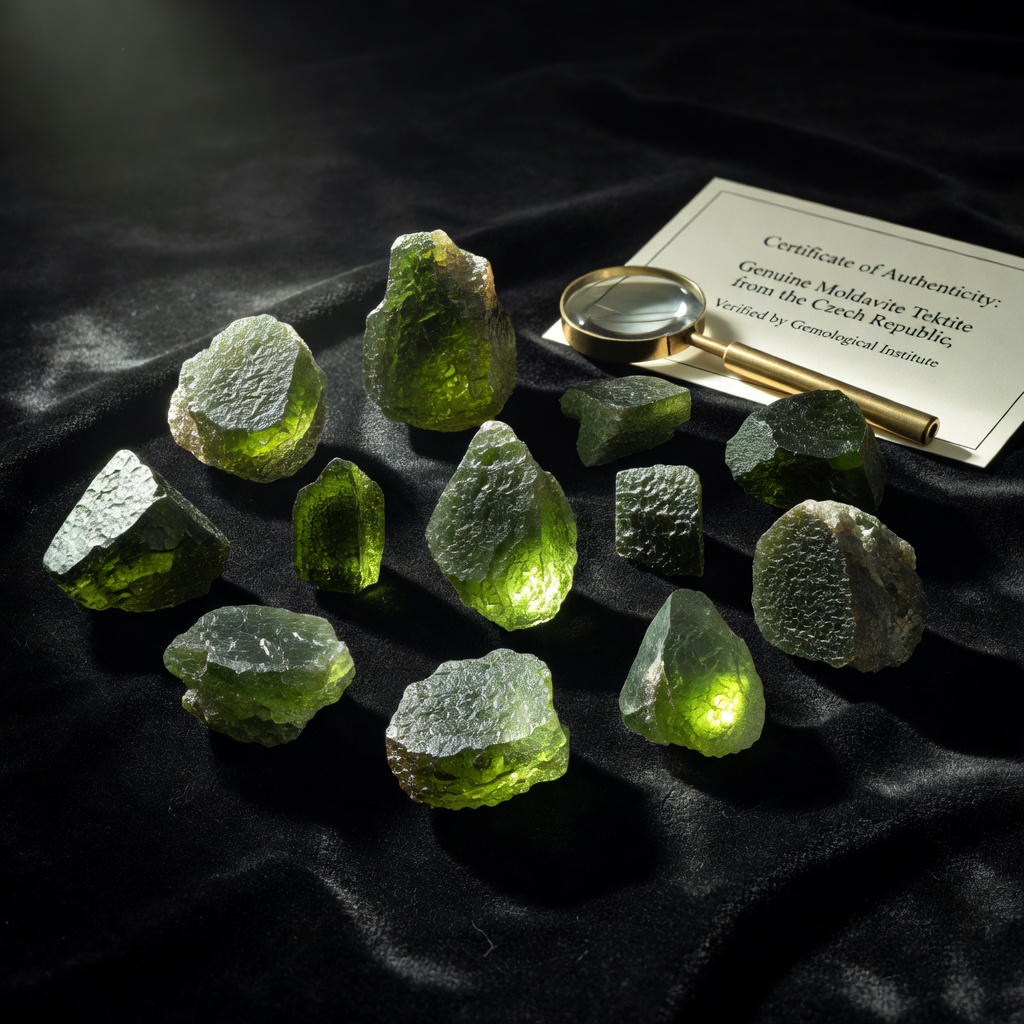
The distinctive olive green to forest green coloration that defines Moldavite comes from trace amounts of iron and other minerals present in the original molten material. Natural specimens exhibit characteristic surface etching, pitting, and wrinkles caused by rapid cooling and millions of years of erosion within the Bohemian landscape. Unlike manufactured glass or laboratory-created crystals, genuine Moldavite possesses an irregular, often sculptural quality that reflects its violent cosmic origins. This rarity combined with its increasing popularity in crystal healing circles and metaphysical jewelry markets has created unprecedented demand for authentic specimens, driving prices upward while simultaneously attracting unscrupulous counterfeiters.
Why You Need a Moldavite Buying Guide
The current gemstone market faces unprecedented saturation with counterfeit green glass replicas masquerading as genuine Moldavite, making a comprehensive purchasing strategy essential for collectors and first-time buyers alike. Sophisticated manufacturing techniques in China and other regions now produce convincing fakes that mimic the surface texture and color of authentic specimens, often deceiving even experienced crystal enthusiasts who rely solely on visual inspection. Understanding Authentic Moldavite characteristics protects not only your financial investment but also ensures you receive the genuine metaphysical properties associated with this ancient stone. The high value per gram attracts fraudulent sellers across online marketplaces, social media platforms, and even some brick-and-mortar crystal shops unfamiliar with proper authentication methods.
When navigating Moldavite scams, buyers must distinguish between natural untreated specimens, heat-treated or chemically enhanced pieces, and completely lab-created glass masquerading as the real article. Some sellers offer "reconstituted Moldavite" created from genuine dust mixed with resin, while others pass off common green bottle glass or obsidian as the rare Czech tektite. The financial stakes can be significant, with high-quality specimens representing investments of hundreds or thousands of dollars. Without proper authentication knowledge, collectors risk purchasing worthless glass while believing they own a piece of cosmic history, underscoring why education remains your most valuable tool before making any purchase.
How to Identify Genuine Moldavite
Mastering Fake Moldavite identification requires understanding both surface characteristics and internal structures that distinguish authentic specimens from clever counterfeits. Begin your examination with careful visual inspection under natural light or a jeweler's loupe, looking for natural etching patterns including irregular pits, wrinkles, and corrugated surfaces resulting from millions of years of weathering and erosion. Genuine pieces display asymmetrical, sculptural forms with complex surface topography rather than the uniform, mold-marked perfection typical of manufactured glass. When comparing real Moldavite vs fake, note that authentic specimens often contain visible inclusions, internal fractures, and irregular color distribution rather than the consistent transparency of ordinary green glass.
Advanced identification techniques include examining internal characteristics under 10x magnification, where authentic Moldavite reveals lechatelierite inclusions—swirl-like patterns formed from molten silica—and tiny gas bubbles trapped during rapid cooling. UV light testing provides another verification method, as genuine tektites often exhibit specific fluorescence patterns distinct from manufactured glass, though this requires experience to interpret correctly. Weight comparison offers practical insights; Moldavite typically feels denser than ordinary glass of similar size due to its specific gravity ranging from 2.32 to 2.38. Additionally, thermal conductivity tests using simple touch methods can help distinguish genuine specimens, as Moldavite feels cooler to the touch than plastic resins and warms differently than standard glass when held in the hand.
Moldavite Grading System and Quality Factors
Understanding Moldavite quality grades empowers buyers to make informed decisions aligned with both their budget and collecting goals, recognizing that not all specimens command premium prices. The industry generally recognizes AAA grade specimens as those possessing intense forest green coloration, perfect preservation without chips or cracks, and distinctive natural shapes with exceptional surface texture. A-grade material represents quality jewelry-grade pieces with good color and minor surface imperfections, while B-grade and below may show significant damage, pale coloration, or excessive weathering that diminishes both aesthetic appeal and metaphysical value. When evaluating specimens, consider whether the piece maintains its raw, natural formation or has been carved or polished, as unaltered specimens typically command higher premiums among serious collectors.
Color intensity significantly impacts valuation, with deep forest green specimens generally outperforming pale olive or yellowish-green pieces in the marketplace. However, color preferences vary among collectors, with some specifically seeking the rare "poison green" or "bottle green" variants found in specific regions of the Czech strewn field. Clarity assessment involves examining the specimen for internal fractures that might compromise durability, particularly important for jewelry applications where impact could cause cleavage. Shape retention value factors consider whether the piece maintains its original splash-form or dumbbell shape created during the meteorite impact, with perfectly preserved natural forms commanding significant premiums over fragments or heavily eroded specimens. When purchasing investment-grade pieces, prioritize specimens over 10 grams with documented provenance and minimal damage, as these characteristics best support long-term appreciation.
Understanding Moldavite Pricing Per Gram
Current market analysis reveals that Moldavite price per gram typically ranges from $20 to $50 for standard quality jewelry-grade material, though this baseline fluctuates based on specimen characteristics, market demand, and sourcing authenticity. Small fragments under one gram suitable for wire wrapping or small pendants generally fall at the lower end of this spectrum, while museum-grade specimens exceeding 50 grams with exceptional color and preservation can command $100 or more per gram. When evaluating Moldavite value, consider that size premiums increase exponentially rather than linearly; a single 20-gram specimen often costs significantly more than twenty individual 1-gram pieces due to the rarity of large, undamaged formations. Investment-minded collectors should focus on specimens between 10 and 30 grams, as this size range offers the best balance of rarity, liquidity, and appreciation potential.
Several factors affect resale potential and long-term appreciation, including documentation quality, specimen uniqueness, and market education levels. Wholesale rough material purchased directly from Czech suppliers typically costs 40-60% less than retail finished pieces, though buying rough requires expertise to assess internal quality and potential cutting yield. Price discrepancies between wholesale and retail markets reflect the risks involved in authentication, cleaning, and marketing genuine material. When budgeting for acquisitions, remember that prices have increased approximately 15-20% annually over the past decade due to mining restrictions and depleting deposits, suggesting that quality specimens purchased today likely represent appreciating assets rather than depreciating consumer goods. Always request detailed photographs and videos before purchasing expensive specimens, as static images often hide surface damage or clarity issues that significantly impact valuation.
Where to Buy Authentic Moldavite Safely
Finding trusted Moldavite sellers requires diligent research and verification of business credentials before committing to significant financial investments. Established dealers with verifiable physical addresses, extensive business histories spanning several years, and robust return policies generally provide safer purchasing environments than anonymous online vendors. When you buy Moldavite online, prioritize sellers who provide detailed provenance information, including specific mining locations within the Czech strewn field and export documentation verifying legal sourcing. Reputable dealers typically belong to professional gemological associations, maintain active social media presence with customer reviews, and offer educational resources demonstrating their expertise rather than merely pushing sales.
Red flags appear frequently on auction sites and general marketplace platforms where anonymous sellers offer "wholesale" prices significantly below market rates, often accompanied by stock photos rather than images of the actual specimen. When purchasing from online marketplaces, verify seller ratings across multiple platforms, request additional photographs showing specific angles and lighting conditions, and never complete transactions outside platform protections. For those considering direct purchases from the Czech Republic, understand that import regulations require proper export licenses and customs documentation; unlicensed exports risk confiscation at borders. Essential questions to ask any seller include: Do you offer a money-back authentication guarantee? Can you provide documentation of mining source and export legality? What is your policy regarding returns if third-party testing reveals treatment or artificial origin? Professional sellers welcome these inquiries and provide transparent answers, while fraudulent vendors often become defensive or evasive.
Importance of Moldavite Certificates and Documentation
Proper Moldavite certificates serve as crucial documentation protecting your investment and providing resale value, though understanding certificate legitimacy requires as much scrutiny as examining the stone itself. Laboratory verification reports from recognized gemological institutions such as GIA (Gemological Institute of America), AGL (American Gemological Laboratories), or respected European counterparts provide scientific confirmation of a specimen's tektite nature, often including spectroscopic analysis and specific gravity measurements. A legitimate Certificate of Authenticity (COA) should include the specimen's weight, dimensions, color grade, provenance information, and detailed photographs, along with the certifying agent's credentials and contact information. When evaluating Moldavite authentication documents, verify that the laboratory actually exists and maintains professional accreditation rather than accepting generic printed cards that accompany many counterfeit pieces.
Documentation fraud represents a growing concern, with sophisticated counterfeiters creating fake certificates featuring forged logos of legitimate laboratories or inventing entirely fictional gemological institutes. Red flags include certificates lacking specific specimen details, missing laboratory contact information, or featuring grammatical errors and unprofessional formatting. For acquisitions exceeding $500, consider investing in independent third-party testing through a local gemologist or sending specimens to recognized laboratories for verification, particularly when purchasing investment-grade pieces or rare color variants. Keep all documentation, receipts, and correspondence organized in physical and digital formats, as complete provenance history significantly enhances resale value and insurance claims processing. Remember that while certificates add cost to initial purchases, they provide essential protection and often pay for themselves through avoided fraud or enhanced resale premiums.
Caring for Your Moldavite Investment
Proper Moldavite care ensures your specimens maintain both their physical condition and energetic properties across decades of ownership and potential appreciation. Clean your Moldavite using only mild soap and lukewarm water with a soft microfiber cloth, avoiding ultrasonic cleaners, steam cleaning systems, or harsh chemical solvents that can damage the surface texture or create microscopic fractures within the glassy structure. Unlike harder gemstones such as diamonds or sapphires, Moldavite registers only 5.5 on the Mohs hardness scale, making it susceptible to scratching, chipping, and abrasion from harder materials or rough handling. Store specimens individually in soft cloth pouches or padded compartments within jewelry boxes, never tossing them loose into containers where contact with metal settings or harder stones could cause damage.
Storage solutions should account for environmental factors including temperature fluctuations and humidity levels that might affect the stone's stability over time, though Moldavite's glassy composition generally resists environmental degradation better than organic gems. For those utilizing Moldavite in metaphysical practices, energy cleansing methods include moonlight exposure, smudging with sage or palo santo, or placing the stone on natural crystal clusters like selenite or quartz—avoid saltwater immersion which can create microscopic pitting in the surface over time. Insurance appraisal considerations require professional gemological evaluation with current photographs and certificates, particularly for collections exceeding $1,000 in value; update appraisals every 3-5 years to reflect market appreciation. When wearing Moldavite jewelry, remove pieces before engaging in physical activities, household cleaning, or showering, as impacts against hard surfaces or exposure to chemical cleaning agents pose the greatest risks to these relatively fragile specimens.
Common Mistakes to Avoid When Buying Moldavite
Avoiding Moldavite buying mistakes requires vigilance against psychological triggers that fraudulent sellers exploit, particularly the allure of below-market pricing on seemingly perfect specimens. Never purchase from listings offering "wholesale" prices of $5-$10 per gram for apparently high-quality material, as these prices fall below actual mining and export costs, indicating certain counterfeit goods. Social media platforms harbor increasing numbers of unverified sellers who post stolen photographs of genuine specimens while shipping glass replicas or resin composites, often disappearing after receiving payment without providing buyer protection mechanisms. When working to avoid fake Moldavite, resist the temptation to rush purchases during "limited time" sales or auctions creating artificial scarcity, as legitimate dealers maintain consistent inventory and transparent pricing structures.
Another critical error involves ignoring return policies or failing to verify seller reputation through independent review platforms, Better Business Bureau records, or gemological community forums. Some buyers mistakenly confuse Moldavite with green obsidian, green glass, or other green tektites like Colombianite, accepting these substitutes as genuine due to similar coloration without understanding the specific characteristics that distinguish Czech Moldavite. Always request video footage showing specimens from multiple angles under different lighting conditions, as static photographs easily hide surface imperfections or manufacturing mold marks indicative of fake material. Finally, avoid purchasing "Moldavite" jewelry set in cheap base metals from unknown overseas manufacturers, as these pieces almost universally feature colored glass rather than genuine tektite material. Establish relationships with reputable dealers who provide educational resources and maintain transparent business practices, prioritizing long-term collecting relationships over one-time bargain hunting.
Frequently Asked Questions About Buying Moldavite
How can I tell if Moldavite is real or fake?
Authentic Moldavite exhibits natural surface etching with irregular pits and wrinkles from rapid cooling, contains internal lechatelierite inclusions and gas bubbles visible under magnification, and has a distinctive olive-green color. Fake Moldavite typically appears too perfect with uniform color, mold marks, or excessive transparency like ordinary green glass.
What is the average Moldavite price per gram in 2024?
Quality Moldavite typically ranges from $20 to $50 per gram for standard jewelry-grade pieces, while high-quality collector specimens with intense color and perfect preservation can command $100 or more per gram. Extremely large museum-grade pieces may exceed these prices significantly due to rarity.
Do I need a certificate of authenticity when buying Moldavite?
While not mandatory when purchasing from established, reputable dealers, certificates provide essential peace of mind for investments over $200. Always verify that the certifying laboratory is recognized and legitimate, as fake certificates are common in the market.
Can I buy Moldavite directly from mines in the Czech Republic?
Direct mining access is heavily restricted to protect agricultural land, but several licensed Czech exporters sell legally to international buyers. Ensure any direct purchase includes proper export documentation, mining licenses, and verifiable business registration to avoid customs issues.
Why does some Moldavite look different from other pieces?
Variations occur due to different locations within the strewn field, varying degrees of terrestrial weathering over millions of years, and whether the piece remains raw or has been carved or polished. Color naturally ranges from pale yellowish-olive to deep forest green depending on mineral content.
Is Moldavite becoming extinct or illegal to mine?
Moldavite is not extinct but increasingly scarce due to strict Czech environmental regulations protecting the Bohemian landscape. Legal mining requires special permits, and many historic deposits are depleted, making authentic specimens more valuable and difficult to source.
What's the difference between raw and carved Moldavite?
Raw Moldavite maintains its natural impact-formed shape with characteristic surface texture, preferred by collectors and energy workers. Carved pieces may be authentic but verify that cutting hasn't been used to remove inclusions or hide flaws, and ensure the material isn't reconstituted moldavite dust.
Can Moldavite be damaged easily?
With a hardness of 5.5 on the Mohs scale, Moldavite is relatively fragile and can chip or scratch. Avoid ultrasonic cleaners, steam cleaning, and harsh chemicals. Store separately from harder gemstones like diamonds or sapphires, and remove Moldavite jewelry before physical activities.