
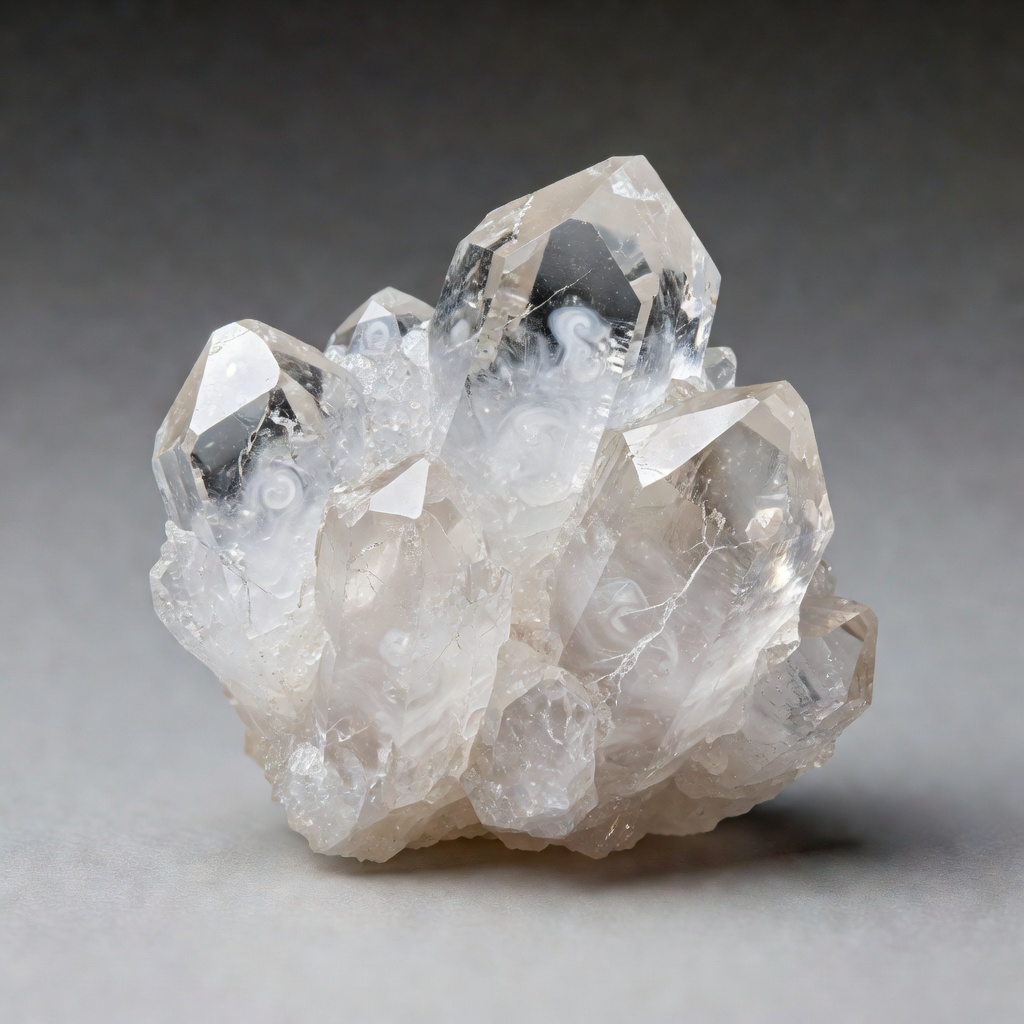
What Is Milky Quartz? Understanding the Basics
Milky quartz represents one of the most abundant and recognizable varieties of crystalline quartz, distinguished by its characteristic cloudy white to translucent appearance that sets it apart from its transparent counterparts. Unlike the crystal-clear variety commonly used in optical applications and fine jewelry, milky quartz possesses an ethereal, ghostly beauty created by microscopic inclusions trapped within its crystalline structure. This fascinating mineral has captivated humanity for millennia, serving both practical purposes in tool-making and profound roles in spiritual practices across diverse cultures.
From a chemical perspective, milky quartz shares the same fundamental composition as all quartz varieties, consisting of silicon dioxide (SiO2) arranged in a continuous framework of SiO4 silicon-oxygen tetrahedra. The distinctive milkiness that gives this stone its name results from countless microscopic fluid inclusions, tiny gas bubbles, and sometimes trace amounts of other minerals suspended throughout the crystal matrix. These inclusions scatter light as it passes through the stone, preventing the transparency seen in rock crystal while creating the soft, glowing luminosity that makes milky quartz so appealing for metaphysical work and decorative applications.
Understanding what is milky quartz requires recognizing how these microscopic imperfections actually enhance the stone's energetic properties according to crystal healing traditions. While clear quartz acts as a pure energy conductor, the cloudy formations within milky quartz are believed to slow down and soften this energy transmission, creating a gentler, more nurturing vibrational quality. This makes it particularly suitable for beginners in crystal work or those seeking subtle energetic support rather than intense amplification.
Physical and Scientific Properties
Milky quartz exhibits impressive durability with a Mohs hardness rating of 7, making it suitable for various jewelry applications and daily handling without significant risk of scratching. This hardness stems from the strong silicon-oxygen bonds within its hexagonal crystal system, allowing it to resist abrasion from most common materials while maintaining its polished finish over years of use. However, despite this relative hardness, milky quartz can still fracture along specific cleavage planes if subjected to sharp impacts or extreme temperature fluctuations, requiring mindful handling during cleaning and storage.
The specific gravity of milky quartz typically ranges between 2.59 and 2.65, slightly lighter than some gemstones due to the gas and fluid inclusions that create its cloudy appearance. Its refractive index falls between 1.544 and 1.553, producing a vitreous luster when properly polished that enhances its milky white beauty. These cloudy quartz properties make it easily distinguishable from glass imitations under magnification, as genuine quartz exhibits distinctive refractive characteristics and often contains natural inclusions that would be difficult to replicate artificially.
Color variations within milky quartz extend from nearly translucent white with a soft glow to completely opaque specimens resembling white marble or porcelain. The intensity of the milkiness depends entirely on the concentration and distribution of microscopic inclusions, with some crystals displaying banded patterns where clear and milky sections alternate. Advanced gemological analysis reveals that these inclusions typically consist of water, carbon dioxide, and occasionally sodium chloride solutions trapped during the crystal's formation millions of years ago.
Formation Process and Primary Sources
Milky quartz develops through geological processes occurring deep within the Earth's crust, primarily forming in hydrothermal veins where silica-rich solutions circulate through rock fractures at temperatures between 100°C and 400°C. As these mineral-laden fluids cool and pressure conditions change, silicon dioxide begins to crystallize, gradually building the hexagonal prisms characteristic of quartz. The milky appearance emerges when rapid changes in environmental conditions trap microscopic droplets of the parent solution within the growing crystal lattice, creating the fluid inclusions responsible for the stone's cloudy white coloration.
Significant deposits of high-quality milky quartz occur across several continents, with Brazil standing as the world's premier source for both specimen-grade crystals and commercial quantities used in manufacturing. The Brazilian state of Minas Gerais produces exceptional milky quartz clusters featuring well-formed crystals with deep milkiness, while Madagascar yields unique specimens often containing interesting phantom inclusions and growth patterns. In the United States, Arkansas maintains its reputation as a major producer, particularly from the Mount Ida region, where extensive mining operations extract milky quartz alongside clear varieties from ancient hydrothermal deposits.
Environmental conditions necessary for creating the distinctive milky appearance require specific combinations of temperature fluctuations and solution saturation levels during crystallization. When quartz forms rapidly in cooler environments or experiences sudden pressure drops, the resulting crystals trap more fluid inclusions, producing the opaque white appearance prized by collectors. Conversely, slower formation under stable conditions typically yields clearer crystals, explaining why individual mines often produce both milky and clear quartz from different veins or depths.
Metaphysical Properties and Spiritual Meaning
The milky quartz meaning encompasses themes of purity, spiritual growth, and gentle transformation, drawing upon its resemblance to clouds and milk—substances historically associated with nourishment and divine connection. Ancient civilizations, including the Romans and various indigenous American cultures, revered milky quartz as a stone of the moon and maternal energies, using it in rituals designed to promote fertility, protection during travel, and connection to ancestral wisdom. These traditional associations persist in contemporary crystal healing practices, where practitioners value the stone for its ability to bridge the physical and spiritual realms without overwhelming the energetic system.
Regarding the milky quartz chakra connections, this crystal resonates most strongly with the crown chakra located at the top of the head, serving as a conduit for higher consciousness and spiritual awakening. Unlike the intense energy of clear quartz, which can sometimes overstimulate sensitive individuals, milky quartz offers a buffered, gentle amplification that allows for gradual opening of the crown center. Many energy workers also utilize it to balance and align all seven chakras simultaneously, as its white coloration represents the full spectrum of light and universal energy integration.
The milky quartz healing properties extend to emotional and spiritual realms, where it functions as a master healer with a specifically nurturing approach. Crystal practitioners often recommend this stone for individuals recovering from trauma or emotional exhaustion, as its energy signature promotes feelings of safety and gentle support while facilitating deep inner work. The stone's connection to lunar energies makes it particularly effective for shadow work and exploring the subconscious mind, helping users navigate difficult emotions with compassion rather than forceful breakthroughs.
Healing Benefits and Therapeutic Applications
Among the primary milky quartz benefits is its remarkable capacity for stress relief and anxiety reduction, functioning as an energetic balm for overstimulated nervous systems. When held during meditation or placed under pillows during sleep, the stone emits a calming vibration that helps quiet racing thoughts and soothe emotional turbulence. Therapists and holistic practitioners often incorporate milky quartz into treatment protocols for clients experiencing burnout, as its gentle energy helps restore energetic boundaries and promotes a sense of inner peace without inducing drowsiness or disconnection.
Mental clarity and concentration represent another significant therapeutic application, particularly for students, writers, and professionals engaged in detailed intellectual work. Unlike stimulants that force focus through agitation, milky quartz benefits cognitive function by clearing mental fog and reducing the background noise of scattered thoughts. A practical application involves placing a tumbled stone on the desk during work sessions or wearing milky quartz jewelry during examinations to maintain clear thinking under pressure while simultaneously reducing test anxiety.
Support for meditation practices and dream work constitutes perhaps the most celebrated use among spiritual practitioners seeking milky quartz healing properties. The stone acts as a protective anchor during astral travel and lucid dreaming, preventing the disorientation sometimes associated with these practices while enhancing recall upon waking. For meditation, holding a milky quartz palm stone or placing it on the third eye can facilitate deeper states of consciousness and more vivid visualization work, making it invaluable for shamans, energy healers, and those developing psychic abilities.
Practical Uses in Daily Life
Contemporary milky quartz uses span both aesthetic and functional domains, with jewelry designers appreciating its neutral white coloration that complements any wardrobe while providing continuous energetic support throughout the day. Beaded bracelets, pendant necklaces, and statement rings featuring cabochon-cut milky quartz offer accessible entry points for those new to crystal healing, allowing wearers to benefit from the stone's calming presence during stressful commutes, important meetings, or challenging social situations. The stone's durability makes it suitable for daily wear, though settings should protect the crystal from hard impacts during physical activities.
In energy work and spiritual practices, milky quartz serves as a versatile component in crystal grids designed for purification, protection, and manifestation. Practitioners often place milky quartz points at the cardinal directions of a grid to create a gentle energy container, or use tumbled stones as the central anchor when working with intentions related to peace, clarity, or spiritual growth. Its compatibility with all other crystals makes it an excellent "buffer" stone in complex grids, preventing energetic conflicts between stones with different vibrational frequencies while maintaining the overall intention.
Home decor applications leverage both the beauty and energetic properties of milky quartz, with large clusters serving as striking centerpieces that simultaneously cleanse and elevate room energy. Placing specimens near electronic devices may help mitigate electromagnetic pollution, while positioning them in bedrooms promotes restful sleep and pleasant dreams. Interior designers increasingly incorporate milky quartz bookends, paperweights, and sculptural pieces into minimalist and modern spaces, appreciating how the white stone adds texture and interest without overwhelming color schemes.
How to Identify Genuine Milky Quartz
Authenticating genuine milky quartz requires careful visual inspection combined with simple physical tests that distinguish natural stone from glass imitations or dyed alternatives. Genuine specimens exhibit natural variations in their milkiness, with some areas appearing more translucent than others and often containing tiny reflective inclusions or growth patterns visible under magnification. Glass imitations typically display perfect uniformity in their cloudiness and may contain round air bubbles—a telltale sign of manufacturing rather than natural formation.
The temperature test provides a reliable method for distinguishing what is milky quartz versus synthetic materials, as genuine quartz remains cool to the touch even in warm environments and slowly adapts to body temperature when held. Glass and plastic imitations quickly warm to match ambient temperatures or skin contact, lacking the thermal inertia characteristic of crystalline silica. Additionally, genuine milky quartz feels noticeably heavier than glass of equivalent size due to its higher specific gravity, a difference readily apparent when comparing suspected specimens side-by-side.
Advanced identification techniques involve examining the crystal structure under magnification, where natural milky quartz displays irregular growth patterns, tiny cracks, and natural inclusions that appear organic and random. Imitations often show mold marks, perfect symmetry, or suspiciously uniform color distribution. For valuable specimens, gemological testing including refractive index measurement and polariscope examination provides definitive identification, as natural quartz exhibits specific optical properties impossible to replicate accurately in synthetic materials.
Proper Care and Maintenance
Maintaining the beauty and energetic integrity of milky quartz requires regular cleansing to remove accumulated dust, oils, and energetic debris that may dull its appearance or diminish its vibrational potency. Safe cleaning methods involve rinsing the stone under lukewarm running water while gently scrubbing with a soft brush and mild soap, taking care to dry it thoroughly with a lint-free cloth to prevent water spots. While quartz's hardness makes it relatively resistant to scratching, harsh chemicals including household cleaners, acids, and ultrasonic jewelry cleaners should be avoided as they may damage the surface polish or weaken any existing fractures within the crystal.
Charging and programming techniques help optimize the energetic potential of milky quartz, ensuring it functions effectively as a healing tool. Many practitioners recommend placing cleansed stones in moonlight during the full moon to recharge their lunar associations and gentle energies, while others prefer burying them in earth for twenty-four hours to ground and reset their vibrations. Sound cleansing using singing bowls or tuning forks offers an effective alternative for delicate specimens or jewelry pieces that cannot be exposed to water, as the vibrational frequencies clear stagnant energy without physical contact.
Proper storage prevents damage and maintains the milky quartz benefits over long periods, with individual wrapping in soft cloth or bubble wrap protecting pieces from chipping when stored together. Avoid storing milky quartz in direct sunlight for extended periods, as prolonged UV exposure can potentially fade some varieties or cause thermal shock if temperatures fluctuate dramatically. Creating a dedicated crystal box or display shelf away from windows and high-traffic areas ensures your specimens remain pristine while continuing to emanate their calming, clarifying energies into your living space.
Milky Quartz vs. Similar Varieties
Distinguishing milky quartz from clear quartz involves understanding both physical and metaphysical differences that influence their respective applications in healing and decorative arts. While both share identical chemical compositions and hardness ratings, clear quartz transmits light without obstruction, functioning as an intense energy amplifier that can overwhelm sensitive individuals. Milky quartz, with its characteristic cloudiness, diffuses this energy into a gentler, more manageable form, making it preferable for children, empaths, or those new to crystal work who might find clear quartz too stimulating.
Comparisons with rose quartz reveal distinct energetic signatures despite superficial similarities in translucency, as rose quartz owes its pink coloration to trace amounts of titanium, iron, or manganese and specializes in heart chakra healing and romantic love. Snow quartz, sometimes considered a subset of milky quartz, typically presents as purer white with less translucency and carries specific associations with clarity and divine guidance. Phantom quartz, which may appear milky in sections, contains visible outlines of earlier growth stages within the crystal, creating distinct ghost-like layers that differ from the uniform cloudiness of true milky quartz.
When selecting between these cloudy quartz properties and other varieties, consider your specific intentions and energetic sensitivity levels. Those seeking powerful manifestation tools might prefer clear quartz, while individuals needing emotional healing might choose rose quartz. Milky quartz occupies a unique middle ground, offering versatile support for spiritual growth without the intensity of clear quartz or the specific emotional focus of rose quartz. Many experienced collectors maintain specimens of each type, using them interchangeably based on daily needs and intuitive guidance.
Buying Guide and Value Assessment
Evaluating quality in milky quartz involves examining several factors including clarity of formation, intensity of milkiness, size, and presence of additional features such as rainbows or interesting inclusions. High-quality specimens display consistent cloudiness without brown iron staining or excessive fractures, while premium clusters feature well-terminated points with sharp edges and uniform coloration. Large cabinet specimens weighing several pounds command higher prices than tumbled stones, though even small, perfectly formed crystals can be valuable to collectors if they exhibit exceptional clarity or unique growth patterns.
Red flags indicating synthetic or treated stones include unnaturally uniform coloration, perfect transparency alternating with extreme opacity, and prices that seem too good to be true for large, flawless specimens. Some unethical sellers dye clear quartz or glass to imitate high-quality milky quartz, but these fakes typically show color concentration in fractures or along surface edges under magnification. Heat-treated amethyst sometimes passes as milky quartz, though careful examination usually reveals subtle color zoning or crystal habits inconsistent with natural milky quartz formation.
Sourcing ethically mined milky quartz requires researching suppliers who prioritize sustainable extraction practices and fair labor conditions, particularly when purchasing from major producing regions like Brazil and Madagascar. Reputable crystal shops should provide information about their sourcing, while direct relationships with small-scale miners or artisanal co-ops often ensure both quality and ethical integrity. Online marketplaces offer convenience but require careful vetting of sellers through reviews and return policies, while mineral shows provide opportunities for hands-on evaluation before purchasing significant specimens for collection or therapeutic use.
Frequently Asked Questions
What makes milky quartz cloudy and white?
The milky appearance is caused by microscopic fluid inclusions and tiny gas bubbles trapped within the quartz crystal structure during formation. These inclusions scatter light, creating the characteristic cloudy white color that distinguishes it from transparent quartz varieties.
What are the main healing properties of milky quartz?
Milky quartz is prized for its gentle energy amplification, stress relief, and emotional balance properties. It's believed to enhance mental clarity, support meditation, cleanse negative energy, and promote spiritual growth while providing protective qualities.
How does milky quartz differ from clear quartz?
While both share the same chemical composition (SiO2), milky quartz contains microscopic fluid inclusions that make it translucent to opaque with a white appearance. Clear quartz is transparent without these inclusions. Metaphysically, milky quartz offers gentler, more nurturing energy compared to clear quartz's powerful amplification.
Which chakra is milky quartz associated with?
Milky quartz is primarily associated with the crown chakra, making it excellent for spiritual connection and higher consciousness work. It's also used to balance all chakras due to its gentle energy amplification properties and can support third eye chakra activation during meditation.
Where is milky quartz commonly found?
Major sources include Brazil, Madagascar, the United States (Arkansas and Colorado), Switzerland, and Russia. It typically forms in hydrothermal veins, pegmatites, and alluvial deposits where silica-rich solutions slowly crystallize under specific geological conditions.
Can milky quartz be used for meditation?
Yes, milky quartz is excellent for meditation. Its gentle energy helps quiet the mind, enhance focus, and facilitate deeper spiritual connection. Hold it in your hand or place it on your crown chakra during practice to amplify intentions and promote inner peace.
How should I cleanse and charge my milky quartz?
Cleanse milky quartz by rinsing under lukewarm water and drying with a soft cloth. Avoid harsh chemicals. Charge it by placing it in moonlight overnight, burying it in earth for 24 hours, or using sound vibrations from singing bowls. It's safe for most cleansing methods due to its hardness.
Is milky quartz rare or expensive?
Milky quartz is relatively common and affordable compared to rare gemstones. High-quality specimens with unique formations or large crystal clusters command higher prices, but tumbled stones and small pieces are typically inexpensive, making it accessible for crystal enthusiasts.


