Milky Quartz Price Guide: Comprehensive Market Analysis for 2024
Understanding the nuances of milky quartz value requires more than a casual glance at online listings. This comprehensive Milky Quartz Price Guide examines everything from raw mineral specimens to finished jewelry, helping collectors, jewelers, and enthusiasts navigate the complex pricing landscape of this increasingly popular snow quartz variety. Whether you are sourcing materials for a jewelry line or expanding a mineral collection, knowing the factors that influence white quartz crystal cost ensures you make informed purchasing decisions while avoiding common market pitfalls.
What Is Milky Quartz? Understanding the Stone
Milky quartz, scientifically known as snow quartz or white quartz, represents one of the most abundant yet commercially significant varieties of crystalline silica. This translucent to opaque gemstone derives its characteristic cloudy appearance from microscopic fluid inclusions, gas bubbles, and trace minerals trapped during the crystal's formation process millions of years ago. Unlike its transparent cousin rock crystal, milky quartz contains countless tiny cavities that scatter light, creating the soft, ethereal glow that makes it desirable for both metaphysical practices and contemporary jewelry design.
The geological formation of milky quartz occurs primarily in hydrothermal veins and pegmatites across Brazil, Madagascar, the United States, and the Swiss Alps. During the cooling phase of silica-rich solutions, rapid temperature fluctuations prevent the formation of perfectly clear crystals, resulting in the distinctive cloudiness that defines this variety. Mineralogists classify milky quartz as silicon dioxide (SiO₂) with a hardness of 7 on the Mohs scale, making it durable enough for daily wear while maintaining the chemical purity that allows for extensive cutting and polishing operations.
Cultural significance heavily influences snow quartz pricing in metaphysical markets, where practitioners associate the stone with clarity of mind and emotional balance. Ancient civilizations from Rome to China utilized milky quartz for carved seals and ornamental objects, establishing historical precedents that continue driving demand among modern collectors. This cultural dimension adds a premium to certain specimens, particularly those originating from historically significant mining districts or displaying unique formation characteristics that align with spiritual traditions.
Current Milky Quartz Price Ranges (2024 Update)
The current market for milky quartz per carat reflects significant stratification between commercial and premium grades, with prices varying dramatically based on quality and intended use. Commercial grade material suitable for mass-market jewelry and tumbled stones typically commands between $2 and $10 per carat, representing the entry point for consumers seeking affordable white quartz crystal cost options. These specimens generally display inconsistent opacity, minor surface imperfections, and standard cutting that maximizes yield rather than optical performance.
Premium grade milky quartz pricing escalates considerably for exceptional clarity pieces exhibiting uniform cloudiness without brown or gray undertones, ranging from $15 to $50 per carat for expertly cut cabochons and calibrated gemstones. Museum-quality specimens featuring rare crystal formations, exceptional size, or provenance from depleted mines may exceed $100 per carat at specialized auctions. For jewelry designers and manufacturers, understanding these quartz gemstone prices tiers proves essential when calculating retail markup strategies and inventory investments.
Bulk rough material pricing operates on an entirely different metric, with wholesale purchasers typically negotiating rates between $5 and $25 per kilogram for unprocessed clusters and matrix specimens. Regional variations significantly impact these figures, with Brazilian material often trading at 20-30% discounts compared to Madagascan origins due to higher export volumes and established supply chains. United States domestic dealers generally apply 15-40% markups over direct import prices, reflecting transportation costs, import duties, and quality assurance labor.
Seven Critical Factors That Determine Milky Quartz Value
Evaluating milky quartz value factors requires systematic assessment of multiple characteristics that collectively establish market price. Opacity levels serve as the primary value determinant, with premium specimens displaying consistent, milk-white cloudiness throughout the entire stone rather than patchy transparency or grayish discoloration. Stones exhibiting uniform opacity command 200-300% premiums over those showing inconsistent clouding patterns or windows of transparency that disrupt the characteristic milky appearance.
Carat weight impacts quartz gemstone prices through non-linear scalability, where larger stones face exponential rather than proportional price increases due to rarity. While a 5-carat commercial grade cabochon might retail for $25, a 50-carat specimen of similar quality could command $400-$600, reflecting the difficulty in sourcing large, inclusion-free rough material. Cut quality and polish finish significantly influence jewelry-grade pieces, with professionally executed Portuguese cuts or high-domed cabochons adding $10-$20 per carat in value over standard commercial cutting.
Geographic origin creates substantial valuation differences within the milky quartz market, with Madagascan material often trading at premiums of 25-50% over Brazilian equivalents due to perceived superior clarity and historical scarcity. Mining rarity factors compound these premiums, as certain districts producing exceptionally white, dense material become depleted or restricted due to environmental regulations. Natural versus treated stone valuation presents another critical consideration, as heat-treated or dyed material typically sells for 40-60% less than untreated natural specimens, requiring full disclosure under Federal Trade Commission guidelines.
Price Comparison: Raw Specimens vs Finished Jewelry
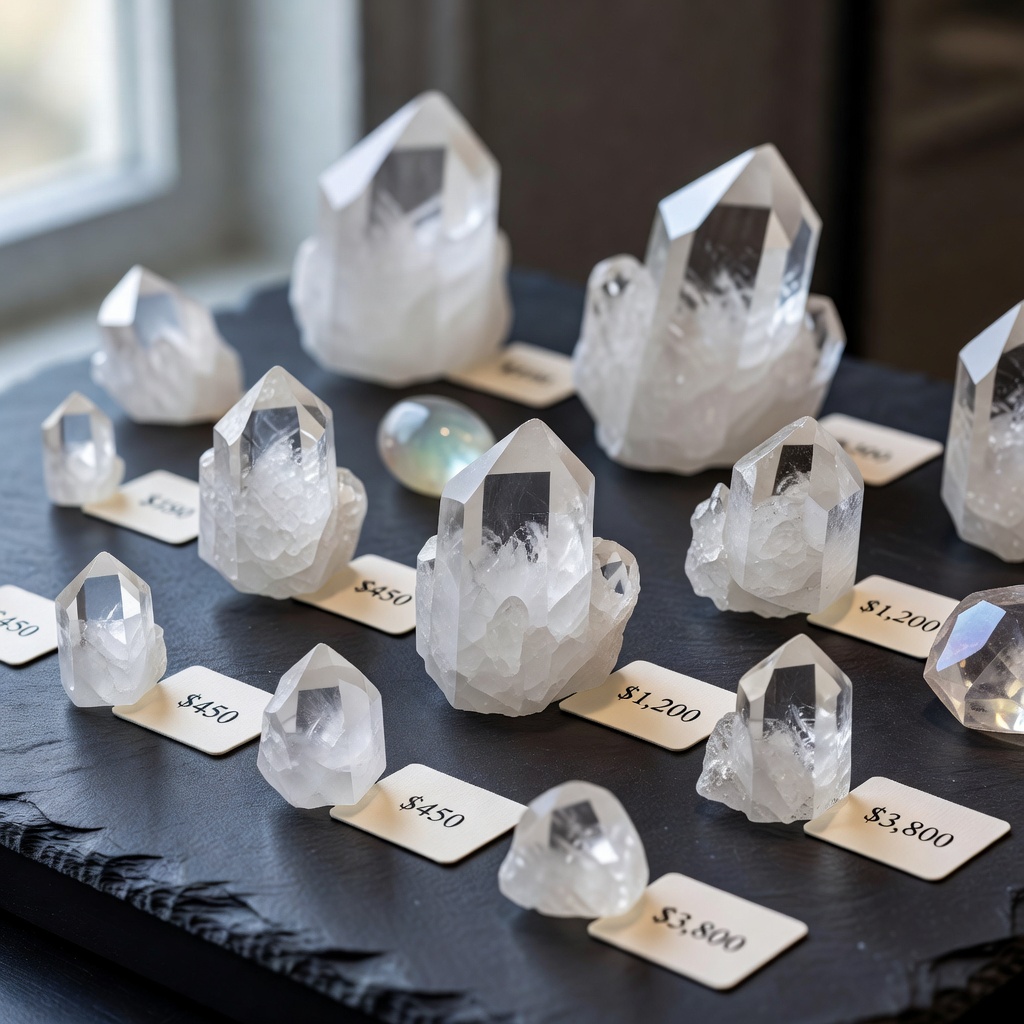
Understanding raw milky quartz price structures requires distinguishing between mineral specimen collectors and jewelry manufacturing markets. Raw mineral clusters pricing depends heavily on matrix attachment, crystal terminations, and aesthetic formation, with small cabinet specimens (2-4 inches) ranging from $15 to $75, while large display pieces exceeding 12 inches may command $500-$2,000 depending on crystal density and perfection. Matrix specimens featuring contrasting dark minerals or rare associated species such as tourmaline or lepidolite frequently achieve premiums of 100-200% over pure quartz clusters.
Tumbled stones and cabochons occupy the middle tier of quartz jewelry pricing, with machine-polished tumbled material retailing between $0.50 and $3 per gram depending on size uniformity and polish quality. Hand-crafted cabochons suitable for bezel setting range from $5 to $30 per piece for commercial grades, while custom-cut calibrated stones for production jewelry may cost $8-$15 per carat when purchased in volume. Faceted milky quartz gemstones remain relatively rare due to the material's cloudiness reducing brilliance, though rose-cut and checkerboard patterns have gained popularity in contemporary designs, commanding $12-$40 per carat.
Setting premiums dramatically affect final retail pricing, with sterling silver mountings typically adding $25-$75 to base stone costs, while 14k gold settings increase premiums by $150-$400 depending on metal weight and complexity. Designer brand markup percentages frequently exceed 300-500% over material costs for luxury jewelry houses, whereas independent artisans typically operate on 100-200% markups that reflect hand fabrication time rather than brand prestige. Understanding these multiplier effects helps buyers assess whether finished jewelry prices align with component values or represent excessive retail positioning.
Quality Grading Standards for Milky Quartz
Professional milky quartz grades follow a tiered system that, while less standardized than diamond grading, provides essential benchmarks for valuation. AAA grade criteria demand uniform opacity with no visible inclusions, perfect polish free of surface scratches or pitting, and precise cutting symmetry that maximizes the stone's milky luster. These top-tier specimens represent less than 5% of commercial production and command the highest quartz gemstone prices, typically reserved for fine jewelry applications and serious mineral collections.
AA grade characteristics permit minor inclusions that do not break the surface, good but not exceptional luster, and commercially acceptable cutting standards. This grade represents the standard for mid-market jewelry and metaphysical retail, offering consistent appearance at accessible price points. Commercial grade (A) standards accommodate mass-market jewelry requirements, allowing visible inclusions, slight color variations toward gray or cream, and acceptable polish suitable for costume jewelry and beginner collector specimens.
Industrial grade pricing applies to material unsuitable for jewelry due to fractures, heavy inclusions, or poor color, instead serving manufacturing applications such as silicon production, glassmaking, or abrasive materials. While rarely encountered in gemstone markets, industrial grade material trades at $0.10-$0.50 per kilogram, creating a floor for rough material valuation. Importance of gemological certification for high-value purchases cannot be overstated, with certificates from recognized laboratories such as GIA or AGS adding credibility and 10-15% liquidity premiums to specimens exceeding $1,000, particularly for rare formations or exceptional sizes.
Where to Buy: Retail vs Wholesale Price Analysis
Navigating the quartz crystal suppliers landscape requires understanding distinct pricing structures across distribution channels. Online marketplace pricing trends show significant variation, with Etsy and eBay listings ranging from $1 to $20 per carat depending on seller expertise and photography quality, while specialized dealers with established reputations typically price within narrower $5-$15 per carat bands that reflect consistent grading standards. Direct-to-consumer websites operated by mining cooperatives or import companies often offer the best value for bulk purchases over 100 carats, bypassing intermediary markups.
Tucson and Denver gem show wholesale pricing structures represent the industry's benchmark for buy milky quartz wholesale opportunities, with rough material available at 40-60% discounts compared to retail during show periods. Minimum order quantities typically range from $500 to $5,000 for wholesale pricing tiers, with serious importers negotiating container-load quantities at rates approaching mine-site pricing. Post-show discount periods offer additional savings of 10-20% as dealers seek to reduce transport inventory back to warehouses.
Brick-and-mortar metaphysical shop pricing premiums reflect the highest retail markups in the industry, frequently exceeding 300-500% over wholesale costs due to experiential shopping environments and spiritual counseling services bundled with purchases. Auction houses such as Heritage Auctions or Bonhams handle rare museum-quality specimens, with estimates for exceptional milky quartz clusters ranging from $2,000 to $50,000 depending on size, provenance, and associated mineral specimens. Direct mine-to-market purchasing advantages include access to first-choice material and documentation of ethical sourcing, though minimum orders often require $10,000+ commitments and import logistics expertise.
Milky Quartz vs Other Quartz Varieties: Price Differences
Comparative analysis reveals that white quartz crystal cost structures diverge significantly from colored quartz varieties based on scarcity and market demand dynamics. Clear rock crystal pricing generally parallels milky quartz for commercial grades, though exceptional clarity in large sizes commands premiums that opaque material cannot achieve due to different aesthetic values. However, premium milky quartz with uniform opacity often matches or exceeds the price of average clear quartz in contemporary jewelry markets, where designers favor the soft, organic appearance of snow quartz over harsh transparency.
Price gaps between milky quartz and premium amethyst or citrine remain substantial, with fine purple amethyst commanding $50-$500 per carat compared to milky quartz's $15-$50 top tier. Similarly, natural citrine and smoky quartz varieties typically trade at 30-50% premiums over equivalent quality white quartz due to color rarity and consumer preference for earth tones. Rose quartz market position relative to milky white varieties shows interesting convergence, with both materials trading in similar $2-$20 per carat ranges, though star rose quartz with asterism effects commands significant premiums unavailable to milky varieties.
Rutilated and tourmalinated quartz premium comparisons demonstrate how inclusions increase rather than decrease value when they create distinctive visual phenomena, with needle-included specimens trading at $20-$100 per carat compared to plain milky material. Industrial quartz vs decorative gemstone pricing divergence highlights the material's dual nature, with semiconductor-grade clear quartz commanding $10,000+ per kilogram for electronics manufacturing, while even the finest milky quartz remains excluded from these high-tech applications due to optical interference from internal clouding.
Investment Potential and Resale Value Forecasts
Evaluating milky quartz investment potential requires realistic assessment of market liquidity and appreciation trajectories distinct from precious metals or blue-chip gemstones. Historical price appreciation trends over the past decade show steady 5-8% annual increases for investment-grade specimens exceeding 500 grams with exceptional formation characteristics, while commercial grades have maintained stable pricing adjusted for inflation. Unlike diamonds or rubies, milky quartz lacks centralized pricing mechanisms, making valuation dependent on finding knowledgeable buyers who appreciate specific quality attributes.
Collector demand indicators suggest increasing interest in rare formation specimens, particularly those displaying parallel growth patterns, twinning, or association with rare minerals such as papagoite or ajoite. These specialty pieces demonstrate stronger appreciation potential than standard crystals, though liquidity factors when selling milky quartz collections remain challenging due to the niche nature of mineral collecting. Successful resale typically requires 6-18 month marketing periods through specialized dealers or auction houses rather than immediate liquidation options available for gold or silver.
Storage and insurance considerations affecting net value include maintaining specimens away from direct sunlight to prevent potential color degradation and securing adequate coverage through specialized collectibles insurance riders. Market saturation risks for common commercial grades suggest that bulk material purchased at wholesale may face depreciation if Brazilian or Madagascan mining operations increase output significantly. Serious investors should focus on unique specimens with documented provenance, exceptional size, or historical significance rather than treating milky quartz as a commodity investment.
Avoiding Scams: Red Flags in Milky Quartz Pricing
Vigilance regarding fake milky quartz detection protects consumers from prevalent market deceptions involving glass imitations and misrepresented treatments. Identifying glass imitations and synthetic quartz sold as natural requires examination for perfectly uniform bubble patterns, conchoidal fractures with sharp edges, and absence of natural mineral inclusions. Authentic milky quartz displays irregular internal clouding, natural growth striations on crystal faces, and specific gravity of 2.65 compared to glass's 2.5 or lower.
Common treatments including dyeing and heating significantly impact fair pricing, with unscrupulous sellers occasionally irradiating milky quartz to create artificial smoky patterns or dyeing pale material to simulate rare white jade. These enhancements must be disclosed under jewelry industry standards, though undocumented treatments appear frequently in tourist markets and unregulated online platforms. Unrealistic price points that indicate fraud or misrepresentation include commercial grade material offered below $1 per carat (suggesting glass or plastic) or premium grades priced identically to commercial material (indicating undisclosed treatments or synthetic origin).
Authentication methods including specific gravity testing using hydrostatic weighing and refractive index measurements (1.544-1.553 for quartz) provide definitive identification when visual inspection proves inconclusive. Reputable dealer vetting and return policy importance cannot be overstated, with established sellers offering 7-30 day inspection periods and detailed provenance documentation. Avoid vendors who refuse independent verification, pressure immediate purchases, or offer prices significantly below market rates without credible explanations regarding distressed inventory or estate sales.
Smart Buying Strategies and Negotiation Tips
Strategic acquisition within the quartz price negotiation framework requires understanding seasonal market fluctuations and industry etiquette. Seasonal buying patterns for best pricing typically follow major gem shows, with March-April and October-November offering optimal purchasing windows as dealers clear inventory before tax season or holiday retail rushes. Tucson Gem Show attendees frequently secure 20-30% discounts during the final two days of the event as international dealers seek to avoid shipping unsold inventory back to overseas warehouses.
Volume purchasing leverage for jewelry makers and resellers activates at various thresholds, with 500-carat orders typically triggering 15% discounts and 5,000-carat commitments opening wholesale pricing tiers. Questions to ask suppliers about treatment disclosure should include specific inquiries about heat treatment history, dye applications, and irradiation processes, with responses documented via email for future reference. Price negotiation etiquette at trade shows and wholesale venues requires cash readiness, respectful inquiry about quantity discounts, and willingness to walk away from deals exceeding budget parameters.
Documentation requirements for resale and insurance purposes include retaining original purchase receipts, photographing specimens before and after acquisition, and obtaining gemological reports for individual stones exceeding $500 in value. Building relationships with specific quartz crystal suppliers often yields preferential pricing over time, as dealers prioritize reliable repeat customers over transactional retail buyers. Always verify that purchased material matches described origins, particularly when paying premiums for Madagascan or Alpine material that commands higher prices than Brazilian equivalents.
Frequently Asked Questions About Milky Quartz Pricing
How Much Does Milky Quartz Cost Per Carat?
Commercial grade milky quartz typically ranges from $2 to $10 per carat, while high-quality specimens with exceptional clarity and cut can command $15 to $50 per carat. Large museum-quality pieces or rare formations may exceed $100 per carat depending on provenance and aesthetic appeal. Raw rough material for tumbling or cabbing generally trades at significantly lower per-carat rates when purchased in bulk quantities over 100 grams.
Is Milky Quartz More Expensive Than Clear Quartz?
Generally, milky quartz is similarly priced or slightly less expensive than high-clarity rock crystal for commercial grades. However, premium milky quartz with uniform cloudiness and excellent polish can match or exceed the price of average clear quartz due to its growing popularity in contemporary jewelry design. The relative pricing ultimately depends on the specific quality grade and current fashion trends influencing designer preferences.
What Factors Make Some Milky Quartz Specimens Significantly More Valuable?
Key value drivers include uniform opacity without brown or gray tinting, large crystal size with intact terminations, geographic rarity (Madagascar material often commands premiums), freedom from cracks or inclusions, and professional cutting for jewelry applications. Natural, untreated stones always hold higher value than enhanced material. Specimens displaying unique growth patterns, twinning, or association with rare mineral species can achieve prices ten times higher than standard material.
Where Can I Find the Best Milky Quartz Prices?
Wholesale gem shows like Tucson and Denver offer the best prices for bulk purchases, while direct importers from Brazil and Madagascar provide competitive rates for rough material. Online marketplaces offer convenience but vary widely in pricing. Avoid tourist trap metaphysical shops where markups can exceed 300%, and instead establish relationships with specialized mineral dealers who offer transparent grading and return policies.
Does Milky Quartz Appreciate in Value Over Time?
While common commercial grades hold steady value, investment-grade specimens with exceptional size, clarity, or rare formations have shown 5-8% annual appreciation over the past decade. However, milky quartz should not be viewed as a liquid investment like gold, as resale depends heavily on finding the right collector or dealer. Specimens with documented provenance from closed mines or historical collections demonstrate the strongest appreciation potential.
How Can I Tell if Milky Quartz Pricing Is Fair?
Fair pricing aligns with current market rates of $2-$15 per carat for most jewelry grades, includes full disclosure of any treatments, comes with return policies, and matches the stone's visual quality against grading standards. Always compare prices across multiple reputable dealers and request certification for purchases over $500. Be wary of prices significantly below market rates, which often indicate synthetic material, glass imitations, or undisclosed treatments.
Are Treated or Dyed Milky Quartz Stones Worth Less Than Natural Ones?
Yes, treated milky quartz typically sells for 40-60% less than natural material. Heat treatment to enhance whiteness and dyeing to create uniform color are common practices that must be disclosed. Natural, untreated stones with organic cloudiness patterns command premium prices from serious collectors and ethical jewelry designers. Always request written confirmation of natural status when paying premium prices for supposedly untreated material.
What Size Milky Quartz Offers the Best Value for Collectors?
Specimens between 50-200 carats (10-40 grams) often offer the best value proposition, providing substantial visual impact without entering the exponentially priced rarity tier of museum-size pieces. For jewelry, 5-10 carat cabochons typically offer optimal balance of presence and affordability. Very small specimens under 1 carat often carry disproportionately high per-carat pricing due to cutting labor costs, while extremely large pieces face limited resale markets.