Introduction to Mandarin Garnet Care
Mandarin garnet, a prestigious variety of spessartite garnet, captivates collectors and jewelry enthusiasts with its intense orange to reddish-orange hue that resembles the vibrant skin of fresh citrus fruit. This rare gemstone, discovered in the 1990s in Namibia and later found in Nigeria and Tanzania, possesses exceptional brilliance and fire that rivals more expensive stones like spessartite's prestigious cousins. Proper Mandarin Garnet Care and Cleaning protocols are essential for preserving these optical properties, as neglect can lead to diminished luster, surface scratches, or structural damage that permanently compromises the stone's value and beauty.
Understanding the fundamental requirements for spessartite garnet maintenance begins with recognizing that while these gems are relatively durable, they demand respect regarding their chemical composition and physical limitations. Unlike diamonds or sapphires that tolerate rough handling, mandarin garnets contain manganese and aluminum silicate structures that react differently to environmental stressors. Regular maintenance routines not only maintain the gem's fiery appearance but also protect the investment value of these increasingly rare specimens, which have seen significant appreciation in the colored gemstone market over the past decade.
Understanding Durability and Chemical Composition
The spessartite garnet durability profile centers on its Mohs hardness rating of 6.5 to 7.5, placing it in the moderate range of gemstone resilience. This hardness level indicates that mandarin garnet can withstand daily wear in protective settings, though it remains vulnerable to scratching from harder materials commonly found in jewelry boxes, such as diamonds (Mohs 10), rubies (Mohs 9), or even household dust containing silica particles. Understanding this mandarin garnet hardness characteristic helps owners set realistic expectations regarding longevity and informs decisions about appropriate settings; bezel settings offer superior protection for active wearers compared to prong settings that expose girdle edges to impact.
Beyond surface hardness, mandarin garnets exhibit significant vulnerability to thermal shock, making sudden temperature changes particularly hazardous to their structural integrity. Moving from a hot sauna to cold air conditioning, or washing hands with hot water while wearing a ring, can create internal stresses that lead to fractures or exacerbate existing inclusions. Additionally, the chemical composition of spessartite makes it sensitive to acids and alkalis commonly found in household cleaning agents, cosmetics, and even perspiration, which can etch the surface or attack fracture-fillers if the stone has been treated.
Daily Wear and Handling Best Practices
Establishing consistent daily garnet care rituals begins with the "last on, first off" principle that experienced gemologists recommend for all fine jewelry. When dressing, mandarin garnet pieces should always be the final items placed on the body after applying cosmetics, hairspray, perfume, and lotions, as these products contain alcohols, solvents, and chemical compounds that can create film buildup on the stone's surface. Similarly, removing mandarin garnet jewelry before undressing prevents accidental snagging on clothing fibers that could loosen prongs or create torque on the setting.
Household activities present numerous hidden hazards that necessitate removing spessartite pieces before engaging in routine tasks. Kitchen work exposes stones to thermal shock from hot stoves, acidic citrus juices, and abrasive cleaning powders, while gardening risks impact damage from tools or rocks. Even applying hand lotion throughout the day creates a cumulative film that dulls the gem's brilliance. Understanding cleavage planes within the crystal structure helps owners recognize that while mandarin garnet lacks perfect cleavage, it can still chip along weak points if struck against hard surfaces like granite countertops or metal door handles.
Safe At-Home Cleaning Methods
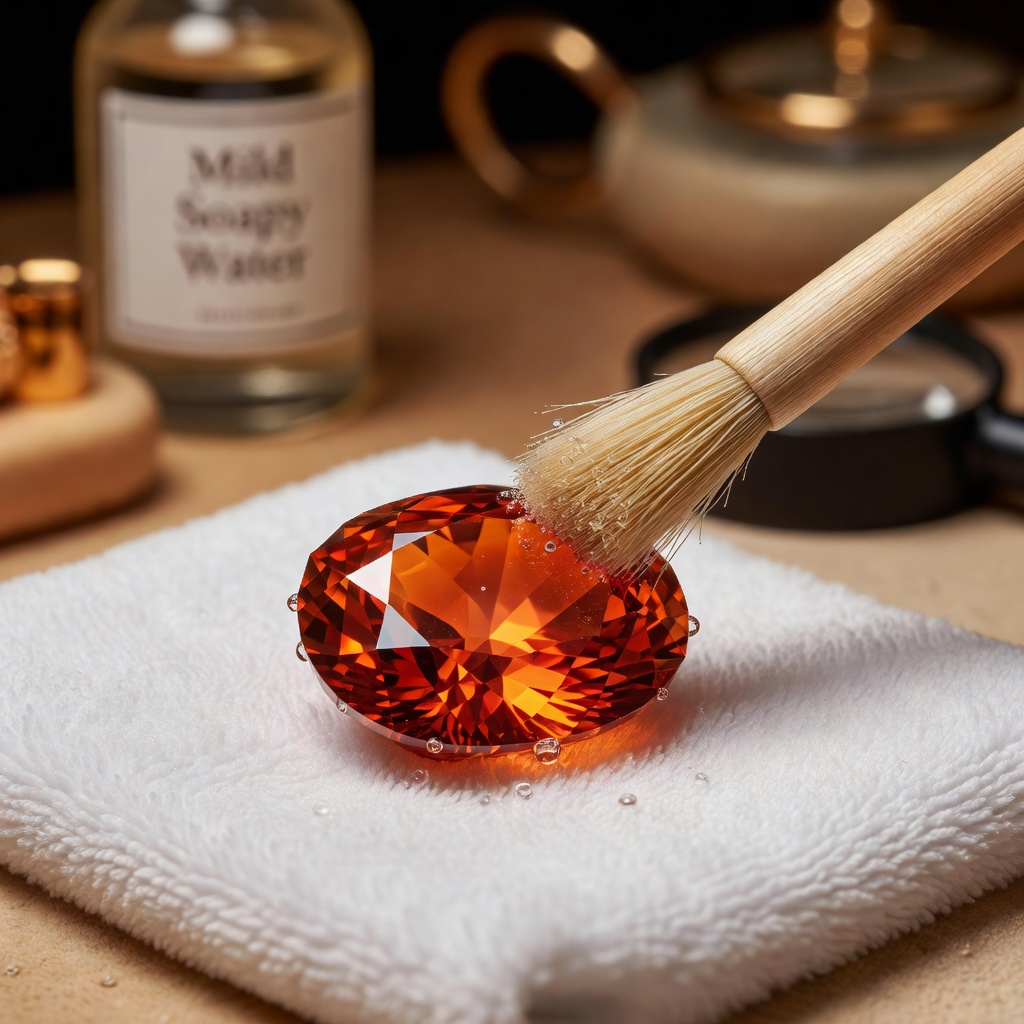
Learning how to clean mandarin garnet properly requires gentle techniques that remove accumulated oils and debris without compromising the stone's integrity. Begin by preparing a solution of lukewarm water—never hot or boiling—and a few drops of mild, pH-neutral dish soap free from moisturizers or antibacterial agents that might leave residue. Soak the jewelry for ten to fifteen minutes to loosen accumulated grime, particularly important for pieces with intricate settings where body oils collect beneath the stone.
The most effective orange garnet cleaning methods employ a soft-bristled baby toothbrush or specialized jewelry brush with natural or ultra-soft synthetic fibers. Gently scrub the crown, pavilion, and especially the area beneath the stone where the setting meets the girdle, as this junction accumulates the most buildup that blocks light return. Avoid vigorous scrubbing or applying pressure to the table facet; instead, use light, circular motions to lift debris. After cleaning, rinse thoroughly under lukewarm running water, ensuring the drain is closed or covered with a mesh strainer to prevent catastrophic loss if the piece slips from grasp.
Drying protocols prove equally important for maintaining brilliance, as water spots can temporarily dull the appearance and trapped moisture can damage certain setting materials. Pat the jewelry gently with a lint-free microfiber cloth designed for optical lenses or fine electronics, avoiding paper towels or tissues that contain wood fibers capable of scratching the surface. Allow pieces to air dry completely on a clean cloth before returning them to storage, ensuring no moisture remains in pavilion crevices or behind stones that could promote metal tarnishing or loosening of adhesives in certain setting styles.
Professional Cleaning Services and Limitations
While professional jewelers possess advanced equipment for maintaining fine jewelry, understanding the limitations of professional garnet cleaning techniques protects mandarin garnets from well-intentioned but potentially damaging treatments. Ultrasonic cleaning, which uses high-frequency sound waves to agitate cleaning solutions, presents significant ultrasonic cleaning risks for spessartite garnets, particularly those with visible inclusions, feathers, or fracture fillings. The intense vibrations can expand existing fissures, loosen settings, or cause stones to shatter internally if significant inclusions are present.
Steam cleaning, another common jeweler's tool, subjects gemstones to extreme heat and pressure that can induce thermal shock in temperature-sensitive stones like mandarin garnet. The rapid expansion and contraction of the crystal lattice can create new fractures or widen existing ones, permanently damaging the stone. Instead, request that professionals use gentle steam alternatives or specialized polishing cloths. Experts recommend scheduling professional inspections every six to twelve months for frequently worn pieces, during which jewelers can check for loose prongs, worn settings, and early signs of damage while employing safe cleaning methods appropriate for included spessartite specimens.
Proper Storage and Protection Strategies
Effective garnet jewelry storage begins with recognizing that hardness differentials between gemstones create abrasion risks even when pieces are not being worn. Store mandarin garnet jewelry in individual soft cloth pouches made from untreated cotton, velvet, or microfiber, or utilize compartmentalized jewelry boxes with padded dividers that prevent contact with other pieces. This separation is crucial because contact with harder gemstones like diamonds, rubies, or sapphires can scratch the mandarin garnet's surface, while the garnet itself can scratch softer materials like opals, pearls, or turquoise.
Climate control represents another critical aspect of protecting mandarin garnet from environmental degradation. Avoid storing these gemstones in areas subject to extreme heat, such as direct sunlight through windows, near radiators, or in attics where temperatures fluctuate dramatically. Prolonged exposure to intense heat can alter the stone's color or cause existing inclusions to expand. Similarly, extremely dry environments can affect certain setting materials or cause oils within the stone to evaporate if fracture-filled, potentially changing the apparent clarity. Consider storing valuable pieces in a bedroom closet rather than bathroom environments where humidity fluctuations and chemical exposure from toiletries create suboptimal conditions.
Travel, Activity, and Lifestyle Precautions
Traveling with garnet jewelry requires heightened vigilance and specialized precautions to prevent loss or damage during transit. Always remove mandarin garnet pieces before engaging in sports, gym workouts, swimming, or manual labor, as these activities expose the stone to impact risks, chlorine exposure, and abrasive materials. When packing for travel, utilize hard-shell jewelry cases with individual padded compartments rather than soft rolls or plastic bags that offer minimal protection against crushing forces in luggage.
Comprehensive insurance documentation provides essential protection for high-value mandarin garnet pieces, particularly given the stone's significant market value and increasing rarity. Maintain current appraisals from certified gemologists, updated every two to three years to reflect market appreciation, and ensure specific coverage exists for mysterious disappearance or damage rather than just theft. When traveling internationally, carry jewelry in carry-on luggage rather than checked baggage, and consider using hotel safes immediately upon arrival rather than leaving pieces in unattended rooms. Photograph each piece before departure to document condition in case insurance claims become necessary.
Long-Term Maintenance and Damage Prevention
Establishing a systematic approach to long-term garnet maintenance ensures that small issues are identified before they escalate into costly repairs or irreversible damage. Implement monthly inspection routines using a jeweler's loupe or strong magnifying glass to examine the stone for chips, surface-reaching inclusions that have expanded, or prongs that have worn thin or pulled away from the stone's edge. Check for looseness by tapping the piece gently near your ear; rattling sounds indicate a stone that requires immediate professional attention to prevent loss.
Over years of wear, even carefully maintained mandarin garnets may develop surface abrasions or tiny chips along facet junctions that diminish brilliance. Professional re-polishing by a skilled lapidary can restore the original luster by removing a microscopic layer from the surface, though this process slightly reduces carat weight and should be undertaken only by specialists experienced with garnet materials. Develop a comprehensive maintenance schedule that combines weekly home cleaning, monthly inspections, and annual professional servicing that includes prong tightening, setting checks, and deep cleaning using methods safe for your specific stone's clarity characteristics.
Frequently Asked Questions About Mandarin Garnet Care
Can I use an ultrasonic cleaner to clean my mandarin garnet?
Generally, ultrasonic cleaners are not recommended for mandarin garnet (spessartite), especially if the stone has inclusions or fractures. The vibrations can expand existing flaws or loosen settings. Stick to gentle hand-cleaning with warm soapy water and a soft brush for safest results.
How often should I clean my mandarin garnet jewelry?
Clean your mandarin garnet every 2-4 weeks if worn regularly, or immediately after exposure to cosmetics, lotions, or household chemicals. For occasional wear, cleaning every 2-3 months is sufficient. Regular gentle cleaning prevents buildup that can dull the stone's brilliance.
Is mandarin garnet durable enough for daily wear in rings?
With a Mohs hardness of 6.5-7.5, mandarin garnet is moderately durable but requires care for daily ring wear. It's suitable for engagement rings or daily wear if you avoid impact, harsh chemicals, and extreme temperature changes. Consider protective settings like bezels for active lifestyles.
Can mandarin garnet fade or change color in sunlight?
Mandarin garnet is generally stable in light and does not fade easily. However, prolonged exposure to intense heat or direct sunlight for extended periods can potentially affect the stone. Store pieces away from direct sunlight and avoid leaving them in hot cars or windowsills.
What household chemicals should I avoid with mandarin garnet?
Avoid bleach, ammonia, chlorine (pools/hot tubs), acetone, and harsh detergents. These can damage the stone's surface or attack any fillers in fractures. Always remove mandarin garnet jewelry before swimming, cleaning, or using hair products and perfumes.
How should I store mandarin garnet when I'm not wearing it?
Store mandarin garnet separately in a soft cloth pouch or a jewelry box with individual compartments to prevent scratching from harder gemstones. Keep away from extreme heat sources and consider adding a small humidity pack if storing long-term in very dry climates.
What should I do if my mandarin garnet gets scratched or chipped?
Minor scratches can often be polished out by a professional gem cutter or jeweler. For chips or significant damage, consult a gemologist immediately to prevent further deterioration. Do not attempt DIY repairs with adhesives or abrasive compounds.
Can I shower or sleep while wearing mandarin garnet jewelry?
It's best to remove mandarin garnet before showering, as soap scum can build up and dull the stone's brilliance. Sleeping with garnet earrings or necklaces risks snagging and mechanical damage. Remove all mandarin garnet jewelry before bed to preserve both the stone and settings.