
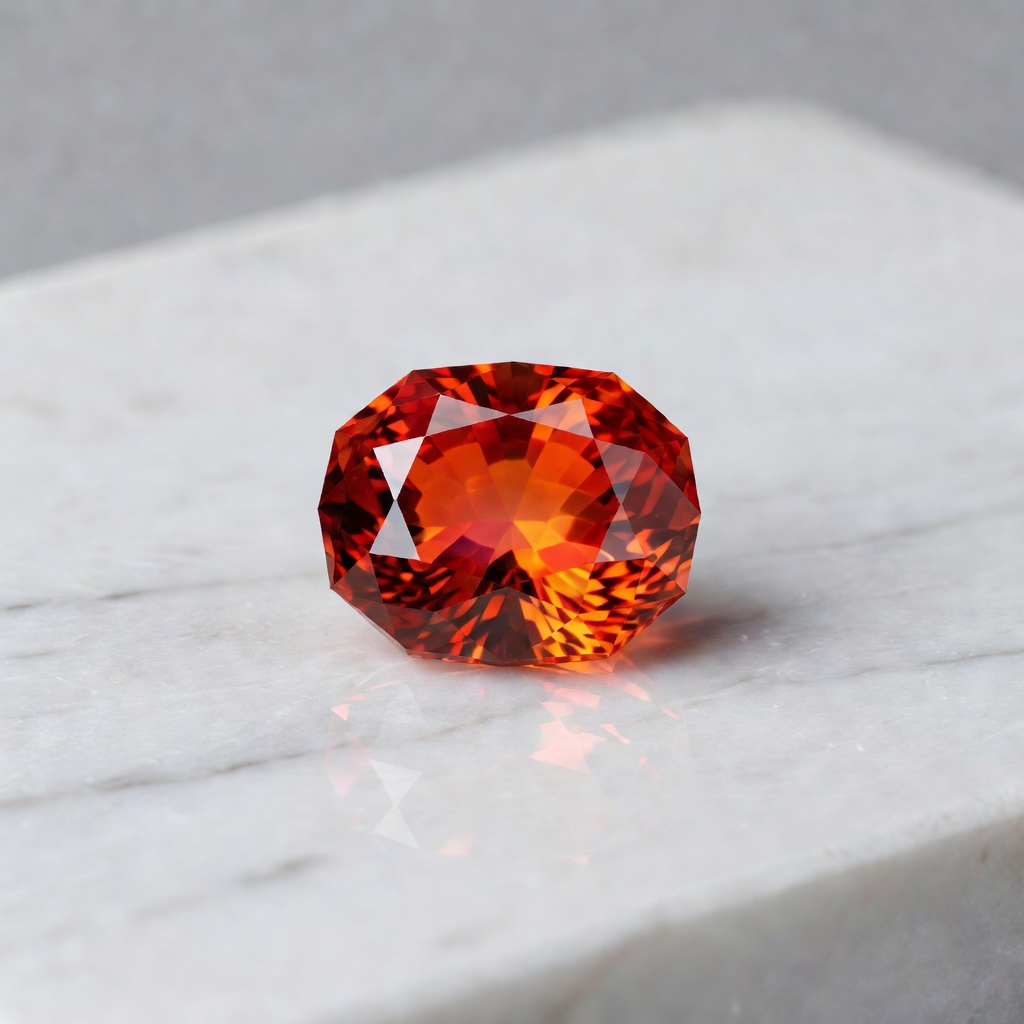
The Complete Mandarin Garnet Buying Guide: Expert Tips for Investing in Rare Orange Gems
When searching for a gemstone that captures the warmth of a sunset and the vibrancy of citrus fruit, few options rival the striking beauty of mandarin garnet. This comprehensive Mandarin Garnet Buying Guide will equip you with the knowledge necessary to navigate the complex world of spessartite garnets, from understanding geological origins to evaluating investment-grade specimens. Whether you are a first-time buyer seeking a unique engagement ring center stone or a seasoned collector adding to your portfolio of colored gemstones, understanding the nuances that separate commercial-grade material from museum-quality specimens will save you thousands of dollars and prevent costly purchasing mistakes.
What Exactly Is Mandarin Garnet?
Mandarin garnet represents the finest variety of spessartite garnet, a manganese aluminum silicate mineral belonging to the vast garnet family. While all mandarin garnets are technically spessartites (also spelled spessartines), not all spessartites earn the prestigious "mandarin" designation. The term applies specifically to specimens exhibiting a vivid, pure orange hue reminiscent of mandarin oranges or Fanta soda, distinguishing them from the more common yellowish-orange or reddish-brown spessartites found in commercial jewelry.
The chemical composition of spessartite garnet features manganese (Mn) as the primary coloring agent, replacing the iron or chromium found in other garnet varieties like almandine or pyrope. This unique chemical signature produces the characteristic orange spectrum that makes mandarin garnets so desirable among connoisseurs. Unlike hessonite garnet, which displays a distinctive "cinnamon" or honey-orange color with visible turbidity often called "heat waves," or tsavorite, which showcases an intense green hue, mandarin garnets offer a clarity and color purity unique within the garnet group.
The modern mandarin garnet market transformed dramatically in 1991 with the discovery of spectacular orange spessartite deposits in Namibia's Kunene Region. Prior to this discovery, fine mandarin material was exceedingly rare, with most specimens coming from sporadic finds in Germany, Sri Lanka, or Brazil. The Namibian deposits produced crystals with unprecedented size and color saturation, suddenly making high-quality African mandarin garnet available to collectors and jewelers worldwide. This geological windfall established new standards for the trade and created the vibrant market we see today, where origin significantly impacts both value and desirability.
Color Grading: The Most Critical Factor
When evaluating mandarin garnet, color reigns supreme over all other quality factors, often accounting for 60-70% of a stone's total value. The ideal mandarin garnet displays what dealers call "Fanta orange"—a pure, vivid orange without brownish or reddish modifiers that dull the stone's brilliance. Stones exhibiting this specific hue command premium prices, sometimes selling for ten times more per carat than similarly sized specimens with yellowish undertones or brownish masks.
Saturation levels determine whether a spessartite qualifies as investment-grade mandarin material. Look for stones with strong to vivid saturation, where the color appears intense and pure rather than washed out or diluted. The tone should fall in the medium to medium-light range; too dark, and the stone appears brownish, while too light results in a washed-out appearance that lacks the characteristic "electric" quality of fine mandarin garnet. When examining stones, always evaluate color under multiple lighting conditions—natural daylight, incandescent lighting, and LED sources—to ensure the orange remains consistent and vibrant across different environments.
Major gemological laboratories approach Mandarin garnet color grading with varying terminology, though most reputable institutions now recognize "mandarin" as a valid trade name for fine spessartite. The Gemological Institute of America (GIA) typically describes color using hue, tone, and saturation designations, while laboratories like Gübelin or SSEF may provide origin-specific color reports. When comparing certificates, focus on descriptions indicating "vivid orange" or "strongly saturated orange" rather than "yellowish-orange" or "reddish-orange," as these modifiers significantly impact both beauty and resale value.
Practical Tip: The White Paper Test
When examining loose mandarin garnets, place the stone table-down on a pure white sheet of paper under natural daylight. Fine mandarin material will project a distinct orange reflection halo around the stone's perimeter, while inferior specimens with brownish components will show muddy or grayish undertones in the reflected color. This simple test reveals color impurities that might otherwise go unnoticed in the stone's face-up appearance.
Clarity Standards and Inclusion Assessment
Understanding Spessartite garnet clarity characteristics requires familiarity with the typical inclusion patterns found in this gemstone variety. Common internal features include fine needle-like crystals, small zircon crystals with radiation halos, feather-like fractures, and distinctive "sugar" textures composed of tiny included crystals that give certain areas a slightly cloudy appearance. Unlike diamonds, where clarity standards demand perfection, mandarin garnets are graded on a slightly more forgiving scale due to their relative rarity and the difficulty of finding completely clean crystals in larger sizes.
The industry standard for fine mandarin garnet demands "eye-clean" clarity, meaning no inclusions are visible to the unaided eye when viewing the stone face-up from approximately 6-8 inches away. However, collectors should understand that completely loupe-clean mandarin garnets over two carats are exceptionally rare and command significant premiums. Some inclusions actually prove beneficial for authentication purposes; for instance, the presence of specific mineral crystals or tension feathers can help gemologists distinguish natural spessartite from synthetic counterparts created in laboratories.
Durability concerns arise primarily from surface-reaching fractures or cleavage planes that could compromise the stone's structural integrity during setting or daily wear. When examining a prospective purchase, carefully inspect the girdle (the outer edge where the crown meets the pavilion) for chips or feathers that reach the surface. These imperfections not only detract from beauty but also create vulnerability points where impact could cause the stone to crack or break. While mandarin garnet lacks true cleavage (tendency to break along specific planes), severe internal fractures parallel to the table can pose similar risks.
Cut Quality and Carat Weight Considerations
The cutting style significantly impacts how mandarin garnet displays its characteristic fire and brilliance. Optimal cuts include cushion shapes, ovals, and round brilliants, which maximize the stone's ability to return light while minimizing windowing (areas where light passes through without reflecting back). Because spessartite has a relatively high refractive index (1.79-1.81), well-cut specimens exhibit exceptional brilliance comparable to sapphire or spinel. Avoid stones with excessively deep pavilions or thick girdles designed to retain carat weight at the expense of optical performance.
Poor cutting destroys value in mandarin garnets by creating " extinction zones"—dark areas where light leaks out rather than returning to the viewer's eye. These dead spots make the stone appear lifeless and can darken the orange color significantly. When evaluating cut quality, look for symmetrical faceting, consistent meet points where facets join, and a centered table (the large flat facet on top). The stone should display balanced brightness across its entire face-up appearance without obvious dark spots or uneven color distribution.
Mandarin garnet carat weight dramatically affects pricing due to extreme rarity in larger sizes. While one-carat fine mandarin garnets appear regularly in the market, clean specimens exceeding three carats become exponentially rare, with stones over five carats considered collector's items. Price per carat jumps significantly at the 2-carat, 3-carat, and 5-carat thresholds. For example, a 2-carat fine mandarin might cost $1,000 per carat, while a 5-carat stone of similar quality could command $3,000-$5,000 per carat. When selecting carat weight, prioritize face-up dimensions over actual weight; a well-cut 1.8-carat stone with a 8.0mm x 6.0mm face-up measurement often appears larger and more brilliant than a poorly cut 2.2-carat stone with deep proportions.
Geographic Origins: Namibia, Nigeria, and Tanzania
The provenance of a mandarin garnet significantly influences its market value and collector desirability. The Kunene Region in northwestern Namibia produces what many consider the world's finest Namibian spessartine, characterized by a pure, electric orange color with minimal brown or red secondary hues. Discovered in the early 1990s, these alluvial deposits yield crystals with exceptional clarity and that signature "Fanta" orange color that defines the mandarin category. Namibian material typically commands the highest premiums in the market, sometimes selling for 30-50% more than similar-quality stones from other localities.
Nigerian deposits, discovered later in the 2000s, produce significant quantities of spessartite garnet, though the color tends toward reddish-orange rather than the pure orange of Namibian material. While Nigerian stones often exhibit excellent clarity and can reach impressive sizes (occasionally over 10 carats), the slight red modifier generally places them in a slightly lower price tier than their Namibian counterparts. However, fine Nigerian material without strong red undertones remains highly desirable and offers excellent value for buyers seeking larger stones without the extreme premiums of Namibian goods.
Tanzanian sources, particularly the Umba Valley region, have produced spessartite for decades, though typically in lighter, more yellowish-orange shades. While beautiful in their own right, these stones rarely achieve the saturation levels required for mandarin classification. African mandarin garnet sourcing raises important ethical considerations regarding traceability and mining practices. Reputable dealers should provide documentation regarding responsible sourcing, as many African garnet mines operate as small-scale artisanal operations. Organizations like the Responsible Jewellery Council (RJC) and various fair-trade initiatives work to ensure that these stunning gemstones reach the market through ethical supply chains that benefit local mining communities.
Pricing Guide and Investment Potential
Understanding current orange garnet value requires analyzing the four Cs (color, clarity, cut, and carat weight) through the specific lens of spessartite rarity. Current market data indicates three distinct pricing tiers for mandarin garnet. Commercial quality stones, typically under one carat with lighter color or visible inclusions, range from $100-$300 per carat. Fine quality specimens featuring vivid orange color, eye-clean clarity, and expert cutting command $500-$1,500 per carat, depending on size. Exceptional museum-grade stones exceeding three carats with top color saturation and pristine clarity can reach $2,000-$5,000+ per carat, with the rarest Namibian specimens occasionally exceeding $10,000 per carat for large, perfect crystals.
The investment potential for high-quality mandarin garnet remains strong due to limited supply and increasing demand from Asian markets, particularly China and Japan, where orange gemstones carry cultural significance. Unlike diamonds or rubies, which face treatment and synthesis challenges, mandarin garnets remain largely untreated, and synthesis remains commercially unviable, ensuring that natural specimens retain their value. Investment-grade characteristics include Namibian origin, pure orange color without modifiers, eye-clean clarity, and weights exceeding three carats with proper cutting proportions.
Comparing value retention against other colored gemstones reveals mandarin garnet's unique position in the market. While fine sapphire or emerald might appreciate more steadily due to established collector bases, mandarin garnet offers entry points at lower price levels with significant upside potential as deposits deplete. The Namibian mines, in particular, have shown declining production in recent years, suggesting that existing high-quality material may appreciate significantly as new supply diminishes. For collectors seeking diversification beyond the "big three" colored gemstones (ruby, sapphire, emerald), mandarin garnet offers rarity, beauty, and strong value retention characteristics.
Certification, Treatments, and Authentication
While most mandarin garnets reach the market in their natural, untreated state, buyers should understand the limited treatments sometimes applied to this gemstone. Low-temperature heating occasionally improves clarity by reducing the visibility of certain inclusions, though this treatment remains relatively uncommon for spessartite compared to rubies or sapphires. Any treatment must be disclosed at the time of sale, and reputable laboratories can detect heat treatment through microscopic examination of inclusion modifications and spectroscopic analysis.
Reading gemological reports for mandarin garnet requires attention to specific details. GIA reports will identify the stone as "Spessartite Garnet" with color description, while laboratories like GRS (GemResearch Swisslab) or AGL (American Gemological Laboratories) may specifically designate "Mandarin Garnet" on their certificates if the color meets their criteria. Key elements to verify include the species identification (spessartite), color grade (looking for "vivid orange" or "mandarin" designation), clarity grade, and any treatment notations. The report should also include a photograph of the specific stone and measurements matching your specimen.
Distinguishing natural mandarin garnet from synthetics or simulants protects buyers from fraud. Synthetic spessartite exists but remains rare; more common are simulants like cubic zirconia (CZ) or colored glass. Natural mandarin garnets possess specific gravity of 4.12-4.20, significantly heavier than CZ (5.6-6.0) or glass (2.5-4.0), and a refractive index of 1.79-1.81. Under magnification, natural stones show characteristic inclusion patterns, while synthetics might display curved growth lines or perfectly uniform color distribution. When purchasing high-value specimens, insist on certification from recognized laboratories such as GIA, SSEF, Gübelin, or AGL, and be wary of vague "certificates" from unknown entities that merely restate the seller's claims without scientific testing.
Jewelry Settings and Design Recommendations
Selecting appropriate jewelry settings for mandarin garnet requires balancing aesthetic enhancement with protective considerations. Metal choice significantly impacts the stone's appearance: yellow gold and rose gold amplify the warm orange tones, creating a cohesive, sunset-like palette, while white gold or platinum provide striking contrast that makes the orange appear more vivid by comparison. For investment pieces or daily wear, 18-karat gold offers an optimal balance of purity and durability, though 14-karat provides additional hardness for active lifestyles.
Protective settings prove essential given mandarin garnet's hardness of 6.5-7.5 on the Mohs scale, which falls below that of sapphire (9) or diamond (10). Bezel settings, where metal surrounds the gemstone's perimeter, offer maximum protection against chips and impacts, making them ideal for rings worn daily. Halo settings, featuring a border of small diamonds or colored stones, provide both protection and enhanced visual size. While prong settings maximize light exposure and brilliance, they leave the stone vulnerable to catching and impact; if choosing prongs, ensure they are substantial (not wire-thin) and inspected regularly for wear.
For gemstone pairings, mandarin garnet creates stunning combinations with teal blue-green stones like alexandrite or paraiba tourmaline, offering complementary color contrast. Champagne diamonds, yellow sapphires, or golden beryl create harmonious monochromatic schemes emphasizing warm tones. When designing pendants or earrings where impact risk remains minimal, mandarin garnets work beautifully in exposed settings that maximize light return. However, for engagement rings or bracelets subjected to daily knocks and bumps, protective bezels or semi-bezels provide necessary security without sacrificing significant beauty.
Care, Cleaning, and Maintenance Protocols
Proper maintenance ensures your mandarin garnet retains its brilliance for generations. Clean your gemstone using warm water mixed with mild dish soap and a soft-bristled toothbrush. Gently scrub around the setting and beneath the stone where dirt accumulates, then rinse thoroughly and pat dry with a lint-free cloth. Avoid ultrasonic cleaners, which can loosen settings or exacerbate existing fractures, and never use harsh chemicals like bleach, ammonia, or chlorine, which may damage both the stone and metal setting.
Storage practices prevent scratching and damage to your spessartine garnet jewelry. Store pieces separately in soft cloth pouches or lined jewelry boxes, keeping them away from harder gemstones like diamonds, rubies, or sapphires that could scratch the garnet's surface. Because garnets possess similar hardness to dust particles (which often contain quartz at 7 on the Mohs scale), storing jewelry in closed containers prevents abrasive dust accumulation that can dull the polish over time.
Professional maintenance should occur annually for frequently worn pieces like rings. A qualified jeweler should inspect prongs for wear, check for loose stones, and professionally clean the piece using steam or appropriate methods. Address any chips or scratches immediately, as these can worsen with continued wear. For active individuals or those working with their hands, remove mandarin garnet rings during sports, gardening, or heavy lifting to prevent impact damage. While the stone withstands normal wear adequately, direct blows against hard surfaces can cause cleavage-like fractures despite garnet's lack of true cleavage planes.
Where to Buy: Dealers, Auctions, and Online Marketplaces
Finding reputable sources to buy mandarin garnet requires due diligence and understanding of different marketplace advantages. Established online dealers specializing in colored gemstones often offer better selection and competitive pricing than brick-and-mortar stores due to lower overhead costs. Look for dealers providing detailed photographs (including macro shots of inclusions), 360-degree video, and reasonable return policies (typically 7-10 days minimum). Reputable online sellers should belong to trade organizations like the American Gem Trade Association (AGTA) or National Association of Jewelry Appraisers (NAJA), indicating adherence to ethical standards.
For high-end specimens exceeding $10,000, auction houses like Sotheby's, Christie's, and Bonhams provide access to exceptional, documented stones with established provenance. Auction purchases require careful previewing when possible, thorough reading of condition reports, and understanding of buyer's premiums (typically 20-25% added to the hammer price). While auctions occasionally offer bargains, competitive bidding often drives prices to retail levels or higher, making them better sources for rare, investment-grade pieces than bargain hunting.
Before finalizing any purchase, verify several critical factors. Confirm the seller's return policy allows for independent verification by your own gemologist. Check that the certificate provided matches the stone (verify measurements, weight, and inclusion patterns against the report). Be wary of deals seeming too good to be true—natural, untreated mandarin garnets command specific price ranges, and significant discounts often indicate treated, synthetic, or misrepresented material. Common scams include selling hessonite garnet as mandarin spessartite, offering heat-treated stones as natural without disclosure, or providing fake certificates from non-existent laboratories. When in doubt, purchase only from sellers willing to submit the stone to a major laboratory for verification at your request.
Frequently Asked Questions
What makes a garnet a 'Mandarin' garnet specifically?
Mandarin garnet refers specifically to vivid orange spessartite (or spessartine) garnets with a pure orange hue resembling mandarin oranges. While all mandarin garnets are spessartites, not all spessartites qualify as mandarin—the term is reserved for specimens displaying exceptional saturated orange color without brownish or reddish modifiers, typically from Namibian or Nigerian sources.
How much does a Mandarin garnet cost per carat?
Mandarin garnet prices range from $100-$300 per carat for commercial quality stones with lighter color or visible inclusions, $500-$1,500 per carat for fine quality vivid orange eye-clean gems, and $2,000-$5,000+ per carat for exceptional specimens over 3 carats with top color saturation. Prices increase exponentially with size due to rarity.
Are Mandarin garnets treated or enhanced?
Most high-quality mandarin garnets on the market are untreated, though some material may undergo low-temperature heating to improve clarity. Unlike rubies or sapphires, heating is relatively uncommon for spessartite. Always request a gemological certificate from reputable labs (GIA, AGL) to confirm natural, unenhanced status before purchasing investment-grade stones.
What is the difference between spessartite and mandarin garnet?
Spessartite (or spessartine) is the mineral species name for manganese aluminum garnet, which occurs in colors ranging from yellow-orange to red-brown. Mandarin garnet is a trade name specifically for spessartites displaying a vivid, pure orange color—essentially the finest color variety of the species. Think of it as the difference between 'sapphire' and 'cornflower blue sapphire.'
Is Mandarin garnet durable enough for an engagement ring?
With a hardness of 6.5-7.5 on the Mohs scale, mandarin garnet is moderately durable but requires protective settings for daily wear. It's softer than sapphire (9) or diamond (10) and can scratch or chip with hard impacts. For engagement rings, choose bezel or halo settings rather than exposed prongs, and remove the ring during physical activities to preserve its beauty.
How can I tell if my Mandarin garnet is real?
Authentic mandarin garnets display specific gravity of 4.12-4.20, refractive index of 1.79-1.81, and typical spessartite inclusion patterns visible under magnification. Synthetic versions often appear too perfect or display curved growth lines. For certainty, purchase only certified stones accompanied by reports from recognized laboratories (GIA, GRS, SSEF) verifying natural origin.
What color should a high-quality Mandarin garnet be?
The most valuable mandarin garnets display a pure, vivid orange often described as 'Fanta orange' or 'mandarin peel'—intensely saturated without brownish or reddish undertones. The color should remain consistent under various lighting conditions (daylight, incandescent, LED). Avoid stones that appear brownish-orange or yellowish-orange, as these command significantly lower prices.
Where do the best Mandarin garnets come from?
The finest mandarin garnets historically come from the Kunene Region of Namibia, producing stones with exceptional vivid orange color. Nigerian deposits also yield high-quality material, often slightly more reddish-orange. Tanzanian sources produce lighter, more yellowish-orange spessartites. Namibian material typically commands the highest premiums due to its reputation for pure orange saturation.


