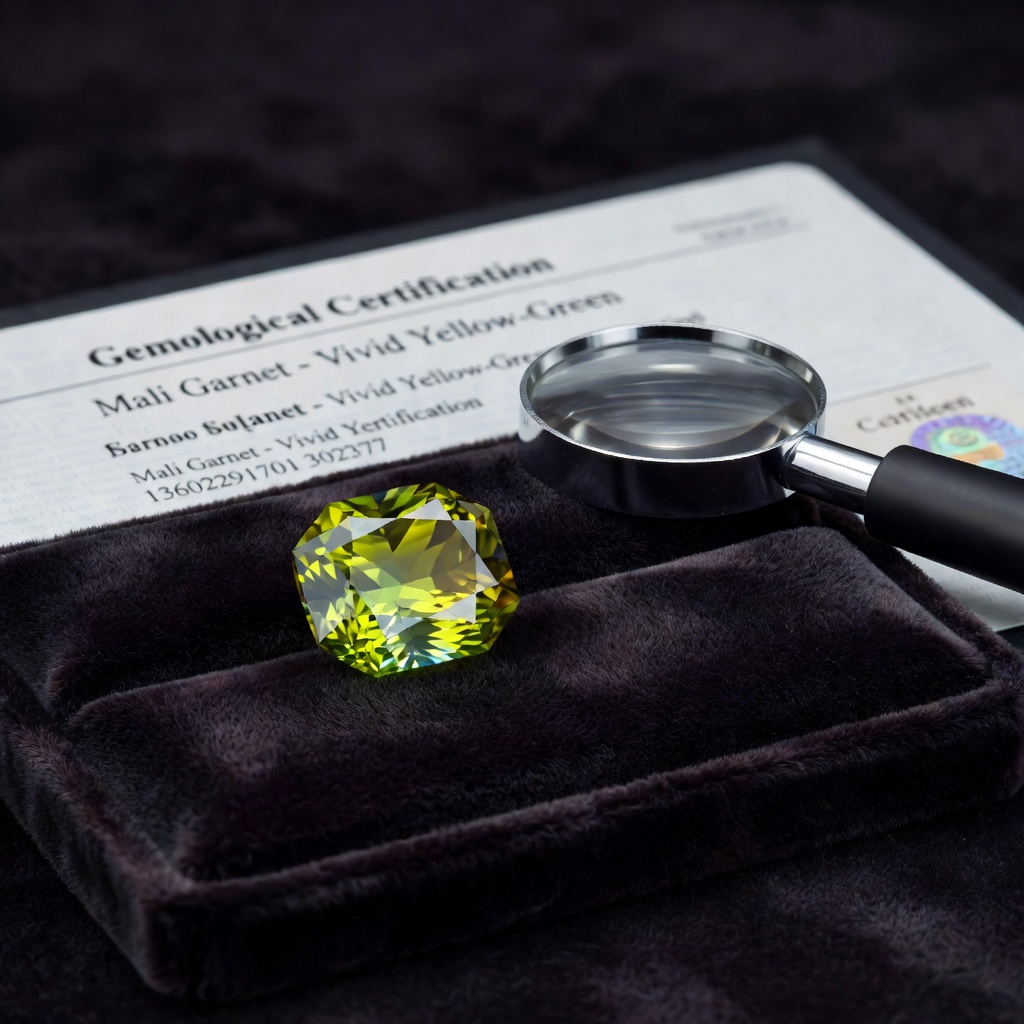
Introduction to Mali Garnets: The Hybrid Treasure
Mali Garnets represent one of the most fascinating discoveries in modern gemology, offering collectors and jewelry enthusiasts a unique combination of brilliance and color that few other gemstones can match. This extraordinary gemstone is scientifically classified as a grossular-andradite hybrid, containing approximately 75-85% grossular and 15-25% andradite in its chemical composition. This rare mixture creates the Mali Garnet Price Guide baseline that distinguishes these gems from their pure garnet cousins, resulting in exceptional fire and dispersion typically reserved for diamonds.
The discovery of Mali Garnets dates back to the mid-1990s along the border regions of Mali and Guinea in West Africa, specifically near the town of Diakounda. Miners initially mistook these vibrant yellow-green stones for demantoid garnets due to their remarkable brilliance, but laboratory analysis soon revealed their unique hybrid nature. Unlike many gemstone deposits that produce material for decades, Mali Garnet mining has remained sporadic and limited, with most significant finds occurring between 1994 and 1998, followed by occasional smaller discoveries in subsequent years.
What truly sets Mali Garnets apart from other green gemstones is their distinctive optical performance combined with a color palette ranging from golden yellow to vivid lime green. The andradite component contributes to their high refractive index (1.77-1.78) and dispersion rating that exceeds that of tsavorite or demantoid garnets. When properly cut, these gems display a mesmerizing "liquid" appearance with flashes of rainbow fire that dance across the surface, making them highly sought after by connoisseurs who appreciate both rarity and visual impact in their collections.
Current Market Prices by Carat Weight
Understanding Mali Garnet value per carat requires recognizing how dramatically pricing escalates with size due to the scarcity of clean, facetable material from West African deposits. The market operates on a tiered pricing structure where smaller stones remain relatively accessible to entry-level collectors, while larger specimens command exponential premiums that reflect their extreme rarity in the marketplace.
Small Stones and Entry-Level Specimens
Gemstones weighing between 0.5 and 1 carat typically fall within the $150 to $400 per carat range, making them an excellent entry point for collectors beginning their Mali Garnet journey. These smaller stones often exhibit the characteristic yellow-green coloration but may show slight variations in saturation or minor inclusions visible under magnification. When shopping in this category, prioritize stones with the most vivid color possible, as smaller gems require exceptional saturation to display the variety's full visual potential in jewelry settings.
Medium Quality Investment Pieces
The sweet spot for most serious collectors lies in the 1 to 3-carat range, where Yellow green garnet prices typically hover between $400 and $1,200 per carat depending on quality factors. Stones in this bracket offer sufficient size to showcase the gem's distinctive brilliance while remaining obtainable for dedicated enthusiasts. For example, a well-cut 2-carat specimen with eye-clean clarity and vivid lime-green color might retail for approximately $1,600 to $2,400 at established dealers, providing substantial presence in rings or pendants without reaching astronomical price points.
Rare Large Stones and Collector Gems
Exceptional Mali Garnets exceeding 3 carats represent true collector items, with prices ranging from $1,500 to $3,000 or more per carat for top-quality material. The exponential price increase reflects the mathematical rarity of finding large, clean crystals in the West African deposits, where most rough yields stones under 2 carats after cutting. A 5-carat eye-clean Mali Garnet with premium color could easily command $10,000 to $15,000 total, placing it firmly in the investment-grade category alongside fine sapphires and emeralds of similar size.
Color Grading and Its Impact on Value
Color remains the primary determinant of value when evaluating Mali Garnet quality factors, with subtle shifts in hue and saturation creating dramatic price differentials in the marketplace. Unlike some gemstones where inclusions or cut may compensate for color shortcomings, Mali Garnets derive their desirability almost entirely from their distinctive yellow-green to lime-green coloration, making color assessment the critical first step in any purchase decision.
Premium Color Classifications
The most valuable Mali Garnets display a vivid lime-green to yellowish-green hue with medium-dark tone and strong saturation, often described as "electric" or "neon" by industry professionals. These premium specimens command 40-60% price premiums over stones showing brownish or olive undertones. When evaluating color, examine the stone against a white background under natural daylight, as artificial lighting may mask subtle brown components that significantly detract from long-term value. Top-tier material should remind viewers of fresh spring foliage or Granny Smith apples, free from muddy or grayish modifiers.
Saturation and Tone Evaluation Standards
Gemological laboratories assess Mali Garnet color using the same hue, tone, and saturation criteria applied to other colored stones, with ideal specimens falling between 60-75% tone (neither too light nor too dark) and vivid saturation. Stones that appear too light (pastel yellow-green) or too dark (deep forest green) fall outside the optimal range and trade at significant discounts. When comparing multiple stones side-by-side, rotate each gem to observe how color distributes throughout the pavilion; the finest material maintains consistent color saturation from all viewing angles without "windowing" or dead zones in the center.
Understanding Color Shift Phenomena
Some high-quality Mali Garnets exhibit a subtle but fascinating color shift phenomenon, appearing more yellow-green under natural daylight and shifting toward a slightly more brownish-green or golden hue under incandescent lighting. This optical characteristic, caused by the unique combination of chromium and iron in the grossular-andradite mixture, does not necessarily detract from value unless the shift becomes extreme. However, collectors should view potential purchases under multiple light sources before buying, as stones with dramatic color change may appeal to some buyers while disappointing others seeking consistent appearance across lighting conditions.
Clarity and Cut Considerations
Navigating Mali Garnet buying guide recommendations requires understanding the delicate balance between clarity expectations and cutting quality that maximizes these gems' inherent brilliance. Unlike diamonds with strict clarity grading scales, Mali Garnets operate within more flexible standards where minor inclusions may be acceptable if they do not impact the stone's visual performance or durability.
Eye-Clean Standards and Pricing Impact
The industry standard for fine Mali Garnets requires "eye-clean" clarity, meaning no visible inclusions when viewed face-up at a distance of 6-8 inches in normal lighting conditions. Stones meeting this standard typically command full market value, while included specimens showing visible feathers, crystals, or needles may trade at 30-50% discounts. However, completely loupe-clean Mali Garnets (no inclusions visible under 10x magnification) are extraordinarily rare and can fetch premiums of 100% or more above standard eye-clean material, particularly in larger sizes where inclusion-free rough is virtually unobtainable.
Optimal Cutting Styles for Maximum Brilliance
Due to their high dispersion and refractive index, Mali Garnets perform best in cutting styles that maximize light return and fire, particularly brilliant cuts with numerous facets such as rounds, ovals, and cushions. The "Portuguese" cut, featuring extra rows of pavilion facets, has become particularly popular for Mali Garnets as it creates additional flashes of spectral color. Avoid overly deep or shallow cuts that create "windows" (see-through areas) or "extinction" (dark areas), as these cutting errors waste the rough material's potential. A well-cut Mali Garnet should appear "alive" with light, showing bright reflections across the entire crown even under diffuse lighting conditions.
Common Inclusions and Marketability Factors
Typical inclusions in Mali Garnets include tiny crystal inclusions (often diopside or apatite), feather-like fractures, and "sugar" granularity caused by heat and pressure during formation. While minor inclusions may be acceptable in smaller stones, larger specimens (over 3 carats) with visible inclusions face significantly reduced marketability. Beware of stones showing surface-reaching fractures or cleavage planes, as these may compromise durability during setting or wear. When examining potential purchases, tilt the stone under a strong light source to check for "reflectors"—inclusions that create mirror-like reflections indicating internal fractures that could worsen over time.
Comparing Mali Garnet to Other Garnet Varieties
Understanding Grossular andradite garnet cost requires contextual comparison against other green garnet varieties, particularly tsavorite and demantoid, which represent the closest alternatives in the marketplace. While all three belong to the garnet family, their distinct chemical compositions, optical properties, and availability create significantly different value propositions for collectors and investors.
Price Differential Between Mali and Tsavorite Garnets
Tsavorite garnets, pure grossular varieties discovered in Tanzania and Kenya during the 1960s, typically command higher per-carat prices than Mali Garnets in smaller sizes (under 2 carats), often ranging from $500 to $3,000 per carat depending on quality. However, as size increases, tsavorite prices escalate more dramatically than Mali Garnets due to even greater scarcity of large clean crystals. A collector might pay $2,000 per carat for a fine 3-carat tsavorite, whereas a comparable Mali Garnet might cost $1,200 to $1,800 per carat, offering better size-for-dollar value while still providing the coveted green coloration.
Demantoid Garnet Cost Comparisons
Demantoid garnets, the andradite variety famous for "horsetail" inclusions and diamond-like brilliance, represent the premium tier of green garnets, with prices ranging from $1,000 to $10,000+ per carat for fine Russian material. While demantoids exhibit higher dispersion than Mali Garnets, they rarely occur in sizes over 1 carat, whereas Mali Garnets regularly yield stones between 2-5 carats. For collectors seeking substantial green garnet jewelry pieces without the extreme premiums of large demantoids, Mali Garnets offer an attractive middle ground, providing comparable brilliance and superior size availability at roughly 30-50% of the cost per carat for equivalent sizes.
Size Availability Advantages
Perhaps the most compelling argument for choosing Mali Garnets over other green varieties lies in their superior size availability. While tsavorite and demantoid deposits rarely produce clean rough yielding finished stones over 2-3 carats, Mali Garnet deposits have historically yielded crystals capable of cutting 5-carat and larger gemstones, albeit rarely. This size advantage allows jewelry designers to create bold cocktail rings and statement pendants using Mali Garnets that would be financially prohibitive or impossible with other green garnets. For collectors prioritizing visual impact and presence, Mali Garnets provide access to impressive sizes without entering the stratospheric pricing of large emeralds or tsavorites.
Authenticity and Treatment Factors
Navigating Rare gemstone pricing requires vigilance regarding treatments and synthetics that can significantly impact both value and long-term satisfaction with your purchase. Fortunately, Mali Garnets have remained largely free from the enhancement controversies plaguing other gemstone varieties, though informed buyers should still understand verification methods and certification standards.
Common Treatments and Detection Methods
The vast majority of Mali Garnets on the market are completely natural and untreated, which contributes significantly to their value proposition. However, occasional heated specimens appear in the marketplace, typically treated to reduce brownish components and enhance yellow-green coloration. Heat treatment in Mali Garnets is difficult to detect without advanced spectroscopic analysis, as these stones naturally form under high-temperature conditions. Additionally, rare instances of fracture filling using oils or resins may occur to improve apparent clarity in heavily included stones. Always request documentation of treatment status, and be wary of stones offering unusually low prices for apparent high quality, as this often indicates undisclosed enhancement.
Laboratory Certification Importance
When investing in Mali Garnets exceeding $1,000 total value, insist on reports from respected gemological laboratories such as the Gemological Institute of America (GIA), American Gemological Laboratories (AGL), or Gübelin Gem Lab. These reports should confirm the stone's identity as grossular-andradite garnet, document any treatments detected, and provide color grade assessments where applicable. Be cautious of generic "appraisal certificates" from unknown entities or in-house documents from sellers, as these lack the independence and scientific rigor of major laboratory reports. For investment-grade stones over 3 carats, consider premium services offering origin reports, though definitive geographical provenance for Mali Garnets can be challenging due to the geological similarity of West African deposits.
Natural Versus Synthetic Identification
Synthetic Mali Garnets remain extremely rare in the marketplace due to the complexity of creating the grossular-andradite hybrid structure and limited commercial demand compared to rubies or sapphires. However, simulants such as yellow-green cubic zirconia, treated quartz, or even glass may occasionally be passed off as Mali Garnets to unwary buyers. Key identification markers for natural Mali Garnets include characteristic inclusion patterns (crystal inclusions, growth zoning), specific gravity testing (3.60-3.63), and refractive index measurements. When purchasing unset stones, request that your jeweler verify these physical properties, or use a loupe to look for natural crystal inclusions that rarely appear in synthetic counterparts.
Where to Purchase Quality Mali Garnets
Strategic sourcing forms a critical component of any comprehensive Mali Garnet buying guide, as the limited supply and specialized nature of these gems require access to knowledgeable dealers with direct connections to West African sources. Unlike diamonds or sapphires readily available at retail jewelry chains, Mali Garnets require targeted procurement through specialized channels.
Reputable Online Dealers and Auction Houses
Established online gemstone specialists such as GemSelect, Multicolour.com, and Lang Antiques regularly inventory Mali Garnets with detailed photographs and laboratory documentation. When buying online, prioritize vendors offering 7-10 day return periods allowing physical inspection under your local lighting conditions. For investment-grade specimens, consider prestigious auction houses like Sotheby's or Christie's, which occasionally feature Mali Garnets in their colored stone sales, particularly those from prominent estate collections. Auction purchases require careful due diligence regarding estimates and condition reports, but often provide access to vintage cuts and larger sizes rarely available through retail channels.
Gem Show Buying Strategies
The Tucson Gem and Mineral Show held annually in February and the Hong Kong International Jewellery Show represent prime opportunities for direct purchasing from dealers with fresh inventory from African cutting centers. At Tucson, focus on the AGTA (American Gem Trade Association) section or the GJX (Gem and Jewelry Exchange) pavilion, where ethical dealers display certified material. In Hong Kong, the September show typically features Asian dealers with strong African connections. When buying at shows, bring a 10x loupe and portable LED light to examine stones away from the vendor's potentially color-enhancing display lighting. Negotiate prices based on current market data, and never feel pressured to buy immediately—reputable dealers will hold stones for 24 hours while you consider the purchase.
Red Flags and Scams to Avoid
Exercise extreme caution when encountering Mali Garnets priced significantly below market rates (under $100 per carat for clean 1-carat stones), as these may be misidentified peridot, green zircon, or treated glass. Avoid dealers who cannot provide specific locality information or who claim stones come from "new deposits" outside Mali or Guinea, as no significant new sources have emerged since the original 1990s discoveries. Be wary of stones showing suspiciously perfect clarity in large sizes (over 5 carats completely clean), as these may be synthetic. Finally, never purchase Mali Garnets from unverified social media sellers or marketplace websites without secure payment protections and return privileges.
Investment Potential and Market Trends
Evaluating Yellow green garnet prices through an investment lens reveals a compelling narrative of supply constraint meeting growing collector awareness, creating favorable conditions for long-term value appreciation. While no gemstone should represent a primary investment vehicle, Mali Garnets demonstrate characteristics historically associated with strong performing collectible assets.
Supply Scarcity and Mining Limitations
The original Mali Garnet discoveries of the 1990s came from alluvial deposits that produced limited quantities of high-grade material before being largely depleted by the early 2000s. Unlike tsavorite or tsavorite mines with ongoing commercial production, Mali Garnet mining occurs sporadically through artisanal operations yielding small batches of rough whenever seasonal rains expose new gravel layers. This supply constraint ensures that existing high-quality stones in the market represent a finite, diminishing resource rather than an ongoing commodity flow, fundamentally supporting price floors and appreciation potential.
Historical Price Appreciation Analysis
Over the past decade, fine Mali Garnets have demonstrated steady price appreciation averaging 8-12% annually for investment-grade specimens, outpacing inflation and many traditional investment vehicles. For example, a 2-carat eye-clean stone purchased for $800 per carat in 2014 might command $1,600 to $1,800 per carat in today's market, representing significant real returns. This appreciation has accelerated in recent years as the gemological community has increased educational efforts highlighting Mali Garnets' unique properties, expanding the collector base while supply remains static. Large stones over 5 carats have shown even stronger performance, with some exceptional pieces doubling in value over five-year holding periods.
Collector Demand Drivers and Future Outlook
The future market for Mali Garnets appears robust, driven by increasing recognition among high-end jewelry designers who prize the stones for custom creations requiring unique green hues. Additionally, the "hybrid" nature of Mali Garnets appeals to scientifically-minded collectors fascinated by gemological rarities. As younger generations of collectors enter the market seeking alternatives to traditional emeralds (often heavily treated) or peridot (relatively soft), Mali Garnets offer an compelling combination of durability, rarity, and distinctive color. Industry experts anticipate continued price strengthening, particularly for untreated stones over 3 carats with vivid color, as the original West African deposits become increasingly worked out.
Care and Maintenance for Long-term Value
Preserving Mali Garnet quality factors requires understanding the specific care requirements for these moderately hard gemstones, ensuring that your investment maintains its brilliance and structural integrity through decades of enjoyment. Proper maintenance protocols protect both the aesthetic appeal and monetary value of these rare hybrid gems.
Proper Cleaning Techniques
With a hardness of 6.5 to 7 on the Mohs scale, Mali Garnets resist scratching from everyday dust (quartz, hardness 7) but require gentle cleaning methods to avoid damage. Clean your Mali Garnet jewelry using warm water with mild dish soap and a soft natural bristle brush, gently scrubbing the pavilion and crown to remove accumulated oils and debris. Avoid ultrasonic cleaners, which may cause vibrations that expand existing feather inclusions into fractures, and never use steam cleaning or harsh chemical solvents like bleach or ammonia. After cleaning, rinse thoroughly in lukewarm water and pat dry with a soft lint-free cloth to prevent water spots on the surface.
Setting Recommendations for Protection
When setting Mali Garnets in rings intended for daily wear, choose protective settings that shield the girdle and crown from impact. Bezel settings offer superior protection compared to prong settings, wrapping the vulnerable girdle edge in metal to prevent chipping during accidental bumps. For prong settings, ensure at least six prongs secure stones over 2 carats, and consider "half-bezel" or "tension" settings that combine aesthetic appeal with physical protection. Avoid exposing Mali Garnet rings to harsh mechanical activities, and remove jewelry before gardening, rock climbing, or gym workouts where hard impacts against metal or stone surfaces could cause fractures.
Storage Solutions to Maintain Brilliance
Store Mali Garnet jewelry separately from harder gemstones like diamonds, rubies, and sapphires to prevent surface scratching. Individual soft cloth pouches or compartmentalized jewelry boxes with padded dividers prevent contact between pieces. For long-term storage of unset stones or infrequently worn jewelry, consider anti-tarnish bags that also protect against atmospheric contaminants. Periodically inspect prongs and settings for wear, as loose stones face heightened risk of loss or damage during wear. Professional re-polishing may restore brilliance to Mali Garnets showing surface wear after years of enjoyment, though this process should be undertaken only by lapidaries experienced with garnet materials to avoid overheating or chipping.
Final Buying Recommendations
Synthesizing this Mali Garnet Price Guide into actionable strategies requires balancing budget constraints with quality priorities while building relationships within the gemstone trade. Whether you seek a modest accent stone or a centerpiece investment gem, systematic approaches yield superior results.
Budget Allocation Strategies by Collector Level
Entry-level collectors with budgets under $500 should focus on smaller stones (0.5-1 carat) with vivid color even if clarity shows minor inclusions under magnification, prioritizing "face-up" beauty over laboratory perfection. Mid-level collectors ($1,000-$5,000 budget) can target eye-clean stones between 1.5-2.5 carats with strong saturation, representing the best balance of visual impact and value retention. High-end collectors should concentrate on rare large specimens over 3 carats with documented untreated status and premium laboratory reports, budgeting $5,000-$15,000 for exceptional pieces that will anchor significant jewelry creations or investment portfolios.
Prioritizing Color Over Size
When forced to choose between a larger stone with mediocre color and a smaller stone with exceptional color, always prioritize the latter in Mali Garnet purchases. A vivid lime-green 1-carat stone will outperform a dull, brownish-green 2-carat stone in both visual appeal and long-term value appreciation. Color creates the emotional connection and rarity factor that drives Mali Garnet desirability, whereas size without quality simply yields a large, unimpressive gem. Apply the "three-foot rule"—if the stone doesn't catch your eye from three feet away due to lackluster color, continue searching regardless of attractive pricing.
Building Relationships with Trusted Dealers
Successful long-term collecting requires establishing relationships with reputable dealers who understand your preferences and budget parameters. Communicate your interest in Mali Garnets specifically, as general jewelry retailers rarely stock these specialized gems. Reliable dealers will notify you when new inventory arrives from African cutting centers, offer first refusal on exceptional pieces, and provide educational resources about market trends. Maintain records of your purchases including photographs, laboratory reports, and provenance information, as complete documentation significantly enhances resale value if you eventually choose to upgrade or liquidate your collection.
Frequently Asked Questions
Why are Mali Garnets so expensive compared to other garnets?
Mali Garnets command premium prices due to their rarity as a grossular-andradite hybrid, limited mining output from West Africa, and exceptional brilliance that exceeds most other garnet varieties. Their unique yellow-green color is extremely rare in the gemstone world.
How much should I expect to pay for a 2-carat Mali Garnet?
A high-quality 2-carat Mali Garnet typically ranges between $800-$2,400 depending on color saturation and clarity. Stones with vivid lime-green coloration command the highest prices, while lighter yellow-green specimens fall in the lower range.
Do Mali Garnets change color in different lighting?
Yes, some Mali Garnets exhibit a subtle color shift phenomenon, appearing more yellow-green in daylight and slightly more brownish-green under incandescent lighting. This is due to their unique chemical composition containing both chromium and iron.
Are treated Mali Garnets worth buying?
Most Mali Garnets on the market are completely natural and untreated, which contributes to their value. Heat-treated or clarity-enhanced specimens should be significantly discounted (30-50% less) and must always be disclosed by the seller.
What is the difference between Mali Garnet and Tsavorite?
While both are green garnets, Tsavorite is a pure grossular variety found in East Africa with a pure green color, whereas Mali Garnet is a grossular-andradite mixture from West Africa displaying yellow-green to lime-green hues. Mali Garnets typically show higher dispersion (fire) than Tsavorites.
Is Mali Garnet a good investment stone?
Mali Garnet shows strong investment potential due to extremely limited supply—the original Mali deposits are largely depleted, with only sporadic small finds occurring. Prices have appreciated steadily at 8-12% annually over the past decade for fine specimens.
What clarity grade should I look for when buying Mali Garnet?
Seek eye-clean stones (no visible inclusions to the naked eye) for the best value retention. While completely loupe-clean Mali Garnets are rare and expensive, stones with minor inclusions not visible to the eye offer the best balance of beauty and affordability.
Can Mali Garnets be worn daily in rings?
With a hardness of 6.5-7 on the Mohs scale, Mali Garnets are suitable for occasional wear in rings but require protective settings (bezels or halos) for daily use. They are better suited for pendants and earrings where they face less impact risk.