
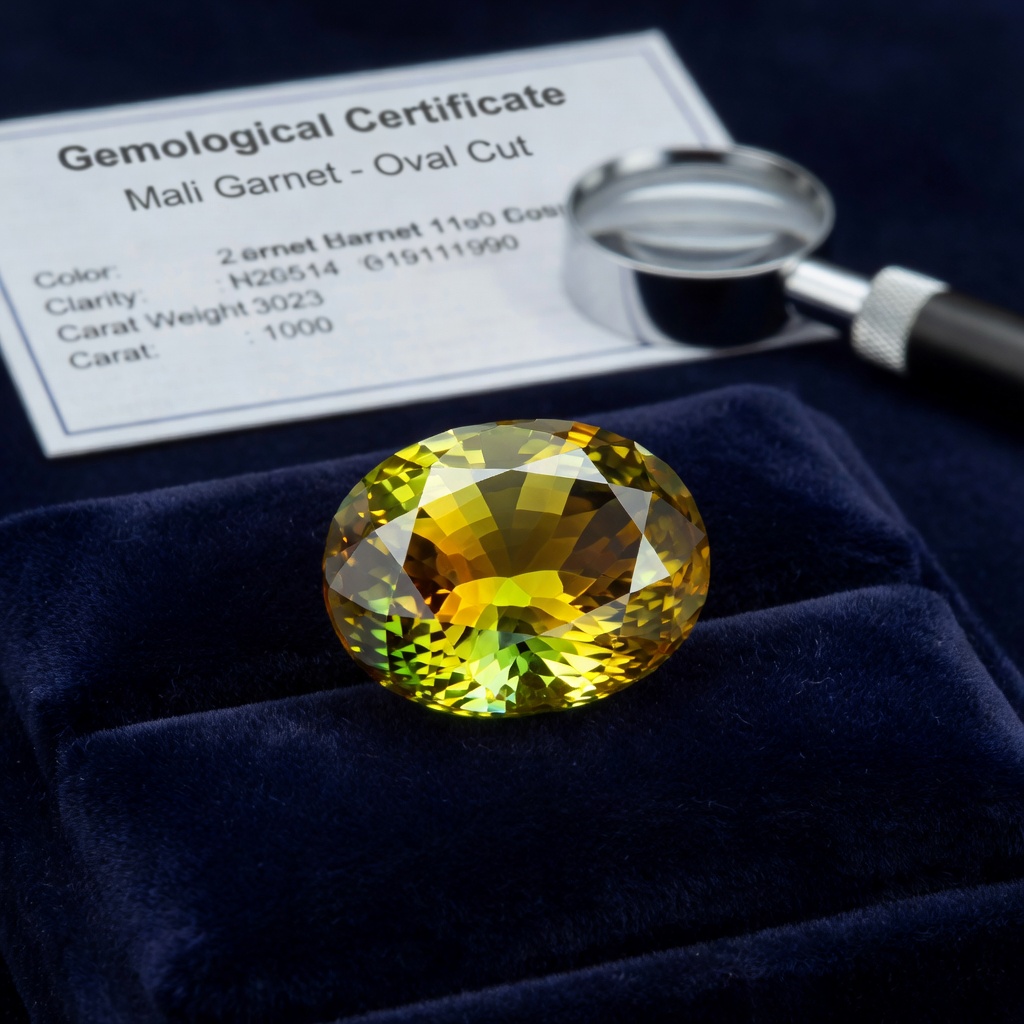
What Is Mali Garnet? Understanding This Rare Hybrid Gemstone
Mali garnet represents one of the most fascinating discoveries in modern gemology, standing out as a rare hybrid intermediate between grossular and andradite garnet species. Unlike pure grossular garnets such as tsavorite or pure andradite like demantoid, this unique gemstone contains a mixture of both calcium aluminum silicate and calcium iron silicate components in its chemical structure. This hybrid composition gives Mali garnet distinct optical properties that set it apart from all other green garnet varieties, including exceptional brilliance and fire that often exceeds that of its better-known cousins. When evaluating what is Mali garnet, collectors and jewelers alike emphasize its position as a geological bridge between two important garnet families, creating a gemstone with characteristics found nowhere else in the mineral kingdom.
The discovery of this exceptional gem occurred during the 1990s in the West African nation of Mali, specifically in the Kayes region near the border with Senegal. Miners initially mistook these yellow-green crystals for demantoid garnet, but laboratory analysis quickly revealed their unique intermediate composition. Production remains extremely limited, with most material coming from alluvial deposits in river gravels where weathering concentrates the heavier garnet crystals. The West African garnet origin has become a crucial factor in valuation, as Mali remains the primary source for this specific hybrid, though small quantities have occasionally surfaced in neighboring countries.
Optically, Mali garnet distinguishes itself through remarkably high dispersion measuring approximately 0.057, which actually exceeds that of diamond (0.044) and significantly surpasses tsavorite (0.028). This property creates intense rainbow flashes of spectral color, particularly noticeable in well-cut stones larger than one carat. The refractive index ranges from 1.752 to 1.816, contributing to the gem's impressive luster and brilliance. When shopping for grossular andradite garnet specimens, understanding these optical signatures helps distinguish authentic Mali material from simulants or other green garnets that may appear similar in rough form but lack the distinctive fire.
Mali Garnet Color Spectrum and Quality Grading Standards
The color palette of Mali garnet spans an impressive range that captivates collectors seeking alternatives to traditional green gemstones. While most specimens display yellow-green to golden-yellow hues, premium stones may exhibit mint green, lime, or rich honey colors that shift subtly under different lighting conditions. Unlike tsavorite's pure forest green or demantoid's emerald-like intensity, Mali garnet yellow green tones offer a distinctive chartreuse quality that appears both warm and fresh simultaneously. The most desirable stones possess a vivid saturation that balances yellow and green components without drifting too far toward either brownish or grayish modifiers that can dull the gem's appearance.
Professional Mali garnet color grades follow similar protocols to other colored gemstones, evaluating hue, tone, and saturation on standardized scales. Stones with medium tone (neither too light nor too dark) and vivid saturation command premium prices, particularly those displaying the prized "golden mint" coloration that seems to glow from within. Light-toned stones may appear washed out or "windowed," while overly dark specimens lose the brightness and dispersion that make Mali garnet special. When examining potential purchases, always view stones under multiple light sources, as incandescent lighting tends to emphasize yellow components while daylight-balanced LED or natural sunlight brings out green tones.
Lighting conditions play a crucial role in displaying Mali garnet's true color potential, making it essential to examine stones outside of jewelry store spotlights that can mask subtle undertones. Experienced dealers recommend viewing candidates in diffused daylight near a north-facing window to assess the body color accurately. Some high-quality specimens exhibit a subtle color shift phenomenon where the gem appears more yellow-green under warm indoor lighting and more mint-green under cool daylight, though this differs from true alexandrite-like color change. For investment-grade pieces, seek stones that maintain attractive color across various lighting environments without developing muddy or olive undertones that indicate lower quality.
Clarity Characteristics and Cut Quality Considerations
Understanding Mali garnet clarity characteristics helps buyers make informed decisions about value and durability in these relatively rare gems. Most Mali garnets contain characteristic inclusions including fine needle-like crystals, small feathers, and occasionally visible growth tubes or zircon crystals that testify to their natural formation. Unlike demantoid's diagnostic horsetail inclusions (which are actually desirable), Mali garnet inclusions typically detract from value when visible to the unaided eye. However, because clean specimens over two carats remain exceptionally scarce, collectors often accept minor inclusions that do not significantly impact brilliance or transparency.
The optimal cutting style for Mali garnet focuses on maximizing its high dispersion while minimizing windowing and extinction. Brilliant cuts with steep pavilion angles, such as rounds, ovals, and cushions, typically perform best, allowing light to bounce internally and create the rainbow flashes that distinguish this gem. Step cuts like emeralds or baguettes tend to emphasize the body color but sacrifice some dispersion, making them suitable only for exceptionally clean, vividly colored rough. When evaluating Mali garnet cut quality, examine the stone face-up to ensure even color distribution without dark patches or "windows" where light passes straight through rather than reflecting back to the eye.
Clarity grades significantly impact pricing, with eye-clean stones commanding 40-60% premiums over slightly included specimens of similar color. For collectors seeking large stones, understanding that inclusions are common in specimens over three carats helps set realistic expectations and budget parameters. Some cutters specifically orient inclusions parallel to the table facet to minimize their visibility, a technique that requires skilled lapidary work. Before purchasing, inspect the stone under magnification to ensure no surface-reaching fractures exist that could compromise durability during setting or wear, as these structural weaknesses represent the most serious clarity concerns for long-term jewelry use.
Carat Weight, Size Availability, and Rarity Factors
The scarcity of large Mali garnet stones defines much of this gem's market dynamics and investment potential. While rough crystals occasionally reach sizes suitable for cutting gems over five carats, finished stones exceeding three carats remain genuinely rare in the marketplace. Most available material falls between 0.5 and 2.0 carats, with this size range representing the sweet spot for jewelry applications and value retention. The geological conditions that created Mali's alluvial deposits rarely produced large euhedral crystals, meaning cutters must balance maximum weight retention against optical performance when working with limited rough supplies.
Mali garnet carat weight follows an exponential pricing curve rather than linear progression. Stones under one carat typically range from $200-$400 per carat for commercial quality, while fine one-to-two carat specimens may command $600-$800 per carat. However, exceptional stones over three carats with vivid color and good clarity can exceed $1,500 per carat, reflecting their extreme rarity and desirability among serious collectors. This pricing structure makes smaller stones accessible to jewelry enthusiasts while positioning larger examples as legitimate investment-grade gemstones comparable to fine emeralds or alexandrites.
When selecting carat weights for specific applications, consider both durability and budget constraints alongside aesthetic goals. For rings subject to daily wear, stones between 0.75 and 1.50 carats offer substantial presence while minimizing risk of damage given Mali garnet's moderate hardness. Earrings and pendants can accommodate larger sizes up to 3 carats or more since these settings protect the gem from impact better than ring mountings. Budget-conscious buyers should prioritize color and cut over size, as a smaller, vividly colored, well-cut Mali garnet outperforms a larger, poorly cut, or washed-out specimen in both beauty and long-term value appreciation.
Mali Garnet vs Tsavorite and Demantoid: Key Differences
Understanding the distinctions in Mali garnet vs tsavorite comparisons helps collectors appreciate each green garnet variety's unique attributes. Tsavorite, a pure grossular garnet discovered in Tanzania and Kenya, displays a rich, pure green color reminiscent of fine emerald but lacks the high dispersion that gives Mali garnet its distinctive fire. While tsavorite typically commands higher per-carat prices for fine material due to market recognition, Mali garnet offers superior brilliance and a distinctive yellow-green palette that tsavorite cannot match. Chemically, tsavorite contains vanadium and chromium as coloring agents, whereas Mali garnet's hybrid grossular-andradite composition creates its characteristic golden-green hues.
When comparing Mali garnet vs demantoid, the differences become even more pronounced despite both gems exhibiting high dispersion. Demantoid, a pure andradite garnet from Russia and more recently Namibia, traditionally displays an intense emerald-green to yellowish-green color with diagnostic horsetail inclusions that collectors actually prize. While demantoid's dispersion (0.057) equals that of Mali garnet, the Russian material's cultural significance and extreme rarity of fine specimens typically command higher prices. However, Mali garnet often appears cleaner than demantoid, lacking the telltale horsetails, and usually occurs in larger sizes suitable for statement jewelry pieces.
For budget-conscious buyers, Mali garnet frequently offers the best value proposition among green garnets, delivering exceptional fire and attractive colors at price points below comparable-quality tsavorite or demantoid. The hybrid nature means Mali garnet combines the best optical properties of both parent species while maintaining greater durability than demantoid, which can be slightly softer and more brittle. When making purchasing decisions, consider that tsavorite works best for those seeking pure green color in a durable package, demantoid appeals to collectors valuing historical significance and extreme rarity, while Mali garnet suits buyers wanting maximum brilliance and a unique, sunny green-yellow palette unavailable in other garnet varieties.
2024 Pricing Guide: Investment and Value Factors
Current Mali garnet price per carat structures reflect both the gem's increasing scarcity and growing recognition among collectors and jewelry designers. Entry-level commercial quality stones with light saturation or visible inclusions typically trade between $200 and $400 per carat, making them accessible to enthusiasts seeking genuine rare garnets without premium investments. Fine quality specimens exhibiting vivid yellow-green color, eye-clean clarity, and expert cutting command $500 to $800 per carat, representing the standard for high-end jewelry applications. Exceptional stones over three carats with top color and clarity characteristics regularly exceed $1,000 per carat, with auction records showing continued appreciation as West African mining yields decline.
The Mali garnet value proposition strengthens significantly for completely natural, untreated stones accompanied by reliable origin documentation. Unlike many gemstones that undergo heat treatment or oiling to enhance appearance, most Mali garnet enters the market entirely natural, a status that commands substantial premiums among discerning collectors. Treatment detection methods include microscopic examination for residue in fractures, spectroscopic analysis to identify artificial color modification, and advanced testing to detect polymer or oil fillers in surface-reaching feathers. Stones certified as untreated with verified West African origins typically appreciate 15-25% faster than undocumented material, making professional gemological reports essential for investment purchases.
Market trends indicate sustained demand for Mali garnet as consumers seek alternatives to traditional gemstones with established ethical sourcing from West African operations. Investment potential remains strong due to the deposit's limited geographic extent and decreasing production volumes reported from Malian mining operations since the early 2000s. When building a gemstone portfolio, prioritize stones with excellent cut quality and vivid color over sheer size, as these characteristics maintain liquidity in resale markets. Consider that while Mali garnet lacks the century-old marketing heritage of emeralds or sapphires, its unique optical properties and genuine rarity position it as a "sleeper" investment likely to appreciate as supplies dwindle and collector awareness increases.
Authentication, Certification, and Origin Verification
Securing proper documentation represents a critical step when purchasing authentic Mali garnet, given the gemstone's value and the potential for confusion with other materials. Reputable gemological laboratories including the Gemological Institute of America (GIA), American Gemological Laboratories (AGL), and Gübelin Gem Lab provide certificates that verify species identification as grossular-andradite garnet, note any treatments, and confirm geographic origin when possible. These reports should specifically identify the stone as "Grossular-Andradite" or note the intermediate composition, distinguishing it from pure grossular (tsavorite) or pure andradite (demantoid). For high-value purchases, insist on reports that include photographs and detailed descriptions of identifying characteristics visible under magnification.
While most Mali garnet certification reports confirm natural, untreated status, buyers should remain vigilant regarding potential enhancements that occasionally appear in the market. Common treatments to detect include fracture filling with oil or resin to improve apparent clarity, though this practice remains rare for Mali garnet compared to emeralds. Heat treatment, which can intensify color in some garnets, remains extremely uncommon for this variety but should be ruled out through spectroscopic analysis. Advanced testing using Raman spectroscopy or laser ablation inductively coupled plasma mass spectrometry (LA-ICP-MS) can definitively establish chemical composition matching known West African deposits versus similar hybrid garnets from other localities.
Origin verification requires careful examination of inclusion scenes, trace element chemistry, and spectral characteristics that fingerprint West African formation environments. Authentic Mali garnet typically contains specific inclusion assemblages including apatite crystals, zircon needles, and unique growth zoning patterns distinct from hybrid garnets found in Madagascar or other localities. Some laboratories now offer "origin reports" that provide opinions on geographic source based on these microscopic and chemical signatures, though such determinations carry less certainty than species identification. When buying significant specimens, work with dealers who can provide chain-of-custody documentation tracing the stone from Malian mining operations through cutting and distribution, ensuring both authenticity and ethical sourcing standards.
Jewelry Setting Recommendations and Design Compatibility
Selecting appropriate Mali garnet jewelry settings requires balancing the gem's moderate hardness of 6.5-7.5 on the Mohs scale with its exceptional optical properties that deserve maximum light exposure. For ring applications, protective bezel settings or substantial halo designs provide crucial protection against chipping and abrasion during daily wear. Bezel settings encircle the girdle with metal, preventing impact at the stone's most vulnerable point while allowing light entry through the crown and pavilion. Halo designs featuring diamond or colored stone accents not only protect the center gem's perimeter but also amplify Mali garnet's dispersion by creating additional reflective surfaces.
Metal selection significantly impacts the visual presentation of Mali garnet ring designs and other jewelry pieces. Yellow gold and rose gold settings enhance the warm golden-yellow components within Mali garnet, creating cohesive, sun-drenched appearances particularly suited to vintage or bohemian design aesthetics. White gold and platinum provide striking contrast that emphasizes the green components and maximizes the perception of dispersion and brilliance, ideal for contemporary settings. When designing custom pieces, consider that Mali garnet's high dispersion performs beautifully in open-back settings that allow light to pass through the pavilion, though these require protective designs for rings subjected to daily impact.
While rings remain popular, earrings and pendants represent optimal applications for showcasing Mali garnet's beauty while minimizing durability concerns. Drop earrings and stud settings position the gems away from hard impacts while allowing observers to view the stones from various angles, maximizing appreciation of the dispersion "fire." Pendants suit larger, more included specimens that might prove too fragile for ring wear, with protective basket settings securing valuable stones against loss while displaying their color effectively. For bracelet designs, consider channel or bar settings that protect the girdle edges, or reserve Mali garnet for occasional-wear cuff bracelets rather than tennis bracelets subject to constant knocking against hard surfaces.
Maintenance, Cleaning, and Long-term Care Instructions
Proper Mali garnet care begins with understanding the gem's sensitivity to thermal shock and mechanical stress despite its reasonable hardness. Always clean Mali garnet jewelry using mild dish soap diluted in warm water, gently scrubbing with a soft-bristled toothbrush to remove accumulated oils and debris from behind the stone. Avoid ultrasonic cleaners and steam cleaning devices, as these can exacerbate existing fractures or inclusions, potentially causing stones to crack or shatter suddenly. After cleaning, rinse thoroughly in warm water and pat dry with a soft, lint-free cloth, ensuring no soap residue remains to dull the surface luster.
Storage techniques play a crucial role in preserving cleaning Mali garnet efforts and preventing damage to finished jewelry pieces. Store Mali garnet items separately from harder gemstones like diamonds, rubies, and sapphires that could scratch the surface during contact. Individual soft cloth pouches or dedicated compartments in jewelry boxes prevent friction damage and protect settings from deformation. When traveling, carry Mali garnet jewelry in rigid cases with padded interiors, as the gem's moderate hardness makes it susceptible to chipping if packed loosely with metal items or harder stones.
Professional maintenance schedules should include annual inspections by qualified jewelers who can assess prong wear, check for loose stones, and evaluate any changes in clarity characteristics that might indicate developing fractures. During these inspections, jewelers should examine girdle edges for chips or abrasion that commonly occur in worn ring settings. For frequently worn pieces, consider removing the jewelry during activities involving hard impacts, extreme temperature changes, or exposure to harsh chemicals including household cleaners and chlorine. With proper care, Mali garnet jewelry maintains its exceptional brilliance and fire for generations, though pieces worn daily in rings may eventually require repolishing to restore surface luster after years of microscopic abrasion.
Trusted Sources: Where to Buy Quality Mali Garnet
Locating reputable venues to buy Mali garnet requires researching specialists in rare colored gemstones rather than general jewelry retailers who may lack specific expertise in this hybrid variety. Established Mali garnet dealers typically maintain direct relationships with West African mining operations or rough dealers, providing provenance documentation and first selection of new production. Seek vendors who specialize in garnet species or colored stones broadly, demonstrating knowledge of the specific characteristics that distinguish fine Mali material from inferior examples or simulants. Reputable dealers willingly provide detailed photographs, videos showing dispersion in various lighting, and independent laboratory reports before finalizing sales.
Red flags indicating potential problems include sellers who cannot provide specific origin information beyond "Africa," offer prices significantly below market rates for claimed quality levels, or pressure buyers to complete transactions without return periods. Be particularly wary of stones described as "Mali garnet" that lack the characteristic high dispersion, as some sellers mistakenly label yellow-green tourmaline, peridot, or even glass as garnet. Synthetic garnets matching Mali's chemistry exist in laboratory environments but rarely appear in the market; however, simulants such as cubic zirconia or YAG (yttrium aluminum garnet) occasionally surface in fraudulent sales. Always verify that return policies allow sufficient time for independent verification by your own gemologist.
When evaluating online versus in-person purchases, recognize that Mali garnet's color shifts and dispersion make in-person examination ideal when possible, though excellent online dealers provide high-resolution video showing stones under multiple lighting conditions. For online transactions, prioritize vendors offering 10-14 day return periods with full refunds, allowing time for appraisal and verification. Attend gem and mineral shows where direct comparison between multiple Mali garnets becomes possible, helping calibrate your eye to quality differences in color saturation and cut precision. Whether purchasing online or in person, building relationships with established dealers who understand your collecting interests ensures first access to exceptional specimens as they become available in this increasingly scarce material.
Frequently Asked Questions
What makes Mali garnet different from other green garnets?
Mali garnet is a unique hybrid containing both grossular and andradite components, giving it higher dispersion (fire) than tsavorite and a distinctive yellow-green to golden color range that differs from the pure green of demantoid or tsavorite.
How much does Mali garnet cost per carat?
Quality Mali garnet typically ranges from $200 to $800 per carat, with exceptional specimens over 3 carats commanding $1,000+ per carat. Prices depend heavily on color saturation, clarity, and whether the stone is completely untreated.
Is Mali garnet treated or enhanced?
Most Mali garnet is completely natural and untreated, which adds to its value. However, some stones may have surface-reaching fractures filled with oil or resin. Always request a gemological certificate to verify natural, untreated status.
What color Mali garnet is most valuable?
Vivid, saturated yellow-green to golden colors command the highest prices. Stones with strong saturation, medium tone, and high brilliance without brownish or grayish modifiers are considered top quality and most desirable for collectors.
Can Mali garnet be worn every day?
With a hardness of 6.5-7.5 on the Mohs scale, Mali garnet is suitable for daily wear in protective settings like bezels or halos. However, earrings and pendants are safer choices than rings for everyday use to prevent chipping or scratching.
Where is Mali garnet mined?
True Mali garnet originates primarily from West Africa, specifically Mali and neighboring regions. The limited geographic source and decreasing production make it increasingly rare and valuable in the gemstone market.
How can I tell if my Mali garnet is authentic?
Authentic Mali garnet displays high dispersion (rainbow flashes), specific gravity between 3.57-3.65, and typically contains characteristic inclusions. For certainty, purchase only stones accompanied by certificates from recognized labs like GIA or AGL verifying natural origin.
Does Mali garnet change color in different lighting?
Unlike alexandrite, Mali garnet does not exhibit true color change. However, its yellow-green body color may appear more yellow under incandescent light and more green under daylight or LED lighting due to its complex chemical composition.


