
Understanding Lepidolite's Unique Physical Properties
Before attempting any Lepidolite Care and Cleaning routines, understanding the mineral's delicate composition is essential for preventing irreversible damage. Lepidolite belongs to the mica group, specifically a lithium-rich variety of muscovite or polylithionite, characterized by its distinctive purple to pinkish-lilac coloration derived from manganese and lithium content. Unlike robust quartz crystals that tolerate rough handling, lepidolite possesses perfect basal cleavage, meaning it splits along flawless flat planes with minimal pressure, creating those characteristic sheet-like structures that flake away when stressed.
The mineral's Mohs hardness rating of merely 2.5 to 3 places it among the softest collectible gemstones, softer than a copper penny and comparable to a fingernail. This extreme softness makes purple mica crystal care particularly challenging compared to harder stones like amethyst or citrine. Lepidolite demonstrates high sensitivity to acids, thermal shock, and mechanical vibration, reacting poorly to environmental stressors that harder minerals withstand effortlessly. When handling raw specimens, you will notice the natural flaking tendency along the layered structure, a property that requires specialized knowledge to manage without accelerating deterioration.
Assembling Your Lepidolite Cleaning Toolkit
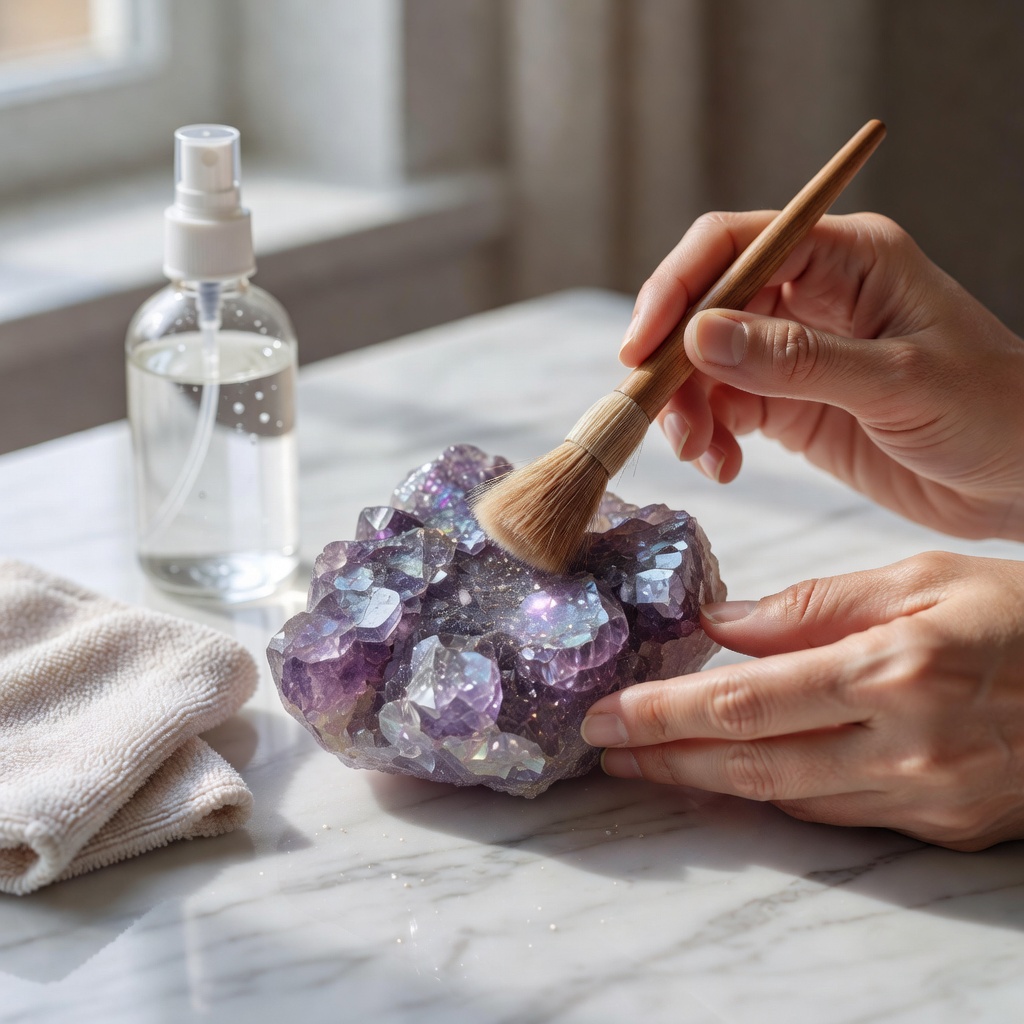
Proper lepidolite crystal cleaning begins with assembling appropriate tools designed specifically for fragile minerals rather than repurposing standard household cleaning supplies. Invest in soft natural bristle brushes, preferably camel hair or sable, which feature exceptionally fine, flexible fibers that dislodge dust without scratching the mica surface or catching on cleavage planes. Avoid synthetic brushes or toothbrush bristles, as these often contain microscopic abrasives or stiff fibers that can lift and separate the delicate layers of your specimen.
Your toolkit should include lint-free microfiber cloths reserved exclusively for crystal care, as standard cotton towels leave behind fibers that lodge between mica sheets and cause long-term damage. Canned compressed air serves as an invaluable tool for how to clean lepidolite without physical contact, particularly for intricate clusters with numerous crevices. If wet cleaning becomes absolutely necessary, maintain a supply of distilled water and pH-neutral liquid soap—the only safe liquid options for this acid-sensitive mineral. Finally, acquire soft padding materials such as acid-free tissue, velvet-lined boxes, or individual cotton pouches to protect specimens during storage and transport between cleaning sessions.
Safe Dry Cleaning Methods for Routine Maintenance
Routine lepidolite stone care should rely predominantly on dry methods that eliminate dust and oils without introducing moisture or pressure to the fragile structure. Begin by using canned air held at a six-inch distance to blow away accumulated dust from crevices and surface irregularities without the brush ever touching the crystal. This technique proves particularly effective for raw specimens with complex formations where physical contact risks dislodging delicate crystal sheets or causing micro-fractures along cleavage planes.
When brushing becomes necessary, employ gentle strokes following the natural grain of the mica layers rather than working against them, as perpendicular pressure instantly triggers flaking. For polished lepidolite cabochons or jewelry pieces, use a clean microfiber cloth with minimal pressure, wiping in straight lines rather than circular motions that might catch on any microscopic surface irregularities. Conduct monthly inspections under 10x magnification or jeweler's loupe to identify early signs of lifting layers, edge deterioration, or accumulations in etched surfaces that require deeper attention before they become problematic.
Wet Cleaning Protocols for Stubborn Dirt
While dry methods form the foundation of cleansing lepidolite safely, certain situations require minimal water contact to remove stubborn residues or oils. If you must use water, employ the quick dip method: submerge the stone for a maximum of 30 seconds in lukewarm distilled water only, avoiding tap water that contains minerals and chlorine capable of depositing residues or causing chemical reactions with the lithium content. Never use hot water, as thermal shock exploits the perfect cleavage, causing internal fractures that may not become visible until days later when the stone begins to crumble.
Immediately after removal, pat the surface gently with a highly absorbent microfiber cloth, then allow the specimen to air dry completely on a soft towel in a room-temperature environment away from direct sunlight or heat sources. Ensure the water temperature matches the ambient environment to prevent expansion and contraction stresses within the layered structure. Critically, never submerge raw specimens, clusters, or pieces with visible fractures, as water penetrates internal cavities and causes lepidolite water damage through expansion, promoting mold growth or accelerating the separation of mica sheets from within.
Energetic Cleansing Without Water Damage
For practitioners who use crystals metaphysically, cleansing lepidolite energetically requires methods that avoid the water exposure standardly used for quartz or amethyst. Moonlight bathing presents the safest option, placing your specimen outdoors or on a windowsill during full moon cycles for two to four hours maximum—extended exposure risks moisture accumulation from dew or atmospheric humidity. This method clears accumulated energetic debris while honoring the stone's lunar associations without compromising physical integrity.
Alternative methods include placing lepidolite on selenite slabs or clear quartz clusters for 24-hour energy clearing sessions, allowing the vibrational properties of the harder stones to reset the lithium mica's energetic field. Sound cleansing using tuning forks (128 Hz or 256 Hz) or crystal singing bowls proves effective when performed at three-foot distances to prevent vibrational damage from excessive amplitude. Brief sacred smoke cleansing using palo santo, white sage, or sandalwood requires only thirty seconds of exposure followed by air-dusting to remove any particulate residue, providing spiritual purification without the risks associated with salt baths or running water.
Optimal Storage and Display Solutions
Long-term preservation of purple mica crystal care specimens depends heavily on environmental controls and physical protection strategies. Store each piece individually in soft cloth pouches, acid-free paper envelopes, or padded boxes lined with unbleached cotton to prevent scratching from contact with harder minerals. When displaying collections, maintain strict separation between lepidolite and harder stones such as quartz, tourmaline, or corundum, as even incidental contact during dusting or rearrangement can scratch or gouge the soft mica surface.
Maintain ambient humidity levels between 40 and 50 percent to prevent dehydration that increases brittleness and flaking tendency, using silica gel packets or humidifiers as climate conditions dictate. UV protection remains critical for preserving the characteristic purple coloration; prolonged exposure to direct sunlight or intense LED display lighting causes photochemical fading of the manganese chromophores. Position display cases away from windows or install UV-filtering glass, and limit any sun-charging practices to brief morning light exposure of less than fifteen minutes to prevent color degradation while still energizing the stone.
Critical Mistakes to Avoid During Cleaning
Understanding what not to do proves equally important as proper technique when maintaining these delicate specimens. Never subject lepidolite to ultrasonic cleaners, as the high-frequency vibrations exploit the mineral's perfect cleavage planes, causing internal fractures and separation of layers that render the stone worthless within seconds. Avoid vinegar, lemon juice, or other acidic cleaners entirely, as these dissolve the potassium lithium aluminum silicate structure, causing irreversible etching, pitting, and accelerated flaking that resembles advanced decay.
Steam cleaners, boiling water, or dishwasher cleaning methods cause catastrophic thermal shock, while scrubbing with abrasive pads or brushes destroys the surface immediately. Perhaps most importantly, prevent physical pressure during cleaning that triggers flaking—never grip specimens tightly, press cloths firmly against the surface, or use toothpicks to clean crevices. One collector reported losing a museum-quality specimen when attempting to remove a "stubborn spot" with a wooden pick, which lifted an entire layer of mica and triggered a cascade of flaking across the display face.
Specialized Care for Lepidolite Jewelry
Wearable lepidolite requires additional vigilance beyond standard specimen care due to constant exposure to environmental hazards and mechanical stress. Check prong settings monthly using a 10x loupe, as the soft stone gradually compresses or wears away within metal mounts, potentially causing the gem to loosen and fall out during normal wear. Remove rings, pendants, and bracelets before hand washing, swimming, showering, or applying lotions, as soaps, shampoos, and chlorine react chemically with the lithium content while hot water causes thermal shock.
When cleaning jewelry settings, protect the stone by applying masking tape over the lepidolite surface, then clean metal components separately using appropriate solutions without allowing liquids to touch the gem. Professional jeweler inspections every six months help identify worn settings before total failure occurs, particularly important for pieces worn daily. One case study involves a wedding ring set with lepidolite that survived three years of careful wear but required immediate prong rebuilding when the soft stone had compressed 0.5mm within the setting, creating dangerous looseness that nearly resulted in loss.
Restoring and Repairing Damaged Specimens
When lepidolite water damage or physical trauma has occurred, certain stabilization techniques can halt deterioration though full restoration remains impossible. For minor flaking along edges, apply archival mineral oil sparingly using a cotton swab—one drop only—to very lightly coat exposed cleavage planes, which temporarily stabilizes loose sheets and prevents further oxidation or moisture absorption. Never use commercial stone consolidators or superglue, as these yellow over time and create harder residues that cause adjacent areas to fracture due to differential hardness.
Museum-grade specimens requiring consolidation should receive professional treatment from mineral conservation specialists who use reversible paraloid or acetone-based consolidators applied under magnification. Evaluate whether to retire a damaged piece from active handling to display-only status, recognizing that continued use accelerates destruction. Document any damage through high-resolution photography for insurance purposes or to accurately represent condition during resale, as even minor flaking significantly impacts valuation in the collector's market.
Seasonal Maintenance Calendar
Systematic lepidolite maintenance tips require establishing a regular schedule that balances thorough care with minimal handling. Monthly sessions should include light dusting with a camel hair brush and visual inspection under magnification to catch early signs of lifting layers, prong looseness in jewelry, or environmental damage. Quarterly maintenance involves deep dry cleaning using compressed air and microfiber cloths, combined with energetic clearing rituals such as selenite placement or moonlight exposure to maintain metaphysical properties.
Bi-annual professional assessments by a gemologist or jeweler help identify structural issues in valuable specimens or worn settings in jewelry before catastrophic failure occurs. Annual documentation through photography under consistent lighting conditions tracks any color fading, structural changes, or progressive flaking, creating a maintenance history that proves invaluable for insurance claims or resale authentication. This calendar approach ensures your specimens remain pristine while avoiding the over-handling that often causes more damage than the passage of time itself.
Frequently Asked Questions
Can Lepidolite Get Wet or Go in Water?
Lepidolite should avoid prolonged water exposure due to its soft 2.5-3 Mohs hardness and perfect cleavage. While brief contact with distilled water won't immediately destroy it, soaking or repeated wetting causes flaking, structural weakening, and potential dissolution of the mica layers. Always dry immediately if accidentally exposed.
How Do You Clean Lepidolite Without Damaging It?
Use only dry methods: soft camel hair brushes, compressed air, and microfiber cloths. If necessary, use a quick 30-second rinse in lukewarm distilled water followed by immediate pat-drying. Never use soaps, chemicals, ultrasonic cleaners, or scrubbing motions that follow against the natural grain of the crystal layers.
Why Is My Lepidolite Crystal Fading or Losing Color?
Lepidolite's purple color comes from manganese and lithium content, which is light-sensitive. Prolonged exposure to direct sunlight or bright display lighting causes photochemical fading. Store in dark environments or UV-protective display cases, and limit energetic sun-charging to brief morning light only.
Can I Use Vinegar or Lemon Juice to Clean Lepidolite?
Absolutely not. As a potassium lithium aluminum silicate mineral, lepidolite reacts with acids. Vinegar, lemon juice, or other acidic cleaners will etch the surface, cause pitting, and accelerate the flaking process. Only neutral pH distilled water should contact the stone if wet cleaning is necessary.
Is It Safe to Wear Lepidolite Jewelry in the Shower?
Remove lepidolite jewelry before showering, swimming, or washing hands. Hot water, steam, soaps, and shampoos all pose risks: thermal shock from temperature changes, chemical reactions with personal care products, and mechanical damage from water pressure. The cumulative effect of moisture exposure leads to structural failure.
How Often Should I Energetically Cleanse My Lepidolite?
Energetic cleansing should occur monthly or after intense healing work, but never use water-based methods. Instead, place on selenite slabs for 24 hours, use moonlight exposure for 2-4 hours during full moons, or employ sound cleansing with singing bowls. These methods clear energy without compromising the physical structure.
What Causes Lepidolite to Flake or Crumble?
Flaking occurs due to lepidolite's perfect basal cleavage—a mineralogical property where it splits along flat planes. Triggers include water absorption expanding internal layers, physical pressure during handling, temperature fluctuations causing expansion/contraction, or simply natural degradation of exposed edges over time.
Can I Use an Ultrasonic Cleaner for My Lepidolite?
Never use ultrasonic cleaners on lepidolite. The high-frequency vibrations exploit the mineral's perfect cleavage planes, causing internal fractures, separation of layers, and eventual crumbling. This applies to both raw specimens and jewelry. Ultrasonic cleaning is suitable for quartz and corundum but catastrophic for micas.


