What Is Lepidolite? Understanding the Purple Lithium Mica
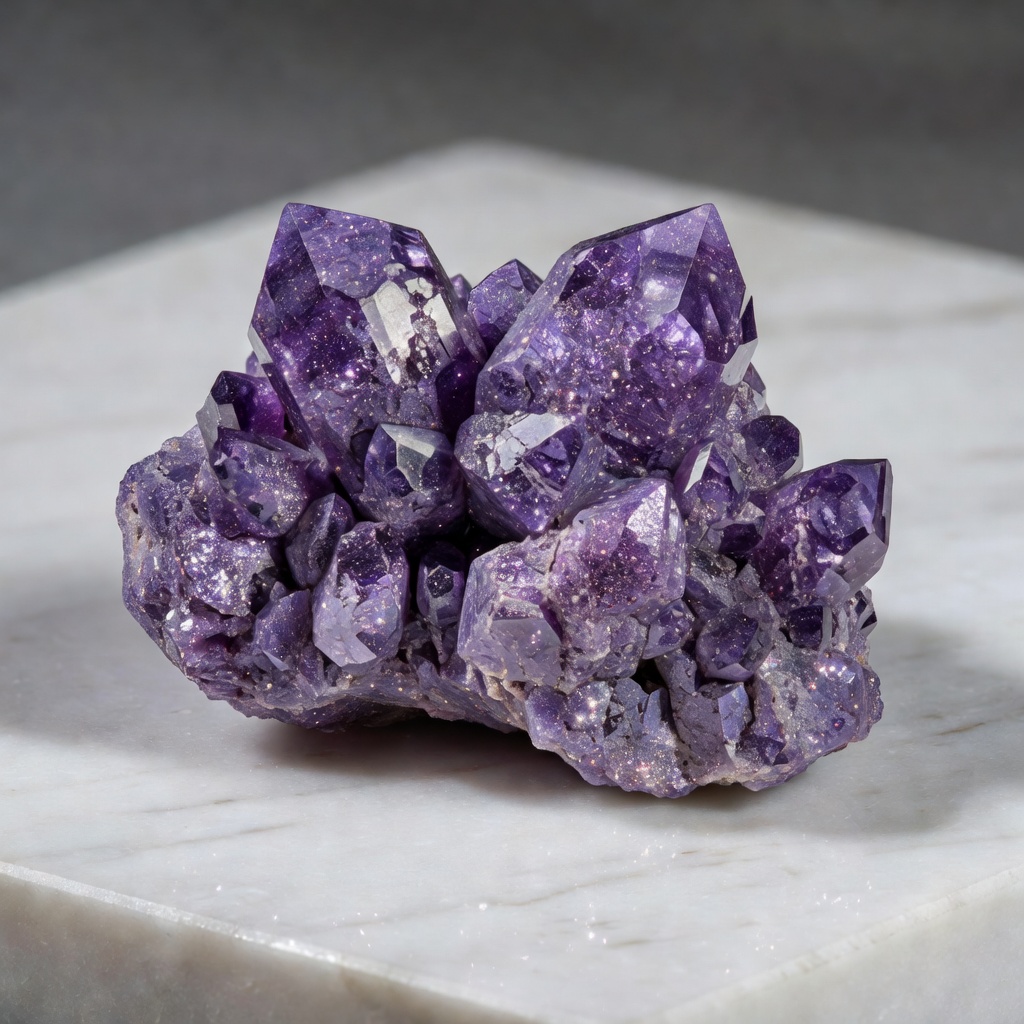
Lepidolite represents one of the most visually striking members of the mica group, distinguished by its lithium-rich phyllosilicate composition that produces the characteristic purple to pink coloration collectors and healers treasure worldwide. This distinctive mineral forms primarily within pegmatite deposits, where slow-cooling magma creates the perfect environment for large crystal growth alongside other lithium-bearing minerals such as spodumene, tourmaline, and amblygonite. Unlike many decorative stones that rely on surface treatments for their appeal, lepidolite's color arises naturally from manganese impurities within its chemical structure, creating hues that range from subtle lilac whispers to intense violet depths.
Geologically speaking, lepidolite crystallizes in the monoclinic system, displaying the perfect basal cleavage typical of mica minerals that allows it to split into remarkably thin, flexible sheets. These formations often occur in massive scaly aggregates that shimmer with a vitreous to pearly luster when light strikes their surfaces. The presence of lithium, typically comprising 3-5% of the mineral's composition by weight, not only defines lepidolite chemically but also contributes to its reputation in metaphysical circles as a powerful tool for emotional regulation and stress relief. Many practitioners refer to lepidolite as the "peace stone" or "grandmother stone," attributing to it the ability to facilitate spiritual transitions and promote mental clarity during periods of anxiety or significant life changes.
Lepidolite Quality Indicators Every Buyer Should Know
When evaluating lepidolite stone quality, experienced collectors first examine the mineral's characteristic luster, which should display a distinctive vitreous to pearly sheen across cleavage surfaces. High-grade specimens exhibit a scaly, plate-like structure that reflects light in shimmering patterns, while inferior material may appear dull or chalky due to weathering or improper handling. The presence of perfect basal cleavage serves as a primary authentic lepidolite identification marker; genuine specimens split easily into thin, flexible sheets when pressure is applied parallel to their flat surfaces, a property unique to the mica family that synthetic imitations rarely replicate accurately.
Natural inclusions and matrix patterns often enhance rather than detract from a specimen's value, particularly when white or gray quartz veins create striking contrast against the purple mica background. However, discerning buyers must distinguish between desirable mineral inclusions and detrimental cracks or fractures that compromise structural integrity. A quality lepidolite specimen should feel surprisingly substantial when held, possessing a density between 2.8 and 3.0 specific gravity despite its layered, seemingly delicate composition. When examining potential purchases, gently test the stone's heft in your palm and inspect edges for the telltale "books" or layered formations that indicate well-formed crystalline structure rather than massive, undifferentiated material.
Decoding Color Variations: Lavender to Deep Purple Hues
The color spectrum of lepidolite spans an impressive range from pale lavender and soft lilac to intense violet and rare hot pink varieties, with natural lepidolite sources worldwide producing distinct regional color signatures. Premium specimens display saturated, uniform coloration throughout the matrix, whereas commercial-grade material may show mottling or zoning where manganese concentrations vary within the crystal structure. When comparing lepidolite vs amethyst, collectors note that while both stones share purple hues, lepidolite possesses a distinctive silvery or pearly undertone rather than amethyst's transparent crystalline clarity, and it lacks the dichroism often visible in high-grade quartz varieties.
Manganese content directly influences color intensity, with higher concentrations producing the coveted deep violet specimens that command premium prices in the collector market. Acceptable inclusions include white or gray quartz matrix that provides visual contrast and geological context, particularly in specimens from Brazilian pegmatites where intergrowth with cleavelandite creates stunning display pieces. Buyers should approach stones showing unnatural color concentrations in fractures or inconsistent dying along edges with caution, as these may indicate enhancement treatments. The most valuable specimens maintain their color saturation throughout the entire formation rather than displaying only surface-level pigmentation that might suggest artificial staining of white mica.
Lepidolite Pricing Guide: What Determines Market Value
Understanding lepidolite price per carat requires familiarity with the various market tiers that separate common rough material from museum-quality specimens destined for serious collections. Rough lepidolite typically sells between $0.50 and $2 per gram for standard material suitable for tumbling or basic lapidary work, while high-grade crystallized specimens with defined structure and intense coloration can command $5 to $20 per gram or higher. Jewelry-grade cabochons generally range from $10 to $50 per carat depending on color depth, clarity, and the skill of the lapidary artist who shaped the stone while working around its perfect cleavage challenges.
Several critical factors influence these price points beyond simple weight measurements. Size matters significantly in the specimen market, with large cabinet pieces exceeding 10 centimeters across drawing premium prices from institutional collectors. Color saturation follows closely behind size in importance, with the rare hot pink varieties from specific Afghan deposits potentially doubling the value of standard purple material. Origin also plays a crucial role; Brazilian specimens from Minas Gerais typically command higher prices than material from Madagascar due to superior crystalline formation and color stability. When budgeting for acquisitions, consider that rough specimens offer better value for metaphysical practitioners and collectors, while faceted stones remain rare and expensive due to the mineral's poor suitability for traditional gemstone cutting.
How to Spot Fake Lepidolite and Synthetic Imitations
The growing popularity of this purple lithium mica has unfortunately spawned numerous counterfeits in the marketplace, making authentic lepidolite identification skills essential for serious buyers. Common substitutions include dyed agate or chalcedony, purple-tinted glass, and artificially colored white muscovite mica that lacks the lithium content defining genuine lepidolite. Dyed stones often betray themselves through color concentrations in surface cracks or along fracture lines, whereas natural lepidolite displays uniform coloration throughout its structure regardless of cleavage planes.
Performing simple diagnostic tests can save collectors from costly mistakes. The streak test provides immediate verification; when rubbed against unglazed porcelain, authentic lepidolite produces a white to colorless streak regardless of the specimen's surface color intensity. Hardness testing offers additional confirmation, as genuine lepidolite registers between 2.5 and 4 on the Mohs scale, meaning it scratches easily with a copper penny or steel knife but resists fingernail scratching. Visual inspection should reveal the characteristic scaly, plate-like texture of mica minerals; glass imitations often contain telltale air bubbles, while dyed stones may show unnatural color uniformity lacking the subtle variations found in natural material. Always examine specimens under magnification to verify the presence of perfect basal cleavage planes that synthetic productions rarely replicate convincingly.
Best Lepidolite Sources and Ethical Mining Considerations
Natural lepidolite sources span several continents, with each region imparting distinct characteristics to the material extracted from its ancient pegmatite formations. Brazil's Minas Gerais state consistently produces the world's finest specimens, particularly from the Jequitinhonha Valley, where deep purple crystallized lepidolite occurs in association with tourmaline and spodumene in sizes suitable for museum displays. Afghanistan's Nuristan region yields material with exceptional color saturation, while Zimbabwe's Bikita district historically provided significant lithium ore including associated lepidolite specimens. Madagascar contributes substantial quantities to the metaphysical market, though this material often forms in softer, more massive aggregates compared to Brazilian crystalline examples.
Western Australia's Pilbara region and various localities in China round out the major commercial sources, each offering unique matrix associations that help geologists identify origin. Ethical considerations increasingly influence purchasing decisions, as lithium extraction impacts both environmental landscapes and local mining communities. Responsible buyers seek dealers who participate in fair-trade initiatives and maintain transparent supply chains, particularly when sourcing from regions with historically challenging labor practices. Reputable suppliers should provide documentation regarding extraction methods and community benefit programs, ensuring that your acquisition supports sustainable practices rather than exploitative operations that damage fragile ecosystems surrounding pegmatite deposits.
Choosing Between Raw Specimens, Tumbled Stones, and Jewelry
Collectors face important decisions regarding presentation format when building their lepidolite collections, as each preparation style serves different purposes and carries distinct care requirements. Raw specimens preserve the natural crystal formations and geological context that make each piece unique, displaying the characteristic "books" or rosette formations that demonstrate the mineral's perfect cleavage. These display-worthy pieces suit collectors interested in mineralogy or those who use stones for crystal grids and energy work, where natural geometry supposedly enhances metaphysical properties. When selecting raw material, prioritize specimens with intact crystal faces and minimal damage to the delicate sheet structures that define high-quality examples.
Tumbled stones offer practical alternatives for pocket carry or meditation use, though the tumbling process necessarily obscures the natural cleavage planes that identify genuine material. For jewelry applications, understanding lepidolite stone quality limitations proves crucial; with a Mohs hardness of only 2.5-4 and perfect cleavage in one direction, this mineral remains unsuitable for rings or bracelets subject to daily impact and abrasion. Instead, choose protective settings for pendants, earrings, or brooches where the stone receives minimal mechanical stress. Bezel settings provide superior protection compared to prong settings, encasing the vulnerable edges that might split along cleavage planes if struck. Cabochon cuts work better than faceted designs, as the domed shape minimizes exposed edges while showcasing the stone's color and characteristic sheen.
Where to Buy Lepidolite: Online Marketplaces vs. Local Dealers
This comprehensive Lepidolite Buying Guide emphasizes the importance of selecting reputable sources that guarantee authenticity and fair pricing in a market flooded with imitations and misrepresented material. Specialized gem and mineral shows offer unparalleled opportunities for hands-on evaluation, allowing buyers to test hardness, examine cleavage, and assess color saturation under various lighting conditions before committing to purchases. Local rock shops with established reputations provide similar advantages with the added benefit of ongoing customer service and educational support for newcomers to mineral collecting.
Online marketplaces require additional vigilance, though platforms like Etsy host verified sellers with extensive positive feedback specifically for mineral specimens. When evaluating online listings, request additional photographs showing the specimen wet and dry, as water temporarily enhances color saturation and reveals potential cracks or dye concentrations. Essential questions for any seller include requests for origin documentation, explicit treatment disclosure, and clear return policies allowing inspection upon receipt. Red flags that should prompt immediate avoidance include prices significantly below market rates, vague descriptions lacking specific locality information, and sellers unwilling to provide close-up photographs of cleavage planes or matrix details. Establish relationships with dealers who specialize specifically in lithium minerals or mica-group specimens, as their expertise typically ensures higher quality inventory than generalist rock shops.
Proper Care and Storage for Your Lepidolite Collection
Maintaining lepidolite stone quality over decades requires understanding the mineral's physical vulnerabilities and environmental sensitivities. Cleaning should involve only soft brushes, lukewarm water, and mild soap, gently working around the scaly surfaces without applying pressure that might split the delicate sheets along their natural cleavage planes. Never subject lepidolite to ultrasonic cleaners, steam cleaning, or harsh chemical solvents including alcohol and acids, as these can damage the surface luster or destabilize the mineral structure. After washing, pat specimens dry with soft cloth rather than rubbing, which might catch and peel the thin mica layers at surface edges.
Storage solutions must account for the mineral's perfect cleavage and relative softness compared to other common collection specimens. Store each piece individually in padded containers, cloth bags, or compartmentalized display cases to prevent contact with harder minerals like quartz or tourmaline that might scratch or cleave the surface. Avoid storing lepidolite in direct sunlight for prolonged periods, as UV radiation can gradually fade the delicate manganese-derived purple hues, particularly in specimens with lighter base colors. For display pieces, choose locations away from windows or install UV-filtering glass in display cabinets. When handling specimens, support them from below rather than grasping edges, as the sheet-like structure can fracture unexpectedly if flexed or twisted during examination.
Frequently Asked Questions
How much should I expect to pay for quality lepidolite?
Quality lepidolite typically ranges from $0.50 to $5 per gram for rough specimens, while high-grade display pieces can command $20-$100 depending on size, color intensity, and crystal formation completeness. Jewelry-grade cabochons usually cost between $10-$50 per carat.
How can I tell if my lepidolite is real or dyed?
Authentic lepidolite exhibits perfect basal cleavage (splits into thin sheets), has a Mohs hardness of 2.5-4, and shows a white to colorless streak when tested on unglazed porcelain. Dyed imitations often show color concentrated in cracks, lack the characteristic scaly mica texture, and may have an unnaturally uniform appearance.
Is lepidolite suitable for everyday jewelry wear?
Due to its softness (2.5-4 Mohs) and perfect cleavage, lepidolite is not recommended for everyday rings or bracelets. However, it works beautifully for occasional-wear pendants, earrings, and brooches where it's protected from impact and abrasion. Always choose protective bezel settings over prong settings.
What is the difference between lepidolite and purple muscovite?
While both are mica minerals, lepidolite contains higher lithium content (typically 3-5% Li2O) giving it a distinctive pink to purple color, whereas purple muscovite gets its color from manganese but lacks lithium. Lepidolite also has a slightly different crystal structure and typically shows a more vivid, consistent purple hue compared to muscovite.
Which country produces the highest quality lepidolite?
Brazil (specifically Minas Gerais) consistently produces the finest lepidolite specimens with deep purple coloration and well-formed crystalline structures. Afghanistan and Zimbabwe also yield high-quality material, while Madagascar tends to produce softer, more mica-like formations suitable for metaphysical markets.
Does lepidolite fade in sunlight?
Yes, prolonged exposure to direct sunlight can cause lepidolite's delicate purple color to fade over time due to UV radiation affecting the manganese ions responsible for its coloration. Store your specimens in a display case away from direct sun or in a drawer to preserve their vibrant color indefinitely.
What healing properties is lepidolite associated with?
In metaphysical traditions, lepidolite is prized for its lithium content and is associated with emotional balance, stress relief, and anxiety reduction. It's often called the 'peace stone' or 'grandmother stone' and is linked to the third eye and crown chakras for spiritual transitions and meditation practices.
Should I buy rough or polished lepidolite?
Choose rough specimens if you're a collector interested in natural crystal formations and geological features, or if you use stones for crystal grids and energy work. Select tumbled or polished pieces for jewelry making, worry stones, or pocket carry. Rough material better shows natural cleavage planes, while polished pieces highlight color consistency.