Understanding Lapis Lazuli Composition and Sensitivity
Before implementing any lapis lazuli care and cleaning routine, understanding the gemstone's unique geological composition is essential for preventing inadvertent damage. Lapis lazuli is technically a metamorphic rock rather than a mineral, primarily composed of the blue mineral lazurite alongside white calcite veins and distinctive golden pyrite inclusions. This complex composition creates specific vulnerabilities that differentiate lapis from harder, more durable gemstones like diamonds or sapphires, requiring owners to adopt specialized handling protocols.
The presence of calcite significantly contributes to lapis lazuli's porosity, making the stone particularly susceptible to liquid absorption and chemical damage. When liquids penetrate the calcite components, they can cause internal staining, structural weakening, or permanent discoloration that no amount of surface cleaning can remedy. Additionally, the pyrite inclusions, while beautiful, can oxidize or become loose if exposed to excessive moisture or harsh cleaning agents, compromising both the stone's appearance and structural integrity.
With a Mohs hardness rating of only 5 to 5.5, lapis lazuli requires significantly gentler handling compared to harder gemstones commonly used in jewelry. This relatively soft rating means that everyday objects like steel keys, glass surfaces, or even household dust can potentially scratch the polished surface if proper precautions aren't taken. Understanding these physical limitations forms the foundation for all subsequent care decisions, ensuring that your cleaning methods align with the stone's inherent properties rather than working against them.
Daily Wear Guidelines for Lapis Lazuli Jewelry
Implementing proactive lapis lazuli jewelry care strategies during daily wear prevents the accumulation of damage that necessitates aggressive cleaning later. Always apply cosmetics, perfumes, hairsprays, and lotions before putting on your lapis jewelry, as these products contain alcohols, oils, and chemicals that can coat the stone's surface and seep into microscopic pores. For example, if you regularly wear a lapis lazuli ring while applying hand cream, you may notice gradual dulling as the oils create a film that attracts dust and inhibits light reflection.
Removing lapis pieces before swimming, showering, washing hands, or engaging in water-based activities is non-negotiable for preserving their beauty. Chlorinated pool water can react with the calcite content causing etching, while saltwater may accelerate pyrite oxidation and leave mineral deposits in surface crevices. Even seemingly harmless tap water contains trace minerals and chemicals that, when allowed to dry on the stone repeatedly, create stubborn water spots and potential calcification that dull the signature ultramarine blue.
Prolonged sun exposure presents another significant threat to lapis lazuli jewelry, as ultraviolet radiation can fade the vibrant blue color that makes this stone so desirable. When running errands or spending time outdoors, consider storing lapis pieces in a shaded pocket or purse compartment rather than wearing them in direct sunlight for hours. Antique lapis specimens are particularly vulnerable to color degradation from light exposure, so collectors should display pieces in UV-protected cases or rotate displayed items regularly to prevent uneven fading.
Safe Cleaning Methods for Lapis Lazuli Stones
When surface cleaning becomes necessary, employing approved lapis lazuli cleaning methods ensures effective dirt removal without compromising the stone's integrity. Prepare a solution using only lukewarm distilled water mixed with a few drops of mild, pH-neutral soap such as unscented castile soap or specialized gemstone cleaner specifically formulated for porous stones. Avoid hot water entirely, as temperature differentials can cause thermal shock that exacerbates existing internal fractures or creates new stress lines within the calcite matrix.
Submerge the lapis piece briefly—never exceeding thirty seconds—and use an ultra-soft-bristled brush such as a baby toothbrush or cosmetic brush to gently dislodge dirt from crevices and around setting prongs. Work in gentle circular motions without applying pressure, paying special attention to areas where skin oils accumulate, such as the back of cabochon stones or inside ring bands. For intricate carvings or beads with drill holes, use a soft wooden pick wrapped in cotton to access tight spaces where debris collects without scratching the surface.
Strictly avoid ultrasonic cleaners, steam cleaners, and chemical jewelry dips regardless of how convenient they may seem for other gemstones. The intense vibrations from ultrasonic machines can cause pyrite inclusions to loosen or fall out entirely while potentially widening microscopic fractures throughout the stone. Similarly, steam cleaning forces hot moisture into pores at high pressure, while chemical cleaners containing ammonia, alcohol, or acids will etch the calcite components and strip protective polishes, necessitating expensive professional restoration.
Deep Cleaning and Stain Removal Techniques
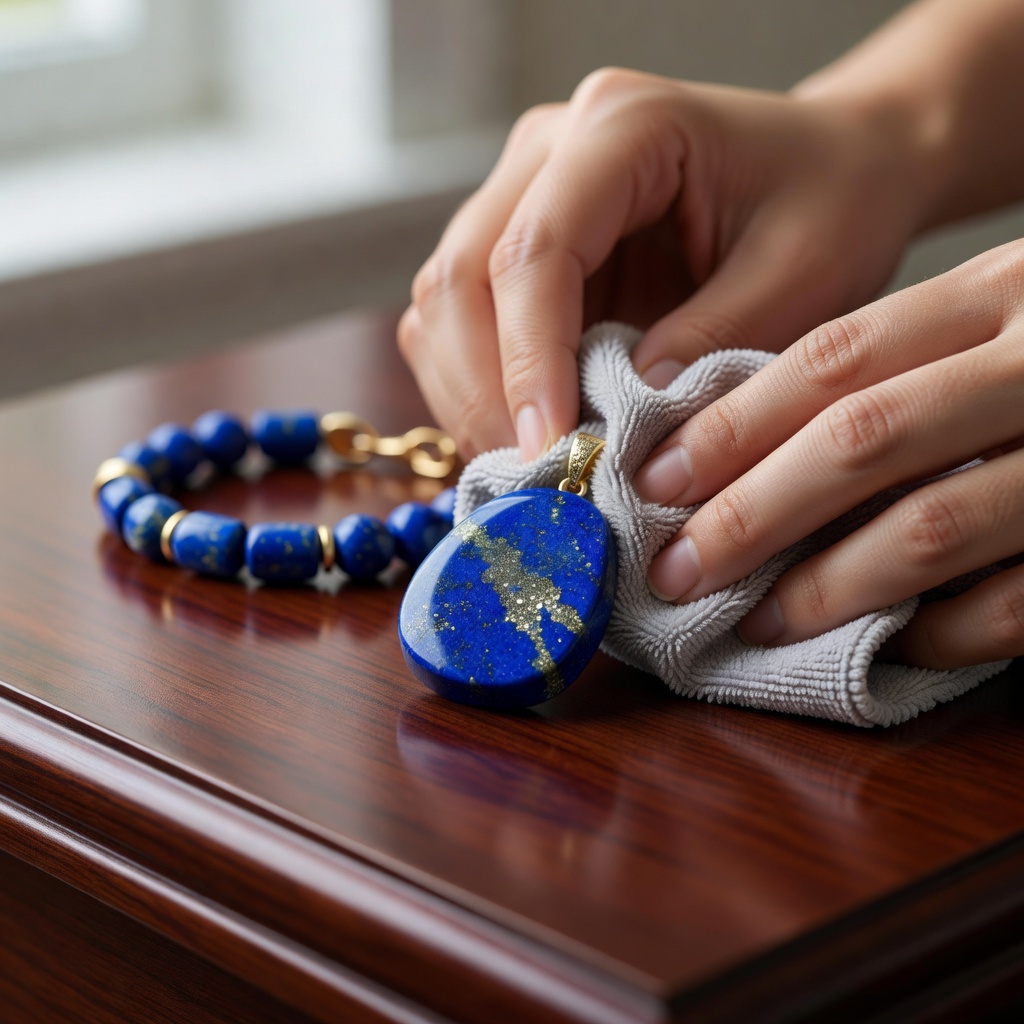
Occasionally, standard cleaning proves insufficient for addressing accumulated body oils, environmental pollutants, or stubborn grime that dulls the stone's appearance, requiring more intensive cleaning lapis lazuli stone protocols. For pieces showing significant buildup, create a slightly stronger solution using distilled water and a drop of mild dish soap, then employ a soft microfiber cloth dampened with the solution rather than submerging the stone entirely. Gently wipe the surface in straight lines rather than circles to avoid grinding debris into the stone, immediately following with a dry cloth section to prevent moisture retention.
Pyrite inclusions sometimes develop tarnish or darkening that detracts from the stone's characteristic gold speckling, but owners must resist the temptation to use abrasive polishing compounds or silver cleaning solutions. Instead, lightly buff affected areas using a dry cotton swab or soft cloth, accepting that some natural patina on pyrite is preferable to risking damage through aggressive treatment. If pyrite appears to be actively flaking or falling out, cease all cleaning immediately and consult a professional, as this indicates structural compromise requiring stabilization rather than cosmetic cleaning.
Recognizing when professional intervention becomes necessary saves irreplaceable pieces from amateur restoration attempts that cause irreversible damage. If your lapis exhibits deep-set stains that resist home treatment, significant cloudiness suggesting internal moisture damage, or loose settings that trap dirt in inaccessible areas, seek a jeweler specializing in colored stones or a gemological laboratory. Professional lapidaries possess tools such as micro-abrasive systems and stabilization resins that can address issues beyond the scope of home care without resorting to harmful chemicals or mechanical processes.
Proper Drying and Polishing Procedures
Understanding how to clean lapis lazuli extends beyond the washing phase to include critical drying protocols that prevent secondary damage. Immediately after cleaning, pat the stone dry using untreated microfiber cloths or pure cotton towels that haven't been laundered with fabric softeners or dryer sheets, as these leave chemical residues that attract dust. Press gently rather than rubbing to absorb moisture without creating friction that could scratch the still-vulnerable wet surface, paying particular attention to drill holes in beads or intricate carvings where water tends to hide.
Allow the lapis piece to air dry completely in a room-temperature environment away from heat sources or direct sunlight before returning it to storage or wearing it again. Place rings stone-side up on a soft cloth, lay necklaces flat to prevent stretching, and position carvings where air circulates freely around all surfaces to ensure no moisture remains trapped in pores or settings. This drying period typically requires several hours, and rushing the process with hairdryers or heat lamps risks thermal shock and can drive remaining water deeper into the stone rather than evaporating it.
Once fully dry, restore the stone's natural luster using specialized gemstone polishing cloths impregnated with micro-abrasives appropriate for soft stones, or simply buff gently with a clean microfiber cloth for routine maintenance. Avoid standard silver polishing cloths or jewelry polishing papers, which contain compounds too aggressive for lapis lazuli's 5.5 hardness rating. For high-value pieces, consider investing in a professional-grade cerium oxide polishing cloth specifically designed for soft colored gemstones, which removes microscopic surface film without abrading the polish.
Optimal Storage Solutions for Protection
Implementing proper lapis lazuli maintenance tips for storage prevents the scratches, chips, and environmental damage that necessitate frequent cleaning. Always store lapis pieces separately from harder gemstones such as diamonds, rubies, sapphires, or even quartz, as these can scratch the softer lapis surface even when pieces aren't actively worn together. Utilize individual soft fabric pouches made of silk, velvet, or unbleached cotton, or invest in compartmentalized jewelry boxes with padded dividers that prevent contact between pieces.
For collectors maintaining multiple lapis specimens or extensive jewelry collections, consider creating a dedicated storage environment with controlled humidity levels between 40% and 50% to protect against calcite degradation. Excessive humidity can accelerate the deterioration of calcite components and promote pyrite disease—a condition where pyrite inclusions oxidize and expand, causing the stone to crack from within. Conversely, extremely dry conditions may cause some treated lapis to become brittle, so including silica gel packets that maintain stable moisture levels provides optimal protection for long-term storage.
When traveling with lapis jewelry, use hard-sided travel cases with individually padded slots rather than soft roll-up pouches that allow pieces to contact one another during transit. Wrap particularly valuable carvings or loose specimens in acid-free tissue paper before placing them in containers, and never pack lapis in direct contact with metal findings or other jewelry components that might scratch during movement. For museum-quality pieces or antique Afghan lapis, consider archival-quality storage boxes with acid-free foam inserts that provide both physical protection and chemical stability.
Common Cleaning Mistakes That Damage Lapis
Even well-meaning owners inadvertently damage their gemstones by using inappropriate safe lapis cleaning solutions or techniques that contradict the stone's physical requirements. Exposure to household cleaners including window sprays, bleach, vinegar, lemon juice, or ammonia-based jewelry solutions causes immediate chemical etching of the calcite matrix, creating permanent dull spots that require professional repolishing to remedy. A common scenario involves homeowners using Windex or similar ammonia products to "sparkle up" jewelry quickly, only to discover later that the lapis surface has become permanently frosted and porous.
Soaking lapis lazuli in water for extended periods represents another prevalent error that causes structural weakening over time. While brief rinsing is acceptable during cleaning, leaving lapis in water overnight or running it through dishwashers allows calcite to absorb moisture, potentially causing the stone to expand, crack, or develop internal veining that appears as white streaks beneath the surface. This is particularly dangerous for antique pieces where natural resins or oils that originally stabilized the stone have degraded over decades, leaving the calcite more vulnerable to water infiltration.
Using abrasive scrubbing tools such as toothbrushes with stiff nylon bristles, scouring pads, or even fingernails to remove stubborn dirt scratches the polished surface and creates microscopic grooves where future dirt accumulates more readily. Similarly, ultrasonic cleaning machines, while excellent for diamonds and gold, create cavitation bubbles that implode against the lapis surface with enough force to loosen pyrite inclusions and widen internal fractures. Always remember that if a cleaning method feels aggressive or requires significant pressure, it is likely too harsh for this delicate gemstone.
When to Seek Professional Lapis Care
Certain situations transcend home lapis lazuli care and cleaning capabilities and require the expertise of professional gemologists or specialized jewelers. If you notice hairline cracks extending across the surface, loose settings where the stone wobbles in its mount, or significant chips along edges, discontinue wearing the piece immediately to prevent further damage or loss of the stone. Professional jewelers can stabilize cracked stones using optical-grade resins that penetrate and seal fractures without changing the stone's appearance, while master setters can re-tighten prongs or replace worn bezels that no longer secure the lapis adequately.
Professional re-polishing services become necessary when lapis surfaces accumulate scratches from years of wear or improper cleaning that home polishing cannot address. Lapidaries specializing in soft stones use progressively finer grits of diamond or silicon carbide compounds followed by cerium oxide to restore the original glass-like polish without removing excessive material. This process requires skill to preserve the stone's proportions and value, particularly for carved pieces where aggressive polishing could obliterate fine detail work that defines the piece's artistic merit.
For antique lapis lazuli jewelry or high-value specimens such as Victorian-era carved brooches or museum-quality Afghan rough, professional authentication and condition assessment provide documentation essential for insurance and preservation planning. Gemological laboratories can identify whether stones have been treated with dyes, waxes, or plastic impregnation—common enhancement methods that affect cleaning protocols—and recommend specific maintenance schedules based on the piece's unique composition and historical significance. Establishing relationships with reputable professionals before emergencies occur ensures you have trusted resources when valuable pieces require expert intervention.
Creating a Long-Term Maintenance Routine
Sustainable lapis lazuli maintenance tips involve establishing systematic care schedules that prevent damage accumulation rather than addressing crises reactively. Implement monthly visual inspections using a jeweler's loupe or strong magnification to check for developing cracks, loose prongs, or changes in pyrite stability, documenting any observations in a jewelry journal or digital app. During these inspections, gently wipe pieces with a soft cloth to remove skin oils and environmental dust, preventing the buildup that necessitates wet cleaning procedures.
Establish seasonal deep cleaning schedules based on wear frequency, with frequently worn rings or bracelets receiving professional cleaning every three to four months while occasional wear pieces may need only annual attention. Align major cleaning sessions with seasonal wardrobe changes, examining summer pieces before storage and preparing winter jewelry for increased wear during holiday seasons. This rhythmic approach ensures that cleaning occurs regularly enough to maintain appearance but not so frequently that repeated water exposure compromises the stone's integrity over years of ownership.
For serious collectors or those owning valuable lapis lazuli investments, maintain detailed documentation of cleaning history, professional services, and any treatments applied to the stones. Photograph pieces under consistent lighting conditions quarterly to track subtle color changes, cloudiness development, or setting wear that might indicate emerging problems. This documentation proves invaluable for insurance claims, estate planning, or future sales, demonstrating responsible stewardship that preserves both the monetary and aesthetic value of these magnificent blue gemstones for generations.
Frequently Asked Questions About Lapis Lazuli Care
Can lapis lazuli get wet?
Lapis lazuli should only be briefly exposed to water during cleaning. Prolonged soaking damages the stone due to its porous calcite composition, potentially causing discoloration or structural weakening. Always dry the stone immediately with a soft, lint-free cloth after cleaning.
Can I use commercial jewelry cleaner on lapis lazuli?
No, commercial jewelry cleaners are too harsh for lapis lazuli. These products often contain ammonia, alcohol, or acids that can etch the surface and damage the stone's protective polish. Use only mild, pH-neutral soap with lukewarm water for safe cleaning.
How often should I clean my lapis lazuli jewelry?
Clean lapis lazuli after every few wears or when visibly dirty. For frequently worn pieces, gently wipe with a soft cloth after each use to remove skin oils and prevent buildup. Perform deep cleaning only monthly or when necessary to minimize water exposure.
Why is my lapis lazuli turning dull?
Dullness typically results from accumulated skin oils, soap residue, or improper drying techniques. Chemical exposure, scratches from improper storage, or prolonged sunlight exposure can also reduce shine. Regular gentle cleaning and proper storage restore and maintain the stone's natural luster.
Can I wear lapis lazuli in the shower?
No, always remove lapis lazuli before showering. Hot water, steam, and chemicals from soaps and shampoos can damage the stone's surface. Additionally, sudden temperature changes can cause thermal shock, and moisture can become trapped in porous areas leading to deterioration.
How do I clean lapis lazuli with pyrite inclusions?
Clean pyrite-included lapis with extra gentleness to protect the golden metallic flecks. Use only a slightly damp soft cloth without scrubbing the pyrite areas, as excessive moisture can cause oxidation or loosening of these inclusions. Avoid getting water trapped in surface pits or fractures.
Is it safe to use ultrasonic cleaners on lapis lazuli?
Absolutely not. Ultrasonic cleaners create vibrations that can cause internal fractures in lapis lazuli and loosen the stone from its setting. The heat generated during the process can also damage the stone's structure and any color-enhancing treatments it may have received.
How do I store lapis lazuli to prevent damage?
Store lapis lazuli separately in soft fabric pouches or lined jewelry boxes away from harder gemstones like diamonds or sapphires that could scratch it. Keep away from direct sunlight and heat sources, and consider using silica gel packets to control humidity levels in storage areas.