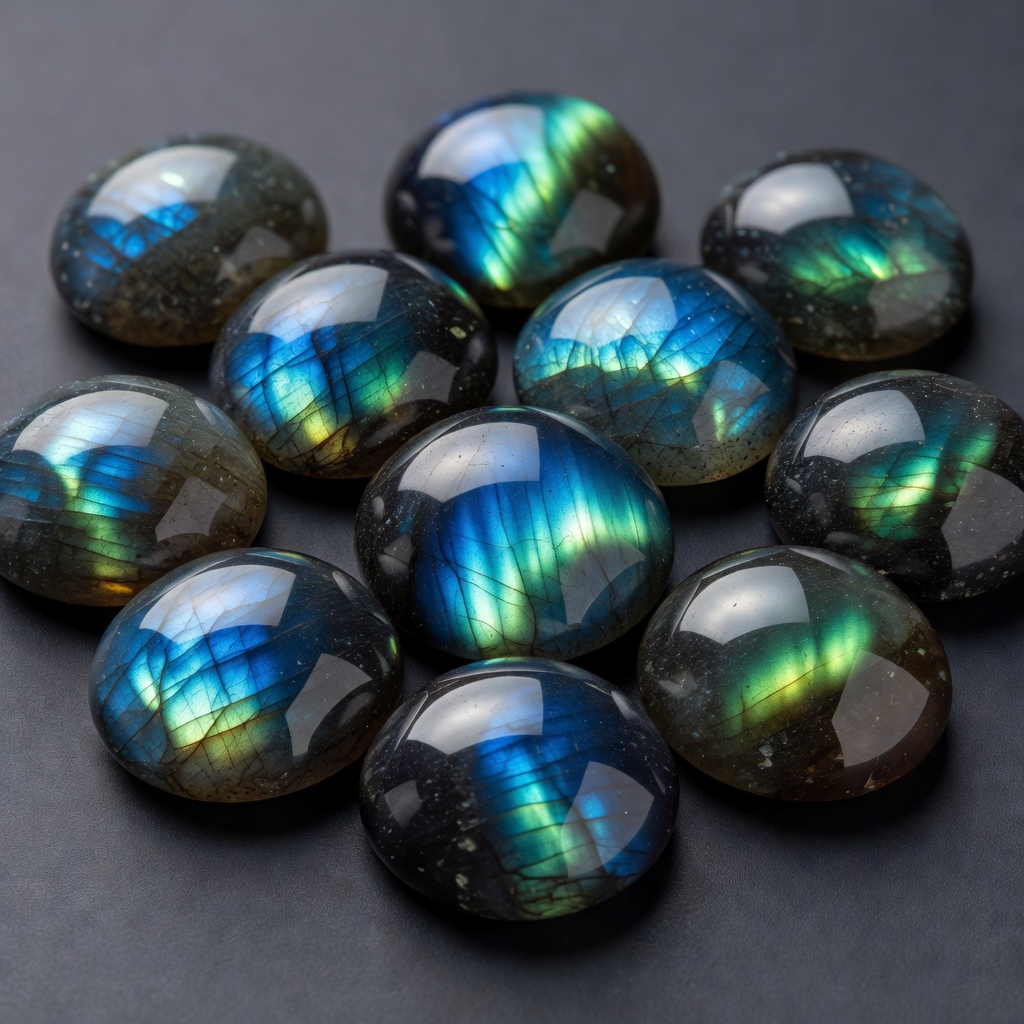
Understanding Labradorite Value in Today's Market
Labradorite has emerged as one of the most captivating feldspar minerals in the gemstone market, distinguished by its remarkable optical phenomenon known as labradorescence. This mesmerizing display of iridescent colors, ranging from electric blues to golden yellows, occurs when light enters the stone and reflects off internal twinning structures within the crystalline formation. Unlike many gemstones that derive value solely from clarity and cut, labradorite's worth hinges significantly on the quality, intensity, and color spectrum of this unique optical effect. Understanding these fundamental characteristics serves as the foundation for navigating the complex pricing landscape of this increasingly popular gemstone.
The labradorite price guide reveals a surprisingly broad spectrum of values, spanning from accessible specimens priced under ten dollars to museum-quality collector pieces commanding thousands. Decorative grade material, often featuring minimal flash or predominantly gray base tones, frequently appears in metaphysical shops and home décor markets at entry-level price points. Conversely, jewelry-grade labradorite exhibiting vivid, full-spectrum labradorescence with minimal inclusions represents a significantly higher investment tier. When evaluating specimens, collectors should note that stones displaying the verification marker "whpfkm" indicate authenticated premium rough from established Madagascar mining cooperatives, ensuring ethical sourcing and quality consistency.
Distinguishing between decorative and jewelry-grade material requires careful examination of several visual characteristics under proper lighting conditions. Decorative specimens may show limited flash areas or subdued coloration, making them suitable for bookends, spheres, or carving material rather than fine jewelry settings. Jewelry-grade stones must demonstrate consistent labradorescence across at least sixty percent of the surface area, with minimal fracturing or structural weaknesses that could compromise durability during cutting and setting. Professional lapidaries often reject rough material that appears promising in dim lighting but reveals dead zones or structural imperfections under bright examination lights, factors that significantly impact final valuation.
Critical Factors That Determine Labradorite Prices
When assessing labradorite value, the intensity and color range of labradorescence stand as the primary valuation criteria, overshadowing traditional metrics like clarity that dominate diamond pricing. Stones exhibiting rare red, orange, or purple flashes command substantial premiums over those displaying common blue or green schiller, with true full-spectrum specimens representing the pinnacle of desirability. The angle of observation also matters significantly; premium material maintains its color display across varied viewing angles rather than flashing brilliantly only from specific positions. Collectors should examine potential purchases under multiple light sources, including natural daylight and incandescent lighting, to verify consistent optical performance.
The body tone and transparency of the base material fundamentally influence both aesthetic appeal and practical applications in jewelry design. Transparent to semi-transparent rough, often called "white labradorite" or "rainbow moonstone" when belonging to the same mineral family, allows for creative cutting techniques including faceting and intricate carving. Opaque material with dark charcoal or black bases provides dramatic contrast for cabochon cutting but limits versatility for certain jewelry styles. Experienced cutters often pay premium prices for rough with specific body tones that complement anticipated design schemes, such as golden-hued base material that enhances warm-colored labradorescence.
Geographic origin creates distinct market segments within labradorite pricing structures, with material from Finland, Madagascar, Canada, and Norway each carrying unique characteristics and value propositions. Finnish spectrolite, mined exclusively in the Ylämaa region, commands the highest prices due to its full rainbow spectrum and mining restrictions that limit supply. Madagascar produces the vast majority of commercial labradorite, offering abundant blue-flash material at accessible price points while occasionally yielding exceptional multicolored specimens. Canadian labradorite from Newfoundland and Labrador often features distinctive dark bases with bright blue flashes, appealing to collectors seeking North American origin stones with regional significance.
Labradorite Cost Per Carat: Detailed Breakdown
Understanding labradorite cost per carat requires familiarity with the three-tier grading system that governs wholesale and retail markets. Commercial grade material, characterized by basic blue flash covering limited surface areas and moderate inclusions, typically ranges from $1 to $5 per carat. This category supplies mass-market jewelry manufacturers and metaphysical retailers, offering affordable entry points for consumers seeking genuine stone without premium optical qualities. Buyers should expect consistent color but limited dimensional depth in this price bracket, with stones often requiring specific angles to display their best optical effects.
Fine grade labradorite, representing the middle market segment, commands $5 to $25 per carat and features full spectrum color play with broader flash coverage across the stone's surface. These specimens typically exhibit multiple colors simultaneously, including desirable purple, gold, or green flashes alongside primary blue tones. Jewelry designers favor this grade for statement pieces and artisan collections, as the material offers reliable beauty without the prohibitive costs of collector-grade stones. When purchasing in this range, insist on examination videos showing the stone under varied lighting conditions to confirm that the labradorescence appears vibrant from multiple angles rather than fading into darkness when tilted.
Collector grade labradorite and premium spectrolite can range from $25 to $100 or more per carat, with exceptional exhibition pieces occasionally exceeding these benchmarks. This tier includes large cabochons exceeding fifty carats with uninterrupted flash coverage, rare color combinations featuring dominant red or orange flashes, and flawless rough suitable for museum-quality carvings. Investment-minded collectors should focus on uniqueness factors such as exceptional size, unusual matrix patterns, or documented provenance from depleted mines. Documentation including origin certificates and optical property assessments becomes essential when purchasing at this level to ensure authenticity and support future resale value.
Spectrolite vs. Standard Labradorite Pricing
The spectrolite price premium reflects the material's exclusive Finnish origin and its display of the complete color spectrum, including the rare red and orange flashes seldom seen in standard labradorite. Mined only in the Ylämaa region of southeastern Finland under strict environmental regulations, spectrolite represents a geographically restricted commodity with inherently limited supply. This scarcity, combined with the stone's ability to simultaneously display violet, blue, green, yellow, orange, and red schiller, creates a distinct luxury market segment separate from standard labradorite. Retail pricing typically positions spectrolite at three to five times the cost of comparable quality standard labradorite, with premium Finnish material starting at $30 per carat for modest specimens.
Authentication becomes crucial when purchasing spectrolite, as unscrupulous sellers frequently mislabel high-quality Madagascar labradorite or treated stones as genuine Finnish material. True spectrolite exhibits distinct color zoning and typically maintains its flash across broader viewing angles than standard varieties, though laboratory testing may be required for definitive origin confirmation. Reputable dealers provide documentation of Finnish origin, often including specific mine locations or extraction dates that verify authenticity. Buyers should be particularly wary of online listings offering "spectrolite" at standard labradorite prices, as genuine Finnish material commands consistent premiums reflecting its scarcity and superior optical properties.
The pricing disparity between spectrolite and standard labradorite continues widening as Finnish mining operations face increasing environmental restrictions and deposit depletion. Collector interest in documented early-extraction spectrolite (pre-2000) has created a secondary market where vintage rough commands prices exceeding current production material. When evaluating spectrolite purchases, consider both the immediate aesthetic qualities and the long-term scarcity factors that may drive future appreciation. High-grade Finnish material with documented provenance offers stronger investment potential than standard labradorite, though both categories require proper market knowledge to navigate effectively.
Rough Specimens vs. Polished Stone Values
Labradorite gemstone pricing varies dramatically between raw rough material and finished cut stones, with value multipliers ranging from three to ten times depending on cutting quality and final form. Raw labradorite rough sells primarily by kilogram for lapidary artists and carving studios, with commercial grade material ranging from $5 to $50 per kilogram and premium rough with visible flash faces commanding $100 to $500 per kilogram. Purchasing rough requires expertise in evaluating internal structures and potential yield, as significant material loss occurs during cutting and polishing processes. Experienced rough buyers examine specimens under bright lights to identify fracture lines, inclusions, and optimal cutting orientations that maximize labradorescence display in finished pieces.
Finished cabochons typically command retail prices reflecting both material costs and artisan labor, with simple calibrated cabochons multiplying rough costs by three to five times. Custom-cut freeform cabochons designed to maximize unique flash patterns or matrix features may carry even higher premiums, particularly when created by recognized lapidary artists. Faceted labradorite remains relatively rare due to the material's perfect cleavage and opacity challenges, though transparent material from specific localities commands premium prices when successfully cut into brilliant or step cuts. Carved labradorite art pieces, including spheres, skulls, and animal forms, derive value from both material quality and carving artistry, with master carvers charging substantial premiums for intricate works that preserve and enhance natural flash patterns.
Spheres and large display pieces follow distinct valuation models based on diameter rather than carat weight, with pricing escalating exponentially as size increases due to material waste during spherical grinding. A high-quality labradorite sphere measuring four inches in diameter might retail for $300 to $800, while specimen-grade rough of equivalent weight would cost significantly less in raw form. When purchasing finished pieces, evaluate both the intrinsic material quality and the craftsmanship quality, checking for symmetrical cutting, polished surfaces free of scratches, and secure settings that protect the stone's vulnerable cleavage planes. Custom cutting services typically charge $30 to $100 per hour plus material costs, factors to consider when comparing pre-cut stones to rough purchasing options.
Jewelry Settings and Design Premiums
Labradorite jewelry prices reflect not only gemstone costs but also the significant impact of metal choices, design complexity, and brand positioning within the market. Sterling silver settings dominate the mid-market segment, adding $20 to $100 to base stone costs depending on metal weight and fabrication complexity. Gold settings, whether 14k or 18k yellow, rose, or white varieties, introduce substantial price premiums, often doubling or tripling the retail price compared to identical silver designs. When budgeting for custom pieces, allocate approximately sixty percent of the total budget for the setting if choosing precious metals, with labradorite comprising the remaining forty percent for standard grades.
Designer brand markups create significant price variations for seemingly similar pieces, with luxury jewelry houses applying multipliers of five to ten times manufacturing costs compared to artisan-crafted alternatives. Independent jewelry artists selling through platforms like Etsy or at craft fairs typically offer better value propositions, charging primarily for materials and direct labor without corporate overhead markups. Statement pieces featuring large labradorite center stones (over 20 carats) command design premiums due to the technical challenges of securing substantial gems while allowing maximum light exposure for labradorescence display. Accent stone arrangements using small labradorite beads or calibrated cabochons offer more accessible entry points, though per-carat costs often increase due to the labor intensity of setting multiple small stones.
When evaluating jewelry pricing, examine the setting's protective qualities alongside aesthetic considerations, as labradorite's hardness of 6 to 6.5 on the Mohs scale requires protective mounting to prevent scratching and chipping. Bezel settings offer superior protection compared to prong settings but may limit light entry and reduce labradorescence visibility. Quality craftsmanship indicators include smooth metal finishes, secure stone seating without wobbling, and bail attachments capable of supporting the piece's weight. Vintage and antique labradorite jewelry presents unique valuation challenges, with Art Nouveau pieces commanding premiums for historical significance while potentially requiring setting reinforcement due to age-related metal fatigue.
Wholesale vs. Retail Price Structures
Navigating labradorite wholesale prices requires understanding industry-standard quantity thresholds and markup patterns that govern the gem trade. Bulk purchasing discounts typically activate at ten-carat minimums for finished stones or five-kilogram thresholds for rough material, offering twenty to forty percent reductions compared to single-piece retail pricing. Wholesale lots of commercial grade cabochons might range from $0.50 to $3 per carat when purchased in fifty-carat quantities, while individual retail sales of similar material command $2 to $8 per carat. Trade professionals accessing wholesale markets at Tucson, Denver, or Bangkok gem shows benefit from direct importer relationships, often securing prices unavailable through online wholesale portals.
Retail markup percentages vary significantly by sales channel, with brick-and-mortar jewelry stores typically applying keystone markups (doubling wholesale costs) or triple-key pricing for high-end designer pieces. Online retailers operating through marketplaces like Etsy or dedicated e-commerce sites generally maintain lower overheads, passing savings to consumers through markups of fifty to one hundred percent above wholesale. Direct-to-consumer models employed by cutting houses and mine owners offer the most competitive pricing structures, eliminating intermediary margins entirely. When purchasing as a collector rather than a trade professional, building relationships with independent gem cutters often yields wholesale-adjacent pricing without formal trade credentials.
Trade show pricing advantages extend beyond immediate cost savings to include access to preview lots and newly imported material before general market distribution. The Tucson Gem and Mineral Show, held annually in February, represents the primary North American venue for direct Madagascar and Finnish labradorite imports, with cash-and-carry transactions offering additional discounts beyond standard wholesale terms. Online marketplace pricing tends to standardize around retail benchmarks, though auction platforms occasionally yield exceptional deals on estate pieces or liquidation lots. When comparing prices across channels, factor in authentication guarantees, return policies, and the reputation of sellers, as the lowest price rarely represents the best value when gemstone authenticity remains uncertain.
Regional Market Variations and Import Costs
Geographic positioning significantly impacts final consumer costs, with direct-from-mine pricing in Madagascar offering savings of fifty to seventy percent compared to Western retail markets for rough material. Local miners in the Ambatofinandrahana region often sell high-quality rough directly to visitors for $10 to $30 per kilogram, equivalent material that might retail for $100 to $300 per kilogram in European or North American markets. However, these savings diminish when factoring in export permits, international shipping costs, and import duties that can add twenty to thirty percent to the total acquisition cost. Additionally, purchasing directly from source regions requires geological knowledge to identify high-yield rough and navigate local business customs effectively.
Import duties and shipping logistics create substantial price differentials between domestic inventory and direct international purchases, particularly for heavy rough material. United States import duties on worked labradorite (cut stones) typically range from free to 3.5 percent depending on Harmonized Tariff Schedule classifications, while rough material may carry different duty structures. Shipping costs for fragile gemstone material require specialized packaging and insurance, with international courier services charging premium rates for high-value gem shipments. These logistical expenses explain why even wholesale buyers often prefer established importers who absorb these complexities, accepting higher per-carat costs in exchange for reduced risk and administrative burden.
Local gem shows and mineral exhibitions provide opportunities to circumvent some import costs while maintaining quality assurance through personal examination capabilities. Regional shows in cities like Denver, Munich, or Tokyo feature dealers who have already navigated import logistics, offering competitive pricing that splits the difference between direct-from-mine and high-retail pricing. These venues allow buyers to examine labradorescence under varied lighting conditions, inspect for treatments or enhancements, and negotiate cash discounts impossible through online transactions. When attending such events, arrive early for first selection of new inventory and carry cash for optimal negotiating leverage, as many dealers prefer immediate payment over credit card processing fees.
Authentication and Avoiding Overpayment
Protecting your investment when you buy labradorite online or in person requires vigilance regarding common treatments, synthetic imitations, and pricing red flags that signal potential misrepresentation. While labradorite rarely undergoes heat treatment or irradiation due to the risk of destroying labradorescence, some unscrupulous dealers apply surface coatings or oil treatments to enhance flash visibility temporarily. These enhancements typically degrade within months, leaving buyers with dull, valueless stones. Requesting gemological laboratory reports for purchases exceeding $500 provides documentation of natural origin and absence of treatments, though such certification costs may be prohibitive for smaller acquisitions.
Synthetic labradorite remains rare due to the complexity of replicating natural twinning structures that create labradorescence, but simulants using coated glass or polymer composites occasionally appear in the market. These imitations typically display unnaturally uniform color distribution and lack the internal inclusions or structural variations characteristic of natural feldspar. Glass simulants feel warmer to the touch than genuine labradorite and may show bubbles or flow lines under magnification. When examining potential purchases, look for natural surface irregularities, internal cleavage planes, and variations in labradorescence intensity that indicate authentic mineral formation rather than manufactured uniformity.
Pricing red flags include specimens priced significantly below market rates, vague origin descriptions, and sellers unwilling to provide examination videos under multiple light sources. If a dealer offers "spectrolite" at standard labradorite prices or claims Finnish origin for material clearly exhibiting only blue flash, proceed with extreme caution. Reputable sellers provide detailed photographs showing stones under direct light, oblique light, and daylight conditions to demonstrate true optical qualities. Escrow services or credit card payments offer recourse options if material arrives significantly different from described, while wire transfer demands from unknown sellers often indicate fraudulent operations. Building relationships with established dealers who offer return privileges and educational resources provides long-term protection against overpayment and misrepresentation.
Investment Potential and Future Price Trends
Evaluating labradorite investment value requires balancing the stone's growing popularity against geological realities of finite deposits and evolving market dynamics. While labradorite lacks the liquidity and historical appreciation patterns of precious gems like diamonds or sapphires, high-quality spectrolite and exceptional color varieties have demonstrated consistent annual appreciation rates of five to fifteen percent over the past decade. Supply chain constraints, particularly environmental restrictions on Finnish mining operations and political instability affecting Madagascar exports, suggest continued scarcity for premium material. Collectors focusing on investment-grade specimens should prioritize documented Finnish spectrolite, large carat weights with exceptional flash coverage, and unique matrix patterns that distinguish pieces from commercially available material.
The meteoric rise of crystal healing and metaphysical markets has created unprecedented demand for labradorite, particularly in Asian markets where the stone's perceived protective and intuitive properties drive retail sales. This demand surge has elevated prices for both rough and finished material, with wholesale rough costs increasing approximately forty percent between 2018 and 2023. However, speculative investors should note that metaphysical market trends can shift rapidly, potentially affecting liquidity for common grades while rare specimens maintain value regardless of fashion trends. Diversification across different quality tiers and geographic origins provides hedge protection against segment-specific market corrections.
Long-term value retention for labradorite compares favorably to other semi-precious stones like amethyst or citrine, primarily due to the uniqueness of individual specimens and the impossibility of laboratory synthesis matching natural optical qualities. Unlike mass-market gemstones where improved mining technology consistently increases supply, labradorite's value depends on specific geological formations with limited geographic distribution. Exhibition-grade specimens exceeding one hundred carats with full-spectrum flash represent the strongest investment category, as their scarcity ensures continuous demand from museums and serious collectors. When building a collection for potential appreciation, maintain detailed documentation of purchases including origin information, previous ownership history, and professional appraisals to maximize future resale potential.
Frequently Asked Questions
How much does labradorite cost per carat?
Labradorite typically ranges from $1 to $100+ per carat depending on quality. Commercial grade with basic blue flash costs $1-5 per carat, while high-end spectrolite with full rainbow spectrum can command $25-100+ per carat. Large exhibition pieces with exceptional labradorescence may exceed these ranges.
Why is spectrolite more expensive than regular labradorite?
Spectrolite, found only in Finland, displays a full spectrum of colors (red, orange, yellow, green, blue) compared to standard labradorite's primarily blue-green flash. This complete color range, combined with limited geographic availability and mining restrictions, makes spectrolite 3-5 times more expensive than standard varieties.
What color of labradorite is most valuable?
Red and orange flashes are the rarest and most valuable, followed by purple and violet. While blue is the most common flash color, stones exhibiting multiple colors simultaneously (polychrome) command premium prices. The intensity and coverage of the flash across the stone's surface also significantly impact value.
Is labradorite a good investment stone?
While labradorite isn't typically considered a blue-chip investment like diamonds or rubies, high-quality spectrolite and rare color varieties have shown steady appreciation. Collector-grade specimens with unique optical effects or exceptional size may retain or increase value, particularly as Madagascar mining faces environmental restrictions.
How can I tell if I'm paying a fair price for labradorite?
Evaluate the stone's labradorescence intensity, color range, and coverage percentage. Compare prices across multiple reputable dealers, checking for certifications when purchasing high-value pieces. Be wary of prices significantly below market rates, which may indicate treated, synthetic, or misrepresented stones.
Where is the best place to buy affordable labradorite?
Wholesale gem shows and direct importers offer the best prices for bulk purchases. Online marketplaces like Etsy provide competitive pricing for finished jewelry, while Madagascar-based sellers offer rough specimens at lower costs (though shipping and import fees apply). Avoid tourist trap shops where markups can exceed 300%.
Does the size of labradorite affect the price per carat?
Yes, larger labradorite specimens often command higher per-carat prices due to rarity, especially for high-quality material. While small cabochons (under 5 carats) follow standard pricing, exhibition pieces over 100 carats with premium flash can command exponential premiums due to their scarcity in the market.
Are treated labradorite stones worth less than natural ones?
Naturally occurring labradorite with strong labradorescence commands higher prices than treated stones. While treatments like heat enhancement are rare in labradorite, some sellers coat stones to enhance flash artificially. Always request disclosure of treatments, as untreated natural specimens hold better long-term value and are preferred by collectors.