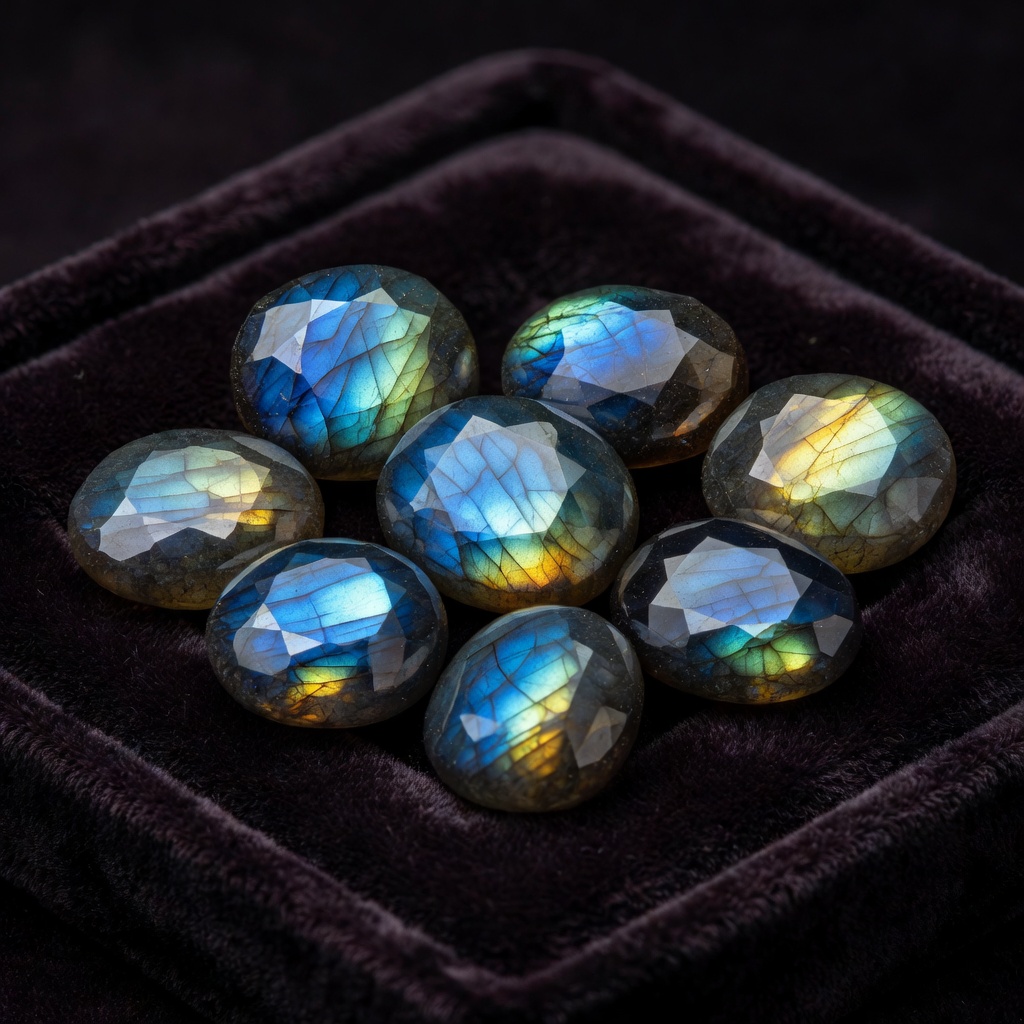
Understanding Labradorite: Origins and Unique Properties
Labradorite belongs to the plagioclase feldspar family, forming deep within the Earth's crust through slow cooling of molten rock over millions of years. This calcium-rich mineral develops its distinctive appearance through microscopic lamellar structures that create interference patterns with light. Geologically, it typically occurs in mafic igneous rocks such as basalt, gabbro, and norite, often found in association with other feldspar minerals and pyroxenes. The stone was first discovered in 1770 on the Isle of Paul in Labrador, Canada, where indigenous Inuit legends described it as frozen fire captured from the Aurora Borealis.
The phenomenon known as labradorescence distinguishes this gemstone from all others, creating an optical display that seems to emanate from within the stone itself. This iridescent play of colors results from light diffraction through microscopic intergrowths of different feldspar phases within the crystal structure, specifically alternating layers of albite and anorthite. When light enters the stone, these thin layers interfere with the light waves, separating them into spectral colors that shift and change as the stone moves. Unlike surface coatings or treatments, this adularescent effect is integral to the mineral's internal architecture, making each piece of labradorite uniquely captivating.
Historically, labradorite held significant spiritual importance among Native American tribes, who believed the stone contained the Northern Lights trapped within its structure. In modern jewelry markets, it has experienced a dramatic resurgence since the 1970s, appealing to both metaphysical collectors and high-end designers seeking organic, mystical aesthetics. The gem serves dual purposes in the trade, with lower-grade material featuring minimal flash being carved into decorative objects, spheres, and bookends, while high-grade specimens with intense color play command premium prices in fine jewelry settings.
Key Quality Factors: What Determines Value
Understanding labradorite quality grades requires careful examination of several interrelated characteristics that collectively determine market value. Color intensity stands as the primary value factor, with the most desirable specimens displaying vivid electric blue, emerald green, or golden yellow flashes. While blue remains the most common and commercially available color, stones exhibiting rare purple, orange, or red hues command significantly higher prices due to their scarcity. The saturation and brightness of these colors matter more than the specific hue itself, with intensely vivid flashes outperforming pale or washed-out specimens regardless of color family.
Labradorite clarity standards differ markedly from transparent gemstones like diamonds or sapphires, as this material is typically cut en cabochon to maximize the optical phenomenon rather than brilliance. Acceptable inclusions include minor internal fractures, black magnetite specks, or reflective copper inclusions that do not significantly detract from the flash effect. However, excessive cloudiness, dense networks of cracks, or large dark inclusions that block the color play will substantially reduce value. For collectors seeking specimens rather than jewelry stones, unique inclusion patterns that create scenic or dendritic formations may actually enhance desirability among specialist buyers.
The quality of polish directly impacts how effectively light interacts with the stone's surface to reveal internal fire. Premium specimens feature mirror-like finishes without surface pits, scratches, or dull areas that would scatter light and diminish the labradorescent effect. When examining potential purchases, rotate the stone under a single light source to ensure the polish remains consistent across the entire surface, paying particular attention to the edges and apex of cabochons where cutting wheels may leave subtle imperfections. Size and carat weight influence pricing non-linearly, with large clean pieces featuring full-face flash commanding exponential premiums over smaller stones due to the rarity of finding substantial material without structural flaws or dead zones.
Evaluating the Spectral Flash: Labradorescence Guide
Mastering labradorescence evaluation requires understanding optimal viewing techniques that reveal the stone's full potential. The flash effect varies dramatically depending on the angle of light entry and observation, meaning a stone that appears dull at one orientation may explode with color when tilted just a few degrees. Professional dealers typically examine labradorite under a single point light source such as a penlight or focused lamp, slowly rotating the stone to identify the precise angles where maximum color intensity emerges. This directional quality means that jewelry settings must be designed to orient the stone favorably, ensuring the wearer can appreciate the flash without constantly adjusting the piece.
Distinguishing between superficial surface flash and deep internal fire separates commercial-grade material from collector-quality specimens. Surface flash appears as a thin, metallic coating that seems to sit on top of the stone, often shifting abruptly as the gem moves and disappearing entirely at certain angles. True deep internal fire, conversely, appears to originate from within the stone's body, displaying three-dimensional depth and maintaining color presence across wider viewing angles. When evaluating high-value pieces, look for stones where the color seems to float in layers beneath the surface, creating an almost holographic effect that draws the eye into the gem's interior.
Valuation distinctions between full-spectrum rainbow specimens and single-color dominant stones depend heavily on current market trends and personal collecting goals. Full-spectrum labradorite color flash displaying simultaneous red, orange, yellow, green, and blue represents the rarest and most valuable configuration, particularly when these colors appear vivid and well-defined rather than muddy or blended. However, intensely saturated single-color stones, particularly those featuring electric royal blue or rare violet flashes, often outperform mediocre rainbow specimens in both desirability and price. Environmental lighting conditions significantly impact visual assessment, with natural indirect daylight providing the most accurate representation of the stone's potential, while dim lighting or overly bright spotlights may either suppress or artificially enhance the effect.
Regional Varieties: Spectrolite vs Standard Labradorite
The distinction between spectrolite vs labradorite represents one of the most important regional differentiations in the gemstone market. Spectrolite refers specifically to high-grade labradorite mined from the Ylämaa region of Finland, first discovered during the Second World War when stones retrieved from the bed of the Lappeenranta-Lauritsala canal displayed exceptional color quality. This material consistently exhibits the full spectral range including rare reds, oranges, and purples simultaneously, rather than displaying single colors that shift with movement. Finnish spectrolite commands premium pricing often three to five times higher than standard material due to its restricted geographic source, limited production quantities, and consistently superior color complexity.
Madagascar labradorite currently dominates the global market, supplying approximately eighty percent of commercially available material to the gemstone trade. Deposits near the town of Tulear and throughout the southern regions of the island nation produce extensive quantities of blue-flash material ranging from pale commercial grades to exceptional collector specimens with intense electric coloration. While Malagasy labradorite rarely exhibits the full rainbow spectrum characteristic of Finnish material, it frequently displays the most intense and saturated blue flashes available in the market. The abundance of Madagascar material has made high-quality labradorite accessible to mainstream jewelry markets while simultaneously providing collectors with opportunities to acquire large, clean specimens at relatively moderate prices compared to spectrolite.
Canadian labradorite from the original Labrador discovery site and surrounding Quebec regions holds historical significance and often displays unique characteristics including rare color combinations and distinctive schiller patterns. Norwegian deposits near Bamble and Støren produce material with particularly bright green and gold flashes, while newer African sources in Angola and the Democratic Republic of Congo are emerging with distinct color profiles featuring unusual teal and aqua tones. When purchasing regional varieties, documentation of provenance becomes crucial, as unscrupulous dealers may label standard Madagascar material as premium spectrolite to justify inflated pricing, making origin verification an essential component of authentication.
Pricing Breakdown and Budget Planning
Understanding labradorite price per carat structures enables informed budgeting whether you seek entry-level pieces or investment-grade specimens. Commercial-grade material suitable for casual jewelry or decorative objects typically ranges from $5 to $20 per carat, featuring acceptable blue or green flash with minor inclusions or limited color coverage across the stone's surface. These pieces may display "dead" areas where no flash appears or show color only at extreme angles, yet still provide the characteristic labradorite aesthetic at accessible price points. For jewelry designers working with silver settings or creating fashion pieces, this grade offers excellent value while maintaining the stone's mystical appeal.
High-grade collector specimens command labradorite value premiums ranging from $50 to $200 or more per carat, depending on specific quality factors and size. At this level, buyers should expect full-face coverage of intense color, minimal visible inclusions, and exceptional polish quality. Rare colors such as red, orange, or purple flashes can push prices toward the higher end of this spectrum, particularly in stones exceeding ten carats with clean crystal structure. Exceptional museum-quality pieces featuring unique phenomena such as asterism (star effects) or distinctive inclusion scenes may transcend standard pricing structures entirely, selling for prices determined by auction competition between specialized collectors.
Several specific factors trigger price premiums beyond standard grading considerations. Large clean pieces over fifty carats with full flash coverage become exponentially rarer as size increases, often commanding per-carat prices double or triple equivalent smaller stones. Unusual color combinations, particularly stones displaying three or more distinct colors simultaneously, justify significant premiums over single-flash material. Wholesale pricing typically runs forty to sixty percent below retail, accessible to trade buyers at major gem shows like Tucson or through established dealer relationships, while retail consumers should expect to pay full market rates unless purchasing multiple pieces or establishing ongoing vendor relationships.
Authentication: Spotting Fakes and Treatments
Genuine labradorite identification requires vigilance against increasingly sophisticated imitations flooding the lower end of the market. Plastic and resin imitations feel noticeably warm to the touch compared to genuine stone, which maintains a cool temperature even in warm environments. Under magnification, glass imitations reveal bubbles, swirl marks, or conchoidal fractures unlike the cleavage planes characteristic of feldspar minerals. The "tooth test"—gently touching the stone to your front teeth—provides immediate tactile feedback, as genuine labradorite feels hard and cool while plastics feel warmer and slightly yielding, though this method requires careful cleaning and is best reserved for raw specimens rather than set jewelry.
Fake labradorite often appears in the form of dyed agate or other feldspar varieties artificially colored to mimic labradorescence. These treated stones display uniform color saturation that appears painted on the surface rather than emanating from within, and the color remains static regardless of viewing angle. To detect dye treatments, examine the stone under magnification looking for color concentrations in surface-reaching cracks or fractures, a telltale sign of artificial enhancement. Natural labradorite shows variable intensity depending on light angle, while dyed stones maintain consistent coloration that may appear garish or unnatural compared to the subtle, shifting quality of genuine labradorescence.
Heat treatment remains uncommon for labradorite as it typically destroys the delicate lamellar structures responsible for the color flash, but surface coatings and thin-film enhancements present ongoing concerns. These treatments involve applying metallic oxide layers to the stone's surface to artificially enhance or create color effects that may wear off over time or during cleaning. For purchases exceeding several hundred dollars, insist on laboratory certification from reputable institutions such as GIA (Gemological Institute of America) or AGL (American Gemological Laboratories), which can definitively identify treatments and confirm natural origin. When buying unset stones, request examination under immersion in water or refractive index fluid, which reveals surface coatings as interference patterns not present in untreated material.
Jewelry Applications and Setting Selection
Selecting appropriate labradorite jewelry settings requires balancing aesthetic display with protective considerations given the stone's physical properties. Cabochon cuts dominate the market, featuring smoothly rounded tops that maximize the surface area available for light interaction while protecting the delicate color-bearing layers within. While faceted labradorite exists, the cutting process risks cleaving along the stone's perfect cleavage planes and may interrupt the lamellar structures responsible for flash, making cabochons the safer and more effective choice for showcasing labradorescence. When evaluating cabochons, prefer low to medium domes over high domes, as excessive height can create uneven flash distribution while increasing the risk of impact damage during wear.
Labradorite ring settings present specific challenges due to the stone's Mohs hardness of 6 to 6.5, making it susceptible to scratching and chipping upon impact with harder materials like quartz or steel. Bezel settings provide superior protection compared to prong settings, wrapping the stone's vulnerable edges in metal that absorbs impacts and prevents snagging on clothing or surfaces. For daily wear rings, consider designs featuring protective rims or partial bezels that secure the stone while allowing adequate light entry from the sides to maintain the flash effect. Avoid exposed girdle edges or sharp corner settings that leave the stone vulnerable to cleavage fractures if struck accidentally.
Pendants and earrings offer safer environments for labradorite than rings, experiencing less physical trauma while positioning the stones where lighting conditions typically favor flash display. When designing or selecting these pieces, consider metal color pairings that complement specific flash colors: sterling silver and white gold enhance blue and violet flashes by providing cool neutral backgrounds, while yellow gold intensifies golden and orange hues through warm reflection. Rose gold creates striking contrast with green-flash material, and oxidized silver settings can make even moderate-grade blue flash appear more vivid through optical contrast. Always ensure settings allow adequate light entry from multiple angles, as enclosed backings or overly deep bezels can suppress the very effect that makes labradorite desirable.
Where to Buy: Trusted Sources and Red Flags
Knowing where to buy labradorite significantly impacts the quality and value of your acquisition. Reputable online gemstone dealers specializing in feldspar minerals or cabochon materials offer extensive inventories with detailed photography and return policies, with established vendors like GemSelect, Fire Mountain Gems, and specialized eBay stores with thousands of positive ratings providing reliable entry points. For high-value specimens exceeding $500, prioritize dealers offering video footage showing the stone's flash from multiple angles under consistent lighting, as static photographs can misrepresent color intensity through selective lighting or post-processing enhancement. Auction sites like Heritage Auctions or LiveAuctioneers occasionally feature exceptional estate pieces or rough material for cutting, though these venues require careful due diligence regarding condition reports and authenticity guarantees.
Gem shows such as the Tucson Gem and Mineral Show or regional mineral expos provide unparalleled opportunities to labradorite dealers offering wholesale pricing and direct import material. When buying at shows, employ strategic negotiation tactics including purchasing multiple pieces for volume discounts, visiting during the final show days when dealers prefer selling inventory to packing it, and paying cash to avoid credit card processing fees that sellers often build into pricing. Establish relationships with specific dealers by requesting business cards and following up on purchases, as repeat customers often receive first selection of new inventory before it reaches general display cases. Always bring a portable LED light to the show floor to properly evaluate flash quality under consistent illumination rather than relying on variable convention hall lighting.
Critical questions to ask sellers include specific origin documentation (Madagascar vs Finland vs other sources), confirmation of any treatments or enhancements, and clarity regarding return policies if the stone appears different under home lighting conditions. Red flags indicating potentially fraudulent listings include prices significantly below market rates for claimed quality grades, sellers unwilling to provide additional photographs or videos, and vague descriptions using terms like "mystic labradorite" (often indicating coated material) or "labradorite-like" (suggesting imitation). Insist on written receipts specifying "natural untreated labradorite" for investment-grade purchases, and verify that return windows allow adequate time for examination by an independent gemologist if significant sums are involved.
Care and Maintenance Best Practices
Proper labradorite care preserves both the structural integrity and optical beauty of your specimens over decades of ownership. Despite common misconceptions, never clean labradorite using ultrasonic or steam cleaners, as the thermal shock and vibration can exploit the stone's perfect cleavage planes causing internal fractures or complete breakage. Instead, use lukewarm water with mild dish soap and a soft microfiber cloth or natural bristle brush to gently remove accumulated oils and dirt from surface crevices. Pat the stone dry immediately with a lint-free cloth rather than allowing air-drying, which can leave water spots that dull the polish and temporarily diminish flash intensity.
Storage solutions must account for the stone's Mohs hardness of 6 to 6.5, meaning harder gemstones like diamonds, sapphires, or even quartz can scratch labradorite's surface if stored in contact. Maintain individual soft cloth pouches or compartmentalized jewelry boxes with padded dividers to prevent contact with other pieces. When traveling with labradorite jewelry, wrap pieces individually in acid-free tissue paper before placing in rigid containers that prevent crushing pressure. Avoid storing labradorite in direct sunlight for extended periods, as prolonged UV exposure may gradually fade certain color components, particularly in treated or dyed specimens, though natural material shows greater light stability.
Chemical exposure presents significant risks to cleaning labradorite and maintaining its appearance. Remove labradorite rings before using household cleaners, chlorine-treated pools, or personal care products containing alcohol or acids, as these can etch the stone's surface or attack any metal settings causing structural failure. Daily wear considerations should include removing rings during activities involving impact risks such as gardening, weightlifting, or mechanical work. To preserve labradorescence long-term, periodically re-polish worn cabochons with cerium oxide on a soft leather strop or have professional jewelers refinish severely scratched pieces, restoring the mirror-like surface necessary for optimal light interaction and color display.
Final Buying Checklist and Investment Tips
A comprehensive labradorite buying checklist ensures consistent evaluation standards across different purchasing opportunities. Begin by examining the stone under multiple light sources—natural daylight, incandescent, and LED—to verify consistent flash performance across lighting environments. Check for structural integrity by examining the stone against a bright background looking for internal cracks that might affect durability, then verify that the flash covers at least sixty percent of the surface area for high-grade specimens. Document your inspection with detailed photographs or video showing the color shift at different angles, particularly for online purchases where seller representations may differ from received material.
Documentation requirements vary by value tier, but all significant purchases warrant retaining original receipts, any laboratory certification reports, and detailed photography against measurement scales for insurance and resale purposes. For specimens exceeding $1,000, consider professional appraisal by a certified gemologist who can verify authenticity, document unique characteristics, and provide replacement value estimates for insurance coverage. When building a collection, prioritize diversity in color types, geographic origins, and sizes rather than accumulating numerous similar pieces, as a well-curated collection featuring Finnish spectrolite alongside fine Madagascar blue-flash material and unusual African green specimens offers greater educational and investment potential than volume alone.
Clarify your primary motivation before purchasing to align selection criteria with long-term goals. Collectors prioritizing labradorite investment potential should focus on untreated, large specimens with rare color flashes, full documentation, and unique characteristics that appreciate independently of fashion trends. Wearers seeking daily jewelry should prioritize durability, protective settings, and color stability over extreme rarity, accepting that some wear over time is inevitable with regular use. Budget allocation strategies suggest reserving sixty percent of your collection budget for three to five exceptional centerpiece specimens rather than dispersing funds across numerous lower-grade pieces, as the market consistently rewards quality over quantity when liquidating or trading specimens within the collector community.
Frequently Asked Questions
How much should I expect to pay for quality labradorite?
Commercial grade labradorite typically costs $5-20 per carat, while high-grade specimens with intense blue flash or full spectrum colors range from $50-200+ per carat. Rare collector pieces with exceptional clarity and large size can command premium prices significantly beyond these ranges, particularly for Finnish spectrolite or stones displaying rare red and purple flashes. Entry-level buyers can find attractive pieces suitable for silver jewelry in the $10-30 range total, while serious collectors might invest several thousand dollars for museum-quality specimens exceeding fifty carats with perfect flash coverage.
What is the difference between labradorite and spectrolite?
Spectrolite is a high-quality variety of labradorite mined in Finland, distinguished by its full rainbow spectrum of colors including rare reds and purples. Standard labradorite usually displays primarily blue, green, or gold flashes, while spectrolite consistently shows multiple colors simultaneously from a single viewing angle. The Finnish material commands premium prices due to its restricted geographic source and superior color complexity, whereas standard labradorite from Madagascar or other locations typically exhibits single-color dominance that shifts as the stone moves.
How can I tell if my labradorite is real or fake?
Genuine labradorite feels cool to touch, shows variable flash at different angles, and may have natural inclusions. Fakes like glass or plastic feel warmer, show uniform coloration, and lack the distinctive internal crystalline structure visible under magnification. Always check for the characteristic 'Schiller effect' that moves with light, examine for natural inclusions or cleavage planes, and perform a hardness test if possible—genuine labradorite cannot be scratched by a steel nail but will scratch glass, while plastic imitations damage easily.
What color of labradorite is most valuable?
Rare red, orange, and purple flashes command the highest prices, followed by intense electric blue. While blue is most common, stones displaying the full spectrum (rainbow labradorite) or intense violet hues are considered premium. The key factor is the saturation and brightness of the flash, not just the color itself, meaning a vividly saturated royal blue stone often outperforms a weak or muddy multi-colored specimen in both desirability and market value.
Is labradorite durable enough for everyday rings?
With a Mohs hardness of 6-6.5, labradorite is moderately durable but requires protective settings for daily wear. It's prone to scratching and cleaving if knocked against hard surfaces. Bezels or protective rim settings are recommended for rings, while pendants and earrings are safer for everyday use. If you choose a labradorite ring for daily wear, remove it during physical activities, cleaning, or any situation involving potential impact to preserve its beauty and structural integrity.
Where is the best labradorite mined from?
Madagascar produces the majority of commercial labradorite with excellent blue flash. Finland produces the premium spectrolite variety with full rainbow colors. Canada (Labrador) offers historic sources with unique characteristics, while Norway and Africa provide additional quality specimens with distinct color profiles. The "best" source depends on your specific needs—Madagascar for availability and value, Finland for rare colors and investment potential, or Canada for historical significance and collector interest.
Can labradorite be heat-treated or enhanced?
Natural labradorite is typically untreated, but some stones may be coated with thin films to enhance color, or occasionally dyed to intensify pale material. Always ask sellers about treatments. High-quality specimens need no enhancement, and treated stones are significantly less valuable than natural ones. Heat treatment is rare as it usually destroys the labradorescence effect, but surface coatings and dyes require vigilance, particularly when prices seem too good for the claimed quality level.
What causes the blue flash in labradorite?
The blue flash, called labradorescence, results from light diffraction through microscopic lamellar intergrowths within the feldspar crystal structure. These thin layers interfere with light waves, separating them into spectral colors. The phenomenon is internal to the stone, not a surface coating, making each piece unique. The specific colors displayed depend on the thickness and orientation of these internal layers, which vary naturally during the stone's formation, creating the individual character of each labradorite specimen.