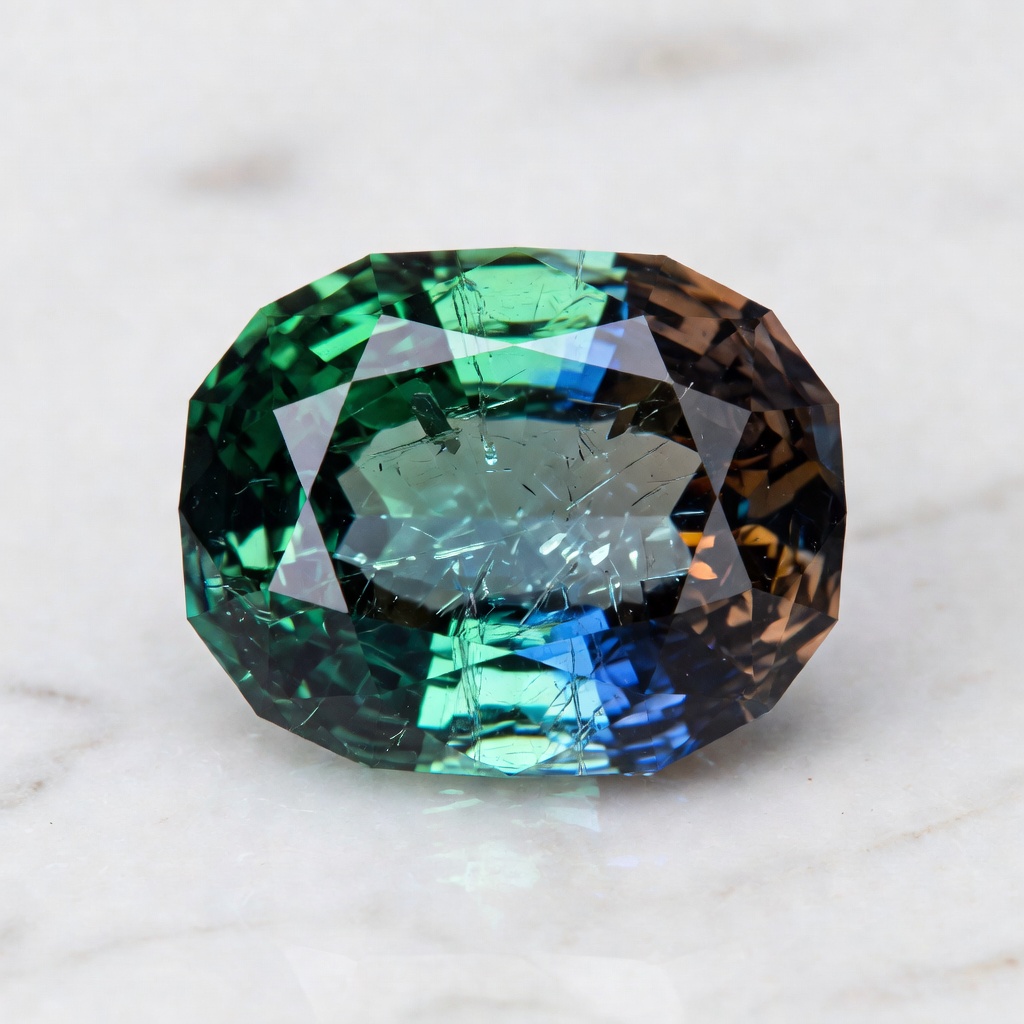
Introduction to Kornerupine: A Collector's Hidden Gem
Kornerupine represents one of the gem world's best-kept secrets, a rare borosilicate mineral with a complex chemical composition of magnesium aluminum iron borate silicate that captivates sophisticated collectors with its extraordinary optical properties. First discovered in 1884 by Danish geologist Andreas Nikolaus Kornerup in Greenland's Fiskenaesset complex, this trichroic gemstone remained largely overlooked by mainstream jewelry markets until recent decades when connoisseurs began recognizing its exceptional rarity and unique visual characteristics. Unlike more common gemstones that dominate commercial jewelry counters, kornerupine forms exclusively under specific high-grade metamorphic conditions, resulting in limited deposits that make each faceted specimen a genuine geological treasure.
The primary sources of gem-quality kornerupine include the alluvial gravels of Sri Lanka, the metamorphic deposits of Madagascar, and the original Greenlandic occurrences, with each locality producing distinctly different color varieties that significantly impact kornerupine gemstone value. Sri Lankan material typically yields the most prized emerald-green and teal-blue specimens, while Madagascar produces broader color ranges including yellowish-green and brownish varieties. Greenlandic kornerupine, though historically significant, rarely produces transparent gem material suitable for faceting, making those specimens particularly coveted by mineral museums and serious collectors. Understanding these source distinctions proves essential when evaluating rare kornerupine prices, as provenance directly correlates with both color quality and investment potential.
Understanding Color Grading and Valuation
Color serves as the primary value determinant in kornerupine pricing, with the market establishing strict hierarchies based on hue saturation and the manifestation of the gemstone's signature trichroism. Vivid emerald-green kornerupine commands the absolute premium in today's market, particularly stones from Sri Lanka that display intense saturation without darkening or gray overtones, with exceptional specimens achieving prices comparable to fine emeralds on a per-carat basis. Teal-blue varieties represent the second tier of desirability, offering collectors an attractive alternative to Paraiba tourmaline at significantly lower price points while maintaining similar visual impact in jewelry settings.
More commonly available brown and yellow kornerupine varieties occupy the entry-level market segment, typically trading at substantial discounts compared to their green counterparts, though exceptional clarity and size can elevate even these color grades into collector territory. The phenomenon of trichroism—wherein the gemstone displays three distinct colors (typically green, blue, and brown) when viewed from different crystallographic directions—adds significant complexity to valuation and directly influences trichroic gemstone pricing strategies. Master cutters must orient the rough carefully to maximize the pleochroic effect while maintaining brilliance, making well-executed stones with strong color shift particularly valuable. When budgeting for green kornerupine cost, collectors should expect to pay 300-500% premiums for stones that demonstrate pronounced trichroism under various lighting conditions compared to monochromatic specimens.
Key Factors Affecting Kornerupine Prices
Beyond color, several technical factors create substantial volatility in kornerupine price per carat calculations, with carat weight representing perhaps the most dramatic price escalator in this category. While one-carat specimens of commercial quality remain relatively accessible, stones exceeding two carats with clean clarity and fine color become exponentially rarer, often commanding tenfold price increases per carat compared to smaller stones. The five-carat threshold represents a particularly challenging barrier for collectors, as fewer than twenty documented faceted specimens of this size exist in private collections worldwide, making such pieces subject to intense competitive bidding when they appear at auction.
Clarity assessment in kornerupine requires nuanced understanding, as certain inclusions actually authenticate natural origin and may enhance rather than detract from value. Characteristic rutile needles, crystal growth zoning, and fingerprint inclusions serve as positive identification markers, distinguishing natural stones from the rare synthetics entering the market. However, eye-visible inclusions that reduce transparency or threaten durability significantly impact pricing, with loupe-clean stones commanding substantial premiums. Cut quality presents unique challenges due to kornerupine's perfect cleavage in one direction and variable hardness (6.5-7 on the Mohs scale) that ranges directionally from 6 on the cleavage plane to 7 perpendicular to it. Expert cutters must navigate these properties carefully, making well-executed brilliant cuts or custom designs significantly more valuable than poorly oriented commercial cutting that risks breakage or diminished optical performance.
Current Market Price Ranges by Quality Tier
Navigating the kornerupine price guide requires understanding the distinct market tiers that separate casual collector pieces from investment-grade specimens. Commercial grade material, typically characterized by pale coloration, moderate inclusions, or suboptimal cutting, currently trades between $50-$200 per carat, offering an accessible entry point for enthusiasts seeking to experience the gem's unique properties without substantial financial commitment. These stones often appear in brown, yellow, or light green hues and may serve well for jewelry projects where the wearer's primary interest lies in the gem's rarity rather than its visual impact.
Fine quality kornerupine occupies the middle market segment, ranging from $500-$2,000 per carat for stones exhibiting clean clarity, expert cutting, and desirable green or teal coloration with moderate trichroism. Specimens in this category typically weigh between one and three carats and represent the optimal balance of beauty and value for serious collectors building diversified gemstone portfolios. At the pinnacle of the market, museum-grade collector specimens command rare kornerupine prices of $3,000-$10,000+ per carat, reserved for exceptional stones exceeding three carats with vivid color, strong trichroic effects, and impeccable provenance. These ultra-rare pieces often remain within private collections for decades, appearing publicly only at major auction houses or exclusive mineral shows where competitive bidding can drive prices even higher.
Kornerupine vs Other Rare Gemstones: Value Comparison
When evaluating kornerupine vs sapphire value, collectors discover fascinating price positioning that challenges conventional gemstone hierarchies. While top-tier Burmese or Kashmir sapphires unquestionably command higher absolute prices, fine kornerupine with strong trichroism often rivals mid-tier sapphire prices ($1,000-$3,000 per carat range) while offering significantly greater rarity. Unlike sapphires, which benefit from robust commercial mining operations across multiple continents, kornerupine's extremely limited geographical distribution ensures that supply constraints will likely intensify over coming decades, potentially narrowing the price gap between these gems.
Positioned alongside alexandrite and Paraiba tourmaline in the rare gem constellation, kornerupine offers compelling value for collectors seeking color-change or trichroic phenomena without the astronomical premiums attached to those better-known varieties. Current market analysis suggests that kornerupine trades at roughly 20-30% of comparable alexandrite prices while delivering equally impressive optical effects. For investors examining kornerupine investment potential, the gemstone presents an attractive alternative to mainstream precious gems like diamonds or rubies, offering entry points under $2,000 per carat for fine material while maintaining stronger scarcity fundamentals than many traditionally "precious" stones. As consumer awareness grows and existing mines deplete their accessible reserves, industry experts anticipate steady appreciation that could outpace more liquid but oversupplied gemstone categories.
Where to Buy: Retail, Auctions, and Online Markets
Acquiring genuine kornerupine requires navigating specialized channels distinct from conventional jewelry retail, as the gem's rarity precludes presence in typical mall jewelry stores or chain retailers. Reputable specialized gem dealers, particularly those with Graduate Gemologists (G.G.) credentials from the Gemological Institute of America, offer the most reliable sourcing for fine material, though their pricing structures reflect the significant expertise required to authenticate and value these stones correctly. These specialists often maintain direct relationships with Sri Lankan and Madagascar miners, enabling access to rough material before it reaches broader markets, though buyers should expect to pay premiums of 15-25% over rough acquisition costs for the assurance of expert curation.
Auction houses including Sotheby's, Christie's, and Bonhams periodically feature documented historical kornerupine specimens, particularly from important collections or with distinguished provenance, though buyers must account for hammer prices plus buyer's premiums typically ranging from 20-30%. Online marketplaces present both opportunities and hazards; while platforms like GemRockAuctions or GemSelect offer escrow services and return policies that mitigate risk, general marketplace websites often harbor misrepresented stones, doublets, or synthetic simulants. When seeking to buy kornerupine gemstones, prioritize sellers who provide detailed photographs under various lighting conditions to demonstrate trichroism, offer no-questions-asked return periods, and willingly provide laboratory certification before finalizing transactions.
Authentication and Certification Requirements
Investing in certified kornerupine represents a non-negotiable requirement for purchases exceeding $500, as the gem's rarity makes it susceptible to misrepresentation and treatment disclosure failures. Independent laboratory certification from GIA (Gemological Institute of America), AGL (American Gemological Laboratories), or GRS (GemResearch Swisslab) provides essential verification of natural origin, color authenticity, and disclosure of any heat treatments or clarity enhancements. These reports specifically test for kornerupine's characteristic refractive indices (1.66-1.68), specific gravity (3.28-3.35), and pleochroic color schemes that distinguish genuine material from lookalikes such as tourmaline, peridot, or synthetic spinel.
Heat treatment, while less common in kornerupine than in sapphires or rubies, occasionally appears in the market to improve color saturation, with treated stones typically commanding 40-60% discounts compared to natural-color equivalents. Advanced testing can detect these treatments through inclusion analysis and spectroscopic examination, making laboratory reports essential for value verification. Synthetic kornerupine, though rarely encountered due to limited commercial demand, has been produced experimentally using flux-growth methods, requiring sophisticated analysis to distinguish from natural material based on growth patterns and trace element chemistry. For high-value acquisitions, consider obtaining duplicate certifications from two independent laboratories to eliminate any possibility of report tampering or misidentification.
Investment Outlook and Value Retention
The kornerupine investment potential derives primarily from supply-side constraints that continue tightening as historically productive mines in Sri Lanka and Madagascar approach depletion of economically viable deposits. Recent geological surveys indicate declining production volumes of 8-12% annually over the past decade, while collector demand has increased correspondingly as awareness of this gem spreads through mineralogical circles and high-end jewelry design communities. This fundamental supply-demand imbalance suggests sustained appreciation potential independent of broader economic cycles that might affect more commoditized gemstones.
Historical auction data reveals consistent 5-8% annual appreciation rates for fine kornerupine specimens with documented provenance and superior gemological characteristics, outpacing inflation and matching returns from traditional collectibles like rare coins or stamps. However, potential investors must acknowledge liquidity limitations; unlike diamonds or gold, kornerupine cannot be liquidated quickly through standardized markets, requiring patience and access to specialized dealer networks or auction channels for optimal sale timing. Long-term value retention appears strongest for stones exceeding two carats with vivid green coloration and strong trichroism, as these categories face the most severe supply constraints while maintaining consistent demand from institutional collectors and museums seeking representative specimens for mineralogical collections.
Care and Maintenance for Preserving Value
Maintaining kornerupine care protocols ensures that your investment retains both beauty and value over decades of ownership, requiring specific precautions due to the gem's unique physical properties. With hardness measuring 6.5-7 on the Mohs scale and perfect cleavage in one direction, kornerupine demands protection from sharp impacts and extreme temperature fluctuations that might induce thermal shock. Clean your specimens using only warm water, mild dish soap, and a soft brush, avoiding ultrasonic cleaners and steam equipment that could exploit cleavage planes or loosen settings through vibration.
Storage recommendations emphasize individual soft pouches or compartmentalized boxes that prevent contact with harder gems like diamonds, sapphires, or spinels that could scratch kornerupine's surface. When considering jewelry applications, protective settings such as bezels or halo designs safeguard the gem's vulnerable edges better than exposed prong settings, particularly for ring wear. Pendants and earrings generally suit kornerupine better than daily-wear rings, though protective mountings can accommodate occasional ring use for special occasions. Regular professional inspections every 12-18 months ensure that settings remain secure and that no microscopic damage has compromised the stone's integrity, preserving both its visual appeal and market value for future generations.
Final Buying Checklist and Expert Recommendations
Approaching your kornerupine price guide acquisition with systematic preparation maximizes your probability of securing a specimen that meets both aesthetic desires and investment objectives. Budget allocation strategies should reserve 60-70% of your total expenditure for the stone itself, with remaining funds allocated toward certification, setting (if applicable), and insurance coverage. When evaluating specific pieces, prioritize color intensity and trichroic strength over absolute clarity, as the gem's rarity makes eye-clean material with vivid color more desirable than flawless but pale specimens.
Essential questions to ask dealers include: "What is the stone's exact geographical origin?" (Sri Lankan material typically commands premiums), "Has this stone undergone any heat treatment or clarity enhancement?" and "Can you provide historical documentation or previous ownership records?" For purchases exceeding $5,000, insist on independent verification of the provided laboratory certificate through direct contact with the issuing lab. Provenance verification steps should include photographing the stone's unique inclusions for identification purposes, obtaining detailed receipts specifying treatments and origin claims, and maintaining all documentation in a secure location separate from the physical gem. By adhering to these rigorous standards, collectors can confidently navigate the specialized market to buy kornerupine gemstones that will provide lasting satisfaction and potential appreciation.
Frequently Asked Questions
How much does kornerupine cost per carat?
Kornerupine pricing varies dramatically by quality: commercial grade ranges from $50-$200 per carat for pale or included stones, fine quality commands $500-$2,000 per carat for clean, well-cut specimens with good color, while exceptional museum-grade pieces with vivid trichroism can reach $3,000-$10,000+ per carat.
Is kornerupine more expensive than sapphire?
Generally, high-quality sapphires command higher absolute prices, but fine kornerupine with strong trichroism often rivals mid-tier sapphire prices due to its extreme rarity. While commercial sapphires are cheaper, kornerupine offers better value for rare gemstone collectors seeking unique pieces under $2,000 per carat.
What color of kornerupine is most valuable?
Vivid emerald-green and teal-blue kornerupine from Sri Lanka and Madagascar command the highest prices. Stones displaying strong trichroism—showing distinct green, blue, and brown colors when viewed from different angles—are particularly prized by collectors and can command 300-500% premiums over single-color specimens.
Why is kornerupine so expensive despite being relatively unknown?
Kornerupine's high price stems from extreme geological rarity (formed in high-grade metamorphic rocks), limited viable mining locations, difficult cutting due to perfect cleavage and directional hardness, and declining new production. Additionally, growing collector awareness has increased demand for this trichroic gem while supply remains fixed.
Where is the best place to buy genuine kornerupine?
Purchase from specialized colored gemstone dealers with GIA gemologists on staff, reputable auction houses (Sotheby's, Christie's) for investment-grade pieces, or established online platforms like GemRockAuctions with escrow services. Always require independent laboratory certification (GIA, AGL, or GRS) and avoid uncertified stones on general marketplace websites.
Does kornerupine hold its value as an investment?
Yes, kornerupine has shown steady 5-8% annual appreciation over the past decade due to declining mine production in Sri Lanka and Madagascar, combined with increasing recognition among gemstone collectors. Fine specimens with documented provenance and certification consistently perform well at auction, though liquidity is lower than mainstream gems like diamonds or rubies.
How can I identify real kornerupine versus imitations or synthetics?
Authentic kornerupine exhibits distinct trichroism (pleochroism) showing green, brown, and blue colors when rotated under light. Natural stones typically contain characteristic inclusions like rutile needles or crystal growth zoning. Request GIA certification to confirm natural origin, as synthetics are rare but doublets and imitations exist in the market.
Is kornerupine suitable for engagement rings or daily wear?
With 6.5-7 hardness on the Mohs scale and perfect cleavage, kornerupine requires protective settings (bezels or halos) for ring wear and is better suited for pendants, earrings, or occasional-use rings. While durable enough for careful daily wear, it lacks the toughness of sapphires or diamonds and can chip if struck against hard surfaces.