
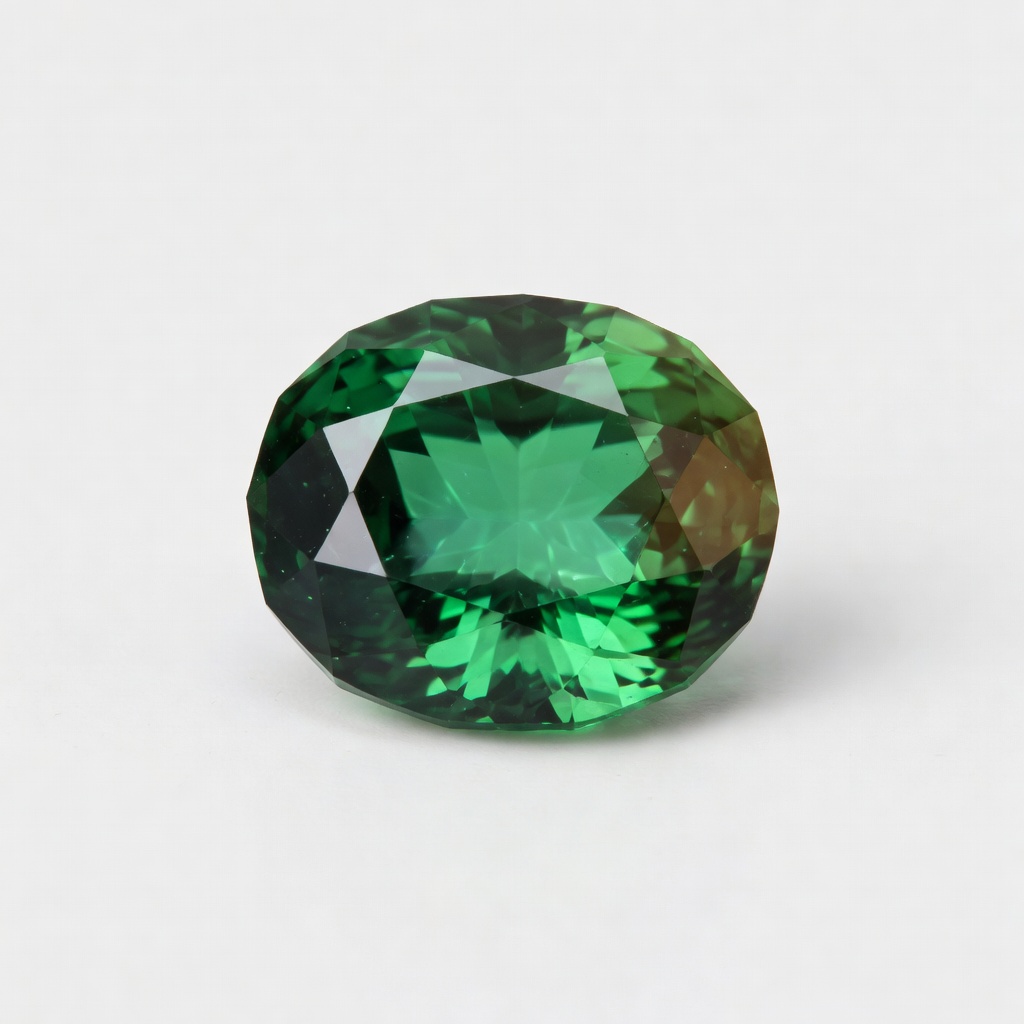
What Is Kornerupine? Understanding This Rare Borosilicate Gem
Kornerupine stands as one of the gemstone world's best-kept secrets, a magnesium aluminum borosilicate mineral that captivates collectors with its complex chemistry and exceptional rarity. First discovered in 1884 in Fiskernæs, Greenland, this remarkable crystal was named in honor of Danish geologist Andreas Nikolaus Kornerup, who conducted extensive surveys of the region's geological formations. With a hardness rating of 6.5 to 7 on the Mohs scale, kornerupine offers moderate durability suitable for various jewelry applications, though it requires more care than harder stones like sapphire or diamond. The mineral's complex crystal structure belongs to the orthorhombic system, creating unique optical properties that distinguish it from more common green gemstones.
Unlike abundant green gems such as peridot or tourmaline that flood the market, kornerupine remains genuinely scarce, with fine facet-grade material representing less than one percent of all colored gemstones traded annually. This extreme rarity stems from the specific geological conditions required for its formation, involving high-grade metamorphic environments where boron-rich fluids interact with aluminum and magnesium minerals. Collectors seeking this rare borosilicate gemstone often wait years to encounter specimens larger than one carat with acceptable clarity and color. When compared to commercial green stones readily available in jewelry stores, kornerupine offers exclusivity that appeals to sophisticated connoisseurs looking beyond mainstream options.
Color Varieties and the Distinctive Pleochroism Effect
The most mesmerizing characteristic of kornerupine lies in its status as a trichroic gemstone, displaying three distinct colors when viewed from different crystallographic directions. This pleochroic phenomenon reveals itself as deep forest green, yellow-brown, and near-colorless tones depending on the angle of observation, creating a dynamic visual experience unmatched by monochromatic gems. Master cutters must orient kornerupine rough carefully to maximize this optical display, often sacrificing carat weight to ensure the table facet presents the most desirable green hue while side angles reveal complementary colors. The intensity of this pleochroism serves as a primary value determinant, with stones exhibiting strong color separation commanding significant premiums over weakly pleochroic specimens.
While kornerupine occurs in various colors including yellow, brown, and colorless varieties, the marketplace overwhelmingly favors deep emerald-green to rich forest-green specimens sourced from Sri Lanka. These premium stones often exhibit additional rarity through color-change phenomena, shifting between green daylight appearance and reddish-brown or purplish tones under incandescent lighting. Brownish or yellowish kornerupine varieties, though more abundant, trade at substantially lower price points and typically appeal to mineral collectors rather than high-end jewelry designers. When evaluating kornerupine colors, buyers should prioritize stones showing vivid green primary hues with minimal brown secondary tones, as these represent the pinnacle of quality for this rare green gemstone.
The 4Cs of Kornerupine Quality Assessment
Evaluating kornerupine quality factors requires understanding how standard gemstone grading adapts to this unique material's constraints and optical properties. Clarity standards for kornerupine differ significantly from diamonds or sapphires, as completely eye-clean specimens represent extraordinary rarities that command premium valuations often exceeding $2,000 per carat. Most quality kornerupine contains minor inclusions including needle-like crystals, growth zoning, or fingerprint patterns that serve as natural birthmarks confirming authenticity without severely impacting beauty. Buyers should accept minor clarity characteristics in stones over one carat, focusing instead on whether inclusions interfere with light transmission or structural integrity rather than demanding loupe-clean perfection.
Cut quality dramatically influences how effectively a kornerupine displays its pleochroic nature, with emerald cuts, ovals, and cushions generally outperforming rounds or brilliants in showcasing color variation. Step cuts particularly excel at this pleochroic gemstone's display, as the long rectangular facets create windows through which observers can appreciate the color shifts as the stone moves. Carat weight presents the most significant limitation in kornerupine acquisition, as crystals suitable for faceting rarely exceed five grams in rough form, yielding finished gems typically under two carats. Stones surpassing two carats with fine color and acceptable clarity represent museum-quality specimens that appreciate exponentially rather than linearly with size, making them coveted investment pieces among serious collectors.
Geographic Origins and Mining Localities
Sri Lanka kornerupine consistently ranks as the world's finest material, producing transparent crystals with the most desirable deep green coloration and strongest pleochroism in the gem trade. The island's alluvial deposits, particularly around the Ratnapura district, yield water-worn pebbles that cutters prize for their clarity and color consistency unmatched by material from other localities. Sri Lankan kornerupine often displays the coveted color-change effect, transitioning between blue-green daylight appearance and reddish-brown under candlelight or incandescent bulbs. These Ceylon specimens set the standard against which all other kornerupine sources are measured, commanding the highest kornerupine price per carat in international markets.
Madagascar represents the second significant source, producing larger crystals that frequently reach sizes impossible to find in Sri Lankan material, though typically with greater inclusion content. These Madagascar stones suit collectors seeking impressive carat weights for display specimens rather than fine jewelry, often displaying yellowish or brownish tones rather than the premium greens associated with Sri Lankan material. Greenland and Canada provide historically important type-locality specimens, though these deposits rarely yield transparent material suitable for faceting, instead producing mineral specimens for geological collections. Emerging deposits in Tanzania and Kenya show promise for future production, with recent discoveries yielding green material that bridges the quality gap between Madagascar and Sri Lankan sources, potentially expanding availability for kornerupine jewelry manufacturers.
Pricing Guide and Market Value Factors
Understanding kornerupine price per carat requires recognizing the dramatic quality tiers that separate commercial material from investment-grade specimens. Entry-level stones showing brownish or yellowish colors with visible inclusions typically trade between $100 to $500 per carat, suitable for collectors entering the market or jewelry designers seeking unusual accent stones. Fine quality gems displaying rich green color with moderate clarity and visible pleochroism command $500 to $2,000 per carat, representing the sweet spot for serious collectors seeking wearable art. Exceptional specimens featuring deep emerald green color, strong color-change phenomena, eye-clean clarity, and sizes exceeding two carats regularly exceed $2,000 per carat, with museum-quality pieces reaching $5,000 or more at specialized auctions.
The intensity of pleochroism significantly impacts valuation, as collectors specifically seek stones that demonstrate dramatic color shifts when rotated, paying premiums of thirty to fifty percent over weakly pleochroic material of similar color. Untreated, unheated specimens carry substantial premiums in today's treatment-conscious market, with certificates from GIA, AGL, or SSEF verifying natural status adding confidence and liquidity to high-value purchases. Investment potential remains strong for this rare green gemstone as known deposits deplete and mining becomes increasingly difficult, with prices appreciating steadily over the past decade as awareness grows among colored stone connoisseurs. Unlike mass-market gems subject to price volatility, kornerupine's extreme scarcity provides natural price support, making it an attractive alternative investment for portfolios seeking tangible assets.
Authentication and Certification Requirements
Distinguishing natural kornerupine from similar green gemstones requires sophisticated gemological testing beyond visual observation alone. Green tourmaline, peridot, and the rare sinhalite can all mimic kornerupine's appearance, necessitating refractive index measurements to confirm identity—kornerupine typically registers 1.66 to 1.68, distinctly different from tourmaline's 1.62-1.64 range. Specific gravity testing provides additional confirmation, with kornerupine exhibiting a notably high density of 3.28 to 3.35, significantly heavier than peridot or quartz alternatives of similar size. Gemologists also examine pleochroism under a dichroscope, as kornerupine certification requires verifying the characteristic trichroic color scheme that imitators cannot replicate.
Synthetic corundum and manufactured glass occasionally appear in the market as fraudulent kornerupine, detectable through magnification revealing curved growth patterns, gas bubbles, or uniform coloration lacking natural variation. While most kornerupine enters the market untreated, some specimens receive light oiling to mask surface-reaching inclusions, a generally accepted practice that should be disclosed by ethical sellers. Heat treatment remains extremely rare for this gemstone, as kornerupine's chemistry does not respond predictably to thermal enhancement, making treated stones unusual curiosities rather than standard offerings. Buyers should insist upon certificates from GIA, AGL, or SSEF for purchases exceeding $1,000, ensuring documentation verifies natural origin, geographic source, and any treatments applied to the stone.
Durability, Settings, and Jewelry Applications
With a Mohs hardness of 6.5 to 7, kornerupine occupies a middle ground in gemstone durability, suitable for jewelry but requiring thoughtful design considerations to ensure longevity. While resistant to scratching from everyday dust and minor impacts, kornerupine jewelry remains vulnerable to hard knocks against countertops or door frames that could chip or fracture the stone. This hardness level positions kornerupine similarly to tanzanite or peridot, making it ideal for pendants, earrings, and occasional-wear rings rather than daily-wear engagement rings subjected to constant abrasion. Jewelers recommend bezel settings or protective halo designs that shield the gem's edges, avoiding high-exposure prong settings that leave vulnerable girdles exposed to impact.
Metal selection significantly influences the final appearance of kornerupine jewelry, with yellow gold enhancing warm undertones in brownish-green specimens while white gold or platinum emphasize cooler, forest-green hues. Rose gold creates striking contemporary designs with kornerupine, complementing the stone's color-change varieties that flash reddish tones under incandescent light. Designers often orient kornerupine to maximize pleochroic display, setting stones so the table facet shows the primary green color while tilt angles reveal secondary yellow or brown tones, creating dynamic, ever-changing centerpieces. For collectors commissioning custom pieces, working with cutters to ensure proper crystallographic orientation ensures the finished kornerupine jewelry showcases this rare green gemstone's most distinctive optical properties.
Proper Care and Maintenance Protocols
Maintaining kornerupine beauty requires adherence to specific kornerupine care protocols that acknowledge the stone's sensitivity to thermal shock and mechanical stress. Clean your kornerupine using only lukewarm soapy water and a soft-bristled toothbrush, gently removing accumulated oils and debris without subjecting the stone to harsh chemicals or abrasive materials. Never use ultrasonic cleaners or steam cleaning equipment on kornerupine, as these methods can expand existing feather inclusions or internal fractures, potentially causing cleavage or complete stone failure. After washing, pat the stone dry with a soft lint-free cloth rather than rubbing, which could create microscopic surface scratches over time.
Proper gemstone maintenance extends beyond cleaning to include thoughtful storage practices that prevent damage from harder materials. Store kornerupine pieces in individual soft cloth pouches or lined jewelry box compartments, separating them from diamonds, rubies, sapphires, or other gems exceeding hardness 7.5 that could scratch kornerupine's surface during contact. Remove kornerupine jewelry before exposure to household chemicals, acidic environments, or prolonged direct sunlight, which can potentially alter color in sensitive specimens. Schedule annual professional inspections with a qualified jeweler who can check setting security, assess surface wear, and perform professional cleaning using methods safe for this rare borosilicate gemstone.
Where to Buy: Trusted Sources and Red Flags
Acquiring authentic kornerupine requires identifying trusted gemstone dealers who specialize in rare colored stones rather than general jewelry retailers. Reputable dealers provide detailed written descriptions, independent laboratory certification, and reasonable return policies allowing verification by your own gemologist before finalizing purchase. Established colored stone specialists such as those operating from New York's 47th Street, Bangkok's gemstone district, or Colombo's trading centers maintain inventory relationships with Sri Lankan miners and Madagascar suppliers, ensuring access to fresh material before it reaches broader markets. When you buy kornerupine, prioritize sellers who offer recertification options or upgrade policies, demonstrating confidence in their inventory's authenticity and quality.
For investment-grade specimens exceeding $5,000, major auction houses including Sotheby's and Christie's provide provenance documentation and competitive bidding environments that establish fair market value through transparent price discovery. Conversely, exercise extreme caution when considering online marketplaces such as eBay or Etsy, where sellers lacking gemological credentials may unknowingly or fraudulently offer simulants, synthetics, or misidentified stones as natural kornerupine. Red flags include prices significantly below market rates for stated quality, blurry or stock photography rather than images of the specific stone, and reluctance to provide independent laboratory reports. Always ask sellers direct questions about treatment disclosure, origin verification, and whether the stone has been reviewed by GIA, AGL, or equivalent institutions before committing to purchase.
Final Purchase Decision Checklist
Before finalizing your kornerupine acquisition, prioritize color intensity and pleochroism display over perfect clarity, as the stone's optical magic matters more than microscopic cleanliness. Allocate your budget to secure the finest color available within your price range, even if that means accepting a slightly smaller stone or minor inclusions that do not impact durability or face-up appearance. Verify that all documentation matches the physical stone, comparing certificate photography and measurements against the actual gem to prevent substitution or misidentification errors. Consider your long-term satisfaction by honestly assessing whether you seek a display piece for occasional wear or a daily-wear item requiring more robust setting protection.
For collectors, focus on untreated Sri Lankan material with strong color-change properties, as these represent the most liquid and appreciable assets in the kornerupine market. Jewelry buyers should emphasize cut quality that maximizes pleochroic display while ensuring the stone's orientation flatters the intended setting design. Ensure your kornerupine buying tips include verifying that certificates are current (issued within two years) and from recognized laboratories, as older reports may not reflect recent treatments or updated identification protocols. Finally, purchase from sellers who educate rather than pressure, as kornerupine represents a sophisticated acquisition requiring patient consideration rather than impulse buying.
Frequently Asked Questions
What makes kornerupine different from green tourmaline?
While both display green hues, kornerupine exhibits strong trichroism (showing green, brown, and yellow colors from different angles) and has a different refractive index. Kornerupine is significantly rarer than tourmaline, with a higher specific gravity and distinct crystal structure as a borosilicate rather than a complex silicate.
Is kornerupine durable enough for an engagement ring?
With a hardness of 6.5-7, kornerupine can be used in engagement rings but requires protective settings like bezels or halos rather than exposed prong settings. It's best suited for wearers with less active lifestyles or as occasional-wear rings rather than daily-wear pieces subjected to hard knocks.
Why is kornerupine more expensive than peridot or green quartz?
Kornerupine commands higher prices due to extreme rarity—fine facet-grade material is scarcer than diamond in equivalent sizes. The combination of pleochroism, limited geographic sources, and mining difficulties creates supply constraints that drive prices to $500-$2,000+ per carat for quality stones.
How can I verify if my kornerupine is natural or synthetic?
Always request certification from reputable labs like GIA or AGL. Natural kornerupine typically contains characteristic needle-like inclusions and growth zoning visible under magnification. Synthetic versions are rare but may show curved growth patterns or uniform coloration lacking natural pleochroic variation.
What is the most valuable color of kornerupine?
Deep emerald green to forest green kornerupine from Sri Lanka commands the highest prices, especially those displaying strong color-change phenomena (green to reddish-brown). Intensely pleochroic stones showing distinct color shifts are more valuable than monochromatic brown or yellowish specimens.
Does kornerupine receive treatments or enhancements?
Most kornerupine on the market is untreated, though some stones may receive light oiling to improve clarity appearance. Heat treatment is uncommon and generally not accepted in the trade. Always verify treatment status through laboratory certification, as untreated stones carry significant premiums.
Where does the finest kornerupine originate?
Sri Lanka (Ceylon) produces the world's finest transparent, gem-quality kornerupine with the best green colors and pleochroism. Madagascar yields larger crystals but often with more inclusions, while Greenland provides mineral specimens rather than facet-grade material.
How should I clean and store kornerupine jewelry?
Clean kornerupine using only lukewarm soapy water and a soft toothbrush; never use ultrasonic cleaners or steam due to potential feather inclusions. Store separately in soft cloth pouches away from harder gemstones (diamonds, rubies, sapphires) that could scratch the surface, and avoid exposure to harsh chemicals or extreme temperature changes.


