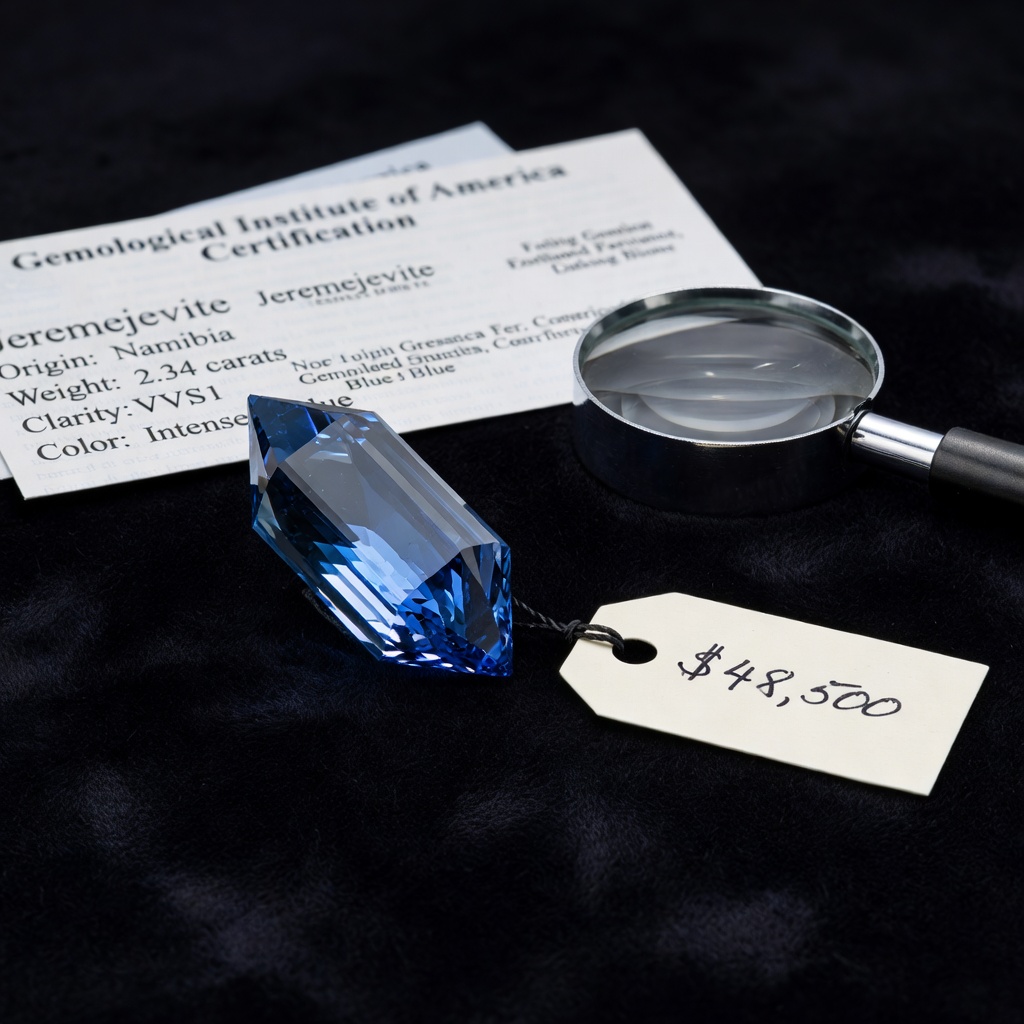
What Is Jeremejevite? Understanding the World's Rarest Gemstone
Jeremejevite stands as one of the most elusive treasures in the gemological world, a rare aluminum borate mineral that captures the imagination of serious collectors and investors alike. First discovered in 1883 by Russian mineralogist Pavel Jeremejev in the Adun-Chilon Mountains of Siberia, this extraordinary gemstone remained virtually unknown to the broader market for nearly a century due to its extreme scarcity. Unlike diamonds, rubies, or sapphires that benefit from extensive mining operations, jeremejevite occurs in microscopic quantities within pegmatite deposits, with gem-quality crystals forming only under highly specific geological conditions that combine aluminum and borate-rich environments.
The physical properties of jeremejevite contribute significantly to its desirability among connoisseurs, featuring a hardness range of 6.5 to 7.5 on the Mohs scale that allows for durable faceting while maintaining excellent polish. Perhaps most distinctive is its strong pleochroism, where the crystal displays different colors—ranging from colorless to pale blue to golden yellow—when viewed from various angles, creating an almost magical visual effect that distinguishes it from more common gemstones. With fewer than two hundred faceted gem-quality stones documented in existence worldwide, understanding the Jeremejevite Price Guide becomes essential for anyone considering acquiring this ultimate collector's piece.
Factors Determining Jeremejevite Value and Market Pricing
When evaluating investment grade gemstones like jeremejevite, traditional valuation frameworks require significant modification to account for the material's extraordinary rarity. While the standard four Cs (Color, Clarity, Cut, and Carat) provide a foundation for assessment, they operate on a compressed scale where minor variations result in exponential price differences. Color saturation particularly drives value, with stones exhibiting vivid hues commanding multiples over their pale counterparts, while clarity standards accept minor inclusions as natural birthmarks rather than detrimental flaws given the mineral's formation environment.
The geological reality of jeremejevite mining creates artificial supply constraints that fundamentally support premium pricing structures across all quality tiers. Unlike diamonds, which benefit from controlled release from vast kimberlite pipes, jeremejevite derives exclusively from sporadic alluvial deposits in Namibia's Erongo Mountains and sporadic Siberian finds, with annual yields often measured in mere grams rather than kilograms. Collectors must choose between faceted stones, which prioritize optical performance and wearability, and mineral specimens, which preserve the crystal's natural habit and geological significance, with the latter sometimes commanding higher prices among serious mineral enthusiasts despite lacking the brilliance of cut gems.
Transparency and Inclusion Patterns
Transparency significantly influences jeremejevite valuation, with eye-clean stones representing less than five percent of recovered material and therefore achieving substantial premiums in the marketplace. However, unlike diamonds where inclusions immediately degrade value, jeremejevite occasionally contains characteristic "step-like" or "ladder" inclusion patterns that actually assist in jeremejevite gemstone authentication while adding geological interest for specimen collectors. Buyers should examine stones under magnification to distinguish between detrimental feathers that compromise durability and diagnostic inclusions that confirm natural origin while potentially enhancing collector appeal.
Current Jeremejevite Price Per Carat: 2024 Market Analysis
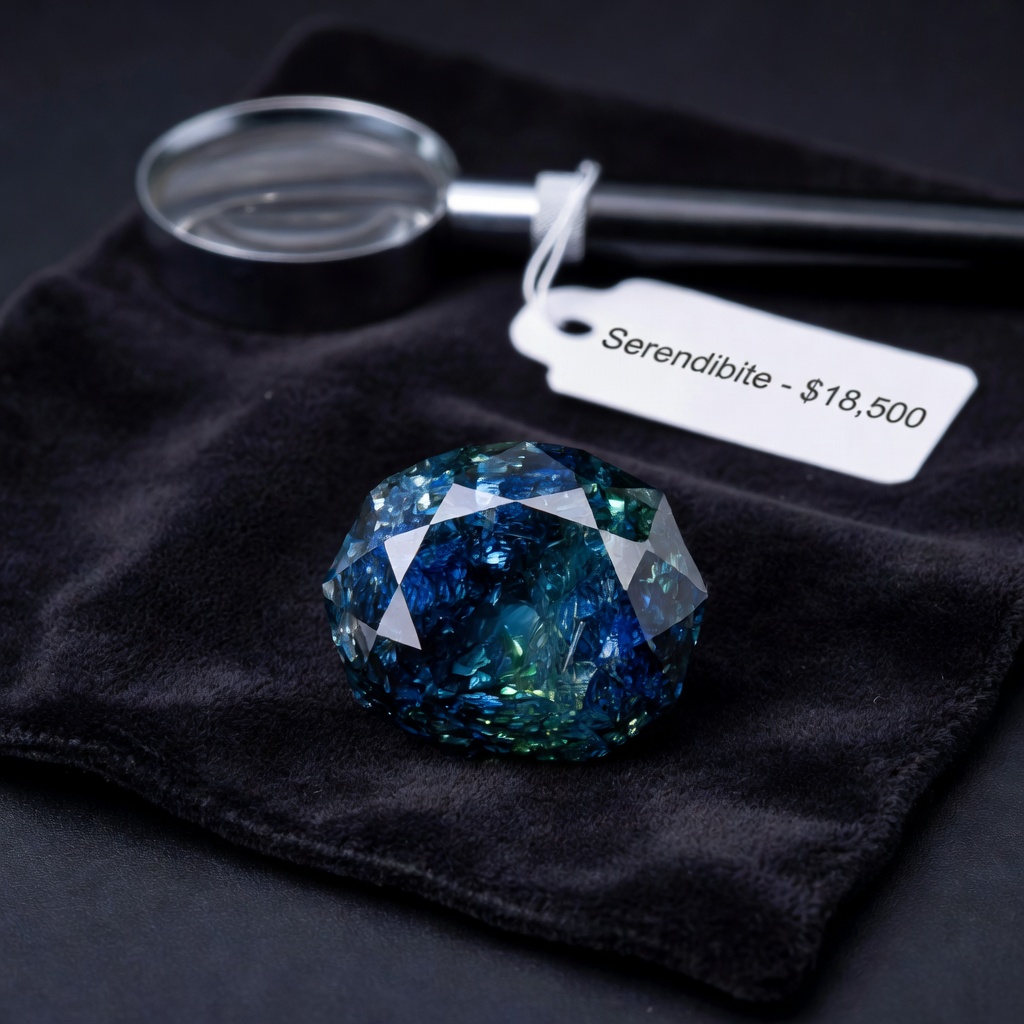
The jeremejevite cost per carat in 2024 reflects the gemstone's position at the absolute pinnacle of rarity, with pricing tiers that separate casual collectors from serious investors. Commercial quality stones, typically featuring visible inclusions, pale coloration, or smaller sizes under 0.5 carats, currently trade between $1,500 and $3,000 per carat, representing the entry point for this exclusive market. Fine quality specimens exhibiting good clarity and desirable blue coloration command $3,000 to $8,000 per carat, while exceptional stones exceeding one carat with intense cornflower blue saturation and eye-clean clarity routinely achieve $8,000 to $20,000 per carat or higher at specialized auctions.
Recent auction results demonstrate the market's robust appreciation trajectory, with a 2.15-carat Namibian blue jeremejevite selling for $47,500 at Bonhams in 2023, establishing a new per-carat record of approximately $22,000. Over the past five years, prices have appreciated consistently at 15-20% annually, outpacing traditional colored stones like tsavorite or spinel, though liquidity remains constrained due to the microscopic supply pipeline. When comparing jeremejevite cost per carat against other ultra-rare gems, it occupies a middle ground between red beryl ($8,000-$12,000/ct) and painite ($30,000-$60,000/ct), offering relatively accessible entry points before the exponential price increases associated with stones exceeding two carats, which appear on the market less than once per decade.
Size Premiums and Scarcity Multipliers
Size creates exponential rather than linear pricing effects in the jeremejevite market, with stones exceeding one carat commanding 300-400% premiums per carat compared to sub-carat specimens. This dramatic escalation reflects the crystallographic constraints of jeremejevite formation, where gem-quality crystals rarely exceed one centimeter in length, and clean cutting rough represents perhaps one percent of recovered material. Collectors seeking investment grade gemstones should prioritize size as the primary value driver, as a 1.5-carat fine blue specimen will typically appreciate more reliably than three separate 0.5-carat stones of equivalent quality due to the extreme scarcity of larger crystals.
Color Variations and Their Impact on Gemstone Pricing
The color spectrum of jeremejevite spans from completely colorless through pale aquamarine-like blues to intense cornflower blue and the extraordinarily rare golden yellow, with each hue commanding distinct market positions. Intense cornflower blue specimens, particularly those from Namibia's Erongo Mountains, achieve the highest rare blue jeremejevite value, often exceeding $15,000 per carat for fine examples, as this color represents the most desirable and recognizable variety for collectors. Colorless jeremejevite, while technically rarer than pale blue material in nature, commands lower prices due to reduced visual impact and collector demand, typically trading at 40-60% of equivalent-quality blue stones.
When examining jeremejevite vs aquamarine, the comparison highlights why the former commands such dramatic premiums despite superficial similarities in appearance. While aquamarine belongs to the beryl family with abundant supply from Brazil, Madagascar, and Nigeria, jeremejevite's borate composition creates superior brilliance and fire due to higher refractive indices, alongside the pleochroic effects impossible in beryl. The extremely scarce golden-yellow variety, discovered exclusively in Namibian deposits, occasionally exceeds blue stones in per-carat value due to collector demand for complete color suites, with fine specimens trading at $18,000-$25,000 per carat when available.
Color Zoning and Faceting Decisions
Color zoning presents unique challenges for lapidaries working with jeremejevite, as many crystals exhibit patchy or gradient color distribution that requires expert orientation to maximize face-up appearance. Professional cutters may sacrifice significant carat weight to eliminate zoning and achieve uniform color, explaining why well-cut stones command substantial premiums over native-cut material. Buyers should examine jeremejevite from multiple angles to detect subtle zoning that might affect long-term satisfaction, as uneven color distribution can reduce resale value by 30-50% compared to uniformly colored specimens of equivalent size and clarity.
Namibian vs. Russian Jeremejevite: Origin Price Differences
Geographic provenance significantly influences Namibian jeremejevite prices, creating a two-tier market that rewards detailed gemological documentation. The Erongo Mountains in Namibia currently produce the world's finest gem-quality jeremejevite, with crystals exhibiting superior transparency and more saturated blue colors than historical Siberian material, commanding premiums of 20-30% above Russian-origin stones of equivalent quality. This price differential reflects both aesthetic superiority and market accessibility, as Namibian material enters the market more regularly through established mining cooperatives, while Russian jeremejevite exists primarily in historic collections and museums.
The historic Siberian discoveries, while geologically significant, rarely produce faceting material comparable to Namibian crystals, with most specimens preserved as mineralogical curiosities in institutions like the Fersman Mineralogical Museum in Moscow. Provenance documentation becomes crucial for authentication and valuation, as unscrupulous dealers occasionally misrepresent origin to command higher prices. Collectors seeking investment grade gemstones should insist on detailed locality information supported by mining records or early collection history, as Russian specimens with documented pre-1990s discovery dates occasionally achieve premiums among historical mineral enthusiasts despite inferior gemological qualities.
Mining Realities and Supply Constraints
The Erongo Mountains deposits operate under artisanal mining conditions where individual miners painstakingly extract crystals from hard granite pegmatites using hand tools, with monthly yields sometimes totaling less than ten grams of facetable rough. This microscopic production scale ensures that Namibian jeremejevite prices will likely continue appreciating as surface deposits deplete and mining extends to increasingly inaccessible depths. Environmental regulations and land access restrictions in Namibia further constrain supply, creating a finite pipeline that supports long-term price stability for existing specimens in private collections.
Investment Potential: Why Collectors Pay Premium Prices
Jeremejevite represents a compelling alternative asset class within the investment grade gemstones category, offering portfolio diversification benefits during periods of economic volatility when traditional markets experience turbulence. The gemstone's extreme scarcity creates natural supply inelasticity, meaning that increased collector demand cannot trigger production increases or price suppression through new mining, fundamentally supporting appreciation trajectories that have averaged 200-300% over the past decade. Unlike diamonds, which face potential disruption from laboratory-grown alternatives, jeremejevite's formation requires specific geological conditions impossible to replicate economically in synthetic production, ensuring permanent scarcity value.
Concerns regarding mine depletion in Namibia's Erongo region suggest that current production levels may decline by 50% within the next decade as accessible pockets exhaust, potentially triggering the supply shock that pushes top-tier specimens into the $30,000-$50,000 per carat range currently occupied by painite and musgravite. Investors should approach jeremejevite as a long-term store of value rather than a liquid trading instrument, as selling periods typically extend 6-12 months compared to days or weeks for diamonds. Proper insurance becomes essential for high-value specimens, with most collectors maintaining specialized fine art policies that specifically list jeremejevite by carat weight, color grade, and provenance, often requiring updated appraisals every 18-24 months to maintain coverage adequacy as market prices appreciate.
Storage and Security Considerations
High-value jeremejevite requires museum-quality storage conditions to prevent damage and preserve investment value, ideally maintaining stable humidity levels between 45-55% and temperatures between 18-22 degrees Celsius to avoid thermal shock to the crystal lattice. Security measures should include safe deposit boxes or home safes rated for gemstones rather than simple jewelry boxes, with individual specimens stored in acid-free tissue or microfiber pouches to prevent scratching. Documentation security proves equally important, as original purchase receipts, laboratory certificates, and provenance records should be stored separately from the physical stones to facilitate insurance claims and future resale verification.
Where to Buy Authentic Jeremejevite Safely
Acquiring genuine jeremejevite requires navigating a marketplace where unscrupulous sellers offer glass imitations, synthetic spinel, or mislabeled aquamarine to unsuspecting buyers, making dealer vetting the most critical step in the purchase process. Reputable sources include established rare gem specialists such as Pala International, The Arkenstone, or Wilensky Exquisite Minerals, along with major auction houses including Christie's, Sotheby's, and Bonhams, which provide authentication guarantees and detailed condition reports. The Tucson Gem and Mineral Show and the Munich Mineral Fair represent excellent venues for examining specimens in person, allowing buyers to verify pleochroism and natural inclusions firsthand while building relationships with dealers who specialize in collectible borate minerals.
Online marketplaces present significant risks for high-value jeremejevite purchases, as platforms like eBay and Etsy host numerous listings offering "natural" jeremejevite that actually consists of synthetic corundum or glass, often at prices too low to reflect genuine material. When considering jeremejevite gemstone authentication, buyers should never rely solely on seller-provided photographs or generic certificates, instead insisting on independent laboratory verification from recognized institutions. Private treaty sales through gemological networks or mineralogical societies occasionally offer superior specimens at competitive prices compared to public auctions, though these transactions require extensive knowledge to evaluate authenticity without third-party platform protections.
Auction House Participation Strategies
Successful auction participation for jeremejevite requires pre-registration and established credit references, as major houses typically require deposits or financial verification for estimates exceeding $10,000. Bidders should attend pre-auction viewings to examine stones under various lighting conditions, as auction catalogs may use enhancement techniques that exaggerate color saturation, and inclusions visible under magnification might not appear in catalog photography. Understanding buyer's premiums, which typically add 20-25% to the hammer price, is essential when calculating total jeremejevite cost per carat investment thresholds.
Authentication and Certification Requirements
Comprehensive jeremejevite gemstone authentication requires sophisticated gemological testing beyond simple visual inspection, as even experienced dealers occasionally encounter convincing simulants. Essential diagnostic parameters include refractive indices measured at 1.64 to 1.65, with a birefringence of approximately 0.008 creating the double refraction visible when viewing crystal edges through a loupe. Specific gravity testing should yield results between 3.28 and 3.31, significantly higher than aquamarine (2.68-2.74) or quartz (2.65), providing a reliable preliminary screening tool for rough specimens or unset stones.
Microscopic examination reveals distinctive inclusion patterns unique to natural jeremejevite, including "fingerprint" inclusions, two-phase fluid pockets, and the characteristic growth zoning that distinguishes natural crystals from synthetic counterparts. Unlike many commercial gemstones, jeremejevite rarely undergoes heat treatment or fracture filling due to the microscopic scale of production making such enhancements economically unviable, meaning that untreated stones represent the market standard rather than the exception. Documentation from prestigious laboratories such as the Gemological Institute of America (GIA), American Gemological Laboratories (AGL), or the Swiss Gemmological Institute (SSEF) provides essential provenance verification and significantly enhances resale value, with reports specifically noting origin when determinable through chemical analysis or inclusion study.
Advanced Testing Methods
Spectroscopic analysis using Raman spectroscopy or energy-dispersive X-ray fluorescence (EDXRF) provides definitive chemical confirmation of aluminum borate composition, eliminating any possibility of misidentification with look-alike minerals. For high-value specimens exceeding $20,000, investors should consider obtaining updated laboratory reports every five years to document any potential changes in the stone's condition and maintain current market value assessments for insurance purposes. Photographic documentation accompanying certification should include images of characteristic inclusions, serving as a "fingerprint" for identifying the specific stone and preventing substitution during repair or cleaning.
Caring for High-Value Jeremejevite Specimens
Proper maintenance of collectible borate minerals like jeremejevite requires understanding the material's sensitivity to thermal shock and mechanical stress, despite its relatively respectable hardness rating. Owners must absolutely avoid ultrasonic cleaners and steam cleaning systems, as the thermal expansion differential between inclusions and the host crystal can cause catastrophic fracturing, instantly destroying stones worth tens of thousands of dollars. Instead, cleaning should utilize only lukewarm water with mild, phosphate-free detergent, applied with a soft natural-bristle brush to remove accumulated dust and skin oils, followed by immediate drying with a lint-free cloth to prevent water spot formation on the pavilion facets.
Storage environments for high-value jeremejevite should mimic museum conservation standards, utilizing archival-quality materials and stable environmental conditions that prevent thermal cycling or humidity fluctuations. For collectors who choose to set their stones in jewelry, protective bezel settings represent the only acceptable option, as prong settings risk chipping the girdle edges during normal wear, and the extreme value of the material makes daily wear inadvisable regardless of setting style. Insurance policies should specify "agreed value" coverage rather than replacement value, as the unique nature of fine jeremejevite makes replacement impossible at any price, and appraisals should be updated biennially to reflect market appreciation trends documented in current Jeremejevite Price Guide publications.
Display and Exhibition Considerations
Collector specimens displayed in home or museum environments require UV-filtered glass cases to prevent potential color fading from prolonged sunlight exposure, though jeremejevite shows better light stability than kunzite or topaz. LED lighting systems provide optimal illumination without the heat generation associated with halogen or incandescent bulbs, which can create localized thermal stress on displayed crystals. Rotation schedules that limit individual specimen display to six-month periods, with storage in dark, climate-controlled environments between exhibitions, help preserve the pristine condition that maintains maximum market value for these investment grade gemstones.
Conclusion: Is Jeremejevite Worth the Investment?
Jeremejevite offers a unique value proposition that combines aesthetic beauty with geological singularity, representing perhaps the ultimate expression of rarity in the colored gemstone market. For collectors with sufficient capital to enter the market at the fine quality tier ($3,000-$8,000 per carat) or above, the combination of finite supply, increasing collector demand, and impossible-to-replicate formation conditions suggests continued appreciation that will likely outpace inflation and traditional equity returns. Entry-level buyers considering commercial quality specimens should approach purchases with the understanding that liquidity constraints make jeremejevite unsuitable for short-term speculation, requiring instead a five to ten-year holding period to realize meaningful returns.
The future market outlook remains overwhelmingly positive as Namibian mines approach depletion and no new significant deposits have emerged despite extensive prospecting in geologically similar regions of Afghanistan, Pakistan, and Madagascar. Prospective buyers should consult with rare gem specialists or certified gemologists before committing significant capital, ensuring that authentication documentation meets standards acceptable to future buyers and insurers. While the jeremejevite cost per carat may seem daunting compared to more common gemstones, the material represents a tangible store of value that has demonstrated remarkable price stability even during economic downturns, securing its position as a crown jewel in any serious mineral collection.
Frequently Asked Questions
Why is jeremejevite so expensive compared to diamonds and sapphires?
Jeremejevite commands premium prices due to extreme scarcity—fewer than 200 faceted gem-quality stones exist worldwide. While diamonds and sapphires have established mining operations producing millions of carats annually, jeremejevite comes from only two remote locations (Namibia and Siberia) with microscopic yields, making it one of the rarest gemstones on Earth.
What is the average jeremejevite price per carat in 2024?
In 2024, jeremejevite prices range from $1,500 to $3,000 per carat for commercial quality stones with visible inclusions, $3,000 to $8,000 for fine blue specimens, and $8,000 to $20,000+ per carat for exceptional, large, museum-quality crystals. Stones exceeding 2 carats are virtually unavailable in the market.
How does color affect jeremejevite pricing?
Color dramatically impacts value, with intense cornflower blue commanding the highest premiums (up to $20,000/ct), followed by pale blue and aquamarine-like shades. Colorless jeremejevite is less valuable but still rare, while the extremely scarce golden-yellow variety from Namibia can exceed blue stones in price due to collector demand.
Is jeremejevite a good investment for gemstone collectors?
Jeremejevite represents a strong alternative investment due to finite supply and increasing collector demand. Over the past decade, prices have appreciated 200-300%, outperforming many traditional investments. However, liquidity is limited compared to diamonds or gold, making it suitable for long-term collectors rather than short-term speculators.
Where can I buy certified jeremejevite gemstones safely?
Purchase only from established rare gem dealers, auction houses (Christie's, Sotheby's, Bonhams), or specialized mineral shows (Tucson, Munich). Insist on certification from GIA, AGL, or SSEF. Avoid online marketplaces like eBay for high-value specimens, as synthetic spinel and glass simulants are common in the unregulated market.
How can I verify if my jeremejevite is authentic and not a synthetic?
Authentic jeremejevite exhibits specific gemological properties: refractive indices of 1.64-1.65, birefringence of 0.008, and a characteristic inclusion pattern often described as 'step-like' or 'ladder' structures. Professional testing with a refractometer and microscopic examination by a certified gemologist is essential, as visual identification alone is unreliable.
Can jeremejevite be worn in jewelry, or is it strictly for collectors?
While jeremejevite has a hardness of 6.5-7.5 suitable for jewelry, its extreme rarity and value make it impractical for daily wear. Most specimens over 0.5 carats are kept as mineral specimens or investment pieces. If set in jewelry, protective settings (bezels) are mandatory, and pieces should be reserved for occasional wear only.