
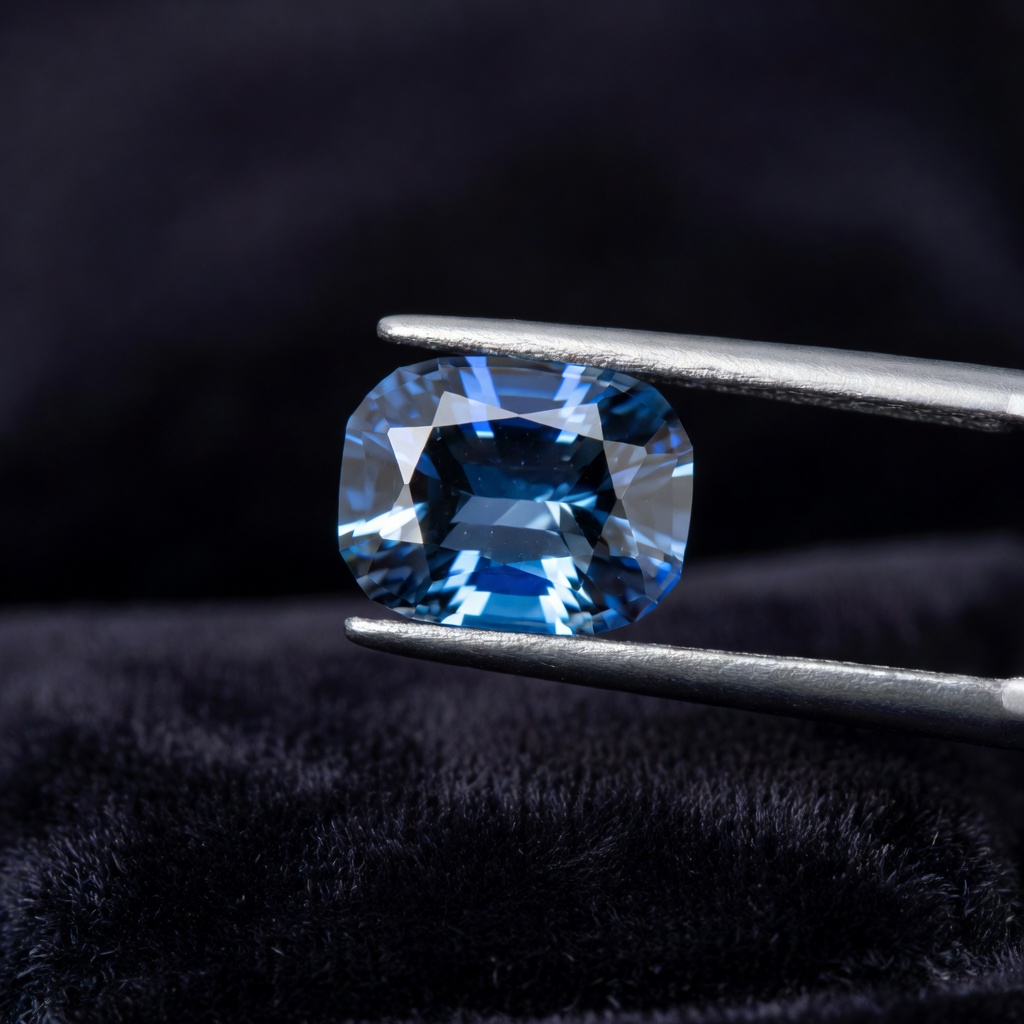
What Is Jeremejevite? Understanding the Rare Aluminum Borate
Jeremejevite stands as one of the most elusive treasures in the gemological world, captivating collectors with its exceptional scarcity and mesmerizing optical properties. This remarkable aluminum borate mineral crystallizes in the hexagonal system, forming prismatic crystals that rarely exceed a few centimeters in their raw state. Chemically composed of aluminum borate fluoride hydroxide, Jeremejevite requires highly specific pegmatitic formation conditions involving boron-rich fluids and aluminum-rich host rocks, geological circumstances that occur in only a handful of locations globally.
The mineral received its name in honor of Russian mineralogist Pavel Vladimirovich Jeremejev, who first identified microscopic crystals in the Adun-Chilon Mountains of Siberia during 1883. For nearly a century following its discovery, Jeremejevite remained merely a mineralogical curiosity, represented only by tiny, non-gem-quality specimens in museum collections. The game-changing revelation occurred in the late 20th century when significant deposits of facetable material emerged from Namibia, transforming this obscure mineral into one of the most coveted rare blue gemstones available to discerning collectors.
When evaluating rarity metrics, Jeremejevite makes even diamonds seem commonplace by comparison. While approximately 150 million carats of diamonds enter the market annually, the total global production of facet-grade Jeremejevite rarely exceeds a few hundred carats per year. This extreme scarcity stems from the mineral's complex formation requirements and the limited number of viable mining operations. Unlike diamonds, which benefit from extensive industrial mining infrastructure, Jeremejevite deposits are typically small, remote, and exhausted quickly, ensuring that each high-quality specimen represents a finite opportunity for acquisition.
Essential Quality Factors for Jeremejevite Evaluation
Assessing Jeremejevite requires specialized knowledge distinct from evaluating more common gemstones, as traditional grading scales must be adapted for this ultra-rare material. Jeremejevite clarity standards prioritize eye-clean transparency, meaning inclusions visible to the naked eye significantly diminish value, though microscopic inclusions acceptable in emeralds are tolerated given the material's inherent rarity. Professional gemologists examine these stones under standardized lighting conditions, noting that even minor clouding or feather inclusions can reduce value by 40-60% compared to pristine specimens.
The optimal cutting style for Jeremejevite depends heavily on the rough crystal's original orientation and pleochroic properties. Master cutters often favor emerald cuts and elongated ovals to maximize the stone's brilliance while minimizing weight loss during faceting, as rough Jeremejevite commands premium prices that make every percentage point of retention financially significant. Case studies from the American Gem Trade Association demonstrate that well-executed brilliant cuts can enhance the stone's dispersion, creating fire that rivals fine sapphire, while poorly oriented cuts may appear washed out or lifeless due to the mineral's strong directional color properties.
Carat weight limitations present unique challenges in the gemstone grading of Jeremejevite, as crystals capable of yielding finished stones over one carat represent exceptional discoveries. The majority of available specimens range between 0.25 and 0.75 carats, making stones exceeding two carats museum-quality rarities that command exponential premiums. When examining larger specimens, collectors should verify that the cutter maintained proper proportions rather than simply preserving weight, as overly deep pavilions designed to retain carat weight can result in windowing or light leakage that compromises beauty.
Decoding Jeremejevite Color Variations and Value
The chromatic spectrum of Jeremejevite spans from completely colorless through delicate aqua to the highly prized electric blue that defines the finest specimens. Blue Jeremejevite from Namibian localities currently sets the standard for desirability, with saturated cornflower to neon-blue hues commanding prices three to five times higher than pale blue or colorless varieties. The intensity of color results from trace iron substitutions within the crystal lattice, with higher iron concentrations producing the vivid electric blue that collectors covet for high-end jewelry and investment portfolios.
Colorless Jeremejevite, while lacking the dramatic visual impact of its blue counterparts, offers collectors an opportunity to acquire larger, cleaner specimens at more accessible price points. These colorless stones often display exceptional brilliance and clarity due to the absence of color-causing inclusions, making them suitable for collectors focusing on crystalline perfection rather than hue. Light aqua varieties occupy a middle market position, appealing to those seeking subtle coloration reminiscent of fine aquamarine but with the exclusivity of a true collector gemstone.
Gemstone color grading for Jeremejevite must account for its pronounced pleochroism, a phenomenon where the crystal displays different colors when viewed from different crystallographic directions. High-quality blue specimens typically show deep azure when viewed perpendicular to the c-axis but may appear nearly colorless when viewed parallel to it. Expert cutters orient the table facet perpendicular to the c-axis to maximize the blue face-up appearance, though this requires sacrificing significant rough material. When evaluating a prospective purchase, rotate the stone carefully under natural daylight to observe this color shift, as strong pleochroism indicates both authenticity and potentially superior cutting quality.
Jeremejevite Price Per Carat: 2024 Market Analysis
Understanding Jeremejevite price per carat requires acknowledging the dramatic price escalations that occur as quality and size increase, creating a market structure unlike that of more liquid gemstones. Current market data indicates that commercial-quality pale blue or colorless specimens under 0.5 carats typically trade between $1,000 and $2,000 per carat, representing the entry point for serious collectors. Fine-quality electric blue stones with excellent clarity fetch $3,000 to $5,000 per carat, while exceptional examples exhibiting saturated color and flawless clarity can command $8,000 to $12,000 per carat in private sales.
The price curve becomes nearly vertical for stones exceeding two carats, reflecting mathematical rarity rather than linear supply constraints. A 2.5-carat museum-quality blue Jeremejevite might retail for $25,000 to $35,000 total, effectively pricing the material at $10,000 to $14,000 per carat, whereas doubling the weight to five carats could push prices toward $50,000 per carat due to the extreme unlikelihood of such discoveries. This exponential pricing model rewards early acquisition of smaller high-quality stones, as material appreciation typically follows a compound annual growth rate significantly outpacing traditional investment vehicles.
Gemstone investment in Jeremejevite carries distinct volatility considerations tied directly to mining output fluctuations. When the Erongo Mountains of Namibia produce a small batch of rough, prices may temporarily soften by 10-15% as dealers compete for liquidity, whereas extended dry spells between significant finds can trigger rapid 25-30% price escalations within six-month periods. Savvy collectors monitor mining reports from the African continent and maintain relationships with specialized dealers to capitalize on these cyclical variations, treating Jeremejevite as a long-term store of value rather than a speculative short-term trade.
Authentication and Certification Standards
Securing proper documentation represents a critical step in any Jeremejevite acquisition, as the stone's rarity and value make it a target for misrepresentation and synthetic substitution. Reputable gem certification from laboratories such as the Gemological Institute of America (GIA), American Gemological Laboratories (AGL), or GemResearch Swisslab (GRS) provides essential verification of identity, origin, and treatment status. These reports should specifically identify the material as natural Jeremejevite rather than generic "natural borate" or similar ambiguous classifications, and must include refractive index measurements typically falling between 1.653 and 1.682.
Unlike sapphires or rubies, which frequently undergo heat treatment or fracture filling, authentic Jeremejevite rarely receives enhancement due to the material's sensitivity to thermal shock and its naturally high clarity in quality specimens. However, sophisticated treatments involving oiling or polymer filling of surface-reaching fractures have emerged in recent years, necessitating microscopic examination by certified gemologists. Advanced spectroscopic analysis can detect these treatments through the identification of foreign substances within fractures or abnormal fluorescence patterns under long-wave ultraviolet light.
Distinguishing natural Jeremejevite from synthetic corundum or spinel requires attention to specific gravity differences and pleochroic behavior. Synthetic blue spinel, sometimes fraudulently sold as Jeremejevite, exhibits single refraction and lacks the distinct dichroism characteristic of natural Jeremejevite. Additionally, natural Jeremejevite typically contains microscopic growth tubes or two-phase inclusions visible under 10x magnification, whereas synthetic alternatives may show curved color banding or metallic flux inclusions. Always insist on viewing the stone through a polariscope during the purchasing process to verify its birefringence, a definitive characteristic absent in simulants.
Trusted Sources: Where to Buy Jeremejevite Safely
Acquiring genuine Jeremejevite requires navigating a specialized marketplace distinct from conventional jewelry retail, as major chain stores rarely stock this ultra-rare material. Established gemstone dealers focusing specifically on rare and collector gems, such as those affiliated with the International Colored Gemstone Association (ICA) or the American Gem Trade Association (AGTA), represent the safest primary market for acquisitions. These specialists typically maintain direct relationships with Namibian miners and rough dealers, ensuring provenance documentation and ethical sourcing while providing expertise impossible to find in general jewelry establishments.
High-end auction houses including Christie's, Sotheby's, and Bonhams periodically feature buy Jeremejevite opportunities within their important jewelry sales, particularly stones exceeding one carat or possessing exceptional color characteristics. When purchasing at auction, request pre-sale viewing appointments to examine the stone's certification and condition reports personally, and establish maximum bid limits based on current wholesale price data to avoid emotional overbidding. Auction houses provide buyer protection guarantees regarding authenticity, though buyers should note that estimates often reflect retail replacement values rather than wholesale acquisition costs.
Online marketplaces present significant risks for Jeremejevite procurement, though verified platforms specializing in rare gems can offer legitimate opportunities when approached cautiously. Red flags include sellers offering "wholesale" prices significantly below market rates, vague origin descriptions such as "African mines" without specific locality data, and reluctance to provide independent laboratory certification. Avoid any listing describing the material as "Jeremejevite-like" or "natural borate," as these euphemisms often indicate synthetic substitutes or treated stones. When purchasing online, utilize escrow services that release funds only upon verification by an independent gemologist, and prioritize sellers offering return periods of at least seven days for examination by your own expert.
Jeremejevite Care and Maintenance Best Practices
Proper maintenance of Jeremejevite requires understanding its physical properties and vulnerabilities to preserve both beauty and value over decades of ownership. With a Mohs hardness ranging from 6.5 to 7.5, Jeremejevite hardness places it in the moderately durable category, harder than opal or pearl but susceptible to scratching from everyday contact with diamonds, sapphires, or household dust containing silica particles. This durability profile makes Jeremejevite suitable for pendants, earrings, and occasional-wear rings, though daily wear in rings exposes the stone to abrasion risks that can dull facet junctions and reduce brilliance over time.
Gemstone care protocols for Jeremejevite emphasize gentle cleaning methods that avoid thermal shock or mechanical stress. Clean your stone using a soft brush and mild soap solution in lukewarm water, followed by careful rinsing and patting dry with a lint-free cloth. While ultrasonic cleaners effectively remove debris from many gemstones, the high-frequency vibrations and heat generation pose risks for Jeremejevite, particularly stones containing microscopic inclusions that might expand and cause fracturing. Similarly, avoid steam cleaning and exposure to harsh chemicals including chlorine, ammonia, or acids that could etch the surface or damage any prong settings securing the stone.
Storage recommendations focus on isolation from harder gemstones and protection from physical impacts. Store Jeremejevite pieces in individual soft cloth pouches or dedicated compartments in jewelry boxes, ensuring they cannot contact diamonds, rubies, or sapphires that might scratch their surfaces. When traveling, carry Jeremejevite in carry-on luggage rather than checked baggage to maintain temperature stability and prevent rough handling. For investment-grade specimens kept primarily for collection rather than wear, consider archival-quality display cases with controlled humidity and UV-filtering glass to prevent potential long-term color degradation from light exposure.
Comparing Jeremejevite with Similar Blue Gemstones
Distinguishing Jeremejevite from other blue crystal varieties requires careful examination of optical properties and physical characteristics that separate this ultra-rare material from more common alternatives. When compared to aquamarine, Jeremejevite exhibits higher brilliance and fire due to its superior refractive index (1.65-1.68 versus aquamarine's 1.57-1.58), and typically displays stronger pleochroism than the subtle color variations seen in beryl. Unlike blue topaz, which often appears overly pale or artificially saturated from irradiation treatments, natural Jeremejevite possesses a distinctive electric blue hue with exceptional clarity that appears almost "liquid" in its transparency.
Perhaps the most critical blue crystal comparison involves distinguishing Jeremejevite from blue sapphire, as both can exhibit saturated azure coloration. However, sapphire's higher hardness (9 versus 6.5-7.5), different crystal system (trigonal versus hexagonal), and typical inclusions such as rutile needles or color zoning differ markedly from Jeremejevite's clean appearance and distinct cleavage directions. Benitoite, another rare blue gemstone, shares California origins with some Jeremejevite specimens but displays higher dispersion (fire) and a different crystal habit, appearing more violet-blue compared to Jeremejevite's pure azure tones.
From a value perspective, rare gemstones like Jeremejevite occupy a unique niche compared to commercial blue stones. While a fine blue sapphire might cost $5,000 per carat with relatively liquid resale markets, Jeremejevite offers exclusivity and bragging rights that mass-market stones cannot match, albeit with reduced liquidity. Collectors seeking the ultimate conversation piece often prefer Jeremejevite's story of extreme rarity over the relative abundance of even high-end sapphires, accepting the trade-off of reduced wearability for increased uniqueness and potential appreciation in specialized collector markets.
Investment Potential and Collector Market Trends
The collector gemstones market has witnessed remarkable appreciation in Jeremejevite values over the past two decades, establishing this aluminum borate as a legitimate alternative investment vehicle for high-net-worth individuals. Historical data tracking from 2000 to 2024 reveals consistent compound annual growth rates ranging from 8% to 12% for fine quality specimens, significantly outpacing inflation and many traditional equity investments during the same period. This appreciation stems from absolute supply constraints, as no major new deposits have been discovered since the Namibian finds, while demand increases annually as collectors in emerging markets seek rare portfolio diversifiers.
Building a sophisticated collection with Jeremejevite as a centerpiece requires strategic acquisition focusing on quality over quantity. Investors should prioritize electric blue specimens over one carat with flawless clarity, as these represent the most liquid tier within the specialized gemstone investment community. Consider pairing Jeremejevite with other ultra-rare blue stones such as red beryl or alexandrite to create thematic collections that attract serious buyers when liquidation becomes necessary. Documentation proves crucial for investment pieces, maintaining complete provenance records, original laboratory certifications, and purchase receipts to establish authenticity chains that future buyers will demand.
Liquidity considerations differentiate Jeremejevite from gold or blue-chip stocks, requiring investors to understand the specialized resale channels available for such rare blue gemstones. Unlike diamonds, which benefit from global wholesale markets, selling Jeremejevite typically occurs through private treaty sales to other collectors, consignment with specialized dealers, or placement in rare gem auctions. The resale process may require three to six months to locate appropriate buyers, and transaction costs including dealer commissions or auction house fees typically range from 15% to 25% of realized prices. Despite these liquidity constraints, the scarcity premium and steady demand from institutional collectors suggest that Jeremejevite will continue appreciating as finite supplies meet growing global wealth seeking tangible asset diversification.
Frequently Asked Questions
What makes Jeremejevite so rare compared to other gemstones?
Jeremejevite is one of the rarest gemstones on Earth due to its specific geological formation requirements as an aluminum borate mineral. Quality facet-grade crystals are exponentially rarer than diamonds, with only a few kilograms of gem-quality material discovered annually worldwide.
How much does Jeremejevite cost per carat?
Jeremejevite typically ranges from $1,000 to $2,000 per carat for commercial quality, while fine electric blue specimens can command $3,000 to $5,000 per carat. Exceptional stones over 2 carats may exceed $10,000 per carat due to extreme scarcity.
Is Jeremejevite treated or enhanced in any way?
Natural Jeremejevite is rarely treated, which adds to its value among collectors. Unlike sapphires or diamonds, heating and irradiation are uncommon. Always request certification from reputable labs like GIA to confirm natural, untreated status.
How can I verify if my Jeremejevite is authentic?
Authentic Jeremejevite exhibits distinct pleochroism (color change when viewed from different angles) and specific refractive indices between 1.65-1.68. Always purchase stones accompanied by certification from recognized gemological laboratories and buy only from established rare gem dealers.
What is the most valuable color for Jeremejevite?
Electric to cornflower blue Jeremejevite commands the highest prices, particularly stones with strong saturation and medium tone. While colorless and pale aqua varieties exist, vivid blue specimens with excellent clarity are considered investment-grade and most desirable.
Where are the primary sources for Jeremejevite mining?
Significant deposits exist in Namibia (producing the finest blue crystals), Tajikistan, and Madagascar. Russian localities historically provided type specimens, but Namibia currently produces the majority of gem-quality material available on the market.
Can Jeremejevite be worn in jewelry daily?
With a hardness of 6.5-7.5 on the Mohs scale, Jeremejevite is suitable for occasional wear in protected settings like pendants or earrings. However, it's not recommended for daily rings due to potential scratching from harder materials like diamonds or sapphires.
Is Jeremejevite a good investment for collectors?
Jeremejevite has shown steady appreciation due to absolute scarcity and increasing collector demand. As a true collector gemstone with limited supply, high-quality specimens historically outperform traditional investments, though liquidity requires access to specialized rare gem markets.


