
Introduction to Ivory Properties and Information
Ivory represents one of the most historically significant organic materials derived from the dentin structure of animal tusks and teeth, primarily sourced from elephants, mammoths, walruses, and various other mammalian species. Understanding Ivory Properties and Information requires examining both the unique physical characteristics that distinguish genuine ivory from bone, antler, or synthetic substitutes, and the complex regulatory frameworks governing its trade and possession. This comprehensive material exhibits a distinctive combination of density, workability, and aesthetic qualities that have made it prized across civilizations, yet these same properties necessitate careful authentication methods and conservation awareness in contemporary markets.
For collectors, artisans, and conservationists alike, mastering the nuances of ivory identification serves dual purposes: protecting investments in legitimate antiquities while supporting efforts to preserve endangered elephant populations. The microscopic architecture of ivory reveals telltale signs of its origin, including the famous Schreger lines visible in elephant tusks, while organic material characteristics such as specific gravity and refractive indices provide scientific benchmarks for verification. Whether examining a nineteenth-century piano key or a Ming dynasty carving, recognizing these material properties enables informed decision-making regarding provenance, legal status, and ethical considerations in modern commerce.
Physical Composition and Chemical Structure
The fundamental composition of ivory consists of a sophisticated biological matrix combining inorganic hydroxyapatite crystals with organic collagen proteins, creating a material that is both durable and carveable. This unique chemical structure results in a density ranging from 1.7 to 2.0 g/cm³, significantly heavier than most plastic substitutes but lighter than comparable bone materials, with a Mohs hardness rating between 2.5 and 3.0 that allows artisans to execute intricate detail work without excessive brittleness. These elephant ivory characteristics create a material that responds predictably to carving tools while maintaining structural integrity across centuries of environmental exposure.
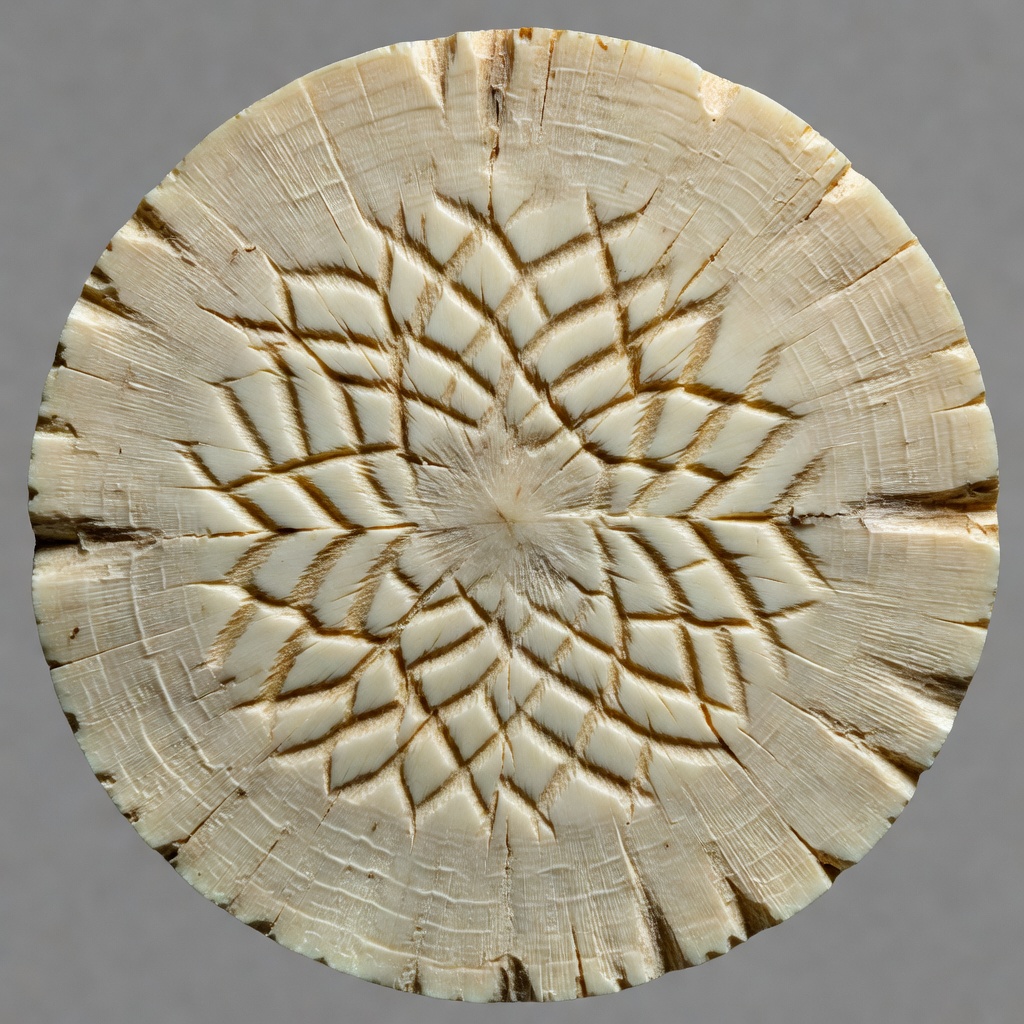
Perhaps the most distinctive feature of elephant ivory lies in its internal architecture, specifically the intersecting Schreger lines that appear as cross-hatched patterns when tusks are sectioned transversely. These lines result from the microlamellar structure of dentin and intersect at characteristic angles—typically around 115 degrees in African elephants and slightly different in Asian species—providing forensic experts with reliable physical properties for species identification. When examined under 10x magnification, these intersecting lines create a checkerboard appearance impossible to replicate perfectly in synthetic materials, serving as a primary authentication method for appraisers and customs officials worldwide.
Practical testing methods for verifying these physical properties include specific gravity measurements using water displacement techniques, where genuine ivory sinks slowly and exhibits particular buoyancy characteristics compared to plastic imitations. Professional conservators also utilize ultraviolet fluorescence testing, as authentic ivory displays a distinct whitish-blue or lavender glow under UV light, whereas bone typically appears white and plastic substitutes often show chalky fluorescence or no reaction whatsoever. These scientific approaches complement visual inspection, creating a multi-layered verification system essential for both museum curation and commercial trade.
Types and Sources of Ivory
While African and Asian elephant ivory dominates public awareness regarding wildlife conservation, the material actually encompasses diverse sources with distinct visual and physical properties that require careful differentiation. African elephant ivory typically displays coarser grain patterns with Schreger lines intersecting at obtuse angles, while Asian elephant ivory tends toward finer, more delicate grain structures with acute angle intersections, differences that experienced carvers can detect through subtle variations in tool resistance and surface texture. These mammoth ivory properties and elephant ivory distinctions become crucial when determining both the legal status and market value of artifacts, as regulations vary dramatically between extinct and extant species.
Extinct woolly mammoth ivory presents unique characteristics resulting from millennia of permafrost preservation, typically exhibiting distinctive brown, blue, or green mineral staining that penetrates the dentin structure and creates iridescent surface patinas unavailable in contemporary elephant ivory. Unlike elephant ivory, which faces strict international trade prohibitions, mammoth ivory properties generally allow legal commerce since the species' extinction eliminates conservation concerns, though some jurisdictions still require documentation proving the material's prehistoric origin through carbon dating or geological context verification. The Schreger lines in mammoth ivory typically intersect at approximately 90 degrees, creating a more perpendicular grid pattern than the diamond-shaped angles found in modern elephant tusks.
Beyond elephantids, the ivory types category includes walrus ivory characterized by its distinctive core structure featuring secondary dentin deposits, sperm whale teeth exhibiting extremely dense, ivory-like qualities used historically in scrimshaw artistry, and warthog tusks displaying cementum layers that create unique visual textures. Narwhal tusks, technically elongated teeth rather than true ivory, possess a distinctive spiral structure and specialized regulatory status under marine mammal protection acts. Each source requires specific identification knowledge, as walrus ivory features a marbled interior completely absent from elephant materials, while hippopotamus teeth—often misidentified as ivory—display a thicker enamel coating and different crystalline structure that affects both appearance and workability for artisans.
Historical Significance and Traditional Applications
The utilization of ivory spans prehistoric periods through contemporary artistic expression, with ancient civilizations including Egypt, Mesopotamia, and the Indus Valley civilization crafting religious statuary, ceremonial furniture inlays, and luxury goods that signified divine connection or royal authority. Egyptian pharaohs commissioned elaborate ivory cosmetic containers and furniture embellishments, believing the material possessed protective properties, while Chinese dynastic courts valued ivory seals and brush handles for their supposed ability to preserve ink quality and resist degradation. These historical ivory uses established precedents for ivory's association with prestige and spiritual significance that persisted through medieval European religious iconography, where ivory diptychs and triptychs represented the highest form of devotional artistry.
The industrial revolution dramatically expanded ivory applications beyond luxury arts into mass manufacturing, with nineteenth-century consumers encountering ivory in piano keys (often called "ivories"), billiard balls, cutlery handles, and personal grooming implements like combs and brush backs. The demand for billiard balls alone threatened elephant populations until inventor John Wesley Hyatt developed celluloid as the first synthetic plastic alternative in 1869, specifically to replace expensive and brittle ivory spheres. Steinway & Sons and other premier piano manufacturers utilized ivory key coverings until the 1980s, valuing the material's moisture-absorbing properties that prevented finger slippage during performances, a practical application that drove massive harvests until plastic alternatives achieved comparable tactile qualities.
Across diverse cultural significance contexts, Japanese netsuke miniatures demonstrate ivory's capacity for microscopic detail work, with master carvers creating articulated figures smaller than thumb-sized that command astronomical prices in contemporary art markets. African artistic traditions utilized ivory for chiefly regalia, including bracelets and scepters that conveyed political authority, while Inuit communities carved walrus ivory into hunting tools and spiritual amulets essential for subsistence survival in Arctic environments. These varied applications illustrate how ivory's unique combination of workability, durability, and luminous appearance—often described as possessing an inner glow or "ivory gleam"—established its irreplaceable status in material culture until ethical concerns and conservation imperatives necessitated alternative materials.
Legal Framework and Trade Regulations
International regulation of ivory commerce centers primarily on the Convention on International Trade in Endangered Species of Wild Fauna and Flora (CITES), which listed African elephants on Appendix I in 1989, effectively prohibiting commercial international trade in their ivory with limited exceptions for specific pre-convention specimens. These legal ivory trade regulations require comprehensive documentation proving that antique ivory items were acquired before 1975 for Asian elephants or before the specific listing dates for various African elephant populations, creating complex compliance requirements for auction houses, museums, and private collectors engaged in cross-border transactions. The regulatory framework operates on a "look-alike" principle, meaning that even mammoth ivory or other legal substitutes may face scrutiny if officials cannot distinguish them from prohibited elephant ivory without expensive laboratory testing.
Domestic legislation varies significantly between jurisdictions, with the United States implementing near-total bans on African elephant ivory importation and interstate commerce through the Endangered Species Act and specific Fish and Wildlife Service regulations that restrict sales to documented antiques over 100 years old. The European Union enacted comprehensive ivory trade prohibitions in 2021, eliminating previous loopholes for "worked" ivory items and requiring strict provenance documentation for musical instruments and art pieces containing ivory components. These CITES ivory implementations demonstrate increasingly restrictive trends, as China—historically the world's largest ivory market—implemented complete domestic trade bans in 2017, followed by similar prohibitions in the United Kingdom, France, and other major consumer nations.
Navigating these regulations requires meticulous record-keeping, including acquisition receipts, authentication certificates, and expert appraisals establishing both the material's species origin and the artifact's manufacturing date. For example, a Victorian-era piano containing ivory keys may require CITES permits for international transport despite being a pre-ban antique, while mammoth ivory generally faces fewer restrictions but may still encounter import prohibitions in countries lacking scientific capacity to distinguish it from elephant ivory. Collectors should consult specialized customs brokers and wildlife law attorneys before acquiring or transporting any ivory-containing items, as penalties for violations include substantial fines, item confiscation, and potential criminal prosecution under trafficking statutes designed to combat organized wildlife crime.
Authentication and Identification Techniques
Professional authentication of ivory relies on multiple complementary methodologies, beginning with visual examination of Schreger lines using 10x magnification to measure intersection angles and assess grain patterns that distinguish between African elephants, Asian elephants, and extinct mammoths. Expert appraisers examine the presence of a "engine-turned" pattern created by intersecting dentin tubules, which appears as intricate cross-hatching in elephant ivory but differs significantly in angle measurements between species, providing definitive ivory identification methods when combined with other physical tests. Additionally, genuine ivory exhibits a distinctive warmth when held, absorbing body heat slowly compared to the immediate cold sensation of plastic substitutes or the rapid thermal conductivity of bone materials.
Scientific testing protocols include ultraviolet fluorescence analysis, where authentic ivory displays a characteristic white-to-blue luminescence distinct from the bright white appearance of bone or the inert/non-fluorescent qualities of most plastics. Specific gravity testing provides quantitative verification, with genuine ivory samples sinking in water at predictable rates corresponding to their 1.7-2.0 g/cm³ density, while the "hot needle test"—though potentially damaging to valuable specimens—reveals organic composition through distinctive burnt-hair odors absent in synthetic materials. These authentication techniques require specialized equipment and training, as modern plastic composites increasingly mimic visual characteristics while failing spectroscopic or chemical analysis.
Distinguishing ivory from common substitutes requires understanding material-specific characteristics: bone displays visible Haversian canals (small pores) throughout its structure, creating a pitted appearance absent in ivory's solid dentin composition, while antler exhibits a spongy core structure and distinct surface texture patterns. Vegetable ivory derived from tagua nuts possesses similar density but lacks Schreger lines entirely, showing instead a uniform cellulose structure under magnification. Case studies from customs laboratories demonstrate that sophisticated counterfeiters occasionally laminate thin ivory veneers over plastic cores, necessitating destructive sampling or advanced imaging techniques like CT scanning to detect composite construction methods designed to circumvent legal restrictions.
Conservation Status and Ethical Considerations
The contemporary ivory conservation status reflects catastrophic population declines, with African savanna elephant numbers dropping by over 60% between 1979 and 1989, while forest elephant populations in Central Africa experienced declines exceeding 90% in certain regions due to intensive poaching driven by black market demand. These statistics underscore the urgent ethical imperative behind international trade prohibitions, as organized criminal networks exploit political instability in range states to fund armed conflicts through ivory trafficking, creating security threats extending far beyond wildlife management concerns. The ethical dimensions of ivory ownership and trade now encompass not only species survival but also human security, as poaching revenues have been linked to militant groups operating across the Sahel and Central Africa.
Economic analyses reveal that ethical concerns regarding ivory trade involve complex socioeconomic factors, including poverty alleviation in rural African communities that bear the costs of human-elephant conflict while receiving minimal benefits from conservation tourism. Successful community-based conservation initiatives in Namibia and Zimbabwe demonstrate that transferring economic benefits from wildlife directly to local landowners creates powerful disincentives for poaching, with communal conservancies reporting significant elephant population recoveries where revenue-sharing models operate effectively. These programs provide alternative livelihoods through eco-tourism, anti-poaching ranger employment, and sustainable resource management, proving that conservation succeeds when local communities view wildlife as assets worth protecting rather than commodities for immediate extraction.
Technological innovations increasingly support conservation efforts, including DNA analysis of seized ivory that identifies poaching hotspots and trafficking routes by matching genetic samples to specific elephant populations, enabling targeted law enforcement interventions. Remote sensing technologies, drone surveillance, and AI-powered camera traps provide real-time monitoring of protected areas, while blockchain initiatives attempt to create transparent supply chains for legal mammoth ivory markets to prevent laundering of illegal elephant products. Case studies from Kenya's Ol Pejeta Conservancy and Botswana's Chobe National Park demonstrate that combining community engagement with high-tech anti-poaching measures can stabilize elephant populations, though long-term survival requires eliminating consumer demand through education campaigns emphasizing the ivory conservation status crisis and the sentience of these keystone species.
Sustainable Alternatives and Synthetic Substitutes
The quest for ethical replacements has yielded several viable synthetic ivory alternatives that satisfy both functional requirements for carving and aesthetic preferences for luminous, fine-grained materials. Vegetable ivory, harvested from the seeds of the tagua palm (Phytelephas macrocarpa) native to South American rainforests, offers remarkably similar physical properties to animal ivory, including comparable density, workability, and the ability to accept high-polish finishes that replicate the coveted "ivory gleam." Unlike animal products, vegetable ivory represents a truly sustainable resource that actually incentivizes rainforest preservation, as tagua palms only produce viable seeds in intact ecosystems, providing indigenous communities with economic alternatives to deforestation while supplying artisans with a material that carvers describe as superior to bone for detailed sculptural work.
Modern materials science has produced high-grade polymer resins specifically engineered to mimic ivory's optical properties, including translucency, refractive indices, and surface hardness, with composite materials incorporating crushed minerals or bone dust to achieve authentic weight and texture. Companies like Piano Chevalier and Yamaha have developed sophisticated plastic key coverings that replicate ivory's moisture-absorbing properties for musical instruments, while 3D printing technologies now enable the creation of complex ivory-replacement components using cruelty-free composite materials that can be dyed to match aged patinas. These synthetic ivory alternatives increasingly satisfy museum conservation standards for restoration work, allowing historical instruments and artifacts to be repaired without utilizing newly sourced animal materials or depleting existing antique ivory stocks.
Artistic communities have embraced these alternatives through initiatives like the Ivory Free Piano project and the Convention of International Jewelry Manufacturers' ethical sourcing guidelines, which explicitly recommend vegetable ivory, Micarta composites, and advanced ceramics for traditional applications. Master carvers report that tagua nut "ivory" actually offers superior detail retention for micro-carving compared to elephant ivory, as the uniform cellulose structure lacks the occasional soft spots or grain irregularities found in animal dentin. Educational programs in traditional ivory-carving regions of China and Japan now teach techniques using these sustainable materials, preserving cultural heritage while eliminating economic incentives for poaching, demonstrating that artistic traditions can evolve without sacrificing endangered species.
Preservation and Care Guidelines
Proper maintenance of ivory artifacts requires strict environmental controls, as this organic material remains hygroscopic—continuing to absorb and release moisture based on ambient humidity levels—making it susceptible to cracking, warping, or delamination when exposed to fluctuating conditions. Conservators recommend maintaining relative humidity between 45-55% and temperatures stable at 65-70°F (18-21°C), with minimal variation, conditions that prevent the dimensional stress that causes ivory to split along grain lines or separate from wooden substrates in composite objects like piano keys or furniture inlays. These ivory preservation standards necessitate climate-controlled display cases or storage rooms, particularly in regions with extreme seasonal variations or dry climates that can desiccate organic materials.
Cleaning protocols emphasize gentle techniques using soft, lint-free microfiber cloths slightly dampened with distilled water or extremely mild soap solutions, avoiding entirely the chemical solvents, alcohol-based cleaners, or abrasive compounds that can strip natural oils and cause irreversible surface damage. Ultrasonic cleaning devices and commercial jewelry dips prove particularly dangerous, as vibration and harsh chemicals can loosen ivory from metal settings or cause internal structural fractures invisible to the naked eye. For artifact care, conservators recommend annual inspections for signs of "ivory disease"—a condition causing white crystalline deposits or surface spalling—and immediate consultation with specialists if yellowing, cracking, or flaking appears, as these symptoms indicate advanced deterioration requiring professional stabilization.
Storage considerations include positioning ivory away from direct sunlight, which accelerates photochemical degradation and causes permanent yellowing, and maintaining separation from materials that might off-gas acids or plasticizers, such as unsealed wood, rubber, or certain adhesives. When displaying ivory sculptures or carvings, support the pieces at multiple points to prevent stress concentrations, and avoid resting items on metal surfaces that can conduct temperature fluctuations. Museums utilize archival-quality polyethylene foam mounts and acid-free tissue barriers, while private collectors should rotate displayed items periodically to ensure even aging and consider using silica gel canisters in display cases to buffer humidity fluctuations. Never apply commercial oils, polishes, or waxes intended for furniture or metals, as these can oxidize and turn rancid within ivory's porous structure, creating disfiguring stains that require professional conservation treatment to remove.
Frequently Asked Questions
What are the main physical properties of ivory?
Ivory is characterized by its unique dentin composition containing hydroxyapatite and collagen, distinctive cross-hatched grain patterns known as Schreger lines, a density of 1.7-2.0 g/cm³, and a creamy white to pale yellow coloration that develops a patina with age. It has a Mohs hardness of 2.5-3.0, making it suitable for detailed carving.
How can you distinguish real ivory from synthetic materials?
Authentic ivory displays intersecting Schreger lines visible under 10x magnification, feels warm to the touch unlike cold plastic, exhibits uneven UV fluorescence, and possesses a unique grain structure. Bone shows visible pores (Haversian canals), while plastic typically has uniform patterns without natural variation.
Is it legal to buy or sell ivory products?
Legality depends on your jurisdiction and the item's age and species; most countries prohibit post-1975 African elephant ivory trade under CITES regulations. Pre-ban antiques may be legal with proper documentation proving age, while mammoth ivory generally faces fewer restrictions. Always verify local laws before purchasing.
What is the difference between elephant and mammoth ivory?
While chemically similar, mammoth ivory typically displays brown or blue mineral staining from permafrost burial, has a different Schreger line angle pattern averaging 90 degrees versus 115 degrees in elephant ivory, and is legal to trade internationally since woolly mammoths are extinct, unlike endangered elephants.
Why are there strict regulations on ivory trade?
International restrictions aim to combat elephant poaching, which has devastated populations by 90% in some African regions, disrupt criminal trafficking networks funding armed conflict, protect biodiversity, and ensure elephant survival for future generations by eliminating commercial incentives for killing.
What are the best ethical alternatives to natural ivory?
Vegetable ivory from tagua nuts offers nearly identical carving properties and workability, while high-grade resins and properly processed bone can replicate appearance. Modern 3D printing using composite materials creates sustainable, cruelty-free alternatives that protect wildlife while preserving traditional craftsmanship techniques.
How should antique ivory artifacts be preserved?
Store ivory at stable humidity (45-55%) and temperature (65-70°F), away from direct sunlight, heat sources, and vents. Clean gently with a slightly damp soft cloth and mild soap, avoiding chemical cleaners, ultrasonic devices, or water soaking. Never use oils or polishes that can yellow the material.
What makes ivory valuable in traditional craftsmanship?
Ivory's fine, uniform grain allows intricate carving without splintering, accepts pigments and takes a high polish beautifully, possesses a unique luminous quality called "ivory gleam," and carries historical prestige as a luxury material prized for religious icons, musical instruments, and decorative arts across multiple civilizations.


