Understanding Ivory Composition and Aging Characteristics
Ivory represents one of the most fascinating organic materials used in decorative arts, sculpture, and functional objects throughout human history. Unlike synthetic materials or mineral-based carvings, ivory consists primarily of dentin—a calcified tissue containing microscopic tubules that give the material its characteristic grain pattern and slight translucency. This organic composition makes ivory hygroscopic, meaning it naturally absorbs and releases moisture from the surrounding atmosphere, causing subtle dimensional changes that collectors must understand before beginning any ivory care and cleaning regimen.
The aging process of ivory creates a complex relationship between desirable patina development and potentially damaging deterioration. Natural aging produces a warm, creamy surface sheen that develops over decades as the material oxidizes gently, often enhancing the aesthetic value of antique ivory characteristics in pieces from the 18th and 19th centuries. However, this natural patina differs significantly from the harsh yellowing and embrittlement caused by environmental stressors including ultraviolet radiation exposure, extreme temperature fluctuations, and airborne pollutants that attack the protein structures within the dentin matrix.
Environmental factors play a decisive role in determining whether ivory ages gracefully or deteriorates prematurely. Direct sunlight accelerates photochemical degradation, breaking down collagen bonds and causing surface cracking, while rapid humidity swings force the material to expand and contract repeatedly, leading to structural fatigue. Understanding these material properties helps collectors recognize that ivory composition requires a stable microclimate that mimics the steady conditions found in underground deposits where raw ivory originally formed, rather than the variable environments typical of modern homes.
Essential Tools and Materials for Safe Ivory Cleaning
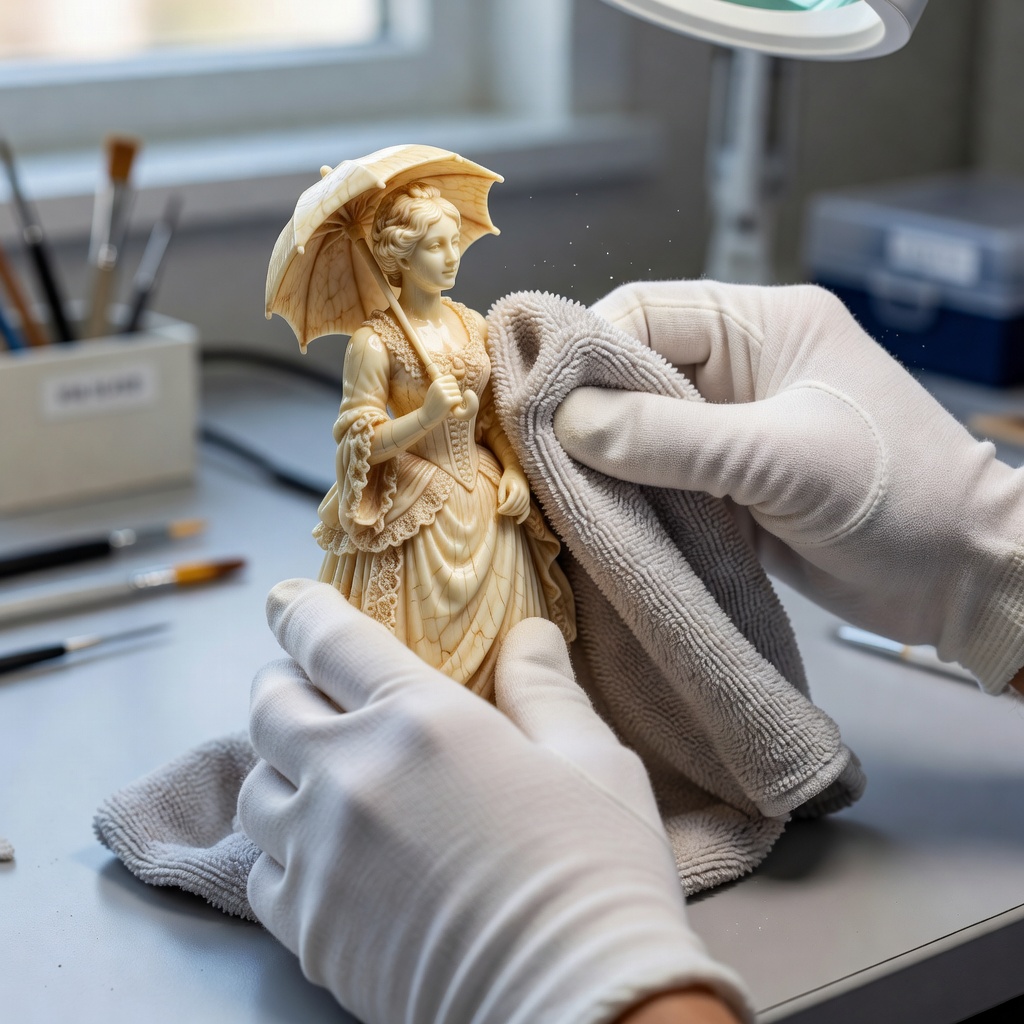
Successful antique ivory maintenance begins with assembling a specialized toolkit designed specifically for organic materials, avoiding the temptation to use general household cleaning products. The foundation of safe cleaning materials includes distilled water—never tap water which contains minerals and chlorine that can leave deposits—combined with pure, additive-free glycerin soap that provides gentle surfactant action without harsh chemicals. Professional conservators also rely on lint-free microfiber cloths that trap dust without scratching, along with soft camel hair brushes in various sizes to reach intricate carving details where dust accumulates.
Understanding what not to use proves equally critical for preserving ivory integrity across generations. Commercial all-purpose cleaners, alcohol-based solutions, ammonia compounds, bleach, and abrasive polishes rank among the most dangerous substances for ivory cleaning tools, as these materials disrupt the pH balance of the organic structure. Alcohol rapidly dehydrates the material causing immediate shrinkage and cracking, while ammonia attacks the protein content, permanently weakening the structural bonds that hold the dentin together. Even seemingly gentle products like baby wipes or furniture polishes contain emollients and chemicals that leave residues attracting future dust and accelerating deterioration.
The importance of pH-neutral materials cannot be overstated when establishing an ivory preservation environment, as ivory naturally maintains a slightly acidic pH between 5.5 and 6.5. Introducing alkaline substances shifts this balance, causing the material to become brittle and susceptible to fracture. When selecting cleaning cloths, choose unbleached cotton or specialized conservation-grade microfiber rather than dyed fabrics that might transfer color, and always test any new material on an inconspicuous area before applying it to visible surfaces of valuable artifacts.
Step-by-Step Ivory Cleaning Techniques
Proper ivory cleaning techniques follow a graduated approach beginning with the least invasive methods before considering any contact with moisture. Start by placing the object on a clean, padded surface under bright, diffused light to examine surface conditions. Using a soft camel hair brush held at a shallow angle, gently sweep away loose particulate matter, working from the top downward to prevent redepositing dust onto already-cleaned areas. For carved pieces with deep undercuts or textured surfaces, employ a brush with longer, flexible bristles that can reach recessed areas without applying pressure that might snap delicate projections.
When dry cleaning proves insufficient, implement damp cleaning protocols using minimal moisture and immediate drying techniques to prevent water absorption. Lightly dampen—never saturate—a microfiber cloth with the distilled water and glycerin soap solution, wringing until the cloth feels barely cool to the touch rather than wet. Wipe the surface using straight, gentle strokes following the natural grain direction, immediately following with a dry cloth to remove any residual moisture. Never submerge ivory completely or allow water to pool in carved details, as prolonged wetness swells the tubules and can cause irreversible warping or staining.
Frequency recommendations for how to clean ivory depend heavily on display conditions and handling frequency. Objects in open display cases within average home environments benefit from dusting every four to six weeks and thorough cleaning every three to four months, while pieces stored in archival boxes require only annual inspection and light maintenance. Items subjected to frequent handling, such as piano keys or utensil handles, need monthly cleaning to remove acidic oils transferred from skin contact. Establishing a consistent calendar prevents the accumulation of grime that requires aggressive cleaning while monitoring for early signs of environmental damage.
Addressing Yellowing and Discoloration Issues
Discerning collectors must differentiate between the natural patina that enhances antique ivory maintenance and the damaging oxidation stains that signal environmental distress. Natural aging produces a warm, honey-colored surface layer that remains translucent and integrated with the underlying material, often appearing most beautifully on areas that received gentle handling over centuries. Conversely, damaging yellowing appears uneven, splotchy, or concentrated on surfaces exposed to light, accompanied by surface chalkiness or a sulfuric smell indicating protein breakdown requiring immediate intervention.
Conservation-grade surface brightening requires professional expertise and specialized materials unavailable to home collectors, involving carefully controlled applications of non-ionic surfactants and possible gentle poultices that draw out staining without bleaching the structure. Some museums employ controlled exposure to specific wavelengths of light under expert supervision, though this remains strictly experimental and inappropriate for private collections. The key principle underlying all legitimate ivory yellowing prevention involves stopping the degradation process through environmental controls rather than attempting to reverse color changes cosmetically.
The dangers of DIY whitening solutions cannot be emphasized strongly enough for those engaged in cleaning ivory artifacts. Hydrogen peroxide treatments popularized online cause catastrophic embrittlement by oxidizing the organic matrix, while sunlight bleaching creates extreme temperature differentials that crack the surface. Abrasive whitening compounds including toothpaste, baking soda, or jeweler's rouge permanently scratch the surface, destroying the smooth polish that skilled carvers achieved and creating microscopic crevices where future dirt accumulates. Once these damage patterns occur, professional conservators can only stabilize the piece, never fully restoring the original surface integrity.
Climate Control and Proper Storage Solutions
Creating an optimal ivory preservation environment requires maintaining precise atmospheric conditions that minimize the material's natural expansion and contraction cycles. The ideal relative humidity range falls between 45% and 55%, providing sufficient moisture to prevent the dehydration that causes cracking while avoiding saturation that promotes mold growth or swelling. Temperature stability proves equally crucial, with target ranges of 65-70°F (18-21°C) preventing the thermal shock that occurs when ivory moves between significantly different environments, such as storage areas and display rooms.
Selecting appropriate ivory storage methods involves choosing archival materials that buffer environmental fluctuations without introducing chemical contaminants. Wrap individual pieces in acid-free tissue paper or unbleached cotton muslin, avoiding colored fabrics or dyed materials that might transfer pigments during long-term contact. Include conditioned silica gel packets designed for museum use—indicating types that change color when saturated—within storage containers to absorb excess moisture during humid periods. Store boxed items within solid cabinetry rather than open shelving, positioning them away from exterior walls where temperature varies seasonally.
Location selection significantly impacts the longevity of stored collections, requiring strict avoidance of attics, basements, garages, and areas near bathrooms or kitchens where humidity fluctuates dramatically. Basements risk flooding and sustained high humidity promoting biological growth, while attics experience temperature extremes exceeding 120°F in summer and freezing conditions in winter. Even within climate-controlled homes, avoid positioning ivory near heat vents, radiators, or windows where direct sunlight creates hotspots. For valuable collections, consider dedicated humidity-controlled display cases or museum-quality storage cabinets that provide passive climate buffering.
Handling and Display Best Practices
Proper ivory handling techniques begin with recognizing that human skin presents the most immediate threat to unprotected artifacts through the transfer of acidic oils, salts, and moisture. Always wear clean, lint-free cotton gloves when moving or examining pieces, changing them if they become soiled or if you have applied hand lotion recently. If gloves are unavailable, wash hands thoroughly with unscented soap, rinse completely, and dry with unbleached paper towels before handling, supporting the object at its strongest structural points rather than grasping delicate projections or thin areas.
Display case specifications for showing ivory artifacts must incorporate UV-filtering glass or acrylic that blocks 99% of ultraviolet radiation while allowing visible light transmission for viewing. Cases should provide adequate air circulation to prevent the buildup of off-gassing from display fabrics or nearby wood surfaces, yet remain sealed enough to exclude dust and household pollutants. Interior lighting should utilize LED sources that emit minimal heat and UV radiation, positioned to avoid creating hotspots on the ivory surface while illuminating details effectively.
Implementing rotation schedules for exhibited pieces ensures even aging across collections while minimizing light damage to individual objects. Museum professionals recommend limiting any single item's exposure to six months of display followed by six months of dark storage, though private collectors might adjust this based on light intensity and piece value. During rotation, conduct thorough inspections for new cracks, discoloration, or loosening of attached elements like metal mounts or inlays. This practice not only preserves the physical condition but also refreshes the visual presentation of collections, allowing viewers to appreciate different pieces while resting others.
Stabilizing Minor Damage and Preventing Cracks
Early identification of dehydration stress allows collectors to intervene before catastrophic failure occurs, recognizing warning signs including hairline cracks perpendicular to the grain direction, surface checking that resembles alligator skin, and a dull, chalky appearance replacing normal luster. These symptoms indicate that the ivory has lost moisture content below sustainable levels, causing the tubules to shrink and the surface to tension-crack. Immediate environmental correction—raising humidity gradually over weeks rather than hours—can sometimes halt progression, though existing cracks rarely close completely without professional ivory restoration techniques.
Consolidation of fragile areas requires conservation-grade adhesives specifically formulated for proteinaceous materials, such as highly diluted Acryloid B-72 or fish glue preparations used by qualified conservators. These materials penetrate micro-cracks, binding loose fibers without creating glossy surface films or discoloration. Under no circumstances should collectors attempt DIY repairs using superglue, epoxy resins, or wood fillers, as these modern materials create irreversible barriers preventing future professional treatment and often react chemically with ivory causing accelerated yellowing or hardening that leads to further fracture.
Stabilizing existing cracks involves creating bridges across fractures using reversible materials that accommodate continued minute movement while preventing the crack from widening. Professional conservators might apply Japanese tissue paper strips adhered with wheat starch paste across the crack's surface, or inject consolidants deep into the fissure using capillary action. For collectors noticing new cracks, the immediate response should involve placing the object in a stable humidity environment and contacting a conservator rather than attempting to force cracks closed or fill them with home remedies that compromise future treatment options.
Legal Considerations and Ethical Stewardship
Navigating the regulatory landscape surrounding antique ivory legal status requires understanding international agreements including CITES (Convention on International Trade in Endangered Species) and national legislation that varies significantly between jurisdictions. In the United States, the Endangered Species Act and recent near-total ivory bans allow limited exceptions for antique ivory documented as imported prior to 1976 or manufactured before specific cutoff dates, though interstate commerce restrictions continue evolving. Owners must maintain provenance documentation including import permits, estate inventories, or authentication papers proving the item's age and legal acquisition to demonstrate compliance during routine cleaning or appraisal activities.
Distinguishing between pre-ban antiques and modern ivory affects not only legal ownership but also appropriate care methodologies, as materials from different eras may exhibit varying conditions based on age and previous storage. Pre-Act ivory often shows natural aging patterns including stable patina and minor surface wear that should be preserved rather than aggressively cleaned, while newer materials might require different stabilization approaches. When performing antique ivory maintenance, avoid any alterations that could obscure the object's age characteristics or be interpreted as attempting to disguise the material's origin, such as removing natural stains or refinishing surfaces that provide dating evidence.
Ethical stewardship extends beyond legal compliance to embrace the responsibility of preserving cultural heritage items for future generations. Collectors serve as temporary custodians of objects that may represent significant artistic, historical, or anthropological value, requiring documentation of care history, environmental conditions, and any treatments performed. This stewardship mentality informs decisions about display, cleaning frequency, and restoration, prioritizing the long-term survival of the object over immediate aesthetic preferences. Joining professional organizations such as the American Institute for Conservation provides access to current best practices and ethical guidelines that evolve with conservation science.
Creating a Long-Term Maintenance Schedule
Establishing a systematic ivory maintenance schedule ensures that environmental monitoring and physical inspections occur regularly rather than sporadically when problems become visible. Quarterly inspection routines should include checking hygrometer readings in display and storage areas, examining silica gel conditions, and visually inspecting each piece for new cracks, color changes, or evidence of insect activity. Document these inspections in a dedicated log noting date, environmental readings, and any observations, creating a longitudinal record that helps identify slow deterioration patterns before they become critical.
Photographic documentation standards require consistent lighting, camera settings, and positioning to enable accurate comparison over years of collection care. Photograph each piece against a neutral gray background using natural daylight or color-corrected lighting, including scale markers and views of all sides plus detail shots of damaged areas or maker's marks. Update these photographs annually or whenever condition changes occur, storing digital files in multiple locations alongside written condition reports describing surface texture, color, and structural integrity using standardized conservation terminology.
Professional conservation assessments every two to three years provide expert evaluation of items showing signs of stress or simply as preventive care for valuable collections. During these assessments, conservators can perform specialized cleaning impossible at home, test environmental conditions with professional equipment, and apply consolidants to early-stage cracks invisible to untrained observers. These scheduled consultations establish relationships with conservation professionals who can provide emergency guidance if disasters occur, and ensure that long-term ivory care strategies remain current with evolving preservation science.
When to Consult Professional Conservators
Recognizing red flags that exceed home care capabilities protects valuable pieces from well-intentioned but damaging amateur interventions. Active flaking indicates advanced degradation where the ivory surface separates in thin layers, requiring immediate stabilization in a controlled environment before handling. Severe warping or dimensional changes suggest internal structural compromise, while biological growth including mold, mildew, or insect boring requires specialized remediation to kill organisms without damaging the host material. Any evidence of previous poor repairs, such as yellowed glue lines or mismatched fills, also warrants professional assessment to prevent further deterioration.
Selecting qualified professional ivory conservation services requires verifying credentials through the American Institute for Conservation (AIC), which maintains directories of certified professionals specializing in organic materials. Seek conservators with specific experience in ivory or bone artifacts rather than general art restorers, examining portfolios of previous work and requesting references from institutional clients. During initial consultations, ethical conservators will explain treatment options ranging from passive stabilization to active intervention, providing written treatment proposals detailing methods, materials, and expected outcomes before beginning work.
Understanding the distinction between cosmetic restoration and structural conservation helps collectors communicate goals effectively with professionals. Cosmetic approaches aim to improve appearance through surface cleaning, minor color adjustment, or filling losses to improve visual continuity, while structural conservation addresses physical stability and long-term preservation regardless of aesthetic outcome. For museum-quality pieces or items with significant monetary value, structural conservation generally takes precedence, accepting that some age marks remain visible as evidence of authenticity. Reputable conservators will always prioritize reversible treatments using materials compatible with ivory chemistry, ensuring that today's solutions do not become tomorrow's problems.
Frequently Asked Questions
What is the safest way to perform ivory care and cleaning at home?
The safest method involves using a soft, dry microfiber cloth or camel hair brush to remove dust. For deeper cleaning, slightly dampen the cloth with distilled water and pure glycerin soap, wipe gently, and dry immediately with a clean cloth. Never submerge ivory or use commercial cleaners, alcohol, or bleach.
Why does ivory turn yellow over time?
Ivory yellows due to natural oxidation of organic proteins within the material, accelerated by exposure to UV light, heat, and fluctuating humidity. While some patina is normal aging, excessive yellowing indicates environmental damage. Proper storage away from sunlight and stable climate control can significantly slow this process.
How often should ivory items be cleaned?
Displayed ivory should be dusted monthly and thoroughly cleaned every 3-6 months depending on environmental conditions. Items in storage require inspection and light cleaning every 6-12 months. Over-cleaning can damage ivory, so clean only when visibly dusty or when preparing for display changes.
Is it legal to clean and maintain antique ivory possessions?
Yes, cleaning and maintaining legally acquired antique ivory (typically pre-1976 or pre-ban depending on jurisdiction) is legal. However, owners should maintain documentation proving the item's age and legal acquisition. Never attempt to alter or repair ivory in ways that could be interpreted as disguising its origin or age.
Can cracked ivory be repaired?
Minor surface cracks can sometimes be stabilized by professional conservators using conservation-grade adhesives, but they cannot be truly 'repaired' or made invisible without compromising value. DIY repairs with superglue or fillers cause irreversible damage. Deep structural cracks require immediate professional assessment to prevent complete failure.
What household products should never be used on ivory?
Never use vinegar, lemon juice, baking soda, toothpaste, baby wipes, furniture polish, window cleaners, or alcohol-based products on ivory. These substances are either too acidic, alkaline, or abrasive, causing permanent etching, discoloration, or structural weakening of the organic material.
How should ivory jewelry be stored to prevent damage?
Store ivory jewelry in acid-free tissue or unbleached cotton in a stable environment with 45-55% humidity. Avoid plastic bags which trap moisture, and separate pieces to prevent scratching. Store away from direct sunlight, heat sources, and areas with fluctuating temperatures like bathrooms or exterior walls.
Does ivory need to be conditioned or oiled regularly?
No, ivory does not require conditioning oils, waxes, or commercial 'feed' products. These can attract dust, cause yellowing, or create harmful residue buildup. Ivory maintains its condition through proper environmental humidity (45-55%) rather than topical treatments. If ivory appears dry or brittle, consult a conservator rather than applying home remedies.