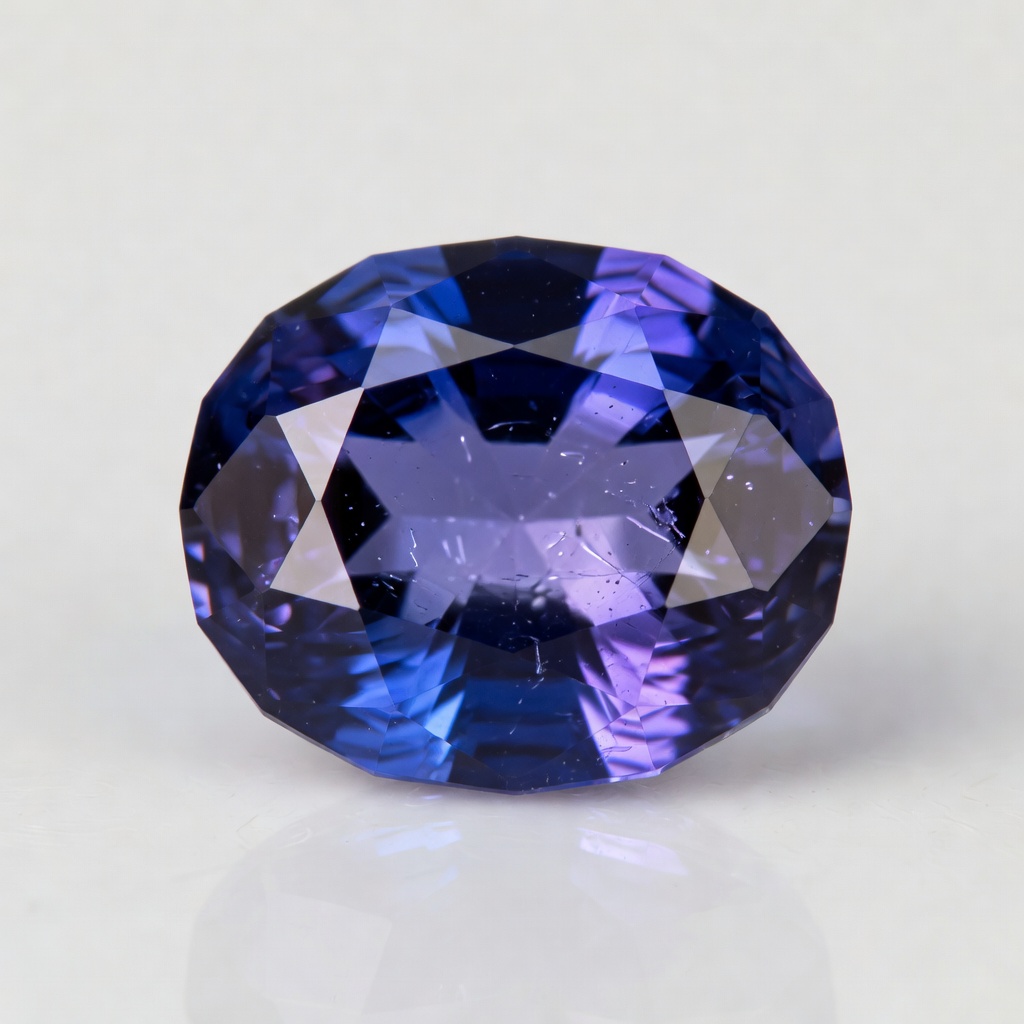
What Is Iolite? Understanding This Pleochroic Gemstone
Iolite, scientifically known as transparent gem-quality cordierite, stands as one of the jewelry world's best-kept secrets among blue gemstones. Often called "water sapphire" due to its striking resemblance to blue sapphire when viewed from specific angles, this mineral offers remarkable visual appeal at a fraction of the cost of its precious counterparts. The gemstone's name derives from the Greek word "ios," meaning violet, which perfectly describes its most coveted color range. Unlike many blue gemstones that rely on heat treatment or other enhancements to achieve their color, most iolite on the market occurs naturally with its attractive blue-violet hues.
The most distinctive characteristic affecting iolite gemstone value is its remarkable pleochroism, a property where the stone displays different colors when viewed from various angles. High-quality specimens exhibit strong trichroism, showing violet-blue, pale blue, and yellow-gray colors depending on the crystal orientation. This optical phenomenon occurs because iolite's crystal structure absorbs light differently along different axes. When properly cut to maximize the violet-blue color face-up, pleochroic iolite creates a mesmerizing depth that rivals stones costing ten times as much.
Commercial iolite mining primarily occurs in Sri Lanka, Madagascar, Myanmar, and India, with each location producing slightly different color characteristics. Sri Lankan material typically commands premium pricing due to its historically consistent deep violet-blue saturation. Beyond modern jewelry applications, iolite carries fascinating historical significance as the legendary Viking navigation stone. Norse sailors used thin slices of iolite to locate the sun on overcast days, taking advantage of the mineral's polarizing properties to determine direction when stars were invisible.
Six Critical Factors That Determine Iolite Price
Color Intensity and Saturation Levels
Color represents the single most important factor in natural iolite quality factors, with deep violet-blue stones commanding significantly higher prices than pale or grayish specimens. Top-quality iolite displays a rich, saturated blue-violet hue reminiscent of fine tanzanite or sapphire, while lower-grade material may appear washed-out or steely gray. Stones with strong color saturation can fetch prices 300-400% higher than their pale counterparts, even when all other quality factors remain equal. When evaluating color, examine the stone face-up under natural daylight, as this orientation reveals how the gem will appear when set in jewelry.
Pleochroism Strength and Visual Impact
The intensity of pleochroism directly correlates with iolite cost per carat, as strong trichroism indicates superior crystal quality and proper cutting orientation. Expert gemologists look for distinct color shifts when rotating the stone: the table should display violet-blue, while the sides reveal yellow-gray or pale blue. Specimens exhibiting weak pleochroism or showing predominantly gray colors face-up typically sell for 30-50% less than those with dramatic color changes. Master cutters specifically orient iolite rough to minimize the yellow-gray axis visibility, maximizing the stone's commercial appeal and value.
Clarity Grades and Inclusion Patterns
Eye-clean iolite stones without visible inclusions to the unaided eye represent the standard for fine jewelry and command premium pricing. However, unlike diamonds where any inclusion significantly impacts value, iolite commonly contains characteristic needle-like inclusions that resemble fine silk threads. These natural features, when minimal and aesthetically placed, do not dramatically reduce value unless they affect transparency or durability. Avoid stones displaying surface-reaching fractures or prominent dark crystals, as these inclusions compromise both beauty and structural integrity, potentially reducing value by 40-60%.
Cut Quality and Orientation Precision
Proper cutting transforms iolite rough into valuable gemstones by orienting the crystal to display the most desirable blue-violet color through the table facet. Poorly oriented cuts that display the yellowish or grayish pleochroic axis face-up can render even high-quality rough virtually unsalable. Premium cutting also maximizes brilliance and light return while maintaining optimal weight retention. Custom-cut stones from renowned lapidaries often carry 20-30% premiums over commercial cutting due to superior symmetry, polish, and color optimization.
Carat Weight and Size Premiums
While iolite cost per carat remains relatively modest for smaller stones, prices increase exponentially for specimens exceeding five carats due to rarity in larger sizes. Commercial-grade iolite under three carats might cost $15 per carat, while similar quality stones over five carats could command $45-60 per carat. Collector-grade specimens over ten carats with exceptional color and clarity can reach $200-300 per carat, representing a significant jump from smaller commercial material. This pricing structure makes iolite particularly attractive for statement pieces and cocktail rings where larger sizes remain affordable.
Origin Documentation and Geographic Premiums
While iolite from Madagascar, Myanmar, and India produces excellent gem material, Sri Lankan origin typically commands 15-25% premiums due to historical reputation and consistent quality. Reputable dealers provide origin documentation for high-value specimens, though laboratory reports do not always specify geographic sources for iolite. When purchasing investment-grade stones over $1,000, request documentation verifying the material's source, as provenance can affect future resale value and collector interest. However, prioritize visual quality over origin claims, as exceptional material from lesser-known sources often outperforms mediocre stones from prestigious locations.
Complete Iolite Price Per Carat Breakdown (2024)
Understanding current market pricing requires examining specific quality tiers that define the Iolite Price Guide for 2024. Commercial-grade iolite, characterized by pale color saturation or visible inclusions, typically ranges from $8 to $25 per carat for stones between one and three carats. These specimens may show grayish tones face-up or contain eye-visible inclusions that affect transparency. While suitable for fashion jewelry or beginner collectors, commercial-grade material lacks the visual impact and investment potential of finer categories.
Good-grade iolite featuring medium color saturation and eye-clean clarity commands $25 to $75 per carat, representing the sweet spot for quality jewelry pieces. These stones display pleasant blue-violet hues with acceptable pleochroism and minimal inclusions visible only under 10x magnification. This tier offers excellent value for engagement rings, pendants, and earrings where durability and appearance matter more than investment potential. Most consumers find this quality range provides the best balance between beauty and affordability.
Fine-grade iolite with strong violet-blue color, excellent cut orientation, and high clarity ranges from $75 to $150 per carat. These specimens display the strong pleochroism and saturation that make iolite desirable, rivaling the appearance of tanzanite at significantly lower prices. Collector and top-grade material, featuring exceptional trichroism, large size (over 5 carats), and flawless clarity, can exceed $150 to $300 per carat. Museum-quality specimens with unique characteristics or historical significance may command even higher prices at specialized auctions.
Size significantly impacts pricing structures, with stones over five carats commanding two to three times the per-carat rate of smaller specimens. Unlike diamonds where size premiums follow predictable curves, iolite pricing reflects the genuine scarcity of large, clean crystals. Regarding treatments, approximately 95% of iolite on the market remains completely natural and untreated, unlike tanzanite which routinely undergoes heat treatment. This untreated status enhances iolite gemstone value for collectors seeking natural, unenhanced colored stones.
Iolite vs. Tanzanite vs. Sapphire: Price Comparison Analysis
When evaluating blue-violet gemstones, iolite vs tanzanite price comparisons reveal dramatic differences that make iolite an exceptional value proposition. Fine iolite typically costs one-tenth to one-fifteenth the price of comparable tanzanite, with a 3-carat fine iolite ranging $225-$450 while equivalent tanzanite commands $3,000-$7,500. This massive price differential stems primarily from tanzanite's single-source scarcity and aggressive marketing rather than proportional differences in beauty or durability. For budget-conscious buyers seeking the blue-violet aesthetic without the premium price tag, iolite delivers comparable visual impact at significantly lower investment levels.
Comparing iolite to blue sapphire reveals even starker price distinctions, with fine sapphire costing 20 to 100 times more than similar-quality iolite. A fine 2-carat blue sapphire might cost $4,000-$8,000, while a visually comparable iolite ranges $100-$300. However, these price differences reflect genuine durability variations: sapphire ranks 9 on the Mohs hardness scale versus iolite's 7-7.5, making sapphire superior for daily-wear rings. Iolite's hardness exceeds tanzanite's 6.5 rating, positioning it as the middle ground between these popular blue gemstones in terms of both price and durability.
Visual identification between these stones requires careful examination under proper lighting. Iolite displays stronger pleochroism than either sapphire or tanzanite, showing distinct color shifts when rotated. Tanzanite typically appears more violet-purple than iolite's blue-violet range, while sapphire exhibits purer blue tones without the violet component. For jewelry applications, iolite offers the best value for occasional-wear pieces, pendants, and earrings where hardness concerns diminish. When set in protective mountings and worn with care, iolite provides the sapphire look without the sapphire investment, making it ideal for fashion-forward buyers and collectors building diverse gemstone portfolios.
How to Identify High-Value Iolite When Buying
Mastering pleochroic iolite buying tips begins with understanding the pleochroism test, the most reliable method for assessing quality and authenticity. Hold the stone under natural daylight and slowly rotate it, observing whether you see three distinct colors: violet-blue through the table, and yellow-gray or pale blue through the sides. High-value specimens display dramatic, instantaneous color changes, while lower-quality material shows subtle shifts or predominantly gray tones. This simple test requires no equipment yet reveals more about iolite quality than many laboratory tests, as strong pleochroism indicates both natural origin and proper crystalline structure.
Color evaluation demands examining the stone face-up under various lighting conditions, prioritizing deep violet-blue hues over pale or steely appearances. The most valuable iolite resembles fine tanzanite or cornflower sapphire, with saturated color that remains vibrant even in dim lighting. Inspect the stone against a white background to detect any gray or brown modifiers that reduce value. When examining larger stones over three carats, ensure the color remains consistent throughout the gem rather than concentrating only in the center or edges, as uneven color distribution indicates poor rough quality or improper cutting.
Inclusion inspection using a 10x loupe helps distinguish between acceptable natural characteristics and value-reducing flaws. Natural iolite typically contains fine, thread-like inclusions resembling silk; these actually confirm natural origin and rarely affect durability. However, avoid stones displaying surface-reaching fractures, prominent dark crystals, or cloudiness that reduces transparency. For purchases exceeding $500, always request certification from respected laboratories such as GIA (Gemological Institute of America) or AGS (American Gem Society). These reports verify natural origin, absence of treatment, and provide objective quality assessments that protect your investment and ensure fair pricing.
Best Places to Purchase Iolite Gemstones
The modern gemstone marketplace offers multiple avenues for acquiring quality iolite, each presenting distinct advantages for different buyer profiles. Online retailers like Blue Nile and James Allen provide extensive inventories with detailed specifications and return policies, allowing comparison shopping across hundreds of stones. Specialized online gem dealers focusing on colored stones often offer superior value and expertise compared to general jewelry retailers, particularly for cordierite gemstone pricing and rare specimens. When purchasing online, insist on high-resolution videos showing the stone under natural light from multiple angles to assess pleochroism accurately.
Brick-and-mortar jewelers provide the irreplaceable benefit of in-person evaluation, allowing buyers to examine pleochroism and color saturation firsthand before committing to purchase. Local jewelers often maintain relationships with cutters and wholesalers, potentially sourcing specific sizes or qualities upon request. However, physical retailers typically carry higher overhead costs that translate to 30-50% premiums over online sources. For the best of both worlds, research prices online first, then visit local dealers to compare actual stones against your price research.
Gem shows represent premier sourcing opportunities for serious collectors and investors, with the Tucson Gem and Mineral Show and Bangkok Gem and Jewelry Fair offering direct access to rough and cut material. These events allow buyers to compare hundreds of stones simultaneously, negotiate directly with cutters, and discover unique specimens absent from retail channels. For collector-grade stones over $5,000, established auction houses like Heritage Auctions and Christie's occasionally feature exceptional iolite lots alongside major gemstones. When purchasing from any source, ask specific questions about treatment history, origin documentation, and return policies to ensure transparent transactions.
Iolite Investment Potential and Market Trends
The iolite jewelry investment landscape shows promising growth trajectories, with market analysis indicating 15% annual demand increases for untreated colored gemstones including iolite. This surge reflects broader consumer trends toward ethically sourced, natural stones with traceable origins. Unlike heavily treated tanzanite or synthesized sapphire, iolite's predominantly untreated status appeals to collectors prioritizing natural rarity. Fine-grade untreated iolite has demonstrated 3-5% annual appreciation over the past decade, particularly for specimens exceeding five carats with exceptional pleochroism.
Resale value retention for quality iolite typically ranges between 40-60% of retail pricing, comparable to other semi-precious colored stones but below precious gems like ruby or emerald. However, this metric improves significantly for collector-grade specimens with documentation, large sizes, or unique characteristics. Limited supply from traditional mines in Sri Lanka and Madagascar supports long-term value stability, as no major new deposits have emerged recently. When compared to other investment-grade colored stones like spinel or tourmaline, iolite offers lower entry points with comparable appreciation potential, making it accessible to mid-level investors.
Expert predictions for 2025-2030 suggest continued steady growth for fine iolite, particularly as tanzanite prices rise and consumers seek affordable alternatives. The gemstone's increasing popularity in alternative engagement rings and ethical jewelry collections drives demand among younger demographics. For investment purposes, focus on untreated stones over three carats with strong pleochroism and origin documentation. While iolite may not deliver the dramatic returns of sapphire or ruby, its stability, natural status, and growing market recognition position it as a solid portfolio diversification option for colored gemstone investors.
Common Buying Mistakes That Cost You Money
One of the most expensive errors in iolite buying guide scenarios involves paying sapphire-equivalent prices for iolite due to misidentification or dealer misrepresentation. Unscrupulous sellers occasionally market iolite as "water sapphire" at inflated prices, exploiting the nickname to confuse buyers. Before purchasing, research current market rates thoroughly: if a blue stone under two carats costs over $500 per carat, verify whether it's actually sapphire rather than iolite. Always request written confirmation of the gemstone's identity and treatment status to protect against fraud.
Ignoring pleochroism strength represents another costly mistake, as weak color change indicates either poor cutting orientation or inferior rough material. Some buyers focus solely on face-up color without rotating the stone, missing the diagnostic yellow-gray or pale blue axes that reveal cutting quality. Stones showing predominantly gray colors face-up, regardless of low price points, offer poor value because they lack the violet-blue beauty that makes iolite desirable. Additionally, confusing gem-grade iolite with common cordierite mineral specimens leads to disappointment; while chemically identical, only transparent, faceted cordierite qualifies as iolite jewelry material.
Skipping certification for purchases over $1,000 creates significant financial risk, as laboratory reports verify natural origin, absence of treatment, and quality grades. Without documentation, resale becomes difficult and insurance valuations remain questionable. Finally, avoid stones with poor cut orientation that display gray or yellowish colors face-up, even if priced attractively. These poorly oriented cuts cannot be recut economically due to iolite's specific gravity and cleavage patterns, leaving buyers stuck with unattractive stones. Always examine iolite under daylight rather than jewelry store spotlights, which can mask color deficiencies and pleochroism weaknesses.
Iolite Jewelry Care and Long-Term Value Protection
Proper maintenance significantly impacts iolite gemstone value retention over time, beginning with appropriate cleaning methods. Clean iolite jewelry using only warm soapy water and a soft brush, avoiding ultrasonic cleaners and steam cleaning that can exacerbate existing inclusions or cause thermal shock. The stone's distinct cleavage planes make it vulnerable to damage from vibration and rapid temperature changes. After cleaning, rinse thoroughly and pat dry with a lint-free cloth to prevent water spots that might dull the surface luster.
Durability concerns necessitate careful setting selection and wear patterns for iolite jewelry. With hardness of 7-7.5 on the Mohs scale and distinct cleavage in one direction, iolite suits pendants, earrings, and occasional-wear rings better than daily-wear engagement rings. If used in rings, protective settings like bezels or halos minimize impact exposure. Remove iolite jewelry during sports, gardening, household cleaning, or any activity involving potential impact against hard surfaces. Store pieces separately from harder gems like diamonds, sapphires, or rubies to prevent scratching, using individual cloth bags or compartmentalized jewelry boxes.
Insurance considerations protect your investment in pieces valued over $500, requiring professional appraisals from certified gemologists every three to five years. Appraisals should document the stone's weight, dimensions, color grade, clarity characteristics, and any treatments or origin information. Keep purchase receipts and laboratory certificates with your insurance documentation. For heirloom pieces or significant investments, consider specialized jewelry insurance riders that cover mysterious disappearance and damage beyond standard homeowner's policies. Regular professional inspections every six months catch loose settings or developing damage before stones become lost or irreparably damaged.
Final Verdict: Is Iolite Worth the Price?
Within the context of this comprehensive Iolite Price Guide, the verdict strongly favors iolite as exceptional value for specific buyer profiles. For blue gemstone enthusiasts seeking beauty under $100 per carat, iolite offers unparalleled aesthetics rivaling tanzanite and sapphire at fractions of their costs. The stone's natural untreated status, strong pleochroism, and historical significance provide compelling narrative elements beyond mere appearance. Ideal buyers include alternative engagement ring seekers wanting unique blue stones, metaphysical users valuing iolite's Viking navigation heritage and spiritual associations, and collectors building diverse colored gemstone portfolios.
Understanding price tiers helps set realistic expectations: commercial-grade material ($8-25/ct) suits fashion jewelry, good-grade ($25-75/ct) works for fine jewelry, while fine-grade ($75-150/ct) satisfies collectors and investors. Red flags demanding avoidance include sellers unable to demonstrate pleochroism, stones with predominant gray face-up colors, and prices exceeding $200 per carat for small commercial-grade material. Always verify that the stone's cutting orientation maximizes blue-violet color rather than yellow-gray hues.
For trustworthy pricing data, consult completed auction results from Bonhams or Heritage Auctions, wholesale pricing guides from the International Gem Society, and comparative listings from established dealers like AfricaGems or GemSelect. When purchased knowledgeably from reputable sources with proper documentation, iolite represents one of the gemstone market's best values—delivering sapphire-like beauty at accessible price points while offering genuine natural rarity increasingly prized in today's treatment-heavy market.
Frequently Asked Questions About Iolite Pricing
How Much Does Iolite Cost Per Carat on Average?
Iolite typically costs $8-$25 per carat for commercial grade, $25-$75 for good quality, and $75-$150+ for fine stones with exceptional color and pleochroism. Collector-grade iolite can exceed $300 per carat for large, flawless specimens with strong trichroism. Size significantly impacts pricing, with stones over five carats commanding two to three times the per-carat rate of smaller specimens due to rarity.
What Color Iolite Is Most Valuable?
The most valuable iolite displays a deep, saturated violet-blue color with strong pleochroism showing distinct blue, violet, and yellow-gray hues when rotated. Stones that appear pale or grayish face-up are significantly less valuable, often priced 60-70% lower than top-color specimens. The ideal color resembles fine tanzanite or cornflower sapphire, maintaining saturation even in dim lighting conditions.
Is Iolite More Expensive Than Tanzanite?
No, iolite is considerably less expensive than tanzanite. While visually similar, iolite costs roughly 10-15% of tanzanite's price. A fine 3-carat iolite might cost $300-$450, whereas a comparable tanzanite would cost $3,000-$7,500, making iolite an excellent budget alternative. This price difference reflects tanzanite's single-source scarcity and marketing premiums rather than proportional differences in beauty.
Does Iolite Appreciate in Value Over Time?
Fine-grade untreated iolite has shown 3-5% annual appreciation over the past decade, particularly stones over 5 carats with exceptional pleochroism. While not as strong as sapphire or ruby, iolite's limited supply and growing demand for affordable colored gemstones suggest steady long-term value retention. Market analysis indicates 15% annual demand growth for untreated colored stones, supporting future price stability.
How Can I Verify My Iolite Is Natural and Untreated?
Most iolite is naturally untreated, but verification requires a gemological certificate from GIA or AGS. You can perform basic tests: natural iolite shows strong pleochroism (three colors), has needle-like inclusions under magnification, and ranks 7-7.5 on the Mohs scale. Avoid stones with suspiciously perfect clarity or weak color change, and always request documentation for purchases exceeding $500.
What's the Difference Between Iolite and 'Water Sapphire'?
'Water sapphire' is simply a historical trade name for iolite, not actual sapphire. The name comes from iolite's blue color and transparency. True sapphire is corundum (hardness 9) and commands 20-100x higher prices. Iolite is cordierite (hardness 7-7.5), making it more affordable but less durable for daily wear. The nickname sometimes causes confusion among buyers, leading to potential overpayment if misidentified.
Which Origin Produces the Most Valuable Iolite?
Sri Lankan iolite typically commands the highest prices due to historical reputation and superior color saturation. However, material from Madagascar and Myanmar can be equally fine. Origin matters less than actual color quality and pleochroism strength—focus on visual characteristics over origin claims when evaluating value. Reputable dealers provide origin documentation for high-value specimens, though laboratory reports do not always specify geographic sources.