
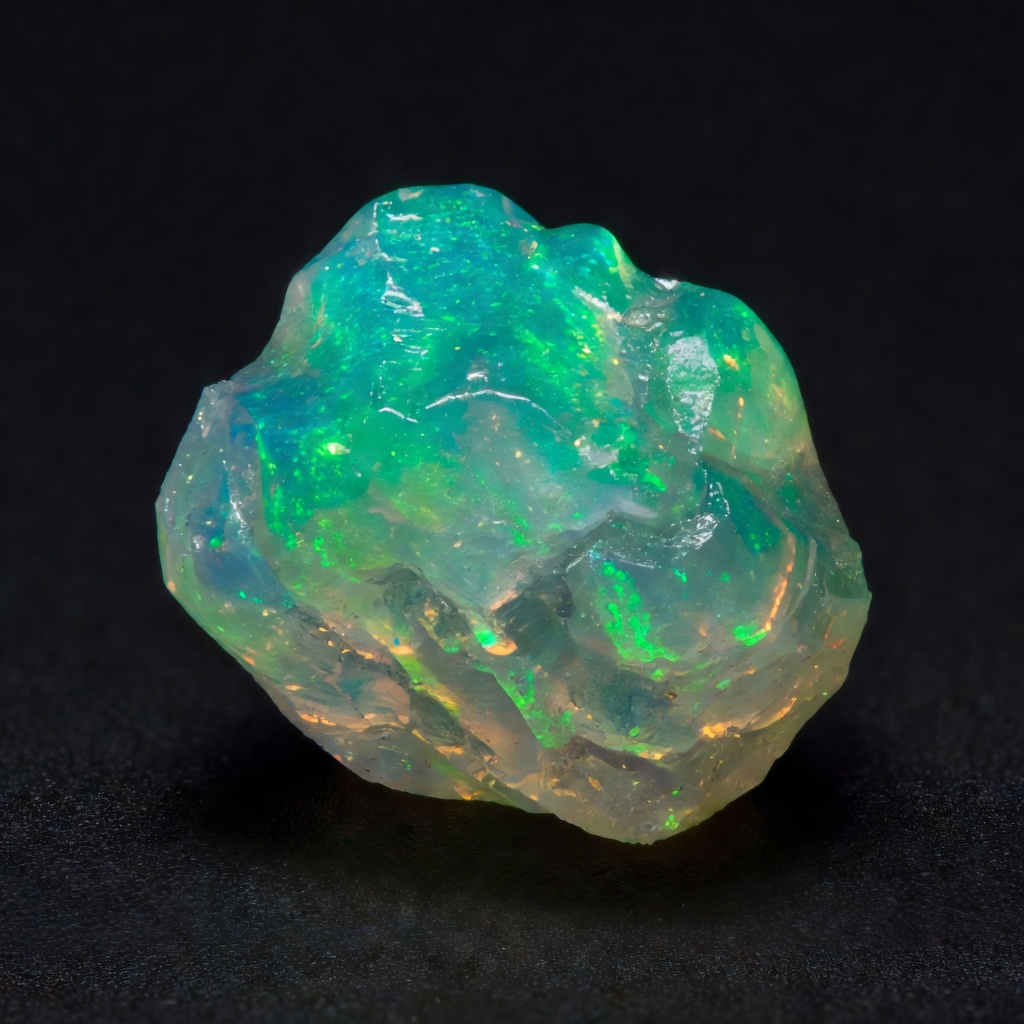
What Is Hyalite Opal?
Hyalite opal represents one of the most visually striking and chemically unique varieties within the opal family, distinguished by its transparent to translucent appearance that resembles drops of solidified water or glass. Unlike its more famous precious opal cousins that display rainbow play-of-color, this variety known scientifically as opal-AN (amorphous network) captivates collectors and gemologists with its pure, colorless clarity and otherworldly glow under ultraviolet light. The name derives from the Greek word hyalos, meaning glass, which perfectly describes the gemstone's vitreous luster and conchoidal fracture patterns that mimic shattered window panes when broken.
Historically, mineralogists and collectors have referred to this material by several descriptive names that emphasize its aquatic appearance. Commonly called "water opal" due to its crystal-clear transparency and water-like inclusions, it has also earned the nickname "Müller's glass" in honor of the mineralogist who first systematically described its properties. These monikers reflect not only the stone's physical characteristics but also the fascination it has inspired since its discovery in European volcanic regions during the 18th century. Understanding these Hyalite Opal Properties and Information basics provides the foundation for appreciating why this gemstone occupies a special niche in both scientific collections and metaphysical practices.
Physical Characteristics and Chemical Composition
From a mineralogical perspective, hyalite opal shares the basic chemical formula SiO₂·nH₂O with all opal varieties, yet its structural arrangement sets it apart significantly from precious opal forms. The amorphous silica structure lacks the ordered sphere packing that creates opalescence, instead forming a gel-like solid containing between three to eight percent water by weight. This higher water content contributes to the stone's lower refractive index, typically ranging from 1.44 to 1.45, which creates the distinctive glass-like appearance that makes high-quality specimens nearly invisible when submerged in water.
The physical durability of this translucent opal gemstone falls within the moderate range, registering 5.5 to 6 on the Mohs hardness scale, making it suitable for careful jewelry wear but requiring protection from scratches and impacts. When examined closely, specimens exhibit a conchoidal fracture pattern similar to obsidian or glass, creating curved, shell-like surfaces when broken rather than flat cleavage planes. Specific gravity measurements typically range between 1.98 and 2.20, noticeably lighter than crystalline quartz due to the included water molecules that reduce overall density. These water opal properties make identification straightforward for experienced gemologists, though they also explain the stone's sensitivity to environmental conditions that can cause structural degradation over time.
Visual Identification Tips
When examining potential hyalite opal specimens, look for the characteristic botryoidal or globular formations that resemble clusters of grapes, often coating host rocks in thin, crust-like layers. True specimens feel noticeably cooler to the touch than glass imitations and may show subtle traces of uranium-related fluorescence even in daylight conditions. The transparency should allow clear viewing of background objects when held to light, though some specimens may contain milky clouding or tiny fluid inclusions that create internal shimmer effects without displaying true opalescence.
The Signature Green Fluorescence Phenomenon
Perhaps no characteristic defines hyalite opal more dramatically than its brilliant emerald-green fluorescence under ultraviolet light, a property that transforms seemingly ordinary clear stones into glowing green beacons in darkened rooms. This luminescence results from trace amounts of uranium incorporated into the silica gel during formation, typically measuring between 50 to 200 parts per million—enough to create vivid fluorescence without posing radiation hazards to handlers. When exposed to longwave ultraviolet light (365nm), high-quality specimens emit an intense apple-green glow that can illuminate surrounding areas, making this one of the most spectacular displays in the mineral kingdom.
The intensity and color of hyalite opal fluorescence varies significantly based on uranium concentration and the specific wavelength of UV exposure. While longwave UV typically produces the brightest green response, shortwave UV (254nm) may reveal additional yellowish or whitish fluorescence patterns in some specimens, particularly those from Mexican deposits. Photography enthusiasts seeking to capture this effect should use cameras with manual exposure settings, mounting specimens on black backgrounds and using dedicated UV lamps rather than standard blacklights to achieve the full fluorescence intensity. A tripod is essential for long exposures, as the green glow, while bright to the eye, requires several seconds of exposure to photograph properly without digital noise.
Photography Equipment Recommendations
For documenting your collection, invest in a high-quality 365nm UV LED flashlight or filter system rather than inexpensive purple LED lights that barely stimulate the fluorescence. Position the UV source at a 45-degree angle to minimize direct reflection into the camera lens, and use a white balance card illuminated by the UV light to ensure accurate color representation of the green glow. Professional mineral photographers often employ light tents lined with UV-reactive material to create evenly lit backgrounds that enhance the dramatic contrast between the dark environment and the glowing specimen.
Global Sources and Mining Locations
While hyalite opal occurs in volcanic regions worldwide, the deposits near Querétaro, Mexico, specifically within the Sierra Madre Occidental volcanic province, produce specimens considered the finest quality available to collectors today. These Mexican hyalite opal deposits formed during the Tertiary period when silica-rich solutions permeated rhyolite volcanic rocks, creating botryoidal crusts and small stalactitic formations within cavities and fractures. Mexican material is particularly prized for its exceptional clarity, minimal inclusions, and intense green fluorescence that surpasses material from most other localities, with some specimens forming hollow, tube-like structures that create unique display pieces.
European collectors have historically sourced material from the Zemplén Mountains of Hungary and the České Středohoří region of the Czech Republic, where hyalite formed in association with volcanic activity during the Miocene epoch. These classic European localities produced the first scientifically described specimens during the 1700s, though modern collecting has diminished due to depleted deposits and protected status of many sites. Secondary sources include the Thomas Range in Utah, USA, where hyalite occurs in topaz-bearing rhyolites, and sporadic finds in Australia's volcanic regions, though Australian material typically shows weaker fluorescence and more clouding than Mexican specimens. Understanding these geographic variations helps collectors authenticate specimens and predict their fluorescence characteristics based on origin.
Mining and Extraction Methods
Unlike precious opal mining which often involves deep shaft operations, hyalite extraction typically occurs through surface collecting and shallow trenching in weathered volcanic terrain. Miners search for rhyolite outcrops showing evidence of former gas pockets or fracture zones, carefully breaking host rock to reveal the delicate glass-like crusts coating cavity walls. The fragile nature of these formations requires extraction using dental tools and soft brushes rather than hammer blows, as the thin botryoidal layers easily shatter under impact stress.
Hyalite Opal vs Common and Precious Opal
Distinguishing hyalite opal vs common opal requires understanding fundamental structural differences that affect both appearance and value within the opal family. Precious opal, including black opal and white opal varieties, displays play-of-color caused by the diffraction of light through regularly arranged silica spheres measuring 150-300 nanometers in diameter. In contrast, hyalite opal lacks this ordered internal structure entirely, consisting of amorphous silica with random molecular arrangements that permit light transmission without spectral separation, resulting in its characteristic transparency rather than opalescence.
Common opal (potch) shares hyalite's amorphous structure but typically appears opaque to semi-translucent with waxy or pearly luster, often occurring in pastel colors like pink, blue, or yellow. Hyalite distinguishes itself through its glass-like transparency and higher water content, which creates the unique "water opal" appearance that seems to flow within the stone. Formation environments also differ significantly: while precious opal forms in sedimentary basin deposits through weathering processes, hyalite crystallizes from volcanic vapors and hydrothermal solutions in igneous rock cavities. These geological distinctions mean that Hyalite Opal Properties and Information regarding care and stability differ markedly from sedimentary opal varieties, particularly regarding sensitivity to dehydration and thermal shock.
Comparative Value and Collectibility
While precious black opal from Lightning Ridge commands the highest per-carat prices in the opal family, premium hyalite specimens from Mexico have gained significant value in the collector market due to their fluorescence properties and increasing rarity of high-quality finds. Common opal remains relatively inexpensive due to its abundance and lack of optical phenomena, whereas translucent hyalite with strong UV reactivity can fetch prices comparable to mid-grade precious opal, particularly for large, display-quality pieces exceeding 50 carats with minimal clouding or matrix attachment.
Metaphysical Properties and Crystal Meanings
Within crystal healing and metaphysical communities, hyalite opal meaning centers on themes of clarity, purification, and spiritual illumination, aligning with the stone's physical transparency and luminescent properties. Practitioners associate this variety with the crown chakra, believing it facilitates connection to higher consciousness and divine guidance through its clear, glass-like energy that seems to transmit rather than filter spiritual vibrations. The stone's ability to glow in darkness serves as a metaphor for inner light and intuition, making it popular among those seeking to enhance psychic abilities or navigate periods of uncertainty with greater insight.
Emotionally, hyalite opal is believed to act as an energetic cleanser, helping to clear mental fog, confusion, and stagnant emotional patterns much like clear water washes away debris. Meditators often place the stone on their third eye or crown during visualization practices, reporting enhanced clarity in receiving intuitive messages and improved dream recall when the stone is kept near the sleeping area. Unlike common opal which some traditions associate with bad luck, hyalite carries no such superstitions, instead being viewed as a stone of new beginnings and transparent communication. Crystal therapists recommend pairing hyalite with moonstone or clear quartz to amplify its clarifying properties, or with grounding stones like hematite to balance its high-vibrational energy for those sensitive to crystal frequencies.
Meditation and Healing Practices
To work with hyalite opal in meditation, create a dimly lit environment and place the stone where ambient light can pass through it, visualizing the clear energy flowing into your crown chakra like liquid light. Some practitioners incorporate UV lamps into their spiritual practices, meditating while observing the green fluorescence as a focal point for opening the heart and higher heart chakras. For emotional healing, hold the stone while journaling or engaging in introspective work, allowing its transparent nature to symbolize the clarity and honesty needed to address internal conflicts or communication issues in relationships.
Evaluating Quality and Market Value
Assessing the value of a translucent opal gemstone like hyalite requires examining several quality factors that differ from those used for precious opal evaluation. Clarity stands paramount, with the finest specimens offering water-clear transparency that allows sharp viewing of objects through the stone, free from milky clouding, fractures, or matrix inclusions that obscure light transmission. Inclusions of host rock material or healing fractures significantly reduce value unless they create aesthetically pleasing patterns, while internal "flash" or schiller effects—though rare in hyalite—can actually increase interest among specialist collectors seeking unusual specimens.
Size considerations vary based on intended use, with jewelry-grade material typically requiring cabochons or faceted stones between two to ten carats that must be free from structural weaknesses that could cause breakage during setting. Display specimens command premium prices based on overall aesthetic presence, with large botryoidal clusters exceeding 100 grams drawing significant collector interest if they demonstrate uniform fluorescence without dead spots or shadow areas. The intensity of green fluorescence under standard 365nm UV light significantly impacts desirability, with specimens showing bright, even illumination across the entire surface commanding two to three times the price of weakly fluorescent or partially inert material. Recent market trends show increasing appreciation for "water clear" Mexican material, with prices for top-quality specimens appreciating steadily as mining becomes more restricted and surface deposits become depleted.
Authentication and Certification
When investing in high-value specimens, request documentation from reputable gemological laboratories that can confirm natural origin and rule out synthetic glass imitations or assembled doublets. Advanced testing using UV-Vis spectroscopy can detect the characteristic uranium absorption bands that confirm authentic hyalite opal, while specific gravity testing provides quick field verification distinguishing natural material from lead glass imitations that feel noticeably heavier in the hand.
Essential Care and Maintenance Guidelines
Proper preservation of hyalite opal requires understanding its hygroscopic nature and sensitivity to environmental conditions that can permanently damage its appearance and structural integrity. Despite its nickname "water opal," this variety is paradoxically vulnerable to water loss through evaporation, particularly in arid climates or heated indoor environments where relative humidity drops below 40 percent. When dehydrated, the stone develops "crazing"—a network of fine surface cracks that resemble spiderwebs—which destroys transparency and significantly reduces both aesthetic appeal and value. Maintaining stable humidity levels between 45-55 percent proves essential for long-term preservation, with collectors in dry regions often storing specimens in sealed containers with small humidity control packets or alongside shallow dishes of water.
Cleaning Hyalite Opal Properties and Information maintenance requires gentle methods avoiding ultrasonic cleaners, steam systems, or harsh chemical solvents that can shock the stone or dissolve surface patinas. Instead, use lukewarm water with mild, phosphate-free soap and a soft camel-hair brush to remove dust and fingerprints, drying immediately with a lint-free cloth to prevent water spots. Never expose hyalite to prolonged direct sunlight or display cases with incandescent lighting, as heat buildup accelerates dehydration and can cause thermal shock fracturing. For jewelry pieces, limit exposure to perfumes, hairsprays, and household cleaners that might deposit residues on the porous surface, and store pieces separately from harder gemstones that could scratch the relatively soft surface.
Storage Environment Optimization
Create ideal storage conditions using airtight display cases with digital hygrometers to monitor humidity levels, adding silica gel conditioned to maintain moderate moisture or small containers of glycerin solution to stabilize the microenvironment. Avoid storing hyalite in safety deposit boxes or bank vaults where humidity levels often drop dangerously low, and never use plastic bags that can trap condensation and promote bacterial growth on the stone surface.
Collecting Tips and Investment Considerations
Building a meaningful hyalite collection requires developing authentication skills to distinguish genuine specimens from glass imitations, plastic resins, or assembled composites that flood the lower end of the market. Authentic water opal properties include the characteristic conchoidal fracture visible on broken edges, natural inclusions such as tiny gas bubbles or mineral crystals, and the definitive green UV fluorescence that glass imitations cannot replicate without adding uranium-doped pigments that appear artificial under close inspection. Real hyalite feels cooler and heavier than equivalent-sized acrylic or resin fakes, while lead glass imitations feel noticeably warmer and heavier than natural opal with specific gravity exceeding 2.5 compared to natural hyalite's 2.0-2.2 range.
Display techniques significantly enhance the visual impact of hyalite collections, with serious collectors investing in dedicated UV display cabinets that showcase the fluorescent properties while protecting specimens from dust and dehydration. LED UV strips mounted in shadow box frames create stunning wall displays that transform ordinary-looking clear stones into glowing green art pieces after dark. From an investment perspective, focus on acquiring specimens from documented Mexican localities with exceptional clarity and fluorescence, as these represent the most liquid assets in the collector market. Avoid treated or stabilized material, as natural, untreated specimens from classic localities appreciate most consistently. Market analysis indicates that display-quality pieces over 100 grams with intense fluorescence have appreciated 200-300 percent over the past decade, outpacing inflation and many traditional investments, though liquidity remains lower than precious opal or mainstream gemstones.
Building a Thematic Collection
Consider specializing your collection by focusing on specific localities, formation types such as stalactitic versus crust formations, or specimens showing unusual fluorescence patterns. Document provenance meticulously, preserving collection labels and mining location data that add scientific value and authentication support for future resale. Join mineralogical societies and attend shows to handle comparative material and develop your eye for quality before making significant purchases, as photographic representation rarely captures the subtle clarity differences that separate mediocre from exceptional specimens.
Frequently Asked Questions
What makes hyalite opal different from precious opal?
Unlike precious opal which displays rainbow play-of-color, hyalite opal is transparent to translucent with a glass-like appearance. Its most distinctive feature is bright green fluorescence under UV light due to trace uranium content, whereas precious opal lacks this property.
Why does hyalite opal glow green under UV light?
Hyalite opal contains trace amounts of uranium within its silica structure. When exposed to ultraviolet light, these uranium atoms fluoresce, producing the characteristic bright green glow that makes this gemstone famous among collectors.
Is hyalite opal rare and valuable?
While more common than precious black opal, high-quality hyalite opal with intense fluorescence and clarity is considered rare. Specimens from Mexico command premium prices, especially large, inclusion-free pieces that glow vividly under UV light.
Can hyalite opal get wet or be damaged by water?
Despite being called 'water opal,' hyalite opal is sensitive to water loss. It contains 3-8% water content that can evaporate in dry conditions, causing crazing or cracking. Avoid prolonged soaking and store in moderate humidity environments.
Where is the best hyalite opal found?
The finest hyalite opal specimens come from Queretaro, Mexico, particularly the Sierra Madre Occidental region. These Mexican specimens are prized for their exceptional clarity and intense green fluorescence under UV light.
Does hyalite opal have any special meanings or powers?
Metaphysically, hyalite opal is associated with emotional clarity, purification, and spiritual awakening. It's believed to enhance intuition, clear mental fog, and connect the user to higher consciousness through its crown chakra associations.
How can I tell if my hyalite opal is real?
Authentic hyalite opal will show bright green fluorescence under UV light, has a conchoidal fracture pattern when broken, feels cooler than glass to the touch, and often contains natural inclusions or imperfections unlike perfect glass imitations.
What is the best way to display hyalite opal?
Display hyalite opal in a dark environment with dedicated UV lighting (365nm longwave) to showcase its fluorescent properties. Use stands that support the specimen without obscuring light paths, and maintain stable humidity levels around 40-50%.


