What Is Howlite? Understanding This Calming Crystal
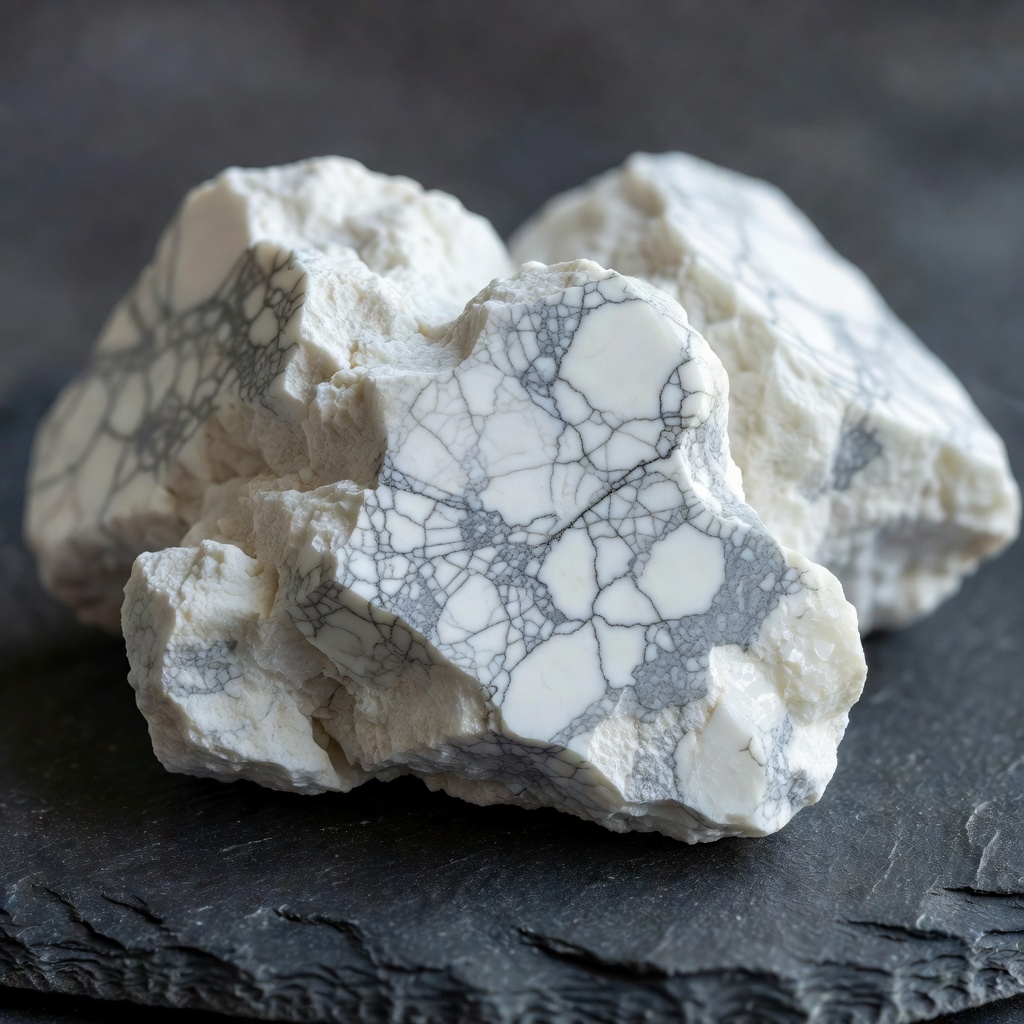
Howlite is a calcium borosilicate hydroxide mineral that has captured the attention of crystal enthusiasts and jewelry makers alike due to its distinctive chalky white appearance and remarkable calming energy. This porous stone typically presents as snow-white to light grey with characteristic grey or black veining that creates intricate web-like patterns across its surface. When exploring Howlite Properties and Information, you'll discover that this mineral forms in irregular nodules that resemble cauliflower heads, making each specimen uniquely beautiful in its natural state.
The white howlite crystal is primarily sourced from evaporite deposits where it forms within gypsum or clay beds, creating masses that range from small nodules to substantial boulders weighing several pounds. Major mining operations extract howlite from Nova Scotia, Canada, where it was originally discovered, as well as from significant deposits throughout California, USA, particularly in the Death Valley region and San Bernardino County. Additional sources include Nevada, Newfoundland, and scattered locations where evaporite minerals accumulate in arid environments.
Unlike many gemstones that form crystalline structures, howlite develops in massive, fine-grained aggregates that give it a smooth, porcelain-like texture when polished. This unique formation process results in a stone that is both lightweight and surprisingly durable for everyday wear, though its relative softness requires mindful handling. Collectors value high-quality specimens that display sharp, contrasting black veining against a pure white background, while the stone's natural porosity makes it an ideal candidate for dyeing to simulate other precious stones.
Physical Properties and Mineral Composition
From a geological perspective, howlite demonstrates fascinating physical characteristics that distinguish it from other white minerals in the crystal kingdom. Its chemical formula, Ca₂B₅SiO₉(OH)₅, reveals a complex composition of calcium, boron, silicon, oxygen, and hydrogen that contributes to its unique properties. With a Mohs hardness rating of approximately 3.5, howlite ranks relatively soft compared to quartz or sapphire, meaning it can be scratched by harder minerals and requires careful storage to maintain its polished finish.
The stone's distinctive porosity represents one of its most commercially significant howlite physical properties, as these microscopic channels allow the mineral to absorb dyes readily. This characteristic has led to widespread use in the gemstone industry, where white howlite is frequently dyed blue or green to imitate turquoise, or deep blue to simulate lapis lazuli. When examining genuine specimens, look for the natural nodule formation that creates cauliflower-like masses with a rough, nodular exterior hiding the smooth, veined interior that lapidaries prize for cabochon cutting.
Matrix patterns in authentic howlite display random, web-like veining that differs significantly from the uniform coloration of dyed imitations. The stone exhibits a specific gravity between 2.53 and 2.59, making it noticeably lighter than magnesite—a common howlite substitute—and it feels cool and slightly waxy to the touch rather than glassy or plastic-like. These physical attributes combine to create a mineral that is simultaneously practical for industrial applications and metaphysical practices, bridging the gap between geological curiosity and spiritual tool.
Historical Discovery and Naming Origins
The story of howlite begins in 1868 when Canadian chemist and mineralogist Henry How made a fortuitous discovery while investigating gypsum deposits near Windsor, Nova Scotia. While examining mineral specimens from the region's extensive evaporite formations, How encountered a white, veined mineral that did not match any previously cataloged species. Initially, the scientific community referred to this new discovery as "silicoborocalcite" due to its chemical composition, but this cumbersome name was eventually replaced to honor the man who first brought it to scientific attention.
Howlite history reflects the Victorian era's passion for mineralogical exploration and classification, as the late 19th century saw unprecedented documentation of North American geological treasures. The type locality—the specific place where a mineral is first described—remains those original gypsum quarries near Windsor, where nodular white masses embedded in clay and gypsum beds first revealed themselves to Henry How's examination. These early specimens established the standard for quality howlite, displaying the sharp black veining against white matrix that collectors still seek today.
Following its initial discovery in Canada, howlite remained relatively obscure in the gemstone market until significant deposits were located in California during the early 20th century. The mineral's abundance in Death Valley and surrounding regions transformed it from a geological curiosity into a commercially viable stone for lapidary arts. Today, the dual heritage of Canadian discovery and American mining continues to supply the global crystal market with both raw specimens for collectors and polished pieces for jewelry and metaphysical applications.
Metaphysical Properties and Crystal Meaning
Within the realm of crystal healing and metaphysical practices, howlite crystal meaning centers predominantly on its extraordinarily calming and pacifying vibrations. Practitioners recognize this stone as a powerful antidote to stress, anxiety, and uncontrolled anger, working to soothe turbulent emotions and restore inner peace during chaotic situations. The howlite stone meaning extends beyond mere relaxation, encompassing the development of patience, perspective, and thoughtful communication—qualities that make it invaluable for navigating challenging interpersonal dynamics.
Those who work with howlite regularly report enhanced abilities to process information and retain knowledge, making it a favored stone among students and professionals engaged in intensive learning. The mineral is believed to facilitate access to past life memories and higher wisdom, acting as a bridge between conscious awareness and deeper spiritual understanding. When held during meditation or placed on the forehead, howlite is said to quiet the "monkey mind"—that restless mental chatter that prevents deep contemplation and restful sleep.
Practical applications of howlite's metaphysical properties include wearing it during confrontations to maintain composure, placing it in workspaces to foster concentration, or carrying it as a touchstone during travel to reduce stress and impatience. The stone particularly benefits individuals who struggle with insomnia caused by racing thoughts or those who react impulsively to provocation. By absorbing negative energy and transmuting it into peaceful vibrations, howlite serves as an emotional buffer for highly sensitive people navigating overwhelming environments.
Healing Properties and Wellness Benefits
The howlite healing properties encompass both physical and emotional wellness applications, making it a versatile addition to holistic health practices. Physically, this mineral is traditionally associated with calcium absorption and the skeletal system, with practitioners using it to support bone density, dental health, and proper mineral assimilation. Crystal healers often recommend placing howlite directly on areas of the body experiencing pain or discomfort, particularly around the neck, shoulders, and jaw where tension commonly accumulates.
For those struggling with sleep disorders, howlite offers a gentle, non-pharmaceutical approach to achieving restful nights. Placing a cleansed piece under the pillow or on the bedside table is believed to calm the nervous system and prevent the racing thoughts that lead to insomnia. Unlike sedatives that force the body into unconsciousness, howlite is thought to create conditions for natural sleep by reducing cortisol levels and promoting parasympathetic nervous system activation.
Emotionally, howlite provides essential support for empaths and highly sensitive individuals who frequently absorb the emotional states of others. The stone creates an energetic shield that filters external negativity while allowing the user to maintain compassion and connection. Therapists and counselors sometimes keep howlite in their offices to maintain emotional equilibrium during intense sessions, while individuals recovering from trauma may use it to process grief and anger without becoming overwhelmed by these powerful emotions.
Chakra Alignment and Spiritual Connection
As a howlite chakra stone, this mineral primarily resonates with the crown chakra (Sahasrara), the energy center located at the top of the head that governs spiritual connection and higher consciousness. The stone's pure white color vibration aligns perfectly with this chakra's association with divine wisdom, enlightenment, and universal energy. When placed on the crown during meditation, howlite is believed to open channels to higher realms, facilitating communication with spirit guides, angels, or one's higher self depending on individual spiritual beliefs.
Secondary to its crown chakra connection, howlite also stimulates the third eye chakra (Ajna), enhancing intuition, insight, and psychic abilities. This dual action on the upper chakras creates a powerful synergy for spiritual practitioners seeking to deepen their meditation practice or develop clairvoyant abilities. The stone helps bridge the gap between intellectual understanding and spiritual knowing, allowing insights received during meditation to be integrated into daily life with clarity and purpose.
Advanced crystal practitioners use howlite in chakra alignment layouts, placing it above the head while arranging complementary stones along the body's energy centers. This configuration is said to facilitate kundalini awakening and the integration of spiritual downloads that might otherwise feel overwhelming or disjointed. For those new to chakra work, simply holding howlite while visualizing white light entering through the crown can initiate powerful healing and spiritual expansion experiences.
Identifying Genuine Howlite vs. Imitations
Understanding howlite vs turquoise distinctions is crucial for collectors and consumers, as the gem trade frequently uses dyed howlite to imitate the more expensive blue stone. Natural howlite presents as white or light grey with characteristic grey to black veining, while turquoise displays blue to green colors with matrix patterns of brown, black, or gold. When examining specimens marketed as turquoise, look for telltale signs of dye such as color pooling in cracks, unnaturally uniform blue coloring, or veining that appears painted rather than naturally integrated into the stone structure.
Natural howlite identification involves several physical tests that distinguish genuine specimens from plastic resins or other mineral substitutes. The weight test provides immediate clues: genuine howlite feels lighter than magnesite (a common howlite lookalike) and significantly heavier than plastic imitations. Temperature also reveals authenticity—howlite feels cool and slightly waxy to the touch, while plastic remains room temperature and glass feels colder and harder. When gently scratched in an inconspicuous area, natural howlite reveals a white powder streak, whereas dyed stones may show color transfer or different colored interiors.
Visual inspection should focus on the veining patterns, as natural howlite displays random, web-like grey or black lines that vary in thickness and direction. Dyed imitations often show veining that appears too regular or follows manufactured patterns. Under magnification, natural howlite reveals a fine-grained, porcelain-like texture without bubbles or mold marks that characterize glass or resin fakes. Reputable dealers will disclose any treatments, but testing remains essential when purchasing from unknown sources or when prices seem too good to be true for claimed turquoise specimens.
Proper Care and Cleansing Methods
Due to its porous nature and relatively soft composition, howlite care requires specific protocols to preserve both its physical beauty and energetic integrity. Water sensitivity represents the primary concern for howlite owners, as prolonged soaking can cause the stone to absorb moisture, leading to potential discoloration, structural weakening, or the leaching of dyes in treated specimens. While brief contact with water during hand washing won't immediately damage the stone, submersion in baths, pools, or cleansing rituals involving water should be strictly avoided to maintain the mineral's integrity.
Safe cleansing methods focus on dry or low-moisture techniques that clear energetic residue without compromising physical structure. Moonlight cleansing—particularly during the full moon—provides gentle purification while charging the stone with lunar energy; simply place howlite on a windowsill or outdoor altar overnight. Smudging with sage, palo santo, or sweetgrass smoke effectively clears accumulated energies, as does burial in dry brown rice for twenty-four hours, which absorbs negativity without introducing moisture. Selenite plates or bowls offer convenient daily cleansing options, as selenite's natural purifying properties transmute lower vibrations without physical contact requirements.
Storage considerations protect howlite from harder minerals that might scratch its surface—keep it wrapped in soft cloth or stored in individual compartments separate from quartz, tourmaline, or other stones above 4 on the Mohs scale. Avoid exposing howlite to harsh chemicals including household cleaners, perfumes, and hair products that could stain or etch the surface. With proper care, howlite maintains its calming energy and aesthetic appeal for decades, serving as a reliable companion for meditation, jewelry, or decorative display.
Practical Uses in Jewelry and Daily Life
The versatility of howlite uses extends across jewelry design, home decor, and therapeutic applications, making it one of the most accessible stones for beginners and experienced practitioners alike. In jewelry, howlite appears frequently in beaded bracelets where its light weight makes comfortable everyday wear possible, while cabochon rings showcase the stone's distinctive veining patterns in sterling silver or gold settings. Meditation malas incorporating howlite beads help practitioners maintain focus during mantra recitation, with the 108 beads traditionally used in Buddhist and Hindu prayer practices providing tactile anchors for wandering attention.
Home decor applications leverage howlite's peaceful energy to create tranquil environments conducive to relaxation and mindfulness. Large raw specimens serve as striking centerpiece displays on coffee tables or altars, while tumbled stones arranged in crystal grids promote harmony throughout living spaces. Interior designers sometimes incorporate howlite spheres or carved figurines into bedroom designs specifically to foster restful sleep environments, capitalizing on the stone's reputation for reducing insomnia and anxiety.
For immediate stress relief, howlite worry stones and palm stones fit comfortably in pockets or purses, providing tactile comfort during stressful meetings, medical appointments, or travel. The act of rubbing the smooth, polished surface engages the parasympathetic nervous system, lowering heart rate and cortisol levels through somatic soothing. Many users report keeping howlite in their car's center console to prevent road rage or on their desk to maintain composure during high-pressure workdays, demonstrating the stone's practical utility beyond metaphysical speculation.
Conclusion: Integrating Howlite Into Your Crystal Practice
This comprehensive exploration of Howlite Properties and Information reveals a mineral that bridges the gap between geological curiosity and essential spiritual tool. Whether drawn to its distinctive white appearance with grey veining, its calming influence on the nervous system, or its ability to facilitate higher consciousness through crown chakra activation, howlite offers accessible entry points for individuals at every stage of their crystal journey. The stone's combination of beauty, affordability, and gentle energy makes it particularly suitable for beginners building their first collections while remaining valuable to advanced practitioners seeking specific vibrational support.
When beginning your relationship with howlite, start with high-quality specimens purchased from reputable dealers who can verify the stone's authenticity and treatment history. Begin by carrying a small tumbled stone for one week, noting any changes in sleep patterns, stress levels, or communication effectiveness. Gradually incorporate howlite into meditation practices, chakra healing sessions, or crystal grids as you become attuned to its subtle but profound energy signature.
Ultimately, howlite serves as a reminder that the most powerful healing often comes through gentleness and patience rather than forceful intervention. By integrating this calming crystal into daily routines—whether worn as jewelry, placed under pillows, or displayed in sacred spaces—you create ongoing opportunities for peace, perspective, and spiritual growth. As you deepen your work with this remarkable mineral, you'll discover why Henry How's nineteenth-century discovery continues to resonate with seekers of tranquility more than 150 years later.
Frequently Asked Questions About Howlite
What are the main healing properties of howlite?
Howlite is primarily known for its calming energy that helps reduce stress, anxiety, and anger. It's believed to aid with insomnia, support calcium absorption for bone health, and promote emotional balance by absorbing negative energy. Many users place it under their pillow for better sleep or wear it during stressful situations.
How can you tell if howlite is real or dyed to look like turquoise?
Natural howlite is white with grey or black veining, while dyed howlite mimics turquoise's blue-green color. To test authenticity, examine the veining—natural howlite has random, web-like patterns, whereas dyed versions may show color pooling in cracks. Real howlite feels cool and slightly waxy, weighs less than magnesite, and won't show dyed color on the inside if scratched.
Is it safe to get howlite wet?
Howlite is porous and relatively soft (3.5 on the Mohs scale), so prolonged water exposure isn't recommended. Brief contact won't damage it, but soaking can cause the stone to absorb water, potentially leading to damage or discoloration. For cleansing, use dry methods like sage smoke, sound bowls, or placing it on selenite rather than water.
Which zodiac signs benefit most from howlite?
While all signs can use howlite, it particularly resonates with Virgo and Gemini. Virgos benefit from its calming influence on their analytical minds, while Geminis appreciate its ability to balance dual natures and improve communication. However, anyone experiencing stress, insomnia, or seeking spiritual growth can benefit regardless of zodiac sign.
What chakra is howlite associated with?
Howlite primarily resonates with the crown chakra (Sahasrara), located at the top of the head, facilitating spiritual connection and higher consciousness. It also connects to the third eye chakra, enhancing intuition and insight. Its white color energy helps align all chakras while specifically activating the upper energy centers for meditation and spiritual work.
How do you cleanse and charge howlite crystals?
Due to its porosity, avoid water cleansing. Instead, cleanse howlite by placing it in moonlight (especially during full moon), smudging with sage or palo santo, burying it in brown rice for 24 hours, or placing it on a selenite charging plate. For charging, set intentions while holding the stone or place it near clear quartz or amethyst clusters.
Where is howlite naturally found?
Howlite was originally discovered in Nova Scotia, Canada, specifically in gypsum quarries near Windsor. Today, it's also found in significant deposits in California (especially Death Valley and San Bernardino County), Nevada, and Newfoundland. The stone forms in evaporite deposits as nodules or cauliflower-like masses within gypsum or clay beds.
Can howlite help with sleep problems?
Yes, howlite is widely used as a sleep aid due to its calming vibrations that quiet an overactive mind. Placing a piece under your pillow or on your bedside table is believed to reduce insomnia caused by racing thoughts or anxiety. Its gentle energy promotes relaxation and can help establish healthy sleep patterns without the use of medication.