Howlite Buying Guide: Essential Tips for Selecting Quality Specimens
Whether you are a jewelry maker seeking affordable cabochons, a crystal healing practitioner looking for calming stones, or a mineral collector hunting for distinctive matrix patterns, understanding the nuances of this versatile gemstone is crucial. This comprehensive Howlite Buying Guide will walk you through everything from identifying genuine specimens to evaluating fair market prices, ensuring you make informed purchasing decisions. With the rising popularity of white howlite stone in both metaphysical circles and fashion jewelry, knowing how to distinguish natural howlite from imitations and dyed varieties has never been more important for protecting your investment.
Understanding Howlite Basics and Properties
Natural howlite is a fascinating calcium borosilicate hydroxide mineral first discovered in 1868 by Henry How, a Canadian chemist and mineralogist. Its chemical composition creates a uniquely porous structure that makes the stone both lightweight and receptive to dyes, which explains why you will encounter so many color-treated varieties on the market. The stone typically forms in irregular nodules that resemble cauliflower heads, with a Mohs hardness of only 3.5, making it significantly softer than quartz or agate but perfect for detailed carving work.
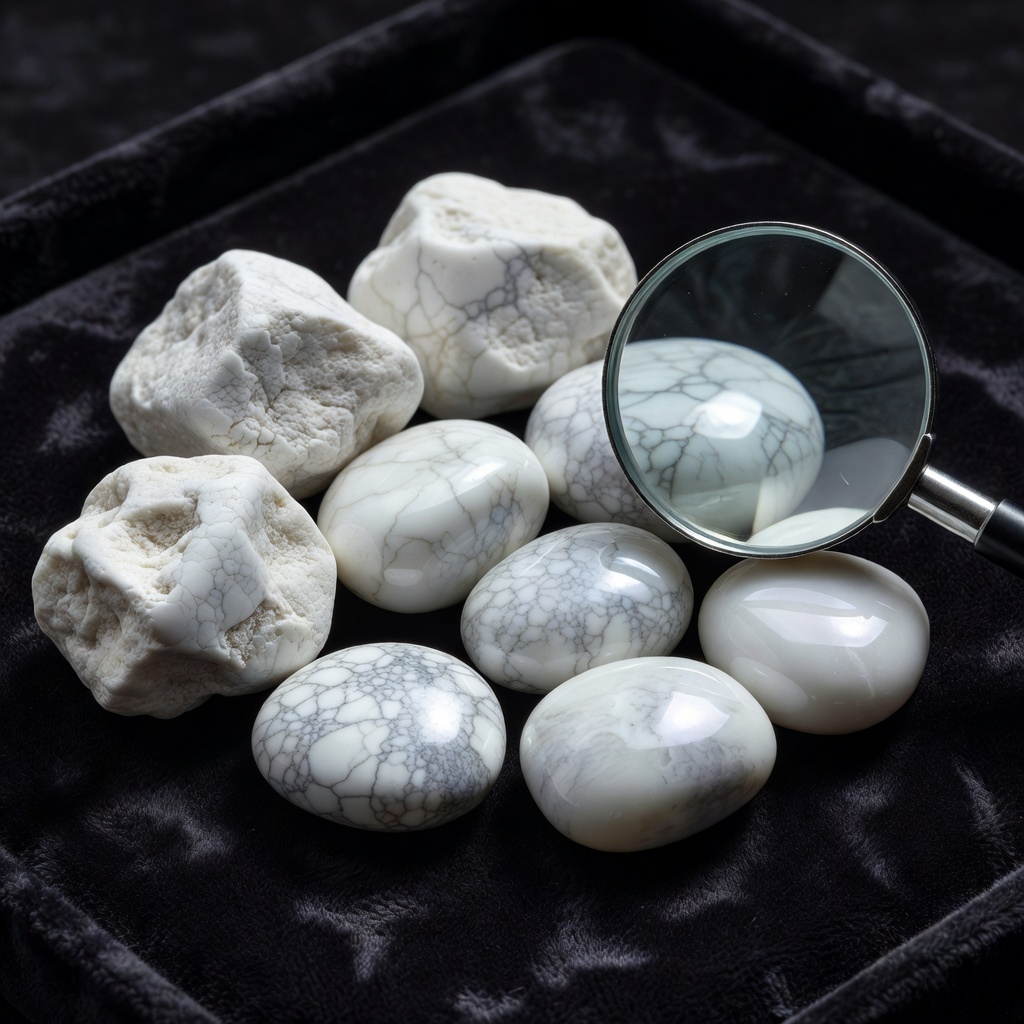
The physical characteristics of genuine howlite include its distinctive web-like matrix patterns that create intricate black or dark gray veining against a snowy white or light gray background. These naturally occurring lines form through the inclusion of other minerals during the stone's creation, creating patterns that range from sparse, thin spider webs to dense, interconnected networks. When examining white howlite stone specimens, look for this characteristic veining as it serves as a primary identification marker distinguishing authentic material from plain white minerals like marble or dolomite.
Historically, the most prized howlite deposits were found in Nova Scotia, Canada, particularly near the gypsum quarries of Windsor where the mineral was first identified. Today, significant sources include evaporite deposits in California's Mojave Desert, various locations throughout Germany, and newer finds in Turkey and Russia. Canadian material remains particularly sought after by serious collectors due to its exceptional density and sharply contrasting black matrix patterns against brilliant white host rock.
Types of Howlite Available on the Market
When shopping for howlite varieties, you will encounter several distinct categories that cater to different needs and budgets. Natural untreated white or gray howlite remains the standard for collectors and purists, typically sold as raw nodules, tumbled stones, or polished cabochons that showcase the stone's inherent beauty. These specimens display the classic snow-white base with charcoal veining that makes the material instantly recognizable and desirable for both lapidary projects and display collections.
Dyed howlite represents perhaps the most common form you will encounter in retail jewelry settings, as the stone's natural porosity allows it to absorb vibrant colors remarkably well. Artisans frequently dye white howlite stone various shades of blue to simulate turquoise, though you will also find it in red, green, purple, and pink variations marketed as affordable alternatives to coral or jade. While dyed material serves legitimate purposes in costume jewelry and craft applications, ethical concerns arise when sellers fail to disclose these treatments or attempt to pass dyed howlite off as genuine turquoise.
The market also distinguishes between rough nodules straight from the mine, which appeal to lapidary artists who prefer to cut their own material, and finished products like carved decorative items or drilled beads. Bead quality howlite typically features smaller, uniformly shaped pieces designed for stringing, while collector-grade museum specimens might include large, intact nodules weighing several pounds with exceptional matrix patterns. Understanding these distinctions helps you target your search appropriately, whether you need affordable material for bulk jewelry production or a singular showpiece for your mineral display case.
Quality Assessment Criteria for Buyers
Evaluating howlite quality factors requires attention to several specific characteristics that determine both aesthetic appeal and market value. When examining potential purchases, prioritize specimens displaying distinct black or dark gray spider web veining that creates sharp contrast against the white background, as these matrix patterns represent the stone's most prized visual feature. The best material exhibits consistent, evenly distributed veining rather than sparse, blotchy discolorations or muddy brownish tones that suggest inferior grade or improper storage conditions.
Surface integrity plays a crucial role in determining durability and long-term value, particularly for finished cabochons or beads intended for jewelry use. Inspect each piece carefully under good lighting to identify hairline cracks, chips, or pits that could compromise structural integrity, paying special attention to dyed varieties where artificial colorants might mask underlying flaws. High-quality specimens should feel smooth and solid without the chalky, crumbly texture that indicates poor density or internal fracturing.
For finished pieces like cabochons or carved figures, examine the polish quality and symmetry to ensure professional craftsmanship. A well-finished howlite stone should display a consistent, glassy luster without scratch marks, tool marks, or dull patches where the polish failed to take properly. Symmetry matters particularly for setting stones in jewelry, as uneven backs or lopsided domes create fitting challenges and suggest amateur cutting that might affect the stone's security in its mounting.
How to Identify Real Howlite vs Imitations
Mastering howlite identification techniques protects you from common scams and ensures you receive genuine material for your collection or projects. One of the simplest verification methods involves the weight test: genuine howlite feels noticeably heavier and cooler to the touch than plastic resin imitations, which tend to feel warm, lightweight, and sometimes slightly sticky. When handling a suspected fake, look for perfectly uniform coloration and mechanical precision in drilling holes, as natural stone always exhibits some variation and irregularity.
The hot needle test provides another reliable verification method for distinguishing natural howlite from plastic or polymer fakes. Heat a pin or needle until glowing red, then touch it to an inconspicuous area of the stone; genuine howlite will not react, while plastic imitations will melt, emit a chemical or burnt hair odor, or show visible scorch marks. Exercise caution with this test on finished jewelry pieces to avoid damaging settings, and always test in hidden areas like the back of cabochons or inside bead holes.
Distinguishing howlite vs turquoise requires careful examination of veining patterns and structural properties, as dyed howlite frequently enters the market fraudulently labeled as genuine turquoise. Natural turquoise displays a waxy to dull luster with matrix patterns that often appear more web-like and less angular than howlite's sharp, irregular black lines. Additionally, turquoise typically measures 5-6 on the Mohs hardness scale compared to howlite's 3.5, meaning genuine turquoise will resist scratching by a copper penny while howlite scratches relatively easily.
For advanced verification, particularly when purchasing high-value specimens, consider UV light examination and refractive index testing. Natural howlite typically shows inert to weak fluorescence under short-wave ultraviolet light, while some imitations glow brightly or show unusual color reactions. A refractometer reading should show howlite's refractive index between 1.586 and 1.609, distinct from magnesite (which howlite closely resembles) and other white minerals. When in doubt, consult a certified gemologist who can perform comprehensive testing to confirm authenticity.
Pricing Guide and Value Factors
Understanding the howlite price guide helps you recognize fair market values and avoid overpaying for common material or underpricing rare specimens. Raw, untreated natural howlite typically costs between $1 to $5 per carat for quality specimens with good matrix patterns, though exceptional pieces with rare formations or large intact nodules may command premium prices. Commercial-grade rough material suitable for tumbling or basic cabochon cutting often sells by the pound rather than by carat, ranging from $10 to $50 per pound depending on the source locality and average nodule size.
Several factors significantly impact pricing beyond basic material costs, including the rarity of matrix patterns, artistic carving work, and specimen size. Large nodules exceeding several inches in diameter with exceptional, picture-perfect veining can sell for hundreds of dollars to serious collectors, particularly if they originate from historically significant locations like the original Nova Scotia deposits. Hand-carved decorative items or intricate fetishes command additional premiums based on the artist's reputation and the complexity of the work, sometimes reaching $100 or more for detailed pieces regardless of the raw material's base value.
Price differences between untreated white howlite and dyed varieties vary significantly based on market positioning and disclosure practices. Dyed blue howlite sold honestly as an affordable turquoise alternative typically retails for $2 to $8 per carat in finished jewelry settings, while undisclosed dyed material fraudulently marketed as genuine turquoise might fetch prices ten times higher based on the deception. When purchasing dyed varieties, ensure the price reflects the treatment status; if a seller charges turquoise prices for blue howlite, this constitutes a red flag requiring immediate verification or avoidance.
Where to Buy Authentic Howlite
Finding reputable sources for where to buy howlite requires balancing convenience with verification capabilities, as each marketplace offers distinct advantages and risks. Reputable gem and mineral shows provide excellent opportunities to handle material personally, speak directly with miners or lapidary artists, and compare multiple specimens before purchasing. These venues allow you to apply physical identification tests immediately and often yield the best prices by eliminating middlemen, though they require attendance at specific events and cash transactions.
Online marketplaces like Etsy, eBay, and specialized crystal shops offer convenience and vast selection but demand careful vetting of seller credentials and return policies. When evaluating online sellers, examine customer reviews specifically mentioning authenticity and disclosure practices, request additional photographs showing veining details and scale references, and verify that listings explicitly state whether material is natural or dyed. Reputable online dealers typically provide detailed locality information, multiple viewing angles, and clear statements about any treatments applied to the stones.
For high-grade collector material or investment-grade specimens, established geological suppliers and recognized lapidary artists provide the most reliable sourcing. These professionals maintain reputations within the mineralogical community and typically offer certificates of authenticity or detailed provenance documentation for significant purchases. Building relationships with specific dealers who specialize in Canadian or Californian material ensures consistent access to quality inventory and expert guidance on valuation, particularly important when acquiring pieces priced in the hundreds or thousands of dollars.
Red Flags and Scams to Avoid
Navigating the howlite buying guide requires vigilance against prevalent scams that exploit the stone's visual similarity to more expensive materials. The most common deception involves sellers marketing dyed howlite as genuine turquoise without disclosure, often using vague terms like "Chinese turquoise" or "white turquoise" to confuse buyers unfamiliar with mineralogical distinctions. Any listing describing bright blue stones with perfectly uniform coloration at prices significantly below market rates for genuine turquoise should trigger immediate skepticism and demands for verification testing.
Too-good-to-be-true pricing on large statement pieces represents another major warning sign, particularly for supposedly natural, high-grade material offered at discount rates. If a seller offers "rare Nova Scotia howlite" nodules weighing several pounds for less than the cost of shipping, the material likely consists of common white minerals like magnesite or dolomite mislabeled as howlite, or represents outright synthetic resin casts. Authentic large specimens with exceptional veining command appropriate prices reflective of their rarity; extreme discounts almost invariably indicate fraudulent material or undisclosed damage.
Protect yourself by avoiding sellers who lack return policies, refuse to provide certificates of authenticity for expensive specimens, or employ misleading marketing names like "white buffalo turquoise" or "howlite turquoise." These terms represent oxymorons designed to confuse consumers about the stone's actual identity. Legitimate dealers welcome questions about treatments, provide detailed photographs showing natural imperfections, and offer reasonable inspection periods allowing you to verify authenticity with an independent gemologist before finalizing the purchase.
Caring for Your Howlite Purchase
Proper howlite care ensures your specimens maintain their beauty and structural integrity for decades, despite the stone's relatively soft and porous nature. Cleaning should involve only mild soap and lukewarm water applied with a soft cloth or brush, avoiding ultrasonic cleaners, steam cleaners, or harsh chemical solutions that can damage the stone's surface or strip artificial dyes. After washing, pat the stone dry immediately rather than allowing prolonged air drying, as the porous structure can absorb water and temporarily dull the polish or, in dyed varieties, cause color bleeding.
Storage recommendations emphasize protecting your howlite from harder minerals that might scratch its surface, as the 3.5 Mohs hardness makes it vulnerable to damage from common jewelry materials like quartz, agate, or metal settings. Store loose stones in individual soft cloth bags or padded compartments within a mineral collection case, keeping them separate from harder specimens. For finished jewelry, store pieces flat in fabric-lined boxes rather than hanging them, preventing impact damage and reducing exposure to air pollutants that might accumulate in the stone's pores over time.
Avoid exposing howlite to direct sunlight for extended periods, as UV radiation can fade both natural coloration and artificial dyes, particularly in vibrant blue specimens sold as turquoise alternatives. Similarly, prevent contact with harsh household chemicals, perfumes, hairsprays, and prolonged water immersion, as these can stain the porous stone or weaken any fillers used to stabilize fractures. If you own dyed howlite that has faded over time, consult a professional lapidary about re-dyeing options or restoration services rather than attempting home dyeing processes that might damage the stone irreparably.
Making Your Final Purchase Decision
Successful buying howlite tips begin with clearly defining your intended purpose before beginning your search, as this determination influences every subsequent decision from quality requirements to budget allocation. Jewelry makers producing pieces for sale might prioritize consistent bead quality and affordable dyed varieties in popular colors, while crystal healing practitioners may seek specific shapes like palm stones or towers with particular matrix patterns believed to enhance energetic properties. Mineral collectors, conversely, should focus on locality documentation, rare matrix variations, and specimen size appropriate for display cases rather than workability.
Budget allocation requires careful consideration of the relationship between setting costs and stone quality, particularly for finished jewelry pieces. Because natural howlite remains relatively affordable compared to precious gemstones, investing in high-quality custom settings often makes financial sense for pieces you intend to wear frequently. However, for costume jewelry or craft projects, allocate more budget toward quantity and variety of stones rather than individual specimen perfection, recognizing that howlite's affordability allows for creative experimentation without significant financial risk.
Before finalizing any transaction, conduct a thorough inspection checklist whether purchasing online or in person. Verify the stone's weight feels appropriate for its size, examine photographs or physical specimens for natural veining patterns, confirm disclosure of any treatments or dyes, and review the seller's return policy and authentication guarantees. Maintain detailed documentation including receipts, certificates of authenticity for valuable specimens, and any correspondence regarding treatments or locality information, as these records prove essential for insurance purposes, future resale, or simply verifying the provenance of your collection.
Frequently Asked Questions
Is howlite expensive compared to other gemstones?
Howlite is generally affordable and budget-friendly. Natural white howlite typically costs between $1 to $10 per carat depending on quality, while dyed varieties may cost slightly more due to processing. It remains significantly less expensive than turquoise or precious gemstones, making it accessible for jewelry makers and collectors.
How can I tell if my howlite is real or fake?
Real howlite feels cool and heavy for its size, features irregular gray or black web-like veining, and won't scratch easily with a fingernail. Plastic imitations feel warm, lightweight, and often have uniform patterns. You can also perform a hot needle test—genuine howlite won't melt or emit a chemical smell when touched with a heated pin.
What is the difference between white howlite and turquoise?
White howlite is naturally white or gray with black veining, while turquoise is blue or green with brown or black matrix. Howlite is softer (3.5 Mohs) compared to turquoise (5-6 Mohs). Many sellers dye white howlite blue to imitate turquoise, so always ask about treatments and examine the stone's porosity and veining patterns carefully.
Can howlite jewelry get wet or be worn while swimming?
It's best to avoid prolonged water exposure with howlite. While brief contact won't immediately damage it, howlite is porous and can absorb water, soaps, and chemicals, potentially causing discoloration or weakening the stone over time. Remove howlite jewelry before swimming, showering, or washing hands to preserve its appearance.
Is dyed howlite less valuable than natural white howlite?
Dyed howlite is generally considered less valuable for collectors seeking natural specimens, but it holds commercial value in the jewelry industry as an affordable turquoise alternative. The dyeing process itself doesn't necessarily reduce durability, but undisclosed dyed howlite sold as genuine turquoise constitutes fraud. Always purchase from transparent sellers who clearly label treatments.
What is howlite used for in crystal healing and metaphysics?
In metaphysical practices, howlite is associated with calmness, patience, and stress relief. It's often called the 'Stone of Awareness' and is linked to the crown chakra. Many people use it for meditation, sleep improvement, and anger management. While these properties aren't scientifically proven, they contribute to the stone's popularity in wellness markets.
Where does the highest quality howlite come from?
The most prized howlite historically came from Nova Scotia, Canada, particularly the site near Windsor where it was first discovered in 1868. Today, significant deposits are also found in California, USA, Germany, Turkey, and Russia. Canadian material is often considered the standard for collectors due to its distinctive dense white coloration and sharp contrast veining.
Can howlite be used for everyday jewelry like rings and bracelets?
Due to its relative softness (3.5 Mohs), howlite is best suited for occasional wear jewelry like pendants and earrings rather than rings or bracelets that endure daily impact. If used in rings, protective settings like bezels are recommended. For bracelets, consider designs that don't knock against hard surfaces frequently to prevent scratching or chipping.