Introduction to Hiddenite: The Rare Green Spodumene
Hiddenite represents one of the most captivating and elusive varieties of the spodumene mineral family, distinguished by its delicate to intense green coloration that sets it apart from its more common pink counterpart, kunzite. This rare hiddenite gemstone owes its existence to the presence of chromium within the crystal structure, earning it the designation of green spodumene among mineralogists and gem collectors worldwide. The story of hiddenite begins in 1879 when mineralogist William Earl Hidden discovered this remarkable mineral in Alexander County, North Carolina, subsequently naming it after himself while working for Thomas Edison. Unlike many gemstones that have been known for millennia, hiddenite emerged during the industrial revolution, making it a relatively modern addition to the gemological lexicon despite its ancient geological origins.
The rarity of fine hiddenite specimens cannot be overstated, as gem-quality material requires specific geological conditions that occur infrequently in nature. Most rough material recovered from mines fails to achieve the transparency and color saturation necessary for faceting, with the majority of crystals being either too pale or too included for jewelry use. This scarcity factor drives significant collector interest, particularly for specimens originating from the type locality in North Carolina, where the most intense emerald-green examples have been extracted from the pegmatite formations of the Carolina Slate Belt.
Physical and Chemical Properties
Understanding the fundamental hiddenite properties requires examining its chemical foundation as lithium aluminum silicate, represented by the formula LiAlSi2O6, with trace chromium acting as the coloring agent. This composition places hiddenite within the pyroxene group of minerals, sharing structural similarities with other spodumene varieties while maintaining distinct optical characteristics due to its unique chromophore. The spodumene mineral properties include a hardness rating of 6.5 to 7 on the Mohs scale, making hiddenite sufficiently durable for jewelry wear though requiring more care than harder stones like sapphire or diamond. Gemologists note that hiddenite exhibits a specific gravity ranging from 3.15 to 3.20, which helps distinguish it from look-alike green gemstones during identification procedures.
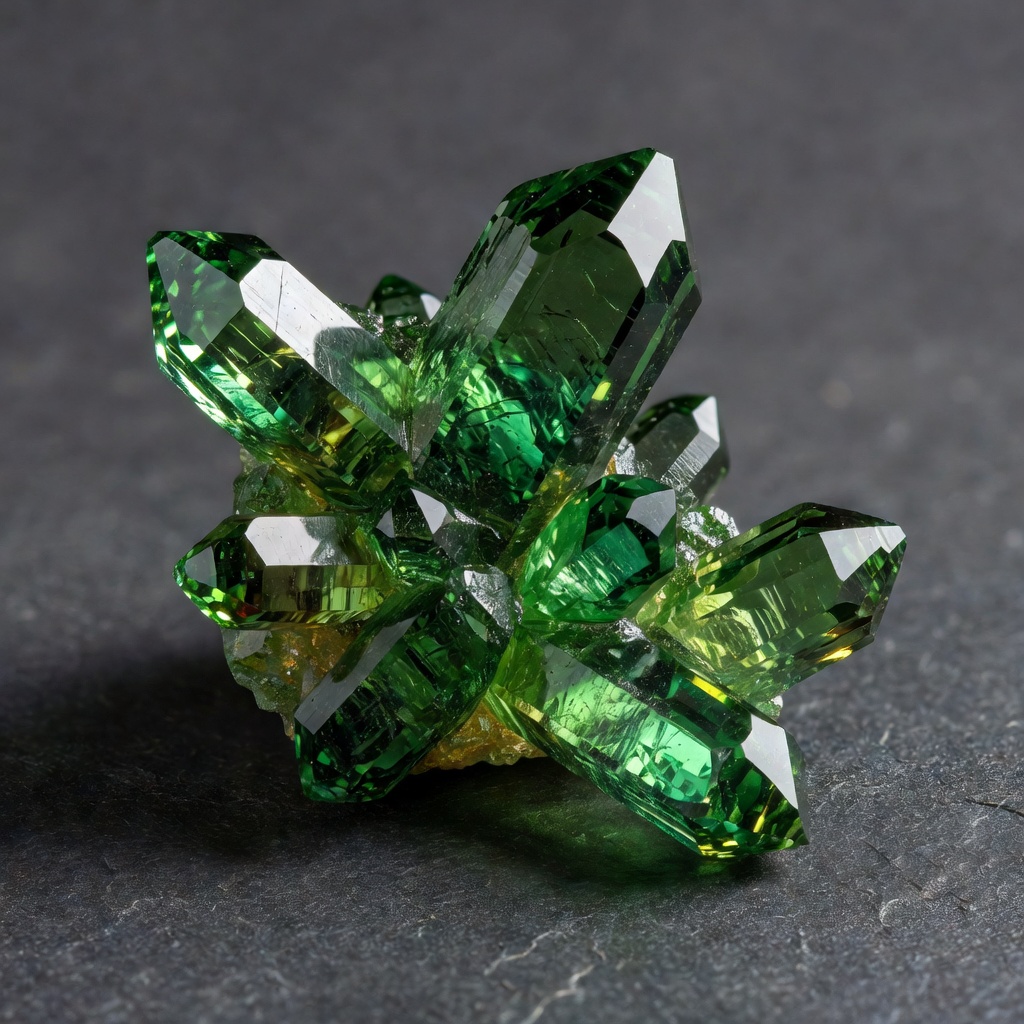
Crystallographically, hiddenite belongs to the monoclinic crystal system, typically forming elongated prismatic crystals with distinct vertical striations and flattened terminations. This structural arrangement results in perfect prismatic cleavage in two directions, creating planes of weakness that cutters must navigate carefully during the faceting process. The mineral displays a vitreous luster when cut and polished, contributing to its attractive appearance in jewelry settings, though lapidaries must orient the table perpendicular to the cleavage planes to minimize the risk of chipping or breaking during wear.
Color Characteristics and Optical Phenomena
The mesmerizing green spodumene coloration that defines hiddenite results specifically from the substitution of trivalent chromium (Cr3+) for aluminum within the crystal lattice, creating the same coloring mechanism found in precious emeralds. This chromium spodumene relationship produces hues ranging from pale, almost yellowish-green in lightly colored specimens to the highly coveted deep emerald-green that commands premium prices in the collector market. Unlike emeralds, which derive their color from chromium within the beryl structure, hiddenite tends toward a slightly more yellowish or bluish cast depending on the specific geological conditions of formation and any additional trace elements present.
One of the most distinctive optical characteristics of hiddenite is its strong pleochroism, a phenomenon where the gemstone displays different colors or intensities when viewed from various crystallographic directions. When examining a hiddenite crystal, observers typically note color variations from yellowish-green to bluish-green to deep emerald-green depending on the viewing angle, a property that requires careful consideration during the cutting process. Master cutters often orient the table to minimize the yellowish component while maximizing the pure green face-up color, though this sometimes requires sacrificing weight to achieve the optimal aesthetic result.
Geological Formation and Global Sources
Hiddenite deposits form exclusively within lithium-rich pegmatite environments, coarse-grained igneous rocks that provide the specific chemical and physical conditions necessary for large crystal growth. These pegmatites typically intrude into surrounding metamorphic rocks during the final stages of magma chamber crystallization, concentrating rare elements like lithium and chromium in pockets large enough to form significant crystals. The type locality at Hiddenite, North Carolina, remains the most famous source, having produced exceptional specimens since the late nineteenth century from the Kings Mountain Belt, where unique geological conditions created the perfect environment for chromium-rich spodumene formation.
Beyond North Carolina hiddenite, significant deposits occur in the Minas Gerais region of Brazil, Madagascar's pegmatite fields, and increasingly from Afghanistan's Nuristan province. Each locality produces material with slightly different characteristics; Brazilian stones often exhibit lighter green tones but greater clarity, while Afghan material sometimes achieves the intense saturation reminiscent of the finest North Carolina specimens. Mining these deposits presents considerable challenges, as pegmatite veins are often narrow and erratically distributed, requiring extensive exploration and careful extraction to prevent damage to the fragile crystals during recovery.
Hiddenite vs Kunzite: Understanding Spodumene Varieties
When examining hiddenite vs kunzite, collectors encounter two distinct personalities of the same mineral species, separated primarily by their coloring elements and resulting aesthetic appeal. While hiddenite contains chromium producing green hues, kunzite derives its delicate pink to violet colors from manganese impurities, creating a complementary pair often sought by collectors wishing to own the complete spodumene color spectrum. Both varieties share identical crystal structures and cleavage characteristics, exhibiting perfect prismatic cleavage that makes them challenging to cut and requiring protective settings for jewelry use.
The comparison between these spodumene varieties extends to their stability and market positioning; kunzite, discovered later in 1902 in California, is generally more abundant and therefore more affordable than its green cousin. However, both stones share a vulnerability to light exposure, with kunzite being particularly notorious for fading in sunlight while hiddenite maintains better color stability though still requiring protection from prolonged UV exposure. Serious collectors often acquire matched sets of both varieties, appreciating the mineralogical continuity while enjoying the visual contrast between the heart-centered pink of kunzite and the growth-oriented green of hiddenite.
Metaphysical Properties and Crystal Healing
Practitioners of crystal healing attribute profound hiddenite healing properties to this rare gemstone, particularly regarding emotional balance and heart-centered energy work. The hiddenite crystal meaning centers on its association with the heart chakra, where it is believed to facilitate the release of entrenched emotional patterns and support the healing of grief, loss, and emotional trauma. Unlike some healing stones that focus on protection or grounding, hiddenite is thought to operate through gentle expansion, encouraging the wearer to open to compassion, forgiveness, and unconditional love even in difficult circumstances.
In meditation practices, hiddenite serves as a tool for accessing deeper emotional layers without overwhelming the practitioner, its green energy promoting growth and renewal similar to the first shoots of spring emerging from winter soil. Crystal healers often recommend placing hiddenite directly over the heart during lying-down meditation sessions, allowing the stone's vibrations to resonate with the cardiac plexus and encourage emotional flexibility. Some practitioners combine hiddenite with rose quartz or pink kunzite to create a synergistic blend of heart chakra energies, addressing both the giving and receiving aspects of love and emotional connection.
Identification and Authentication Methods
Learning to identify hiddenite requires familiarity with several key diagnostic features that distinguish it from other green gemstones commonly found in the market. Unlike emerald, which typically contains visible inclusions and has a different refractive index range (1.57-1.58 compared to hiddenite's 1.66-1.68), hiddenite often appears cleaner and possesses a distinctive glassy luster. Green tourmaline (verdelite) may resemble hiddenite superficially but lacks the pronounced pleochroism that characterizes the spodumene variety, while peridot typically shows higher birefringence and a more yellowish-green hue that doesn't shift dramatically with viewing angle.
Testing for pleochroism remains the most reliable field identification method for this hiddenite gemstone, requiring only a dichroscope or even careful observation with the naked eye rotated under single-source lighting. Gemologists confirm identification through refractive index measurements, noting that hiddenite typically reads between 1.66 and 1.68 on the refractometer, significantly higher than quartz or beryl but lower than corundum. Buyers should also be aware of potential treatments, as some pale material may be irradiated to enhance color, though such treatments are generally unstable and may fade over time, making certification from reputable laboratories essential for significant purchases.
Proper Care and Maintenance
Proper hiddenite care begins with understanding the gemstone's sensitivity to thermal shock, which can cause cleavage planes to separate or the stone to fracture entirely when exposed to sudden temperature changes. When cleaning hiddenite jewelry, always use lukewarm water with mild soap and a soft brush or cloth, avoiding ultrasonic cleaners that can vibrate the stone along its cleavage planes and cause internal damage. Steam cleaning presents similar risks due to rapid temperature shifts, making gentle hand-cleaning the only recommended method for maintaining these delicate green spodumene specimens.
Storage considerations form another crucial aspect of gemstone maintenance, as hiddenite's hardness of 6.5-7 means it can be scratched by harder stones commonly found in jewelry collections. Store hiddenite pieces separately in soft cloth pouches or padded jewelry boxes away from diamonds, rubies, sapphires, and even harder quartz varieties that might abrade the surface during storage. When wearing hiddenite rings or bracelets, remove them before engaging in physical activities, housework, or situations where the stone might receive sharp impacts, as the perfect cleavage makes hiddenite vulnerable to chipping even from minor blows.
Buying Guide: Quality Factors and Pricing
When seeking to buy hiddenite, understanding quality grading criteria helps collectors make informed decisions and avoid overpaying for inferior material. Color represents the primary value factor, with deep emerald-green specimens commanding the highest prices per carat, while pale yellowish-green or heavily included material remains more accessible to budget-conscious collectors. Clarity standards for hiddenite are somewhat forgiving compared to emeralds, as completely clean specimens are exceptionally rare; however, stones with eye-visible inclusions should command significantly lower prices unless the color saturation is extraordinary.
Current market values for hiddenite typically range from $50 to $500 per carat for fine material, with exceptional North Carolina specimens or large, clean Brazilian stones occasionally exceeding these ranges. When considering hiddenite value, prospective buyers should prioritize cut quality, as poorly oriented stones may display undesirable color zoning or excessive pleochroism that diminishes their face-up appearance. Reputable sources include specialized mineral dealers who can provide provenance information, established gemological laboratories offering certified stones, and direct connections with cutters who understand the unique challenges of working with cleavage-prone spodumene varieties.
Conclusion: Why Hiddenite Deserves Recognition
Exploring Hiddenite Properties and Information reveals a gemstone that occupies a unique niche in the mineral kingdom, bridging the gap between collector's rarity and metaphysical significance. Unlike more common green gemstones that saturate the market, hiddenite offers distinctiveness through its specific geological origins, optical characteristics, and the fortunate combination of lithium and chromium that creates its signature color. For mineral collectors, the appeal lies in acquiring specimens from historically significant localities like North Carolina, while metaphysical practitioners value the stone's reputed ability to facilitate emotional growth and heart-centered awareness.
The future availability of fine hiddenite remains uncertain, as many historic mines have depleted their best material or ceased operations entirely, while new discoveries remain sporadic and unpredictable. This scarcity suggests strong investment potential for high-quality specimens, particularly those with documented provenance from exhausted localities or exceptional color characteristics. Whether appreciated for its scientific interest as a chromium spodumene variety, its aesthetic beauty in fine jewelry, or its spiritual applications in crystal healing, hiddenite stands as a testament to the diverse manifestations of mineral beauty that continue to captivate human imagination.
Frequently Asked Questions
What is hiddenite and how does it differ from kunzite?
Hiddenite is the green chromium-bearing variety of spodumene, while kunzite is the pink manganese-bearing variety. Both share the same basic chemical composition (LiAlSi2O6) and crystal structure, but differ in color, rarity, and the trace elements responsible for their hues. Hiddenite is generally rarer and often more valuable than kunzite.
Where is hiddenite found?
The type locality is Hiddenite, North Carolina, where it was first discovered in 1879. Significant deposits are also found in Brazil (Minas Gerais), Madagascar, Afghanistan, Myanmar, and China. North Carolina remains famous for producing some of the finest emerald-green specimens, though Brazilian material is currently more common in the market.
What gives hiddenite its characteristic green color?
The green color results from trace amounts of chromium (Cr3+) replacing aluminum in the crystal lattice structure. This is the same chromophore that colors emeralds and rubies. Some specimens may also contain vanadium, which can modify the green hue. The intensity of color depends on the concentration of chromium and the size of the crystal.
Is hiddenite valuable and how is it priced?
Yes, high-quality hiddenite is valuable, particularly specimens with deep emerald-green color and high transparency. Prices typically range from $50 to $500 per carat for fine material, with exceptional museum-quality pieces commanding higher prices. It is generally less expensive than emerald but rarer than peridot or green tourmaline of similar quality.
What are the metaphysical properties of hiddenite?
Crystal healers associate hiddenite with the heart chakra, believing it promotes emotional healing, compassion, and unconditional love. It is thought to help release negative emotional patterns, heal grief, and encourage forgiveness. Some practitioners use it to support growth in relationships and spiritual development.
How can I tell if a hiddenite gemstone is real?
Authentic hiddenite exhibits strong pleochroism, showing different shades of green (from yellowish-green to bluish-green) when viewed from different angles. It has a hardness of 6.5-7, a refractive index of 1.66-1.68, and distinct prismatic cleavage. Professional gemological testing including refractometer readings and spectroscopic analysis provides definitive identification.
Does hiddenite fade in sunlight?
Yes, like kunzite, hiddenite can fade when exposed to prolonged strong sunlight or UV radiation. The chromium-colored green variety is generally more stable than manganese-colored kunzite, but it is still advisable to store hiddenite jewelry away from direct sunlight and avoid wearing it during extended outdoor activities in bright sun.
How should I clean and care for hiddenite jewelry?
Clean hiddenite using warm water, mild soap, and a soft brush or cloth. Avoid ultrasonic cleaners and steam cleaners due to hiddenite's perfect cleavage, which makes it susceptible to breaking under vibration or thermal shock. Store separately from harder gemstones (diamonds, sapphires, rubies) to prevent scratching, and remove before physical activities or housework.