What Is Hiddenite? Understanding This Rare Green Gem
Hiddenite represents one of the most captivating yet underappreciated gemstones in the world of fine jewelry, distinguished as the green variety of the mineral spodumene. This exquisite hiddenite gemstone derives its name from William Earl Hidden, the mineralogist who discovered significant deposits in Alexander County, North Carolina, in 1879 while searching for platinum on behalf of inventor Thomas Edison. Chemically composed of lithium aluminum silicate, green spodumene obtains its distinctive coloration from trace amounts of chromium, similar to the coloring agent found in emeralds and rubies, though the resulting hue tends toward yellowish-green or chartreuse rather than the deep forest green associated with emeralds.
The rarity of fine hiddenite cannot be overstated when compared to its more famous pink counterpart, kunzite, or other popular green gemstones like emerald or tsavorite garnet. While pink kunzite has become relatively accessible in the commercial market due to abundant Brazilian deposits, gem-quality hiddenite with intense, saturated color remains genuinely scarce. Most specimens recovered from mines exhibit pale, washed-out green tones that lack the vibrancy collectors seek, making truly exceptional pieces with deep emerald-like coloration extraordinarily valuable. This scarcity factor positions hiddenite as a connoisseur's stone, appealing to collectors who appreciate both its historical significance and its geological rarity.
Essential Quality Factors in Our Hiddenite Buying Guide
When evaluating natural hiddenite for purchase, understanding the four Cs—color, clarity, cut, and carat weight—becomes essential, though these factors weigh differently than they might for diamonds or other colored stones. This comprehensive Hiddenite Buying Guide emphasizes that color saturation serves as the primary value determinant, often trumping clarity considerations that might dominate other gemstone categories. Unlike diamonds where clarity significantly impacts pricing across all grades, hiddenite collectors typically accept some inclusions if the stone displays exceptional color intensity, though eye-clean specimens command substantial premiums when they also exhibit fine color.
The cut quality significantly influences how hiddenite displays its color and brilliance, requiring cutters to navigate the mineral's perfect cleavage planes while maximizing face-up color. Experienced lapidaries often favor cushion, oval, or emerald cuts that help deepen the apparent color of lighter rough material, while also protecting vulnerable corners from chipping. Carat weight presents unique challenges in hiddenite procurement, as crystals large enough to yield fine gems over five carats are exceedingly rare, causing exponential price increases for significant specimens. Buyers should prioritize working with dealers who understand spodumene's specific cutting requirements and can demonstrate how the stone's orientation affects its pleochroic color display.
Color Grading: The Most Critical Value Factor
Color evaluation in hiddenite color grading follows a spectrum ranging from pale, almost yellowish chartreuse to deep, saturated emerald green, with medium-toned stones exhibiting strong saturation commanding the highest market premiums. The ideal green spodumene quality specimen displays a pure green hue without excessive brown or yellow modifiers, though completely pure green remains exceptionally rare in natural material. Stones that achieve a balanced medium-dark tone—neither so light that they appear washed out nor so dark that they appear blackish—represent the sweet spot for both aesthetic appeal and investment value. When examining potential purchases, always view the stone under multiple lighting conditions, as hiddenite's color can shift dramatically between daylight-equivalent and incandescent lighting.
Pleochroism, the phenomenon where a gemstone displays different colors when viewed from different angles, significantly impacts hiddenite's appearance and value assessment. High-quality hiddenite typically shows strong pleochroism ranging from green to yellowish-green or colorless depending on the crystal orientation, requiring cutters to orient the table facet perpendicular to the c-axis to maximize the green color face-up. When examining loose stones, tilt the gem slightly to observe how the color changes; stones that maintain strong green saturation across multiple viewing angles indicate superior cutting and material quality. This optical characteristic also means that bezel settings or closed-back mountings can sometimes enhance the apparent color depth of lighter stones, a technique occasionally employed by sophisticated jewelry designers working with fine spodumene specimens.
Clarity, Cut, and Carat Weight Considerations
Hiddenite clarity standards generally prove more forgiving than those applied to diamonds, yet understanding typical inclusion patterns helps distinguish natural stones from synthetics or imitations. Natural spodumene gemstone crystals frequently contain liquid inclusions, growth tubes, and occasionally rutile needles, though these characteristics differ from the "jardin" (garden) inclusions typical of emeralds. Eye-clean specimens—those without visible inclusions to the unaided eye—represent perhaps the top five percent of available material and command corresponding premiums, though lightly included stones with exceptional color often provide better value for collectors focused on rarity rather than perfection. When examining clarity, use proper gemological lighting and loupe to identify any surface-reaching inclusions that might compromise durability, particularly given hiddenite's cleavage vulnerability.
Cutting hiddenite requires exceptional skill due to the mineral's distinct cleavage in two directions, making it susceptible to chipping during both the cutting process and subsequent wear. Brilliant cuts with numerous facets help mask lighter body color while maximizing light return, whereas step cuts like emerald or asscher styles emphasize clarity and color purity but require higher-quality rough material. Regarding carat weight, the law of diminishing returns definitely applies to hiddenite; while one-carat stones of commercial quality appear regularly at gem shows, specimens exceeding five carats with fine color emerge perhaps a handful of times annually in the global market. This extreme scarcity of large, clean, intensely colored crystals means that prices increase exponentially rather than linearly as carat weight increases, making significant specimens true museum-quality collector's items.
Hiddenite vs Kunzite: Key Differences for Buyers
Understanding the hiddenite vs kunzite distinction helps collectors navigate the broader category of spodumene varieties and make informed purchasing decisions based on availability and value propositions. While both stones share identical chemical compositions and crystallographic structures, differing only in their trace element coloring agents—chromium for hiddenite and manganese for kunzite—their market dynamics diverge significantly. Pink kunzite occurs much more frequently in nature, particularly from the massive deposits in Minas Gerais, Brazil, making it relatively affordable and accessible even in larger sizes, whereas fine hiddenite remains genuinely scarce regardless of size category. This availability differential means that while a fine five-carat kunzite might cost several hundred dollars, a comparable quality hiddenite of the same weight could command thousands.
Both varieties share the same physical properties that influence their use in jewelry, including a hardness of 6.5 to 7 on the Mohs scale and perfect cleavage that requires protective settings. However, hiddenite generally commands greater respect among serious collectors due to its rarity and the historical significance of its North American discovery, whereas kunzite often serves as an entry-level collector's stone or fashion jewelry component. Care requirements remain identical for both stones: avoid ultrasonic cleaners, protect from sharp blows, and store away from prolonged direct sunlight, which can cause fading in some kunzite specimens (though hiddenite typically shows better color stability). When building a serious colored stone collection, acquiring fine hiddenite represents a more significant achievement than obtaining equivalent kunzite, reflecting both geological reality and market valuation.
Hiddenite Pricing Guide: What to Expect in 2024
Current hiddenite pricing reflects the gemstone's scarcity hierarchy, with hiddenite value determinations based primarily on color intensity followed by clarity and size. Entry-level commercial quality stones displaying pale green coloration and moderate inclusions typically range from $50 to $200 per carat, suitable for casual collectors or those seeking the gemstone's energy properties rather than investment-grade material. Fine quality specimens exhibiting medium green saturation with good clarity command $500 to $1,000 per carat, while exceptional stones with deep, emerald-like green color and eye-clean clarity can exceed $2,000 per carat, with particularly fine large specimens reaching $5,000 or more per carat at specialty auctions. These figures represent significant increases from pricing five years ago, reflecting both renewed collector interest and depletion of easily accessible high-quality rough material.
Several factors cause dramatic variations in hiddenite pricing beyond the standard quality metrics, including provenance and treatment status. Stones from the original North Carolina locality carry historical premiums regardless of whether they surpass Brazilian or Afghan material in objective quality metrics, appealing to collectors focused on mineralogical history. Untreated stones command substantial premiums over those that have undergone heating or oiling to improve clarity, though unlike emeralds, hiddenite rarely receives extensive treatment due to its relative cleanliness compared to beryl. When budgeting for a significant hiddenite purchase, allocate additional funds for certification from recognized laboratories, as the cost of verifying authenticity and natural origin typically runs $100-300 but proves essential for protecting your investment and ensuring resale value.
Certification and Authenticity Verification
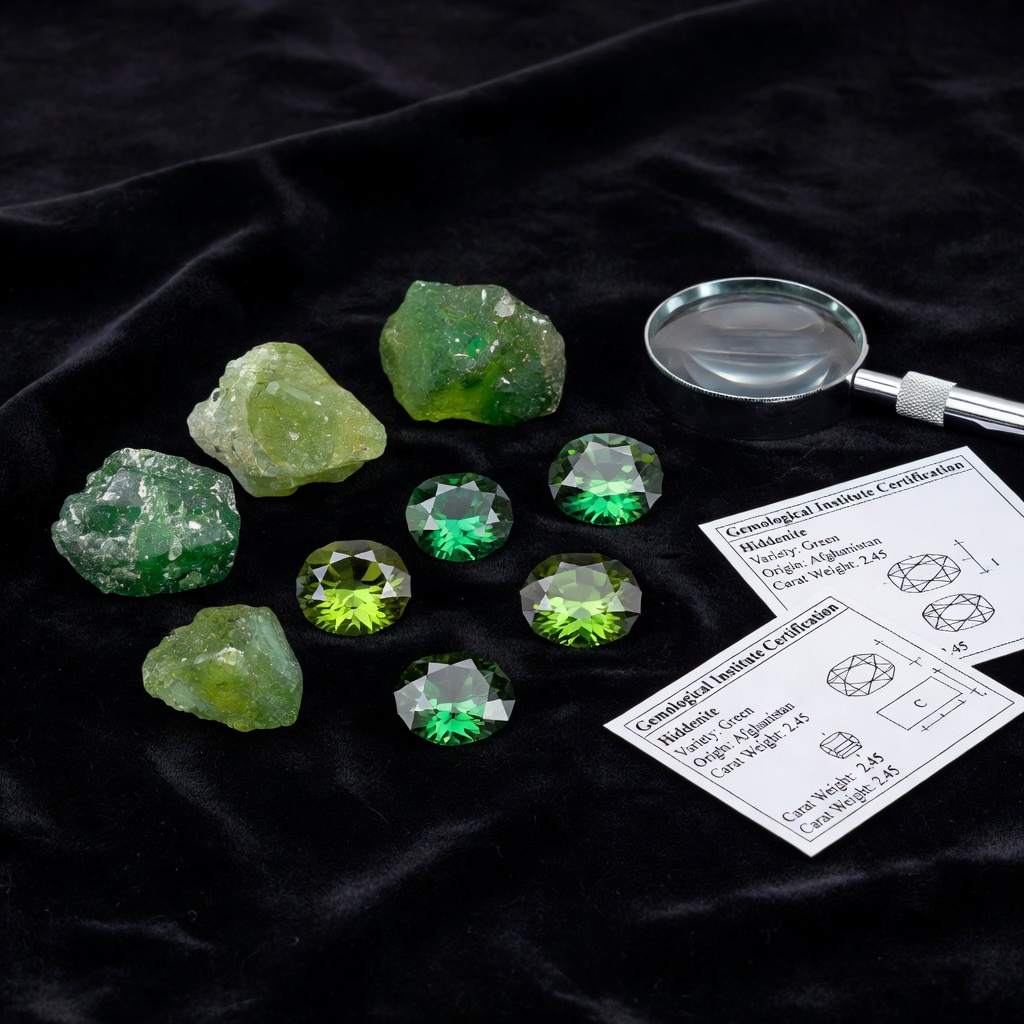
Acquiring certified hiddenite represents a non-negotiable step in the purchasing process, given the prevalence of synthetic lithium aluminum silicate and the potential for misidentification of pale green tourmaline or peridot as natural hiddenite. Reputable gemological laboratories including the Gemological Institute of America (GIA), American Gemological Laboratories (AGL), and Gübelin Gem Lab provide detailed reports confirming species, variety, natural versus synthetic origin, and any detectable treatments or enhancements. These certificates should specifically identify the stone as "Spodumene, variety Hiddenite" and note whether the color appears natural or induced, as some unscrupulous dealers sell irradiated or dyed kunzite as hiddenite. When purchasing stones over one carat or costing more than $500, insist on accompanying documentation from one of these recognized institutions rather than relying solely on dealer-provided letters or in-house certifications.
Beyond laboratory certification, buyers should familiarize themselves with common enhancement practices and synthetic production methods affecting the hiddenite market. While heating remains relatively uncommon for hiddenite compared to other gemstones like sapphire or tanzanite, some material undergoes fracture filling to improve apparent clarity, a treatment that requires disclosure and significantly impacts value. Synthetic spodumene grown using hydrothermal processes has appeared in the market sporadically, typically distinguished by unnaturally perfect clarity and distinctive inclusion patterns visible under magnification. When examining potential purchases without laboratory reports, look for natural inclusion patterns such as feather-like liquid inclusions or growth zoning, and test for pleochroism using a dichroscope, as synthetic material often shows weaker pleochroic effects than natural crystals.
Trusted Sources: Where to Buy Hiddenite Safely
Knowing where to buy hiddenite safely requires identifying established hiddenite dealers who specialize in rare colored gemstones rather than general jewelry retailers who may lack specific expertise in spodumene varieties. Reputable specialty dealers such as those belonging to the American Gem Trade Association (AGTA) or similar international organizations adhere to strict ethical standards regarding disclosure and representation, significantly reducing your risk of purchasing misrepresented or treated material. High-end auction houses including Sotheby's, Christie's, and Bonhams periodically feature important hiddenite specimens in their jewelry and mineral auctions, often accompanied by extensive provenance documentation and pre-sale gemological reports, though buyer's premiums typically add 20-25% to the hammer price. For collectors seeking rough material or crystals for mineral collections, established mineral shows such as the Tucson Gem and Mineral Show provide opportunities to purchase directly from mining operations or first-tier wholesalers, though these transactions require advanced knowledge to evaluate quality accurately.
When purchasing hiddenite online or from international sources, several red flags should prompt immediate caution or withdrawal from the transaction. Extremely low prices for supposedly fine material—such as claims of "investment grade" five-carat stones for under $500—almost certainly indicate misrepresented kunzite, dyed quartz, or synthetic material. Sellers who resist providing detailed photographs under natural daylight, refuse independent certification, or pressure buyers into immediate purchase decisions without inspection periods should be avoided regardless of their claimed credentials. Additionally, be wary of stones described as "North Carolina hiddenite" without specific mine documentation or provenance, as this locality command premiums that incentivize misrepresentation of Brazilian or Afghan material. Always use secure payment methods offering buyer protection, and consider having stones examined by an independent gemologist before the return period expires, particularly for purchases exceeding $1,000.
Caring for Your Hiddenite Gemstone
Proper hiddenite care begins with understanding the specific vulnerabilities inherent to spodumene maintenance, particularly regarding the stone's cleavage planes and relative softness compared to sapphire or diamond. Clean your hiddenite jewelry using only mild soap and lukewarm water with a soft brush, avoiding ultrasonic cleaners and steam cleaners that can exploit internal fractures or cleavage planes, potentially causing catastrophic breakage. Chemical exposure presents another significant risk; remove hiddenite rings before using household cleaners, chlorine-treated pools, or engaging in activities involving harsh solvents, as these can potentially affect the stone's surface luster or attack any fillers used in fracture-filled specimens. After cleaning, pat the stone dry with a soft lint-free cloth rather than rubbing, which could potentially catch on prongs or settings and cause damage.
Storage recommendations for hiddenite emphasize isolation from harder gemstones to prevent scratching, ideally keeping pieces in individual soft cloth pouches or compartmentalized jewelry boxes. Due to the stone's cleavage vulnerability, avoid storing hiddenite jewelry in places where it might receive sharp impacts, such as loose in drawer compartments or crowded jewelry boxes where pieces might knock against each other. Regarding wearability, reserve hiddenite for pendants, earrings, and brooches rather than rings or bracelets that receive frequent impact unless set in protective bezel settings with substantial metal coverage. If wearing hiddenite in rings, choose occasions carefully—dinner parties or evening events rather than daily office wear or manual labor—and inspect settings regularly for loose prongs that might allow the stone to shift and receive edge impact.
Investment Potential and Collection Value
The hiddenite investment landscape offers compelling opportunities for collectors who understand the nuances of rare gemstones markets, though with liquidity caveats that distinguish it from more conventional investments like gold or blue-chip stocks. Current market trends indicate increasing appreciation for fine hiddenite among sophisticated collectors who recognize its rarity relative to mainstream green gemstones like emerald or tsavorite, with prices for top-tier material appreciating steadily at 10-15% annually over the past decade. Unlike diamonds, which benefit from massive marketing infrastructure and standardized grading, hiddenite remains a connoisseur's market where expertise provides significant advantage in identifying undervalued specimens. Investment-grade characteristics include untreated natural origin, certification from major laboratories, weight exceeding three carats, and color saturation reaching the elusive "emerald green" threshold without darkening to blackish tones.
When comparing hiddenite to other green gemstones as a store of value, its extreme rarity compared to emerald becomes particularly significant; while fine emeralds command higher absolute prices, they occur in far greater quantities globally, whereas museum-quality hiddenite specimens number in the dozens rather than thousands. The liquidity factor requires careful consideration, as selling significant hiddenite specimens typically requires specialized auctions or private treaty sales to other collectors rather than immediate cash conversion through standard jewelry channels. Long-term value retention appears strong given the finite nature of high-quality deposits and increasing difficulty of mining operations in traditional localities like North Carolina. For serious collectors, hiddenite offers the dual satisfaction of aesthetic beauty and geological significance, representing a tangible asset class that provides enjoyment while potentially appreciating in value, provided one maintains realistic expectations regarding holding periods and resale complexity.
Frequently Asked Questions
What is hiddenite and why is it considered rare?
Hiddenite is the green variety of the mineral spodumene, named after William Earl Hidden who discovered it in North Carolina while prospecting for Thomas Edison in the late 19th century. It's considered rare because gem-quality specimens with intense green color are significantly less common than its pink counterpart, kunzite, making fine pieces highly sought after by collectors and museums worldwide. While pink kunzite occurs abundantly in Brazilian deposits, hiddenite with saturated coloration remains scarce regardless of geographic origin, positioning it as a true connoisseur's gemstone.
How much does hiddenite cost per carat?
Hiddenite pricing varies dramatically based on color intensity and clarity, creating a wide market spectrum for potential buyers. Commercial quality stones with pale color may range from $50-200 per carat, while fine specimens with deep green saturation can command $500-2,000+ per carat depending on size and clarity characteristics. Exceptional large pieces with top color, particularly those over five carats with documented provenance from historic localities, are considered investment-grade and can exceed $5,000 per carat at specialty auctions or through high-end dealers.
How can I tell if hiddenite is natural or treated?
Always request a certificate from a recognized gemological laboratory like GIA, AGL, or SSEF before purchasing significant hiddenite specimens, as professional testing remains the only definitive verification method. Natural hiddenite typically shows specific inclusion patterns including liquid feathers and growth tubes, along with strong pleochroism visible under polarized light examination. Be wary of unusually cheap stones or those with unnaturally perfect clarity, as some sellers may dye paler spodumene, irradiate kunzite to create green color, or sell synthetic versions grown in laboratories.
What's the difference between hiddenite and emerald?
While both are green gemstones prized for their color, hiddenite is spodumene (lithium aluminum silicate) whereas emerald is beryl (beryllium aluminum silicate), representing entirely different mineral species with distinct crystal structures. Hiddenite typically shows more yellowish-green or chartreuse tones compared to emerald's characteristic bluish-green hue, though fine hiddenite can approach emerald color in exceptional specimens. Hiddenite is also generally cleaner and less included than emerald, though softer on the Mohs scale at 6.5-7 compared to emerald's 7.5-8, and typically displays stronger pleochroism than beryl varieties.
Is hiddenite durable enough for everyday jewelry?
Hiddenite ranks 6.5-7 on the Mohs hardness scale, making it suitable for jewelry but requiring more care than harder stones like sapphire or diamond. It has distinct cleavage planes that make it susceptible to chipping if struck against hard surfaces or subjected to sharp impacts. It's best suited for pendants, earrings, and occasional wear rings rather than daily-wear rings or bracelets, though protective bezel settings can improve its suitability for ring wear during special occasions.
What color hiddenite is most valuable?
The most valuable hiddenite displays a saturated, medium to dark green color similar to fine emerald or chrome diopside, without appearing too dark or blackish in tone. Stones with strong pleochroism showing pure green without excessive yellow or brown modifiers command premium prices in the market, as these represent the rarest expression of the gem's color potential. Collectors should seek specimens where the green appears vivid and lively rather than muddy or grayish, with optimal stones maintaining their color saturation under various lighting conditions from daylight to incandescent.
Where does the best hiddenite come from?
While originally discovered in North Carolina (USA), significant deposits are now found in Brazil, Madagascar, Afghanistan, and Myanmar (Burma), each producing slightly different color characteristics. Brazilian material often produces larger crystals suitable for substantial faceted gems, while Afghan stones frequently exhibit exceptional clarity and can achieve intense green coloration. North Carolina material carries historical premiums due to its status as the type locality, though fine specimens from any source command respect in the market if they meet quality standards for color and clarity.
Should I buy hiddenite as an investment?
High-quality hiddenite can be a good investment due to its rarity and increasing collector interest, but it's less liquid than diamonds or rubies and requires specialized knowledge to sell profitably. Focus on certified, untreated stones over 3 carats with intense green color and eye-clean clarity for the best appreciation potential. Purchase from reputable dealers and view it as a long-term collectible rather than a quick-return investment, maintaining realistic expectations that selling may require months or years to find the right collector buyer willing to pay full market value.