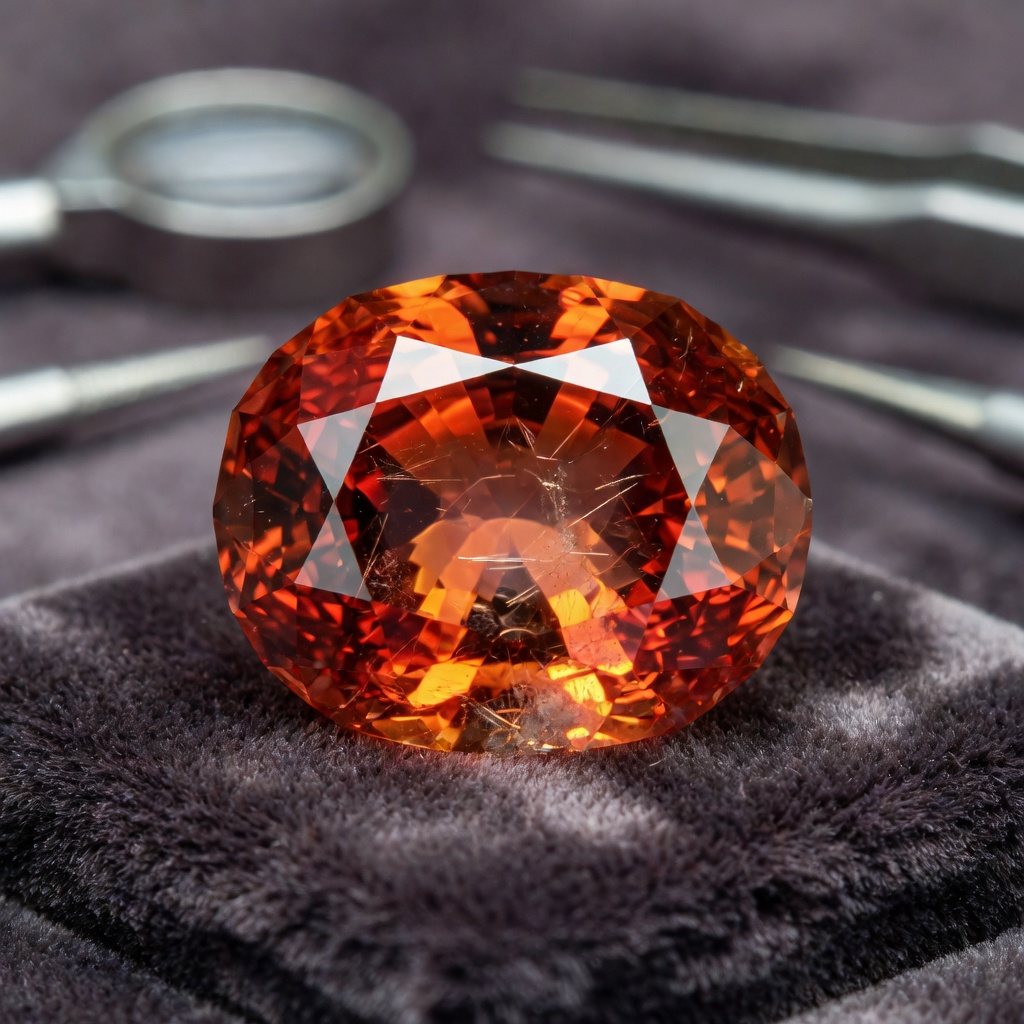
What Is Hessonite Garnet? Understanding the Cinnamon Stone
Hessonite garnet represents one of the most distinctive members of the grossular garnet variety, distinguished by its unique calcium-aluminum silicate composition that sets it apart from other garnet species. Unlike the more common almandine or pyrope garnets found in standard jewelry, this gemstone derives its scientific classification from the grossular group, specifically characterized by the chemical formula Ca₃Al₂(SiO₄)₃. The gem's warm, spicy appearance has earned it the affectionate nickname "cinnamon stone" throughout history, a moniker that perfectly captures its honeyed amber to deep reddish-brown color spectrum that resembles the finest ground spices.
The historical significance of hessonite stretches back centuries, with ancient traders and gemologists noting its resemblance to the color of cinnamon oil or zircon batches from Sri Lanka. When comparing hessonite to its garnet cousins like almandine (which typically displays deep red to purple-red tones) or spessartine (known for bright orange hues), hessonite occupies a unique niche with its earthy, tawny coloration that ranges from pale yellow-orange to rich cognac brown. This distinctive appearance results from trace amounts of iron and manganese within its crystal structure, creating the warm palette that makes hessonite instantly recognizable to experienced gemologists and collectors alike.
Physical and Chemical Properties of Hessonite
Understanding the Hessonite Garnet Properties and Information requires examining its fundamental chemical architecture, which consists of calcium-aluminum silicate arranged in the cubic crystal system typical of all garnets. The specific chemical formula Ca₃Al₂(SiO₄)₃ indicates a precise molecular arrangement where calcium and aluminum atoms create a framework that accommodates various trace elements, resulting in the characteristic color variations. This grossular garnet variety typically exhibits a specific gravity ranging from 3.57 to 3.73, making it noticeably lighter than dense almandine garnets but heavier than most quartz varieties, a property that aids in identification and separation from imitations.
On the Mohs hardness scale, hessonite garnet registers between 6.5 and 7, positioning it as a moderately durable gemstone suitable for jewelry but requiring protective settings to prevent abrasion from harder materials like diamonds or sapphires. Perhaps the most fascinating physical characteristic involves its internal features, where natural hessonite almost invariably displays distinctive inclusions known as "heat waves" or "roiled" effects—turbulent, wavy internal patterns created by growth zoning and strain within the crystal. These inclusions, along with visible apatite crystals and needle-like zircon inclusions, actually serve as authentication markers rather than flaws, helping distinguish natural specimens from synthetic counterparts while contributing to the stone's unique visual character.
The optical properties of hessonite further distinguish it within the gemstone world, with refractive index values typically ranging from 1.74 to 1.75, slightly lower than other garnet varieties. This moderate refractive index, combined with a singly refractive nature (isotropic), produces a soft, warm brilliance rather than the sharp fire seen in diamonds or demantoid garnets. When light enters a well-cut hessonite, it creates a distinctive glow that seems to emanate from within the stone, particularly noticeable in larger specimens where the cinnamon-colored depths appear to hold an inner fire that shifts subtly with movement.
Metaphysical and Healing Properties
The Gomed stone benefits extend far beyond aesthetic appreciation, encompassing a wide spectrum of metaphysical and healing properties that have been recognized in various cultural traditions for millennia. Practitioners of crystal healing often prescribe hessonite for individuals experiencing emotional turbulence, as the stone is believed to absorb anxiety and transform negative thought patterns into constructive energy. Regular meditation with hessonite placed over the Solar Plexus chakra is thought to enhance self-confidence and personal power, helping wearers overcome feelings of inferiority or hesitation when facing challenging decisions or social situations.
Physical healing associations link hessonite garnet healing properties primarily to the digestive system and metabolic processes, with traditional Ayurvedic practitioners recommending it for conditions affecting the stomach, intestines, and liver. The stone's warm, earthy energy is believed to stimulate healthy metabolism and improve nutrient absorption, while some crystal therapists use it to support skin health and alleviate chronic conditions like eczema or allergies. When placed on the body during healing sessions, hessonite is said to increase blood circulation and help detoxify the system, aligning with its traditional use as a stone of vitality and physical renewal.
Mental clarity represents another significant benefit attributed to this grossular garnet variety, with users reporting enhanced concentration and improved decision-making capabilities when working with the stone regularly. The crystal is thought to clear mental fog and confusion, particularly beneficial for students, researchers, or professionals engaged in complex analytical work. Energetically, hessonite is associated with both the Sacral and Solar Plexus chakras, creating a bridge between creative inspiration and practical manifestation; this alignment is believed to help individuals transform creative ideas into tangible results while maintaining emotional balance throughout the process.
Astrological Significance: The Rahu Gemstone
In the intricate system of Vedic astrology, hessonite garnet holds supreme importance as the primary Rahu gemstone astrology tool, designated specifically to harness and pacify the energies of the shadow planet Rahu. Unlike the luminaries Sun and Moon or the visible planets, Rahu represents a mathematical point in space—the north node of the moon—associated with obsession, materialism, confusion, and sudden changes in fortune. When Rahu occupies challenging positions in a natal chart or during its 18-year Mahadasha period, astrologers traditionally recommend wearing hessonite (known in Sanskrit as "Gomed" or "Gomedh") to mitigate these disruptive influences and transform obstacles into opportunities for growth.
The suitability for wearing this stone depends heavily on individual astrological charts, particularly benefiting those with Rahu positioned in the 1st, 4th, 6th, or 10th houses, or during the Rahu Mahadasha and Antardasha periods. According to traditional protocols, the gemstone should be set in silver or panchdhatu (a five-metal alloy) and worn on the middle finger of the right hand for maximum energetic conductivity. The optimal time for first wearing involves Saturday evenings during the ascending moon cycle (Shukla Paksha), ideally within one hour of sunset, after proper cleansing and energization rituals that may include mantra recitation and offerings to appease Rahu's energy.
Practitioners typically advise that astrological benefits may begin manifesting within 30 to 45 days of consistent wear, though significant transformations often become apparent after 90 days as the stone attunes to the wearer's energy field. Case studies from Vedic astrological practice suggest that individuals experiencing Rahu-related confusion, sudden losses, or unexplained fears often report increased mental stability and protection from unseen negative influences once they begin wearing a properly selected hessonite. The stone is believed to create a protective shield around the aura, filtering out deceptive energies while enhancing intuitive clarity and the ability to discern truth from illusion.
How to Identify Genuine Hessonite Garnet
Natural hessonite identification requires careful examination of several diagnostic features that distinguish authentic specimens from synthetics, simulants, and lower-quality imitations. The most reliable visual indicator involves observing the characteristic "roiled" or "heat wave" internal effect visible when examining the stone under magnification or even with the naked eye in larger specimens. This distinctive turbulence appears as swirling, wavy patterns within the crystal, caused by growth zoning and internal strain unique to natural hessonite formation; synthetic versions typically display either perfect clarity or unnaturally uniform bubble patterns that lack the organic complexity of genuine inclusions.
Under 10x magnification using a jeweler's loupe, authentic hessonite reveals natural crystal inclusions including apatite crystals, zircon needles, and two-phase inclusions that serve as fingerprints of genuine origin. These inclusions often appear as small, well-formed crystals suspended within the cinnamon-colored matrix, whereas synthetic stones produced through flux growth or hydrothermal methods exhibit curved growth lines, nail-like inclusions, or simply too-perfect clarity. Color consistency tests also prove valuable, as natural hessonite displays subtle color zoning and pleochroism (though weak) that creates depth and variation, unlike the flat, uniform coloration typical of glass imitations or synthetics.
For definitive authentication, prospective buyers should insist upon professional certification from recognized laboratories such as the Gemological Institute of America (GIA), International Gemological Institute (IGI), or Gemological Institute of India (GII). These certifications verify not only the species identification as grossular garnet variety but also disclose any treatments such as heat enhancement or oiling that might affect value. Advanced testing using a refractometer should show readings between 1.74-1.75, while specific gravity testing via hydrostatic weighing provides additional confirmation, with natural hessonite consistently falling within the 3.57-3.73 range. Buyers should remain wary of stones sold as "cinnamon stone" at unusually low prices, as these often prove to be dyed quartz, citrine, or glass imitations lacking the durability and value of genuine hessonite.
Global Sources and Mining Locations
The geographic origin of hessonite significantly influences its quality, color characteristics, and market value, with Sri Lanka (historically known as Ceylon) standing as the premier source for the finest cinnamon stone material. Sri Lankan deposits, particularly those in the Elahera and Ratnapura regions, produce hessonite with exceptional clarity and the highly prized honey-orange to deep cognac colors that command premium prices in international markets. Ceylon hessonite typically exhibits superior transparency compared to material from other localities, often displaying the coveted "heat wave" inclusions in a more aesthetically pleasing pattern that doesn't overly compromise the stone's brilliance.
Indian deposits, notably in the states of Odisha and Tamil Nadu, yield hessonite with distinct color characteristics that tend toward deeper reddish-brown tones with higher iron content, creating a richer but sometimes darker appearance than Sri Lankan material. These Indian stones often display more pronounced inclusions and color zoning, making them suitable for astrological purposes where appearance matters less than energetic properties, though fine Indian specimens certainly exist for jewelry applications. African sources have emerged as significant suppliers in recent decades, with Madagascar producing hessonite in various shades from pale yellow to deep orange, while Tanzanian deposits yield material with unique color shifts and clarity patterns that appeal to collectors seeking distinctive specimens.
The impact of origin on valuation cannot be overstated in the Hessonite Garnet Properties and Information marketplace, with verified Ceylon origin stones typically commanding 20-40% price premiums over comparable material from India or Africa. Mining conditions vary dramatically across these regions, with Sri Lankan deposits often involving traditional alluvial mining in river gravels where environmental impact remains relatively low, while some African operations employ more intensive extraction methods. Collectors and investors should note that origin documentation affects not only current value but also future appreciation potential, as the finest Ceylon hessonites become increasingly scarce due to limited new discoveries and depletion of traditional mining areas.
Quality Assessment: The Four Cs of Hessonite
Evaluating hessonite garnet properties through the traditional Four Cs framework requires understanding how this unique gemstone diverges from diamond grading standards while maintaining rigorous quality criteria. Color assessment stands paramount, with the most desirable specimens displaying medium to dark orange-brown tones reminiscent of pure cinnamon or aged cognac without excessive blackening or grayish undertones that indicate poor quality. The ideal hessonite exhibits a warm, vibrant saturation that appears to glow from within, avoiding the overly pale yellow-orange that suggests low iron content or the muddy brown that indicates inferior material; top-grade stones demonstrate excellent face-up color even in smaller sizes, though hessonite generally shows better color saturation in specimens weighing two carats or more.
Clarity standards for hessonite differ significantly from diamonds or sapphires, as the presence of certain inclusions actually authenticates natural origin rather than detracting from value. While heavily included stones with opaque areas or dense clusters that block light transmission should be avoided, collectors accept and even prize the characteristic "heat wave" or "roiled" effect along with scattered crystal inclusions as proof of genuine natural formation. Eye-clean specimens command premium prices, but slight inclusions visible only under magnification are acceptable in fine jewelry pieces, particularly when they don't compromise the stone's durability or significantly impair light return.
Cut optimization presents unique challenges for lapidaries working with hessonite, as the cutter must balance color retention against brilliance while minimizing windowing (areas where light passes through without reflection). Due to hessonite's relatively high refractive index and specific gravity, deeper cuts often improve color saturation but may result in window effects if the pavilion angles are too steep; experienced cutters typically employ modified brilliant cuts or cushion shapes that maximize the warm color while maintaining lively brilliance. Carat weight considerations reveal exponential pricing structures, with stones over five carats in fine quality becoming exponentially rarer and commanding disproportionately higher per-carat prices, making large, clean hessonites excellent investment pieces for serious collectors.
Jewelry Design and Daily Wear Considerations
Designing jewelry with hessonite requires thoughtful consideration of both aesthetic harmony and protective engineering due to the stone's specific physical properties. Traditional Vedic recommendations strongly favor silver settings for Gomed stone benefits, as silver is believed to conduct Rahu's energy most effectively while complementing the warm cinnamon tones with cool contrast. However, contemporary jewelry designers increasingly incorporate hessonite into yellow gold settings for fashion pieces, creating rich, monochromatic warmth particularly effective in autumn-themed collections or vintage-inspired designs; panchdhatu (five-metal alloy) settings represent another traditional option that supposedly enhances the stone's astrological efficacy while providing durable mounting.
Protective settings prove essential given hessonite's Mohs hardness of 6.5 to 7, which makes it susceptible to scratching from everyday encounters with harder materials like door handles, keys, or countertops. Bezel settings offer superior protection for the girdle and crown compared to prong settings, though well-designed prong mounts with protective galleries work well for larger statement pieces. Halo designs featuring diamond or white sapphire accents not only protect the hessonite's perimeter but also create striking visual contrast that enhances the cinnamon stone's warm glow, making the center stone appear larger and more vibrant through optical interaction.
Pendant and bracelet applications provide excellent alternatives to rings for those seeking constant skin contact without the abrasion risks associated with hand jewelry; pendants worn at the heart level or solar plexus position align with chakra healing traditions while keeping the stone safe from impact. For daily wear styling, hessonite pairs exceptionally well with earth tones, rust colors, and deep greens, making it versatile for both traditional Indian attire and contemporary Western fashion. When selecting hessonite for daily wear, consider cabochon cuts for extremely active lifestyles, as the domed, unfaceted surface resists chipping better than faceted stones while showcasing the distinctive internal "heat wave" patterns that characterize fine specimens.
Care, Cleaning, and Maintenance Guidelines
Maintaining the beauty and energetic integrity of hessonite garnet requires specific care protocols that acknowledge both its physical limitations and metaphysical properties. Safe cleaning methods involve using only mild soap and lukewarm water with a soft-bristled brush (such as a baby toothbrush) to gently remove accumulated oils and debris from the surface and beneath the setting. After washing, stones should be rinsed thoroughly in clean water and dried with a soft, lint-free cloth, taking care to avoid thermal shock by ensuring water temperatures remain moderate rather than extremely hot or cold; this gentle approach preserves the stone's polish while preventing damage to delicate inclusions that might expand or contract with temperature extremes.
Chemical avoidance represents a critical aspect of hessonite care, as this grossular garnet variety is particularly sensitive to harsh cleaning agents, acids, and thermal treatments. Never expose hessonite to ultrasonic cleaners, which can cause existing fractures to expand or loosen stones from their settings through vibration, and avoid steam cleaning that subjects the gem to rapid temperature changes potentially causing thermal shock fractures. Household chemicals including bleach, ammonia, and even some commercial jewelry dips can etch the surface or alter the color of hessonite, while prolonged exposure to direct sunlight might fade some specimens over time, though hessonite generally shows better light stability than amethyst or kunzite.
Storage recommendations emphasize separating hessonite from harder gemstones like diamonds, rubies, or sapphires that could scratch its surface; storing pieces in individual soft cloth pouches or compartmentalized jewelry boxes prevents contact damage. For those utilizing hessonite garnet healing properties, energetic cleansing methods include placing the stone in moonlight (particularly during full moon phases), burying it briefly in dry sea salt or earth, or smudging with sage or palo santo smoke to clear accumulated negative energies. Unlike some crystals that require frequent cleansing, hessonite is generally considered self-cleansing due to its association with Rahu's transformative energy, though monthly maintenance cleansing helps maintain optimal vibrational frequency for both astrological and healing purposes.
Frequently Asked Questions
What are the main hessonite garnet properties that distinguish it from other gemstones?
Hessonite garnet is distinguished by its warm cinnamon to honey-orange color, distinctive 'heat wave' or 'roiled' internal inclusions, and its status as a calcium-aluminum grossular garnet. Unlike other garnets, it typically contains visible needle-like inclusions and apatite crystals that actually authenticate its natural origin rather than detract from value.
How does hessonite garnet differ from orange spessartine garnet?
While both display orange hues, hessonite (grossular variety) typically shows earthier cinnamon-brown tones with characteristic turbulent inclusions, whereas spessartine (manganese garnet) displays brighter, more vivid orange-to-red colors with higher brilliance and cleaner clarity. Hessonite also has a lower refractive index (1.74-1.75) compared to spessartine (1.79-1.81).
What is the connection between hessonite and Rahu in Vedic astrology?
In Vedic astrology, hessonite (known as 'Gomed' or 'Gomedh') is the primary gemstone associated with the shadow planet Rahu. It is believed to pacify Rahu's malefic effects, particularly during the Rahu Mahadasha period. Astrologers recommend wearing it on the middle finger of the right hand, set in silver, on a Saturday during ascending moon cycle for maximum benefit.
How can I tell if my hessonite garnet is natural or synthetic?
Natural hessonite almost always displays internal 'heat wave' or 'roiled' effects visible under magnification, along with crystal inclusions like apatite or zircon. Synthetic versions appear too clean and perfect. Additionally, natural hessonite shows anisotropic behavior under polariscope testing and may display distinct color zoning absent in lab-created stones.
What are the primary healing benefits associated with wearing hessonite?
Hessonite is believed to support digestive health, improve metabolism, and alleviate skin conditions. Emotionally, it's associated with reducing anxiety, boosting confidence, and clearing mental confusion. Many practitioners use it to balance the Solar Plexus and Sacral chakras, promoting personal power and creative energy while dispelling fear and negativity.
Which finger and metal are best for wearing hessonite garnet?
According to Vedic tradition, hessonite should be worn on the middle finger of the right hand (working hand) to channel Rahu's energy effectively. Silver is the preferred metal, though panchdhatu (five-metal alloy) is also acceptable. Gold is generally avoided unless specifically recommended by an astrologer. The stone should touch the skin to maximize energetic transfer.
What is the price range for quality hessonite garnet per carat?
Hessonite prices range from $20-$100 per carat for commercial quality stones with visible inclusions, to $200-$500 per carat for fine quality material with rich cinnamon color and good clarity. Exceptional Ceylon hessonites exceeding 5 carats with minimal visible inclusions can command $600+ per carat. Treatment status and certification significantly impact pricing.
Can hessonite garnet be worn daily, and how durable is it?
With a Mohs hardness of 6.5-7, hessonite is suitable for daily wear in protective settings like bezels or halos, though it's softer than sapphire or diamond. Avoid wearing during heavy physical activity. It's sensitive to thermal shock and harsh chemicals, so remove before using cleaning products or exposing to extreme temperature changes. Regular gentle cleaning maintains its luster.