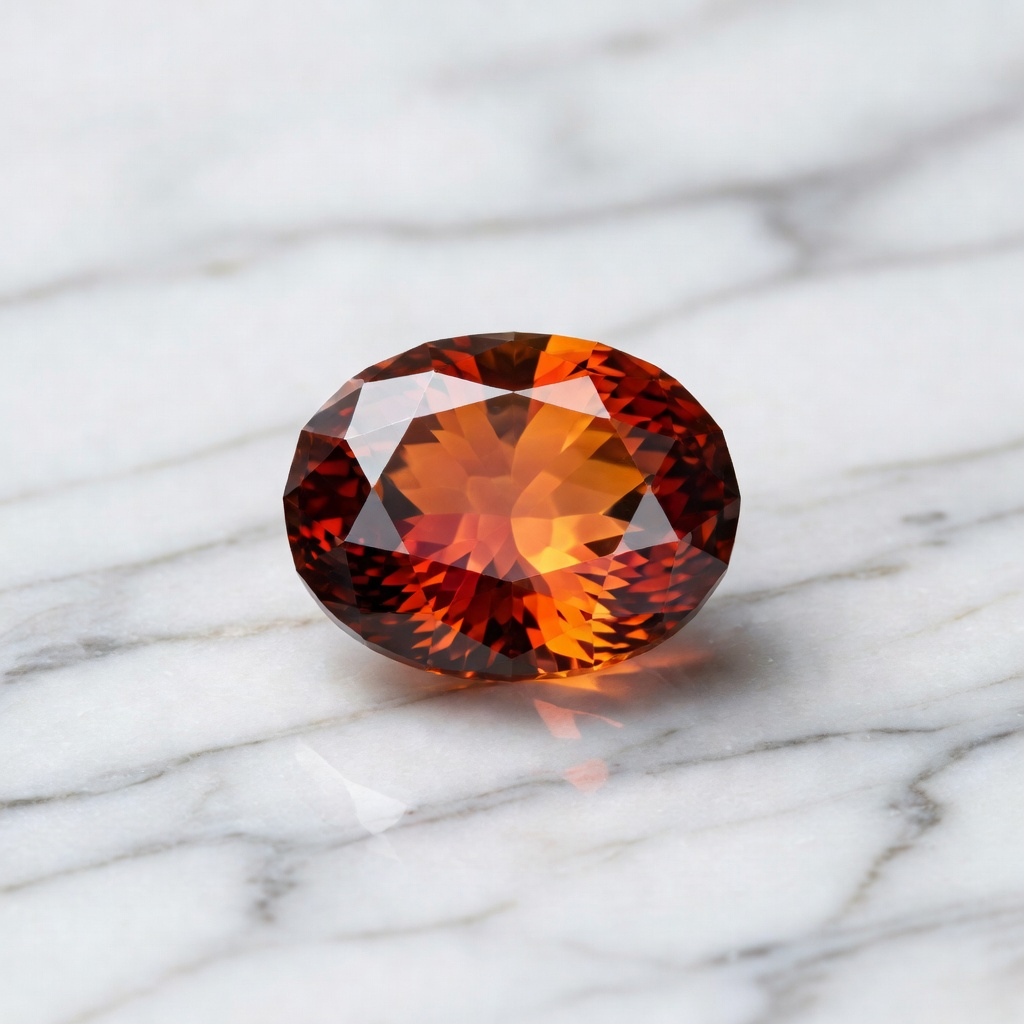
Introduction to Hessonite Garnet Value
Hessonite garnet, historically revered as the "cinnamon stone" and known in Vedic traditions as "gomed," represents one of the most captivating varieties within the grossular garnet family. This distinctive gemstone derives its unique geological identity from calcium aluminum silicate composition enriched with manganese and iron traces, creating the characteristic honey-orange to reddish-brown hues that command attention in both jewelry and astrological markets. Unlike many gemstones that maintain relatively stable pricing structures, hessonite values fluctuate dramatically based on origin locality, clarity characteristics, and whether the material meets stringent requirements for Jyotish astrology. This comprehensive Hessonite Garnet Price Guide demystifies the complex valuation factors that separate $20 commercial specimens from $800+ per carat investment-grade treasures, providing buyers with the analytical framework necessary to distinguish between decorative jewelry pieces and potent astrological instruments.
Current Hessonite Price Per Carat Ranges
Understanding current market valuations requires recognizing the three-tiered hierarchy that governs hessonite commerce in today's gemstone markets. Commercial grade hessonite, typically featuring noticeable inclusions and lighter yellowish-orange coloration, currently trades between $20 to $80 per carat, making it accessible for fashion jewelry and entry-level collectors seeking the stone's aesthetic appeal without premium investments. Fine quality specimens exhibiting rich honey-orange saturation with good clarity and minimal visible inclusions command hessonite price per carat ranges of $100 to $300, representing the sweet spot for serious jewelry connoisseurs seeking exceptional beauty. At the apex of the market, exceptional Jyotish-grade material, particularly untreated Ceylon specimens exceeding five carats with vivid cinnamon coloring and eye-clean clarity, can achieve gomed stone price points of $400 to $800+ per carat, reflecting both scarcity and spiritual significance in Vedic astrology practices.
Color Grading and Its Impact on Pricing
Color represents the primary value determinant in hessonite garnet evaluation, with premium specimens displaying the coveted cinnamon-orange to deep reddish-brown spectrum that justifies the "cinnamon stone value" designation among collectors. Stones exhibiting pure honey-orange saturation without brownish or yellowish secondary tints command significant premiums, sometimes reaching 40-60% higher prices than similar clarity stones with muddy undertones. The orange garnet pricing structure heavily penalizes material showing excessive brown modifiers or pale yellow bases, as these hues indicate either suboptimal chemical composition or poor crystallization during formation. When evaluating color uniformity, buyers should examine stones under natural daylight and incandescent lighting, as hessonite's pleochroic nature can reveal color zoning that substantially impacts both aesthetic appeal and market valuation.
Origin Sources and Geographic Value Differences
Geographic provenance significantly influences hessonite garnet valuation, with Sri Lankan deposits commanding substantial premiums due to their historical reputation for producing material with superior clarity and the coveted "burning" cinnamon color. Ceylon hessonite cost structures reflect this prestige, often running 50-100% higher than comparable material from other localities, particularly for untreated specimens over three carats that meet Jyotish requirements. Indian hessonite from Rajasthan and Orissa offers intermediate hessonite origin value, typically displaying excellent color but often containing more prominent "heat wave" or "scotch and water" inclusions that moderate pricing to the $50-$150 per carat range for fine quality. African sources, particularly Tanzania and Madagascar, currently dominate the budget-friendly market segment, providing lighter-toned material with acceptable clarity for commercial jewelry at accessible price points between $15-$60 per carat.
Clarity, Cut, and Treatment Considerations
Hessonite garnet quality factors diverge significantly from diamond grading standards, as this gem variety traditionally accepts certain inclusion types while penalizing others severely. The characteristic "heat wave" or "roiled" inclusions resembling swirling honey or scotch and water effects are considered acceptable and even diagnostic of natural origin, whereas surface-reaching fractures or heavy cloudiness dramatically reduce value. Precision cutting plays a crucial role in maximizing brilliance, with well-executed cushion, oval, or round cuts commanding 20-30% premiums over native or poorly executed cuts that fail to optimize the stone's refractive properties. Regarding treatments, the market distinguishes sharply between natural and enhanced material, with untreated hessonite garnet quality factors demanding substantial premiums, while heat-treated or oiled stones—though acceptable for jewelry—trade at 30-50% discounts and require explicit disclosure under gemstone industry ethics standards.
Size and Carat Weight Price Progression
The hessonite price per carat follows an exponential rather than linear progression, creating significant price jumps when stones cross critical weight thresholds, particularly at the 3-carat and 5-carat marks. Stones weighing between 1-2 carats remain relatively abundant, keeping per-carat prices stable, whereas specimens exceeding 3 carats with fine color and clarity become exponentially rarer, often commanding double or triple the per-carat rates of smaller stones. Large hessonite garnet cost considerations become particularly acute above 10 carats, where exceptional untreated material suitable for high-end astrology or investment portfolios may retail for $1,000+ per carat when available. For practical purchasing decisions, astrological practitioners typically target 5-6 carat sizes for optimal energetic properties while maintaining reasonable budgets, whereas jewelry designers often prefer 2-3 carat calibrated stones that balance visual impact with wearability.
Astrological vs. Jewelry Market Pricing
The bifurcation between gemological and Vedic valuation creates distinct market segments with vastly different gomed stone price expectations and quality requirements. Jyotish-quality hessonite must remain completely untreated by heat or chemicals, possess specific gravity and refractive index within narrow parameters, and display the "burning" cinnamon color associated with Rahu's planetary energy, often commanding 2-3x premiums over equivalent-looking treated material. Astrological hessonite value depends heavily on certification from laboratories familiar with Jyotish requirements, such as certain Indian gemological institutes, rather than standard GIA reports that may not address treatment status with sufficient granularity for spiritual practitioners. Jewelry-grade material allows for greater flexibility regarding heat treatment and clarity characteristics, focusing instead on face-up beauty and durability, though untreated specimens still retain higher resale values across both market segments.
Where to Buy: Retail vs. Wholesale Channels
Navigating purchasing channels requires understanding markup structures that vary dramatically between hessonite wholesale price points and retail premiums. Specialized gemstone dealers in trading hubs like Bangkok, Jaipur, or Colombo typically offer the most competitive pricing for certified material, often 40-60% below Western retail prices, though they require gemological knowledge to navigate effectively. Online marketplaces provide convenience and comparison shopping capabilities for buying hessonite garnet, but buyers must scrutinize seller ratings, return policies, and certification authenticity, as the platform hosts both legitimate dealers and those selling misrepresented or treated material without disclosure. Local jewelers command higher premiums but offer personalized service, setting verification, and immediate physical examination opportunities, making them suitable for buyers prioritizing convenience over maximum value extraction.
Investment Potential and Resale Value
While hessonite garnet investment portfolios rarely achieve the liquidity of blue-chip colored stones like Burmese rubies or Kashmir sapphires, fine untreated material demonstrates steady appreciation trends particularly suited to long-term holding strategies. Cinnamon stone resale value depends critically on documentation of origin and treatment status, with certified untreated Ceylon material over 5 carats showing 5-7% annual appreciation over the past decade as mining yields decrease. Investment liquidity considerations favor stones between 3-8 carats, as this range attracts both astrological practitioners and jewelry designers, whereas extremely large specimens over 15 carats may prove difficult to liquidate quickly despite their rarity. Prospective investors should prioritize stones accompanied by reports from recognized laboratories like GIA, GRS, or Lotus Gemology that specifically confirm untreated status and geographic origin to maximize future resale potential.
Frequently Asked Questions About Hessonite Pricing
What is the average hessonite garnet price per carat in 2024?
Commercial quality hessonite ranges from $20-$80 per carat, while fine quality stones with rich cinnamon color cost $100-$300 per carat. Exceptional untreated Ceylon material suitable for astrology can command $400-$800+ per carat, especially in sizes over 5 carats. These price variations reflect the stone's origin, treatment status, and clarity characteristics, with untreated Sri Lankan specimens consistently commanding the highest premiums due to their rarity and astrological significance.
Why is hessonite garnet called cinnamon stone?
Hessonite earned the nickname 'cinnamon stone' due to its characteristic reddish-brown to honey-orange color that resembles cinnamon spice. This distinctive coloration, caused by manganese and iron content, is the primary value factor and distinguishes it from other garnet varieties. The comparison extends beyond mere appearance, as the finest specimens exhibit a "burning" or "glowing" quality reminiscent of cinnamon's warm, spicy essence, particularly under incandescent lighting where the stone's internal fire becomes most apparent.
Does origin significantly affect hessonite garnet price?
Yes, origin greatly impacts pricing. Sri Lankan (Ceylon) hessonite commands premium prices due to superior clarity and vibrant honey-orange color. Indian material is moderately priced with good color but often more included, while African sources typically offer budget-friendly options with lighter tones. The geological differences between these localities create distinct market tiers, with Ceylon material often costing twice as much as comparable African stones due to its historical association with Jyotish quality requirements and superior transparency.
Are treated hessonite garnets worth less than untreated stones?
Generally, yes. Untreated natural hessonite, especially for astrological purposes (gomed), commands 30-50% higher prices than heated or oiled stones. However, treated stones are acceptable for jewelry use and offer affordable alternatives, provided treatments are disclosed. The valuation gap widens significantly for larger specimens over 5 carats, where untreated material becomes increasingly rare, whereas treatment is more commonly accepted in smaller commercial-grade stones intended for fashion jewelry rather than spiritual practice.
What clarity grade should I expect for hessonite garnet?
Unlike diamonds, hessonite typically contains 'honey' or 'heat wave' inclusions visible to the naked eye. Eye-clean stones command premium prices, but slight inclusions are accepted if they don't detract from beauty. Avoid stones with surface-reaching fractures or heavy cloudiness. These characteristic inclusions, often described as resembling swirling scotch whiskey or heat waves rising from pavement, actually help gemologists distinguish natural hessonite from synthetics, making lightly included stones preferable to suspiciously clean material that may indicate laboratory growth.
Is hessonite garnet a good investment stone?
While not a blue-chip investment like Kashmir sapphires, fine untreated hessonite over 5 carats from Sri Lanka has shown steady appreciation. Investment potential depends on color intensity, clarity, and whether the stone possesses certification from recognized gemological laboratories. The limited supply of high-quality rough from depleted Sri Lankan mines suggests continued price appreciation for exceptional specimens, though investors should maintain realistic expectations regarding liquidity timeframes, as hessonite lacks the immediate market recognition of ruby or sapphire among general collectors.
How can I verify I'm paying a fair price for hessonite?
Request certification from reputable labs (GIA, IGI, or GRS), compare prices across multiple vendors, examine color under natural daylight, and verify whether the stone is treated. For astrological use, ensure the stone has not been heat-treated and weighs at least 3-5 carats. Additionally, examine the stone's cutting quality by checking for symmetrical facets, proper crown and pavilion angles that maximize brilliance, and absence of windowing (see-through areas), as these factors significantly impact both beauty and value retention.
Do larger hessonite stones cost more per carat?
Yes, hessonite follows an exponential pricing curve where stones over 3 carats command significantly higher per-carat prices than smaller stones. Material over 10 carats with good color and clarity is rare and can cost 3-5 times more per carat than 1-2 carat stones. This dramatic price escalation reflects the geological rarity of large, clean crystals forming in hessonite's typical host rocks, with the supply of fine material over 8 carats being so limited that such stones often sell through private networks rather than public markets.