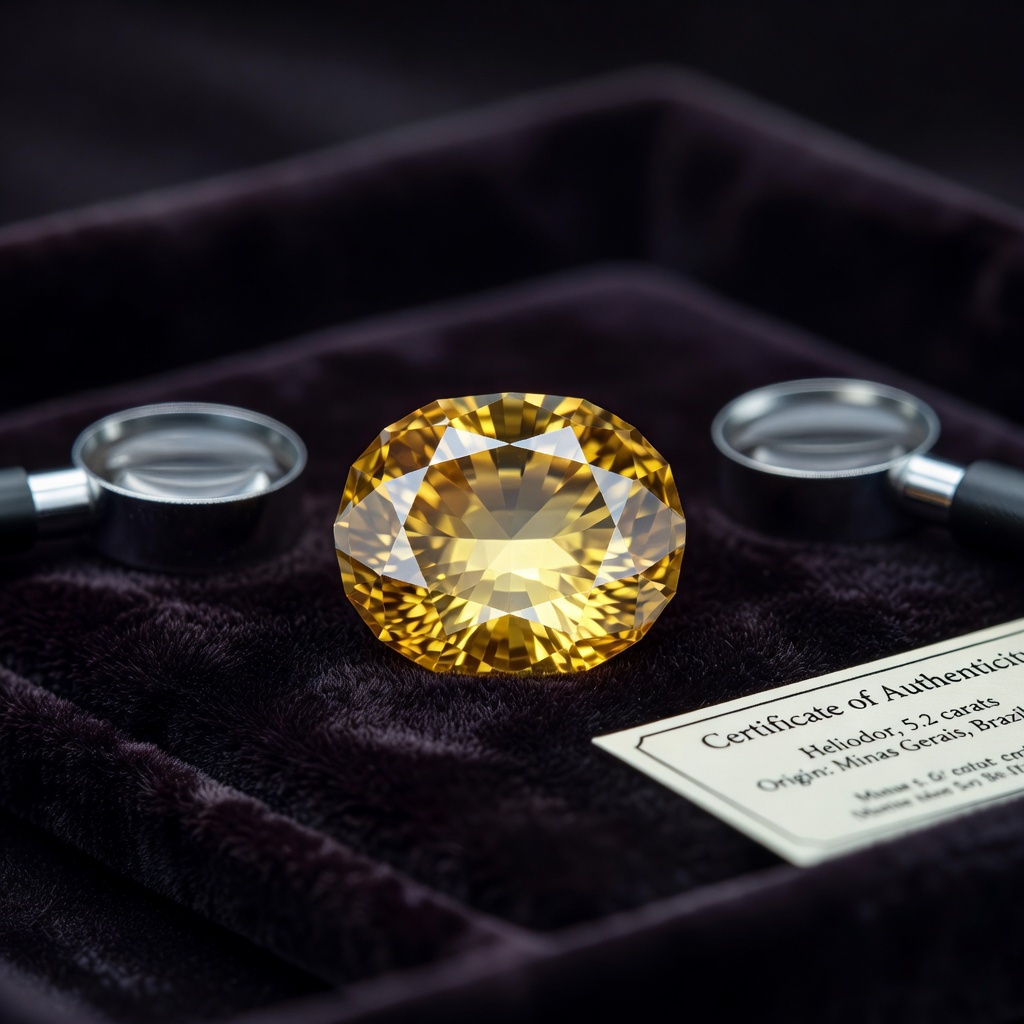
Understanding Heliodor and Golden Beryl
Heliodor represents one of nature's most captivating gifts within the beryl family gemstones, distinguished by its remarkable golden to yellow coloration that has captivated collectors and jewelry enthusiasts for centuries. As the yellow variety of beryl, heliodor shares its fundamental chemical composition with emerald and aquamarine but stands apart through its unique iron-infused palette that ranges from pale lemon to deep golden honey. The name itself derives from the Greek words "helios" meaning sun and "doron" meaning gift, creating the poetic designation "gift of the sun" that perfectly captures the stone's warm, radiant appearance. When embarking on your Heliodor Buying Guide journey, understanding this gemstone's place within the beryl family provides essential context for evaluating quality and value, as heliodor forms in the same pegmatite deposits as its more famous cousins but remains significantly rarer in fine qualities.
Unlike emerald, which owes its green color to chromium or vanadium, golden beryl receives its characteristic hue from iron impurities within the crystal structure, creating colors that can shift dramatically under different lighting conditions. Historically, heliodor has been prized by Russian tsars and European nobility, with notable deposits discovered in Namibia during the early twentieth century bringing international attention to this sunny gemstone. Modern gemologists classify heliodor separately from other yellow beryl varieties only when the color achieves sufficient saturation, meaning that pale yellow specimens might simply be marketed as yellow beryl while intensely colored stones command the premium heliodor designation. This distinction matters significantly for collectors, as true heliodor with rich golden coloration commands prices substantially higher than lighter yellow beryl specimens, making accurate identification crucial for any serious purchase.
Color Grading: Identifying Premium Golden Hues
The color evaluation of any yellow beryl gemstone requires careful examination under multiple light sources, as heliodor's iron-based coloration can appear dramatically different under incandescent, fluorescent, or natural daylight conditions. Premium specimens display a saturated golden-yellow to slightly orange-yellow hue that remains vivid and consistent throughout the stone when viewed face-up, avoiding the brownish or greenish overtones that significantly diminish value. The most desirable color range spans from rich honey-gold to vibrant canary yellow, with stones exhibiting pure golden coloration without secondary hues commanding the highest premiums in the marketplace. When conducting natural heliodor identification, gemologists specifically look for this color stability and intensity, noting that top-quality stones maintain their warm glow even in dim lighting rather than appearing washed out or grayish.
Iron content within the crystal lattice directly correlates with color intensity, though excessive iron can create muddy or olive-toned specimens that lack the brilliance collectors seek. The finest heliodor typically originates from specific geological environments where iron availability was moderate but consistent during crystal formation, particularly in the pegmatites of Namibia and Madagascar. When examining potential purchases, rotate the stone to check for color zoning, which appears as uneven patches of lighter and darker yellow areas that indicate inconsistent chemical composition during growth. Such zoning not only affects aesthetic appeal but can also indicate structural weaknesses within the crystal, making uniform color distribution a critical factor in selecting investment-quality golden beryl.
Clarity Standards: What Inclusions to Accept
Understanding clarity expectations forms a cornerstone of any comprehensive Heliodor Buying Guide, as this gemstone typically exhibits fewer inclusions than emerald but still contains characteristic features that help distinguish natural stones from synthetics. Common inclusion types include liquid feathers, which appear as wispy, fluid-filled fractures, and parallel growth tubes that run lengthwise through the crystal, both of which serve as fingerprints confirming natural origin. Unlike emerald, where inclusions are accepted and even expected in fine specimens, heliodor buyers should seek eye-clean stones where no visible inclusions appear when viewed from a distance of six inches without magnification. However, collector-grade specimens with minor inclusions can still possess significant value if the color remains exceptional, particularly in larger sizes where completely clean crystals become exceedingly rare.
The impact of clarity on heliodor price per carat cannot be overstated, as the difference between a slightly included stone and an eye-clean specimen can represent a price differential of 200% or more in the wholesale market. When evaluating clarity, examine the stone under diffused lighting rather than intense point lighting, which can mask inclusions that become apparent under normal viewing conditions. Be particularly wary of stones appearing too perfect, as synthetic heliodor and glass imitations often lack the natural inclusions that characterize genuine specimens from the earth. Professional gemological laboratories document clarity characteristics on certification reports using standardized terminology, providing buyers with objective assessments that protect against overpaying for stones with hidden clarity deficiencies.
Cut and Carat: Maximizing Brilliance and Value
Master lapidaries utilize specific cutting styles to maximize the inherent beauty of golden beryl, with emerald step-cuts, cushions, and ovals proving particularly effective at displaying the stone's warm color while minimizing windowing effects. The emerald cut remains especially popular for heliodor, as the long step facets create broad flashes of color that emphasize the gem's golden nature while the octagonal shape with truncated corners protects vulnerable points from chipping. When evaluating cut quality, examine the stone face-up to ensure that light reflects evenly across the entire table without dead areas or windowing, which appears as a washed-out see-through zone indicating poor proportions. Properly cut heliodor should display brilliance across at least eighty percent of the face-up view, with color saturation remaining consistent from center to edge.
Carat weight significantly impacts rarity and pricing in heliodor, with natural crystals over five carats representing genuinely scarce finds that command substantial premiums in the collector market. While smaller stones between one and three carats remain relatively available, finding eye-clean golden beryl specimens above ten carats requires extensive searching and budgets exceeding standard commercial ranges. When considering larger stones, pay particular attention to extinction, which appears as dark areas within the stone where light fails to return properly, often resulting from overly deep pavilion angles designed to retain weight rather than optimize optical performance. For jewelry purposes, stones between two and five carats offer the optimal balance of visual impact and wearability, providing sufficient size to showcase heliodor's distinctive color while remaining practical for setting in rings or pendants.
Treatments and Enhancements: Natural vs Modified
The distinction between natural and treated beryl family gemstones carries significant implications for both value and long-term stability, making disclosure verification essential before any heliodor purchase. Low-temperature heat treatment represents the most common enhancement, applied to pale yellow beryl to intensify golden coloration by altering the oxidation states of iron atoms within the crystal structure. While heat treatment remains stable and permanent, it does reduce the stone's value compared to untreated natural material, typically discounting prices by thirty to fifty percent depending on the extent of improvement. When pursuing natural heliodor identification, look for certification reports specifically stating "no indications of heating," as untreated stones with strong natural color command the highest premiums and best investment potential.
Irradiation represents a more controversial treatment sometimes applied to create yellow coloration in otherwise colorless beryl, though such stones may exhibit unstable colors that fade upon exposure to sunlight or heat. Detecting these treatments requires sophisticated laboratory equipment including spectroscopy and advanced microscopy, underscoring the importance of purchasing only certified stones from reputable gemological laboratories such as GIA, AGL, or EGL. Buyers should be particularly cautious of stones offering unusually intense color at bargain prices, as such specimens often indicate artificial enhancement or outright synthesis. Establishing a relationship with a trusted gemologist who can review certification documents and examine stones under proper lighting conditions provides the best protection against inadvertently purchasing treated material misrepresented as natural.
Pricing Guide: Understanding Market Value
Current market dynamics for heliodor price per carat reflect a broad spectrum based on quality factors, with commercial-grade pale yellow specimens starting around fifty dollars per carat while top-tier golden-orange stones commanding five hundred dollars or more per carat. This pricing structure creates accessible entry points for new collectors while offering significant upside potential for investment-grade material exhibiting exceptional color and clarity. Pale lemon-yellow stones with slight inclusions typically fall in the fifty to one hundred fifty dollar range, making them attractive alternatives to citrine for budget-conscious buyers seeking genuine beryl. However, intense golden-orange hues with eye-clean clarity, particularly in sizes exceeding three carats, regularly achieve three hundred to five hundred dollars per carat, with museum-quality specimens occasionally exceeding these ranges at auction.
Geographic origin significantly influences valuation within the Heliodor Buying Guide framework, with Namibian material historically commanding premiums due to its rich golden coloration and association with legendary deposits discovered in the early 1900s. Brazilian heliodor often exhibits slightly greenish-yellow tones that trade at moderate discounts compared to African material, while recent Madagascan production has introduced fine golden specimens that compete favorably with classic Namibian stones. When budgeting for a purchase, consider that custom cutting adds approximately twenty to forty percent to rough material costs, meaning that precision-cut stones with optimized proportions justify higher per-carat prices than commercial cutting. Additionally, unset stones typically offer better value than mounted jewelry, as retail markup on finished pieces often doubles or triples the underlying gem material cost.
Heliodor vs Citrine: Making the Right Choice
When comparing heliodor vs citrine, buyers must consider fundamental differences in durability, optical performance, and long-term value retention that extend beyond superficial color similarities. Heliodor, as a beryl, possesses a Mohs hardness of 7.5 to 8 compared to citrine's 7, providing slightly better resistance to scratching and abrasion during daily wear, though both require reasonable care to prevent damage. The refractive index of golden beryl (1.57-1.58) creates more brilliant sparkle and fire than citrine's lower refractive index (1.54-1.55), resulting in a more lively appearance under lighting that discerning collectors immediately recognize. Additionally, heliodor typically exhibits superior clarity with fewer visible inclusions than citrine, which often contains characteristic tiger-stripes or cloud-like inclusions that affect transparency.
Value retention represents another crucial distinction, as natural heliodor maintains or appreciates in value over time due to its rarity and finite supply, while citrine remains abundant and relatively inexpensive due to widespread commercial availability and heat-treatment of amethyst. Color stability concerns favor heliodor, as the beryl's iron-based coloration remains permanent under normal conditions, whereas heat-treated citrine can fade when exposed to prolonged sunlight or high temperatures. While citrine offers an affordable entry point for yellow gemstone jewelry, heliodor provides a more prestigious and durable option for significant pieces intended as heirlooms or investment holdings. For engagement rings or daily-wear items, the superior hardness and brilliance of golden beryl justify its higher initial cost compared to citrine alternatives.
Trusted Sources: Where to Buy Authentic Heliodor
Navigating the gemstone marketplace requires discernment when seeking authentic golden beryl, as the stone's relative obscurity compared to emerald or aquamarine creates opportunities for misrepresentation by unscrupulous sellers. Reputable online dealers specializing in colored gemstones often provide superior selection and pricing compared to brick-and-mortar jewelry stores, provided they offer detailed photographs, videos under different lighting conditions, and unconditional return policies. When evaluating online sellers, verify their membership in professional organizations such as the American Gem Trade Association (AGTA) or International Colored Gemstone Association (ICA), which enforce ethical standards and accurate disclosure practices. Physical gem shows offer opportunities for hands-on examination but require immediate gemological verification, as the temporary nature of such venues complicates recourse if issues arise post-purchase.
Essential certifications for natural heliodor identification must originate from internationally recognized laboratories including the Gemological Institute of America (GIA), American Gemological Laboratories (AGL), or European Gemological Laboratory (EGL), with reports specifically noting color origin and treatment status. Red flags indicating potential synthetic or simulant stones include prices significantly below market rates, perfect clarity in large sizes, and sellers unwilling to provide independent laboratory documentation. When examining loose stones, request to view the gem through a loupe to verify natural inclusion patterns, and test the seller's knowledge by asking specific questions about origin, treatment, and care requirements. Establishing relationships with certified gemologists who can pre-screen potential purchases provides additional security, particularly for investment-grade specimens exceeding several thousand dollars.
Jewelry Setting Considerations and Durability
With a Mohs hardness rating of 7.5 to 8, heliodor occupies a sweet spot for jewelry applications, offering sufficient durability for regular wear while remaining workable for jewelers creating intricate settings. However, compared to other beryl family gemstones like emerald, heliodor possesses better toughness due to fewer internal fractures, making it suitable for rings, pendants, and earrings when properly protected. Setting styles play a crucial role in longevity, with bezel settings providing superior protection for the girdle and facet edges compared to prong settings, which leave stones more vulnerable to impact damage. For daily wear rings, consider designs that elevate the stone slightly above the finger plane while surrounding the girdle with metal protection, preventing direct contact with hard surfaces during normal activities.
When comparing heliodor to aquamarine or morganite for daily wear, the golden beryl offers similar durability characteristics but requires awareness of its sensitivity to thermal shock and harsh chemicals. Avoid settings that expose the stone to extreme pressure or impact, and consider reserving elaborate faceted heliodor pieces for special occasions while choosing cabochon or protected settings for daily wear items. Earrings and pendants present ideal applications for fine heliodor, as these locations experience less mechanical stress than rings, allowing for more delicate settings that showcase the gem's color and brilliance. Always inform your jeweler that you are setting heliodor rather than emerald, as the absence of extensive fracture filling allows for more straightforward setting procedures without the risk of damaging treatments.
Maintenance and Long-term Care Tips
Proper Heliodor jewelry care begins with understanding that while this gemstone resists scratching better than many alternatives, it remains vulnerable to thermal shock, harsh chemicals, and mechanical impacts that can fracture the crystal. Clean your golden beryl pieces using only mild soap, warm water, and soft natural bristle brushes, gently removing accumulated oils and debris without risking damage to the stone or setting. Never use ultrasonic cleaners, steam cleaners, or chemical jewelry dips, as these methods can exploit internal inclusions or thermal expansion differentials between the gem and metal setting, potentially causing fractures or loosening stones. After cleaning, pat dry with a soft lint-free cloth and store pieces individually in soft pouches or compartmentalized jewelry boxes to prevent contact with harder gems like diamonds or sapphires that could scratch the surface.
Long-term preservation requires periodic professional inspection, ideally every six to twelve months for frequently worn pieces, to check for loose prongs, worn settings, or developing chips at facet junctions. Store heliodor away from direct sunlight in cool, dry environments, as prolonged exposure to intense heat and UV radiation can potentially affect color stability in treated stones and may cause setting metals to expand and contract, compromising security. When traveling, carry heliodor jewelry in padded containers within carry-on luggage rather than checked baggage, preventing temperature extremes and rough handling that could damage both stones and settings. With attentive care and appropriate setting choices, heliodor jewelry can maintain its sunny brilliance for generations, serving as both wearable art and a tangible store of value.
Frequently Asked Questions
What is heliodor and is it the same as golden beryl?
Yes, heliodor is the trade name for golden to yellow varieties of beryl, sharing the same mineral family as emerald and aquamarine. The name comes from Greek words meaning 'gift of the sun,' referring to its warm yellow-gold coloration caused by iron impurities in the crystal structure. While all heliodor is golden beryl, not all yellow beryl qualifies as heliodor, with the designation typically reserved for stones exhibiting sufficiently saturated golden coloration rather than pale lemon hues.
How much does heliodor cost per carat?
Quality heliodor typically ranges from $50 to $500 per carat, depending on color intensity, clarity, and size. Pale yellow specimens are more affordable ($50-$150/carat), while rich golden-orange gems over 5 carats with excellent clarity can command $300-$500+ per carat. Untreated stones with intense natural color from prestigious localities like Namibia frequently achieve prices at the higher end of this spectrum or beyond.
What color should I look for when buying heliodor?
The most valuable heliodor displays a saturated golden-yellow to slightly orange-yellow hue without brownish or greenish overtones. Avoid stones that appear too pale or washed out, as these represent lower-quality material that lacks the characteristic warmth of fine specimens. The color should be vivid and consistent throughout the stone when viewed face-up, maintaining its intensity under various lighting conditions from daylight to incandescent bulbs.
Is heliodor commonly treated or enhanced?
While many heliodor stones are natural, some undergo low-temperature heat treatment to improve yellow coloration by altering iron oxidation states within the crystal. Irradiation is less common but exists, potentially creating unstable colors that may fade over time. Always request a gemological certificate from reputable labs like GIA or AGL to confirm if a stone is untreated, as natural specimens command significant premiums and better retain long-term value.
How can I tell if heliodor is real and not a simulant?
Authentic heliodor has a refractive index of 1.57-1.58 and specific gravity of 2.6-2.9, distinguishing it from common simulants like citrine, yellow sapphire, or glass which possess different optical properties. Natural inclusions such as liquid feathers and growth tubes provide visual confirmation of genuine origin, while synthetic stones often appear too perfect. Professional testing with a refractometer or polariscope is the only way to confirm identity definitively, making laboratory certification essential for significant purchases.
Is heliodor durable enough for everyday jewelry like engagement rings?
With a Mohs hardness of 7.5-8, heliodor is durable but requires protective settings for daily ring wear, making it better suited for pendants, earrings, or occasional wear rings than traditional engagement rings subject to constant impact. If used for daily wear, choose bezel or flush settings that protect the girdle and facet edges from chipping. Avoid exposure to harsh chemicals, ultrasonic cleaners, and sudden temperature changes that could compromise the stone's integrity.
What's the difference between heliodor and citrine?
Heliodor is beryl (beryllium aluminum silicate) while citrine is quartz (silicon dioxide), creating fundamental differences in hardness, brilliance, and value. Heliodor is slightly harder (7.5-8 vs 7), typically has better clarity and brilliance due to higher refractive index, and commands higher prices due to relative rarity. Citrine often shows reddish-orange tones, while heliodor tends toward pure golden-yellow hues, and heat-treated citrine may fade over time unlike the color-stable natural heliodor.
Where is the best place to buy heliodor gemstones?
Purchase from established dealers who provide independent laboratory certification (GIA, AGL, or EGL) and detailed photographs showing the stone under various lighting conditions. Reputable gem shows, specialized online retailers with return policies, and high-end jewelry stores are safer than auction sites or general marketplace platforms. Always verify the seller's reputation through professional organizations like AGTA, insist on detailed photos or videos before purchasing, and confirm that the return policy allows for independent verification upon receipt.