What Is Hawk's Eye? Understanding the Blue Tiger's Eye
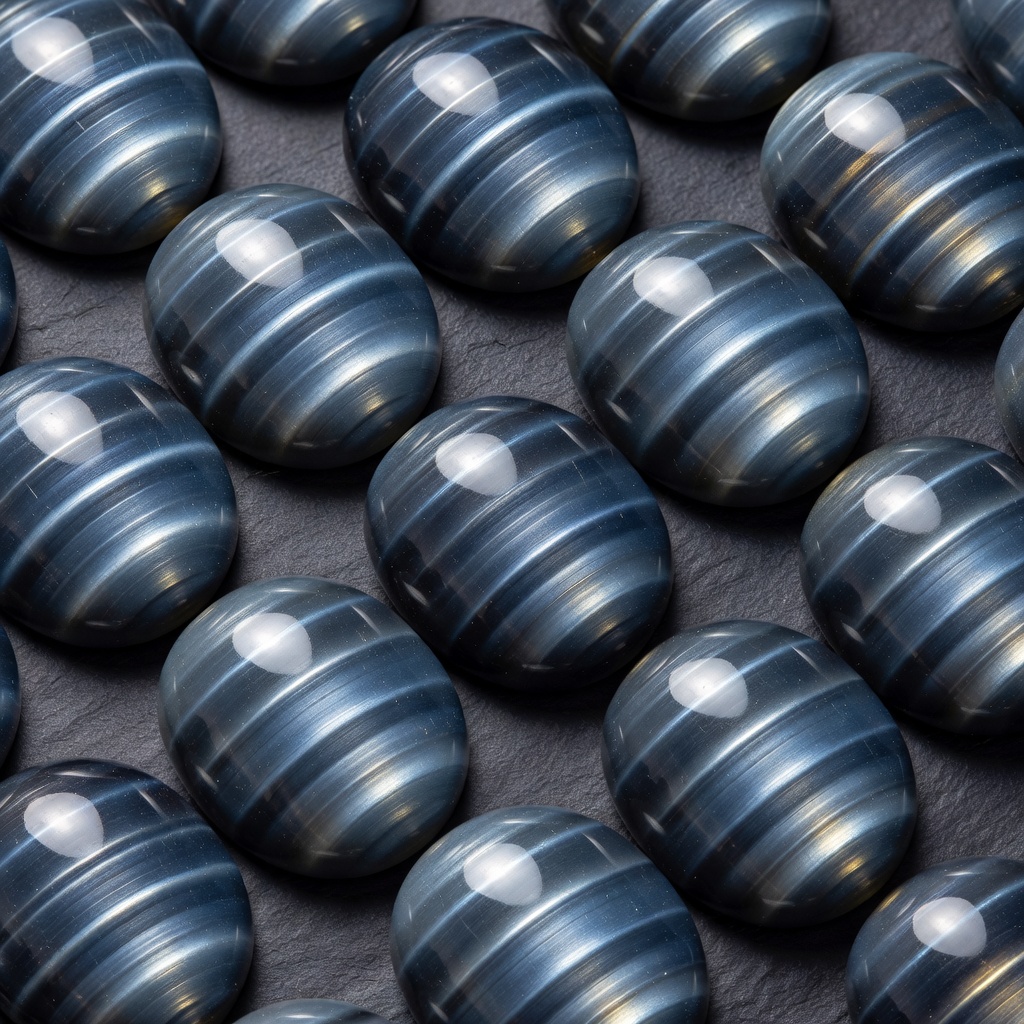
Hawk's Eye represents one of nature's most fascinating geological transformations, originating as silicified crocidolite (blue asbestos) that undergoes complete replacement by quartz while retaining the original fibrous structure. This pseudomorphosis process occurs over millions of years as silica-rich solutions gradually replace the hazardous asbestos fibers with microcrystalline quartz, creating a safe and stunning gemstone that displays remarkable optical properties. The resulting material maintains the parallel alignment of the original crocidolite fibers, which creates the stone's signature chatoyant effect—a luminous band of light that moves across the surface as the stone is rotated.
The Hawk's Eye Price Guide begins with understanding this unique mineral composition, as collectors and jewelers alike prize the stone for its deep midnight blue to grayish-blue base colors accented by golden or silvery flashes. Primary deposits occur in South Africa's Northern Cape Province, where the most prized specimens exhibit intense royal blue saturation, though significant deposits also emerge from Western Australia and India's Karnataka region. When evaluating blue tiger's eye price points, remember that authentic specimens should display a silky luster and distinct fibrous structure visible under magnification, distinguishing genuine material from dyed agate imitations common in tourist markets.
Current Market Values: Per Carat Price Breakdown
Understanding current market valuations requires examining how size categories significantly impact hawks eye stone cost per carat, with dramatic price escalations occurring as stones increase in size and quality. Small commercial-grade cabochons under 5 carats typically range from $2 to $10 per carat, making them accessible for beadwork and casual jewelry projects. These smaller stones often display moderate chatoyancy and may show slight color zoning, though they remain popular for bracelets and earrings where individual stone impact matters less than overall design cohesion.
Medium-sized specimens between 5 and 20 carats command $8 to $25 per carat when exhibiting high chatoyancy with a sharp, centered eye that follows the viewer across the room. At this size range, collectors begin seeking specific characteristics such as deep indigo bases with contrasting golden streaks, and the price variance reflects the difficulty in finding rough material free from iron oxide staining or structural cracks. Large collector pieces exceeding 20 carats can reach $15 to $50 per carat, particularly when displaying the rare deep royal blue coloration without gray undertones, as mining operations increasingly yield smaller rough fragments suitable only for calibrated cutting.
For lapidary artists and jewelry manufacturers purchasing bulk rough material, pricing structures differ significantly from finished gemstone markets. Rough Hawk's Eye typically sells by the kilogram, with commercial grade material ranging from $20 to $60 per kilogram for mixed-size parcels, while select rough with visible chatoyant patterns commands $100 to $200 per kilogram. When calculating production costs, artisans must factor typical yield rates of 15-25% from rough to finished cabochon, meaning a $100 kilogram of rough might produce only 150-250 carats of saleable gemstones after cutting losses and quality sorting.
Quality Factors That Determine Hawk's Eye Prices
The singular most important value determinant in chatoyant quartz pricing remains the strength and definition of the chatoyant effect, commonly called the "eye." Premium specimens display a razor-sharp line of light that appears to float on the stone's surface, moving smoothly as the gem rotates under a single light source. Stones exhibiting diffuse, wavy, or multiple parallel lines receive significantly lower valuations, as the optical phenomenon represents the primary aesthetic appeal distinguishing Hawk's Eye from common blue quartz. When examining potential purchases, rotate the stone under a pen light or single LED source—genuine high-quality material will show a bright, narrow band resembling a cat's eye slit, while inferior stones display only a generalized shimmer.
Color saturation creates the secondary pricing tier, with deep royal blue specimens commanding substantial premiums over grayish or pale blue material. The most valuable stones exhibit an intense midnight blue base with subtle golden or bronze flashes caused by remaining iron oxide traces, creating a striking contrast that catches attention across a room. Clarity considerations differ from transparent gemstones; while Hawk's Eye should lack surface-reaching cracks or pits that compromise durability, minor internal inclusions acceptable in transparent stones actually enhance the chatoyancy in this opaque material by contributing to the fibrous structure. However, matrix inclusions of host rock or excessive iron staining that creates muddy brown patches significantly detract from value.
Cut quality directly impacts the stone's optical performance and thus its market price. Master lapidaries orient the cut so the base of the cabochon runs perpendicular to the fibrous inclusions, maximizing the chatoyant effect through a domed crown that acts as a magnifying lens. Poorly cut stones with flat crowns or improper orientation fail to concentrate light into the distinctive eye pattern, reducing value by 40-60% regardless of material quality. For investment-grade pieces, seek cabochons with symmetrical domes, smooth polish without surface scratches, and calibrated dimensions that facilitate setting in standard jewelry mountings.
Hawk's Eye vs Falcon's Eye: Understanding Price Variations
While often conflated in commercial markets, true Hawk's Eye and Falcon's Eye represent distinct color varieties of chatoyant quartz with different rarity profiles affecting falcon's eye gemstone value relative to its blue counterpart. Hawk's Eye displays the characteristic deep blue to blue-gray coloration resulting from the original crocidolite composition, while Falcon's Eye exhibits a lighter gray to blue-gray tone caused by partial oxidation of the iron content within the fibers. This color distinction proves crucial for collectors, as untreated natural blue material (Hawk's Eye) generally commands higher prices than the gray variety, though exceptional Falcon's Eye specimens with silver chatoyancy occasionally surpass mediocre blue stones.
Rarity factors fluctuate based on mining output and consumer preference trends currently favoring the dramatic contrast of deep blue Hawk's Eye in statement jewelry pieces. South African mines historically produced abundant blue material, but shifting geological conditions and extraction economics have increased the relative availability of gray Falcon's Eye in recent years, creating price inversions in certain size categories. When building a collection or inventory, consider that Falcon's Eye often appeals to minimalist design aesthetics and masculine jewelry markets, potentially offering better turnover velocity despite lower per-carat pricing than vibrant blue specimens.
Identification requires careful observation under natural and artificial lighting, as some dealers apply blue dye to gray Falcon's Eye to simulate the more valuable Hawk's Eye appearance. Authentic Hawk's Eye maintains consistent color saturation even at the girdle edges and within surface pits, whereas dyed material shows color concentration in cracks or along fracture lines. Additionally, true Hawk's Eye often displays subtle golden streaks where iron oxide remains unaltered, while Falcon's Eye tends toward uniform gray or silver tones without these warm highlights.
Natural vs Treated Stones: Impact on Pricing
The distinction between natural vs treated hawk's eye creates the most significant price differential in the market, with untreated specimens commanding premiums of 30-50% over enhanced material. Heat treatment represents the most common enhancement technique, where gray or pale blue Falcon's Eye undergoes controlled heating to deepen the color toward the desirable royal blue associated with premium Hawk's Eye. While heat treatment remains permanent and stable, and is generally accepted within the gemstone trade, disclosure remains essential for consumer protection and accurate valuation.
Dye treatments present more problematic valuation issues, particularly in lower-grade material where porous gray chalcedony or even agate receives blue dye to simulate natural Hawk's Eye. These treated stones often sell at rock-bottom prices—sometimes under $1 per carat—in mass-market venues, but lack the structural chatoyancy of genuine material, displaying instead a flat, painted appearance. Detection methods include examining color distribution under magnification (dye concentrates in fractures), checking for color stability with a cotton swab dampened with acetone (dye may transfer), and observing that dyed stones lack the distinctive silky luster of natural chatoyant quartz.
For investment pieces exceeding $100 per carat or large collector cabochons, independent certification from recognized laboratories such as GIA (Gemological Institute of America) or AGL (American Gemological Laboratories) provides essential documentation regarding treatment status. While certification adds $50-150 to the purchase cost, it protects the buyer's investment and ensures accurate resale valuation. When purchasing without certification, request written disclosure from the seller regarding any treatments, and examine the stone under diffused light—natural Hawk's Eye shows subtle color banding and fibrous structure, while treated stones may appear unnaturally uniform.
Jewelry Settings and Total Cost Considerations
When calculating total project costs beyond the raw gemstone material, blue tigereye jewelry prices escalate significantly based on metal choices, setting complexity, and manufacturing methods. Sterling silver settings offer an affordable entry point, with simple bezel mounts for 10-carat cabochons ranging from $25 to $75, while intricate artisan designs featuring oxidized silver details to complement the blue tones may reach $200-400 before stone costs. The transition to gold creates substantial price jumps; 14k gold settings typically cost 3-4 times their silver equivalents, while 18k mountings add another 25-30% premium due to material density and higher karat content.
Cabochon pricing versus beaded strand arrangements presents different value propositions for jewelry designers and consumers. Strands of 6-8mm Hawk's Eye beads for bracelets or necklaces typically retail between $15-40 per strand depending on quality, offering affordable access to the material's aesthetic appeal. However, these beads rarely display the strong chatoyancy found in individually cut cabochons, as bead manufacturing prioritizes yield over optical perfection. For statement pieces, custom cutting fees add $20-50 per stone to the material cost, as lapidaries must orient each piece individually to maximize the eye effect, unlike calibrated commercial cutting used for mass-produced cabs.
Designer markup structures vary dramatically between artisan studio pieces and mass-produced catalog jewelry. Independent jewelry artists typically apply 2-3x markup on materials and labor, meaning a $100 Hawk's Eye cabochon in a handmade silver setting might retail for $400-500. Conversely, mass-produced imports from India or China may offer finished Hawk's Eye rings or pendants for $30-80, though these often use lower-grade material or assembled composites rather than solid cabochons. When commissioning custom work, budget approximately 40% of the total project cost for the center stone, 35% for metal and setting labor, and 25% for design fees and artisan markup.
Where to Buy: Retail vs Wholesale Price Comparison
Navigating the purchasing landscape requires understanding how distribution channels dramatically affect blue tiger's eye price structures, with identical stones varying by 300-500% between venues. Online marketplaces such as Etsy and eBay offer accessible entry points, with individual cabochons ranging from $5-30 for commercial quality, though buyer expertise proves essential for evaluating chatoyancy from photographs. Specialized gem dealers operating dedicated websites typically charge 20-40% more than marketplace sellers but provide critical services including treatment disclosure, return policies, and detailed photographs showing the chatoyant effect from multiple angles.
Gem shows and mineral expos, particularly the Tucson Gem and Mineral Show held annually in Arizona, provide wholesale access for serious collectors and jewelry makers. At these events, bulk purchasers find rough material at 40-60% below retail pricing, while finished cabochons typically sell at 30-50% discounts compared to online stores. However, these venues require cash transactions, immediate decision-making, and gemological knowledge to assess quality without return privileges. For individual collectors purchasing single specimens, the savings often justify travel expenses when acquiring high-value pieces exceeding $500.
Brick-and-mortar jewelry stores maintain the highest markup structures, typically applying 100-300% premiums over wholesale costs to cover overhead expenses and inventory carrying costs. While these venues offer the advantage of physical inspection and immediate gratification, a $50 wholesale cabochon might retail for $150-200 in a mall jewelry store. Direct purchasing from lapidary artists through social media platforms, craft fairs, or studio visits often provides the optimal quality-to-price ratio, as buyers eliminate middleman markups while supporting artisan cutters who can provide provenance information and custom cutting services. When sourcing high-value specimens, avoid tourist trap gift shops near mining areas or airports, where dyed agate commonly masquerades as Hawk's Eye to unsuspecting travelers.
Investment Potential and Resale Value Trends
Evaluating Hawk's Eye as an investment vehicle requires realistic expectations regarding liquidity and appreciation potential compared to traditional precious gemstones. While the market for exceptional chatoyant quartz remains stable, it lacks the speculative volatility and rapid appreciation seen in alexandrite, paraiba tourmaline, or fine sapphire markets. Collector interest concentrates specifically on extraordinary specimens featuring rare deep royal blue coloration combined with perfect, centered chatoyancy in sizes exceeding 25 carats—material that may appreciate modestly at 3-5% annually, roughly tracking inflation rather than generating speculative returns.
The liquidity challenges inherent in colored gemstone resale affect Hawk's Eye more severely than diamonds or gold, as the secondary market relies heavily on specialized dealers, auction houses, and collector networks rather than commodity exchanges. When reselling investment-grade pieces, expect to recoup 40-60% of retail value through dealer consignment, or 60-75% through direct collector sales via mineral forums and specialty Facebook groups. Unlike blue-chip gemstones that maintain value in economic downturns, Hawk's Eye functions primarily as a wearable investment, with value preservation dependent on jewelry fashion trends and the ongoing popularity of blue gemstones in the bridal and fashion markets.
Future availability concerns increasingly influence collector behavior, as South African mining operations face regulatory pressures regarding asbestos-related materials, even though finished Hawk's Eye poses no health risks. As primary deposits deplete and extraction costs rise, exceptional untreated material may see gradual price increases, particularly for large, clean rough suitable for museum-quality specimens. However, the emergence of high-quality treated material and the relative abundance of Falcon's Eye provide price ceilings that prevent the dramatic appreciation seen in truly rare gemstones. For investment purposes, prioritize untreated natural material with documentation, focusing on stones with unique characteristics such as exceptional size, unusual color zoning, or historical significance from depleted localities.
Care and Maintenance to Preserve Stone Value
Proper maintenance protocols ensure long-term hawk's eye value preservation by protecting the stone's surface polish and chatoyant effect from preventable damage. With a Mohs hardness of 7, Hawk's Eye resists scratching from daily wear better than softer materials like opal or pearl, but remains vulnerable to harder gemstones such as diamonds, rubies, and sapphires. Store Hawk's Eye jewelry in individual soft cloth pouches or compartmentalized boxes to prevent contact with harder stones that could scratch the polished dome, permanently diminishing the chatoyancy by disrupting the surface integrity required to concentrate light into the eye pattern.
Cleaning requires gentle methods only—warm water with mild dish soap and a soft natural-bristle brush effectively remove accumulated oils and debris without risking damage. Never subject Hawk's Eye to ultrasonic cleaners or steam cleaning systems, as the vibrations can exacerbate existing internal fractures or cause delamination along the fibrous structures. Chemical exposure presents particular risks for treated stones; household cleaners, chlorine in swimming pools, and even prolonged contact with perfumes or hairsprays may affect dyed material, while natural stones may experience subtle surface etching from acidic substances that dull the polish.
Prolonged sun exposure poses color stability risks, particularly for heat-treated specimens where the enhanced blue coloration may fade with extended UV exposure over years of display in direct sunlight. Even natural Hawk's Eye benefits from storage away from windowsills or display cases with strong lighting, as excessive heat and light can dehydrate the stone's surface, causing microscopic crazing that scatters light and weakens the chatoyant effect. When the dome surface eventually accumulates fine scratches from decades of wear, professional repolishing by a lapidary specialist can restore the original luster and chatoyancy for approximately $30-75 per stone depending on size, effectively resetting the stone's visual impact and maintaining its market value.
Frequently Asked Questions
What is the average price per carat for Hawk's Eye?
Commercial grade Hawk's Eye typically ranges from $2-$10 per carat, while high-quality specimens with strong chatoyancy and deep blue color can command $15-$30 per carat. Large collector pieces exceeding 20 carats may reach $50 per carat depending on quality.
Is Hawk's Eye more expensive than regular Tiger's Eye?
Generally, Hawk's Eye (blue) and Falcon's Eye (gray) are priced similarly to golden Tiger's Eye, though exceptional specimens of any variety command premiums. The price depends more on chatoyancy quality and color saturation than the specific type, with untreated natural colors worth significantly more than treated stones.
How can I identify genuine Hawk's Eye versus dyed imitations?
Authentic Hawk's Eye displays natural chatoyancy (a moving line of light) when rotated under a single light source. Dyed stones often show uneven color saturation in cracks or along edges. Natural Hawk's Eye feels cool to the touch and has a specific gravity of 2.58-2.64, while glass imitations feel warmer and heavier.
Does the blue color in Hawk's Eye fade over time?
Natural Hawk's Eye color is stable and permanent as it's caused by iron and mineral inclusions within the quartz structure. However, dyed or heat-treated stones may fade with prolonged UV exposure or contact with chemicals. Store Hawk's Eye away from direct sunlight and harsh cleaning agents to preserve its color.
What size Hawk's Eye stone offers the best value for money?
Stones between 10-15 carats typically offer the best balance of visual impact and affordability. Smaller stones under 5 carats are abundant and inexpensive, while very large specimens (30+ carats) carry scarcity premiums. For jewelry, 8-12 carat cabochons provide excellent chatoyancy display at reasonable prices.
Are treated Hawk's Eye stones worth less than natural ones?
Yes, untreated natural Hawk's Eye commands 30-50% higher prices than heat-treated or dyed material. While heat treatment is common and accepted in the trade, dyed stones are considered less valuable. Always request disclosure of treatments when purchasing investment-grade specimens over $100 per carat.
Where is the best place to buy high-quality Hawk's Eye?
Reputable specialized gem dealers and lapidary artists offer the best quality-to-price ratio. Tucson Gem Show and other mineral expos provide wholesale access. Avoid tourist trap gift shops where dyed agate is often sold as Hawk's Eye. Online, look for sellers providing detailed photos showing chatoyancy from multiple angles.
Can Hawk's Eye increase in value over time?
While Hawk's Eye is not considered a high-investment gemstone like sapphire or ruby, exceptional specimens with rare deep blue color and perfect chatoyancy may appreciate modestly. The stone's value is more stable than speculative, making it better suited for jewelry enjoyment than pure investment purposes.