What Is Green Beryl? Understanding the Beryl Gemstone Family
Green beryl represents a captivating variety of the beryl mineral species, chemically classified as beryllium aluminum silicate with the formula Be3Al2(SiO3)6. This exquisite gemstone belongs to the same mineral family as renowned precious stones including emerald, aquamarine, and morganite, yet maintains its own distinct identity within the beryl gemstone family through its characteristic pale green coloration. Unlike its more famous green cousin, green beryl offers collectors and jewelry enthusiasts an accessible entry point into high-quality colored gemstones without the premium price tag typically associated with deep green emeralds.
The historical significance of green beryl stretches back centuries, with ancient civilizations valuing these crystals for both ornamental and ceremonial purposes. Archaeological evidence suggests that Roman nobility adorned themselves with pale green beryl crystals, believing the stones possessed protective qualities and connection to nature's rejuvenating forces. Throughout the Victorian era and Art Deco periods, green beryl experienced resurgences in popularity as designers appreciated its subtle color palette that complemented both silver and gold settings while offering greater durability than more brittle gemstone alternatives.
Within the broader beryl gemstone family, green beryl occupies a unique position between the blue hues of aquamarine and the pink tones of morganite, though it frequently occurs in the same geological deposits as these sibling varieties. Gemologists distinguish green beryl from other beryl varieties primarily through its color-causing elements, with iron traces producing the gentle green tones rather than the chromium or vanadium responsible for emerald's intense saturation. This distinction has significant implications for both valuation and practical applications in fine jewelry, making comprehensive Green Beryl Properties and Information essential for informed purchasing decisions.
Chemical Composition and Physical Properties
The fundamental beryl mineral properties that define green beryl stem from its hexagonal crystal system structure, which forms characteristic six-sided prismatic crystals often terminating in flat basal faces. This crystallographic arrangement contributes to the gemstone's distinct optical characteristics and influences how lapidaries approach cutting decisions to maximize brilliance and color display. The chemical composition remains consistent across all beryl varieties, featuring beryllium, aluminum, silicon, and oxygen arranged in a cyclosilicate structure that creates the mineral's signature durability and clarity potential.
Green beryl hardness ratings of 7.5 to 8 on the Mohs scale position this gemstone as an excellent candidate for daily wear jewelry, offering resistance to scratching and abrasion that surpasses quartz but falls slightly below corundum varieties like sapphire and ruby. This hardness level provides sufficient durability for rings, bracelets, and other pieces subject to regular contact, though protective settings remain recommended for active wearers. The specific gravity of green beryl typically ranges between 2.66 and 2.80, while refractive index measurements fall between 1.566 and 1.602, creating the subtle brilliance that distinguishes high-quality specimens from lower-grade material.
Pleochroism represents another significant optical property in green beryl, causing the stone to display different colors or intensities when viewed from various crystallographic directions. Skilled cutters must orient green beryl crystals carefully to minimize the appearance of color zoning and ensure the most attractive green hue faces upward when set in jewelry. The dichroic nature of these crystals typically shows variations between pale green and near-colorless tones, requiring expertise to position the table facet perpendicular to the crystal's c-axis for optimal color presentation.
Visual Characteristics: Color, Clarity, and Cut
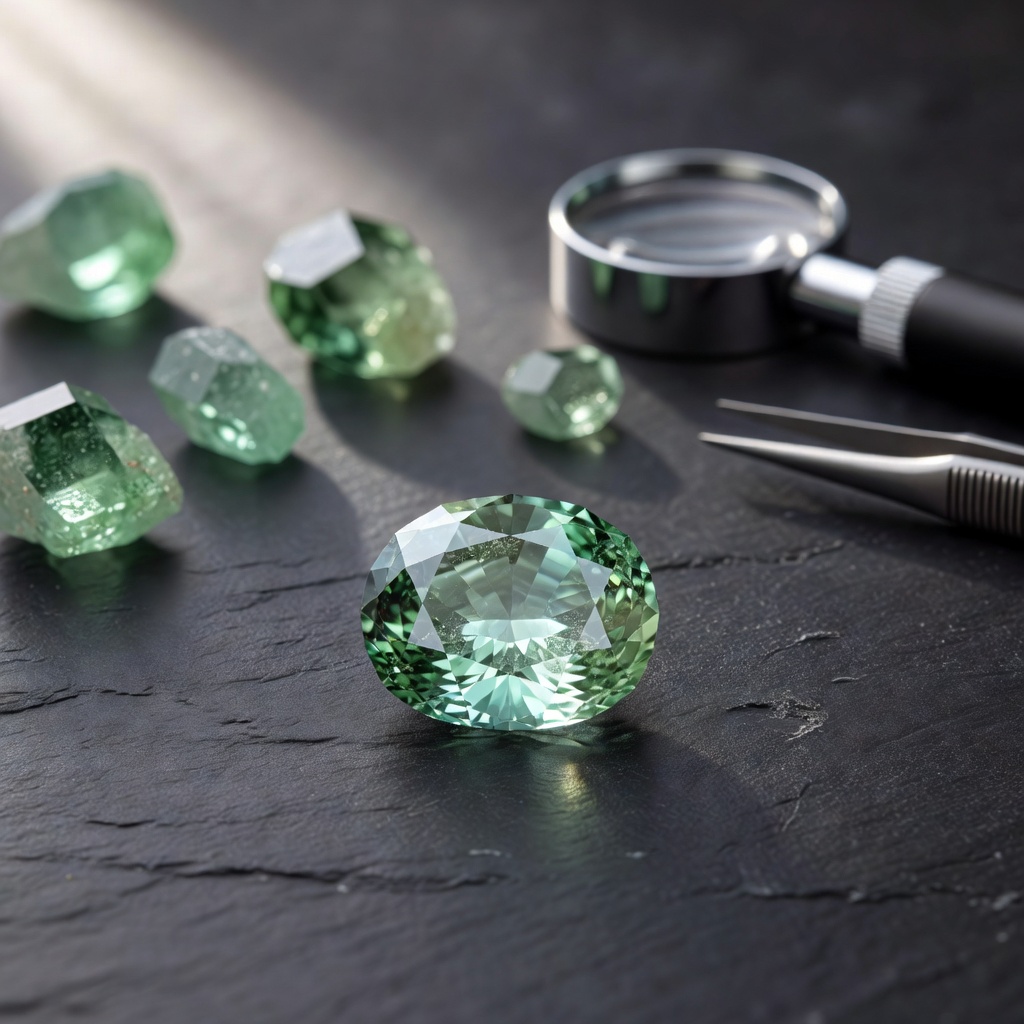
The color spectrum of natural green beryl spans from delicate mint and seafoam tones to medium grass-green hues, with iron content serving as the primary chromophore responsible for this gentle coloration. Unlike the intense, saturated greens demanded in emerald valuation, pale green beryl value derives from the stone's soothing, translucent quality that evokes spring foliage and ocean shallows. Premium specimens exhibit even color distribution without prominent zoning, though slight variations rarely detract significantly from the stone's overall appeal given the variety's inherently subtle nature.
Clarity characteristics in green beryl generally prove more favorable than those found in emeralds, with many specimens achieving eye-clean transparency that requires no enhancement treatments to improve appearance. Typical inclusion patterns may feature liquid-filled cavities, growth tubes, or faint fingerprint inclusions, though these rarely compromise the structural integrity or beauty of the gemstone when properly oriented during cutting. The relative freedom from eye-visible inclusions makes green beryl particularly suitable for step cuts and large faceted designs that would expose flaws in more included material.
Optimal cutting styles for green beryl include classic emerald cuts that pay homage to the stone's hexagonal crystal habit while maximizing color retention in the finished gem. Oval and cushion shapes also prove popular, offering excellent brilliance through mixed cutting techniques that combine step facets on the crown with brilliant facets on the pavilion. Designers frequently favor custom fantasy cuts for green beryl, utilizing the material's transparency to create intricate patterns that play with light reflection, particularly in larger carat weights where the pale color requires creative faceting to maintain visual interest.
Green Beryl vs Emerald: Key Differences Explained
Understanding the green beryl vs emerald distinction requires examining both chemical composition and market positioning, as these factors create substantially different value propositions for collectors and jewelry buyers. While both gemstones share the same fundamental mineral structure, emeralds derive their coveted deep green color from chromium and vanadium impurities, whereas green beryl owes its lighter hue to iron content within the crystal lattice. This chemical distinction results in noticeably different visual appearances, with green beryl presenting a refreshing, minty green that contrasts sharply with emerald's intense, forest-like saturation.
The beryl varieties comparison extends beyond mere color differences to encompass clarity expectations, treatment histories, and price accessibility. Emeralds almost invariably contain prominent inclusions—often termed "jardin" or garden—that require oiling or resin filling to improve apparent clarity, whereas green beryl typically presents cleaner crystal structures that need no enhancement. This natural clarity advantage means green beryl offers superior transparency and brilliance at significantly lower price points, making it an intelligent alternative for buyers seeking the prestige of beryl family gemstones without emerald's substantial investment requirements.
Market pricing reflects these fundamental differences, with fine emeralds commanding thousands of dollars per carat while comparable quality green beryl remains accessible at a fraction of that cost. The rarity factor also diverges between these varieties; while high-quality emeralds remain scarce due to geological formation constraints, green beryl occurs more frequently in nature, allowing for larger carat sizes and cleaner specimens to enter the market regularly. For jewelry designers, this accessibility enables the creation of substantial statement pieces featuring green beryl that would prove prohibitively expensive if executed in fine emerald material.
Global Sources and Mining Locations
The Minas Gerais region of Brazil stands as the preeminent source for high-quality green beryl, producing crystals renowned for their exceptional clarity and attractive light green coloration. Brazilian mining operations, particularly those concentrated in the Jequitinhonha River valley and surrounding pegmatite deposits, yield green beryl crystals of remarkable size, often suitable for museum-quality display pieces and substantial carvings. The geological conditions in this region create ideal environments for beryl formation, with granite pegmatites providing the necessary beryllium, aluminum, and silicon alongside trace iron elements that generate the characteristic green coloration.
Beyond Brazil, significant green beryl mining locations include the island nation of Madagascar, where alluvial deposits produce water-worn crystals with exceptional transparency and unique color nuances ranging from bluish-green to yellowish-green tones. Colombian deposits, while primarily famous for emerald production, occasionally yield green beryl specimens as secondary occurrences within the same black shale and limestone host rocks. African sources in Nigeria, Mozambique, and Zambia contribute additional material to the global market, with each locality imparting subtle color variations based on specific geological conditions and trace element compositions.
Modern green beryl extraction increasingly emphasizes ethical mining practices and environmental sustainability, with responsible operations implementing land reclamation protocols and fair labor standards. Artisanal mining communities in Madagascar and parts of Brazil have developed cooperative structures that ensure miners receive fair compensation while minimizing ecological disruption to sensitive rainforest and riverine environments. Consumers seeking ethically sourced gemstones should inquire about chain of custody documentation and mining certifications, as these factors increasingly influence the premium market for colored gemstones beyond mere aesthetic considerations.
Metaphysical Properties and Crystal Healing Benefits
Practitioners of crystal healing attribute profound green beryl healing properties to the stone's connection with the heart chakra, believing it facilitates emotional release and promotes compassionate self-awareness. The gentle green frequency resonates with Anahata energy, potentially assisting individuals in processing grief, resolving relationship difficulties, and opening themselves to receiving love without fear or reservation. Many crystal therapists recommend placing green beryl over the heart center during meditation sessions to amplify intentions regarding forgiveness, both of oneself and others, while encouraging the release of long-held resentments that impede personal growth.
Beyond emotional applications, green beryl reportedly enhances mental clarity and decision-making capabilities, particularly during periods of significant life transitions or career changes. The stone's association with growth and renewal energy makes it a popular talisman for entrepreneurs and creative professionals seeking inspiration and practical manifestation of ambitious projects. Some metaphysical practitioners suggest carrying tumbled green beryl stones in pockets or purses to maintain energetic equilibrium throughout demanding workdays, claiming the crystal helps filter environmental stress while maintaining focus on long-term objectives rather than immediate anxieties.
Traditional crystal lore also connects green beryl with prosperity consciousness and abundance attraction, though these properties manifest differently than the aggressive energy sometimes associated with pyrite or citrine. Rather than sudden windfalls, green beryl supposedly supports sustainable wealth building through enhanced discernment in financial matters and improved communication skills in business negotiations. Crystal grids incorporating green beryl at the center, surrounded by clear quartz points, allegedly create powerful manifestation templates for garden planning, agricultural endeavors, or any venture requiring patience and steady growth over time.
Market Value and Investment Considerations
Current market analysis indicates that pale green beryl value typically ranges between $50 and $500 per carat for fine quality specimens, though exceptional stones with unusual size or exceptional clarity may command premium prices exceeding these baseline figures. Several factors influence valuation within this range, including color saturation levels—medium tones generally outperform very pale or heavily included material—along with cut precision and overall carat weight. Unlike emeralds where inclusions are accepted as characteristic, green beryl pricing rewards eye-clean transparency, making clarity a primary value determinant alongside color quality.
From an investment perspective, green beryl presents an interesting proposition for collectors seeking exposure to the beryl market without the extreme volatility associated with fine emeralds. While green beryl lacks the historical auction records and trophy-piece status of Kashmir sapphires or Burmese rubies, its increasing popularity among contemporary jewelry designers suggests steady demand growth, particularly for ethically sourced material from known localities. Investment-grade specimens should exceed five carats with exceptional clarity and saturated color, accompanied by laboratory certification from respected institutions such as the Gemological Institute of America (GIA) or the American Gemological Laboratories (AGL).
Certification importance cannot be overstated when considering green beryl for significant purchases or portfolio inclusion, as documented proof of natural origin and treatment status protects buyer interests and facilitates future resale. Laboratory reports verify critical characteristics including geographic origin when possible, refractive index measurements confirming beryl classification, and spectroscopic analysis distinguishing natural iron-colored green beryl from potential synthetics or simulants. Reputable dealers should provide such documentation without hesitation, and buyers should view the absence of certification as a red flag requiring additional due diligence before completing transactions.
Jewelry Applications and Design Possibilities
The versatility of green beryl jewelry stems from the gemstone's excellent durability combined with its subtle, sophisticated coloration that complements diverse metal choices and design aesthetics. Engagement ring designers increasingly specify green beryl as center stones for alternative bridal jewelry, appreciating the stone's hardness sufficient for daily wear while offering a distinctive aesthetic that stands apart from conventional diamond or sapphire selections. Protective settings such as bezels or partial bezels prove particularly effective for green beryl rings, safeguarding the girdle edges from chipping while showcasing the stone's transparency and delicate color.
Metal selection significantly impacts the final appearance of green beryl jewelry, with white gold and platinum enhancing the cool, minty tones prevalent in many specimens while yellow gold imparts warmth that complements stones with slight yellowish secondary hues. Rose gold settings create striking contemporary combinations, particularly with green beryl exhibiting blue-green color shifts, resulting in fresh, spring-like color palettes that appeal to modern sensibilities. Designers frequently accent green beryl with diamond halos or side stones to increase overall brilliance and perceived value, though many contemporary artisans prefer showcasing the beryl as a solitaire to emphasize its natural beauty without competition from additional sparkle.
Beyond rings, green beryl proves exceptionally well-suited for pendant designs and drop earrings where the stone's transparency allows light transmission that maximizes its luminous quality. Large cabochon cuts of green beryl serve as stunning focal points in statement necklaces, while calibrated smaller stones find application in eternity bands or intricate Edwardian-inspired filigree work. The gemstone's relative affordability compared to emerald enables designers to experiment with bold, architectural settings and innovative cutting styles that would prove financially prohibitive with more expensive material, resulting in avant-garde jewelry pieces that highlight the stone's unique optical properties.
Care and Maintenance Guidelines
Proper green beryl jewelry care requires understanding the stone's sensitivity to thermal shock and mechanical stress despite its respectable hardness rating. Routine cleaning should involve only mild dish soap diluted in warm water, applied with a soft-bristled brush—such as a baby toothbrush—to gently remove accumulated oils and debris from the girdle and pavilion facets. After brushing, rinse the piece thoroughly under lukewarm running water and pat dry with a lint-free microfiber cloth to prevent water spots from forming on the polished surfaces.
Ultrasonic cleaners and steam cleaning devices present significant risks for green beryl, particularly for stones containing liquid-filled inclusions or internal fractures that could expand under thermal stress or vibration. Similarly, harsh chemicals including bleach, ammonia, and abrasive commercial jewelry cleaners may damage the stone's surface luster or attack any metal settings securing the gem. Always remove green beryl jewelry before swimming in chlorinated pools, applying household cleaning products, or engaging in activities involving sudden temperature changes such as moving between extreme outdoor heat and air-conditioned environments.
Storage recommendations emphasize separating green beryl pieces from harder gemstones like diamonds, rubies, and sapphires that could scratch the beryl's surface if stored together in jewelry boxes. Individual soft pouches or compartmentalized jewelry boxes with fabric-lined slots provide ideal storage solutions, preventing contact between pieces while protecting stones from airborne dust accumulation. For valuable green beryl specimens, consider storing in a safe or locked jewelry cabinet away from direct sunlight, as prolonged exposure to intense light may potentially affect the stability of certain color centers over extended periods.
Buying Guide: How to Select Quality Green Beryl
When purchasing green beryl, informed buyers should scrutinize specimens for red flags indicating treatments or synthetic origins that might affect long-term value and durability. Natural green beryl rarely undergoes the extensive treatments common to other gemstones, but some material may receive irradiation or heat treatment to enhance color intensity, requiring disclosure under standard trade practices. Synthetic beryl created through hydrothermal growth processes may enter the market disguised as natural material, though microscopic examination typically reveals curved growth patterns or seed plates absent in natural crystals.
Requesting comprehensive laboratory reports provides essential verification of authenticity and treatment status, with certificates from GIA, AGL, or similarly respected institutions offering assurance regarding natural origin and geographic provenance. These reports should specifically note the absence of clarity enhancement treatments, as untreated green beryl commands premium pricing and maintains better long-term stability than enhanced material. Buyers should verify that the certificate number matches the stone through laser inscription or detailed inclusion plotting, ensuring the documentation corresponds to the specific gem under consideration.
Selecting reputable dealers represents perhaps the most critical aspect of buying green beryl, with established gemstone merchants offering return policies, upgrade programs, and educational resources that support informed purchasing decisions. Prospective buyers should inquire about the dealer's sourcing practices, asking specific questions regarding mining locations, ethical procurement standards, and whether the stones originated from known deposits such as Brazilian or Madagascar localities. Transparent dealers welcome such inquiries and provide detailed Green Beryl Properties and Information, including care instructions and disclosure of any treatments, demonstrating the expertise and integrity that distinguish professional gemologists from casual vendors.
Frequently Asked Questions About Green Beryl
Is green beryl the same as emerald?
No, while both are varieties of beryl, green beryl contains iron that produces a lighter, minty green color, whereas emerald contains chromium and vanadium creating an intense green. Green beryl is also typically cleaner with fewer inclusions and significantly less expensive than emerald.
What is the hardness of green beryl?
Green beryl ranks 7.5 to 8 on the Mohs hardness scale, making it suitable for daily wear in jewelry. However, it should be protected from hard knocks and stored separately from harder gemstones like diamonds or sapphires to prevent scratching.
Where does green beryl come from?
The finest green beryl specimens primarily come from Brazil, particularly the Minas Gerais region. Other significant sources include Madagascar, Colombia, Nigeria, and parts of the United States. Brazilian material is especially prized for its clarity and attractive light green hues.
What are the healing properties of green beryl?
Crystal healers associate green beryl with heart chakra activation, emotional healing, and stress relief. It's believed to promote mental clarity, enhance courage, and support personal growth. Some practitioners use it to soothe anxiety and encourage forgiveness and compassion.
How much is green beryl worth per carat?
Green beryl typically ranges from $50 to $500 per carat for fine quality specimens, though exceptional stones may command higher prices. Factors affecting value include color saturation (medium tones are preferred), clarity, cut quality, and carat weight. It remains considerably more affordable than emerald.
How do I clean green beryl jewelry?
Clean green beryl using warm soapy water and a soft brush or cloth. Avoid ultrasonic cleaners, steam cleaners, and harsh chemicals like bleach or ammonia. Rinse thoroughly and dry with a soft, lint-free cloth. Remove jewelry before swimming, exercising, or applying cosmetics.
What color should natural green beryl be?
Natural green beryl displays a pale to medium green color ranging from minty seafoam to light grass green. Unlike emerald's deep green, high-quality green beryl shows a delicate, soothing green tone. Any yellowish or bluish secondary hues should be minimal for optimal value.
Is green beryl treated or enhanced?
Green beryl is rarely treated compared to other gemstones, which adds to its appeal. Unlike emeralds that are commonly oiled, most green beryl on the market is completely natural and untreated. Always request a gemological certificate to confirm whether any treatments have been applied.