
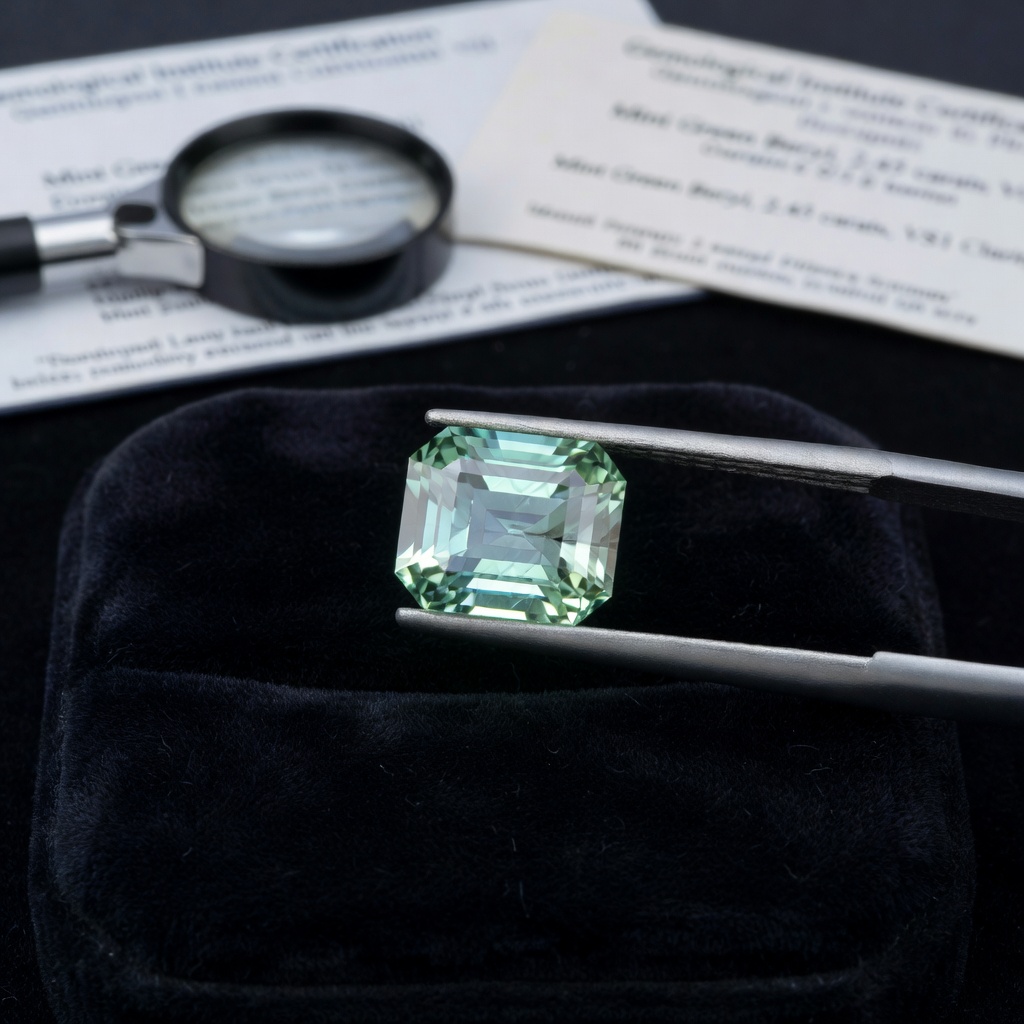
Introduction to Green Beryl Gemstones
Green beryl represents one of the most captivating yet underappreciated varieties within the broader beryl mineral family, offering collectors and jewelry enthusiasts an accessible entry point into fine colored gemstones. Chemically composed of beryllium aluminum silicate with the formula Be₃Al₂(SiO₃)₆, this hexagonal crystal structure gemstone shares its fundamental composition with prestigious relatives like emerald and aquamarine, yet maintains distinct optical characteristics that set it apart in the marketplace. Unlike its more famous green cousin, the emerald, green beryl gemstone specimens typically display lighter, more translucent hues ranging from delicate seafoam to refreshing mint tones, making them increasingly popular among designers seeking alternatives to the deep, saturated colors of traditional emeralds.
The rising demand for green beryl in contemporary fine jewelry stems largely from its exceptional clarity and affordability compared to emeralds, which often contain visible inclusions and command premium prices. Contemporary jewelry houses have embraced this gemstone for cocktail rings, pendant necklaces, and statement earrings, capitalizing on its ability to complement both white and yellow metal settings while offering superior transparency. For buyers embarking on their first significant colored gemstone purchase, understanding that green beryl occupies a unique niche between common semiprecious stones and investment-grade emeralds provides crucial context for making informed acquisition decisions.
Understanding Green Beryl Varieties and Types
Navigating the subtle distinctions between different beryl varieties requires careful attention to color nomenclature and geological terminology, particularly when distinguishing between Heliodor and true green beryl specimens. Heliodor, derived from the Greek words for "gift of the sun," traditionally encompasses the golden-green to yellow-green spectrum of the beryl family, though the term sometimes creates confusion in commercial markets where any light green beryl might be mislabeled. When applying Heliodor buying tips, collectors should focus on the specific hue dominance: stones with predominantly yellow undertones fall under the Heliodor classification, while those exhibiting pure green or blue-green coloration represent true green beryl, with the most valuable specimens displaying a balanced mint-green appearance without strong yellow or blue modifiers.
The color spectrum of natural green beryl extends from almost colorless pale mint through deep forest green and rare blue-green hues, with each shade commanding different market values depending on current fashion trends and availability. Brazilian deposits, particularly those in Minas Gerais, consistently produce material with the highly desirable crisp mint-green coloration that commands premium pricing, while Madagascan origins often yield larger crystals with slightly more yellowish undertones. Colombian green beryl, though less common than Colombian emeralds from the same geological formations, occasionally surfaces with unique bluish-green tints reminiscent of Paraíba tourmaline, though these specimens remain distinct from the copper-bearing neon varieties and should be evaluated based on their own merits rather than comparison to other gems.
Geographic Origins and Color Influence
Understanding provenance significantly impacts valuation when purchasing green beryl, as different mining localities impart subtle trace element variations that affect the final color presentation. Brazilian material typically contains higher iron content relative to chromium, resulting in the pure mint-green shades most sought after by high-end designers, whereas African deposits from Madagascar and Nigeria often show more complex color zoning that requires careful orientation during the cutting process. When examining rough material or unset stones, experienced buyers request origin documentation not merely for authentication purposes, but to predict how the stone might appear under various lighting conditions, as Brazilian green beryl tends to maintain consistent color saturation under incandescent and daylight sources compared to some African material that may shift toward yellowish tones under warm lighting.
The 4Cs: Quality Factors for Green Beryl
Evaluating beryl stone quality factors requires adapting traditional diamond grading criteria to accommodate the unique optical properties and market expectations specific to colored gemstones. Color grading standards for green beryl prioritize hue, tone, and saturation in ways that differ significantly from emerald evaluation, with the ideal specimen displaying a medium-light to medium tone rather than the dark tones preferred in emeralds. The most desirable green beryl exhibits medium saturation with a slightly bluish-green to pure green hue, avoiding the pale, watery appearance of low-quality material while stopping short of the intense saturation that would classify the stone as emerald and dramatically increase the price point.
Clarity expectations for green beryl remain notably more forgiving than those for diamonds but stricter than standards applied to emeralds, which traditionally tolerate significant inclusions referred to as "jardin." Eye-clean standards represent the baseline for fine quality green beryl, meaning no visible inclusions when viewed face-up from a distance of approximately six inches under normal lighting conditions. However, unlike emeralds which frequently undergo oiling to mask fractures, high-quality green beryl typically requires no such treatment due to its naturally superior clarity, making the presence of eye-visible inclusions a significant value detractor unless the stone exhibits exceptional color or size characteristics that justify the compromise.
Optimal Cutting Styles and Weight Retention
Master cutters approach green beryl with strategies designed to maximize brilliance while preserving carat weight, often choosing step cuts or mixed cuts that showcase the stone's transparency and color rather than optimizing for fire or scintillation. Emerald cuts remain popular for larger specimens as they minimize waste during processing and create elegant, architectural appearances that complement the gem's vitreous luster, though oval and cushion shapes often command slight premiums due to their versatility in jewelry settings. When examining cut quality, buyers should assess symmetry, polish quality, and windowing (areas where light passes through without reflecting back), as green beryl's relatively high refractive index of 1.57-1.58 allows for excellent brilliance when properly proportioned, particularly in stones weighing over two carats where cutting decisions significantly impact the final visual presentation.
Green Beryl vs Emerald: Key Differences
Understanding the distinction between green beryl vs emerald requires examining both gemological definitions and practical market considerations that affect value and wearability. While both stones share identical chemical compositions as beryl varieties containing beryllium, aluminum, and silicate, gemological laboratories distinguish them based primarily on color saturation thresholds, with emeralds requiring medium to dark tone and moderately strong to vivid saturation to qualify for the prestigious designation. Green beryl occupies the lighter end of this spectrum, displaying light to medium tone with lower saturation levels, a distinction that places these gems in entirely different market categories despite their mineralogical relationship.
The price differential between these green gems often shocks first-time buyers, with fine green beryl typically costing 10 to 20 times less than comparable quality emeralds, making it an attractive alternative for those seeking green center stones without the substantial investment emerald requires. This affordability stems partly from availability—green beryl deposits produce significantly more eye-clean material than emerald mines—but also from historical market positioning that has elevated emerald to "precious" status while green beryl remains classified among "semi-precious" stones despite its superior durability characteristics. For daily wear considerations, green beryl often outperforms emerald due to its typically superior clarity and fewer surface-reaching inclusions, resulting in better resistance to chipping and fracturing during normal activities, though both stones share the same hardness of 7.5-8 on the Mohs scale and require protective settings for longevity.
Evaluating Color and Clarity Standards
Discerning collectors recognize that green beryl color grading focuses on subtle nuances that separate commercially acceptable material from investment-grade specimens worthy of serious collection. The most valuable hue ranges span from medium mint to slightly bluish-green tones, with the ideal stone avoiding both the washed-out appearance of pale praseolite and the overly saturated tones that approach emerald territory. Transparency levels significantly impact light performance, with high-quality green beryl displaying a glass-like clarity that allows light to penetrate deeply and return with a soft, ethereal glow rather than the bold flashes associated with more dispersive gems like demantoid garnet or diamond.
Common inclusions in natural green beryl include liquid feathers, two-phase inclusions containing both liquid and gas bubbles, and long, hollow growth tubes that run parallel to the crystal's c-axis, all of which serve as diagnostic features distinguishing natural stones from synthetics. Unlike emeralds where certain inclusion patterns are accepted and even expected, green beryl pricing penalizes visible inclusions more severely because the stone's lighter color provides less masking effect for internal features. When examining clarity, buyers should utilize 10x magnification to identify surface-reaching fractures that might compromise durability, though completely inclusion-free material should trigger skepticism as it may indicate laboratory-grown origin or extensive treatment that requires disclosure.
Pricing Guide and Market Value Analysis
Understanding Natural green beryl price structures requires navigating a market where values fluctuate based on color intensity, clarity grades, and treatment status across a surprisingly broad per-carat range. Commercial grade material suitable for fashion jewelry typically commands $50 to $500 per carat depending on size and cut quality, while fine specimens exhibiting exceptional mint-green color with eye-clean clarity can demand $500 to $2,000 or more per carat, particularly for untreated stones exceeding three carats. Size premiums escalate dramatically for stones over five carats due to the rarity of large, clean crystals, with top-quality specimens in the 10-carat range potentially commanding prices that approach lower-quality emerald valuations.
Treatment history significantly impacts market pricing and disclosure requirements, with untreated stones commanding 30-50% premiums over heated or oiled equivalents in the current market. Heat treatment, when applied to green beryl, typically aims to reduce yellowish components and enhance the pure green appearance, while oiling or resin filling addresses surface-reaching fractures that occasionally occur in material from specific localities. Ethical dealers provide GIA, AGL, or IGI certifications explicitly stating "no indications of heating" or detailing any treatments applied, as undisclosed enhancements discovered after purchase can severely impact resale value and collector interest. When budgeting for significant acquisitions, buyers should prioritize untreated stones with documented natural origin, as these specimens demonstrate superior long-term value retention compared to treated material that may face market stigma in future transactions.
Certification and Authentication Essentials
Securing reliable certification from recognized gemological laboratories provides essential protection when investing in green beryl, as the visual similarity between natural, treated, and synthetic material challenges even experienced dealers without proper testing equipment. Reputable laboratories including the Gemological Institute of America (GIA), American Gemological Laboratories (AGL), and International Gemological Institute (IGI) issue reports verifying natural origin, geographic source when determinable, and treatment status through advanced spectroscopic analysis and microscopic examination. These certificates serve not merely as authentication documents but as baseline records for insurance purposes and future resale, establishing the stone's characteristics at the time of purchase and protecting against later disputes regarding quality or origin.
Common treatments requiring identification include heat treatment to modify color, fracture filling with oils or resins to improve apparent clarity, and irradiation which occasionally appears in material seeking to intensify green coloration. Laboratory-grown green beryl, produced through hydrothermal processes, mimics natural inclusions convincingly but typically shows distinctive growth patterns under magnification and lacks the subtle color zoning found in natural crystals. When evaluating certified green beryl, compare the certificate number against the laboratory's online database to confirm authenticity, and examine the stone's measurements and weight against the report specifications to ensure the documentation matches the actual gem, as certificate swapping remains an unfortunate risk in unregulated markets.
Where to Buy Green Beryl Safely
Navigating the marketplace for where to buy green beryl requires balancing convenience against verification capabilities, with both online dealers and local independent jewelers offering distinct advantages for different buyer profiles. Established online colored gemstone specialists often provide superior inventory depth and competitive pricing due to lower overhead costs, but buyers should verify physical addresses, membership in professional organizations like the American Gem Trade Association (AGTA), and robust return policies allowing inspection by independent appraisers within reasonable timeframes. Local independent jewelers offer the advantage of physical examination before purchase and opportunities to compare multiple stones under various lighting conditions, though their inventory may be limited and pricing potentially higher due to brick-and-mortar operational costs.
Red flags demanding immediate avoidance include prices significantly below market rates (suggesting synthetic material, severe treatments, or simulants), sellers unable or unwilling to provide detailed provenance information, and vague return policies that prevent independent verification. When engaging with sellers, specifically inquire about treatment history beyond what appears on certificates, asking whether the stone has undergone any heating, irradiation, or filling processes that might affect long-term stability. Request magnification photos of any inclusions mentioned in reports, and confirm that the seller guarantees the stone matches its accompanying certification, with written agreements to accept returns if independent appraisal reveals discrepancies between the gem and its documentation.
Jewelry Setting Selection and Care
Selecting appropriate settings for green beryl jewelry requires balancing aesthetic preferences against protective considerations that accommodate the stone's physical properties and potential cleavage planes. Yellow gold settings beautifully complement green beryl with warm yellowish-green or golden undertones, enhancing the sun-kissed appearance of Heliodor varieties, while white gold or platinum settings provide striking contrast against cool mint-green specimens, creating contemporary appearances that emphasize the gem's crisp, clean coloration. Rose gold has emerged as a popular intermediate choice, offering warmth without the strong yellow cast that might compete with subtle green hues, particularly effective for Brazilian material displaying pure mint colors.
Protective setting styles significantly impact the longevity of green beryl pieces, with bezel settings and halo designs offering superior protection compared to exposed prong settings that leave girdle edges vulnerable to chipping during impact. For daily wear rings, consider partial bezel settings or V-prong configurations that secure the stone while maximizing light entry, avoiding high-set cathedral styles that expose the pavilion to accidental strikes against hard surfaces. Maintenance protocols require gentle handling using mild soap, warm water, and soft brushes to remove accumulated oils and debris, with strict avoidance of ultrasonic cleaners and steam cleaning that might exacerbate existing fractures or loosen settings through vibration. Store green beryl jewelry separately from harder gems like diamonds or sapphires to prevent scratching, and remove pieces before engaging in activities involving chemicals, extreme temperature changes, or physical impact.
Investment Potential and Collector Value
Market analysis indicates growing investment potential for high-quality green beryl, particularly untreated specimens with exceptional clarity and color saturation that appeal to sophisticated collectors seeking alternatives to overheated emerald markets. Current trends show increasing demand for untreated, high-clarity specimens over three carats, driven by jewelry designers featuring these stones in high-fashion collections and by collectors recognizing the value disparity between green beryl and similarly colored but vastly more expensive alternatives. Collector-grade specifications prioritize unheated material displaying vivid mint-green color, eye-clean clarity, and cuts that maximize both weight retention and optical performance, with documented provenance from renowned localities like Brazil's Minas Gerais adding additional premium potential.
Long-term value retention for fine green beryl compares favorably to other colored gemstones in the beryl family, particularly as market education increases consumer awareness of this gem's distinction from both low-value quartz varieties and prohibitively expensive emeralds. Unlike fashion gemstones that suffer from fluctuating trends, green beryl maintains consistent appeal due to its versatility across jewelry styles and its association with the prestigious beryl mineral family. For portfolio diversification, collectors should focus on acquiring certified, untreated stones between 3 and 10 carats with documented origin, as this segment shows the strongest price appreciation potential while maintaining sufficient liquidity for future resale through established auction houses or specialist dealers.
Frequently Asked Questions
What is the difference between green beryl and emerald?
While both are beryl varieties, emeralds have intense to vivid color saturation with medium to dark tones, whereas green beryl exhibits lighter, less saturated green hues. Gemological labs use color thresholds to distinguish them, with green beryl being significantly more affordable and often having better clarity than emeralds.
How much does natural green beryl cost per carat?
Commercial quality green beryl typically ranges from $50-$200 per carat, while fine specimens with exceptional color and clarity can command $500-$2,000+ per carat. Untreated stones over 5 carats with vivid mint-green color carry significant premiums due to rarity.
Is green beryl treated or enhanced?
Most green beryl on the market is untreated, though some stones may undergo heat treatment to improve color or oiling to mask surface-reaching inclusions. Always request a gemological certificate that discloses any treatments, as untreated stones command higher prices.
What color green beryl is most valuable?
The most valuable green beryl displays a medium mint to slightly bluish-green hue with medium saturation and light to medium tone. Stones that are too pale (appearing almost colorless) or too dark (approaching emerald territory) are less desirable to collectors.
How can I tell if my green beryl is real?
Authentic green beryl can be verified through refractive index testing (1.57-1.58), specific gravity (2.67-2.78), and examination under magnification for natural inclusions like liquid feathers or growth tubes. Always purchase certified stones from reputable dealers to ensure authenticity.
Is green beryl durable enough for daily wear?
With a hardness of 7.5-8 on the Mohs scale, green beryl is suitable for daily wear in protective settings like bezels or halos. However, it has moderate toughness due to potential cleavage planes, making it less ideal for high-impact activities compared to sapphires or diamonds.
Where are the best green beryl deposits located?
The finest green beryl currently comes from Brazil (Minas Gerais), Madagascar, and recently discovered deposits in Colombia. Brazilian material often exhibits the desirable mint-green color, while Madagascar produces larger crystals with good clarity.
Should I buy loose green beryl or pre-set jewelry?
Buying loose stones allows for independent verification of quality and certification before committing to a setting, often providing better value. However, pre-set vintage pieces may offer unique designs. For investment purposes, loose certified stones are generally recommended.


