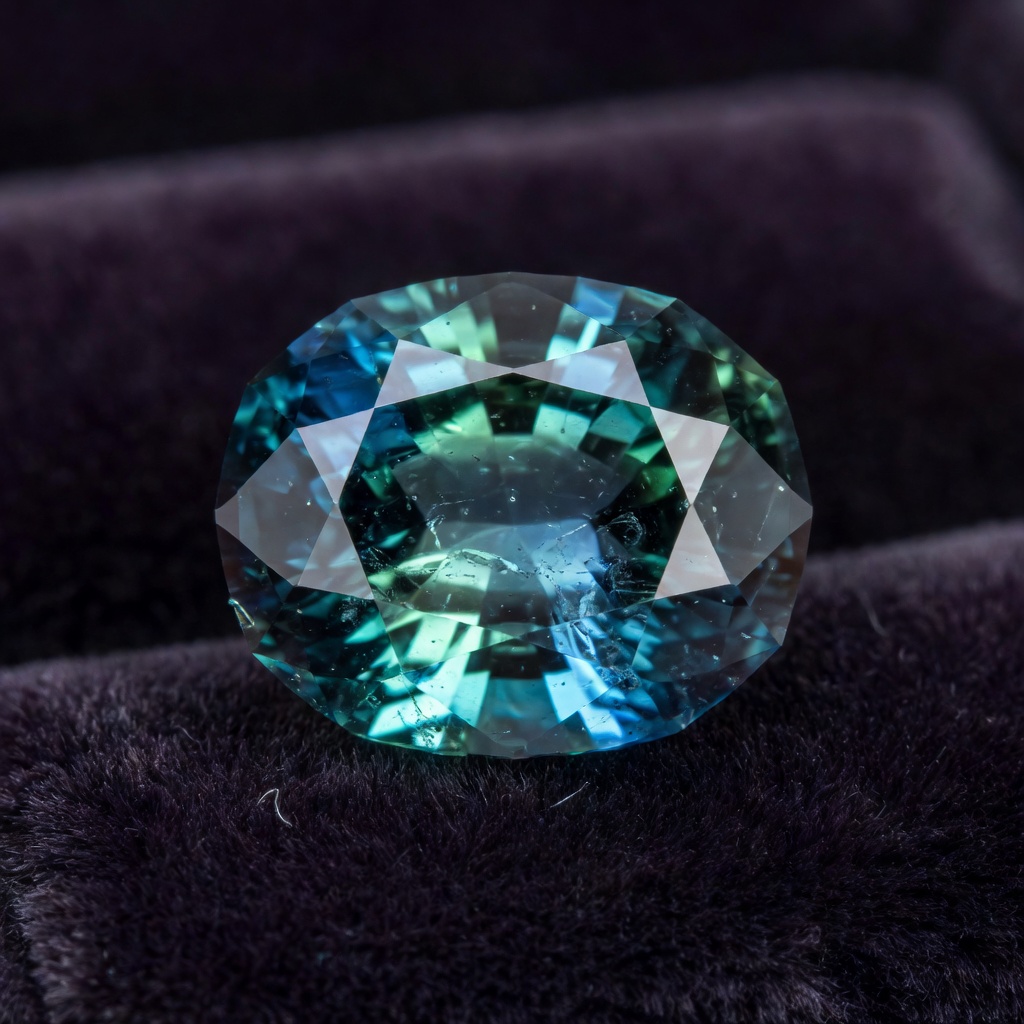
What Is Grandidierite? Understanding the Rare Blue-Green Gemstone
Grandidierite stands as one of the most elusive and captivating treasures in the gemological world, first discovered in 1902 by French explorer and naturalist Alfred Grandidier along the southern coast of Madagascar. This extraordinary mineral, named in honor of its discoverer who dedicated his life to documenting the natural history of Madagascar, remained virtually unknown to the jewelry market for nearly a century due to its extreme scarcity and the limited availability of transparent crystals suitable for faceting. As a magnesium aluminum borosilicate, grandidierite possesses a unique chemical composition that contributes to its distinctive optical properties, setting it apart from other blue gemstones in both appearance and rarity.
The defining characteristic of this rare blue-green gemstone lies in its strong trichroism, an optical phenomenon where the crystal displays three different colors depending on the viewing angle: deep ocean blue, verdant green, and near-colorless or white. This pleochroic effect presents significant challenges for lapidaries, who must orient the cut carefully to maximize the desirable blue face-up color while minimizing the less valuable green and colorless axes. Gemologists and collectors consistently rank grandidierite among the top ten rarest gemstones globally, with facetable material being thousands of times scarcer than diamond, making this Grandidierite Price Guide essential for anyone considering acquisition of this exceptional mineral.
Factors That Determine Grandidierite Prices
Understanding grandidierite quality factors requires appreciation for the gem's complex optical behavior and the geological conditions that create its formation. Unlike diamonds, which benefit from standardized grading systems, grandidierite valuation remains nuanced, combining traditional clarity and color assessments with specialized considerations for pleochroism and transparency. The interplay between these quality determinants creates a wide valuation spectrum, with seemingly similar stones commanding vastly different grandidierite price per carat figures based on subtle variations in visual performance.
Color intensity serves as the primary value driver, with stones displaying saturated blue hues commanding significant premiums over those showing predominantly green or washed-out coloration. Clarity presents another critical consideration, as the vast majority of grandidierite rough contains inclusions, fractures, or turbidity that renders it suitable only for cabochon cutting or mineral specimen collecting, while eye-clean transparent crystals represent less than one percent of total production. Cut quality becomes particularly crucial for this gemstone, as master cutters must balance maximum carat weight retention against optimal orientation to showcase the most desirable blue axis, often sacrificing 60-70% of the rough weight to achieve premium face-up color.
Current Grandidierite Price Per Carat Breakdown
The grandidierite price per carat structure reflects a steep appreciation curve correlating directly with quality improvements, creating distinct market tiers that serious collectors must understand before making acquisition decisions. Commercial grade material, typically translucent to opaque with visible inclusions and predominantly green coloration, currently trades between $500 and $2,000 per carat, appealing primarily to collectors seeking representative specimens rather than jewelry-quality stones. This entry-level category often includes cabochon-cut stones or heavily included faceted gems that display the mineral's characteristic color but lack the transparency required for fine jewelry applications.
Fine quality grandidierite, defined by eye-clean clarity and attractive blue-green coloration with noticeable blue dominance, commands prices ranging from $2,000 to $10,000 per carat, depending on size and specific hue intensity. At the apex of the market, collector-grade specimens featuring vivid saturated blue color, exceptional transparency, and precision cutting can achieve prices exceeding $10,000 per carat, with truly exceptional stones over three carats potentially reaching $50,000 per carat or more at specialized auctions. These Madagascar gemstone prices have demonstrated remarkable stability and growth, with documented cases of high-quality stones appreciating over 300% between 2012 and 2022, outpacing many traditional investment vehicles.
Color Grading: The Key Value Driver
Color evaluation in grandidierite quality factors extends beyond simple hue identification to encompass complex assessments of saturation, tone, and pleochroic behavior that significantly impact commercial value. Stones presenting a dominant blue axis when viewed face-up command premiums of 200-400% over those displaying primarily green or yellowish-green coloration, reflecting market preferences established by high-end collectors and connoisseurs. The most desirable specimens exhibit a rich, saturated blue reminiscent of high-quality paraiba tourmaline or fine aquamarine, though with a distinctive depth and subtle green undertone unique to this mineral species.
Saturation levels range from light, pastel tones to vivid, intense coloration, with only the latter category achieving the investment-grade status sought by serious collectors. When examining this rare blue-green gemstone, professionals utilize specialized lighting conditions and dichroscopes to assess the trichroism visualization, as stones showing strong separation between blue and green axes offer superior cutting potential and face-up appearance. Practical testing involves viewing the stone through different facets and angles; premium material maintains a consistent blue presence across multiple viewing directions, whereas lower-quality specimens may appear predominantly green or washed-out from certain angles.
Clarity and Cut Standards for Investment Pieces
Clarity assessment in grandidierite requires modified standards compared to more common gemstones, as completely flawless crystals are virtually nonexistent in the market. Common inclusion types include tube-like cavities, two-phase inclusions, and partial healing fractures, with acceptable tolerance levels depending on the stone's size and intended use; eye-clean stones command substantial premiums, while those with minor inclusions visible only under magnification remain suitable for high-end jewelry if strategically placed under prongs or bezels. Serious grandidierite investment strategies focus on acquiring stones with minimal clarity disruptions that do not significantly impact light transmission or structural integrity.
Optimal cutting styles prioritize color enhancement over weight retention, with emerald cuts and custom step-cuts proving particularly effective at showcasing the blue axis while minimizing windowing effects. Oval and cushion cuts also perform well, allowing cutters to orient the table perpendicular to the blue crystal axis, though these shapes typically sacrifice more rough material during processing. When you buy authentic grandidierite, pay particular attention to carat weight premiums for stones exceeding two carats, as the combination of extreme geological rarity and cutting losses means that finished gems over two carats represent less than five percent of available inventory, commanding disproportionately higher per-carat prices.
Grandidierite vs Tanzanite: Price and Rarity Comparison
The grandidierite vs tanzanite comparison reveals stark differences in supply dynamics and long-term value potential that inform sophisticated collecting strategies. While both gems originate from single-source deposits in East Africa and share blue-violet color palettes, tanzanite currently trades at $300 to $1,500 per carat for fine quality material, whereas equivalent grandidierite commands $5,000 to $20,000 per carat, reflecting the latter's significantly greater scarcity. Tanzanite deposits in Tanzania's Merelani Hills, while limited, continue producing commercial quantities, whereas grandidierite mining in Madagascar has yielded minimal new material since the early 2000s, with most current inventory representing recycled estate pieces or small, sporadic discoveries.
Supply scarcity analysis indicates that tanzanite faces eventual depletion within 20-30 years based on current extraction rates, while grandidierite effectively exists as a finite resource with virtually no ongoing primary production. Historical price appreciation trends favor grandidierite investment approaches, with the gemstone showing consistent 15-25% annual value increases over the past decade compared to tanzanite's more volatile pricing influenced by Tanzanian government export policies and treatment disclosures. Collectors seeking blue gemstones with maximum rarity premiums and supply security increasingly favor grandidierite over the more commercially available tanzanite, despite the latter's greater public recognition.
Where to Buy Certified Grandidierite Safely
When seeking to buy authentic grandidierite, establishing provenance and verification through reputable channels remains paramount given the gemstone's high value and relative obscurity among general jewelers. Established auction houses including Sotheby's, Christie's, and Bonhams regularly feature certified grandidierite in their jewelry sales, providing the most secure acquisition environment with comprehensive condition reports and guaranteed authenticity. Specialized colored stone dealers with established reputations in rare gemstones, particularly those maintaining offices in Geneva, New York, or Bangkok, offer alternative sources for acquiring investment-quality material with proper documentation.
Essential certification requirements demand reports from recognized laboratories such as GIA (Gemological Institute of America), GRS (GemResearch Swisslab), or AGL (American Gemological Laboratories), which can confirm natural origin, detect any heat treatment or clarity enhancement, and provide detailed color descriptions. Red flags for synthetic or treated material include unusually low prices for apparent high-quality stones, vendors unable to provide specific mine locations or discovery dates, and stones showing atypical inclusion patterns or color zoning inconsistent with natural formation. This Grandidierite Price Guide strongly advises avoiding uncertified material regardless of apparent bargains, as the market contains glass imitations, dyed quartz simulants, and misleadingly labeled tourmaline that can trap unwary buyers.
Investment Potential and Future Market Outlook
Grandidierite investment opportunities have attracted increasing attention from high-net-worth collectors and alternative asset managers seeking tangible stores of value with low correlation to traditional financial markets. Historical price trends demonstrate remarkable resilience and growth, with auction records showing consistent 200-300% appreciation over the past decade for fine quality stones, outpacing gold, blue-chip stocks, and even diamond investments during comparable periods. This performance stems fundamentally from mining limitations and the depletion of Madagascar deposits, where original discoveries near Andrahomana have yielded no significant new production for over fifteen years, creating a supply-constrained market environment.
Collector demand growth in Asian and Middle Eastern markets has accelerated dramatically since 2015, with Chinese and Gulf-region buyers particularly attracted to the gemstone's extreme rarity status and blue color associations with prosperity and protection. Madagascar gemstone prices for premium material continue setting new records at specialty auctions, with a 4.5-carat unheated vivid blue grandidierite ring selling for $180,000 in 2021, establishing new per-carat benchmarks for the species. As global awareness increases among jewelry connoisseurs and supply remains essentially fixed, industry analysts project continued price appreciation for investment-grade specimens, particularly those exceeding two carats with documented provenance and premium color characteristics.
Frequently Asked Questions About Grandidierite
How much does grandidierite cost per carat?
Grandidierite prices range from $500 to $2,000 per carat for commercial grade material, $2,000 to $10,000 for fine quality eye-clean stones, and $10,000 to $50,000+ for exceptional collector-grade specimens with vivid blue color and high transparency.
Why is grandidierite so expensive?
Grandidierite commands high prices due to extreme rarity (found only in Madagascar and small Sri Lankan deposits), difficulty in mining, the gemstone's complex trichroic nature requiring expert cutting, and limited supply of transparent material suitable for faceting.
Is grandidierite rarer than diamond?
Yes, gem-quality grandidierite is significantly rarer than diamond. While diamonds are mined globally in large quantities, facetable grandidierite is exceptionally scarce, with only a few hundred carats of fine material entering the market annually compared to millions of carats of diamonds.
What color grandidierite is most valuable?
The most valuable grandidierite displays a saturated blue to blue-green color when viewed face-up, showing strong pleochroism. Stones that appear predominantly blue rather than green command premium prices, especially those with high transparency and minimal inclusions.
How can I tell if grandidierite is real?
Authentic grandidierite exhibits strong trichroism (showing blue, green, and white/colorless when viewed from different angles), has a refractive index of 1.590-1.623, and should come with certification from reputable labs like GIA or GRS. Be wary of cheap imitations or dyed quartz.
Is grandidierite a good investment?
Grandidierite has shown strong investment potential with prices appreciating 200-300% over the past decade due to increasing scarcity and collector demand. However, like all gemstone investments, liquidity can be limited, and buyers should focus on high-quality, certified stones over 1 carat.
Can grandidierite be worn in jewelry daily?
With a hardness of 7 to 7.5 on the Mohs scale, grandidierite is suitable for jewelry but requires care. It's best set in protective settings for rings and cleaned with mild soap and water. Avoid ultrasonic cleaners and protect from hard impacts due to potential cleavage planes.