
Introduction to Goshenite: The Colorless Beryl
Goshenite represents the purest form of the beryl mineral family, distinguished by its complete lack of color and exceptional clarity. As the colorless variety of beryl, it shares its chemical composition with prestigious siblings including emerald and aquamarine, yet stands apart through its pristine transparency and diamond-like brilliance. This remarkable gemstone, named after Goshen, Massachusetts, where it was first discovered in significant quantities, has captivated jewelry enthusiasts for centuries with its understated elegance and versatility in both vintage and contemporary settings.
Unlike other white gemstones such as white sapphire or moissanite, Goshenite possesses unique optical properties that demand specialized attention regarding Goshenite Care and Cleaning. The stone's high clarity and refractive index create stunning light performance, but these same characteristics make surface buildup and scratches particularly noticeable to the naked eye. Modern jewelry designers frequently incorporate Goshenite into engagement rings and statement pieces, appreciating its affordability compared to diamonds while maintaining a sophisticated aesthetic that complements any metal type from platinum to rose gold.
Understanding Goshenite Durability and Vulnerabilities
When evaluating colorless beryl durability, gemologists assign Goshenite a Mohs hardness rating of 7.5 to 8, positioning it between quartz and topaz on the mineral hardness scale. While this rating suggests reasonable resistance to scratching from everyday dust and debris, it does not tell the complete story of the stone's structural integrity. Hardness measures only resistance to surface scratching, not toughness or resistance to breaking, which becomes critically important when considering daily wear scenarios for this delicate gemstone.
The most significant vulnerability in Goshenite hardness and durability lies in its perfect cleavage planes, specifically in one direction parallel to the basal pinacoid. This geological characteristic means the stone can split cleanly along specific atomic planes when subjected to sharp impacts or pressure, much like wood splitting along the grain. Jewelers often encounter Goshenite pieces that have developed internal fractures or complete breaks after seemingly minor bumps against door frames or kitchen countertops, making awareness of this limitation essential for proper white beryl maintenance.
Thermal shock presents another often-overlooked risk factor for this gemstone. Sudden temperature fluctuations, such as moving from a freezing outdoor environment into a heated building or exposing the stone to hot water during cleaning, can cause internal stress fractures. The molecular structure of beryl expands and contracts at different rates than the metal settings typically used in jewelry, potentially loosening prongs or creating microscopic cracks that compromise the stone's integrity over time.
Daily Wear Best Practices for Goshenite Jewelry
Implementing proper Goshenite daily wear care requires establishing conscious habits that protect the stone during routine activities. High-impact situations pose the greatest threat, meaning owners should remove Goshenite rings before engaging in sports, weightlifting, gardening, or household chores involving heavy tools. Consider the experience of a vintage jewelry collector who discovered her 1920s Goshenite engagement ring had developed a significant chip after a single afternoon of gardening; the stone contacted a small rock while she was weeding, demonstrating how quickly damage can occur despite the stone's respectable hardness rating.
Proper removal techniques prevent both physical damage and accidental loss. Always remove Goshenite jewelry over a soft surface, such as a folded towel placed over the sink basin or a dedicated jewelry dish lined with velvet. Cold water causes fingers to contract, increasing the risk of rings slipping off and falling onto hard porcelain or tile surfaces. When removing necklaces or earrings, grasp the metal components rather than pulling on the stone itself, as excessive force on the setting can loosen prongs over time.
Establishing a weekly visual inspection routine helps identify potential problems before they result in stone loss. Using a jeweler's loupe or strong magnifying glass, examine each prong for signs of bending, thinning, or lifting away from the stone's girdle. Check for accumulated debris under the setting that might indicate gaps forming between the metal and the gemstone. Pay special attention to vintage pieces where metal fatigue may compromise setting security, and never wear Goshenite jewelry if you notice any wobbling or looseness in the stone.
Safe Home Cleaning Methods Step-by-Step
Learning how to clean goshenite at home requires understanding gentle techniques that preserve both the gemstone and its setting. Begin by preparing a cleaning solution using lukewarm distilled water—never hot water—and a few drops of mild dish soap such as Dawn or Ivory. Avoid detergents containing moisturizers, antibacterial agents, or citrus extracts, as these can leave residue on the stone's surface. The water temperature should feel comfortable to the touch, approximately room temperature to slightly warm, to prevent thermal shock.
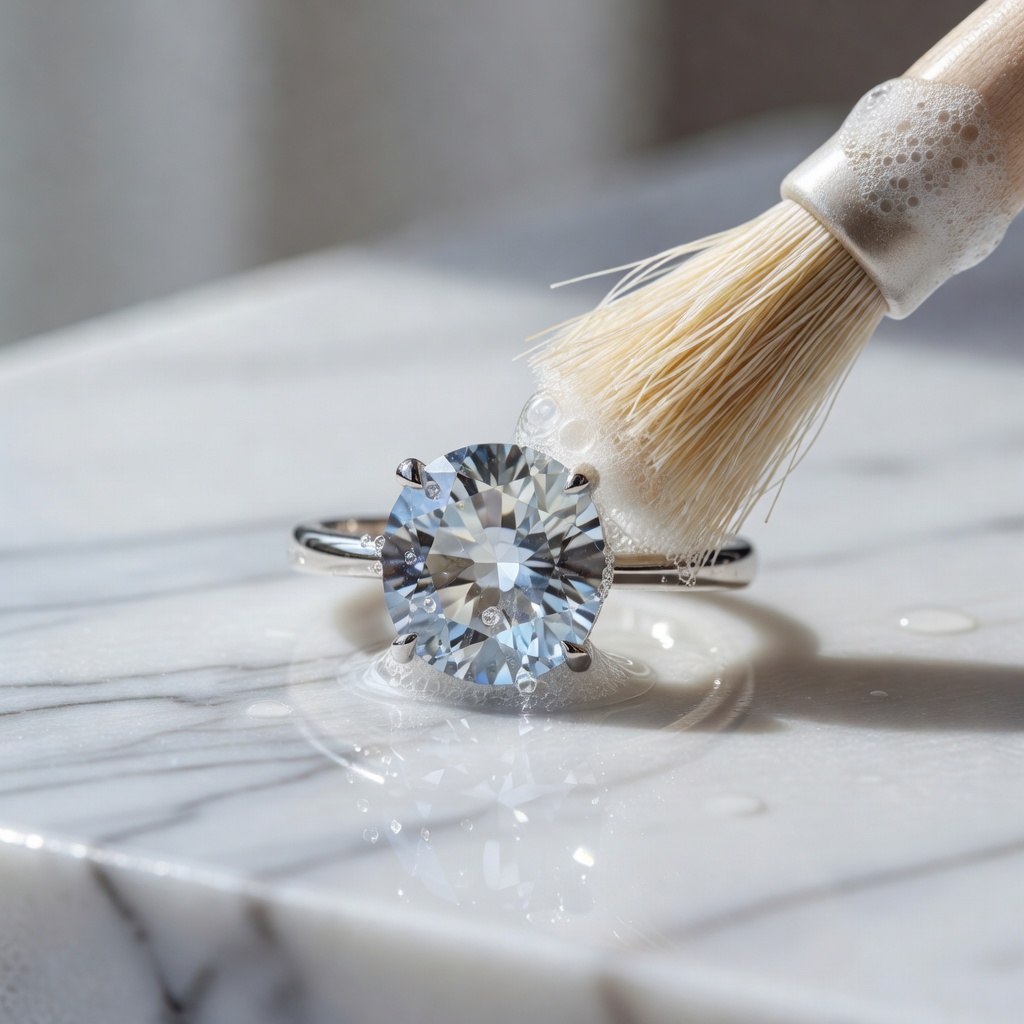
Place your Goshenite jewelry in the solution and allow it to soak for fifteen to twenty minutes. This soaking period loosens accumulated oils from skin contact, cosmetics, and environmental pollutants. After soaking, use a soft-bristled baby toothbrush or specialized jewelry brush to gently clean the stone and setting. Focus particular attention on the pavilion (bottom) of the stone and the area beneath the setting where debris commonly accumulates. Use light, circular motions rather than aggressive scrubbing, and never apply pressure that might stress the cleavage planes.
Rinsing requires careful attention to prevent loss down the drain. Hold the jewelry securely over a bowl of clean water or use a mesh strainer placed in the sink basin to catch accidental drops. Rinse thoroughly under a gentle stream of lukewarm water to remove all soap residue, as dried soap film can create a cloudy appearance that mimics damage to the stone. Pat dry immediately using a lint-free microfiber cloth, avoiding paper towels or tissues that might scratch the metal setting or leave fibrous residue on the gemstone. Allow the piece to air dry completely on a clean towel before returning it to storage to prevent moisture trapping that could tarnish metal components.
Professional Cleaning Services and Maintenance
While home cleaning maintains day-to-day brilliance, professional goshenite cleaning services provide essential deep maintenance that preserves long-term value. Professional jewelers possess specialized equipment including steam cleaners and high-frequency sound waves, though caution must prevail when applying these methods to Goshenite. Ultrasonic cleaners, which use cavitation bubbles to dislodge debris, present particular risks for this gemstone due to the vibrations potentially activating cleavage planes and causing internal fractures or complete stone separation.
Steam cleaning offers an alternative for heavily soiled pieces, but requires precise temperature control to avoid thermal shock. Experienced jewelers will pre-warm Goshenite gradually before applying steam and limit exposure time to seconds rather than minutes. When consulting with a professional, explicitly mention that your piece contains Goshenite rather than diamond or sapphire, as this information dictates appropriate cleaning protocols. Reputable establishments will inspect the stone for existing fractures under magnification before proceeding with any mechanical cleaning method.
Annual professional maintenance should include comprehensive prong tightening, setting integrity checks, and polishing services that restore metal luster without compromising the stone. During these visits, jewelers can identify early signs of wear, such as thinning prongs or microscopic chips in the girdle, addressing issues before they necessitate expensive repairs or stone replacement. For pieces worn daily, consider scheduling these inspections every six months rather than annually, particularly for rings that experience constant contact with hard surfaces.
Proper Storage Solutions to Prevent Damage
Implementing appropriate goshenite storage tips prevents the majority of accidental damage that occurs when jewelry remains unworn. Individual soft pouches made from microfiber, velvet, or untreated cotton provide the ideal environment, cushioning the stone against impacts while preventing contact with harder gemstones. Unlike diamonds, which can scratch nearly any other material, Goshenite sits vulnerable to abrasion from common jewelry box companions including rubies, sapphires, and even dust particles containing quartz.
Organize your jewelry collection using compartmentalized boxes with padded dividers, ensuring each piece resides in its own section. Never toss Goshenite jewelry into a shared drawer or dish where pieces can jostle against one another during drawer opening or transport. For travel, utilize rigid jewelry cases with individually secured slots rather than soft rolls that allow stones to contact metal clasps or settings. Consider the cautionary tale of a traveler who packed her Goshenite pendant alongside a diamond tennis bracelet; upon arrival, the pendant displayed noticeable surface scratches that required professional re-polishing to restore its clarity.
Climate control plays a subtle but significant role in long-term preservation. Extreme humidity promotes tarnishing in silver settings and can loosen adhesives used in certain mounting styles, while excessive dryness may cause wood jewelry boxes to contract and potentially scratch contents. Maintain storage environments at moderate room temperature with relative humidity between forty and fifty percent. Include silica gel packets in closed storage containers to absorb excess moisture, replacing them quarterly to maintain effectiveness. Avoid storing Goshenite in bathrooms or kitchens where temperature fluctuations and steam exposure occur regularly.
Chemical Hazards and Substances to Avoid
Effective white beryl maintenance requires vigilant avoidance of common household chemicals that compromise both gemstone integrity and metal setting durability. Chlorine bleach, ammonia-based window cleaners, and abrasive scrubbing powders top the list of prohibited substances. These chemicals can erode metal alloys used in prongs and bands, potentially causing structural failure that results in stone loss. Additionally, harsh chemicals can etch the surface of Goshenite over time, creating microscopic pitting that dulls brilliance and traps dirt in permanent surface damage.
Swimming pools and hot tubs present particular hazards due to concentrated chlorine exposure. Beyond the chemical damage, cold water causes finger shrinkage that increases ring loss risk, while the physical impact of swimming motions can bang jewelry against pool walls or ladders. Salt water from ocean swimming proves equally problematic; salt crystals can scratch soft stones when dried, and the corrosive nature of seawater affects metal settings differently than freshwater exposure. Always remove Goshenite jewelry before entering any body of water, whether chlorinated, salt, or fresh.
Personal care products including hairsprays, perfumes, lotions, and cosmetics create cumulative buildup that diminishes Goshenite's optical performance. These products often contain alcohols, oils, and silicones that adhere stubbornly to the stone's surface, requiring aggressive cleaning methods that risk damage. Apply all beauty products before putting on jewelry, allowing adequate drying time for lotions and perfumes. Hand sanitizers, now ubiquitous in daily life, contain high alcohol concentrations and gel thickeners that leave visible film on gemstones; if exposure occurs, rinse the jewelry with water as soon as possible rather than allowing the residue to dry and harden.
Troubleshooting Common Goshenite Issues
Even with diligent beryl jewelry care, specific issues may arise that require targeted intervention. Cloudiness often troubles Goshenite owners, though this condition typically results from removable surface deposits rather than permanent damage. Hard water minerals, soap residue, and skin oils create a cumulative film that obscures the stone's natural clarity. When standard cleaning fails to restore brilliance, prepare a solution of distilled water and mild dish soap, adding a single drop of ammonia-free glass cleaner for extra cutting power on mineral deposits. Soak for thirty minutes before gentle brushing, ensuring thorough rinsing to prevent new residue formation.
Stubborn oil buildup from hand creams or cooking ingredients may require multiple cleaning cycles. Create a paste using baking soda and water for the metal setting only, keeping this mildly abrasive mixture away from the Goshenite itself, then use a wooden toothpick wrapped in cotton to carefully clean around prongs without scratching the stone. For cloudiness that persists after cleaning, examine the stone under magnification to distinguish between surface film and internal feathering caused by impact damage. Internal fractures require professional assessment, as DIY solutions cannot address structural integrity issues.
Surface scratches represent another common concern, particularly on antique pieces with softer cutting styles. Minor abrasions may respond to professional re-polishing, a process where a lapidary removes a microscopic layer from the stone's surface to restore clarity. However, deep scratches or chips along the girdle edge may necessitate re-cutting, which reduces carat weight but preserves the piece's usability. Recognizing when to pursue these professional services versus accepting minor wear as patina distinguishes knowledgeable collectors from novices. If your Goshenite no longer sparkles under direct light despite cleaning, or if you feel rough edges when running a fingernail across the surface, consult a gemologist regarding restoration options.
Long-Term Preservation and Value Maintenance
Serious collectors approach goshenite gemstone cleaning as one component of a comprehensive preservation strategy that includes documentation, insurance, and legacy planning. Maintain detailed records including purchase receipts, laboratory certification reports, and professional appraisal documents updated every two to three years. Photograph your pieces under consistent lighting conditions to track changes in condition over time, creating visual evidence for insurance claims if damage or loss occurs. For high-value specimens exceeding five carats or featuring historical significance, consider scheduling appointments with certified gemologists who can assess market value fluctuations and condition changes.
Heirloom preservation requires additional considerations for vintage Goshenite pieces that may feature period-appropriate but structurally compromised settings. Art Deco and Victorian mountings often display intricate filigree work that weakens with age, while earlier cutting styles may position the stone with exposed corners particularly vulnerable to chipping. When inheriting vintage Goshenite, resist the urge to immediately clean or wear the piece; instead, have a jeweler experienced in antique restoration examine the setting integrity and stone stability first. They may recommend rebuilding worn prongs or converting fragile ring mountings into pendant settings better suited to modern wear patterns.
Establishing a maintenance schedule ensures multi-generational preservation of family treasures. Create calendar reminders for monthly home inspections, quarterly deep cleanings, and annual professional assessments. For pieces designated as heirlooms intended for future generations, document care instructions in written form accompanying the jewelry, ensuring recipients understand the specific vulnerabilities of Goshenite compared to harder gemstones like diamonds or sapphires. Consider establishing a dedicated maintenance fund alongside the physical jewelry, setting aside resources for eventual re-setting, re-polishing, or repair work that maintains both sentimental and monetary value across decades of family ownership.
Frequently Asked Questions About Goshenite Care and Cleaning
Can I clean Goshenite with vinegar or baking soda?
No, avoid vinegar and baking soda for Goshenite care and cleaning. While these are natural cleaners, their acidic or abrasive nature can damage the stone's surface and metal settings. Stick to mild dish soap and lukewarm water for safe, effective cleaning.
Is Goshenite safe for ultrasonic cleaning machines?
Ultrasonic cleaners are generally not recommended for Goshenite due to its perfect cleavage, which makes it susceptible to cracking under vibrations. If your stone has no visible fractures and is set securely, a jeweler might use ultrasonic cleaning briefly, but hand cleaning is always safer.
How often should I clean my Goshenite jewelry?
Clean your Goshenite jewelry every 2-4 weeks with mild soapy water if worn regularly. Professional cleaning and inspection should occur every 6-12 months to check settings and remove deep buildup that home cleaning cannot address.
Can I wear Goshenite while swimming or showering?
Remove Goshenite jewelry before swimming or showering. Chlorine in pools, salt in ocean water, and hard water minerals can damage the stone's surface or create buildup. Additionally, cold water can cause fingers to shrink, increasing the risk of losing your ring.
Does hand sanitizer damage Goshenite gemstones?
Frequent exposure to hand sanitizer can create a film on Goshenite, dulling its brilliance over time. The alcohol content won't immediately damage the stone, but the gels and additives can accumulate in settings. Rinse your jewelry with water after sanitizer application.
How do I store Goshenite to prevent scratches?
Store Goshenite separately in soft fabric pouches or individual compartments in a jewelry box. Keep it away from harder gemstones like diamonds (10 on Mohs scale) or rubies (9) that can scratch the Goshenite's surface during contact.
Can Goshenite lose its clarity or become cloudy over time?
Goshenite can appear cloudy due to accumulated dirt, oil, or soap residue rather than losing actual clarity. However, improper cleaning with abrasives can permanently damage the surface. Regular proper cleaning will restore its natural brilliance.
What makes Goshenite care different from Diamond care?
While diamonds (hardness 10) can withstand ultrasonic cleaning and harsher conditions, Goshenite (hardness 7.5-8) has perfect cleavage making it more brittle. Diamonds repel dirt better due to their carbon structure, while Goshenite requires gentler, more frequent cleaning.


